


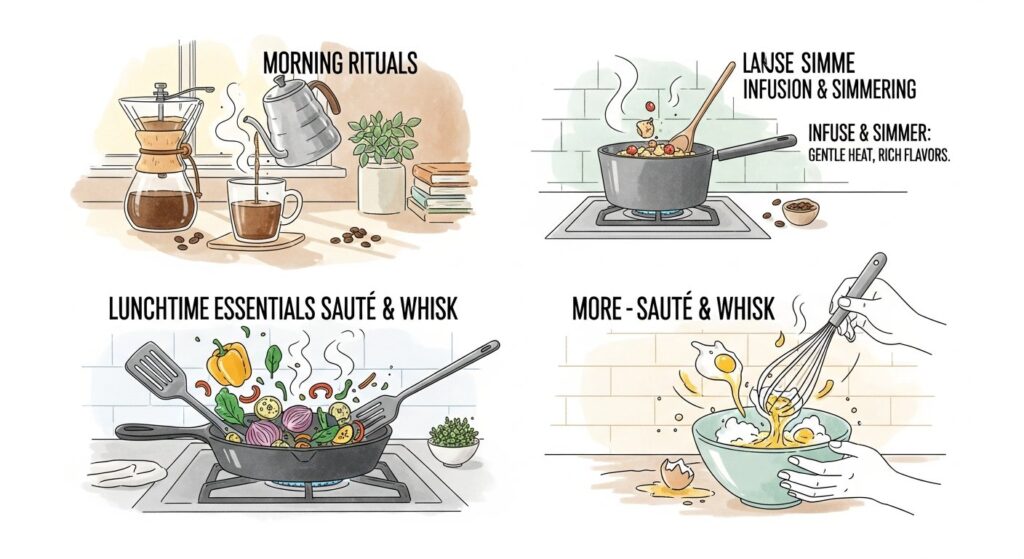
Mastering Basic Cooking Methods: An Essential Guide for Home Cooks
In the vibrant world of home cooking, mastering basic cooking methods is the cornerstone of transforming raw ingredients into extraordinary meals. For the aspiring home culinary artist, understanding these fundamental techniques empowers you to unlock flavors, achieve desired textures, and consistently create delicious dishes. At Cafeserre, we believe that exceptional home cooking begins with a solid foundation in these essential skills, much like a perfectly brewed coffee starts with precise technique. This comprehensive guide will delve into the core basic cooking methods, explaining their principles, ideal applications, and providing expert tips to elevate your kitchen prowess. Get ready to embark on a journey that will not only demystify cooking but also inspire a newfound confidence in your culinary endeavors, making every meal a testament to your growing expertise.
What are the Core Basic Cooking Methods Every Home Cook Should Master?
Basic cooking methods are the essential techniques employed to apply heat to food, altering its physical and chemical properties to make it palatable, safe, and delicious. These methods fundamentally involve different ways of heat transfer—conduction, convection, and radiation—each yielding unique results in terms of texture, flavor, and appearance. Understanding these distinctions is critical for any home culinary artist aiming for consistent success. For clarity and practical application, we categorize these basic cooking methods into three main groups:
- Dry-Heat Cooking Methods: These techniques rely on hot air, fat, or metal to cook food, often resulting in delicious browning, caramelization, and crisp textures. They typically involve higher temperatures.
- Moist-Heat Cooking Methods: Utilizing hot liquids or steam, these methods excel at tenderizing tougher ingredients and infusing food with moisture and flavor. They generally operate at lower, more controlled temperatures.
- Combination Cooking Methods: As the name suggests, these techniques blend elements of both dry-heat and moist-heat cooking, leveraging the benefits of each to create complex flavors and incredibly tender results, particularly with tougher cuts of meat.
Familiarity with each of these basic cooking methods allows you to select the optimal approach for any ingredient, ensuring that your dishes are not just cooked, but crafted with intention and expertise.
What are Dry-Heat Basic Cooking Methods and How Do They Enhance Flavor?

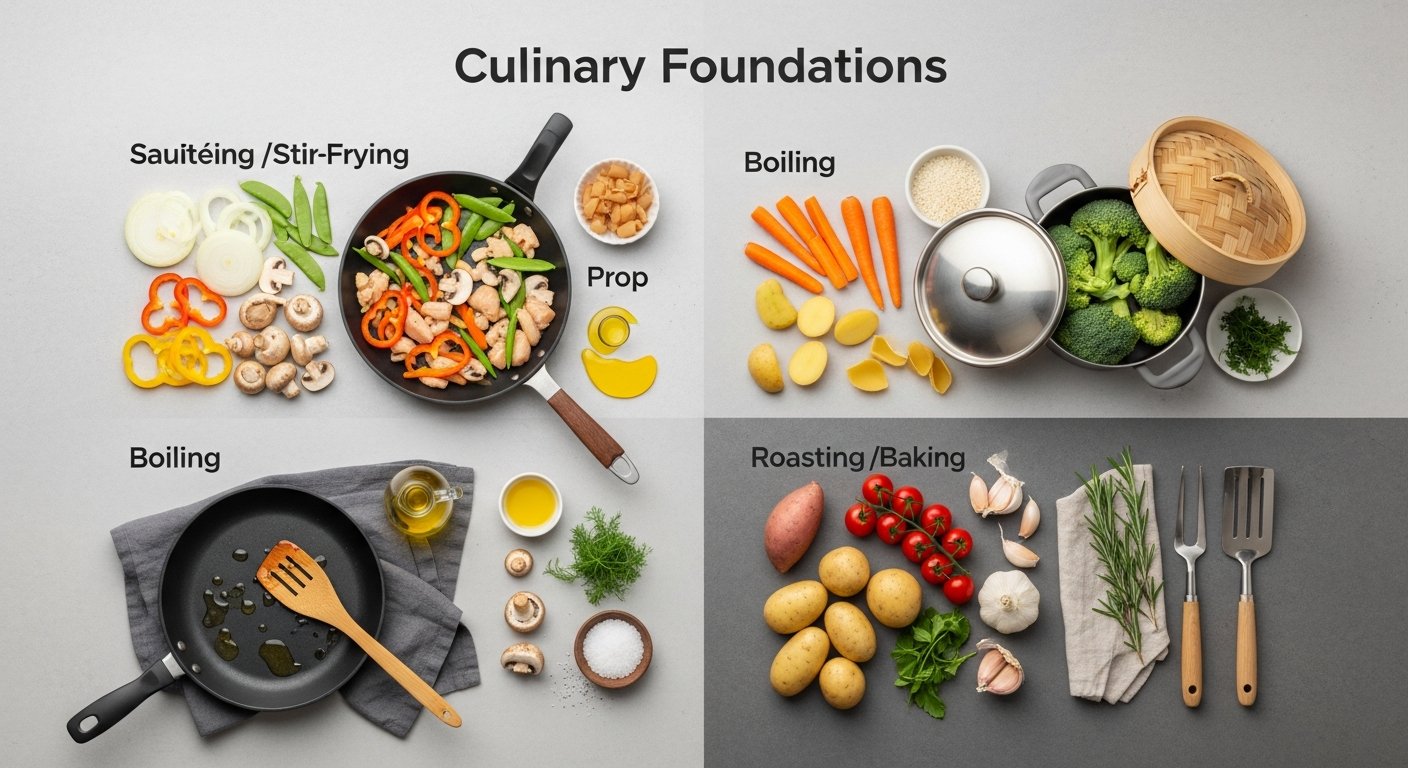
Dry-heat cooking methods are foundational basic cooking techniques that utilize hot air, fat, or metal to cook food, creating delicious browning and crisp textures. This section will explore key dry-heat methods essential for any home culinary artist looking to enhance flavor and texture. The hallmark of these methods is the Maillard reaction and caramelization, complex chemical processes that create hundreds of new flavor compounds and the appealing golden-brown crust we all love.


What is Sautéing: Quick and Flavorful?
- Definition: Sautéing involves cooking food quickly in a small amount of fat over relatively high heat.
- Principle: This method primarily uses conduction for heat transfer, quickly browning the surface of food through the Maillard reaction, developing rich, savory flavors.
- Equipment: A wide, shallow skillet with sloped sides (stainless steel or cast iron) is ideal for even heat distribution and easy tossing.
- Food Types: Best suited for thin-sliced vegetables (onions, mushrooms, peppers), delicate proteins (shrimp, scallops, chicken tenders), and small, tender pieces of meat.
- Results: Food develops a browned exterior with a tender-crisp interior, and its natural flavors become concentrated.
- Temperature Range: High heat, typically 350-400°F (175-200°C).
- Fat/Liquid Usage: A minimal amount of high-smoke-point oil (like canola, grapeseed, or clarified butter) is used. Deglazing the pan with wine or broth after cooking is common to capture flavorful browned bits.
- Tip for Home Cooks: Don’t overcrowd the pan! This is crucial. Overcrowding lowers the pan’s temperature, causing food to steam rather than brown, leading to a duller flavor and texture. Cook in batches if necessary.
What is Roasting: Achieving Even Browning and Tenderness?
- Definition: Roasting is cooking food, often larger pieces, uncovered in an oven using dry heat, typically with some fat.
- Principle: Heat transfer occurs primarily through convection (hot air circulation) and radiation. This method promotes significant Maillard reaction and caramelization on the exterior while gently cooking the interior to tenderness.
- Equipment: A sturdy roasting pan, a sheet pan with a wire rack (to allow air circulation around all sides), and a meat thermometer are essential.
- Food Types: Ideal for root vegetables (potatoes, carrots), whole poultry (chickens, turkeys), larger cuts of meat (roasts, tenderloins), and firm fruits.
- Results: A beautiful golden-brown, often crispy exterior with a moist and tender interior.
- Temperature Range: Moderate to high heat, typically 350-450°F (175-230°C).
- Fat/Liquid Usage: Oil or rendered fat (like duck fat) is commonly used to promote browning and flavor. Basting liquids are sometimes used for moisture.
- Tip for Home Cooks: For perfectly roasted vegetables, ensure they are cut to a similar size for even cooking, tossed lightly in oil, and spread in a single layer on the pan. Avoid overcrowding to allow for proper browning.
What is Pan-Frying: Creating Crisp Exteriors?
- Definition: Pan-frying involves cooking food, usually breaded or battered, in a moderate amount of fat over medium-high heat, turning once or twice.
- Principle: Relies on conduction from the hot fat and pan to create a crispy, browned crust through the Maillard reaction. The moderate fat provides a consistent cooking medium.
- Equipment: A heavy-bottomed skillet, such as a cast iron pan, which retains heat exceptionally well, is crucial. Tongs or a spatula for turning.
- Food Types: Excellent for breaded cutlets (schnitzel, chicken Milanese), fish fillets, fritters, and larger, thinner pieces of meat or poultry.
- Results: A distinctively crispy, golden-brown crust with a moist, fully cooked interior.
- Temperature Range: Medium-High heat, approximately 325-375°F (160-190°C).
- Fat/Liquid Usage: Enough oil or fat (e.g., vegetable oil, shortening) to cover about one-third to half the thickness of the food item.
- Tip for Home Cooks: Ensure the oil is at the correct temperature before adding food. Too cold, and the food will absorb too much oil; too hot, and the exterior will burn before the interior cooks.
What is Grilling: Imparting Smoky Char and Sear?
- Definition: Grilling is cooking food over direct, radiant heat, typically from below, often on an open grate.
- Principle: Utilizes intense radiant heat and conduction from the hot grates to create characteristic grill marks, a smoky flavor, and significant Maillard reaction/pyrolysis (charring) on the exterior.
- Equipment: A charcoal, gas, or electric grill, grill grates, long tongs, and a grill brush.
- Food Types: Steaks, chicken, fish, sausages, firm vegetables (asparagus, corn), and some fruits.
- Results: Distinctive charred marks, a smoky aroma and flavor, and a well-seared exterior with a juicy interior.
- Temperature Range: High to very high, often 450-650°F (230-340°C) or higher.
- Fat/Liquid Usage: Minimal oil on food or grates to prevent sticking. Marinades add flavor and sometimes tenderize.
- Tip for Home Cooks: For perfect grill marks and even cooking, allow your grill to preheat thoroughly. Only flip food once it naturally releases from the grates.
What is Baking: Using Gentle, Even Heat for Structure?
- Definition: Baking is cooking food in an oven with dry heat, where the heat surrounds the food, gently cooking it through. It’s often associated with dishes that require internal structure to set.
- Principle: Predominantly uses convection (air currents) and radiation to cook food evenly. The gentle, consistent heat gradually transforms starches (gelatinization) and proteins, allowing cakes to rise, bread to form crusts, and casseroles to set.
- Equipment: Baking sheets, cake pans, loaf pans, casserole dishes, muffin tins.
- Food Types: Breads, cakes, cookies, pastries, casseroles, quiches, some vegetables (e.g., baked potatoes).
- Results: Cooked through, often with a firm but tender interior and a golden-brown exterior. The texture and structure are key outcomes.
- Temperature Range: Typically low to moderate, 250-400°F (120-200°C), varying greatly by recipe.
- Fat/Liquid Usage: Fats and liquids are typically incorporated into the batter or dough, contributing to moisture and tenderness. Minimal surface fat for pan preparation.
- Tip for Home Cooks: Always preheat your oven completely before placing food inside to ensure even cooking from the start. Use an oven thermometer to verify accuracy.
What is Broiling: Utilizing Intense Direct Heat?
- Definition: Broiling is a high-heat dry-cooking method that cooks food by exposing it to intense, direct radiant heat from above.
- Principle: Radiation is the primary heat transfer method. The extreme heat rapidly sears the surface, causing quick browning through the Maillard reaction and caramelization, often used for finishing dishes or cooking thin items quickly.
- Equipment: A broiler pan (with a slotted top to drain fat), or a sheet pan lined with foil. An oven with a broiler setting.
- Food Types: Thin cuts of meat (steaks, pork chops), fish fillets, chicken breasts, gratins, toasting bread or cheese, charring peppers.
- Results: Rapidly browned, crispy, or charred exterior. Can be used to melt cheese or toast toppings.
- Temperature Range: Very high, often exceeding 500°F (260°C).
- Fat/Liquid Usage: Minimal fat, often just enough to prevent sticking and promote browning.
- Tip for Home Cooks: Keep a close eye on food when broiling, as it can burn very quickly due to the intense heat. Position the oven rack according to your desired browning level and food thickness.
What are Moist-Heat Basic Cooking Methods and How Do They Tenderize Food?
Moist-heat cooking methods are a category of basic cooking techniques that involve cooking food in hot liquid or steam. These methods are excellent for tenderizing tougher cuts of meat, softening fibrous vegetables, and infusing food with rich flavors from the cooking liquid. They are characterized by their gentle nature and their ability to preserve moisture within the food.
What is Boiling: A Method for Rapid Cooking?
- Definition: Boiling is cooking food in a liquid that has reached its highest possible temperature, creating rapid, vigorous bubbles.
- Principle: Primarily relies on conduction and convection. The rapid movement of boiling water transfers heat quickly and efficiently to the food.
- Equipment: A large stockpot or saucepan with a lid.
- Food Types: Pasta, grains (rice, quinoa), hard root vegetables (potatoes, corn on the cob), blanching vegetables for freezing or peeling.
- Results: Food is softened and cooked relatively quickly. Can sometimes lead to a loss of nutrients or diluted flavors if not managed well.
- Temperature Range: 212°F (100°C) at sea level.
- Fat/Liquid Usage: A large volume of water or broth.
- Tip for Home Cooks: When boiling pasta or vegetables, ensure the water is generously salted before adding the food. This seasons the food from within.
What is Simmering: Achieving Gentle Infusion of Flavors?
- Definition: Simmering involves cooking food in a liquid just below the boiling point, where small, gentle bubbles periodically rise to the surface.
- Principle: This gentle method uses conduction and convection to slowly tenderize ingredients and allow flavors to meld and deepen without aggressive agitation.
- Equipment: A heavy-bottomed saucepan or Dutch oven with a lid.
- Food Types: Ideal for making stocks, soups, stews, sauces, legumes, grains, and tenderizing delicate vegetables or meats without toughening them.
- Results: Food becomes tender, flavors are deeply infused, and sauces can thicken naturally.
- Temperature Range: Approximately 185-205°F (85-96°C).
- Fat/Liquid Usage: Moderate to large volumes of liquid (water, broth, milk, wine, sauces).
- Tip for Home Cooks: For clear stocks and consistent flavor, maintain a gentle simmer and skim any foam that rises to the surface during the initial stages.
What is Steaming: A Method for Preserving Nutrients?
- Definition: Steaming is cooking food by exposing it to hot vapor (steam) from boiling water, without direct contact with the water itself.
- Principle: Heat transfer occurs through convection as the steam circulates around the food. The latent heat of condensation, released when steam condenses on the cooler food, is highly efficient and gentle, preserving nutrients, color, and texture.
- Equipment: A steamer basket (bamboo or metal), a pot with a tight-fitting lid, or a dedicated electric steamer.
- Food Types: Excellent for vegetables (broccoli, asparagus), delicate fish, dumplings, custards, and some poultry.
- Results: Food is moist, tender, retains its vibrant color and nutrients, and has a clean, natural flavor.
- Temperature Range: The temperature of steam is 212°F (100°C), similar to boiling water, but its heat transfer is more efficient and less damaging to food structure.
- Fat/Liquid Usage: Water is used to generate steam, but no direct fat or liquid comes into contact with the food during cooking.
- Tip for Home Cooks: Ensure the water level in the pot is below the steamer basket, and the lid fits tightly to trap the steam effectively. Don’t lift the lid too often!
What is Poaching: A Delicate Cooking Method?
- Definition: Poaching is a gentle moist-heat cooking method where food is cooked partially or fully submerged in a flavorful liquid at very low, controlled temperatures, just below a simmer.
- Principle: Heat is transferred gently through conduction from the liquid, preventing delicate proteins from toughening and maintaining moisture. This method is all about finesse and control.
- Equipment: A shallow pan (for eggs, fish fillets) or a deeper saucepan (for chicken breasts), with a lid often used to maintain even temperature.
- Food Types: Best for very delicate foods like eggs, fish fillets (salmon, cod), chicken breasts, fruit (pears, peaches), and sometimes sausages.
- Results: Food is exceptionally tender, moist, and retains a delicate flavor profile from the poaching liquid.
- Temperature Range: Approximately 160-180°F (71-82°C).
- Fat/Liquid Usage: A small to moderate volume of flavorful liquid such as water, broth, wine, milk, or a court bouillon (aromatic vegetable broth).
- Tip for Home Cooks: Maintain a consistent, very low temperature. The liquid should show almost no movement, just a slight shiver. Use a thermometer to monitor if unsure.
What are Combination Basic Cooking Methods and Why Use Them?
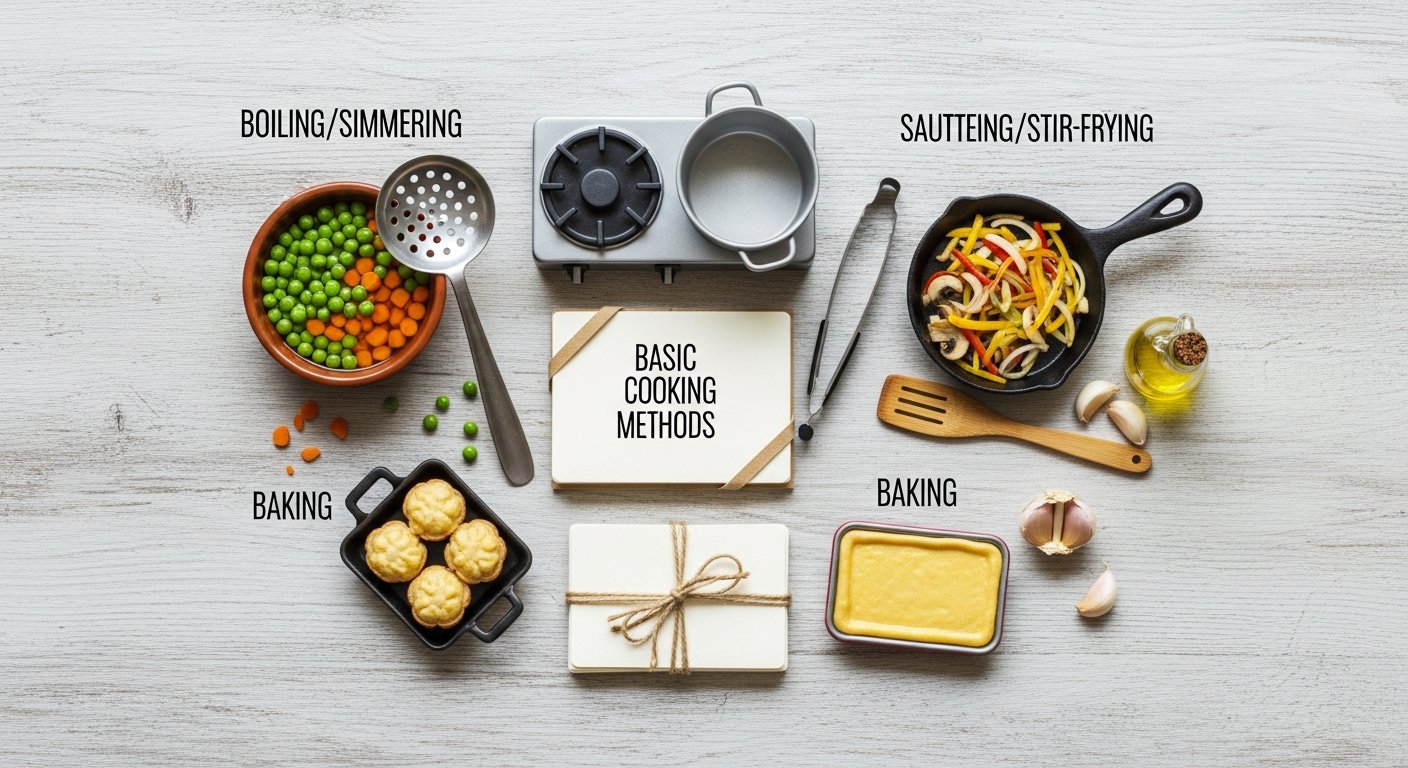
Combination cooking methods strategically integrate elements of both dry-heat and moist-heat techniques. They typically begin with a dry-heat step, like searing, to develop deep flavors and rich browning via the Maillard reaction. This is followed by a moist-heat step, usually a slow simmer in liquid, to tenderize ingredients, particularly tougher cuts of meat, and allow flavors to meld. These methods are celebrated for producing dishes with incredible depth of flavor and fork-tender textures.

What is Braising: Creating Fork-Tender Meats?
- Definition: Braising is a combination cooking method where a large piece of food (typically a tougher cut of meat) is first seared in fat, then partially submerged in liquid and slowly simmered in a covered pot, either on the stovetop or in the oven.
- Principle: The initial searing (dry heat) creates deep, complex flavors and a beautiful crust through the Maillard reaction. The subsequent slow, moist cooking (moist heat) gently breaks down tough connective tissues (collagen) into gelatin, resulting in incredibly tender, succulent meat and a rich, flavorful sauce.
- Equipment: A heavy-bottomed pot with a tight-fitting lid, such as a Dutch oven or a braiser, is essential for even heat retention.
- Food Types: Ideal for tougher, larger cuts of meat with connective tissue (beef short ribs, pot roast, lamb shanks, pork shoulder), and sometimes whole poultry. Robust vegetables can also be braised.
- Results: Meat that is meltingly tender and easily pulls apart with a fork, surrounded by a deeply flavored, often thickened sauce.
- Temperature Range: Searing: High heat. Simmering: Low heat, typically 250-325°F (120-160°C) in an oven, or very low on the stovetop.
- Fat/Liquid Usage: Fat for searing. A flavorful liquid (broth, wine, tomatoes, beer) that covers about one-third to half of the food.
- Tip for Home Cooks: Don’t rush the searing step; a deep, dark brown crust is essential for flavor development. Ensure the lid is tight to prevent moisture loss during the long simmer.
What is Stewing: Crafting Hearty One-Pot Meals?
- Definition: Stewing is similar to braising but typically involves smaller, uniformly cut pieces of food (often meat and vegetables) that are first seared, then fully submerged in liquid and simmered slowly in a covered pot.
- Principle: Like braising, stewing starts with searing for flavor development. The extended moist-heat cooking tenderizes the ingredients and allows all the flavors from the meat, vegetables, and cooking liquid to thoroughly meld, creating a cohesive, hearty dish.
- Equipment: A large, heavy-bottomed pot or Dutch oven.
- Food Types: Smaller, tougher cuts of meat (beef stew meat, lamb shoulder, chicken thighs), and hearty vegetables (carrots, potatoes, celery, onions).
- Results: All components are uniformly tender, and the dish is characterized by a rich, thick, and deeply flavorful sauce.
- Temperature Range: Searing: High heat. Simmering: Low heat, typically 250-325°F (120-160°C) in an oven, or very low on the stovetop.
- Fat/Liquid Usage: Fat for searing. A flavorful liquid (broth, wine, tomatoes) that fully covers all ingredients.
- Tip for Home Cooks: Cut all ingredients to a similar size to ensure even cooking and tenderization. A “mise en place” (everything in its place) approach before starting is particularly helpful for stews.
How to Choose the Right Basic Cooking Method for Your Ingredients?
Selecting the appropriate basic cooking method is a skill that distinguishes a competent cook from a true culinary artist. It’s not merely about following a recipe; it&s about understanding how different methods interact with various ingredients to produce desired outcomes. Here are the key factors to consider:
- Ingredient Characteristics:
- Tenderness/Connective Tissue: Tender cuts of meat (e.g., tenderloin, fish fillets) benefit from quick, dry-heat methods like sautéing, grilling, or pan-frying, or gentle moist-heat methods like poaching. Tougher cuts with significant connective tissue (e.g., chuck, short ribs) require long, slow moist-heat or combination methods like braising or stewing to break down collagen.
- Fat Content: Fattier meats can handle higher dry heat (grilling, roasting) as the fat renders and bastes the meat. Leaner meats benefit from gentler methods to prevent drying out.
- Density/Moisture Content (Vegetables): Delicate, high-moisture vegetables (e.g., spinach) fare well with quick sautéing or steaming. Denser, starchy vegetables (e.g., potatoes, carrots) are good for roasting, boiling, or simmering.
- Desired Outcome (Texture, Flavor, Appearance):
- Crispiness/Browning: Opt for dry-heat methods (sautéing, pan-frying, roasting, grilling) to achieve the Maillard reaction and caramelization.
- Tenderness/Moisture: Moist-heat (simmering, steaming, poaching) or combination methods (braising, stewing) are best for soft, succulent results.
- Infused Flavors: Simmering, stewing, and braising allow ingredients to absorb flavors from the cooking liquid.
- Clean, Fresh Taste: Steaming and poaching often highlight the natural flavors of delicate ingredients.
- Time Constraints:
- Quick Meals: Sautéing, pan-frying, grilling, boiling, and steaming are fast methods.
- Slow Cooking: Roasting (for large items), simmering, braising, and stewing require more time but often hands-off cooking.
- Equipment Available: Your choice may be limited by what kitchen tools you have at hand. A skillet is versatile for sautéing/pan-frying, a Dutch oven for braising/stewing, and a stockpot for boiling/simmering.
- Preparation Style: Are you looking for a simple, elegant dish, or a hearty, rustic meal? This influences the method chosen.
By thoughtfully considering these factors, you can make informed decisions that lead to consistently delicious and perfectly cooked food, embodying the true spirit of a home culinary artist.
Here’s a comparative overview to help you navigate your choices:
| Cooking Method | Category | Primary Heat Transfer | Key Benefit | Ideal Food Examples |
|---|---|---|---|---|
| Sautéing | Dry-Heat | Conduction | Quick Browning & Flavor | Thin Vegetables, Shrimp, Scallops |
| Roasting | Dry-Heat | Convection, Radiation | Even Browning & Tenderness | Root Vegetables, Whole Chicken, Roasts |
| Pan-Frying | Dry-Heat | Conduction | Crisp Exterior, Cooked Interior | Breaded Cutlets, Fish Fillets |
| Grilling | Dry-Heat | Radiation | Smoky Flavor, Sear Marks | Steaks, Chicken, Firm Vegetables |
| Baking | Dry-Heat | Convection, Radiation | Gentle Setting of Structure | Breads, Cakes, Casseroles |
| Broiling | Dry-Heat | Radiation | Rapid Surface Browning | Thin Meats, Gratins, Toasting |
| Boiling | Moist-Heat | Conduction, Convection | Rapid Cooking & Softening | Pasta, Hard Vegetables, Grains |
| Simmering | Moist-Heat | Conduction, Convection | Gentle Tenderizing & Infusion | Stocks, Soups, Sauces, Legumes |
| Steaming | Moist-Heat | Convection | Nutrient Preservation, Moisture | Delicate Vegetables, Fish, Dumplings |
| Poaching | Moist-Heat | Conduction | Delicate Cooking, Very Tender | Eggs, Delicate Fish, Chicken Breast |
| Braising | Combination | Dry then Moist | Deep Flavor & Fork-Tender Meat | Short Ribs, Pot Roast, Lamb Shanks |
| Stewing | Combination | Dry then Moist | Hearty, Flavorful, Tender Pieces | Beef Stew Meat, Root Vegetables |
| Feature | Dry-Heat Methods | Moist-Heat Methods |
|---|---|---|
| Moisture Involvement | Minimal to no added moisture; relies on food’s natural moisture. | Food cooked in or with significant liquid/steam. |
| Typical Temperature | Generally higher (325-650°F+). | Generally lower (160-212°F). |
| Resulting Texture | Crispy, browned, firm, tender interior. | Tender, soft, succulent, moist. |
| Flavor Impact | Develops intense, complex flavors through Maillard reaction & caramelization. | Infuses flavors from cooking liquid, preserves natural delicate flavors. |
| Best For (Food Types) | Tender meats, poultry, firm vegetables, baked goods. | Tougher meats, legumes, grains, delicate fish, vegetables needing gentle cooking. |
What Essential Kitchen Tools Do You Need for Basic Cooking Methods?
Having the right tools is just as important as knowing the basic cooking methods themselves. A well-equipped kitchen empowers the home culinary artist to execute techniques effectively and efficiently. Investing in quality, versatile equipment will enhance your cooking experience and the quality of your finished dishes.
| Tool | Primary Cooking Methods | Why It’s Essential | Key Feature |
|---|---|---|---|
| Cast Iron Skillet | Sautéing, Pan-Frying, Roasting, Baking (cornbread) | Exceptional heat retention and even heat distribution for perfect browning and searing. | Durable, naturally non-stick (when seasoned), oven-safe. |
| Stainless Steel Skillet | Sautéing, Pan-Frying, Deglazing | Excellent for browning and developing fond (flavorful browned bits) which can be deglazed into sauces. | Responsive to heat changes, durable. |
| Dutch Oven (Cast Iron) | Braising, Stewing, Simmering, Boiling, Roasting | Heavy, even-heating pot with a tight-fitting lid, ideal for long, slow cooking and moisture retention. | Versatile, retains heat well, oven-safe. |
| Stock Pot (8-12 quart) | Boiling, Simmering, Steaming (with insert), Stock Making | Large capacity for boiling pasta, making stocks, or cooking larger batches of soup. | Tall sides to minimize evaporation. |
| Sheet Pans (Half-Sheet Size) | Roasting, Baking, Broiling (with wire rack) | Versatile flat surface for even roasting of vegetables, baking cookies, or preparing ingredients. | Large surface area, high sides to prevent spills. |
| Wire Rack | Roasting (in sheet pan), Cooling baked goods | Lifts food off a surface to allow air circulation, promoting even cooking and crispy exteriors. | Elevates food, prevents soggy bottoms. |
| Steamer Basket (Metal or Bamboo) | Steaming | Allows food to be cooked by steam without direct contact with water, preserving nutrients and texture. | Collapsible or multi-tiered, fits various pot sizes. |
| Tongs | Grilling, Sautéing, Pan-Frying, Flipping | Essential for safely grasping, turning, and moving food without piercing it. | Precision, heat resistance, good grip. |
| Meat Thermometer (Instant-Read) | Roasting, Grilling, Baking, Poaching | Ensures food is cooked to a safe internal temperature and desired doneness, preventing overcooking. | Accurate, fast readings. |
| Whisk | Sauce Making (Simmering, Poaching), Emulsification | Incorporates air, blends ingredients smoothly, prevents lumps in sauces and batters. | Creates smooth textures. |
What are Common Mistakes in Basic Cooking Methods and How to Avoid Them?
Even with a solid understanding of basic cooking methods, home cooks can encounter common pitfalls. Recognizing and rectifying these mistakes is a sign of true culinary growth. By being mindful of these issues, you can enhance your E-E-A-T (Expertise, Experience, Authoritativeness, Trustworthiness) in the kitchen.
- Overcrowding the Pan:
- Mistake: Adding too much food to a pan during sautéing, pan-frying, or roasting. This significantly lowers the pan’s temperature.
- Result: Food steams instead of browns, leading to soggy textures and underdeveloped flavors (Maillard reaction is inhibited).
- Solution: Cook in batches. Ensure there’s enough space for air to circulate and for the food to make good contact with the hot surface.
- Insufficiently Preheated Pan/Oven:
- Mistake: Starting to cook before your pan or oven has reached the correct temperature.
- Result: For dry-heat methods, this leads to sticking, uneven browning, and longer cooking times. For baking, it affects rise and texture.
- Solution: Always allow ample time for preheating. For pans, test with a drop of water (sizzle/evaporate) or a small amount of oil (shimmer). Use an oven thermometer to confirm oven accuracy.
- Lack of Seasoning at Every Step:
- Mistake: Only seasoning at the very end of cooking.
- Result: Flat, uninspired flavors. Salt added at the beginning and throughout cooking penetrates ingredients, enhancing their natural taste.
- Solution: Season your ingredients (meat, vegetables) before cooking, salt your pasta water, and taste and adjust seasoning for sauces and stews as they simmer.
- Ignoring “Mise en Place“:
- Mistake: Not preparing all ingredients (chopping, measuring) before starting to cook.
- Result: Rushed, disorganized cooking, leading to overcooked or undercooked components, especially in fast-paced methods like sautéing.
- Solution: Embrace “mise en place.” Have all your ingredients prepped and ready before heat touches the pan. This promotes efficiency and reduces stress.
- Overcooking/Undercooking:
- Mistake: Relying solely on visual cues or guesswork for doneness.
- Result: Dry, tough meats or raw interiors, soggy vegetables, or unappealing textures.
- Solution: Invest in a good instant-read meat thermometer for proteins. Learn to recognize visual cues (e.g., vibrant green for steamed vegetables), but don’t hesitate to taste as you go for vegetables.
- Flipping Food Too Frequently:
- Mistake: Constantly moving food in the pan or on the grill.
- Result: Prevents proper browning and crust development. Food needs undisturbed contact with the hot surface to achieve the Maillard reaction.
- Solution: Be patient. For searing, let food sit undisturbed for a few minutes until it naturally releases from the pan or grill grates, indicating a crust has formed.
- Using the Wrong Fat/Oil:
- Mistake: Using olive oil for high-heat searing or butter for very high-temperature frying.
- Result: Fat burns, creating bitter, acrid flavors and potentially harmful compounds.
- Solution: Use oils with high smoke points (e.g., canola, grapeseed, avocado) for high-heat cooking. Save extra virgin olive oil for finishing or low-heat applications. Butter is great for flavor but burns easily; use clarified butter or finish with whole butter.
How Can Basic Cooking Methods Elevate Your Home Culinary Skills?
Mastering basic cooking methods is more than just learning techniques; it’s about building confidence, developing intuition, and transforming your kitchen into a space of creative expression. Each method, from the precise searing of sautéing to the gentle infusion of poaching, offers a unique opportunity to interact with ingredients and coax out their finest qualities. As you continue your journey as a home culinary artist, remember that consistency, attention to detail, and a willingness to experiment are your greatest allies.
At Cafeserre, we are dedicated to providing you with the knowledge and inspiration to excel in both the art of coffee and the craft of cooking. By understanding these fundamental basic cooking methods, you’ve taken a significant step toward becoming a more proficient and confident cook. Keep practicing, keep exploring, and most importantly, keep enjoying the delicious results of your culinary expertise. We encourage you to explore other resources on our site for specific recipes and advanced techniques that build upon these core skills.