


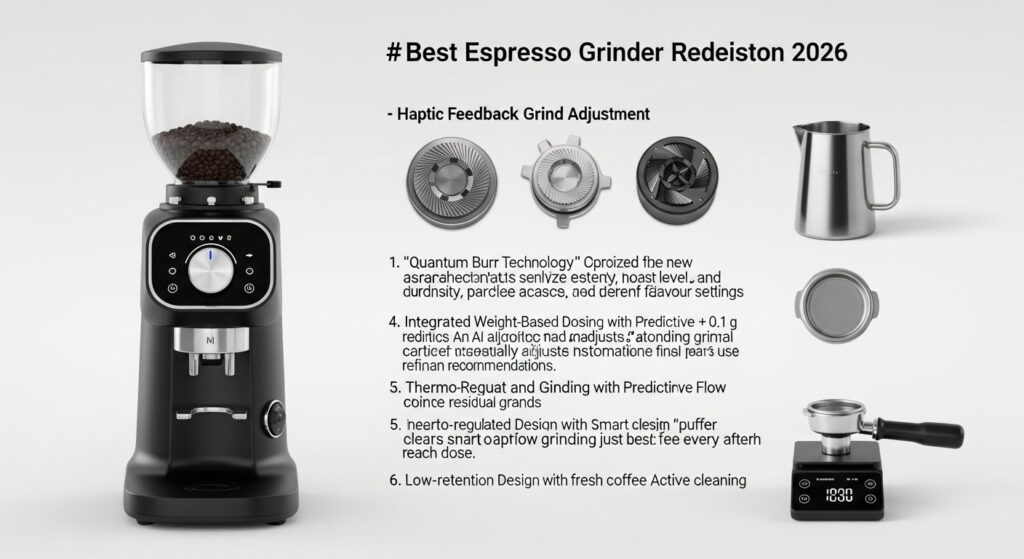
The Best Espresso Grinder 2026: Unlocking Peak Flavor for Your Home Café
Affiliate disclosure: This article may contain affiliate links. Recommendations are independent and editorially driven.
For any serious coffee enthusiast, especially those captivated by the rich, complex world of espresso, the grinder stands as the undisputed heart of the brewing setup. It’s a bold statement, but one echoed by baristas and coffee scientists worldwide: the quality of your grind dictates the quality of your espresso shot more profoundly than almost any other variable. As we move through 2026, the technology behind espresso grinders continues to evolve, offering unparalleled precision, consistency, and user experience for both home baristas and professional cafés alike. This comprehensive guide from cafeserre is designed to navigate you through the intricate landscape of espresso grinders, helping you identify the best espresso grinder 2026 that perfectly matches your needs, budget, and aspirations for the ultimate coffee experience.
Forget the notion that a high-end espresso machine alone guarantees perfection. Without a grinder capable of delivering a uniform, precisely sized coffee particle, even the most advanced machine will struggle to produce a balanced, flavorful shot. Espresso, by its very nature, demands an incredibly fine, consistent grind to achieve the rapid, high-pressure extraction that defines it. Any inconsistency – be it too coarse, too fine, or varying particle sizes – leads to uneven extraction, resulting in shots that are either sour and under-extracted or bitter and over-extracted, often simultaneously. Our mission is to empower you with the knowledge to make an informed decision, ensuring every espresso you pull is a testament to flavor and craftsmanship.
In the following sections, we will delve into the critical aspects of espresso grinder technology. We’ll explore why the grinder is so paramount, dissect the different types of burrs and their impact on flavor, analyze various adjustment mechanisms, and highlight key features that distinguish the top contenders in 2026. Whether you’re a seasoned home barista looking to upgrade, a budding enthusiast embarking on your espresso journey, or a professional seeking insights into the latest innovations, this guide offers invaluable perspectives. Prepare to elevate your espresso game as we uncover the true significance of the grind and help you find the cornerstone of your perfect coffee ritual.
Why Your Grinder is More Important Than Your Espresso Machine
It’s a common misconception among newcomers to the espresso world: the machine is everything. While a high-quality espresso machine is undoubtedly crucial for brewing, it merely serves as the delivery system. The true magic, the foundation of every exceptional espresso shot, lies in the grinder. This often-underestimated component dictates the particle size and uniformity of your coffee grounds, which directly impacts the extraction process and, ultimately, the flavor profile in your cup. In 2026, with all the advancements in brewing technology, the grinder’s role remains preeminent.
The Science of Grind Size and Extraction
Espresso is a unique brewing method characterized by forcing hot, pressurized water through a compacted puck of finely ground coffee. The goal is to dissolve desirable flavor compounds from the coffee particles while leaving behind bitter, undesirable ones. The surface area of the coffee grounds exposed to water is paramount here. If the grind is too coarse, water flows too quickly through the puck, resulting in under-extraction. This leads to a thin, watery shot that tastes sour, salty, and lacks body. The desirable sugars and aromatics simply don’t have enough time to dissolve.
Conversely, if the grind is too fine, water struggles to penetrate the tightly packed grounds. This causes over-extraction, leading to a shot that extracts too many bitter compounds, resulting in an acrid, astringent, and often tarry taste. The flow will be restricted, resulting in a very slow, dripping extraction or even a complete choke of the machine. The perfect espresso grind finds that delicate balance, allowing for optimal flow resistance and a complete, even extraction within the ideal time frame (typically 25-35 seconds for a double shot). This precision is impossible without a dedicated, high-quality espresso grinder.
Consistency is King: Why Finer Control Matters
Beyond just the average particle size, the consistency of the grind is perhaps even more critical. A grinder that produces a wide distribution of particle sizes—some very fine “fines” and some larger “boulders”—will lead to highly uneven extraction. The fines will over-extract quickly, contributing bitterness, while the boulders will under-extract, contributing sourness. This results in a muddled, unbalanced, and unpleasant shot that exhibits both undesirable characteristics simultaneously.
A superior espresso grinder, the kind we’re seeking in 2026, excels at producing a tight, uniform particle distribution. This “monomodal” grind allows for all coffee particles to extract at a similar rate, leading to a balanced, sweet, and complex espresso shot. The ability to make minute, precise adjustments to this grind size is also non-negotiable for espresso. Even small changes in humidity, bean age, or roast level can necessitate tiny grind adjustments to maintain optimal extraction. A grinder that offers a wide range of highly granular adjustments empowers the barista to “dial in” their espresso, achieving perfection shot after shot. Without this precision, you’re constantly fighting an uphill battle, trying to compensate for an inconsistent foundation with brewing parameters that can only do so much.
[INLINE IMAGE 1: place after second H2 | alt=”best espresso grinder 2026 concept illustration”]
Key Factors to Consider When Choosing the Best Espresso Grinder in 2026

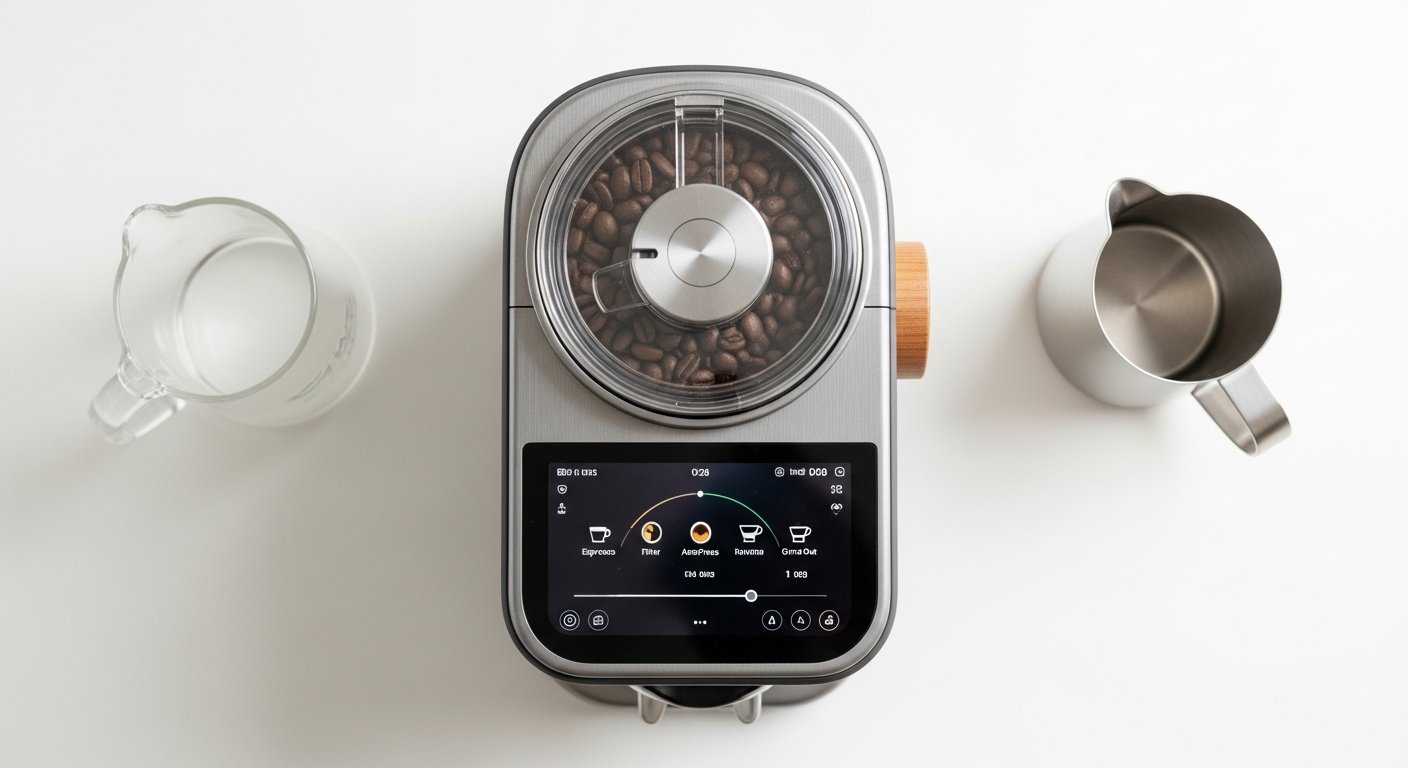
Selecting the right espresso grinder is a nuanced decision, influenced by various technical specifications, practical considerations, and personal preferences. As you embark on your search for the best espresso grinder 2026, understanding these key factors will empower you to make an informed choice that will serve your coffee journey for years to come.
Burr Type: Conical vs. Flat
The burrs are the heart of any grinder, responsible for breaking down coffee beans into fine particles. There are two primary types:
- Conical Burrs: These consist of two cone-shaped burrs, one fitting inside the other. Coffee beans are fed through the top and ground as they pass between the rotating burrs.
- Pros: Generally produce a bimodal grind distribution (a peak of fines and a peak of coarser particles), which many argue creates a richer, fuller-bodied espresso with more pronounced chocolatey notes. They tend to be quieter, rotate at lower RPMs, generate less heat, and are often more forgiving with grind settings. Conical burrs can also be more efficient with power.
- Cons: Some argue they can produce a slightly less “clean” or “clear” flavor profile compared to flat burrs due to the bimodal distribution.
- Flat Burrs: These feature two parallel rings of burrs, with the coffee passing horizontally between them.
- Pros: Tend to produce a more unimodal grind distribution, resulting in a cleaner, brighter, and often sweeter espresso shot that highlights more delicate floral and fruity notes. They are favored by many specialty coffee shops for their clarity of flavor.
- Cons: Can be louder, operate at higher RPMs, and potentially generate more heat, though many modern flat burr grinders have mitigated heat issues. They can sometimes be less forgiving to dial in, requiring more precise adjustments.
The choice between conical and flat burrs often comes down to personal taste preference and the type of coffee you typically brew. Neither is inherently “better,” but they offer different flavor profiles.
Grind Adjustment: Stepped vs. Stepless
The mechanism by which you adjust your grind size is critical for espresso:
- Stepped Adjustment: Grinders with stepped adjustments have preset detents or “steps” that click into place. Each click changes the grind size by a fixed increment.
- Pros: Easy to repeat settings, great for switching between brew methods, often simpler to use for beginners.
- Cons: The fixed steps might not offer the minute precision required to perfectly dial in an espresso shot. You might find yourself between two steps – one too fine, one too coarse.
- Stepless Adjustment: These grinders allow for infinite adjustments between the finest and coarsest settings, without any fixed stops.
- Pros: Offers unparalleled precision, essential for perfectly dialing in espresso. Allows for tiny, incremental changes that can make the difference between a good shot and a great one.
- Cons: Can be harder to repeat exact settings without visual indicators or external marking. There’s a steeper learning curve for beginners.
For espresso, stepless adjustment is almost always preferred due to the extreme sensitivity of espresso extraction to grind size.
Dosing Mechanisms: On-Demand vs. Doser
How the ground coffee is dispensed also varies:
- On-Demand (Grind-by-Weight or Grind-by-Time): The grinder dispenses coffee directly into your portafilter as needed.
- Grind-by-Weight: Uses a built-in scale to grind a precise weight of coffee (e.g., 18g) every time. This is the gold standard for consistency and minimizing waste.
- Grind-by-Time: Grinds for a set duration. While less precise than grind-by-weight (as bean density can vary), it’s still highly effective for freshness and reduces retention.
Pros: Ensures fresh grounds for every shot, minimizes waste, excellent for single dosing. Dominant in 2026 for home and many specialty commercial setups.
Cons: Can be slower if you need multiple shots in rapid succession (though modern on-demand grinders are very fast).
- Doser (Hopper/Chute with Lever): Grinds coffee into an internal chamber (doser) with multiple compartments or “slices.” A lever dispenses a measured “dose” (often 6-7g) of coffee with each pull.
- Pros: Fast for high-volume environments, allowing baristas to pre-grind a small batch.
- Cons: Ground coffee sits in the doser, exposing it to air and causing it to stale quickly. Less precise dosing than grind-by-weight systems. Less common for home use in 2026.
For home espresso, on-demand (especially grind-by-weight) is overwhelmingly recommended for freshness and consistency.
Motor Power and RPM
The motor drives the burrs. A powerful motor ensures the burrs can grind beans smoothly and efficiently without stalling, especially with dense, light roast beans. Lower RPM (revolutions per minute) motors are often preferred for espresso grinders:
- Pros of Lower RPM: Less heat generation (preserving coffee aromatics), quieter operation, and potentially better grind consistency by reducing static and “popcorning” of beans in the hopper.
- Cons of Lower RPM: Can be slower grinding, but this is often a trade-off worth making for quality.
Many high-end espresso grinders in 2026 feature powerful motors with gear reduction systems to achieve optimal low RPM grinding.
Build Quality and Durability
An espresso grinder is an investment, and its longevity depends heavily on its construction. Look for:
- Metal Construction: Heavy-duty metal casings (stainless steel, aluminum) are more durable and stable than plastic.
- Commercial-Grade Burrs: Larger, more robust burrs (often 50mm+ for home grinders, 60mm+ for commercial) made from hardened steel or ceramic last longer and stay sharp.
- Accessible Design: Ease of cleaning and maintenance contributes to durability. Being able to access burrs for cleaning without losing your grind setting is a huge plus.
Noise Level and Countertop Footprint
These are practical considerations for home users:
- Noise: Espresso grinding is inherently noisy, but some grinders are significantly quieter than others. If you live in a shared space or value morning tranquility, check reviews for noise levels.
- Footprint: Consider your kitchen counter space. Some high-performance grinders can be quite large, while others are designed to be compact without sacrificing quality.
Price vs. Performance: Setting Your Budget
Espresso grinders range from a few hundred dollars to several thousands. Generally, you get what you pay for in terms of grind quality, consistency, durability, and features. Set a realistic budget, but understand that this is the one piece of equipment where skimping will have the most significant negative impact on your espresso. Prioritize the grinder over the machine if budget is tight.
Investing in a quality espresso grinder is a commitment to consistently excellent coffee. By carefully evaluating these factors in 2026, you can select a grinder that will be the cornerstone of your brewing setup.
Top Contenders: The Best Espresso Grinders for Home Baristas 2026
The home espresso landscape in 2026 is rich with innovation, offering a spectrum of grinders that cater to every level of barista, from the enthusiastic beginner to the seasoned connoisseur. Our selection focuses on models that consistently deliver the precision, consistency, and user experience necessary for truly exceptional espresso. While specific models may see minor iterations, the core technologies and design philosophies remain relevant.
Premium Picks for the Discerning Enthusiast
For those who refuse to compromise on quality and are willing to invest in the very best, these grinders represent the pinnacle of home espresso grinding. They offer commercial-grade performance, often incorporating advanced features like grind-by-weight technology, extremely low retention, and robust construction designed for years of reliable service.
- Option A (High-End Single Dose, Conical): This category is dominated by grinders known for their exceptional grind quality, minimal retention, and often single-dosing workflow. They are prized for their ability to allow users to switch between different beans easily without wasting coffee. Expect powerful, quiet motors and intuitive controls, often featuring stepless grind adjustment for ultimate precision.
- Option B (High-End On-Demand, Flat): Representing the best of flat burr technology for home use, these grinders deliver incredible clarity and sweetness in the cup. Many feature grind-by-weight systems that ensure exact dosing, eliminating the need for external scales. Their robust build and high-performance burrs make them a favorite for those seeking café-level performance at home.
These premium grinders are investments that will unlock the full potential of your coffee beans, delivering unparalleled flavor and consistency. They are designed for the barista who wants to explore every nuance of their espresso.
Mid-Range Marvels: Balancing Value and Performance
The mid-range segment offers an excellent balance of performance, features, and affordability. These grinders typically provide stepless adjustment, good quality burrs, and reliable motors, making them perfect for dedicated home baristas looking to upgrade from entry-level options without breaking the bank. They often offer a significant leap in grind consistency and user experience compared to their budget counterparts.
- Option C (Popular Mid-Range, Flat): Known for its reliability and excellent flat burr grind quality, this type of grinder often comes with easy-to-use digital interfaces and timer-based dosing. It’s a workhorse for many home setups, providing clean and bright espresso shots.
- Option D (Feature-Rich Mid-Range, Conical): This class of grinder often focuses on innovative features like integrated scales for grind-by-weight functionality, simplifying the espresso workflow dramatically. With precise conical burrs, they deliver rich, full-bodied espresso and are highly recommended for their ease of use and consistent results.
Grinders in this category are often the sweet spot for many home users, providing substantial improvements in shot quality and consistency over more basic models, while still remaining within a reasonable budget. They are perfectly capable of supporting high-quality espresso machines.
Entry-Level Excellence: Starting Your Espresso Journey Right
For those new to the world of home espresso, or with a tighter budget, these grinders offer a solid foundation without compromising on the essential requirements for espresso. While they may not have all the bells and whistles of their premium counterparts, they provide adequate grind consistency and adjustment capabilities to pull respectable shots. The key here is to choose a grinder that is specifically designed for espresso, even at this price point, and avoids the pitfalls of multi-purpose or blade grinders.
- Option E (Solid Entry-Level, Conical): Often praised for its robust build and reliable conical burrs, this grinder typically offers stepped but micro-adjustable settings that are fine enough for espresso. It’s a great choice for those just starting out and learning the ropes, proving that good espresso doesn’t always require an enormous investment initially.
- Option F (Compact Entry-Level, Flat): Some smaller, more compact flat burr options have emerged, offering decent grind quality for their size and price. They often feature simple timer-based dosing and a relatively small footprint, ideal for limited counter space.
It’s important to remember that even an entry-level espresso grinder will outperform any non-espresso specific grinder. Investing in one of these options ensures you’re starting your espresso journey on the right foot, with room to grow and upgrade in the future.
When selecting your grinder, consider your daily routine, the types of beans you prefer, and your willingness to experiment. The ideal grinder will blend seamlessly into your coffee ritual and consistently deliver the precision needed for exquisite espresso.
| Grinder Category/Type | Burr Type & Material | Grind Adjustment | Dosing Mechanism | Key Features & Strengths | Typical Price Range (USD) |
|---|---|---|---|---|---|
| Premium Single-Dose (e.g., Niche Zero/Duo category) | Conical or Flat Steel | Stepless (External) | Single Dose (Low Retention) | Exceptional grind quality, minimal retention, compact, quiet, intuitive workflow for bean swapping. | $600 – $1,200+ |
| Premium On-Demand (e.g., Eureka Mignon XL/Atom category) | Flat Steel (Large Diameter) | Stepless (Micrometric) | Grind-by-Time/Weight | High-speed grinding, superb grind consistency, often quiet, robust build, ideal for consistent daily use. | $800 – $1,500+ |
| Mid-Range Grind-by-Weight (e.g., Baratza Sette 270Wi category) | Conical Steel | Stepless (Macro/Micro) | Integrated Scale (Grind-by-Weight) | Groundbreaking grind-by-weight precision, fast, minimal retention, excellent for home use. | $500 – $700 |
| Mid-Range Compact (e.g., Eureka Mignon Specialita category) | Flat Steel | Stepless (Micrometric) | Grind-by-Time (Digital) | Compact size, quiet operation, excellent grind quality for its class, touchscreen controls. | $400 – $600 |
| Entry-Level Dedicated (e.g., Baratza Encore ESP/Rancilio Rocky category) | Conical or Flat Steel | Stepped (with Micro-adjustments) | On-Demand (Manual/Timer) | Reliable performance for the price, durable build, good consistency for beginners, easy to use. | $200 – $400 |
Professional-Grade Grinders: What the Pros Use in 2026
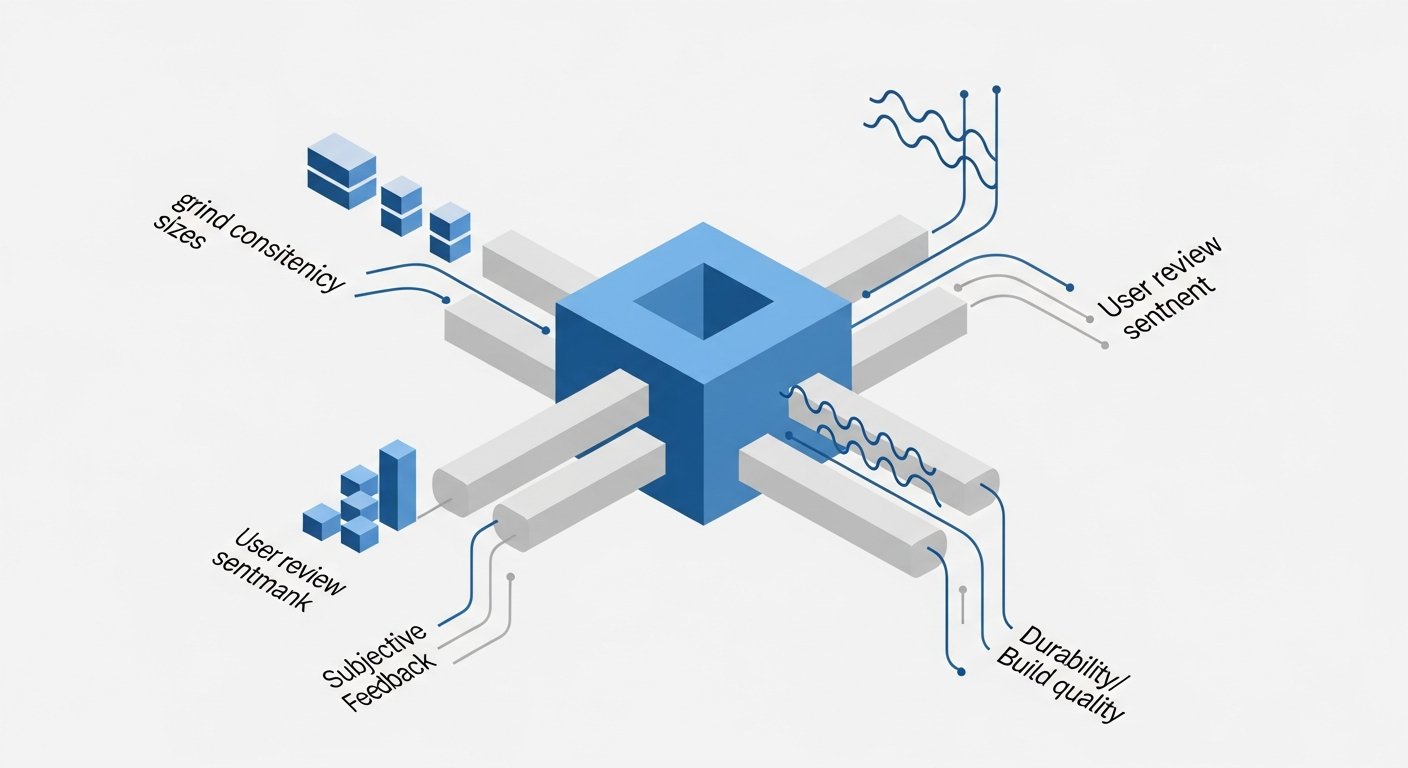
In the bustling environment of a professional café, the demands on an espresso grinder are significantly higher than those in a home setting. Speed, reliability, extreme durability, and consistent precision under high-volume conditions become paramount. Professional-grade grinders in 2026 reflect decades of engineering excellence, designed to withstand continuous operation and deliver perfect grounds for hundreds of shots daily. They are the workhorses that underpin the quality and efficiency of any successful coffee shop.
High-Volume Cafes: Speed and Reliability
For cafes that serve hundreds, or even thousands, of espresso-based drinks a day, grinders must excel in speed and unwavering reliability. Downtime due to grinder issues is simply not an option. These machines are built like tanks, featuring robust motors, oversized burrs (typically 64mm, 75mm, or even 83mm+), and heavy-duty components designed for continuous use. The focus here is on rapid grinding without compromising quality, ensuring a consistent workflow even during peak rush hours.
- Large Flat Burrs: Often found in these grinders, large flat burrs allow for very fast grinding speeds while maintaining a uniform particle distribution. The increased surface area of larger burrs can also contribute to a cooler grind.
- High Power Motors: Commercial grinders feature powerful, often fan-cooled motors to prevent overheating during prolonged operation.
- Durability and Serviceability: Components are designed to be easily accessible for cleaning, maintenance, and burr replacement, minimizing service time.
- Efficiency in Dosing: While many high-volume cafes still use grind-by-time, increasingly, models with integrated grind-by-weight technology are being adopted to eliminate waste and improve consistency across all baristas.
Examples might include grinder series known for their sheer power and throughput, capable of handling back-to-back shots without faltering. These are the unsung heroes behind your morning rush hour latte.
Specialty Coffee Bars: Precision and Flavor Profiling
Specialty coffee bars often prioritize ultimate precision and the ability to finely tune grind settings to extract the absolute best from exquisite, often expensive, single-origin coffees. While speed is still important, it’s often balanced with an emphasis on thermal stability, minimal retention, and unparalleled consistency to highlight nuanced flavor profiles. Many specialty cafes will employ multiple grinders – one for their house blend, and one or more for single origins or decaf, each dialed in to perfection.
- Advanced Burr Geometries: Beyond just size, these grinders often feature specific burr designs optimized for clarity, sweetness, or body, allowing baristas to fine-tune the flavor profile. “Red Speed” or similar treated burrs are common for extended sharpness and durability.
- Low Retention & Single Dosing: To minimize waste and ensure the freshest grounds for each shot, many specialty grinders feature very low retention designs, or are designed specifically for single dosing. This prevents stale coffee from contaminating subsequent shots, which is crucial when working with diverse and often costly beans.
- Temperature Stability: Minimizing heat transfer to the grounds is vital for preserving delicate aromatics. Advanced cooling systems, low RPM motors, and insulated grinding chambers are common features.
- Exceptional Grind Adjustment: Ultra-fine, repeatable stepless adjustments are standard, giving baristas ultimate control over extraction.
These grinders are the tools of choice for baristas who treat coffee as a craft, allowing them to explore the full spectrum of flavors locked within each bean. They are often larger, more sophisticated, and require a skilled hand to fully unlock their potential. The increasing trend for specialty coffee shops in 2026 is toward greater customization, sometimes even employing dedicated grinders for light, medium, and dark roasts.
Grinder Features for Commercial Environments
Beyond the core grind quality, commercial grinders incorporate several features tailored for the demands of a professional setting:
- Large Hoppers: To hold significant quantities of beans, reducing the frequency of refills during busy periods.
- Portafilter Holders: Robust and stable portafilter forks or hands-free holders that can withstand constant use and securely hold various portafilter sizes.
- Dosing Precision: From advanced timer-based dosing with multiple programmable presets to integrated scales, ensuring consistency across shifts and baristas.
- Durability and Longevity: Built with heavy-duty materials, industrial-grade motors, and burrs designed for extremely high volumes (e.g., 1,000kg+ burr life).
- Ease of Cleaning: Quick and easy access to burrs and grinding chambers for routine cleaning, critical for maintaining hygiene and preventing flavor contamination.
- Smart Features: Some 2026 models integrate connectivity for remote diagnostics, usage tracking, and firmware updates, enhancing operational efficiency.
Understanding these distinctions helps underscore why home users typically don’t need a grinder of commercial scale, but can still benefit immensely from the trickle-down technology and design philosophies that prioritize precision and consistency. The best commercial grinders are engineered to be reliable, powerful, and precise under the most demanding conditions, ensuring that every cup served meets the highest standards of quality.
[INLINE IMAGE 2: place after fourth H2 | alt=”best espresso grinder 2026 comparison illustration”]
Manual Espresso Grinders: The Ultimate Portability and Control
While the focus of this guide primarily revolves around electric grinders, it would be incomplete without acknowledging the resurgence and growing popularity of high-quality manual espresso grinders. For a certain segment of the coffee community, manual grinders represent the zenith of portability, simplicity, and often, an unexpected level of grind quality that rivals or even surpasses many electric options. In 2026, advancements in burr design and build quality have made manual grinders more effective and enjoyable to use than ever before.
When to Choose a Manual Grinder
A manual grinder isn’t for everyone, but it excels in specific scenarios:
- Portability: This is arguably the primary advantage. Manual grinders are compact, self-contained, and require no electricity, making them ideal for travel, camping, or brewing in remote locations. For the coffee enthusiast who wants to bring their high-quality espresso ritual wherever they go, a manual grinder is indispensable.
- Budget-Conscious Excellence: Dollar for dollar, a high-quality manual grinder can often provide a significantly better grind quality for espresso than an electric grinder at the same price point. The cost savings from not needing a motor, circuitry, and casing are invested directly into superior burr sets and precise adjustment mechanisms.
- Quiet Operation: Manual grinding is inherently quieter than electric grinding. This can be a huge benefit for early morning coffee rituals, avoiding disturbing others in the household.
- Single Dosing & Low Retention: Almost all manual grinders are designed for single dosing, meaning you only grind the exact amount of beans you need for each shot. This results in virtually zero retention and ensures every grind is fresh, maximizing flavor.
- Engagement and Ritual: For many, the act of manually grinding coffee is a meditative part of the brewing ritual. It offers a direct, tactile connection to the coffee-making process.
- Emergency Backup: Even if you primarily use an electric grinder, a quality manual grinder can serve as an excellent backup during power outages or for specific bean types where its unique grind profile might shine.
Top Manual Options for Espresso
Modern manual grinders for espresso have evolved significantly. Gone are the days of crude, inconsistent hand mills. Today’s best manual grinders feature large, sharp conical burrs (often made from hardened stainless steel or titanium-nitride coated steel), robust all-metal construction, and sophisticated stepless or micro-stepped adjustment systems that offer the fine-tuning necessary for espresso. When looking for the best espresso grinder 2026 in the manual category, consider these characteristics:
- High-Quality Burrs: Look for 38mm or 48mm conical burrs made from precision-machined stainless steel. The sharpness and geometry of the burrs are crucial for both grind quality and ease of grinding.
- Stepless or Fine-Stepped Adjustment: Espresso requires extremely precise adjustments. Many top manual grinders feature external adjustment rings with very fine threads, allowing for minute changes to the grind size.
- Stable Axle: A stable central axle is critical for maintaining burr alignment, which directly translates to grind consistency. Poor alignment leads to wobble and inconsistent grinds.
- Ergonomics: Grinding for espresso can require some effort. Look for models with comfortable grips, long handles, and smooth bearings to make the process as easy as possible.
- Build Materials: Stainless steel, aluminum, and sometimes high-quality plastics are common. All-metal construction often implies greater durability and stability.
Some prominent brands have established themselves as leaders in this space, consistently producing grinders capable of espresso-level fineness and consistency. While the physical effort is a consideration, the results from these high-performance manual grinders can be astounding, offering clarity and sweetness in the cup that rivals expensive electric models. They embody the spirit of craftsmanship and offer a unique, deeply satisfying coffee experience for those who appreciate the process as much as the product.
Maintenance and Longevity: Keeping Your Grinder in Top Shape

Investing in a high-quality espresso grinder in 2026 is just the first step; ensuring its longevity and consistent performance requires proper maintenance. Coffee beans contain oils that, over time, can build up on the burrs and grinding chamber, leading to clumping, reduced grind consistency, and even rancid flavors. Regular cleaning and attention to detail will protect your investment and ensure every shot tastes as good as the first.
Regular Cleaning Routines
A consistent cleaning regimen is crucial. There are two main types of cleaning:
- Daily/Weekly Cleaning (Hopper and Chute):
- Empty Hopper: Never leave beans in the hopper for extended periods, especially if not using the grinder daily. Light, air, and humidity will stale them quickly.
- Wipe Down: Use a dry cloth to wipe down the inside of the hopper and any external surfaces to remove coffee dust and oil.
- Purge: After adjusting grind settings or if the grinder has been sitting for a while, grind a small amount (2-5g) of beans to clear out any stale grounds from the chute.
- Brush Chute: Use a stiff brush or a specialized grinder brush to dislodge any grounds stuck in the exit chute. Some grinders come with these tools.
- Monthly/Quarterly Deep Cleaning (Burrs and Chamber):
- Disassemble: Crucially, always unplug your grinder before attempting a deep clean. Consult your grinder’s manual for specific disassembly instructions. Most grinders allow for easy removal of the upper burr.
- Brush & Vacuum: Use a stiff brush (a dedicated grinder brush or an old toothbrush) to brush away all caked-on coffee dust and oils from both burrs and the grinding chamber. A small vacuum cleaner attachment can be very effective at removing stubborn particles.
- Grinder Cleaning Tablets (Optional): Specialized tablets (like Urnex Grindz) can be run through the grinder. These food-safe, flavorless pellets absorb coffee oils and help dislodge old grounds. Follow product instructions carefully. They are not a substitute for mechanical brushing but can supplement it.
- Reassemble: Carefully reassemble the grinder, ensuring the burrs are properly seated and the adjustment mechanism is aligned.
- Re-dial: After a deep clean, you will almost certainly need to re-dial your espresso grind settings as removing old coffee residue can change the burr spacing slightly.
Frequency of deep cleaning depends on usage: a daily home user might do it monthly, while an occasional user might extend it to quarterly. High-volume commercial settings will often clean daily or weekly.
Burr Replacement and Calibration
Burrs are wear-and-tear items and will eventually dull, impacting grind consistency. The lifespan of burrs varies widely based on material, size, and usage:
- Home Grinders: Steel burrs for home use might last for 200-500kg of coffee.
- Commercial Grinders: Larger, hardened steel burrs can last for 500-1,500kg (or even more for some specialized burrs).
Signs your burrs need replacement:
- Noticeable increase in grinding time.
- Increased clumping or static.
- Inconsistent shots despite careful dialing in.
- A “squealing” sound during grinding.
- Visual inspection reveals dull edges or chipped teeth on the burrs.
Replacement Process:
Consult your grinder’s manual for burr replacement instructions. It typically involves removing the old burrs and carefully installing new ones, often requiring specific tools.
Calibration:
After replacing burrs or sometimes after a deep clean, your grinder might need to be recalibrated, especially if it has a stepless adjustment or a zero-point indicator. This ensures that the finest setting is truly as fine as the burrs allow without touching, and that your grind scale is accurate. Again, refer to your grinder’s manual for specific calibration procedures.
Troubleshooting Common Grinder Issues
- Clumping/Static: Often a sign of oily burrs (clean them!) or very fresh/dark roast beans. A light spritz of water on the beans (RDT – Ross Droplet Technique) can sometimes help with static.
- Grinder Stalling/Choking: Usually indicates the grind setting is too fine, especially with very dense or light roast beans. Try a slightly coarser setting. It could also indicate a motor issue or a jam from a foreign object.
- Inconsistent Shots: The most common culprit is inconsistent grind. Check for burr dullness, cleaning needs, or burr alignment issues. Ensure your grind adjustment is truly stepless and precise enough for espresso.
- Beans Not Feeding: Can be due to “popcorning” with a low hopper, very oily beans, or a foreign object blocking the feed.
Regular, diligent maintenance is not just about extending the life of your best espresso grinder 2026; it’s about preserving the integrity
The Best Espresso Grinder 2026: Unlocking Peak Flavor for Your Home Café
Affiliate disclosure: This article may contain affiliate links. Recommendations are independent and editorially driven.
For any serious coffee enthusiast, especially those captivated by the rich, complex world of espresso, the grinder stands as the undisputed heart of the brewing setup. It’s a bold statement, but one echoed by baristas and coffee scientists worldwide: the quality of your grind dictates the quality of your espresso shot more profoundly than almost any other variable. As we move through 2026, the technology behind espresso grinders continues to evolve, offering unparalleled precision, consistency, and user experience for both home baristas and professional cafés alike. This comprehensive guide from cafeserre is designed to navigate you through the intricate landscape of espresso grinders, helping you identify the best espresso grinder 2026 that perfectly matches your needs, budget, and aspirations for the ultimate coffee experience.
Forget the notion that a high-end espresso machine alone guarantees perfection. Without a grinder capable of delivering a uniform, precisely sized coffee particle, even the most advanced machine will struggle to produce a balanced, flavorful shot. Espresso, by its very nature, demands an incredibly fine, consistent grind to achieve the rapid, high-pressure extraction that defines it. Any inconsistency – be it too coarse, too fine, or varying particle sizes – leads to uneven extraction, resulting in shots that are either sour and under-extracted or bitter and over-extracted, often simultaneously. Our mission is to empower you with the knowledge to make an informed decision, ensuring every espresso you pull is a testament to flavor and craftsmanship.
In the following sections, we will delve into the critical aspects of espresso grinder technology. We’ll explore why the grinder is so paramount, dissect the different types of burrs and their impact on flavor, analyze various adjustment mechanisms, and highlight key features that distinguish the top contenders in 2026. Whether you’re a seasoned home barista looking to upgrade, a budding enthusiast embarking on your espresso journey, or a professional seeking insights into the latest innovations, this guide offers invaluable perspectives. Prepare to elevate your espresso game as we uncover the true significance of the grind and help you find the cornerstone of your perfect coffee ritual.
Why Your Grinder is More Important Than Your Espresso Machine
It’s a common misconception among newcomers to the espresso world: the machine is everything. While a high-quality espresso machine is undoubtedly crucial for brewing, it merely serves as the delivery system. The true magic, the foundation of every exceptional espresso shot, lies in the grinder. This often-underestimated component dictates the particle size and uniformity of your coffee grounds, which directly impacts the extraction process and, ultimately, the flavor profile in your cup. In 2026, with all the advancements in brewing technology, the grinder’s role remains preeminent.
The Science of Grind Size and Extraction
Espresso is a unique brewing method characterized by forcing hot, pressurized water through a compacted puck of finely ground coffee. The goal is to dissolve desirable flavor compounds from the coffee particles while leaving behind bitter, undesirable ones. The surface area of the coffee grounds exposed to water is paramount here. If the grind is too coarse, water flows too quickly through the puck, resulting in under-extraction. This leads to a thin, watery shot that tastes sour, salty, and lacks body. The desirable sugars and aromatics simply don’t have enough time to dissolve.
Conversely, if the grind is too fine, water struggles to penetrate the tightly packed grounds. This causes over-extraction, leading to a shot that extracts too many bitter compounds, resulting in an acrid, astringent, and often tarry taste. The flow will be restricted, resulting in a very slow, dripping extraction or even a complete choke of the machine. The perfect espresso grind finds that delicate balance, allowing for optimal flow resistance and a complete, even extraction within the ideal time frame (typically 25-35 seconds for a double shot). This precision is impossible without a dedicated, high-quality espresso grinder.
Consistency is King: Why Finer Control Matters
Beyond just the average particle size, the consistency of the grind is perhaps even more critical. A grinder that produces a wide distribution of particle sizes—some very fine “fines” and some larger “boulders”—will lead to highly uneven extraction. The fines will over-extract quickly, contributing bitterness, while the boulders will under-extract, contributing sourness. This results in a muddled, unbalanced, and unpleasant shot that exhibits both undesirable characteristics simultaneously.
A superior espresso grinder, the kind we’re seeking in 2026, excels at producing a tight, uniform particle distribution. This “monomodal” grind allows for all coffee particles to extract at a similar rate, leading to a balanced, sweet, and complex espresso shot. The ability to make minute, precise adjustments to this grind size is also non-negotiable for espresso. Even small changes in humidity, bean age, or roast level can necessitate tiny grind adjustments to maintain optimal extraction. A grinder that offers a wide range of highly granular adjustments empowers the barista to “dial in” their espresso, achieving perfection shot after shot. Without this precision, you’re constantly fighting an uphill battle, trying to compensate for an inconsistent foundation with brewing parameters that can only do so much.
[INLINE IMAGE 1: place after second H2 | alt=”best espresso grinder 2026 concept illustration”]
Key Factors to Consider When Choosing the Best Espresso Grinder in 2026
Selecting the right espresso grinder is a nuanced decision, influenced by various technical specifications, practical considerations, and personal preferences. As you embark on your search for the best espresso grinder 2026, understanding these key factors will empower you to make an informed choice that will serve your coffee journey for years to come.
Burr Type: Conical vs. Flat
The burrs are the heart of any grinder, responsible for breaking down coffee beans into fine particles. There are two primary types:
- Conical Burrs: These consist of two cone-shaped burrs, one fitting inside the other. Coffee beans are fed through the top and ground as they pass between the rotating burrs.
- Pros: Generally produce a bimodal grind distribution (a peak of fines and a peak of coarser particles), which many argue creates a richer, fuller-bodied espresso with more pronounced chocolatey notes. They tend to be quieter, rotate at lower RPMs, generate less heat, and are often more forgiving with grind settings. Conical burrs can also be more efficient with power.
- Cons: Some argue they can produce a slightly less “clean” or “clear” flavor profile compared to flat burrs due to the bimodal distribution.
- Flat Burrs: These feature two parallel rings of burrs, with the coffee passing horizontally between them.
- Pros: Tend to produce a more unimodal grind distribution, resulting in a cleaner, brighter, and often sweeter espresso shot that highlights more delicate floral and fruity notes. They are favored by many specialty coffee shops for their clarity of flavor.
- Cons: Can be louder, operate at higher RPMs, and potentially generate more heat, though many modern flat burr grinders have mitigated heat issues. They can sometimes be less forgiving to dial in, requiring more precise adjustments.
The choice between conical and flat burrs often comes down to personal taste preference and the type of coffee you typically brew. Neither is inherently “better,” but they offer different flavor profiles.
Grind Adjustment: Stepped vs. Stepless
The mechanism by which you adjust your grind size is critical for espresso:
- Stepped Adjustment: Grinders with stepped adjustments have preset detents or “steps” that click into place. Each click changes the grind size by a fixed increment.
- Pros: Easy to repeat settings, great for switching between brew methods, often simpler to use for beginners.
- Cons: The fixed steps might not offer the minute precision required to perfectly dial in an espresso shot. You might find yourself between two steps – one too fine, one too coarse.
- Stepless Adjustment: These grinders allow for infinite adjustments between the finest and coarsest settings, without any fixed stops.
- Pros: Offers unparalleled precision, essential for perfectly dialing in espresso. Allows for tiny, incremental changes that can make the difference between a good shot and a great one.
- Cons: Can be harder to repeat exact settings without visual indicators or external marking. There’s a steeper learning curve for beginners.
For espresso, stepless adjustment is almost always preferred due to the extreme sensitivity of espresso extraction to grind size.
Dosing Mechanisms: On-Demand vs. Doser
How the ground coffee is dispensed also varies:
- On-Demand (Grind-by-Weight or Grind-by-Time): The grinder dispenses coffee directly into your portafilter as needed.
- Grind-by-Weight: Uses a built-in scale to grind a precise weight of coffee (e.g., 18g) every time. This is the gold standard for consistency and minimizing waste.
- Grind-by-Time: Grinds for a set duration. While less precise than grind-by-weight (as bean density can vary), it’s still highly effective for freshness and reduces retention.
Pros: Ensures fresh grounds for every shot, minimizes waste, excellent for single dosing. Dominant in 2026 for home and many specialty commercial setups.
Cons: Can be slower if you need multiple shots in rapid succession (though modern on-demand grinders are very fast).
- Doser (Hopper/Chute with Lever): Grinds coffee into an internal chamber (doser) with multiple compartments or “slices.” A lever dispenses a measured “dose” (often 6-7g) of coffee with each pull.
- Pros: Fast for high-volume environments, allowing baristas to pre-grind a small batch.
- Cons: Ground coffee sits in the doser, exposing it to air and causing it to stale quickly. Less precise dosing than grind-by-weight systems. Less common for home use in 2026.
For home espresso, on-demand (especially grind-by-weight) is overwhelmingly recommended for freshness and consistency.
Motor Power and RPM
The motor drives the burrs. A powerful motor ensures the burrs can grind beans smoothly and efficiently without stalling, especially with dense, light roast beans. Lower RPM (revolutions per minute) motors are often preferred for espresso grinders:
- Pros of Lower RPM: Less heat generation (preserving coffee aromatics), quieter operation, and potentially better grind consistency by reducing static and “popcorning” of beans in the hopper.
- Cons of Lower RPM: Can be slower grinding, but this is often a trade-off worth making for quality.
Many high-end espresso grinders in 2026 feature powerful motors with gear reduction systems to achieve optimal low RPM grinding.
Build Quality and Durability
An espresso grinder is an investment, and its longevity depends heavily on its construction. Look for:
- Metal Construction: Heavy-duty metal casings (stainless steel, aluminum) are more durable and stable than plastic.
- Commercial-Grade Burrs: Larger, more robust burrs (often 50mm+ for home grinders, 60mm+ for commercial) made from hardened steel or ceramic last longer and stay sharp.
- Accessible Design: Ease of cleaning and maintenance contributes to durability. Being able to access burrs for cleaning without losing your grind setting is a huge plus.
Noise Level and Countertop Footprint
These are practical considerations for home users:
- Noise: Espresso grinding is inherently noisy, but some grinders are significantly quieter than others. If you live in a shared space or value morning tranquility, check reviews for noise levels.
- Footprint: Consider your kitchen counter space. Some high-performance grinders can be quite large, while others are designed to be compact without sacrificing quality.
Price vs. Performance: Setting Your Budget
Espresso grinders range from a few hundred dollars to several thousands. Generally, you get what you pay for in terms of grind quality, consistency, durability, and features. Set a realistic budget, but understand that this is the one piece of equipment where skimping will have the most significant negative impact on your espresso. Prioritize the grinder over the machine if budget is tight.
Investing in a quality espresso grinder is a commitment to consistently excellent coffee. By carefully evaluating these factors in 2026, you can select a grinder that will be the cornerstone of your brewing setup.
Top Contenders: The Best Espresso Grinders for Home Baristas 2026
The home espresso landscape in 2026 is rich with innovation, offering a spectrum of grinders that cater to every level of barista, from the enthusiastic beginner to the seasoned connoisseur. Our selection focuses on models that consistently deliver the precision, consistency, and user experience necessary for truly exceptional espresso. While specific models may see minor iterations, the core technologies and design philosophies remain relevant.
Premium Picks for the Discerning Enthusiast
For those who refuse to compromise on quality and are willing to invest in the very best, these grinders represent the pinnacle of home espresso grinding. They offer commercial-grade performance, often incorporating advanced features like grind-by-weight technology, extremely low retention, and robust construction designed for years of reliable service.
- Option A (High-End Single Dose, Conical): This category is dominated by grinders known for their exceptional grind quality, minimal retention, and often single-dosing workflow. They are prized for their ability to allow users to switch between different beans easily without wasting coffee. Expect powerful, quiet motors and intuitive controls, often featuring stepless grind adjustment for ultimate precision.
- Option B (High-End On-Demand, Flat): Representing the best of flat burr technology for home use, these grinders deliver incredible clarity and sweetness in the cup. Many feature grind-by-weight systems that ensure exact dosing, eliminating the need for external scales. Their robust build and high-performance burrs make them a favorite for those seeking café-level performance at home.
These premium grinders are investments that will unlock the full potential of your coffee beans, delivering unparalleled flavor and consistency. They are designed for the barista who wants to explore every nuance of their espresso.
Mid-Range Marvels: Balancing Value and Performance
The mid-range segment offers an excellent balance of performance, features, and affordability. These grinders typically provide stepless adjustment, good quality burrs, and reliable motors, making them perfect for dedicated home baristas looking to upgrade from entry-level options without breaking the bank. They often offer a significant leap in grind consistency and user experience compared to their budget counterparts.
- Option C (Popular Mid-Range, Flat): Known for its reliability and excellent flat burr grind quality, this type of grinder often comes with easy-to-use digital interfaces and timer-based dosing. It’s a workhorse for many home setups, providing clean and bright espresso shots.
- Option D (Feature-Rich Mid-Range, Conical): This class of grinder often focuses on innovative features like integrated scales for grind-by-weight functionality, simplifying the espresso workflow dramatically. With precise conical burrs, they deliver rich, full-bodied espresso and are highly recommended for their ease of use and consistent results.
Grinders in this category are often the sweet spot for many home users, providing substantial improvements in shot quality and consistency over more basic models, while still remaining within a reasonable budget. They are perfectly capable of supporting high-quality espresso machines.
Entry-Level Excellence: Starting Your Espresso Journey Right
For those new to the world of home espresso, or with a tighter budget, these grinders offer a solid foundation without compromising on the essential requirements for espresso. While they may not have all the bells and whistles of their premium counterparts, they provide adequate grind consistency and adjustment capabilities to pull respectable shots. The key here is to choose a grinder that is specifically designed for espresso, even at this price point, and avoids the pitfalls of multi-purpose or blade grinders.
- Option E (Solid Entry-Level, Conical): Often praised for its robust build and reliable conical burrs, this grinder typically offers stepped but micro-adjustable settings that are fine enough for espresso. It’s a great choice for those just starting out and learning the ropes, proving that good espresso doesn’t always require an enormous investment initially.
- Option F (Compact Entry-Level, Flat): Some smaller, more compact flat burr options have emerged, offering decent grind quality for their size and price. They often feature simple timer-based dosing and a relatively small footprint, ideal for limited counter space.
It’s important to remember that even an entry-level espresso grinder will outperform any non-espresso specific grinder. Investing in one of these options ensures you’re starting your espresso journey on the right foot, with room to grow and upgrade in the future.
When selecting your grinder, consider your daily routine, the types of beans you prefer, and your willingness to experiment. The ideal grinder will blend seamlessly into your coffee ritual and consistently deliver the precision needed for exquisite espresso.
| Grinder Category/Type | Burr Type & Material | Grind Adjustment | Dosing Mechanism | Key Features & Strengths | Typical Price Range (USD) |
|---|---|---|---|---|---|
| Premium Single-Dose (e.g., Niche Zero/Duo category) | Conical or Flat Steel | Stepless (External) | Single Dose (Low Retention) | Exceptional grind quality, minimal retention, compact, quiet, intuitive workflow for bean swapping. | $600 – $1,200+ |
| Premium On-Demand (e.g., Eureka Mignon XL/Atom category) | Flat Steel (Large Diameter) | Stepless (Micrometric) | Grind-by-Time/Weight | High-speed grinding, superb grind consistency, often quiet, robust build, ideal for consistent daily use. | $800 – $1,500+ |
| Mid-Range Grind-by-Weight (e.g., Baratza Sette 270Wi category) | Conical Steel | Stepless (Macro/Micro) | Integrated Scale (Grind-by-Weight) | Groundbreaking grind-by-weight precision, fast, minimal retention, excellent for home use. | $500 – $700 |
| Mid-Range Compact (e.g., Eureka Mignon Specialita category) | Flat Steel | Stepless (Micrometric) | Grind-by-Time (Digital) | Compact size, quiet operation, excellent grind quality for its class, touchscreen controls. | $400 – $600 |
| Entry-Level Dedicated (e.g., Baratza Encore ESP/Rancilio Rocky category) | Conical or Flat Steel | Stepped (with Micro-adjustments) | On-Demand (Manual/Timer) | Reliable performance for the price, durable build, good consistency for beginners, easy to use. | $200 – $400 |
Professional-Grade Grinders: What the Pros Use in 2026
In the bustling environment of a professional café, the demands on an espresso grinder are significantly higher than those in a home setting. Speed, reliability, extreme durability, and consistent precision under high-volume conditions become paramount. Professional-grade grinders in 2026 reflect decades of engineering excellence, designed to withstand continuous operation and deliver perfect grounds for hundreds of shots daily. They are the workhorses that underpin the quality and efficiency of any successful coffee shop.
High-Volume Cafes: Speed and Reliability
For cafes that serve hundreds, or even thousands, of espresso-based drinks a day, grinders must excel in speed and unwavering reliability. Downtime due to grinder issues is simply not an option. These machines are built like tanks, featuring robust motors, oversized burrs (typically 64mm, 75mm, or even 83mm+), and heavy-duty components designed for continuous use. The focus here is on rapid grinding without compromising quality, ensuring a consistent workflow even during peak rush hours.
- Large Flat Burrs: Often found in these grinders, large flat burrs allow for very fast grinding speeds while maintaining a uniform particle distribution. The increased surface area of larger burrs can also contribute to a cooler grind.
- High Power Motors: Commercial grinders feature powerful, often fan-cooled motors to prevent overheating during prolonged operation.
- Durability and Serviceability: Components are designed to be easily accessible for cleaning, maintenance, and burr replacement, minimizing service time.
- Efficiency in Dosing: While many high-volume cafes still use grind-by-time, increasingly, models with integrated grind-by-weight technology are being adopted to eliminate waste and improve consistency across all baristas.
Examples might include grinder series known for their sheer power and throughput, capable of handling back-to-back shots without faltering. These are the unsung heroes behind your morning rush hour latte.
Specialty Coffee Bars: Precision and Flavor Profiling
Specialty coffee bars often prioritize ultimate precision and the ability to finely tune grind settings to extract the absolute best from exquisite, often expensive, single-origin coffees. While speed is still important, it’s often balanced with an emphasis on thermal stability, minimal retention, and unparalleled consistency to highlight nuanced flavor profiles. Many specialty cafes will employ multiple grinders – one for their house blend, and one or more for single origins or decaf, each dialed in to perfection.
- Advanced Burr Geometries: Beyond just size, these grinders often feature specific burr designs optimized for clarity, sweetness, or body, allowing baristas to fine-tune the flavor profile. “Red Speed” or similar treated burrs are common for extended sharpness and durability.
- Low Retention & Single Dosing: To minimize waste and ensure the freshest grounds for each shot, many specialty grinders feature very low retention designs, or are designed specifically for single dosing. This prevents stale coffee from contaminating subsequent shots, which is crucial when working with diverse and often costly beans.
- Temperature Stability: Minimizing heat transfer to the grounds is vital for preserving delicate aromatics. Advanced cooling systems, low RPM motors, and insulated grinding chambers are common features.
- Exceptional Grind Adjustment: Ultra-fine, repeatable stepless adjustments are standard, giving baristas ultimate control over extraction.
These grinders are the tools of choice for baristas who treat coffee as a craft, allowing them to explore the full spectrum of flavors locked within each bean. They are often larger, more sophisticated, and require a skilled hand to fully unlock their potential. The increasing trend for specialty coffee shops in 2026 is toward greater customization, sometimes even employing dedicated grinders for light, medium, and dark roasts.
Grinder Features for Commercial Environments
Beyond the core grind quality, commercial grinders incorporate several features tailored for the demands of a professional setting:
- Large Hoppers: To hold significant quantities of beans, reducing the frequency of refills during busy periods.
- Portafilter Holders: Robust and stable portafilter forks or hands-free holders that can withstand constant use and securely hold various portafilter sizes.
- Dosing Precision: From advanced timer-based dosing with multiple programmable presets to integrated scales, ensuring consistency across shifts and baristas.
- Durability and Longevity: Built with heavy-duty materials, industrial-grade motors, and burrs designed for extremely high volumes (e.g., 1,000kg+ burr life).
- Ease of Cleaning: Quick and easy access to burrs and grinding chambers for routine cleaning, critical for maintaining hygiene and preventing flavor contamination.
- Smart Features: Some 2026 models integrate connectivity for remote diagnostics, usage tracking, and firmware updates, enhancing operational efficiency.
Understanding these distinctions helps underscore why home users typically don’t need a grinder of commercial scale, but can still benefit immensely from the trickle-down technology and design philosophies that prioritize precision and consistency. The best commercial grinders are engineered to be reliable, powerful, and precise under the most demanding conditions, ensuring that every cup served meets the highest standards of quality.
[INLINE IMAGE 2: place after fourth H2 | alt=”best espresso grinder 2026 comparison illustration”]
Manual Espresso Grinders: The Ultimate Portability and Control
While the focus of this guide primarily revolves around electric grinders, it would be incomplete without acknowledging the resurgence and growing popularity of high-quality manual espresso grinders. For a certain segment of the coffee community, manual grinders represent the zenith of portability, simplicity, and often, an unexpected level of grind quality that rivals or even surpasses many electric options. In 2026, advancements in burr design and build quality have made manual grinders more effective and enjoyable to use than ever before.
When to Choose a Manual Grinder
A manual grinder isn’t for everyone, but it excels in specific scenarios:
- Portability: This is arguably the primary advantage. Manual grinders are compact, self-contained, and require no electricity, making them ideal for travel, camping, or brewing in remote locations. For the coffee enthusiast who wants to bring their high-quality espresso ritual wherever they go, a manual grinder is indispensable.
- Budget-Conscious Excellence: Dollar for dollar, a high-quality manual grinder can often provide a significantly better grind quality for espresso than an electric grinder at the same price point. The cost savings from not needing a motor, circuitry, and casing are invested directly into superior burr sets and precise adjustment mechanisms.
- Quiet Operation: Manual grinding is inherently quieter than electric grinding. This can be a huge benefit for early morning coffee rituals, avoiding disturbing others in the household.
- Single Dosing & Low Retention: Almost all manual grinders are designed for single dosing, meaning you only grind the exact amount of beans you need for each shot. This results in virtually zero retention and ensures every grind is fresh, maximizing flavor.
- Engagement and Ritual: For many, the act of manually grinding coffee is a meditative part of the brewing ritual. It offers a direct, tactile connection to the coffee-making process.
- Emergency Backup: Even if you primarily use an electric grinder, a quality manual grinder can serve as an excellent backup during power outages or for specific bean types where its unique grind profile might shine.
Top Manual Options for Espresso
Modern manual grinders for espresso have evolved significantly. Gone are the days of crude, inconsistent hand mills. Today’s best manual grinders feature large, sharp conical burrs (often made from hardened stainless steel or titanium-nitride coated steel), robust all-metal construction, and sophisticated stepless or micro-stepped adjustment systems that offer the fine-tuning necessary for espresso. When looking for the best espresso grinder 2026 in the manual category, consider these characteristics:
- High-Quality Burrs: Look for 38mm or 48mm conical burrs made from precision-machined stainless steel. The sharpness and geometry of the burrs are crucial for both grind quality and ease of grinding.
- Stepless or Fine-Stepped Adjustment: Espresso requires extremely precise adjustments. Many top manual grinders feature external adjustment rings with very fine threads, allowing for minute changes to the grind size.
- Stable Axle: A stable central axle is critical for maintaining burr alignment, which directly translates to grind consistency. Poor alignment leads to wobble and inconsistent grinds.
- Ergonomics: Grinding for espresso can require some effort. Look for models with comfortable grips, long handles, and smooth bearings to make the process as easy as possible.
- Build Materials: Stainless steel, aluminum, and sometimes high-quality plastics are common. All-metal construction often implies greater durability and stability.
Some prominent brands have established themselves as leaders in this space, consistently producing grinders capable of espresso-level fineness and consistency. While the physical effort is a consideration, the results from these high-performance manual grinders can be astounding, offering clarity and sweetness in the cup that rivals expensive electric models. They embody the spirit of craftsmanship and offer a unique, deeply satisfying coffee experience for those who appreciate the process as much as the product.
Maintenance and Longevity: Keeping Your Grinder in Top Shape
Investing in a high-quality espresso grinder in 2026 is just the first step; ensuring its longevity and consistent performance requires proper maintenance. Coffee beans contain oils that, over time, can build up on the burrs and grinding chamber, leading to clumping, reduced grind consistency, and even rancid flavors. Regular cleaning and attention to detail will protect your investment and ensure every shot tastes as good as the first.
Regular Cleaning Routines
A consistent cleaning regimen is crucial. There are two main types of cleaning:
- Daily/Weekly Cleaning (Hopper and Chute):
- Empty Hopper: Never leave beans in the hopper for extended periods, especially if not using the grinder daily. Light, air, and humidity will stale them quickly.
- Wipe Down: Use a dry cloth to wipe down the inside of the hopper and any external surfaces to remove coffee dust and oil.
- Purge: After adjusting grind settings or if the grinder has been sitting for a while, grind a small amount (2-5g) of beans to clear out any stale grounds from the chute.
- Brush Chute: Use a stiff brush or a specialized grinder brush to dislodge any grounds stuck in the exit chute. Some grinders come with these tools.
- Monthly/Quarterly Deep Cleaning (Burrs and Chamber):
- Disassemble: Crucially, always unplug your grinder before attempting a deep clean. Consult your grinder’s manual for specific disassembly instructions. Most grinders allow for easy removal of the upper burr.
- Brush & Vacuum: Use a stiff brush (a dedicated grinder brush or an old toothbrush) to brush away all caked-on coffee dust and oils from both burrs and the grinding chamber. A small vacuum cleaner attachment can be very effective at removing stubborn particles.
- Grinder Cleaning Tablets (Optional): Specialized tablets (like Urnex Grindz) can be run through the grinder. These food-safe, flavorless pellets absorb coffee oils and help dislodge old grounds. Follow product instructions carefully. They are not a substitute for mechanical brushing but can supplement it.
- Reassemble: Carefully reassemble the grinder, ensuring the burrs are properly seated and the adjustment mechanism is aligned.
- Re-dial: After a deep clean, you will almost certainly need to re-dial your espresso grind settings as removing old coffee residue can change the burr spacing slightly.
Frequency of deep cleaning depends on usage: a daily home user might do it monthly, while an occasional user might extend it to quarterly. High-volume commercial settings will often clean daily or weekly.
Burr Replacement and Calibration
Burrs are wear-and-tear items and will eventually dull, impacting grind consistency. The lifespan of burrs varies widely based on material, size, and usage:
- Home Grinders: Steel burrs for home use might last for 200-500kg of coffee.
- Commercial Grinders: Larger, hardened steel burrs can last for 500-1,500kg (or even more for some specialized burrs).
Signs your burrs need replacement:
- Noticeable increase in grinding time.
- Increased clumping or static.
- Inconsistent shots despite careful dialing in.
- A “squealing” sound during grinding.
- Visual inspection reveals dull edges or chipped teeth on the burrs.
Replacement Process:
Consult your grinder’s manual for burr replacement instructions. It typically involves removing the old burrs and carefully installing new ones, often requiring specific tools.
Calibration:
After replacing burrs or sometimes after a deep clean, your grinder might need to be recalibrated, especially if it has a stepless adjustment or a zero-point indicator. This ensures that the finest setting is truly as fine as the burrs allow without touching, and that your grind scale is accurate. Again, refer to your grinder’s manual for specific calibration procedures.
Troubleshooting Common Grinder Issues
- Clumping/Static: Often a sign of oily burrs (clean them!) or very fresh/dark roast beans. A light spritz of water on the beans (RDT – Ross Droplet Technique) can sometimes help with static.
- Grinder Stalling/Choking: Usually indicates the grind setting is too fine, especially with very dense or light roast beans. Try a slightly coarser setting. It could also indicate a motor issue or a jam from a foreign object.
- Inconsistent Shots: The most common culprit is inconsistent grind. Check for burr dullness, cleaning needs, or burr alignment issues. Ensure your grind adjustment is truly stepless and precise enough for espresso.
- Beans Not Feeding: Can be due to “popcorning” with a low hopper, very oily beans, or a foreign object blocking the feed.
Regular, diligent maintenance is not just about extending the life of your best espresso grinder 2026; it’s about preserving the integrity