


The Ultimate Coffee Grind Size Guide: Mastering Extraction for Your Perfect Cup
Affiliate disclosure: This article may contain affiliate links. Recommendations are independent and editorially driven.
For many coffee enthusiasts, the journey to a truly exceptional cup often begins with the beans and the brewing method. However, a critical, often overlooked, and immensely powerful variable in this alchemy is the coffee grind size. It’s not merely a step in the process; it’s the foundational element that dictates how water interacts with coffee, ultimately shaping the flavor profile, body, and aroma of your final brew. At cafeserre, we believe that understanding and mastering the coffee grind size guide is paramount to elevating your daily ritual from good to extraordinary.
Imagine two seemingly identical cups of coffee, brewed from the same beans, using the same water and ratio. Yet, one is vibrant, complex, and sweet, while the other is either shockingly sour or intensely bitter. The most likely culprit? An incorrect grind size. This guide will demystify the intricate relationship between grind size and extraction, providing you with the knowledge and tools to consistently achieve brewing perfection, no matter your preferred method.
From the fine, powdery consistency required for a robust shot of espresso to the coarse, chunky grounds ideal for a smooth, low-acid cold brew, every brewing technique demands a specific grind. Deviate from this precise calibration, and you risk under-extraction, leaving your coffee weak and underdeveloped, or over-extraction, resulting in a harsh, acrid taste. This isn’t just about avoiding bad coffee; it’s about unlocking the full potential of your beans, highlighting their unique characteristics, and consistently delivering a cup that delights your senses.
Join us as we dive deep into the world of coffee grind sizes, exploring the science, the art, and the practical application of this fundamental variable. Whether you’re a seasoned home barista or just beginning your coffee journey, this comprehensive guide will equip you with the expertise to transform your brewing experience and ensure every sip is nothing short of magnificent.
The Fundamental Role of Grind Size in Coffee Extraction
At the heart of every delicious cup of coffee lies the process of extraction. This is where hot water dissolves soluble compounds—acids, sugars, oils, and other flavorful elements—from the ground coffee beans. The goal is to extract the right amount of these compounds to achieve a balanced, pleasant flavor profile. Too little, and your coffee will taste underdeveloped; too much, and it will be harsh and unappealing. The single most influential factor governing the rate and efficiency of this extraction is the grind size.
Consider the humble coffee bean. When whole, its surface area is minimal, and water struggles to penetrate its dense structure. Grinding the bean increases its surface area exponentially, exposing more of the interior to water. However, the degree to which this surface area is increased, and how uniformly, is entirely dependent on the fineness of the grind. This concept is crucial for understanding why a specific grind size is tailored to a specific brewing method.
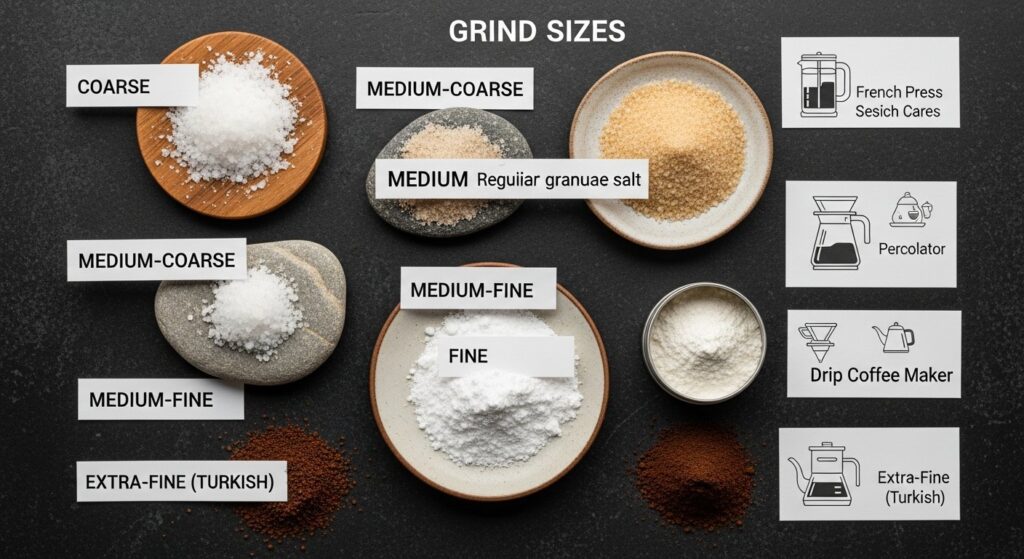
A coarser grind, resembling chunky sea salt, offers less surface area for water to interact with. This means water will pass through the coffee bed relatively quickly, and the extraction will be slower. Conversely, a finer grind, like powdered sugar, presents a massive surface area. Water will permeate these grounds more slowly, and extraction will occur much more rapidly. The challenge, and the art, lie in matching this rate of extraction to the brewing method’s contact time and water flow dynamics.
The Science of Extraction: Surface Area and Water Contact
Understanding the science behind grind size begins with the concept of surface area. When coffee beans are ground, their internal structure is fractured, exposing myriad cellular components to the brewing water. The finer the grind, the more minuscule these particles become, and consequently, the greater the cumulative surface area available for water to interact with. This is not a linear relationship; even a slight adjustment in grind fineness can dramatically alter the total surface area.
Water acts as a solvent, seeking out and dissolving the desirable compounds within the coffee particles. With a larger exposed surface area (finer grind), water can access these compounds more quickly and efficiently. This rapid dissolution is ideal for brewing methods that involve short contact times or high pressure, such as espresso, where water is forced through a tightly packed bed of fine grounds in a matter of seconds. The fine particles create resistance, slowing the water flow and increasing the contact time with the immense surface area, facilitating a rapid yet thorough extraction.
Conversely, a coarser grind offers less surface area. This means that if water were to pass through coarse grounds too quickly, there wouldn’t be enough time for sufficient extraction to occur. Therefore, coarse grinds are paired with brewing methods that allow for extended contact times, like the French Press or cold brew. In these methods, the coffee and water steep together for several minutes or even hours, compensating for the reduced surface area with prolonged exposure. The larger particles also create less resistance, preventing the coffee bed from becoming clogged and allowing for an even flow or steeping.
Furthermore, grind size also impacts the flow rate of water through the coffee bed. Finer grinds create more resistance, slowing down the water. Coarser grinds allow water to pass through more freely. This interplay between surface area, contact time, and flow rate is what brewers manipulate to achieve optimal extraction. An ideal extraction yields a balance of desirable acids, sweetness, and bitterness, without the unpleasant notes of either under-extraction or over-extraction.
Over-extraction vs. Under-extraction: The Flavor Spectrum
The “sweet spot” of coffee extraction is a narrow window where the perfect balance of soluble compounds has been dissolved into your brew. Stray outside this window, and you enter the realm of either under-extraction or over-extraction, both of which result in a less-than-ideal cup.
Under-extraction occurs when not enough soluble compounds have been dissolved from the coffee grounds. This typically happens when the grind is too coarse for the brewing method, the water temperature is too low, or the brew time is too short. The flavor characteristics of under-extracted coffee are often:
- Sour or Tart: The desirable acids, often the first compounds to extract, are present, but the sugars and bitter compounds that would balance them out haven’t developed fully.
- Weak or Watery: A lack of dissolved solids leads to a thin body and diluted flavor.
- Salty: A less common but distinct indicator of under-extraction.
- Grassy or Hay-like: Unpleasant vegetal notes can emerge from underdeveloped extraction.
If your coffee tastes sour or weak, and you’ve already checked your water temperature and brew ratio, your grind is likely too coarse. Finer grinds allow for more resistance and surface area, increasing extraction.
Over-extraction, on the other hand, occurs when too many soluble compounds, including undesirable bitter compounds, have been dissolved. This is commonly caused by a grind that is too fine for the brewing method, water that is too hot, or a brew time that is excessively long. The flavor characteristics of over-extracted coffee are typically:
- Bitter or Astringent: This is the most common sign. The coffee can taste burnt, charred, or like very strong dark chocolate without any sweetness.
- Hollow or Flat: While bitter, the nuanced flavors can be stripped away, leaving a one-dimensional, unpleasant taste.
- Dry Mouthfeel: Astringency leaves a sensation of dryness in the mouth, similar to unripe fruit or strong black tea steeped for too long.
- Rubber or Ashy: Very over-extracted coffee can take on these highly undesirable notes.
If your coffee consistently tastes bitter or leaves a dry sensation, and other variables are in check, your grind is likely too fine. Coarser grinds will reduce the surface area and resistance, leading to less extraction.
The art of mastering grind size is about finding that perfect equilibrium between under and over-extraction, allowing the inherent sweetness, acidity, and body of the coffee to shine through in harmony.
Mastering Your Grinder: A Crucial First Step

Having the knowledge of optimal grind sizes is one thing, but possessing the right tool to consistently achieve them is another. Your coffee grinder is arguably the most important piece of equipment in your brewing arsenal, even more so than your brewing device. A high-quality grinder ensures uniformity in particle size, which is critical for even extraction. Inconsistent grinds lead to uneven extraction, where some particles are over-extracted while others are under-extracted, resulting in a muddy, unbalanced cup.
The market offers a dizzying array of grinders, but they generally fall into two main categories: burr grinders and blade grinders. Understanding the fundamental differences between them is the first step towards consistent, delicious coffee.
Burr Grinders: Conical vs. Flat
Burr grinders are the gold standard for serious coffee enthusiasts because they actually grind coffee, rather than chopping it. They operate using two abrasive surfaces (burrs) that crush the coffee beans between them into consistently sized particles. This consistency is paramount for even extraction and a superior cup. Burr grinders come in two primary configurations:
- Conical Burr Grinders: These feature two cone-shaped burrs, one fitting inside the other. The coffee beans are fed into the top, drawn down, and ground between the rotating inner burr and the stationary outer burr.
- Pros: Generally quieter, produce less static, and are often considered more durable due to fewer moving parts. They typically operate at lower RPMs, which generates less heat, preserving the delicate flavors of the coffee. They are excellent for a wide range of grind sizes, from fine espresso to coarse French Press.
- Cons: Can be more expensive than flat burr grinders at the entry level.
Conical burr grinders are a popular choice for home baristas and commercial settings alike, offering excellent versatility and consistency.
- Flat Burr Grinders: These grinders utilize two parallel, ring-shaped burrs with cutting edges. Coffee beans are fed between the burrs, which rotate horizontally to grind the coffee.
- Pros: Often praised for producing a very uniform particle size distribution, particularly at finer settings, which can be advantageous for espresso. They tend to be faster than conical burrs at similar price points.
- Cons: Can be noisier and generate more static. They also tend to produce more heat due to higher RPMs, which can potentially degrade coffee flavors if not designed well. Retention of grounds can be a slight issue in some models.
Flat burr grinders are often found in high-end espresso setups where precision and uniformity for very fine grinds are critical.
Both conical and flat burr grinders come in manual (handheld) and electric versions. Manual burr grinders are excellent portable options and offer a quiet grinding experience, though they require more effort. Electric burr grinders offer convenience and speed, making them ideal for daily use.
[INLINE IMAGE 1: place after second H2 | alt=”coffee grind size guide concept illustration”]
Blade Grinders: Why They Fall Short
Blade grinders, often mistaken for coffee grinders but more accurately described as spice grinders, operate like blenders. They use a rapidly spinning blade to chop and shatter coffee beans into fragments. While they are inexpensive and widely available, they are severely detrimental to coffee quality for several reasons:
- Inconsistent Grind: The primary flaw is the lack of uniformity. Blade grinders produce a mix of very fine powder (fines) and large, chunky pieces. This unevenness leads to highly inconsistent extraction: the fines will over-extract rapidly, creating bitterness, while the larger chunks will under-extract, resulting in sourness. The end result is a muddy, unbalanced cup with compromised flavor.
- Heat Generation: The high-speed chopping action generates significant heat, which can prematurely degrade the volatile aromatic compounds in coffee, leading to a duller, less vibrant flavor profile.
- Flavor Contamination: If used for spices, residual flavors can easily transfer to your coffee.
For any serious home barista, or anyone who values the flavor of their coffee, a blade grinder is a false economy. The investment in even an entry-level burr grinder will pay dividends in the quality of your brew.
Maintenance and Calibration for Consistency
Even the best burr grinder requires regular maintenance and occasional calibration to perform optimally. Over time, coffee oils and fine particles can build up on the burrs, affecting their grinding efficiency and introducing stale flavors. Here’s why and how to maintain your grinder:
- Regular Cleaning: Depending on usage, burrs should be cleaned every few weeks or months. This involves disassembling the visible parts of the grinding chamber and brushing away accumulated grounds and oils. Specialized grinder cleaning tablets (like Urnex Grindz) can also be run through the grinder to absorb oils and dislodge particles. This prevents rancid oil buildup that can impart off-flavors to your fresh coffee.
- Burr Life: Burr sets have a finite lifespan. Over hundreds or thousands of pounds of coffee, they will dull, much like a knife blade. Dull burrs produce a less consistent grind and require more effort from the motor. Consult your grinder’s manual for recommended replacement intervals, which can range from several hundred to several thousand pounds of coffee depending on the material (steel vs. ceramic) and design.
- Calibration and Zero Point: High-end grinders often allow for calibration of their “zero point”—the setting where the burrs just touch. This ensures that the numerical settings on your grinder correspond accurately to precise grind sizes. For most home grinders, simply understanding that the numerical scale is relative and learning to identify grind sizes by sight and feel is sufficient. However, if your grinder has explicit calibration instructions, following them ensures accuracy.
- Consistency Check: Periodically grind a small amount of coffee at a specific setting and visually inspect the uniformity of the particles. If you notice a significant increase in fines or large chunks, it might be a sign that your burrs are dulling or your grinder needs a thorough cleaning.
Investing in a quality burr grinder and committing to its maintenance is a foundational step in mastering the coffee grind size guide. It ensures that every adjustment you make to your grind setting translates directly and consistently into the desired particle size, paving the way for predictable and delightful brewing results.
Explore our curated selection of top-rated burr grinders for every budget and brewing style.
The Spectrum of Grind Sizes: From Powder to Peppercorn
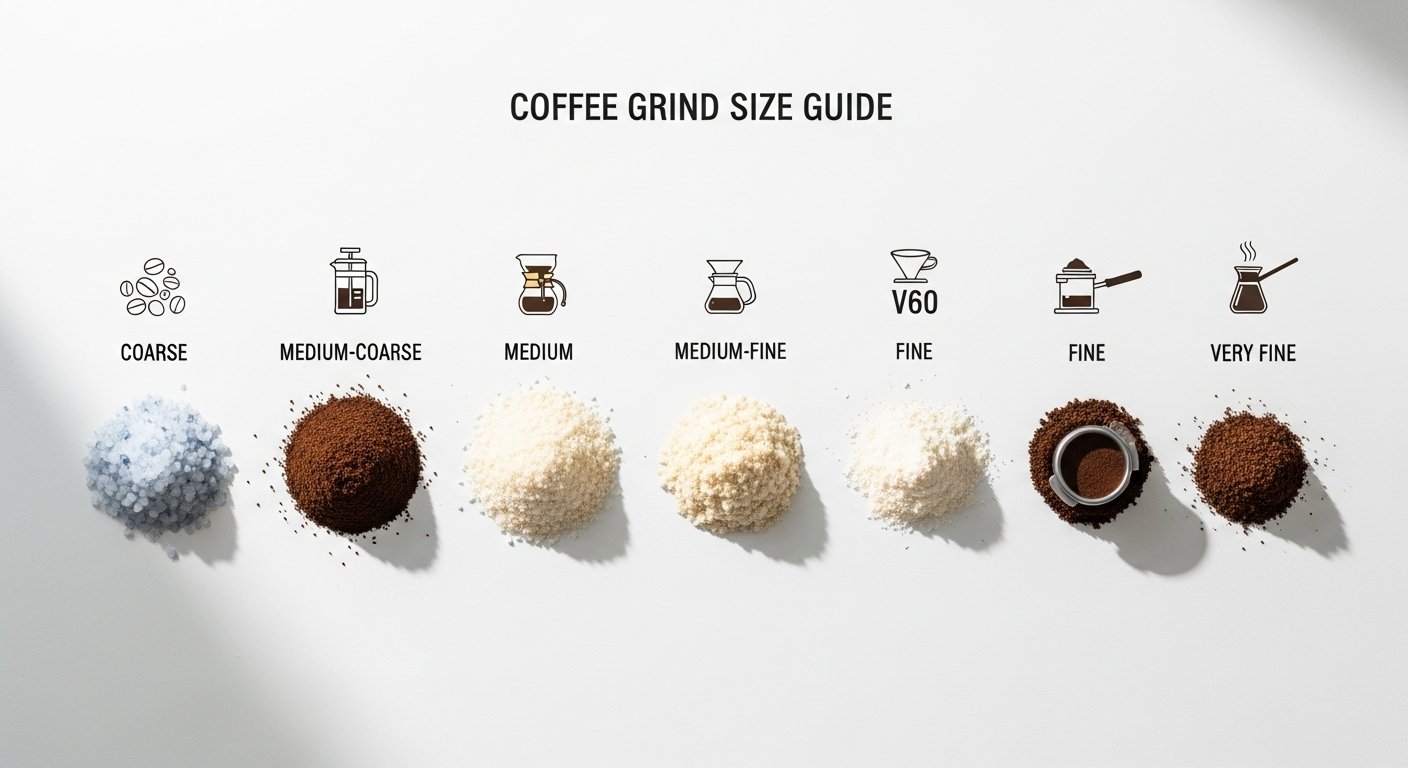
To truly master the grind, one must develop an intuitive understanding of the various grind sizes and what they look and feel like. Descriptions like “fine” or “coarse” can be subjective, but with practice, you’ll be able to identify the ideal consistency for each brewing method by sight and touch. Here, we’ll categorize the most common grind sizes, providing visual and tactile analogies, and linking them to their primary brewing applications.
Extra-Fine: Turkish Coffee
- Appearance: Resembles flour or powdered sugar. It’s incredibly fine, with no discernible individual particles. When rubbed between your fingers, it feels like a smooth powder, almost sticky.
- Feel: Powdery, silky, smooth.
- Purpose: This ultra-fine grind is exclusively for Turkish coffee, where the coffee is boiled with water in a cezve. The extremely fine particles allow for maximum extraction in a very short contact time, and the grounds are consumed along with the liquid, contributing to its thick, viscous body. Any other brewing method would result in severe over-extraction and an undrinkable brew.
Fine: Espresso and Moka Pot
- Appearance: Finer than table salt, but coarser than powdered sugar. Individual particles are barely visible, and it feels like a fine powder when rubbed, but with a slight gritty texture.
- Feel: Smooth, slightly gritty.
- Purpose: This is the crucial grind size for espresso. The fine particles create sufficient resistance against the high pressure of an espresso machine, allowing for a concentrated, flavorful shot in 25-30 seconds. It also works well for Moka pots, where steam pressure forces water through the coffee bed, requiring resistance for proper extraction. Using a grind that’s too fine for espresso will choke the machine, while too coarse will result in a fast, watery, under-extracted shot.
Medium-Fine: Aeropress (shorter brew times) and Siphon
- Appearance: A consistency between fine and medium, often likened to table salt or slightly finer. Individual particles are visible, and it feels gritty but not sandy.
- Feel: Gritty, like fine sand.
- Purpose: This versatile grind is excellent for pour-over methods with slightly faster flow rates, Aeropress when brewing with shorter immersion times (1-2 minutes) or inverted, and Siphon brewers. It provides a good balance of extraction without creating excessive resistance, allowing for a clean, bright cup. It’s a sweet spot for many who enjoy a clear, well-extracted coffee without the intensity of espresso or the body of French Press.
Medium: Pour Over and Automatic Drip Coffee
- Appearance: Resembles regular sand or granulated sugar. Individual particles are clearly visible and feel distinct when rubbed between your fingers.
- Feel: Distinctly gritty, like beach sand.
- Purpose: This is the standard grind for most automatic drip coffee makers and many pour-over devices (like Kalita Wave or some V60 recipes). It allows water to flow through the coffee bed at an optimal rate, ensuring balanced extraction during the typical 3-5 minute brew cycle. Too fine, and the filter will clog, leading to over-extraction; too coarse, and the water will pass through too quickly, resulting in a weak, under-extracted brew.
Medium-Coarse: Chemex, Clever Dripper, Aeropress (longer brew times)
- Appearance: Similar to coarse sand or flaky sea salt. Particles are noticeably larger than medium grind and are easily discernible.
- Feel: Very gritty, with individual flakes.
- Purpose: This grind is perfectly suited for brewing methods that involve a slightly longer contact time or require a slower flow rate. The Chemex, with its thicker filter, benefits from this grind to prevent clogging and allow for a clean, nuanced cup. The Clever Dripper, which combines immersion and pour-over, also thrives with a medium-coarse grind. For Aeropress users experimenting with longer immersion times (3-5 minutes), this grind size prevents over-extraction.
Coarse: French Press and Cold Brew
- Appearance: Resembles coarse sea salt or breadcrumbs. The particles are chunky and distinctly visible, often irregular in shape.
- Feel: Rough, chunky, like coarse kosher salt.
- Purpose: Coarse grinds are ideal for brewing methods with extended immersion times, such as the French Press and cold brew. In a French Press, the larger particles prevent sediment from passing through the plunger’s mesh filter. For cold brew, the long steeping time (12-24 hours) compensates for the reduced surface area, allowing for a full, smooth, low-acid extraction without bitterness. A finer grind in these methods would lead to excessive sediment and over-extraction.
Extra-Coarse: Specialized Cold Brew or Cupping
- Appearance: Very large, jagged pieces, almost like cracked peppercorns or small gravel.
- Feel: Large, distinct chunks.
- Purpose: This extremely coarse grind is less common but can be used for very specific cold brew applications where ultra-long steep times (24+ hours) are desired, or for coffee cupping protocols, where it allows for consistent saturation and minimal sediment for tasting. It’s rarely used for hot brewing methods due to the difficulty of achieving adequate extraction.
Learn more about the nuances of specific brewing methods in our comprehensive guides.
Matching Grind Size to Brewing Method: The Ultimate Pairing Guide
The synergy between grind size and brewing method is the cornerstone of great coffee. Each brewing device is designed with a specific interaction between water and coffee in mind, and the grind size must complement this design to facilitate optimal extraction. This section will delve into specific methods, outlining the ideal grind size and explaining the rationale behind it. We’ll also include our comprehensive comparison table to serve as a quick reference.
Espresso: Precision for Pressure
Espresso is perhaps the most demanding brewing method when it comes to grind size. It utilizes high pressure (typically 9 bars) to force hot water through a tightly packed “puck” of coffee grounds in a very short time (25-30 seconds for a standard shot). This requires an extremely fine grind, just slightly coarser than Turkish coffee, resembling fine sugar or flour. The fine particles create the necessary resistance for the pressure to build, allowing for rapid, intense extraction of soluble solids and the formation of a rich, reddish-brown crema.
- Too Fine: The machine will “choke,” meaning the water struggles to pass through, resulting in a very slow, drops-per-second flow, often leading to a burnt, bitter, over-extracted shot.
- Too Coarse: The water will flow too quickly through the coffee bed (a “gush”), resulting in a watery, weak, sour, under-extracted shot with little to no crema.
Dialing in espresso is an art form, often requiring micro-adjustments to the grind setting based on factors like bean freshness, roast level, and even ambient humidity. A slight change can drastically alter shot time and flavor.
Pour Over & Drip: Balancing Flow Rate and Extraction
Pour-over methods (like Hario V60, Kalita Wave, Chemex) and automatic drip brewers rely on gravity to draw water through a bed of coffee. The grind size here needs to balance sufficient surface area for extraction with a flow rate that prevents clogging or under-extraction. Generally, a medium to medium-fine grind is preferred for pour-overs, while automatic drip typically uses a medium grind.
- Hario V60: Often benefits from a medium-fine grind due to its large single drainage hole, which allows for faster flow. This grind provides enough resistance for optimal extraction in a typical 2.5-3.5 minute brew.
- Kalita Wave: With its flat bottom and three drainage holes, it’s more forgiving and works well with a medium grind, offering consistent extraction.
- Chemex: Features a thick paper filter and a slower flow. A medium-coarse grind is usually recommended to prevent clogging and allow for a clean, sediment-free brew that highlights clarity and sweetness.
- Automatic Drip: Most home drip machines operate optimally with a medium grind. This prevents clogging of the filter basket and ensures the brew cycle (usually 4-6 minutes) yields a balanced cup.
Adjustments for these methods are crucial: a grind that’s too fine will lead to bitterness and a bogged-down brew, while one that’s too coarse will yield a weak, sour, and watery coffee.
French Press & Cold Brew: Maximizing Contact Time
These immersion brewing methods involve steeping coffee grounds in water for an extended period. The grind size must be coarse to prevent over-extraction and manage sediment.
- French Press: Requires a coarse grind, similar to breadcrumbs or chunky sea salt. The large particles allow for full immersion without excessive fines that would clog the mesh filter or pass into the cup, creating a sludgy mouthfeel. The typical brew time is 4 minutes. A finer grind would result in a bitter, silty brew.
- Cold Brew: Demands an extra-coarse to coarse grind. Cold water is a less efficient solvent than hot water, so a long steeping time (12-24 hours) is necessary to extract desirable compounds. The coarse grind minimizes surface area exposure per unit of time, preventing over-extraction during this prolonged process and reducing bitterness and acidity, resulting in a smooth, concentrated extract. A finer grind would lead to a murky, over-extracted, and potentially astringent cold brew.
[INLINE IMAGE 2: place after fourth H2 | alt=”coffee grind size guide comparison illustration”]
Aeropress: Versatility in Grind and Brew
The Aeropress is celebrated for its incredible versatility, capable of producing anything from an espresso-like concentrate to a full-bodied filter coffee. Its unique design, which uses air pressure to push water through a small coffee bed and paper filter, allows for a wide range of grind sizes depending on the desired outcome and brew time.
- Fine Grind (similar to espresso): For short, concentrated brews (e.g., 30-60 seconds) often intended to be diluted or used as a base for milk drinks. The fine grind ensures rapid extraction.
- Medium-Fine Grind (table salt): A common choice for standard Aeropress recipes, offering a balanced cup with 1-2 minutes of immersion. This grind provides good resistance for pressing.
- Medium-Coarse Grind (coarse sand): For longer immersion times (3-5 minutes), especially when brewing larger volumes or a more gentle cup. The coarser grind prevents over-extraction during extended contact.
The Aeropress’s ability to use pressure means it can handle slightly finer grinds than gravity-driven methods without choking, making it highly adaptable.
Moka Pot & Siphon: Unique Pressure Dynamics
These methods operate on principles distinct from drip or immersion, and thus have specific grind size requirements.
- Moka Pot: Uses steam pressure to force water up through a coffee bed. It requires a fine to medium-fine grind, similar to espresso but often slightly coarser. The finer grind creates sufficient resistance for the steam pressure to build, ensuring proper extraction. Too fine, and the Moka pot can sputter or clog; too coarse, and the water will pass through too quickly, resulting in a weak, watery brew. The goal is a rich, strong coffee, not quite espresso, but certainly more robust than drip.
- Siphon (Vacuum Brewer): Brews coffee by drawing heated water from a lower chamber into an upper chamber containing coffee grounds, then returning it through a filter. A medium-fine to medium grind is typically recommended. This allows for thorough immersion and extraction during the contact time (often 1-3 minutes) while ensuring smooth drawdown back into the lower chamber without excessive sediment. The delicate nature of siphon brewing means consistency in grind is key to avoid muddying the notoriously clean cup it produces.
Here is a comprehensive table summarizing the recommended grind sizes for various popular brewing methods:
| Brewing Method | Recommended Grind Size | Visual/Tactile Analogy | Key Characteristics/Notes |
|---|---|---|---|
| **Turkish Coffee** | Extra-Fine | Powdered Sugar / Flour | Ultra-fine, no discernible particles. For boiling coffee with grounds consumed. |
| **Espresso** | Fine | Between Powdered Sugar and Table Salt | Slightly gritty powder. Crucial for high-pressure, short extraction. |
| **Moka Pot** | Fine to Medium-Fine | Fine Table Salt | Finer than drip, slightly coarser than espresso for steam pressure. |
| **Aeropress (Short Brews)** | Medium-Fine | Table Salt | Versatile; good for quick, concentrated brews. |
| **Pour Over (V60, Kalita Wave)** | Medium to Medium-Fine | Granulated Sugar / Beach Sand | Clear, distinct particles. Balances flow rate and extraction for drip. |
| **Automatic Drip Coffee** | Medium | Beach Sand | Standard for most home brewers, ensures balanced extraction. |
| **Chemex** | Medium-Coarse | Coarse Sand / Flaky Sea Salt | Larger particles for slower flow through thicker filter. |
| **Aeropress (Long Brews)** | Medium-Coarse | Coarse Sand / Flaky Sea Salt | Good for extended immersion, prevents over-extraction. |
| **French Press** | Coarse | Coarse Sea Salt / Breadcrumbs | Chunky, distinct particles. Prevents sediment in immersion brew. |
| **Cold Brew** | Coarse to Extra-Coarse | Cracked Peppercorns / Small Gravel | Very large particles for long, cold immersion, minimal bitterness. |
This table serves as an excellent starting point, but remember that even within these categories, slight adjustments are often necessary. The “dial-in” process for your specific beans, grinder, and water is an ongoing journey of refinement and sensory exploration.
Discover our expert reviews of the best brewing devices for every coffee lover.
Troubleshooting Your Brew: How Grind Size Affects Flavor
The beauty of coffee brewing is that it’s a dynamic process, full of variables that can be manipulated. When your cup isn’t quite hitting the mark, grind size is often the first and most impactful variable to adjust. Understanding how different grind sizes manifest in the final flavor profile is crucial for effective troubleshooting. Let’s explore common flavor faults and how to remedy them by adjusting your grind.
Sour or Weak Coffee? Adjusting for Under-extraction
If your coffee tastes noticeably sour, tangy, or overly acidic without a balancing sweetness, it’s a strong indicator of under-extraction. Similarly, if your coffee lacks body, tastes watery, or seems generally underwhelming, under-extraction is likely the culprit. This occurs when the water hasn’t dissolved enough of the desirable compounds from the coffee grounds. The initial compounds to extract are often acids, followed by sugars and then bitter compounds. If the process stops too soon, you’re left with an imbalanced, acidic, and weak brew.
Common Symptoms of Under-extraction:
- Sour, tart, or tangy taste (like unripe fruit).
- Weak, watery, or thin body.
- Salty notes.
- Grassy, hay-like, or vegetal flavors.
- Lack of sweetness or complexity.
- For espresso, a fast flow rate (gushing) and pale, thin crema.
The Grind Size Solution: Make your grind FINER.
By grinding finer, you increase the total surface area of the coffee particles. This allows water to extract more soluble compounds more quickly and efficiently. A finer grind also increases resistance in the coffee bed, which means water spends more time in contact with the coffee (for drip methods) or requires more pressure to pass through (for espresso), further encouraging greater extraction. Even a small adjustment to a finer setting can make a significant difference, bringing out more sweetness, body, and balance. Make incremental changes and taste after each adjustment.
Bitter or Astringent Coffee? Mitigating Over-extraction
Conversely, if your coffee tastes harsh, burnt, acrid, or overwhelmingly bitter, it’s a clear sign of over-extraction. This happens when too many compounds, particularly the less desirable bitter ones, have been leached from the coffee grounds. A common accompanying sensation is astringency, which leaves a dry, mouth-puckering feeling, similar to drinking very strong black tea or eating an unripe banana.
Common Symptoms of Over-extraction:
- Intensely bitter, burnt, or ashy taste.
- Astringent or drying sensation in the mouth.
- Hollow, flat, or one-dimensional flavor.
- Rubber or metallic notes.
- For espresso, a very slow flow rate (choking) and dark, mottled crema.
The Grind Size Solution: Make your grind COARSER.
By grinding coarser, you decrease the total surface area of the coffee particles. This reduces the rate at which soluble compounds are extracted, preventing the water from dissolving too many of the unpleasant bitter elements. A coarser grind also decreases resistance, allowing water to pass through the coffee bed more quickly. This effectively shortens the contact time (or simulates it) and reduces the extent of extraction. Adjusting to a coarser setting will help to diminish bitterness and astringency, revealing the more delicate and desirable flavors that were previously masked. Again, make small, controlled adjustments.
Muddy or Sludgy Brews: Sediment Management
Beyond taste, grind size also significantly impacts the clarity and mouthfeel of your coffee. If you find your cup has an undesirable amount of sediment at the bottom, or if the texture feels “muddy” or “sludgy,” your grind might be too fine for your brewing method, or your grinder might be producing too many “fines” (very tiny particles) due to dull burrs or improper operation.
Common Symptoms of Excessive Sediment/Muddiness:
- Visible coffee particles at the bottom of the cup, particularly in immersion methods like French Press.
- A thick, sludgy mouthfeel that obscures flavor clarity.
- Clogged filters in pour-over or drip brewers, causing slow drainage and eventual over-extraction.
The Grind Size Solution: Make your grind COARSER.
For methods like French Press, a coarser grind is specifically chosen to ensure the mesh filter can effectively separate the grounds from the liquid. If you’re getting too much sediment, try grinding slightly coarser. For pour-over or drip methods where sediment isn’t typically an issue but clogging is, a coarser grind will also help. If you’re already at the correct coarseness and still experiencing excessive fines and sludge, consider:
- Tapping your portafilter/brewer: After grinding, gently tap your portafilter or brewing basket to settle the bed and allow fines to migrate to the bottom, which can help prevent them from moving into your cup.
- Grinder quality: A cheap blade grinder or a burr grinder with dull burrs will inevitably produce an
The Ultimate Coffee Grind Size Guide: Mastering Extraction for Your Perfect Cup
Affiliate disclosure: This article may contain affiliate links. Recommendations are independent and editorially driven.
For many coffee enthusiasts, the journey to a truly exceptional cup often begins with the beans and the brewing method. However, a critical, often overlooked, and immensely powerful variable in this alchemy is the coffee grind size. It’s not merely a step in the process; it’s the foundational element that dictates how water interacts with coffee, ultimately shaping the flavor profile, body, and aroma of your final brew. At cafeserre, we believe that understanding and mastering the coffee grind size guide is paramount to elevating your daily ritual from good to extraordinary.
Imagine two seemingly identical cups of coffee, brewed from the same beans, using the same water and ratio. Yet, one is vibrant, complex, and sweet, while the other is either shockingly sour or intensely bitter. The most likely culprit? An incorrect grind size. This guide will demystify the intricate relationship between grind size and extraction, providing you with the knowledge and tools to consistently achieve brewing perfection, no matter your preferred method.
From the fine, powdery consistency required for a robust shot of espresso to the coarse, chunky grounds ideal for a smooth, low-acid cold brew, every brewing technique demands a specific grind. Deviate from this precise calibration, and you risk under-extraction, leaving your coffee weak and underdeveloped, or over-extraction, resulting in a harsh, acrid taste. This isn’t just about avoiding bad coffee; it’s about unlocking the full potential of your beans, highlighting their unique characteristics, and consistently delivering a cup that delights your senses.
Join us as we dive deep into the world of coffee grind sizes, exploring the science, the art, and the practical application of this fundamental variable. Whether you’re a seasoned home barista or just beginning your coffee journey, this comprehensive guide will equip you with the expertise to transform your brewing experience and ensure every sip is nothing short of magnificent.
The Fundamental Role of Grind Size in Coffee Extraction
At the heart of every delicious cup of coffee lies the process of extraction. This is where hot water dissolves soluble compounds—acids, sugars, oils, and other flavorful elements—from the ground coffee beans. The goal is to extract the right amount of these compounds to achieve a balanced, pleasant flavor profile. Too little, and your coffee will taste underdeveloped; too much, and it will be harsh and unappealing. The single most influential factor governing the rate and efficiency of this extraction is the grind size.
Consider the humble coffee bean. When whole, its surface area is minimal, and water struggles to penetrate its dense structure. Grinding the bean increases its surface area exponentially, exposing more of the interior to water. However, the degree to which this surface area is increased, and how uniformly, is entirely dependent on the fineness of the grind. This concept is crucial for understanding why a specific grind size is tailored to a specific brewing method.
A coarser grind, resembling chunky sea salt, offers less surface area for water to interact with. This means water will pass through the coffee bed relatively quickly, and the extraction will be slower. Conversely, a finer grind, like powdered sugar, presents a massive surface area. Water will permeate these grounds more slowly, and extraction will occur much more rapidly. The challenge, and the art, lie in matching this rate of extraction to the brewing method’s contact time and water flow dynamics.
The Science of Extraction: Surface Area and Water Contact
Understanding the science behind grind size begins with the concept of surface area. When coffee beans are ground, their internal structure is fractured, exposing myriad cellular components to the brewing water. The finer the grind, the more minuscule these particles become, and consequently, the greater the cumulative surface area available for water to interact with. This is not a linear relationship; even a slight adjustment in grind fineness can dramatically alter the total surface area.
Water acts as a solvent, seeking out and dissolving the desirable compounds within the coffee particles. With a larger exposed surface area (finer grind), water can access these compounds more quickly and efficiently. This rapid dissolution is ideal for brewing methods that involve short contact times or high pressure, such as espresso, where water is forced through a tightly packed bed of fine grounds in a matter of seconds. The fine particles create resistance, slowing the water flow and increasing the contact time with the immense surface area, facilitating a rapid yet thorough extraction.
Conversely, a coarser grind offers less surface area. This means that if water were to pass through coarse grounds too quickly, there wouldn’t be enough time for sufficient extraction to occur. Therefore, coarse grinds are paired with brewing methods that allow for extended contact times, like the French Press or cold brew. In these methods, the coffee and water steep together for several minutes or even hours, compensating for the reduced surface area with prolonged exposure. The larger particles also create less resistance, preventing the coffee bed from becoming clogged and allowing for an even flow or steeping.
Furthermore, grind size also impacts the flow rate of water through the coffee bed. Finer grinds create more resistance, slowing down the water. Coarser grinds allow water to pass through more freely. This interplay between surface area, contact time, and flow rate is what brewers manipulate to achieve optimal extraction. An ideal extraction yields a balance of desirable acids, sweetness, and bitterness, without the unpleasant notes of either under-extraction or over-extraction.
Over-extraction vs. Under-extraction: The Flavor Spectrum
The “sweet spot” of coffee extraction is a narrow window where the perfect balance of soluble compounds has been dissolved into your brew. Stray outside this window, and you enter the realm of either under-extraction or over-extraction, both of which result in a less-than-ideal cup.
Under-extraction occurs when not enough soluble compounds have been dissolved from the coffee grounds. This typically happens when the grind is too coarse for the brewing method, the water temperature is too low, or the brew time is too short. The flavor characteristics of under-extracted coffee are often:
- Sour or Tart: The desirable acids, often the first compounds to extract, are present, but the sugars and bitter compounds that would balance them out haven’t developed fully.
- Weak or Watery: A lack of dissolved solids leads to a thin body and diluted flavor.
- Salty: A less common but distinct indicator of under-extraction.
- Grassy or Hay-like: Unpleasant vegetal notes can emerge from underdeveloped extraction.
If your coffee tastes sour or weak, and you’ve already checked your water temperature and brew ratio, your grind is likely too coarse. Finer grinds allow for more resistance and surface area, increasing extraction.
Over-extraction, on the other hand, occurs when too many soluble compounds, including undesirable bitter compounds, have been dissolved. This is commonly caused by a grind that is too fine for the brewing method, water that is too hot, or a brew time that is excessively long. The flavor characteristics of over-extracted coffee are typically:
- Bitter or Astringent: This is the most common sign. The coffee can taste burnt, charred, or like very strong dark chocolate without any sweetness.
- Hollow or Flat: While bitter, the nuanced flavors can be stripped away, leaving a one-dimensional, unpleasant taste.
- Dry Mouthfeel: Astringency leaves a sensation of dryness in the mouth, similar to unripe fruit or strong black tea steeped for too long.
- Rubber or Ashy: Very over-extracted coffee can take on these highly undesirable notes.
If your coffee consistently tastes bitter or leaves a dry sensation, and other variables are in check, your grind is likely too fine. Coarser grinds will reduce the surface area and resistance, leading to less extraction.
The art of mastering grind size is about finding that perfect equilibrium between under and over-extraction, allowing the inherent sweetness, acidity, and body of the coffee to shine through in harmony.
Mastering Your Grinder: A Crucial First Step
Having the knowledge of optimal grind sizes is one thing, but possessing the right tool to consistently achieve them is another. Your coffee grinder is arguably the most important piece of equipment in your brewing arsenal, even more so than your brewing device. A high-quality grinder ensures uniformity in particle size, which is critical for even extraction. Inconsistent grinds lead to uneven extraction, where some particles are over-extracted while others are under-extracted, resulting in a muddy, unbalanced cup.
The market offers a dizzying array of grinders, but they generally fall into two main categories: burr grinders and blade grinders. Understanding the fundamental differences between them is the first step towards consistent, delicious coffee.
Burr Grinders: Conical vs. Flat
Burr grinders are the gold standard for serious coffee enthusiasts because they actually grind coffee, rather than chopping it. They operate using two abrasive surfaces (burrs) that crush the coffee beans between them into consistently sized particles. This consistency is paramount for even extraction and a superior cup. Burr grinders come in two primary configurations:
- Conical Burr Grinders: These feature two cone-shaped burrs, one fitting inside the other. The coffee beans are fed into the top, drawn down, and ground between the rotating inner burr and the stationary outer burr.
- Pros: Generally quieter, produce less static, and are often considered more durable due to fewer moving parts. They typically operate at lower RPMs, which generates less heat, preserving the delicate flavors of the coffee. They are excellent for a wide range of grind sizes, from fine espresso to coarse French Press.
- Cons: Can be more expensive than flat burr grinders at the entry level.
Conical burr grinders are a popular choice for home baristas and commercial settings alike, offering excellent versatility and consistency.
- Flat Burr Grinders: These grinders utilize two parallel, ring-shaped burrs with cutting edges. Coffee beans are fed between the burrs, which rotate horizontally to grind the coffee.
- Pros: Often praised for producing a very uniform particle size distribution, particularly at finer settings, which can be advantageous for espresso. They tend to be faster than conical burrs at similar price points.
- Cons: Can be noisier and generate more static. They also tend to produce more heat due to higher RPMs, which can potentially degrade coffee flavors if not designed well. Retention of grounds can be a slight issue in some models.
Flat burr grinders are often found in high-end espresso setups where precision and uniformity for very fine grinds are critical.
Both conical and flat burr grinders come in manual (handheld) and electric versions. Manual burr grinders are excellent portable options and offer a quiet grinding experience, though they require more effort. Electric burr grinders offer convenience and speed, making them ideal for daily use.
[INLINE IMAGE 1: place after second H2 | alt=”coffee grind size guide concept illustration”]
Blade Grinders: Why They Fall Short
Blade grinders, often mistaken for coffee grinders but more accurately described as spice grinders, operate like blenders. They use a rapidly spinning blade to chop and shatter coffee beans into fragments. While they are inexpensive and widely available, they are severely detrimental to coffee quality for several reasons:
- Inconsistent Grind: The primary flaw is the lack of uniformity. Blade grinders produce a mix of very fine powder (fines) and large, chunky pieces. This unevenness leads to highly inconsistent extraction: the fines will over-extract rapidly, creating bitterness, while the larger chunks will under-extract, resulting in sourness. The end result is a muddy, unbalanced cup with compromised flavor.
- Heat Generation: The high-speed chopping action generates significant heat, which can prematurely degrade the volatile aromatic compounds in coffee, leading to a duller, less vibrant flavor profile.
- Flavor Contamination: If used for spices, residual flavors can easily transfer to your coffee.
For any serious home barista, or anyone who values the flavor of their coffee, a blade grinder is a false economy. The investment in even an entry-level burr grinder will pay dividends in the quality of your brew.
Maintenance and Calibration for Consistency
Even the best burr grinder requires regular maintenance and occasional calibration to perform optimally. Over time, coffee oils and fine particles can build up on the burrs, affecting their grinding efficiency and introducing stale flavors. Here’s why and how to maintain your grinder:
- Regular Cleaning: Depending on usage, burrs should be cleaned every few weeks or months. This involves disassembling the visible parts of the grinding chamber and brushing away accumulated grounds and oils. Specialized grinder cleaning tablets (like Urnex Grindz) can also be run through the grinder to absorb oils and dislodge particles. This prevents rancid oil buildup that can impart off-flavors to your fresh coffee.
- Burr Life: Burr sets have a finite lifespan. Over hundreds or thousands of pounds of coffee, they will dull, much like a knife blade. Dull burrs produce a less consistent grind and require more effort from the motor. Consult your grinder’s manual for recommended replacement intervals, which can range from several hundred to several thousand pounds of coffee depending on the material (steel vs. ceramic) and design.
- Calibration and Zero Point: High-end grinders often allow for calibration of their “zero point”—the setting where the burrs just touch. This ensures that the numerical settings on your grinder correspond accurately to precise grind sizes. For most home grinders, simply understanding that the numerical scale is relative and learning to identify grind sizes by sight and feel is sufficient. However, if your grinder has explicit calibration instructions, following them ensures accuracy.
- Consistency Check: Periodically grind a small amount of coffee at a specific setting and visually inspect the uniformity of the particles. If you notice a significant increase in fines or large chunks, it might be a sign that your burrs are dulling or your grinder needs a thorough cleaning.
Investing in a quality burr grinder and committing to its maintenance is a foundational step in mastering the coffee grind size guide. It ensures that every adjustment you make to your grind setting translates directly and consistently into the desired particle size, paving the way for predictable and delightful brewing results.
Explore our curated selection of top-rated burr grinders for every budget and brewing style.
The Spectrum of Grind Sizes: From Powder to Peppercorn
To truly master the grind, one must develop an intuitive understanding of the various grind sizes and what they look and feel like. Descriptions like “fine” or “coarse” can be subjective, but with practice, you’ll be able to identify the ideal consistency for each brewing method by sight and touch. Here, we’ll categorize the most common grind sizes, providing visual and tactile analogies, and linking them to their primary brewing applications.
Extra-Fine: Turkish Coffee
- Appearance: Resembles flour or powdered sugar. It’s incredibly fine, with no discernible individual particles. When rubbed between your fingers, it feels like a smooth powder, almost sticky.
- Feel: Powdery, silky, smooth.
- Purpose: This ultra-fine grind is exclusively for Turkish coffee, where the coffee is boiled with water in a cezve. The extremely fine particles allow for maximum extraction in a very short contact time, and the grounds are consumed along with the liquid, contributing to its thick, viscous body. Any other brewing method would result in severe over-extraction and an undrinkable brew.
Fine: Espresso and Moka Pot
- Appearance: Finer than table salt, but coarser than powdered sugar. Individual particles are barely visible, and it feels like a fine powder when rubbed, but with a slight gritty texture.
- Feel: Smooth, slightly gritty.
- Purpose: This is the crucial grind size for espresso. The fine particles create sufficient resistance against the high pressure of an espresso machine, allowing for a concentrated, flavorful shot in 25-30 seconds. It also works well for Moka pots, where steam pressure forces water through the coffee bed, requiring resistance for proper extraction. Using a grind that’s too fine for espresso will choke the machine, while too coarse will result in a fast, watery, under-extracted shot.
Medium-Fine: Aeropress (shorter brew times) and Siphon
- Appearance: A consistency between fine and medium, often likened to table salt or slightly finer. Individual particles are visible, and it feels gritty but not sandy.
- Feel: Gritty, like fine sand.
- Purpose: This versatile grind is excellent for pour-over methods with slightly faster flow rates, Aeropress when brewing with shorter immersion times (1-2 minutes) or inverted, and Siphon brewers. It provides a good balance of extraction without creating excessive resistance, allowing for a clean, bright cup. It’s a sweet spot for many who enjoy a clear, well-extracted coffee without the intensity of espresso or the body of French Press.
Medium: Pour Over and Automatic Drip Coffee
- Appearance: Resembles regular sand or granulated sugar. Individual particles are clearly visible and feel distinct when rubbed between your fingers.
- Feel: Distinctly gritty, like beach sand.
- Purpose: This is the standard grind for most automatic drip coffee makers and many pour-over devices (like Kalita Wave or some V60 recipes). It allows water to flow through the coffee bed at an optimal rate, ensuring balanced extraction during the typical 3-5 minute brew cycle. Too fine, and the filter will clog, leading to over-extraction; too coarse, and the water will pass through too quickly, resulting in a weak, under-extracted brew.
Medium-Coarse: Chemex, Clever Dripper, Aeropress (longer brew times)
- Appearance: Similar to coarse sand or flaky sea salt. Particles are noticeably larger than medium grind and are easily discernible.
- Feel: Very gritty, with individual flakes.
- Purpose: This grind is perfectly suited for brewing methods that involve a slightly longer contact time or require a slower flow rate. The Chemex, with its thicker filter, benefits from this grind to prevent clogging and allow for a clean, nuanced cup. The Clever Dripper, which combines immersion and pour-over, also thrives with a medium-coarse grind. For Aeropress users experimenting with longer immersion times (3-5 minutes), this grind size prevents over-extraction.
Coarse: French Press and Cold Brew
- Appearance: Resembles coarse sea salt or breadcrumbs. The particles are chunky and distinctly visible, often irregular in shape.
- Feel: Rough, chunky, like coarse kosher salt.
- Purpose: Coarse grinds are ideal for brewing methods with extended immersion times, such as the French Press and cold brew. In a French Press, the larger particles prevent sediment from passing through the plunger’s mesh filter. For cold brew, the long steeping time (12-24 hours) compensates for the reduced surface area, allowing for a full, smooth, low-acid extraction without bitterness. A finer grind in these methods would lead to excessive sediment and over-extraction.
Extra-Coarse: Specialized Cold Brew or Cupping
- Appearance: Very large, jagged pieces, almost like cracked peppercorns or small gravel.
- Feel: Large, distinct chunks.
- Purpose: This extremely coarse grind is less common but can be used for very specific cold brew applications where ultra-long steep times (24+ hours) are desired, or for coffee cupping protocols, where it allows for consistent saturation and minimal sediment for tasting. It’s rarely used for hot brewing methods due to the difficulty of achieving adequate extraction.
Learn more about the nuances of specific brewing methods in our comprehensive guides.
Matching Grind Size to Brewing Method: The Ultimate Pairing Guide
The synergy between grind size and brewing method is the cornerstone of great coffee. Each brewing device is designed with a specific interaction between water and coffee in mind, and the grind size must complement this design to facilitate optimal extraction. This section will delve into specific methods, outlining the ideal grind size and explaining the rationale behind it. We’ll also include our comprehensive comparison table to serve as a quick reference.
Espresso: Precision for Pressure
Espresso is perhaps the most demanding brewing method when it comes to grind size. It utilizes high pressure (typically 9 bars) to force hot water through a tightly packed “puck” of coffee grounds in a very short time (25-30 seconds for a standard shot). This requires an extremely fine grind, just slightly coarser than Turkish coffee, resembling fine sugar or flour. The fine particles create the necessary resistance for the pressure to build, allowing for rapid, intense extraction of soluble solids and the formation of a rich, reddish-brown crema.
- Too Fine: The machine will “choke,” meaning the water struggles to pass through, resulting in a very slow, drops-per-second flow, often leading to a burnt, bitter, over-extracted shot.
- Too Coarse: The water will flow too quickly through the coffee bed (a “gush”), resulting in a watery, weak, sour, under-extracted shot with little to no crema.
Dialing in espresso is an art form, often requiring micro-adjustments to the grind setting based on factors like bean freshness, roast level, and even ambient humidity. A slight change can drastically alter shot time and flavor.
Pour Over & Drip: Balancing Flow Rate and Extraction
Pour-over methods (like Hario V60, Kalita Wave, Chemex) and automatic drip brewers rely on gravity to draw water through a bed of coffee. The grind size here needs to balance sufficient surface area for extraction with a flow rate that prevents clogging or under-extraction. Generally, a medium to medium-fine grind is preferred for pour-overs, while automatic drip typically uses a medium grind.
- Hario V60: Often benefits from a medium-fine grind due to its large single drainage hole, which allows for faster flow. This grind provides enough resistance for optimal extraction in a typical 2.5-3.5 minute brew.
- Kalita Wave: With its flat bottom and three drainage holes, it’s more forgiving and works well with a medium grind, offering consistent extraction.
- Chemex: Features a thick paper filter and a slower flow. A medium-coarse grind is usually recommended to prevent clogging and allow for a clean, sediment-free brew that highlights clarity and sweetness.
- Automatic Drip: Most home drip machines operate optimally with a medium grind. This prevents clogging of the filter basket and ensures the brew cycle (usually 4-6 minutes) yields a balanced cup.
Adjustments for these methods are crucial: a grind that’s too fine will lead to bitterness and a bogged-down brew, while one that’s too coarse will yield a weak, sour, and watery coffee.
French Press & Cold Brew: Maximizing Contact Time
These immersion brewing methods involve steeping coffee grounds in water for an extended period. The grind size must be coarse to prevent over-extraction and manage sediment.
- French Press: Requires a coarse grind, similar to breadcrumbs or chunky sea salt. The large particles allow for full immersion without excessive fines that would clog the mesh filter or pass into the cup, creating a sludgy mouthfeel. The typical brew time is 4 minutes. A finer grind would result in a bitter, silty brew.
- Cold Brew: Demands an extra-coarse to coarse grind. Cold water is a less efficient solvent than hot water, so a long steeping time (12-24 hours) is necessary to extract desirable compounds. The coarse grind minimizes surface area exposure per unit of time, preventing over-extraction during this prolonged process and reducing bitterness and acidity, resulting in a smooth, concentrated extract. A finer grind would lead to a murky, over-extracted, and potentially astringent cold brew.
[INLINE IMAGE 2: place after fourth H2 | alt=”coffee grind size guide comparison illustration”]
Aeropress: Versatility in Grind and Brew
The Aeropress is celebrated for its incredible versatility, capable of producing anything from an espresso-like concentrate to a full-bodied filter coffee. Its unique design, which uses air pressure to push water through a small coffee bed and paper filter, allows for a wide range of grind sizes depending on the desired outcome and brew time.
- Fine Grind (similar to espresso): For short, concentrated brews (e.g., 30-60 seconds) often intended to be diluted or used as a base for milk drinks. The fine grind ensures rapid extraction.
- Medium-Fine Grind (table salt): A common choice for standard Aeropress recipes, offering a balanced cup with 1-2 minutes of immersion. This grind provides good resistance for pressing.
- Medium-Coarse Grind (coarse sand): For longer immersion times (3-5 minutes), especially when brewing larger volumes or a more gentle cup. The coarser grind prevents over-extraction during extended contact.
The Aeropress’s ability to use pressure means it can handle slightly finer grinds than gravity-driven methods without choking, making it highly adaptable.
Moka Pot & Siphon: Unique Pressure Dynamics
These methods operate on principles distinct from drip or immersion, and thus have specific grind size requirements.
- Moka Pot: Uses steam pressure to force water up through a coffee bed. It requires a fine to medium-fine grind, similar to espresso but often slightly coarser. The finer grind creates sufficient resistance for the steam pressure to build, ensuring proper extraction. Too fine, and the Moka pot can sputter or clog; too coarse, and the water will pass through too quickly, resulting in a weak, watery brew. The goal is a rich, strong coffee, not quite espresso, but certainly more robust than drip.
- Siphon (Vacuum Brewer): Brews coffee by drawing heated water from a lower chamber into an upper chamber containing coffee grounds, then returning it through a filter. A medium-fine to medium grind is typically recommended. This allows for thorough immersion and extraction during the contact time (often 1-3 minutes) while ensuring smooth drawdown back into the lower chamber without excessive sediment. The delicate nature of siphon brewing means consistency in grind is key to avoid muddying the notoriously clean cup it produces.
Here is a comprehensive table summarizing the recommended grind sizes for various popular brewing methods:
Brewing Method Recommended Grind Size Visual/Tactile Analogy Key Characteristics/Notes **Turkish Coffee** Extra-Fine Powdered Sugar / Flour Ultra-fine, no discernible particles. For boiling coffee with grounds consumed. **Espresso** Fine Between Powdered Sugar and Table Salt Slightly gritty powder. Crucial for high-pressure, short extraction. **Moka Pot** Fine to Medium-Fine Fine Table Salt Finer than drip, slightly coarser than espresso for steam pressure. **Aeropress (Short Brews)** Medium-Fine Table Salt Versatile; good for quick, concentrated brews. **Pour Over (V60, Kalita Wave)** Medium to Medium-Fine Granulated Sugar / Beach Sand Clear, distinct particles. Balances flow rate and extraction for drip. **Automatic Drip Coffee** Medium Beach Sand Standard for most home brewers, ensures balanced extraction. **Chemex** Medium-Coarse Coarse Sand / Flaky Sea Salt Larger particles for slower flow through thicker filter. **Aeropress (Long Brews)** Medium-Coarse Coarse Sand / Flaky Sea Salt Good for extended immersion, prevents over-extraction. **French Press** Coarse Coarse Sea Salt / Breadcrumbs Chunky, distinct particles. Prevents sediment in immersion brew. **Cold Brew** Coarse to Extra-Coarse Cracked Peppercorns / Small Gravel Very large particles for long, cold immersion, minimal bitterness. This table serves as an excellent starting point, but remember that even within these categories, slight adjustments are often necessary. The “dial-in” process for your specific beans, grinder, and water is an ongoing journey of refinement and sensory exploration.
Discover our expert reviews of the best brewing devices for every coffee lover.
Troubleshooting Your Brew: How Grind Size Affects Flavor
The beauty of coffee brewing is that it’s a dynamic process, full of variables that can be manipulated. When your cup isn’t quite hitting the mark, grind size is often the first and most impactful variable to adjust. Understanding how different grind sizes manifest in the final flavor profile is crucial for effective troubleshooting. Let’s explore common flavor faults and how to remedy them by adjusting your grind.
Sour or Weak Coffee? Adjusting for Under-extraction
If your coffee tastes noticeably sour, tangy, or overly acidic without a balancing sweetness, it’s a strong indicator of under-extraction. Similarly, if your coffee lacks body, tastes watery, or seems generally underwhelming, under-extraction is likely the culprit. This occurs when the water hasn’t dissolved enough of the desirable compounds from the coffee grounds. The initial compounds to extract are often acids, followed by sugars and then bitter compounds. If the process stops too soon, you’re left with an imbalanced, acidic, and weak brew.
Common Symptoms of Under-extraction:
- Sour, tart, or tangy taste (like unripe fruit).
- Weak, watery, or thin body.
- Salty notes.
- Grassy, hay-like, or vegetal flavors.
- Lack of sweetness or complexity.
- For espresso, a fast flow rate (gushing) and pale, thin crema.
The Grind Size Solution: Make your grind FINER.
By grinding finer, you increase the total surface area of the coffee particles. This allows water to extract more soluble compounds more quickly and efficiently. A finer grind also increases resistance in the coffee bed, which means water spends more time in contact with the coffee (for drip methods) or requires more pressure to pass through (for espresso), further encouraging greater extraction. Even a small adjustment to a finer setting can make a significant difference, bringing out more sweetness, body, and balance. Make incremental changes and taste after each adjustment.
Bitter or Astringent Coffee? Mitigating Over-extraction
Conversely, if your coffee tastes harsh, burnt, acrid, or overwhelmingly bitter, it’s a clear sign of over-extraction. This happens when too many compounds, particularly the less desirable bitter ones, have been leached from the coffee grounds. A common accompanying sensation is astringency, which leaves a dry, mouth-puckering feeling, similar to drinking very strong black tea or eating an unripe banana.
Common Symptoms of Over-extraction:
- Intensely bitter, burnt, or ashy taste.
- Astringent or drying sensation in the mouth.
- Hollow, flat, or one-dimensional flavor.
- Rubber or metallic notes.
- For espresso, a very slow flow rate (choking) and dark, mottled crema.
The Grind Size Solution: Make your grind COARSER.
By grinding coarser, you decrease the total surface area of the coffee particles. This reduces the rate at which soluble compounds are extracted, preventing the water from dissolving too many of the unpleasant bitter elements. A coarser grind also decreases resistance, allowing water to pass through the coffee bed more quickly. This effectively shortens the contact time (or simulates it) and reduces the extent of extraction. Adjusting to a coarser setting will help to diminish bitterness and astringency, revealing the more delicate and desirable flavors that were previously masked. Again, make small, controlled adjustments.
Muddy or Sludgy Brews: Sediment Management
Beyond taste, grind size also significantly impacts the clarity and mouthfeel of your coffee. If you find your cup has an undesirable amount of sediment at the bottom, or if the texture feels “muddy” or “sludgy,” your grind might be too fine for your brewing method, or your grinder might be producing too many “fines” (very tiny particles) due to dull burrs or improper operation.
Common Symptoms of Excessive Sediment/Muddiness:
- Visible coffee particles at the bottom of the cup, particularly in immersion methods like French Press.
- A thick, sludgy mouthfeel that obscures flavor clarity.
- Clogged filters in pour-over or drip brewers, causing slow drainage and eventual over-extraction.
The Grind Size Solution: Make your grind COARSER.
For methods like French Press, a coarser grind is specifically chosen to ensure the mesh filter can effectively separate the grounds from the liquid. If you’re getting too much sediment, try grinding slightly coarser. For pour-over or drip methods where sediment isn’t typically an issue but clogging is, a coarser grind will also help. If you’re already at the correct coarseness and still experiencing excessive fines and sludge, consider:
- Tapping your portafilter/brewer: After grinding, gently tap your portafilter or brewing basket to settle the bed and allow fines to migrate to the bottom, which can help prevent them from moving into your cup.
- Grinder quality: A cheap blade grinder or a burr grinder with dull burrs will inevitably produce an