


The Definitive Guide to Coffee Waves History: Tracing Coffee’s Evolution From Commodity to Craft and Beyond
Affiliate disclosure: This article may contain affiliate links. Recommendations are independent and editorially driven.
Coffee is more than just a beverage; it’s a global phenomenon, a cultural touchstone, and an intricate art form. Its journey through history is marked by profound transformations in how it’s cultivated, processed, brewed, and consumed. This evolution is best understood through the concept of “coffee waves” – distinct eras that have reshaped our relationship with this cherished bean. From its humble beginnings as a potent stimulant to its current status as a highly specialized, nuanced drink, the history of coffee waves offers a captivating glimpse into human innovation, changing tastes, and an ever-deepening appreciation for quality.
At cafeserre, we believe that understanding the trajectory of coffee, its past “waves,” and the currents shaping its future is essential for every enthusiast, professional, and curious newcomer. This comprehensive guide delves deep into the fascinating coffee waves history, exploring the pivotal moments, defining characteristics, and lasting impacts of each era. Join us as we journey through time, from the earliest coffee rituals to the cutting-edge innovations of today, charting the course of this extraordinary drink and its enduring place in our lives.
The First Wave: Coffee as a Commodity and Convenience
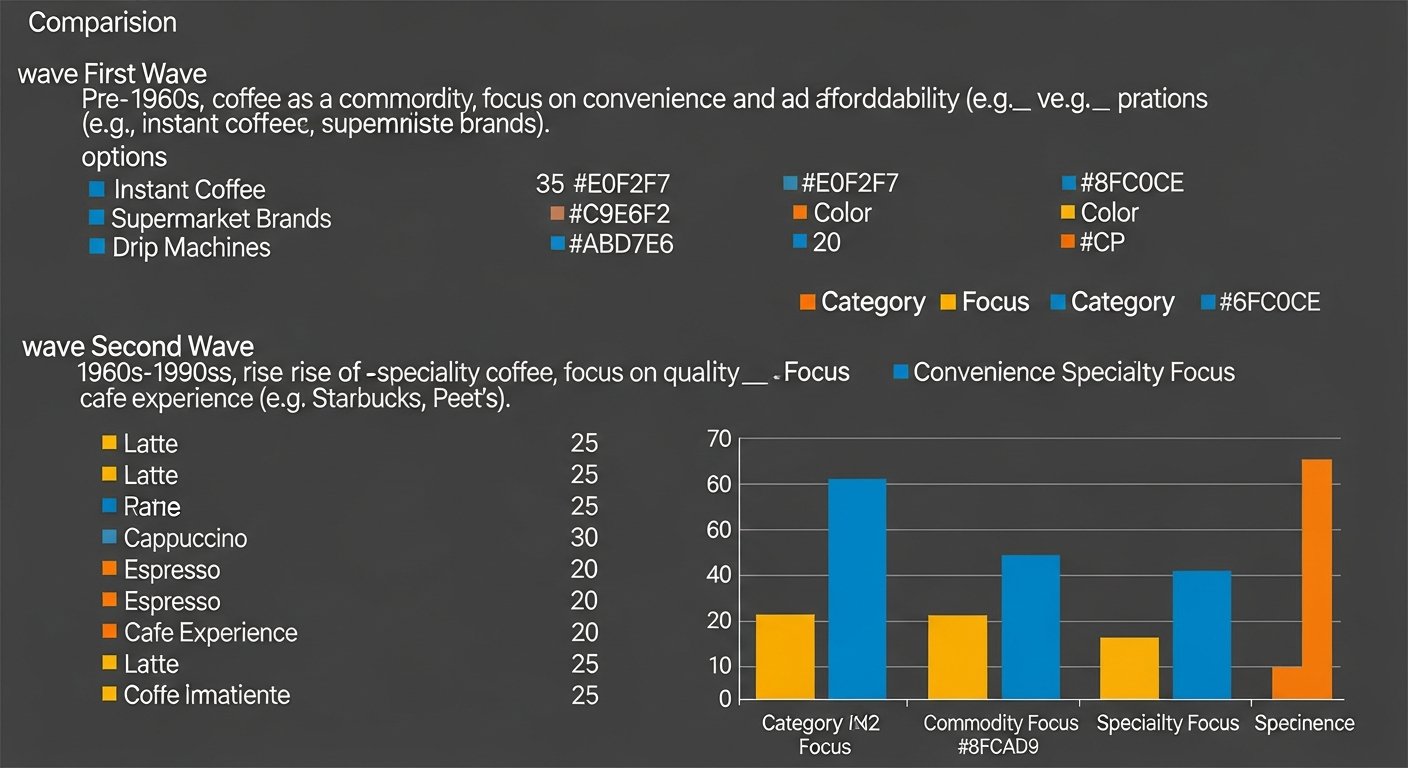
The First Wave of coffee is characterized by its focus on accessibility, affordability, and the sheer volume of production. Originating roughly in the late 19th and early 20th centuries, this era cemented coffee’s place in households worldwide as a daily staple. The primary goal was to make coffee convenient and widely available, often at the expense of nuanced flavor or artisanal quality.
Origins and Early Global Spread
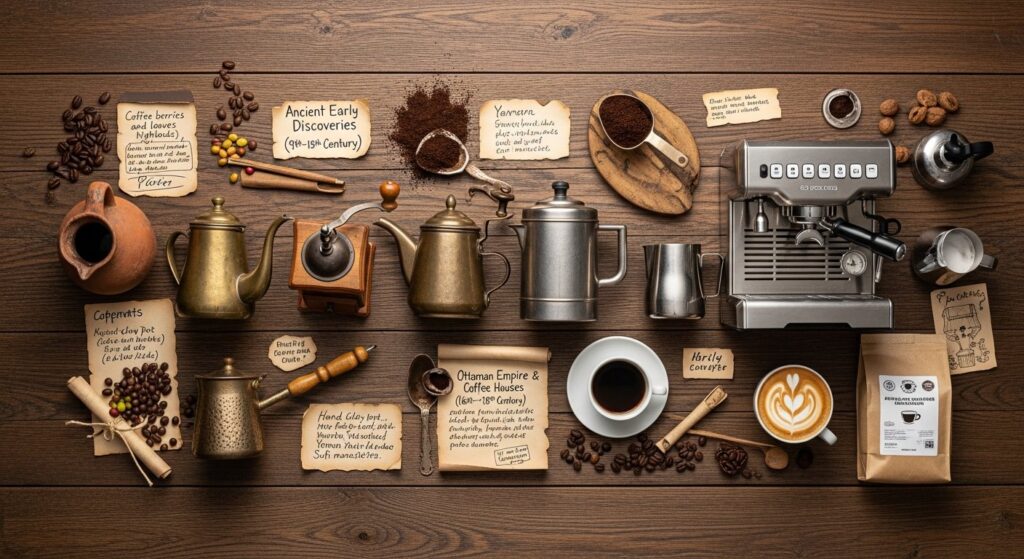
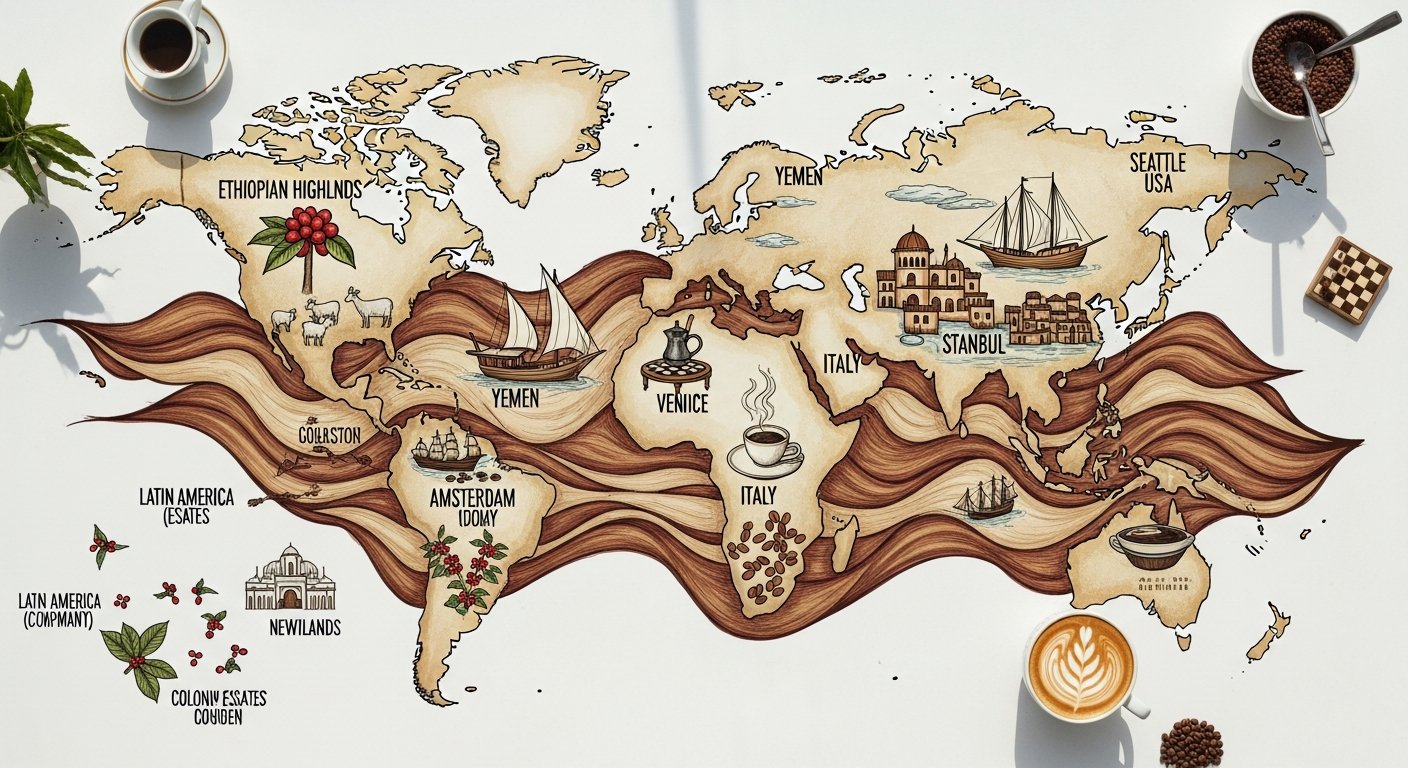
While the First Wave is a modern phenomenon, coffee’s journey began centuries earlier. The story famously starts in the ancient coffee forests of Ethiopia, where legend speaks of kaldi, a goat herder, discovering the energizing effects of the coffee cherry around the 9th century. From there, coffee made its way to Yemen, where Sufi mystics used it to stay awake during long prayer sessions. By the 15th century, coffee cultivation flourished in the Arabian Peninsula, and coffee houses (qahveh khaneh) began to emerge as vibrant centers of social and intellectual life in cities like Mecca and Cairo.
The Ottoman Empire played a crucial role in introducing coffee to Europe in the 17th century. Venetian merchants brought beans back, and soon, coffee houses became popular social hubs across major European cities like London, Paris, and Vienna. These early establishments mirrored their Middle Eastern counterparts, serving as places for conversation, commerce, and political discourse. Coffee’s popularity exploded, leading to its cultivation being aggressively expanded by European colonial powers in their overseas territories, particularly in Latin America, Asia, and Africa.
The Rise of Mass Production and Brand Domination
The First Wave truly took hold with the advent of industrialization and advancements in processing and packaging. Companies like Folgers, Maxwell House, and Nestlé (with its Nescafé instant coffee) revolutionized the industry. Their strategies focused on large-scale roasting, grinding, and vacuum-sealing to ensure a consistent, if sometimes bland, product that could be shipped globally and stored for extended periods.
- Vacuum Packaging: This innovation was critical. It allowed roasted and ground coffee to maintain a degree of freshness, making it a shelf-stable grocery item.
- Instant Coffee: Developed in the late 19th century and popularized throughout the 20th, instant coffee made brewing incredibly quick and simple, further emphasizing convenience.
- Aggressive Marketing: Brands invested heavily in advertising, portraying coffee as an essential part of the American dream, a stimulant for productivity, and a symbol of domestic comfort. Slogans like “Good to the last drop” became cultural touchstones.
The First Wave made coffee democratic. It was no longer an exotic luxury but a widely accessible commodity, a ubiquitous beverage found in virtually every home, diner, and office.
The American Home Coffee Experience
For many, the First Wave defined their coffee experience. It was about the automatic drip brewer, the canned pre-ground coffee, and the consistent, if sometimes uninspired, cup. The focus was on caffeine delivery and a familiar taste, rather than exploring origin characteristics or complex flavor profiles. Coffee was often consumed with milk and sugar, masking any potential bitterness from lower-quality beans or over-roasting. This era laid the foundation for coffee’s immense popularity and established its place in daily rituals across the globe, setting the stage for subsequent waves to refine and redefine what coffee could be.
Discover the fascinating journey of coffee’s global spread.
[INLINE IMAGE 1: place after second H2 | alt=”coffee waves history concept illustration”]
The Second Wave: Experience, Craft, and the Rise of the Café

Emerging in the 1970s and truly flourishing in the 1980s and 90s, the Second Wave represented a significant shift from the First Wave’s commodity-driven approach. This era brought an increased focus on the experience of coffee, its origins, and its preparation, transforming it from a mere caffeine delivery system into a crafted beverage enjoyed in a social setting. While still emphasizing convenience, the Second Wave introduced a layer of sophistication, education, and brand loyalty.
European Café Culture’s Influence and the “Third Place”
The Second Wave drew heavily from the rich tradition of European café culture, where coffee houses had long been vital social hubs. Companies like Starbucks, Peet’s Coffee & Tea, and Caribou Coffee were instrumental in bringing this concept to the masses, particularly in North America. Starbucks, in particular, under the vision of Howard Schultz, consciously sought to recreate the Italian espresso bar experience, positioning their stores as “third places” – neither home nor work, but a comfortable, inviting space for community, connection, and relaxation.
- Atmosphere and Ambiance: Cafés became intentionally designed spaces with comfortable seating, appealing decor, and often background music, encouraging patrons to linger.
- Social Hubs: These establishments fostered a sense of community, becoming popular spots for meetings, studying, casual encounters, and simply enjoying a moment of solitude.
Specialization, Espresso’s Ascent, and Flavor Profiles
A defining characteristic of the Second Wave was the specialization of coffee offerings. Espresso-based drinks took center stage, with lattes, cappuccinos, macchiatos, and mochas becoming household names. Baristas, though not yet the highly trained artisans of the Third Wave, became skilled in operating espresso machines and crafting these popular beverages. The focus expanded beyond just “coffee” to specific drinks with distinct flavor profiles, often enhanced by syrups, whipped cream, and various milk alternatives.
- Dark Roasts: Many Second Wave roasters favored darker roasts, which provided a consistent, robust flavor that stood up well to milk and sugar, and appealed to a broader palate.
- Flavor Descriptors: While not as precise as the Third Wave, menus began to include terms like “bold,” “smooth,” “nutty,” or “caramel notes,” giving consumers a hint of what to expect beyond just “regular” or “decaf.”
- Customization: The ability to customize drinks with different milks, syrup flavors, and shot counts became a hallmark, catering to individual preferences and making the coffee experience more personal.
The Birth of Coffee Education (for the Consumer)
The Second Wave also marked the beginning of consumer education about coffee. While not deeply technical, customers started to learn about different bean origins (e.g., Sumatra, Colombia), roast levels (light, medium, dark), and brewing methods (drip, French press). This was facilitated by signage in cafés, packaging information, and knowledgeable staff. It wasn’t just about drinking coffee; it was about understanding a little more about what you were drinking and how it was made. This foundational shift in consumer awareness paved the way for the even deeper exploration of coffee that would characterize the Third Wave.
The Third Wave: Quality, Transparency, and Artistry
Beginning in the late 1990s and gaining significant momentum in the 2000s, the Third Wave of coffee represents a profound paradigm shift towards treating coffee not just as a beverage, but as an artisanal product akin to fine wine or craft beer. This era is defined by an intense focus on quality at every stage, from seed to cup, emphasizing transparency, ethical sourcing, and the artistry of brewing.
From Bean to Brew: A Focus on Origin
The core philosophy of the Third Wave is to highlight the inherent characteristics of the coffee bean itself. This means recognizing that coffee, like grapes for wine, expresses unique flavors and aromas based on its varietal, terroir (soil, climate, altitude), and processing methods. The goal is to bring out these intrinsic qualities rather than masking them with dark roasts or excessive additives. This requires meticulous attention at every stage:
- Farm-Level Attention: Roasters and importers began forging direct relationships with coffee farmers, investing in their practices, and ensuring fair compensation. This fosters sustainability and higher quality.
- Single-Origin Coffees: A hallmark of the Third Wave, single-origin coffees highlight beans from a specific farm, region, or even lot, allowing drinkers to experience the unique flavor profile of that particular origin. This stands in contrast to blended coffees, which aim for consistency over individuality.
- Micro-Roasters: The proliferation of small-batch, independent roasteries became central. These roasters meticulously develop roast profiles designed to unlock the nuanced flavors of each bean, often aiming for lighter roasts that preserve the bean’s inherent acidity and fruit notes.
Explore our comprehensive guide to understanding coffee origins.
Advanced Brewing Techniques and the Barista as Artisan
With an emphasis on quality beans came a demand for precise brewing. The Third Wave ushered in an era of diverse and often elaborate brewing methods, each designed to optimize the extraction of flavor from the carefully roasted beans. The barista’s role transformed from a drink preparer to a skilled artisan, a knowledgeable guide, and a performer.
- Manual Brewing Methods: Pour-over (Hario V60, Chemex), AeroPress, Siphon, and French Press became popular tools for home brewers and cafés alike. These methods allow for greater control over water temperature, pour rate, grind size, and contact time, all critical factors in extraction.
- Espresso Precision: Espresso machines became more technologically advanced, and baristas underwent extensive training to master grind adjustments, dosing, tamping, and extraction times to pull perfect shots, often judged by the quality of the crema and the clarity of flavor.
- Latte Art: While not purely about taste, latte art became a visible symbol of barista skill and dedication, elevating the craft and enhancing the customer experience.
- Coffee Education (for Everyone): Third Wave cafés often offer classes, cupping sessions, and detailed information about their coffees, empowering consumers to better understand and appreciate the nuances of their drink.
Direct Trade and Ethical Sourcing
Transparency and ethics are paramount in the Third Wave. The direct trade model, where roasters purchase beans directly from farmers, cutting out intermediaries, ensures that a larger share of the profit goes to the producers. This fosters sustainable practices, improves living conditions for farmers, and encourages the cultivation of higher-quality beans. Consumers are increasingly concerned about the provenance of their coffee, and Third Wave establishments pride themselves on providing detailed information about where their beans come from, who grew them, and how they were processed. This holistic approach, from seed to cup, defines the Third Wave’s commitment to excellence and responsibility.
[INLINE IMAGE 2: place after fourth H2 | alt=”coffee waves history comparison illustration”]
The Fourth Wave: Science, Innovation, and Hyper-Specialization
Building on the quality and transparency ethos of the Third Wave, the Fourth Wave, emerging around the 2010s, takes coffee appreciation to an even more granular and scientific level. This era is characterized by a deep dive into the underlying chemistry, biology, and physics of coffee, pushing the boundaries of what’s possible through intense research, technological innovation, and an almost obsessive pursuit of “peak flavor.”
Deepening the Science of Coffee
The Fourth Wave distinguishes itself by integrating scientific methodologies and analytical rigor into every aspect of coffee production and preparation. It’s about understanding *why* certain methods yield specific flavors, rather than just *what* they yield.
- Chemical Analysis: Roasters and researchers use gas chromatography-mass spectrometry (GC-MS) and other analytical tools to identify volatile aromatic compounds in different beans and roast profiles, seeking to understand the chemical origins of specific flavors.
- Water Chemistry: The precise mineral content and pH of brewing water are meticulously studied and often adjusted to optimize extraction and enhance specific flavor notes. Cafes and home enthusiasts now employ sophisticated water filtration systems and mineral additives.
- Extraction Theory: Advanced mathematical models and experiments are used to understand the kinetics of coffee extraction, leading to more precise recipes and equipment design. This includes detailed analysis of grind particle distribution, flow dynamics, and temperature gradients.
Fermentation and Processing Innovations
Processing at the farm level has become a major frontier for Fourth Wave innovation. Beyond the traditional washed, natural, and honey methods, farmers and processors are experimenting with highly controlled and sometimes exotic fermentation techniques to develop unique flavor profiles.
- Anaerobic Fermentation: Coffee cherries are fermented in oxygen-deprived environments, often with specific yeasts or bacteria added, to create complex, sometimes wine-like or intensely fruity flavors.
- Carbonic Maceration: Borrowed from winemaking, this involves fermenting whole coffee cherries in a sealed, carbon-dioxide-rich environment, leading to vibrant fruit and floral notes.
- Koji Fermentation: An emerging technique where the Koji fungus (used in sake and soy sauce) is introduced to coffee, creating distinct umami and sweet notes.
These sophisticated processing methods require significant expertise, investment, and risk, but they open up entirely new dimensions of flavor hitherto unseen in coffee.
Genetic Research and Cultivar Exploration
The Fourth Wave also looks beyond processing to the genetic origins of the coffee plant itself. Researchers are studying different Arabica cultivars (varieties) to understand their inherent flavor potential, disease resistance, and yield. This leads to:
- Rare Cultivars: A renewed interest in heirloom varieties like Geisha (Gesha), Pacamara, and Sudan Rume, which are known for their extraordinary and distinctive flavor profiles.
- New Hybrids: Development of new, disease-resistant, and high-quality hybrids that can withstand environmental challenges while maintaining exceptional cup quality.
- Terroir Specificity: A deeper understanding of how specific cultivars express themselves in different microclimates and soil types, leading to highly specific and sought-after micro-lots.
Data-Driven Roasting and Brewing and the Pursuit of “Peak Flavor”
Precision is key. Roasters utilize highly sophisticated machines with data logging capabilities, meticulously charting temperature curves, airflow, and bean development to achieve incredibly consistent and optimized roasts. Baristas employ refractometers to measure Total Dissolved Solids (TDS) and calculate Extraction Yield (EY), ensuring optimal extraction and reproducibility. The Fourth Wave is about leaving nothing to chance, using data and scientific understanding to consistently produce the most expressive and delicious cup possible, pushing the boundaries of “peak flavor” for each unique bean.
The Fifth Wave (Emerging): Sustainability, Technology, and Personalization
As the Fourth Wave continues to refine the scientific and artistic aspects of coffee, a “Fifth Wave” is beginning to coalesce, characterized by a holistic approach that integrates advanced technology, unparalleled personalization, and an urgent focus on environmental and social sustainability. This wave is not just about taste but about impact, convenience, and the seamless integration of coffee into a modern, conscious lifestyle.
Climate Change and Sustainable Practices at the Forefront
The existential threat of climate change looms large over coffee production. The Fifth Wave places sustainability at its absolute core, moving beyond simply “direct trade” to actively engage in climate-resilient agriculture and supply chain practices.
- Regenerative Coffee Farming: Promoting practices that restore soil health, increase biodiversity, and sequester carbon, such as agroforestry, cover cropping, and organic fertilization.
- Water Conservation: Implementing technologies and methods that drastically reduce water usage in processing and cultivation, crucial for water-stressed regions.
- Waste Reduction: Innovations in reusable packaging, composting coffee grounds, and developing circular economy models within the coffee industry.
- Fair Labor and Equity: A renewed and intensified focus on living wages, gender equity, and fair working conditions for everyone in the supply chain, from farm to café.
This wave recognizes that the future of quality coffee is inextricably linked to the well-being of the planet and its people.
AI, Automation, and Smart Coffee Devices
Technology is set to revolutionize every aspect of coffee, from cultivation to consumption. The Fifth Wave embraces automation and artificial intelligence to enhance consistency, efficiency, and the overall experience.
- Smart Farms: IoT sensors monitoring soil moisture, temperature, and nutrient levels, coupled with AI analytics, will optimize irrigation and fertilization, improving yield and quality while reducing resource waste.
- Automated Brewing: Advanced home and commercial espresso machines and brewers will use AI to precisely control every variable – grind size, temperature, pressure, flow rate – based on specific bean profiles or desired outcomes. Robotic baristas, while not replacing human interaction, will provide consistent, high-quality drinks in high-volume settings.
- Blockchain for Transparency: Blockchain technology will provide immutable records of a coffee bean’s journey, offering unparalleled transparency from farm to cup, verifying ethical sourcing and quality claims.
Hyper-Personalized Coffee Experiences
Leveraging data and AI, the Fifth Wave promises coffee experiences tailored to an individual’s exact preferences, health goals, and even mood.
- Personalized Subscriptions: AI-driven algorithms will recommend specific beans, roast levels, and brewing instructions based on a user’s taste profile, past purchases, and expressed preferences.
- Nutraceutical Coffees: Coffees infused with adaptogens, vitamins, or other functional ingredients tailored to specific health benefits (e.g., enhanced focus, relaxation, gut health).
- On-Demand Roasting: The ability to order green beans that are roasted specifically for you, just days before delivery, ensuring ultimate freshness and customization.
Blurring Lines: Coffee in the Culinary World and Health Integration
Coffee in the Fifth Wave is not confined to the cup. It’s increasingly integrated into broader culinary and wellness contexts.
- Culinary Ingredient: Coffee as a complex ingredient in fine dining, desserts, cocktails, and savory dishes, recognized for its diverse flavor notes beyond just bitterness.
- Health and Wellness: A deeper understanding of coffee’s health benefits and its role in a balanced lifestyle, with brands offering ethically sourced, low-acid, or organic options catering to specific dietary needs.
The Fifth Wave represents a future where coffee is deeply sustainable, technologically advanced, intimately personal, and seamlessly integrated into a conscious, modern way of living.
Explore the latest advancements in sustainable coffee practices.
Beyond the Waves: The Enduring Cultural Impact of Coffee
Regardless of the specific “wave” that defines an era, coffee’s profound cultural impact has remained a constant throughout its history. It transcends its role as a mere beverage to become a universal symbol of connection, creativity, and daily ritual. Understanding the coffee waves history is incomplete without acknowledging these enduring influences.
Coffee as a Social Catalyst
From the first coffee houses in the Middle East to the bustling cafés of 2026, coffee has always been a powerful social lubricant. It facilitates interaction, sparks conversations, and fosters community. Whether it’s a quick chat over an espresso or a lengthy discussion over a pour-over, coffee provides the perfect backdrop for human connection. It’s the drink of shared moments, whether at home, in the office, or in a vibrant public space.
- Meeting Point: Cafés consistently serve as informal meeting places for friends, colleagues, and even strangers, bridging social divides.
- Idea Exchange: Historically, coffee houses were crucibles of intellectual and political discourse, earning them monikers like “penny universities” in 17th-century London. This tradition continues, with cafés often being hubs for creative thought and collaboration.
- Ritual and Comfort: The shared act of making and consuming coffee, whether in a family setting or a professional one, creates a sense of ritual and comfort that strengthens social bonds.
The Global Café Phenomenon
The concept of the café, shaped by each wave, has spread across every continent, adapting to local cultures while retaining its core function as a public living room. From minimalist Third Wave havens to ornate Second Wave establishments, cafés reflect the diverse facets of global coffee culture.
- Cultural Adaptation: Think of the sophisticated coffee rituals of Italy, the Fika tradition in Sweden, the elaborate Kopi shops of Southeast Asia, or the vibrant café scene in Melbourne – each reflects a unique interpretation of coffee’s social role.
- Economic Driver: The café industry supports millions of jobs globally, from baristas and roasters to equipment manufacturers and supply chain logistics, making it a significant economic force.
Economic Significance
Coffee is one of the most traded commodities in the world, second only to oil in certain metrics. Its economic impact is colossal, affecting millions of livelihoods from smallholder farmers in developing nations to multinational corporations. The value chain, encompassing cultivation, processing, trading, roasting, brewing, and retail, is complex and spans the globe. Each coffee wave has introduced new economic models, from colonial trade to direct trade, continuously reshaping how wealth is generated and distributed within the industry.
Coffee and Creativity
There’s an undeniable link between coffee and creativity. Countless writers, artists, musicians, and thinkers have found inspiration in the stimulating effects of coffee and the contemplative atmosphere of a café. The focus and energy coffee provides have fueled revolutions in thought and artistic expression throughout history. The cafe, whether a bohemian haunt or a sleek modern space, often serves as a muse or a sanctuary for creative endeavors.
As we navigate the currents of the Fifth Wave, coffee’s fundamental role in connecting us, inspiring us, and enriching our daily lives remains unwavering. The coffee waves history is not just about changing trends in taste or production; it’s a testament to coffee’s enduring power as a cultural bedrock.
Navigating the Modern Coffee Landscape: Choosing Your Wave
In 2026, the global coffee landscape is a vibrant tapestry woven from threads of all the previous waves. While the Fourth and emerging Fifth Waves push the boundaries of scientific and ethical excellence, elements of the First, Second, and Third Waves remain firmly entrenched and continue to satisfy diverse preferences. Navigating this rich environment means understanding what each offers and making choices that align with your taste, values, and lifestyle.
Understanding Different Roasts and Profiles
The “roast” is perhaps the most immediate determinant of coffee’s flavor profile, and each wave has had its preferred style:
- Light Roasts (Third/Fourth/Fifth Wave): Often showcasing complex acidity, floral notes, and fruitiness, these roasts are popular among connoisseurs who want to taste the inherent characteristics of the bean and its origin. They are often brewed using manual pour-over methods.
- Medium Roasts (Second/Third Wave): Offering a balanced profile, these roasts typically have less acidity than light roasts but retain more origin character than dark roasts, often presenting notes of nuts, chocolate, or caramel. Versatile for various brewing methods.
- Dark Roasts (First/Second Wave): Emphasizing bold, smoky, sometimes bitter flavors with a heavier body, these roasts are traditional for espresso and often preferred with milk and sugar. They mask origin characteristics in favor of a universally recognized “coffee” taste.
Experiment with different roasts to discover what appeals most to your palate. Don’t be afraid to step outside your comfort zone.
Exploring Brewing Methods
Just as there are different waves of coffee, there are myriad ways to brew it, each impacting the final cup:
- Drip Coffee (First/Second Wave): Convenient and consistent, ideal for a quick, reliable cup. Modern drip machines often offer improved temperature control and showerhead designs for better extraction.
- French Press (Second/Third Wave): Offers a full-bodied, rich cup due to full immersion brewing and unfiltered oils. Great for showcasing the depth of a bean.
- Pour-Over (Third/Fourth Wave): Manual, precise, and highlights clarity and nuanced flavors. Requires a bit more effort but rewards with an exceptionally clean cup.
- Espresso (Second/Third/Fourth Wave): The base for countless café drinks, espresso requires specialized equipment and skill but delivers an intense, concentrated shot.
- AeroPress (Third/Fourth Wave): Versatile and portable, capable of brewing concentrated shots or full-bodied cups with minimal sediment.
- Cold Brew (All Waves, but popularized in Third/Fourth): A low-acid, smooth concentrate, excellent for iced coffee and mixed drinks.
Learning different brewing methods can transform your home coffee experience and unlock new dimensions of flavor. Many cafeserre guides delve into specific brewing techniques.
Supporting Ethical and Sustainable Brands
As we move deeper into the Fifth Wave, consumer choices increasingly reflect values beyond just taste. If sustainability, transparency, and social equity are important to you, seek out brands that prioritize:
- Direct Trade: Ensuring fair prices and strong relationships with farmers.
- Certifications: Look for certifications like Fair Trade, Rainforest Alliance, Organic, or specific B Corp status, though it’s important to remember that some small, ethical roasters might not have these due to cost, relying instead on transparent storytelling.
- Environmental Stewardship: Companies actively investing in climate-resilient agriculture, waste reduction, and eco-friendly packaging.
Your purchasing decisions have a real impact on the future of coffee and the livelihoods of those who produce it.
Check out our reviews of top ethical coffee brands.
The Future of Coffee Consumption
The current confluence of all coffee waves offers an unprecedented breadth of choice. Whether you prefer the nostalgic comfort of a classic diner coffee, the social buzz of a busy café, the intricate craft of a single-origin pour-over, or the technologically advanced, sustainable options of the future, there is a “wave” for you. The most exciting aspect of the modern coffee landscape is the freedom to explore, learn, and consciously choose the coffee experience that resonates most deeply with you.
Comparison of Coffee Waves History
To summarize the distinct characteristics and evolutions through the coffee waves history, the following table provides a clear overview of each era’s defining features, from production methods to consumer experience.
| Characteristic | First Wave (Late 19th – Mid 20th C) | Second Wave (1970s – 1990s) | Third Wave (Late 1990s – 2010s) | Fourth Wave (2010s – 2020s) | Fifth Wave (Emerging, 2020s Onward) |
|---|---|---|---|---|---|
| Primary Focus | Commodity, Convenience, Affordability | Experience, Brand, Social Hub | Quality, Transparency, Craftsmanship | Science, Innovation, Peak Flavor | Sustainability, Technology, Personalization |
| Roast Style | Dark, Consistent, Mass-produced | Darker, Flavor-focused (e.g., Starbucks Roast) | Lighter, Origin-specific, Highlight Acidity | Precision-roasted, Chemically Optimized | Hyper-customized, Data-driven, Regenerative |
| Typical Preparation | Drip Machine, Instant Coffee | Espresso Machines, Drip Brewers, French Press | Pour-over, AeroPress, Siphon, Precision Espresso | Refractometer-calibrated Espresso, Advanced Manual Brews | AI-driven Smart Brewers, Automated Robotics, Molecular Brewing |
| Consumer Engagement | Minimal, “Coffee is Coffee” | Some education (origin, roast level), customization | Deep education (farm, varietal, processing), cupping | Scientific understanding, data tracking, specific sensory goals | Values-driven, Hyper-personalized, Tech-integrated |
| Key Value Proposition | Energy, Routine, Low Cost | Comfort, Community, Indulgence | Authenticity, Nuance, Ethical Consumption | Flavor Extremes, Scientific Excellence, Rarity | Impact, Convenience, Bespoke Experience |
| Social Impact Driver | Mass market access, ubiquity | “Third place” community, brand loyalty | Direct trade, farmer empowerment, transparency | Research & development, genetic preservation | Climate action, social equity, circular economy |
Conclusion: Riding the Ever-Evolving Coffee Waves
The coffee waves history is a dynamic narrative of human ingenuity, cultural shifts, and an unyielding passion for one of the world’s most beloved beverages. From its ancient origins to its modern manifestations, coffee has continually transformed, reflecting societal values and technological advancements. The journey from the First Wave’s emphasis on accessibility and convenience to the Third Wave’s celebration of quality and transparency, and now into the Fourth and Fifth Waves’ embrace of science, sustainability, and personalization, demonstrates a remarkable evolution.
Today, we stand at a fascinating juncture where all these waves coexist, offering a rich and diverse coffee experience. Whether you’re a purist seeking the precise nuances of a scientifically processed single-origin bean, a socialite enjoying the ambiance of a bustling café, or a conscientious consumer prioritizing ethical and sustainable practices, the world of coffee has something for everyone. The beauty of the modern coffee landscape lies in this very diversity, allowing us to choose the experience that resonates most deeply with our tastes, our values, and our daily lives.
As cafeserre, we believe that understanding the coffee waves history not only enriches your appreciation for each cup but also empowers you to be a more informed and engaged participant in the coffee journey. The next wave is always brewing, promising further innovation, deeper understanding, and an even more profound connection to the extraordinary world of coffee. So, raise your cup, savor the moment, and anticipate the exciting chapters yet to unfold in this endless story.
Frequently Asked Questions
Q1: What are the main “coffee waves” and how do they differ?
A1: The concept of “coffee waves” categorizes the historical evolution of coffee consumption and production. The First Wave focused on coffee as a commodity, prioritizing convenience and affordability (e.g., instant coffee, mass-produced brands). The Second Wave emphasized experience and brand, introducing café culture, specialty drinks, and social spaces (e.g., Starbucks). The Third Wave shifted focus to quality, transparency, and artistry, highlighting single-origin beans, precise brewing, and direct trade. The Fourth Wave delves into the science of coffee, optimizing flavor through innovative processing and detailed analysis. The emerging Fifth Wave centers on sustainability, advanced technology, and hyper-personalization.
Q2: Why is “direct trade” important in the Third Wave of coffee?
A2: Direct trade is a crucial aspect of the Third Wave because it establishes direct relationships between coffee roasters and farmers, bypassing traditional intermediaries. This model ensures that a greater portion of the coffee’s selling price reaches the farmers, fostering economic stability, incentivizing higher quality cultivation, and promoting sustainable and ethical practices. It also increases transparency, allowing consumers to know the exact origin and social impact of their coffee.
Q3: How does the Fourth Wave differ from the Third Wave?
A3: While the Third Wave focuses on the craftsmanship and appreciation of quality, the Fourth Wave elevates this by applying rigorous scientific methods. It’s less about the art of the barista and more about the chemistry of extraction, the biology of fermentation, and data-driven optimization. Fourth Wave enthusiasts and professionals delve into water chemistry, precise roasting profiles using advanced analytics, and experimental processing techniques at the farm level to achieve specific, often extreme, flavor profiles that push the boundaries of what coffee can taste like.
Q4: What is the significance of the “third place” concept in coffee history?
A4: The “third place” concept, popularized during the Second Wave by companies like Starbucks, refers to a social environment distinct from home (first place) or work (second place). Coffee houses became comfortable, inviting spaces where people could gather, socialize, work, or relax. This transformed coffee consumption from a purely functional act into a cultural and communal experience, making cafés vital hubs for community building and fostering a sense of belonging.
Q5: What are some key characteristics of the emerging Fifth Wave of coffee?
A5: The Fifth Wave is distinguished by its strong emphasis on sustainability (climate-resilient farming, regenerative agriculture, waste reduction), technological integration (AI-driven smart brewers, blockchain for transparency, smart farms), and hyper-personalization (customized subscriptions, nutraceutical coffees). It’s a holistic approach that seeks to integrate high-quality, ethically produced coffee seamlessly into a conscious and technologically advanced lifestyle, addressing both taste and global impact.
The Definitive Guide to Coffee Waves History: Tracing Coffee’s Evolution From Commodity to Craft and Beyond
Affiliate disclosure: This article may contain affiliate links. Recommendations are independent and editorially driven.
Coffee is more than just a beverage; it’s a global phenomenon, a cultural touchstone, and an intricate art form. Its journey through history is marked by profound transformations in how it’s cultivated, processed, brewed, and consumed. This evolution is best understood through the concept of “coffee waves” – distinct eras that have reshaped our relationship with this cherished bean. From its humble beginnings as a potent stimulant to its current status as a highly specialized, nuanced drink, the history of coffee waves offers a captivating glimpse into human innovation, changing tastes, and an ever-deepening appreciation for quality.
At cafeserre, we believe that understanding the trajectory of coffee, its past “waves,” and the currents shaping its future is essential for every enthusiast, professional, and curious newcomer. This comprehensive guide delves deep into the fascinating coffee waves history, exploring the pivotal moments, defining characteristics, and lasting impacts of each era. Join us as we journey through time, from the earliest coffee rituals to the cutting-edge innovations of today, charting the course of this extraordinary drink and its enduring place in our lives.
The First Wave: Coffee as a Commodity and Convenience
The First Wave of coffee is characterized by its focus on accessibility, affordability, and the sheer volume of production. Originating roughly in the late 19th and early 20th centuries, this era cemented coffee’s place in households worldwide as a daily staple. The primary goal was to make coffee convenient and widely available, often at the expense of nuanced flavor or artisanal quality.
Origins and Early Global Spread
While the First Wave is a modern phenomenon, coffee’s journey began centuries earlier. The story famously starts in the ancient coffee forests of Ethiopia, where legend speaks of kaldi, a goat herder, discovering the energizing effects of the coffee cherry around the 9th century. From there, coffee made its way to Yemen, where Sufi mystics used it to stay awake during long prayer sessions. By the 15th century, coffee cultivation flourished in the Arabian Peninsula, and coffee houses (qahveh khaneh) began to emerge as vibrant centers of social and intellectual life in cities like Mecca and Cairo.
The Ottoman Empire played a crucial role in introducing coffee to Europe in the 17th century. Venetian merchants brought beans back, and soon, coffee houses became popular social hubs across major European cities like London, Paris, and Vienna. These early establishments mirrored their Middle Eastern counterparts, serving as places for conversation, commerce, and political discourse. Coffee’s popularity exploded, leading to its cultivation being aggressively expanded by European colonial powers in their overseas territories, particularly in Latin America, Asia, and Africa.
The Rise of Mass Production and Brand Domination
The First Wave truly took hold with the advent of industrialization and advancements in processing and packaging. Companies like Folgers, Maxwell House, and Nestlé (with its Nescafé instant coffee) revolutionized the industry. Their strategies focused on large-scale roasting, grinding, and vacuum-sealing to ensure a consistent, if sometimes bland, product that could be shipped globally and stored for extended periods.
- Vacuum Packaging: This innovation was critical. It allowed roasted and ground coffee to maintain a degree of freshness, making it a shelf-stable grocery item.
- Instant Coffee: Developed in the late 19th century and popularized throughout the 20th, instant coffee made brewing incredibly quick and simple, further emphasizing convenience.
- Aggressive Marketing: Brands invested heavily in advertising, portraying coffee as an essential part of the American dream, a stimulant for productivity, and a symbol of domestic comfort. Slogans like “Good to the last drop” became cultural touchstones.
The First Wave made coffee democratic. It was no longer an exotic luxury but a widely accessible commodity, a ubiquitous beverage found in virtually every home, diner, and office.
The American Home Coffee Experience
For many, the First Wave defined their coffee experience. It was about the automatic drip brewer, the canned pre-ground coffee, and the consistent, if sometimes uninspired, cup. The focus was on caffeine delivery and a familiar taste, rather than exploring origin characteristics or complex flavor profiles. Coffee was often consumed with milk and sugar, masking any potential bitterness from lower-quality beans or over-roasting. This era laid the foundation for coffee’s immense popularity and established its place in daily rituals across the globe, setting the stage for subsequent waves to refine and redefine what coffee could be.
Discover the fascinating journey of coffee’s global spread.
[INLINE IMAGE 1: place after second H2 | alt=”coffee waves history concept illustration”]
The Second Wave: Experience, Craft, and the Rise of the Café
Emerging in the 1970s and truly flourishing in the 1980s and 90s, the Second Wave represented a significant shift from the First Wave’s commodity-driven approach. This era brought an increased focus on the experience of coffee, its origins, and its preparation, transforming it from a mere caffeine delivery system into a crafted beverage enjoyed in a social setting. While still emphasizing convenience, the Second Wave introduced a layer of sophistication, education, and brand loyalty.
European Café Culture’s Influence and the “Third Place”
The Second Wave drew heavily from the rich tradition of European café culture, where coffee houses had long been vital social hubs. Companies like Starbucks, Peet’s Coffee & Tea, and Caribou Coffee were instrumental in bringing this concept to the masses, particularly in North America. Starbucks, in particular, under the vision of Howard Schultz, consciously sought to recreate the Italian espresso bar experience, positioning their stores as “third places” – neither home nor work, but a comfortable, inviting space for community, connection, and relaxation.
- Atmosphere and Ambiance: Cafés became intentionally designed spaces with comfortable seating, appealing decor, and often background music, encouraging patrons to linger.
- Social Hubs: These establishments fostered a sense of community, becoming popular spots for meetings, studying, casual encounters, and simply enjoying a moment of solitude.
Specialization, Espresso’s Ascent, and Flavor Profiles
A defining characteristic of the Second Wave was the specialization of coffee offerings. Espresso-based drinks took center stage, with lattes, cappuccinos, macchiatos, and mochas becoming household names. Baristas, though not yet the highly trained artisans of the Third Wave, became skilled in operating espresso machines and crafting these popular beverages. The focus expanded beyond just “coffee” to specific drinks with distinct flavor profiles, often enhanced by syrups, whipped cream, and various milk alternatives.
- Dark Roasts: Many Second Wave roasters favored darker roasts, which provided a consistent, robust flavor that stood up well to milk and sugar, and appealed to a broader palate.
- Flavor Descriptors: While not as precise as the Third Wave, menus began to include terms like “bold,” “smooth,” “nutty,” or “caramel notes,” giving consumers a hint of what to expect beyond just “regular” or “decaf.”
- Customization: The ability to customize drinks with different milks, syrup flavors, and shot counts became a hallmark, catering to individual preferences and making the coffee experience more personal.
The Birth of Coffee Education (for the Consumer)
The Second Wave also marked the beginning of consumer education about coffee. While not deeply technical, customers started to learn about different bean origins (e.g., Sumatra, Colombia), roast levels (light, medium, dark), and brewing methods (drip, French press). This was facilitated by signage in cafés, packaging information, and knowledgeable staff. It wasn’t just about drinking coffee; it was about understanding a little more about what you were drinking and how it was made. This foundational shift in consumer awareness paved the way for the even deeper exploration of coffee that would characterize the Third Wave.
The Third Wave: Quality, Transparency, and Artistry
Beginning in the late 1990s and gaining significant momentum in the 2000s, the Third Wave of coffee represents a profound paradigm shift towards treating coffee not just as a beverage, but as an artisanal product akin to fine wine or craft beer. This era is defined by an intense focus on quality at every stage, from seed to cup, emphasizing transparency, ethical sourcing, and the artistry of brewing.
From Bean to Brew: A Focus on Origin
The core philosophy of the Third Wave is to highlight the inherent characteristics of the coffee bean itself. This means recognizing that coffee, like grapes for wine, expresses unique flavors and aromas based on its varietal, terroir (soil, climate, altitude), and processing methods. The goal is to bring out these intrinsic qualities rather than masking them with dark roasts or excessive additives. This requires meticulous attention at every stage:
- Farm-Level Attention: Roasters and importers began forging direct relationships with coffee farmers, investing in their practices, and ensuring fair compensation. This fosters sustainability and higher quality.
- Single-Origin Coffees: A hallmark of the Third Wave, single-origin coffees highlight beans from a specific farm, region, or even lot, allowing drinkers to experience the unique flavor profile of that particular origin. This stands in contrast to blended coffees, which aim for consistency over individuality.
- Micro-Roasters: The proliferation of small-batch, independent roasteries became central. These roasters meticulously develop roast profiles designed to unlock the nuanced flavors of each bean, often aiming for lighter roasts that preserve the bean’s inherent acidity and fruit notes.
Explore our comprehensive guide to understanding coffee origins.
Advanced Brewing Techniques and the Barista as Artisan
With an emphasis on quality beans came a demand for precise brewing. The Third Wave ushered in an era of diverse and often elaborate brewing methods, each designed to optimize the extraction of flavor from the carefully roasted beans. The barista’s role transformed from a drink preparer to a skilled artisan, a knowledgeable guide, and a performer.
- Manual Brewing Methods: Pour-over (Hario V60, Chemex), AeroPress, Siphon, and French Press became popular tools for home brewers and cafés alike. These methods allow for greater control over water temperature, pour rate, grind size, and contact time, all critical factors in extraction.
- Espresso Precision: Espresso machines became more technologically advanced, and baristas underwent extensive training to master grind adjustments, dosing, tamping, and extraction times to pull perfect shots, often judged by the quality of the crema and the clarity of flavor.
- Latte Art: While not purely about taste, latte art became a visible symbol of barista skill and dedication, elevating the craft and enhancing the customer experience.
- Coffee Education (for Everyone): Third Wave cafés often offer classes, cupping sessions, and detailed information about their coffees, empowering consumers to better understand and appreciate the nuances of their drink.
Direct Trade and Ethical Sourcing
Transparency and ethics are paramount in the Third Wave. The direct trade model, where roasters purchase beans directly from farmers, cutting out intermediaries, ensures that a larger share of the profit goes to the producers. This fosters sustainable practices, improves living conditions for farmers, and encourages the cultivation of higher-quality beans. Consumers are increasingly concerned about the provenance of their coffee, and Third Wave establishments pride themselves on providing detailed information about where their beans come from, who grew them, and how they were processed. This holistic approach, from seed to cup, defines the Third Wave’s commitment to excellence and responsibility.
[INLINE IMAGE 2: place after fourth H2 | alt=”coffee waves history comparison illustration”]
The Fourth Wave: Science, Innovation, and Hyper-Specialization
Building on the quality and transparency ethos of the Third Wave, the Fourth Wave, emerging around the 2010s, takes coffee appreciation to an even more granular and scientific level. This era is characterized by a deep dive into the underlying chemistry, biology, and physics of coffee, pushing the boundaries of what’s possible through intense research, technological innovation, and an almost obsessive pursuit of “peak flavor.”
Deepening the Science of Coffee
The Fourth Wave distinguishes itself by integrating scientific methodologies and analytical rigor into every aspect of coffee production and preparation. It’s about understanding *why* certain methods yield specific flavors, rather than just *what* they yield.
- Chemical Analysis: Roasters and researchers use gas chromatography-mass spectrometry (GC-MS) and other analytical tools to identify volatile aromatic compounds in different beans and roast profiles, seeking to understand the chemical origins of specific flavors.
- Water Chemistry: The precise mineral content and pH of brewing water are meticulously studied and often adjusted to optimize extraction and enhance specific flavor notes. Cafes and home enthusiasts now employ sophisticated water filtration systems and mineral additives.
- Extraction Theory: Advanced mathematical models and experiments are used to understand the kinetics of coffee extraction, leading to more precise recipes and equipment design. This includes detailed analysis of grind particle distribution, flow dynamics, and temperature gradients.
Fermentation and Processing Innovations
Processing at the farm level has become a major frontier for Fourth Wave innovation. Beyond the traditional washed, natural, and honey methods, farmers and processors are experimenting with highly controlled and sometimes exotic fermentation techniques to develop unique flavor profiles.
- Anaerobic Fermentation: Coffee cherries are fermented in oxygen-deprived environments, often with specific yeasts or bacteria added, to create complex, sometimes wine-like or intensely fruity flavors.
- Carbonic Maceration: Borrowed from winemaking, this involves fermenting whole coffee cherries in a sealed, carbon-dioxide-rich environment, leading to vibrant fruit and floral notes.
- Koji Fermentation: An emerging technique where the Koji fungus (used in sake and soy sauce) is introduced to coffee, creating distinct umami and sweet notes.
These sophisticated processing methods require significant expertise, investment, and risk, but they open up entirely new dimensions of flavor hitherto unseen in coffee.
Genetic Research and Cultivar Exploration
The Fourth Wave also looks beyond processing to the genetic origins of the coffee plant itself. Researchers are studying different Arabica cultivars (varieties) to understand their inherent flavor potential, disease resistance, and yield. This leads to:
- Rare Cultivars: A renewed interest in heirloom varieties like Geisha (Gesha), Pacamara, and Sudan Rume, which are known for their extraordinary and distinctive flavor profiles.
- New Hybrids: Development of new, disease-resistant, and high-quality hybrids that can withstand environmental challenges while maintaining exceptional cup quality.
- Terroir Specificity: A deeper understanding of how specific cultivars express themselves in different microclimates and soil types, leading to highly specific and sought-after micro-lots.
Data-Driven Roasting and Brewing and the Pursuit of “Peak Flavor”
Precision is key. Roasters utilize highly sophisticated machines with data logging capabilities, meticulously charting temperature curves, airflow, and bean development to achieve incredibly consistent and optimized roasts. Baristas employ refractometers to measure Total Dissolved Solids (TDS) and calculate Extraction Yield (EY), ensuring optimal extraction and reproducibility. The Fourth Wave is about leaving nothing to chance, using data and scientific understanding to consistently produce the most expressive and delicious cup possible, pushing the boundaries of “peak flavor” for each unique bean.
The Fifth Wave (Emerging): Sustainability, Technology, and Personalization
As the Fourth Wave continues to refine the scientific and artistic aspects of coffee, a “Fifth Wave” is beginning to coalesce, characterized by a holistic approach that integrates advanced technology, unparalleled personalization, and an urgent focus on environmental and social sustainability. This wave is not just about taste but about impact, convenience, and the seamless integration of coffee into a modern, conscious lifestyle.
Climate Change and Sustainable Practices at the Forefront
The existential threat of climate change looms large over coffee production. The Fifth Wave places sustainability at its absolute core, moving beyond simply “direct trade” to actively engage in climate-resilient agriculture and supply chain practices.
- Regenerative Coffee Farming: Promoting practices that restore soil health, increase biodiversity, and sequester carbon, such as agroforestry, cover cropping, and organic fertilization.
- Water Conservation: Implementing technologies and methods that drastically reduce water usage in processing and cultivation, crucial for water-stressed regions.
- Waste Reduction: Innovations in reusable packaging, composting coffee grounds, and developing circular economy models within the coffee industry.
- Fair Labor and Equity: A renewed and intensified focus on living wages, gender equity, and fair working conditions for everyone in the supply chain, from farm to café.
This wave recognizes that the future of quality coffee is inextricably linked to the well-being of the planet and its people.
AI, Automation, and Smart Coffee Devices
Technology is set to revolutionize every aspect of coffee, from cultivation to consumption. The Fifth Wave embraces automation and artificial intelligence to enhance consistency, efficiency, and the overall experience.
- Smart Farms: IoT sensors monitoring soil moisture, temperature, and nutrient levels, coupled with AI analytics, will optimize irrigation and fertilization, improving yield and quality while reducing resource waste.
- Automated Brewing: Advanced home and commercial espresso machines and brewers will use AI to precisely control every variable – grind size, temperature, pressure, flow rate – based on specific bean profiles or desired outcomes. Robotic baristas, while not replacing human interaction, will provide consistent, high-quality drinks in high-volume settings.
- Blockchain for Transparency: Blockchain technology will provide immutable records of a coffee bean’s journey, offering unparalleled transparency from farm to cup, verifying ethical sourcing and quality claims.
Hyper-Personalized Coffee Experiences
Leveraging data and AI, the Fifth Wave promises coffee experiences tailored to an individual’s exact preferences, health goals, and even mood.
- Personalized Subscriptions: AI-driven algorithms will recommend specific beans, roast levels, and brewing instructions based on a user’s taste profile, past purchases, and expressed preferences.
- Nutraceutical Coffees: Coffees infused with adaptogens, vitamins, or other functional ingredients tailored to specific health benefits (e.g., enhanced focus, relaxation, gut health).
- On-Demand Roasting: The ability to order green beans that are roasted specifically for you, just days before delivery, ensuring ultimate freshness and customization.
Blurring Lines: Coffee in the Culinary World and Health Integration
Coffee in the Fifth Wave is not confined to the cup. It’s increasingly integrated into broader culinary and wellness contexts.
- Culinary Ingredient: Coffee as a complex ingredient in fine dining, desserts, cocktails, and savory dishes, recognized for its diverse flavor notes beyond just bitterness.
- Health and Wellness: A deeper understanding of coffee’s health benefits and its role in a balanced lifestyle, with brands offering ethically sourced, low-acid, or organic options catering to specific dietary needs.
The Fifth Wave represents a future where coffee is deeply sustainable, technologically advanced, intimately personal, and seamlessly integrated into a conscious, modern way of living.
Explore the latest advancements in sustainable coffee practices.
Beyond the Waves: The Enduring Cultural Impact of Coffee
Regardless of the specific “wave” that defines an era, coffee’s profound cultural impact has remained a constant throughout its history. It transcends its role as a mere beverage to become a universal symbol of connection, creativity, and daily ritual. Understanding the coffee waves history is incomplete without acknowledging these enduring influences.
Coffee as a Social Catalyst
From the first coffee houses in the Middle East to the bustling cafés of 2026, coffee has always been a powerful social lubricant. It facilitates interaction, sparks conversations, and fosters community. Whether it’s a quick chat over an espresso or a lengthy discussion over a pour-over, coffee provides the perfect backdrop for human connection. It’s the drink of shared moments, whether at home, in the office, or in a vibrant public space.
- Meeting Point: Cafés consistently serve as informal meeting places for friends, colleagues, and even strangers, bridging social divides.
- Idea Exchange: Historically, coffee houses were crucibles of intellectual and political discourse, earning them monikers like “penny universities” in 17th-century London. This tradition continues, with cafés often being hubs for creative thought and collaboration.
- Ritual and Comfort: The shared act of making and consuming coffee, whether in a family setting or a professional one, creates a sense of ritual and comfort that strengthens social bonds.
The Global Café Phenomenon
The concept of the café, shaped by each wave, has spread across every continent, adapting to local cultures while retaining its core function as a public living room. From minimalist Third Wave havens to ornate Second Wave establishments, cafés reflect the diverse facets of global coffee culture.
- Cultural Adaptation: Think of the sophisticated coffee rituals of Italy, the Fika tradition in Sweden, the elaborate Kopi shops of Southeast Asia, or the vibrant café scene in Melbourne – each reflects a unique interpretation of coffee’s social role.
- Economic Driver: The café industry supports millions of jobs globally, from baristas and roasters to equipment manufacturers and supply chain logistics, making it a significant economic force.
Economic Significance
Coffee is one of the most traded commodities in the world, second only to oil in certain metrics. Its economic impact is colossal, affecting millions of livelihoods from smallholder farmers in developing nations to multinational corporations. The value chain, encompassing cultivation, processing, trading, roasting, brewing, and retail, is complex and spans the globe. Each coffee wave has introduced new economic models, from colonial trade to direct trade, continuously reshaping how wealth is generated and distributed within the industry.
Coffee and Creativity
There’s an undeniable link between coffee and creativity. Countless writers, artists, musicians, and thinkers have found inspiration in the stimulating effects of coffee and the contemplative atmosphere of a café. The focus and energy coffee provides have fueled revolutions in thought and artistic expression throughout history. The cafe, whether a bohemian haunt or a sleek modern space, often serves as a muse or a sanctuary for creative endeavors.
As we navigate the currents of the Fifth Wave, coffee’s fundamental role in connecting us, inspiring us, and enriching our daily lives remains unwavering. The coffee waves history is not just about changing trends in taste or production; it’s a testament to coffee’s enduring power as a cultural bedrock.
Navigating the Modern Coffee Landscape: Choosing Your Wave
In 2026, the global coffee landscape is a vibrant tapestry woven from threads of all the previous waves. While the Fourth and emerging Fifth Waves push the boundaries of scientific and ethical excellence, elements of the First, Second, and Third Waves remain firmly entrenched and continue to satisfy diverse preferences. Navigating this rich environment means understanding what each offers and making choices that align with your taste, values, and lifestyle.
Understanding Different Roasts and Profiles
The “roast” is perhaps the most immediate determinant of coffee’s flavor profile, and each wave has had its preferred style:
- Light Roasts (Third/Fourth/Fifth Wave): Often showcasing complex acidity, floral notes, and fruitiness, these roasts are popular among connoisseurs who want to taste the inherent characteristics of the bean and its origin. They are often brewed using manual pour-over methods.
- Medium Roasts (Second/Third Wave): Offering a balanced profile, these roasts typically have less acidity than light roasts but retain more origin character than dark roasts, often presenting notes of nuts, chocolate, or caramel. Versatile for various brewing methods.
- Dark Roasts (First/Second Wave): Emphasizing bold, smoky, sometimes bitter flavors with a heavier body, these roasts are traditional for espresso and often preferred with milk and sugar. They mask origin characteristics in favor of a universally recognized “coffee” taste.
Experiment with different roasts to discover what appeals most to your palate. Don’t be afraid to step outside your comfort zone.
Exploring Brewing Methods
Just as there are different waves of coffee, there are myriad ways to brew it, each impacting the final cup:
- Drip Coffee (First/Second Wave): Convenient and consistent, ideal for a quick, reliable cup. Modern drip machines often offer improved temperature control and showerhead designs for better extraction.
- French Press (Second/Third Wave): Offers a full-bodied, rich cup due to full immersion brewing and unfiltered oils. Great for showcasing the depth of a bean.
- Pour-Over (Third/Fourth Wave): Manual, precise, and highlights clarity and nuanced flavors. Requires a bit more effort but rewards with an exceptionally clean cup.
- Espresso (Second/Third/Fourth Wave): The base for countless café drinks, espresso requires specialized equipment and skill but delivers an intense, concentrated shot.
- AeroPress (Third/Fourth Wave): Versatile and portable, capable of brewing concentrated shots or full-bodied cups with minimal sediment.
- Cold Brew (All Waves, but popularized in Third/Fourth): A low-acid, smooth concentrate, excellent for iced coffee and mixed drinks.
Learning different brewing methods can transform your home coffee experience and unlock new dimensions of flavor. Many cafeserre guides delve into specific brewing techniques.
Supporting Ethical and Sustainable Brands
As we move deeper into the Fifth Wave, consumer choices increasingly reflect values beyond just taste. If sustainability, transparency, and social equity are important to you, seek out brands that prioritize:
- Direct Trade: Ensuring fair prices and strong relationships with farmers.
- Certifications: Look for certifications like Fair Trade, Rainforest Alliance, Organic, or specific B Corp status, though it’s important to remember that some small, ethical roasters might not have these due to cost, relying instead on transparent storytelling.
- Environmental Stewardship: Companies actively investing in climate-resilient agriculture, waste reduction, and eco-friendly packaging.
Your purchasing decisions have a real impact on the future of coffee and the livelihoods of those who produce it.
Check out our reviews of top ethical coffee brands.
The Future of Coffee Consumption
The current confluence of all coffee waves offers an unprecedented breadth of choice. Whether you prefer the nostalgic comfort of a classic diner coffee, the social buzz of a busy café, the intricate craft of a single-origin pour-over, or the technologically advanced, sustainable options of the future, there is a “wave” for you. The most exciting aspect of the modern coffee landscape is the freedom to explore, learn, and consciously choose the coffee experience that resonates most deeply with you.
Comparison of Coffee Waves History
To summarize the distinct characteristics and evolutions through the coffee waves history, the following table provides a clear overview of each era’s defining features, from production methods to consumer experience.
| Characteristic | First Wave (Late 19th – Mid 20th C) | Second Wave (1970s – 1990s) | Third Wave (Late 1990s – 2010s) | Fourth Wave (2010s – 2020s) | Fifth Wave (Emerging, 2020s Onward) |
|---|---|---|---|---|---|
| Primary Focus | Commodity, Convenience, Affordability | Experience, Brand, Social Hub | Quality, Transparency, Craftsmanship | Science, Innovation, Peak Flavor | Sustainability, Technology, Personalization |
| Roast Style | Dark, Consistent, Mass-produced | Darker, Flavor-focused (e.g., Starbucks Roast) | Lighter, Origin-specific, Highlight Acidity | Precision-roasted, Chemically Optimized | Hyper-customized, Data-driven, Regenerative |
| Typical Preparation | Drip Machine, Instant Coffee | Espresso Machines, Drip Brewers, French Press | Pour-over, AeroPress, Siphon, Precision Espresso | Refractometer-calibrated Espresso, Advanced Manual Brews | AI-driven Smart Brewers, Automated Robotics, Molecular Brewing |
| Consumer Engagement | Minimal, “Coffee is Coffee” | Some education (origin, roast level), customization | Deep education (farm, varietal, processing), cupping | Scientific understanding, data tracking, specific sensory goals | Values-driven, Hyper-personalized, Tech-integrated |
| Key Value Proposition | Energy, Routine, Low Cost | Comfort, Community, Indulgence | Authenticity, Nuance, Ethical Consumption | Flavor Extremes, Scientific Excellence, Rarity | Impact, Convenience, Bespoke Experience |
| Social Impact Driver | Mass market access, ubiquity | “Third place” community, brand loyalty | Direct trade, farmer empowerment, transparency | Research & development, genetic preservation | Climate action, social equity, circular economy |
Conclusion: Riding the Ever-Evolving Coffee Waves
The coffee waves history is a dynamic narrative of human ingenuity, cultural shifts, and an unyielding passion for one of the world’s most beloved beverages. From its ancient origins to its modern manifestations, coffee has continually transformed, reflecting societal values and technological advancements. The journey from the First Wave’s emphasis on accessibility and convenience to the Third Wave’s celebration of quality and transparency, and now into the Fourth and Fifth Waves’ embrace of science, sustainability, and personalization, demonstrates a remarkable evolution.
Today, we stand at a fascinating juncture where all these waves coexist, offering a rich and diverse coffee experience. Whether you’re a purist seeking the precise nuances of a scientifically processed single-origin bean, a socialite enjoying the ambiance of a bustling café, or a conscientious consumer prioritizing ethical and sustainable practices, the world of coffee has something for everyone. The beauty of the modern coffee landscape lies in this very diversity, allowing us to choose the experience that resonates most deeply with our tastes, our values, and our daily lives.
As cafeserre, we believe that understanding the coffee waves history not only enriches your appreciation for each cup but also empowers you to be a more informed and engaged participant in the coffee journey. The next wave is always brewing, promising further innovation, deeper understanding, and an even more profound connection to the extraordinary world of coffee. So, raise your cup, savor the moment, and anticipate the exciting chapters yet to unfold in this endless story.
Frequently Asked Questions
Q1: What are the main “coffee waves” and how do they differ?
A1: The concept of “coffee waves” categorizes the historical evolution of coffee consumption and production. The First Wave focused on coffee as a commodity, prioritizing convenience and affordability (e.g., instant coffee, mass-produced brands). The Second Wave emphasized experience and brand, introducing café culture, specialty drinks, and social spaces (e.g., Starbucks). The Third Wave shifted focus to quality, transparency, and artistry, highlighting single-origin beans, precise brewing, and direct trade. The Fourth Wave delves into the science of coffee, optimizing flavor through innovative processing and detailed analysis. The emerging Fifth Wave centers on sustainability, advanced technology, and hyper-personalization.
Q2: Why is “direct trade” important in the Third Wave of coffee?
A2: Direct trade is a crucial aspect of the Third Wave because it establishes direct relationships between coffee roasters and farmers, bypassing traditional intermediaries. This model ensures that a greater portion of the coffee’s selling price reaches the farmers, fostering economic stability, incentivizing higher quality cultivation, and promoting sustainable and ethical practices. It also increases transparency, allowing consumers to know the exact origin and social impact of their coffee.
Q3: How does the Fourth Wave differ from the Third Wave?
A3: While the Third Wave focuses on the craftsmanship and appreciation of quality, the Fourth Wave elevates this by applying rigorous scientific methods. It’s less about the art of the barista and more about the chemistry of extraction, the biology of fermentation, and data-driven optimization. Fourth Wave enthusiasts and professionals delve into water chemistry, precise roasting profiles using advanced analytics, and experimental processing techniques at the farm level to achieve specific, often extreme, flavor profiles that push the boundaries of what coffee can taste like.
Q4: What is the significance of the “third place” concept in coffee history?
A4: The “third place” concept, popularized during the Second Wave by companies like Starbucks, refers to a social environment distinct from home (first place) or work (second place). Coffee houses became comfortable, inviting spaces where people could gather, socialize, work, or relax. This transformed coffee consumption from a purely functional act into a cultural and communal experience, making cafés vital hubs for community building and fostering a sense of belonging.
Q5: What are some key characteristics of the emerging Fifth Wave of coffee?
A5: The Fifth Wave is distinguished by its strong emphasis on sustainability (climate-resilient farming, regenerative agriculture, waste reduction), technological integration (AI-driven smart brewers, blockchain for transparency, smart farms), and hyper-personalization (customized subscriptions, nutraceutical coffees). It’s a holistic approach that seeks to integrate high-quality, ethically produced coffee seamlessly into a conscious and technologically advanced lifestyle, addressing both taste and global impact.