


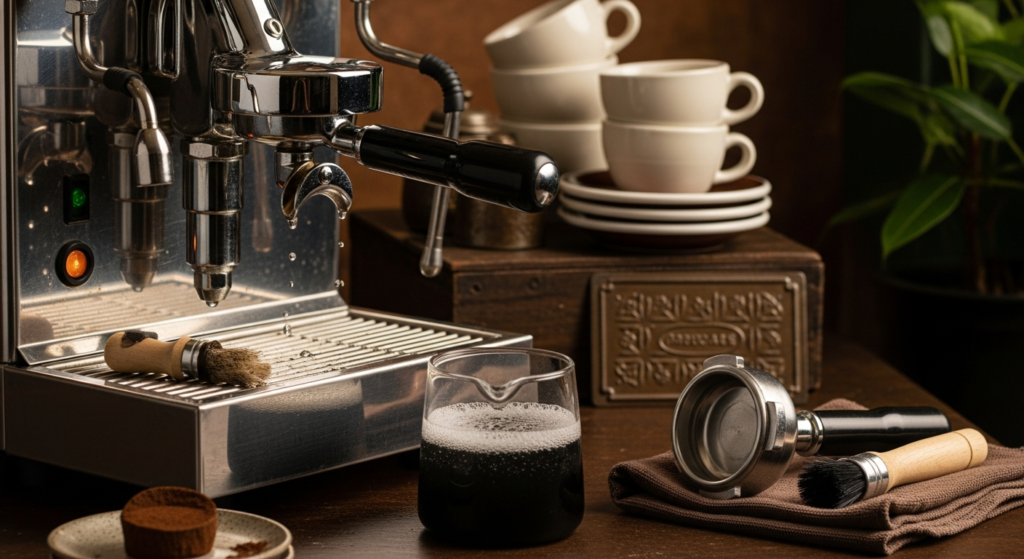
How to Descale an Espresso Machine Properly: The Ultimate Guide for 2026
For a home barista, the espresso machine is more than just an appliance; it is the heart of the morning ritual and a significant financial investment. We obsess over bean origin, grind size, and extraction ratios, yet we often overlook the one element that can silently dismantle our setup from the inside out: limescale. Understanding how to descale an espresso machine properly is the difference between a machine that lasts two decades and one that dies a premature death after two years.
As we move into 2026, home espresso technology has become more sophisticated, with advanced sensors and PID controllers that are more sensitive than ever to mineral buildup. Ignoring maintenance doesn’t just result in bad-tasting coffee; it leads to catastrophic mechanical failure. In this comprehensive guide, we will explore the science of descaling, the step-by-step methodology for a professional-grade clean, and the preventative measures that will keep your shots syrupy and your machine pristine for years to come.
Understanding Limescale: The Silent Killer of Espresso Machines
To descale properly, you must first understand what you are fighting. Limescale is primarily composed of calcium carbonate and magnesium, minerals that are naturally present in most water supplies. When water is heated inside your espresso machine’s boiler or thermoblock, these minerals precipitate out of the liquid and solidify onto metal surfaces.
Think of your espresso machine like a cardiovascular system. The boiler is the heart, and the internal copper or stainless steel pipes are the arteries. Limescale acts like arterial plaque. As it builds up, it narrows the passage through which water flows. This forces the pump to work harder, leading to premature wear. More importantly, scale is an incredible insulator. When a layer of scale coats your heating element, the element must get significantly hotter to reach the desired water temperature. This causes thermal stress on the metal, eventually leading to a “burnt-out” element that requires an expensive professional repair.
Furthermore, scale buildup interferes with temperature stability. In 2026, where we demand precision to the tenth of a degree, a scaled-up boiler will produce “temperature surfing” issues, where your espresso is either too cold (underextracted/sour) or fluctuates wildly, ruining the flavor profile of your expensive specialty beans.
Signs Your Espresso Machine Needs Descaling Right Now
Many modern machines feature a “descale” indicator light, but these are often based on simple timers rather than actual sensor data. It is crucial to recognize the physical symptoms of mineral buildup before the light even turns on.
1. **Reduced Steam Pressure:** If your steam wand feels weaker than usual or takes longer to texturize milk, scale is likely clogging the small orifices in the steam tip or the internal valves.
2. **Slow Flow or “Choking”:** If your pump sounds strained and the water flow from the group head has slowed to a crawl (even without a portafilter attached), your internal lines are narrowing.
3. **Unusual Noises:** A “hissing” or “spitting” sound coming from the machine while it sits idle or heats up often indicates that water is getting trapped behind scale flakes.
4. **Temperature Inconsistency:** If your shots are coming out lukewarm despite the machine being on for 20 minutes, the heating element is likely insulated by a thick crust of calcium.
5. **Visible White Flakes:** If you see white, chalky particles in your hot water dispenser or at the bottom of your water tank, you are in the advanced stages of scaling.
Descaling Solutions: Vinegar vs. Commercial Cleaners
One of the most debated topics in the coffee community is what solution to use. While many “DIY” blogs suggest white vinegar, professionals in 2026 generally advise against it for several reasons.
**The Case Against Vinegar:**
Vinegar (acetic acid) is effective at dissolving calcium, but it has a powerful, lingering odor and taste. Because espresso machines have complex internal nooks and crannies, it can take dozens of rinse cycles to fully remove the vinegar taste. More importantly, acetic acid can be aggressive toward certain rubber gaskets and specialized seals used in high-end Italian machines, potentially causing leaks.
**Commercial Descaling Agents:**
Modern commercial descalers, such as those from Urnex or Puly Caff, are typically formulated with citric acid, sulfamic acid, or lactic acid. These are designed to be “metal-safe.” They are highly effective at breaking down scale without stripping the protective oxides from your boiler’s interior. Furthermore, they are odorless and rinse away much faster than vinegar. In 2026, many brands have moved toward biodegradable, phosphate-free formulas that are as kind to the environment as they are to your machine.
**Citric Acid Powder:**
For the budget-conscious barista, food-grade citric acid powder is a middle ground. It is the primary ingredient in many commercial cleaners and is highly effective. However, it must be dissolved thoroughly in warm water before being added to the tank to prevent crystals from clogging the pump.
A Step-by-Step Guide to Descaling Your Espresso Machine Properly
Regardless of your machine’s brand—be it a Breville, Gaggia, Rocket, or La Marzocco—the fundamental process remains similar. Follow these steps to ensure a thorough deep clean.
#
Step 1: Preparation
Before you begin, remove the water filter from your reservoir. Descaling solutions will ruin carbon or ion-exchange filters. Empty the drip tray and ensure you have a large container (at least 1 liter) to catch the discharge from the group head and steam wand.
#
Step 2: Mixing the Solution
Follow the instructions on your commercial descaler. If using powder, dissolve it in approximately 1 liter of lukewarm water. Pour the solution into the water tank and fill the rest with fresh water.
#
Step 3: Priming the Internal System
Turn the machine on and allow it to reach operating temperature. Once hot, run about one cup of the solution through the **group head** (as if pulling a shot) and another cup through the **steam wand/hot water dispenser**. This ensures the acidic solution is sitting inside the boiler and the internal plumbing where the scale lives.
#
Step 4: The “Soak” Phase
This is the most skipped, yet most important step. Turn the machine off and let it sit for 20 to 30 minutes. The solution needs time to chemically react with the hardened calcium. If your machine is severely scaled, you may want to let it sit for up to an hour.
#
Step 5: Flushing the Solution
Turn the machine back on and run the remainder of the water tank through the machine, alternating between the group head and the steam wand. You may notice the water coming out looks cloudy or slightly blue/green (a reaction with copper)—this is a sign that it is working.
#
Step 6: The Final Rinse
Rinse the water reservoir thoroughly to remove any trace of the chemical. Fill it with fresh, filtered water. Run at least two full reservoirs of clean water through the machine (both the group head and the wand) to ensure no descaling agent remains. Taste a small amount of the water from the hot water tap; if it tastes metallic or acidic, continue rinsing.
Tailoring the Process: Descaling Different Machine Types
Not all espresso machines are built the same, and descaling them requires slightly different nuances.
**Thermoblock Machines (e.g., Breville/Sage):**
These machines use a spiral heating path rather than a tank. They scale very quickly because the water passages are narrow. However, they are also easier to descale because there is less volume to flush. Many of these machines have automated “Descale Cycles” programmed into their software—always follow the on-screen prompts if available.
**Single Boiler Machines (e.g., Gaggia Classic, Rancilio Silvia):**
These are straightforward. The main concern is ensuring the solution reaches the top of the boiler. Running the pump while the steam valve is open is the best way to ensure the entire chamber is treated.
**Heat Exchanger (HX) and Dual Boiler Machines:**
These are more complex. In a Dual Boiler, you must descale both the brew boiler and the steam boiler separately. Descaling a steam boiler often requires “overfilling” the boiler to ensure the scale at the water line is reached. Because these machines often use vacuum breakers and sensitive probes, many manufacturers recommend that high-end E61 group machines be descaled by a professional or handled with extreme care to prevent loose scale flakes from clogging the tiny “gicleur” valves.
Pro Tips to Prevent Mineral Buildup and Extend Machine Life
The best way to descale is to not have to do it often. In 2026, the focus has shifted from “remedial cleaning” to “preventative water chemistry.”
* **Use the 70/30 Water Rule:** Many enthusiasts now use “custom water.” By starting with distilled or RO (Reverse Osmosis) water and adding specific amounts of minerals (like potassium bicarbonate), you can create water that tastes great but is chemically incapable of forming scale.
* **In-Tank Softeners:** If you use tap water, always use an in-tank softener pouch or a resin filter. These exchange calcium ions for sodium or potassium, significantly slowing the scaling process.
* **The BWT Pitcher:** Many home baristas use BWT magnesium-exchange filters. These remove the scale-forming calcium and replace it with magnesium, which enhances the flavor of the coffee without the damaging buildup.
* **Regularity over Intensity:** It is much better to do a “light” descale every 3 months than a “heavy” descale once a year. Heavy descaling on a severely neglected machine can cause large chunks of scale to break off and get stuck in the solenoid valve, leading to a total blockage.
FAQ: Common Descaling Questions
**Q1: How often should I descale my espresso machine?**
A: This depends entirely on your water hardness. If you have “soft” water, every 4-6 months is sufficient. If you have “hard” water, you should descale every 1-2 months. Using a TDS (Total Dissolved Solids) meter can help you monitor your water quality.
**Q2: Can I use bottled spring water to avoid descaling?**
A: Not necessarily. Many spring waters (like Volvic or Evian) are actually quite high in mineral content and can cause scale faster than filtered tap water. If you want to avoid scale, look for water labeled “distilled” or “demineralized,” but remember you must add a small amount of minerals back in for taste and to allow the machine’s sensors to detect the water.
**Q3: Will descaling fix a machine that won’t pump water?**
A: It might, but if the machine is completely blocked, the descaling solution cannot reach the blockage. In this case, you may need a “mechanical” descale, which involves disassembling the machine and soaking individual components in acid.
**Q4: Is citric acid safe for aluminum boilers?**
A: You must be careful. Some older machines (like certain Gaggia models) have aluminum boilers. Prolonged exposure to high concentrations of citric acid can pit the aluminum. Always use a descaler specifically labeled as safe for aluminum for these machines.
**Q5: Why does my coffee taste weird after descaling?**
A: This is usually due to insufficient rinsing. The acidic solution can linger in the gaskets or at the bottom of the boiler. Run another two liters of fresh water through the system, and the taste should normalize.
Conclusion
Mastering the art of how to descale an espresso machine properly is a fundamental skill for any serious coffee lover. While it may seem like a tedious chore, it is the single most important action you can take to protect your equipment and ensure the quality of your espresso.
As we look toward the innovations of 2026, the home barista community continues to move toward better water management and smarter maintenance habits. By choosing the right descaling agents, following a disciplined cleaning schedule, and understanding the unique needs of your specific machine, you ensure that every shot you pull is a perfect reflection of your craft. Don’t wait for the warning light—treat your machine with the care it deserves, and it will reward you with delicious, café-quality espresso for a lifetime.