


Does Dark Roast Have More Caffeine? Unpacking the Ultimate Coffee Myth
Affiliate disclosure: This article may contain affiliate links. Recommendations are independent and editorially driven.
For countless coffee enthusiasts worldwide, the morning ritual begins with that first invigorating sip. Whether it’s the rich, bold flavor of a dark roast or the bright, nuanced notes of a lighter brew, coffee is more than just a beverage; it’s a culture, a comfort, and often, a catalyst for our day. Yet, amidst the myriad brewing methods, bean origins, and flavor profiles, one question persistently percolates through coffee conversations: does dark roast have more caffeine?
It’s a common assumption, deeply ingrained in the popular consciousness: dark equals strong, and strong equals more caffeine. The smoky aroma and robust taste of a dark roast coffee often lead us to believe it delivers a more substantial kick. Conversely, light roasts, with their delicate acidity and fruity undertones, are sometimes perceived as gentler, less potent caffeine delivery systems. But is this widely held belief rooted in scientific fact, or is it merely one of the many myths swirling around our beloved brew?
At cafeserre, we pride ourselves on dissecting the nuances of coffee culture, separating fact from fiction, and empowering our readers with knowledge that enhances their coffee experience. In this comprehensive guide, we’re not just answering whether dark roast has more caffeine; we’re diving deep into the fascinating world of coffee chemistry, the intricate art of roasting, and the multitude of factors that truly dictate the caffeine content of your cup. Prepare to have your assumptions challenged, your understanding enriched, and your appreciation for coffee deepened as we unpack the truth behind one of coffee’s most enduring mysteries.
The Persistent Question: Does Dark Roast Have More Caffeine?
The idea that dark roasts pack a bigger caffeine punch is pervasive. Walk into almost any coffee shop, mention a need for a strong coffee, and you’re likely to be steered towards a French Roast or an Espresso Roast. This perception isn’t accidental; it’s born from a blend of sensory experience and anecdotal evidence.
The Common Misconception
Our brains are wired to associate dark colors and intense flavors with strength. A dark roast coffee typically presents a richer, sometimes bitter, and often more concentrated flavor profile than its lighter counterparts. This intensity, both visually and gustatorily, leads many to conclude that the caffeine content must also be higher. It feels stronger, therefore it must be stronger, right?
Furthermore, the term “espresso” itself is often linked with dark roasts, and espresso shots are known for their concentrated caffeine dose. This connection further solidifies the idea that the darker the roast, the higher the caffeine. However, this conflates two distinct concepts: roast level and preparation method. While espresso is typically made with darker roasts (though this is increasingly changing), the high concentration of caffeine in an espresso shot comes from the brewing method’s efficiency in extraction, not inherently from the roast level of the beans themselves.
Why This Myth Endures
The endurance of the “dark roast equals more caffeine” myth can be attributed to several factors. Firstly, the sensory experience is powerful. The robust body and often smoky notes of a dark roast can feel more stimulating to the palate, mistakenly translating to a greater physiological stimulant effect. Secondly, without readily available scientific information, people rely on common knowledge and personal experience. If someone feels more awake after a dark roast, they attribute it to higher caffeine, even if other variables (like larger serving size or psychological effects) are at play.
Finally, marketing sometimes plays a role. Descriptions like “bold,” “intense,” and “robust” are frequently used for dark roasts, words that consumers might naturally associate with a heightened stimulating effect. Unraveling this myth requires a deeper dive into what caffeine is, how coffee beans transform during roasting, and the precise science of caffeine extraction.
Understanding Caffeine: The Core of the Conversation

Before we can definitively answer the question, “does dark roast have more caffeine?”, we must first understand caffeine itself. What is this magical compound that kickstarts billions of mornings worldwide, and how does it actually work?
What is Caffeine? A Chemical Perspective
Caffeine (1,3,7-trimethylxanthine) is a naturally occurring stimulant found in the seeds, leaves, and fruits of over 60 plants, most notably the coffee plant, tea plant, and cacao plant. It’s an alkaloid, a class of naturally occurring chemical compounds that contain nitrogen and often have pharmacological effects. Caffeine is highly water-soluble, which is crucial for its extraction into your daily cup.
Chemically, caffeine is remarkably stable. It has a relatively high melting point (around 238°C or 460°F) and a boiling point that’s even higher (around 353°C or 667°F, though it sublimes readily before reaching that point). This inherent stability means that the temperatures reached during typical coffee roasting processes, while intense, are generally not high enough, or sustained for long enough, to significantly degrade the vast majority of the caffeine present in the bean. This chemical property is the bedrock of understanding why roast level has a minimal impact on caffeine content.
How Caffeine Affects Your Body
Caffeine exerts its stimulating effects primarily by blocking adenosine, a neurotransmitter that promotes relaxation and sleepiness. Adenosine binds to receptors in the brain, slowing down nerve cell activity. Caffeine molecules are structurally similar to adenosine, allowing them to bind to these same receptors, but without activating them. This effectively prevents adenosine from performing its usual job, leading to increased neuronal activity and the release of other stimulating neurotransmitters like dopamine and norepinephrine.
The result is a cascade of effects: increased alertness, enhanced concentration, reduced perception of fatigue, and even mild mood elevation. These effects typically begin within 15-30 minutes of consumption and can last for several hours, depending on individual metabolism.
Individual Responses to Caffeine
It’s important to note that the impact of caffeine varies significantly from person to person. Genetics play a major role in how quickly an individual metabolizes caffeine. People with faster metabolisms might feel the effects more intensely but for a shorter duration, while slow metabolizers might experience prolonged effects and be more sensitive to smaller doses.
Other factors like body weight, tolerance (developed through regular consumption), and even hydration levels can influence how you react to caffeine. This variability is why one person might feel jittery after a single cup, while another can drink several without issue.
The Role of Dosage
Ultimately, the feeling of “strength” or the extent of stimulation you get from coffee is directly correlated with the total amount of caffeine you consume. Whether that caffeine comes from a dark roast or a light roast, a small espresso or a large drip coffee, the body reacts to the quantity of the compound, not its perceived “intensity” based on flavor or roast color.
Understanding this foundational principle – that caffeine is a stable chemical compound whose effects depend on dosage – is key to dispelling the myth about dark roasts. The crucial questions then become: how does roasting affect the physical characteristics of the bean, and how does that, in turn, influence how much caffeine ends up in your cup?
[INLINE IMAGE 1: place after second H2 | alt=”does dark roast have more caffeine concept illustration”]
The Art and Science of Coffee Roasting
Roasting is the transformative stage that unlocks the magic within green coffee beans. It’s an intricate dance of time and temperature, converting dense, flavorless seeds into the aromatic, complex beans we recognize. Understanding this process is crucial to comprehending how roast level relates (or doesn’t relate) to caffeine content.
From Green Bean to Aromatic Delight
Unroasted, green coffee beans bear little resemblance to the rich brown beans we brew. They are dense, grassy in smell, and lack the characteristic coffee flavor. The roasting process involves heating these beans at temperatures typically ranging from 190°C to 260°C (375°F to 500°F). This heat initiates a complex series of physical and chemical reactions that develop the coffee’s color, aroma, and flavor.
Key Stages of Roasting: Drying, Maillard, Caramelization
- Drying Stage: In the initial minutes, the beans absorb heat, and any residual moisture evaporates. The beans turn from green to a pale yellowish color.
- Maillard Reaction: As temperatures continue to rise (around 140-165°C / 285-330°F), amino acids and reducing sugars react, creating hundreds of new flavor compounds. This is where the characteristic “coffee” flavor begins to develop, along with browning of the beans. This stage is responsible for much of coffee’s complexity and aromatic richness.
- First Crack: Around 196°C (385°F), the beans rapidly expand as internal pressure builds and moisture is released, producing an audible “crack.” This signals the beginning of significant flavor development and marks the transition from very light roasts to medium roasts.
- Caramelization: After the first crack, sugars within the bean begin to caramelize, contributing sweetness and body. Acidity levels also start to decrease, and bitterness increases. The bean continues to expand and shed chaff (silver skin).
- Second Crack: If roasting continues, a second, softer cracking sound occurs around 224°C (435°F). This indicates a more significant breakdown of the bean’s cellular structure, leading to a darker color, oil migration to the surface, and a more pronounced roasted flavor. Beyond this point, the coffee quickly approaches very dark roasts, where flavors become dominated by roast notes and bitterness.
Roast Profiles: Light, Medium, Dark
The length of time and the final temperature a bean reaches during roasting determine its roast profile:
- Light Roasts: Pulled shortly after the first crack. They are light brown, often have a dry surface, and retain much of the bean’s original origin characteristics. They tend to be higher in acidity with fruity, floral, or earthy notes.
- Medium Roasts: Roasted between the first and second crack. They are medium brown, may have a slightly oily surface, and offer a balanced flavor profile with more body and less acidity than light roasts. This is often considered the “sweet spot” for many specialty coffees.
- Dark Roasts: Roasted to or beyond the second crack. They are dark brown, often very oily, and have a more pronounced bitterness, smoky notes, and less original bean character. The origin flavors are largely subsumed by the “roast” flavor.
The Roaster’s Role in Flavor Development
A master roaster acts as an artisan, meticulously controlling the roasting process to highlight specific characteristics of each bean. They don’t just apply heat; they manage airflow, drum speed, and temperature curves to achieve a desired profile. Their goal is always to optimize flavor, balancing acidity, sweetness, body, and bitterness. While caffeine is present in the green bean, its level is largely a fixed quantity per bean, and the roasting process is not primarily aimed at altering this quantity but rather at transforming the bean’s flavor precursors into desirable aromatic compounds.
The key takeaway here is that roasting is about developing flavor, not fundamentally altering the caffeine content. The changes that occur are primarily chemical transformations of sugars, acids, and other compounds, along with physical changes to the bean’s structure. Understanding these changes helps us contextualize the caffeine discussion.
Dark Roast vs. Light Roast: A Closer Look at Physical Transformation
While the chemical structure of caffeine remains largely intact during roasting, the physical characteristics of the coffee bean undergo significant changes. These transformations are vital for understanding why the “dark roast equals more caffeine” myth persists and why precise measurement is critical for comparison.
Color, Aroma, and Flavor Profiles
The most obvious difference between roast levels is color. Light roasts are a pale brown, like cinnamon, while dark roasts range from a rich chocolate brown to nearly black, sometimes exhibiting an oily sheen.
- Light Roast: Characterized by high acidity, a lighter body, and distinct, often complex flavors that reflect the bean’s origin (e.g., citrus, berry, floral notes). The aroma is often delicate and bright.
- Medium Roast: Offers a more balanced acidity and body, with a wider range of flavors that can include chocolate, nuttiness, and caramel, alongside some residual origin characteristics. The aroma is typically rich and inviting.
- Dark Roast: Exhibits low acidity, a heavy body, and flavors dominated by the roasting process itself—notes of bittersweet chocolate, smoky nuances, and sometimes a char-like bitterness. Origin characteristics are often masked. The aroma is intense and robust.
Cellular Structure and Density Changes During Roasting
As coffee beans roast, they lose moisture, expand in size, and become less dense. This is a critical point in our discussion:
- Moisture Loss: Green coffee beans can contain 10-12% moisture. During roasting, most of this water evaporates. Darker roasts lose more moisture than lighter roasts, resulting in a greater weight loss.
- Expansion: The beans puff up as internal gases are released and cellular structures break down. Darker roasts expand more significantly, becoming noticeably larger and more porous than lighter roasts.
- Density Reduction: Because darker roasts lose more water and expand more, they become less dense. A dark roast bean is effectively lighter and larger than a light roast bean of the same initial green weight.
Weight Loss and Expansion
Consider two identical green coffee beans. One is roasted to a light level, the other to a dark level. The light roast will lose about 12-15% of its initial weight, while the dark roast might lose 18-25% or more. Concurrently, the light roast will expand somewhat, but the dark roast will expand even further, becoming noticeably bigger. This means that if you compare them by volume (e.g., a scoop of beans), the dark roast scoop will contain fewer individual beans, and therefore less overall bean mass, than a scoop of light roast beans.
The Impact on Grindability
The cellular changes also affect how the beans grind. Darker roasts, being less dense and more brittle due to extensive cell wall breakdown, grind more easily and often produce a finer particulate size with less effort. This can influence extraction efficiency during brewing, a factor we’ll discuss later regarding caffeine content in the cup.
The crucial insight from this section is that while the *amount* of caffeine in an individual bean changes negligibly with roasting, the *physical characteristics* of that bean change dramatically. A dark roast bean is physically larger but lighter in weight than a light roast bean. This distinction—comparing by mass versus by volume—is where the myth of dark roast having more caffeine truly begins to unravel.
[INLINE IMAGE 2: place after fourth H2 | alt=”does dark roast have more caffeine comparison illustration”]
Dispelling the Myth: Caffeine Content and Roast Level
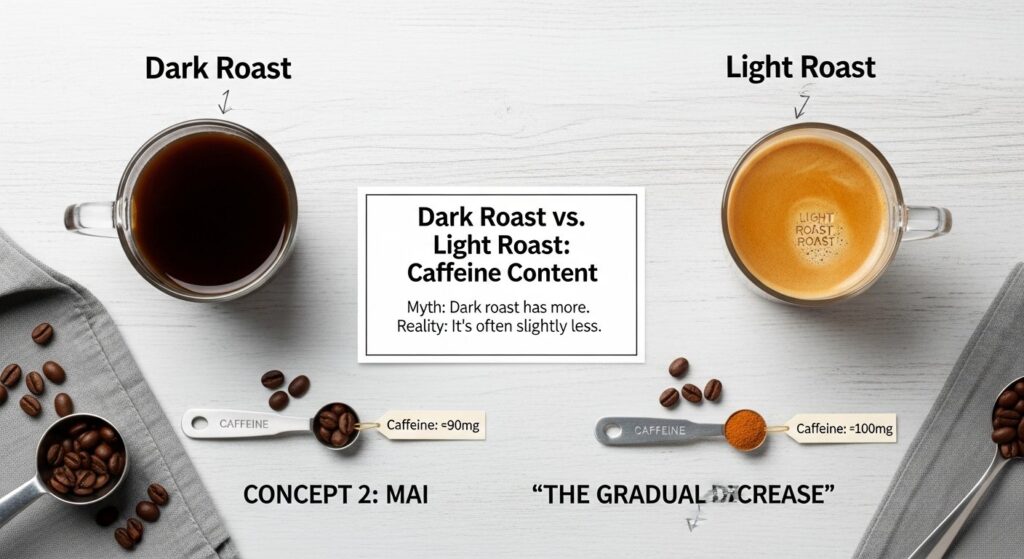
Now, we arrive at the crux of the matter: does dark roast have more caffeine? The short, definitive answer is: not significantly, and in some common scenarios, it may even have slightly less by volume.
The Chemical Stability of Caffeine
As established earlier, caffeine is a remarkably stable compound. While very minimal degradation can occur at extreme temperatures over prolonged periods, typical coffee roasting (which rarely exceeds 230-240°C or 450-465°F and lasts only 10-15 minutes) simply doesn’t reach the conditions necessary to “burn off” a significant amount of caffeine. The vast majority of the caffeine present in the green bean remains in the roasted bean, regardless of whether it’s light or dark.
Studies have consistently shown that the percentage of caffeine by dry weight of the bean changes very little across different roast levels. If you take 100 grams of green coffee beans and split them into two batches, roasting one light and the other dark, the total caffeine content of the light roasted batch (by weight) will be very similar to the total caffeine content of the dark roasted batch (by weight).
Mass vs. Volume: Why Measurement Matters
This is where the distinction becomes critical. While the *percentage* of caffeine by weight remains relatively constant, the *physical density* of the beans changes. Darker roasts are less dense and more porous because they’ve lost more moisture and expanded more during the longer roasting process. This means:
- By Weight: If you measure your coffee by weight (e.g., 20 grams of beans), then a light roast and a dark roast will have nearly identical caffeine content. This is the most accurate way to compare.
- By Volume: If you measure your coffee by volume (e.g., a standard coffee scoop), then a scoop of dark roast beans will contain fewer individual beans and less overall coffee mass than a scoop of light roast beans. Because there’s less total coffee material, there will be slightly less caffeine in that volumetrically measured scoop of dark roast.
Therefore, if you’re scooping your coffee by volume, a light roast coffee would typically deliver slightly *more* caffeine than an equal volume of dark roast coffee. The perception of “strength” in a dark roast comes from its intense flavor profile, not from higher caffeine.
The “Burn-Off” Fallacy Explained
The idea that caffeine “burns off” during darker roasting is a misconception. While minuscule amounts might degrade, it’s not enough to be practically significant. What does change drastically is the bean’s structure and density. Imagine a dense log of wood versus a puffed-up piece of charcoal. Both started as wood, but the charcoal is lighter and less dense for the same volume, even if the total carbon content (analogous to caffeine here) hasn’t fundamentally disappeared, but rather dispersed or concentrated in a different physical form.
The “boldness” of dark roasts is due to the formation of more intense, often bitter, and smoky flavor compounds, as well as a heavier body, which are products of longer exposure to heat and caramelization. These sensory attributes are easily confused with a higher caffeine kick.
Quantifying Caffeine Across Roasts
To further illustrate, let’s look at approximate caffeine content, acknowledging that these are averages and can vary widely based on bean origin, varietal, and specific roast profiles.
| Roast Level | Approx. Caffeine Content (per 100g dry weight) | Approx. Caffeine Content (per standard scoop of beans by volume) | Flavor Profile Notes |
|---|---|---|---|
| Light Roast | ~1.3% – 1.5% | ~100-120 mg (more beans per scoop) | Bright acidity, fruity/floral, distinct origin flavors |
| Medium Roast | ~1.3% – 1.5% | ~90-110 mg (fewer beans per scoop than light) | Balanced, sweet, nutty/chocolatey, less acidity |
| Dark Roast | ~1.3% – 1.5% | ~80-100 mg (fewest beans per scoop due to expansion) | Bold, smoky, bittersweet, low acidity, roast-forward flavors |
| Very Dark Roast (e.g., French Roast) | ~1.3% – 1.5% | ~70-90 mg (least dense, fewest beans per scoop) | Intensely smoky, bitter, sometimes burnt notes |
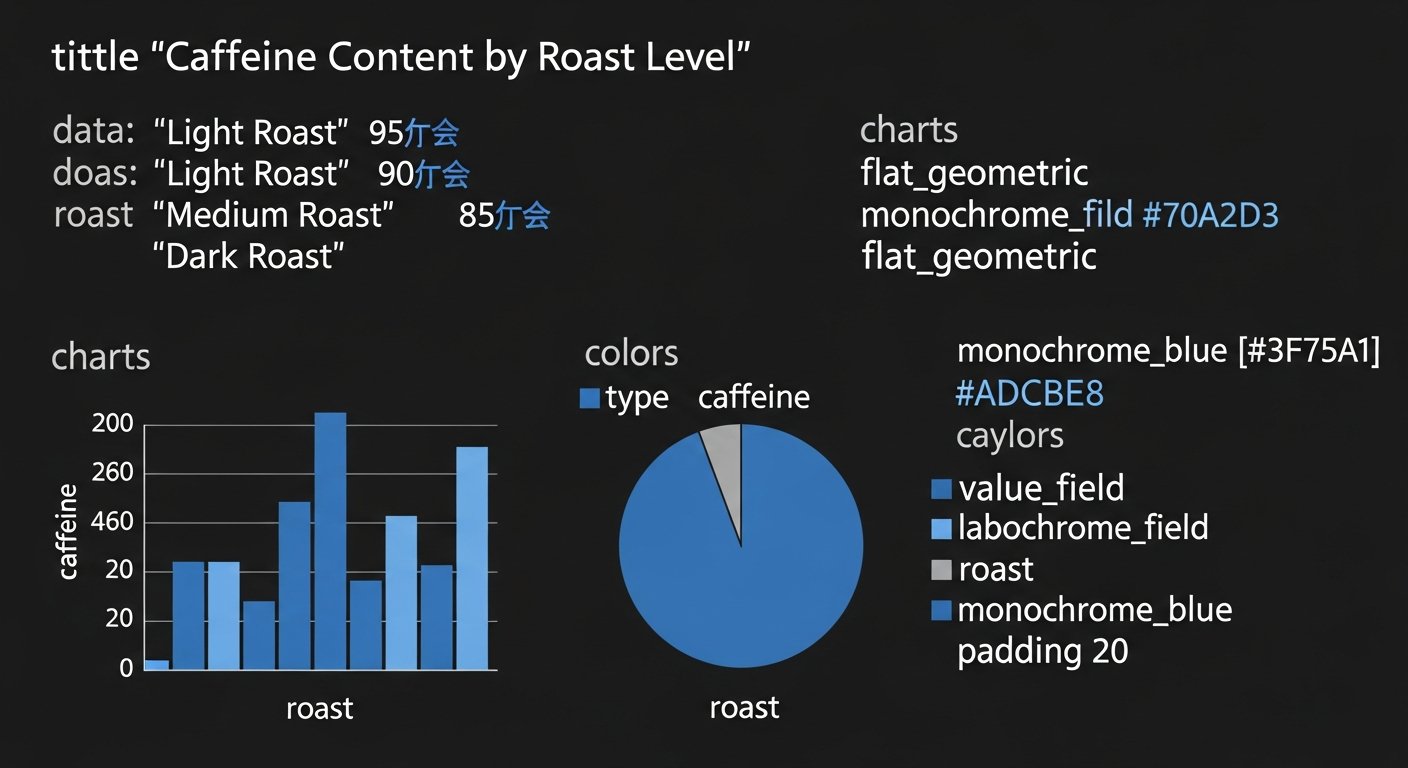
As the table clearly shows, the caffeine content by dry weight of the beans remains remarkably consistent. The slight differences in volumetric measurement are due to the physical changes in the bean’s density and size, not a fundamental alteration of the caffeine itself.
This means that if you’re trying to maximize your caffeine intake, simply choosing a dark roast based on the assumption of higher caffeine is misguided. You’d be better served by focusing on other variables or, more simply, by adding more coffee by weight to your brew.
Explore the art of precision brewing to unlock your coffee’s full potential.
Beyond the Roast: Other Factors Influencing Caffeine Levels in Your Cup
While the roast level has a negligible impact on the inherent caffeine content of a coffee bean (when measured by weight), many other variables play a significant role in determining how much caffeine ultimately ends up in your cup. Understanding these factors is key to truly controlling your coffee experience.
Coffee Bean Varietal: Arabica vs. Robusta
This is arguably the most significant factor impacting a coffee’s natural caffeine content. There are two primary species of coffee grown commercially:
- Arabica (Coffea arabica): Accounts for 60-70% of global coffee production. Arabica beans are renowned for their complex aromas, delicate flavors, higher acidity, and lower bitterness. They typically contain 1.5% caffeine by dry weight, or roughly 70-120 mg per 8-ounce cup, depending on preparation.
- Robusta (Coffea canephora): Makes up 30-40% of the market. Robusta beans are known for their bolder, rubbery, or more bitter taste and heavier body. They are hardier plants, easier to grow, and significantly higher in caffeine, containing about 2.5%-4.5% caffeine by dry weight, translating to 150-250 mg or more per 8-ounce cup.
If you’re looking for a genuine caffeine boost, choosing a blend with a higher percentage of Robusta beans will make a far greater difference than selecting a dark roast Arabica. Many espresso blends incorporate some Robusta for its crema-enhancing properties and extra kick.
Grind Size: Surface Area and Extraction Efficiency
The size of your coffee grounds dramatically impacts how efficiently caffeine and other soluble compounds are extracted. Think of it like this: the finer the grind, the greater the surface area exposed to water, and thus, the faster and more thoroughly extraction can occur.
- Fine Grind: Optimal for espresso or Turkish coffee, where contact time with water is very short. The large surface area allows for quick, intense extraction.
- Medium Grind: Ideal for drip coffee makers and pour-overs, balancing extraction with flow rate.
- Coarse Grind: Best for immersion methods like French press or cold brew, where water has a longer time to interact with the grounds.
If your grind is too coarse for your brewing method, you’ll under-extract, resulting in a weaker cup with less caffeine. Conversely, too fine a grind can lead to over-extraction (bitterness) and blockages, especially in methods like drip or pour-over.
Brewing Method: Immersion vs. Drip vs. Pressure
Different brewing methods extract different amounts of caffeine due to varying factors like water temperature, brew time, and pressure.
- Drip/Pour-Over: Water passes through the grounds relatively quickly. Caffeine content is moderate to high, depending on the coffee-to-water ratio and brew time.
- French Press (Immersion): Grounds are fully submerged for several minutes. This method is highly efficient at extracting caffeine due to longer contact time, often yielding a cup with robust caffeine levels.
- Espresso: Though a small serving, espresso is highly concentrated. High pressure forces hot water through finely ground coffee very quickly. While a single shot (1-2 oz) may have less total caffeine than a large mug of drip coffee, it has a much higher caffeine concentration per ounce. A typical single espresso shot (approx. 1 oz) contains 60-100 mg of caffeine, whereas a double shot (2 oz) contains 120-200 mg.
- Cold Brew: Characterized by long immersion times (12-24 hours) with cold water. Cold water extracts caffeine more slowly but very thoroughly. Cold brew often uses a higher coffee-to-water ratio than hot brewing, leading to a highly concentrated concentrate that, when diluted, can still deliver significant caffeine.
Water Temperature and Brew Time
Caffeine is more soluble in hot water. Brewing with water that’s too cool will result in less efficient extraction and a lower caffeine yield. The ideal temperature range for hot brewing is typically 90-96°C (195-205°F). Similarly, longer brew times generally lead to more caffeine extraction, up to a point where over-extraction of bitter compounds might occur.
Coffee-to-Water Ratio: The Concentration Factor
This is arguably the most straightforward way to control caffeine in your cup. The more coffee grounds you use relative to water, the more concentrated your brew will be, and thus, the more caffeine it will contain. The generally recommended ratio for drip coffee is 1:15 to 1:18 (e.g., 1 gram of coffee for every 15-18 grams of water). Deviating from this significantly impacts both flavor and caffeine.
Serving Size and Cup Volume
This might seem obvious, but a larger cup of coffee, even if brewed with the exact same method and beans, will contain more total caffeine simply because there’s more liquid. A small espresso has less total caffeine than a large Americano, even if the espresso itself is more concentrated. When comparing your caffeine intake, always consider the final volume of your beverage.
In summary, while the question “does dark roast have more caffeine” focuses on a single variable, the reality is that a symphony of factors orchestrates the caffeine content of your final cup. Focusing on bean varietal, grind size, brewing method, and coffee-to-water ratio will have a far more tangible impact than simply choosing a darker roast.
Discover the perfect grind size for every brewing method in our comprehensive guide.
Brewing for Optimal Flavor and Desired Caffeine Kick
Armed with the knowledge that roast level isn’t the primary determinant of caffeine, you can now approach your brewing with a more informed perspective, aiming to achieve both exceptional flavor and your desired caffeine experience. The goal is balance: extracting enough solubles for a full-flavored cup without over-extracting bitterness or under-extracting essential compounds, including caffeine.
Matching Roast to Brew Method
Different roasts shine in different brewing contexts, not just for flavor, but for how their characteristics interact with extraction dynamics.
- Light Roasts: Often best appreciated in pour-overs, AeroPress, or even cold brew. These methods highlight their delicate acidity, fruity notes, and aromatic complexity. Since light roasts are denser, they may require a slightly finer grind than usual for a given method to ensure adequate extraction.
- Medium Roasts: Highly versatile. They excel in drip coffee makers, French presses, and pour-overs. Their balanced profile makes them forgiving and enjoyable across many preparations.
- Dark Roasts: Their bold, rich flavors stand up well to espresso machines, Moka pots, and French presses. The heavy body and lower acidity complement milk-based drinks. For drip or pour-over, use a slightly coarser grind to prevent over-extraction and bitterness.
Experimentation is key. Don’t be afraid to try a light roast as an espresso or a dark roast in a pour-over; just adjust your grind and ratio accordingly.
Grind Size Precision
Investing in a good burr grinder is perhaps the single most impactful step you can take to improve your coffee. Burr grinders produce uniform particle sizes, which are essential for consistent and even extraction.
- Too Coarse: Results in under-extraction, leading to a sour, weak, and underdeveloped flavor, and lower caffeine.
- Too Fine: Leads to over-extraction, resulting in a bitter, astringent, and harsh cup, often with excessive fines that can clog filters.
Adjust your grind for each brewing method and even for different beans within that method. A darker roast, being more brittle, may require a slightly coarser setting on your grinder compared to a light roast for the same brewing method to prevent over-extraction.
Water Quality and Temperature Control
Your coffee is over 98% water, so its quality profoundly affects flavor. Use filtered water that is free of chlorine, odors, and excessive minerals. As for temperature, aiming for 90-96°C (195-205°F) for hot brewing methods is crucial for optimal extraction of both flavor compounds and caffeine. Water that is too hot can scald the grounds, leading to bitterness, while water that is too cool will under-extract.
Brewing Ratios for Consistency
Measuring your coffee by weight (using a kitchen scale) rather than by volume (scoops) is the most accurate way to ensure consistent caffeine levels and flavor profiles. A standard starting point is a 1:15 to 1:18 coffee-to-water ratio. For example:
- For 300ml (approx. 10 oz) of coffee, you’d use 17-20 grams of coffee (300 / 18 = 16.6g; 300 / 15 = 20g).
If you want more caffeine, increase your coffee dose slightly while maintaining an appropriate grind and brew time. This will raise the concentration of your brew.
Personalizing Your Coffee Experience
The beauty of coffee lies in its versatility and the endless possibilities for customization. Don’t be afraid to experiment to find what works best for your palate and your caffeine needs. Try different roast levels with different brewing methods, adjust your grind, tweak your ratios, and pay attention to the subtle changes in flavor and how you feel after each cup. This journey of discovery is part of the joy of coffee. Understanding that “does dark roast have more caffeine” is a myth liberates you to explore coffee based on flavor preference, rather than a mistaken belief about its stimulating power.
Uncover the secrets to perfect pour-over coffee with our expert guide.
Health, Enjoyment, and Making Informed Coffee Choices
With the myth of dark roast caffeine content debunked, we can shift our focus from a misinformed pursuit of a caffeine kick to a more holistic appreciation of coffee. Understanding the true factors influencing your brew allows for healthier, more enjoyable, and genuinely informed choices.
Benefits of Coffee Consumption
Beyond the immediate stimulating effects, coffee consumption has been linked to numerous health benefits, supported by a growing body of scientific research:
- Antioxidant Power: Coffee is one of the richest sources of antioxidants in the Western diet. These compounds help combat oxidative stress and inflammation in the body.
- Reduced Risk of Chronic Diseases: Regular coffee intake has been associated with a lower risk of Type 2 diabetes, Parkinson’s disease, Alzheimer’s disease, certain cancers (liver, colorectal), and liver conditions like cirrhosis.
- Improved Physical Performance: Caffeine can enhance endurance and reduce perceived exertion during exercise.
- Mood Enhancement: The stimulating effects of caffeine, combined with coffee’s rich aroma and ritualistic consumption, can contribute to improved mood and reduced risk of depression.
- Heart Health: Moderate coffee consumption has been linked to a lower risk of heart disease and stroke in some studies.
These benefits are generally associated with moderate consumption, typically 3-5 cups (240ml/8oz each) per day, providing around 300-400 mg of caffeine.
Potential Downsides and Moderation
While beneficial, coffee is not without its potential downsides, particularly when consumed in excess or by sensitive individuals:
- Insomnia and Sleep Disturbances: Caffeine’s stimulating effects can interfere with sleep, especially if consumed too close to bedtime.
- Anxiety and Jitters: High doses can lead to anxiety, nervousness, restlessness, and heart palpitations in sensitive individuals.
- Digestive Issues: For some, coffee can cause stomach upset or heartburn.
- Dependence and Withdrawal: Regular, high consumption can lead to physical dependence, with withdrawal symptoms including headaches, fatigue, and irritability if intake is suddenly stopped.
Understanding your individual tolerance and practicing moderation are key. If you find yourself experiencing adverse effects, consider reducing your intake or switching to decaffeinated options. Remember that dark roasts, despite their lower caffeine by volume, can still be more acidic for some stomachs due to the longer roasting process that can break down more fibers, though this is also highly individual.
Listening to Your Body
The “perfect” amount of caffeine, and the ideal coffee, is highly personal. Some thrive on a robust, high-caffeine brew, while others prefer a gentle pick-me-up or even decaf. Pay attention to how different coffees and different caffeine levels make you feel. Do you feel energized and focused, or jittery and anxious? Your body provides the best feedback mechanism for your coffee choices.
If you’re seeking a less intense caffeine experience but still enjoy the bold flavors often found in dark roasts, you can simply brew with a slightly smaller coffee-to-water ratio or choose a dark roast Arabica. If you desire a significant caffeine boost, opt for Robusta blends or increase the mass of coffee grounds in your brew, irrespective of roast level.
Exploring the World of Coffee Beyond Caffeine
By letting go of the myth that “dark roast has more caffeine,” you open yourself up to a richer, more diverse world of coffee exploration. You can now choose your roast level purely based on flavor preference, knowing that you have other, more effective levers to pull for caffeine control.
- Do you love the bright, complex acidity of a light roast? Enjoy it! If you need more caffeine, just use a bit more coffee by weight.
- Do you crave the smoky, bittersweet notes of a dark roast? Indulge! If you’re concerned about caffeine, you now know that by volume it’s likely less, and you can further moderate by using an Arabica dark roast.
This freedom allows you to truly savor the incredible spectrum of flavors, aromas, and cultural experiences that coffee offers, without being constrained by an unfounded belief about
Does Dark Roast Have More Caffeine? Unpacking the Ultimate Coffee Myth
Affiliate disclosure: This article may contain affiliate links. Recommendations are independent and editorially driven.
For countless coffee enthusiasts worldwide, the morning ritual begins with that first invigorating sip. Whether it’s the rich, bold flavor of a dark roast or the bright, nuanced notes of a lighter brew, coffee is more than just a beverage; it’s a culture, a comfort, and often, a catalyst for our day. Yet, amidst the myriad brewing methods, bean origins, and flavor profiles, one question persistently percolates through coffee conversations: does dark roast have more caffeine?
It’s a common assumption, deeply ingrained in the popular consciousness: dark equals strong, and strong equals more caffeine. The smoky aroma and robust taste of a dark roast coffee often lead us to believe it delivers a more substantial kick. Conversely, light roasts, with their delicate acidity and fruity undertones, are sometimes perceived as gentler, less potent caffeine delivery systems. But is this widely held belief rooted in scientific fact, or is it merely one of the many myths swirling around our beloved brew?
At cafeserre, we pride ourselves on dissecting the nuances of coffee culture, separating fact from fiction, and empowering our readers with knowledge that enhances their coffee experience. In this comprehensive guide, we’re not just answering whether dark roast has more caffeine; we’re diving deep into the fascinating world of coffee chemistry, the intricate art of roasting, and the multitude of factors that truly dictate the caffeine content of your cup. Prepare to have your assumptions challenged, your understanding enriched, and your appreciation for coffee deepened as we unpack the truth behind one of coffee’s most enduring mysteries.
The Persistent Question: Does Dark Roast Have More Caffeine?
The idea that dark roasts pack a bigger caffeine punch is pervasive. Walk into almost any coffee shop, mention a need for a strong coffee, and you’re likely to be steered towards a French Roast or an Espresso Roast. This perception isn’t accidental; it’s born from a blend of sensory experience and anecdotal evidence.
The Common Misconception
Our brains are wired to associate dark colors and intense flavors with strength. A dark roast coffee typically presents a richer, sometimes bitter, and often more concentrated flavor profile than its lighter counterparts. This intensity, both visually and gustatorily, leads many to conclude that the caffeine content must also be higher. It feels stronger, therefore it must be stronger, right?
Furthermore, the term “espresso” itself is often linked with dark roasts, and espresso shots are known for their concentrated caffeine dose. This connection further solidifies the idea that the darker the roast, the higher the caffeine. However, this conflates two distinct concepts: roast level and preparation method. While espresso is typically made with darker roasts (though this is increasingly changing), the high concentration of caffeine in an espresso shot comes from the brewing method’s efficiency in extraction, not inherently from the roast level of the beans themselves.
Why This Myth Endures
The endurance of the “dark roast equals more caffeine” myth can be attributed to several factors. Firstly, the sensory experience is powerful. The robust body and often smoky notes of a dark roast can feel more stimulating to the palate, mistakenly translating to a greater physiological stimulant effect. Secondly, without readily available scientific information, people rely on common knowledge and personal experience. If someone feels more awake after a dark roast, they attribute it to higher caffeine, even if other variables (like larger serving size or psychological effects) are at play.
Finally, marketing sometimes plays a role. Descriptions like “bold,” “intense,” and “robust” are frequently used for dark roasts, words that consumers might naturally associate with a heightened stimulating effect. Unraveling this myth requires a deeper dive into what caffeine is, how coffee beans transform during roasting, and the precise science of caffeine extraction.
Understanding Caffeine: The Core of the Conversation
Before we can definitively answer the question, “does dark roast have more caffeine?”, we must first understand caffeine itself. What is this magical compound that kickstarts billions of mornings worldwide, and how does it actually work?
What is Caffeine? A Chemical Perspective
Caffeine (1,3,7-trimethylxanthine) is a naturally occurring stimulant found in the seeds, leaves, and fruits of over 60 plants, most notably the coffee plant, tea plant, and cacao plant. It’s an alkaloid, a class of naturally occurring chemical compounds that contain nitrogen and often have pharmacological effects. Caffeine is highly water-soluble, which is crucial for its extraction into your daily cup.
Chemically, caffeine is remarkably stable. It has a relatively high melting point (around 238°C or 460°F) and a boiling point that’s even higher (around 353°C or 667°F, though it sublimes readily before reaching that point). This inherent stability means that the temperatures reached during typical coffee roasting processes, while intense, are generally not high enough, or sustained for long enough, to significantly degrade the vast majority of the caffeine present in the bean. This chemical property is the bedrock of understanding why roast level has a minimal impact on caffeine content.
How Caffeine Affects Your Body
Caffeine exerts its stimulating effects primarily by blocking adenosine, a neurotransmitter that promotes relaxation and sleepiness. Adenosine binds to receptors in the brain, slowing down nerve cell activity. Caffeine molecules are structurally similar to adenosine, allowing them to bind to these same receptors, but without activating them. This effectively prevents adenosine from performing its usual job, leading to increased neuronal activity and the release of other stimulating neurotransmitters like dopamine and norepinephrine.
The result is a cascade of effects: increased alertness, enhanced concentration, reduced perception of fatigue, and even mild mood elevation. These effects typically begin within 15-30 minutes of consumption and can last for several hours, depending on individual metabolism.
Individual Responses to Caffeine
It’s important to note that the impact of caffeine varies significantly from person to person. Genetics play a major role in how quickly an individual metabolizes caffeine. People with faster metabolisms might feel the effects more intensely but for a shorter duration, while slow metabolizers might experience prolonged effects and be more sensitive to smaller doses.
Other factors like body weight, tolerance (developed through regular consumption), and even hydration levels can influence how you react to caffeine. This variability is why one person might feel jittery after a single cup, while another can drink several without issue.
The Role of Dosage
Ultimately, the feeling of “strength” or the extent of stimulation you get from coffee is directly correlated with the total amount of caffeine you consume. Whether that caffeine comes from a dark roast or a light roast, a small espresso or a large drip coffee, the body reacts to the quantity of the compound, not its perceived “intensity” based on flavor or roast color.
Understanding this foundational principle – that caffeine is a stable chemical compound whose effects depend on dosage – is key to dispelling the myth about dark roasts. The crucial questions then become: how does roasting affect the physical characteristics of the bean, and how does that, in turn, influence how much caffeine ends up in your cup?
[INLINE IMAGE 1: place after second H2 | alt=”does dark roast have more caffeine concept illustration”]
The Art and Science of Coffee Roasting
Roasting is the transformative stage that unlocks the magic within green coffee beans. It’s an intricate dance of time and temperature, converting dense, flavorless seeds into the aromatic, complex beans we recognize. Understanding this process is crucial to comprehending how roast level relates (or doesn’t relate) to caffeine content.
From Green Bean to Aromatic Delight
Unroasted, green coffee beans bear little resemblance to the rich brown beans we brew. They are dense, grassy in smell, and lack the characteristic coffee flavor. The roasting process involves heating these beans at temperatures typically ranging from 190°C to 260°C (375°F to 500°F). This heat initiates a complex series of physical and chemical reactions that develop the coffee’s color, aroma, and flavor.
Key Stages of Roasting: Drying, Maillard, Caramelization
- Drying Stage: In the initial minutes, the beans absorb heat, and any residual moisture evaporates. The beans turn from green to a pale yellowish color.
- Maillard Reaction: As temperatures continue to rise (around 140-165°C / 285-330°F), amino acids and reducing sugars react, creating hundreds of new flavor compounds. This is where the characteristic “coffee” flavor begins to develop, along with browning of the beans. This stage is responsible for much of coffee’s complexity and aromatic richness.
- First Crack: Around 196°C (385°F), the beans rapidly expand as internal pressure builds and moisture is released, producing an audible “crack.” This signals the beginning of significant flavor development and marks the transition from very light roasts to medium roasts.
- Caramelization: After the first crack, sugars within the bean begin to caramelize, contributing sweetness and body. Acidity levels also start to decrease, and bitterness increases. The bean continues to expand and shed chaff (silver skin).
- Second Crack: If roasting continues, a second, softer cracking sound occurs around 224°C (435°F). This indicates a more significant breakdown of the bean’s cellular structure, leading to a darker color, oil migration to the surface, and a more pronounced roasted flavor. Beyond this point, the coffee quickly approaches very dark roasts, where flavors become dominated by roast notes and bitterness.
Roast Profiles: Light, Medium, Dark
The length of time and the final temperature a bean reaches during roasting determine its roast profile:
- Light Roasts: Pulled shortly after the first crack. They are light brown, often have a dry surface, and retain much of the bean’s original origin characteristics. They tend to be higher in acidity with fruity, floral, or earthy notes.
- Medium Roasts: Roasted between the first and second crack. They are medium brown, may have a slightly oily surface, and offer a balanced flavor profile with more body and less acidity than light roasts. This is often considered the “sweet spot” for many specialty coffees.
- Dark Roasts: Roasted to or beyond the second crack. They are dark brown, often very oily, and have a more pronounced bitterness, smoky notes, and less original bean character. The origin flavors are largely subsumed by the “roast” flavor.
The Roaster’s Role in Flavor Development
A master roaster acts as an artisan, meticulously controlling the roasting process to highlight specific characteristics of each bean. They don’t just apply heat; they manage airflow, drum speed, and temperature curves to achieve a desired profile. Their goal is always to optimize flavor, balancing acidity, sweetness, body, and bitterness. While caffeine is present in the green bean, its level is largely a fixed quantity per bean, and the roasting process is not primarily aimed at altering this quantity but rather at transforming the bean’s flavor precursors into desirable aromatic compounds.
The key takeaway here is that roasting is about developing flavor, not fundamentally altering the caffeine content. The changes that occur are primarily chemical transformations of sugars, acids, and other compounds, along with physical changes to the bean’s structure. Understanding these changes helps us contextualize the caffeine discussion.
Dark Roast vs. Light Roast: A Closer Look at Physical Transformation
While the chemical structure of caffeine remains largely intact during roasting, the physical characteristics of the coffee bean undergo significant changes. These transformations are vital for understanding why the “dark roast equals more caffeine” myth persists and why precise measurement is critical for comparison.
Color, Aroma, and Flavor Profiles
The most obvious difference between roast levels is color. Light roasts are a pale brown, like cinnamon, while dark roasts range from a rich chocolate brown to nearly black, sometimes exhibiting an oily sheen.
- Light Roast: Characterized by high acidity, a lighter body, and distinct, often complex flavors that reflect the bean’s origin (e.g., citrus, berry, floral notes). The aroma is often delicate and bright.
- Medium Roast: Offers a more balanced acidity and body, with a wider range of flavors that can include chocolate, nuttiness, and caramel, alongside some residual origin characteristics. The aroma is typically rich and inviting.
- Dark Roast: Exhibits low acidity, a heavy body, and flavors dominated by the roasting process itself—notes of bittersweet chocolate, smoky nuances, and sometimes a char-like bitterness. Origin characteristics are often masked. The aroma is intense and robust.
Cellular Structure and Density Changes During Roasting
As coffee beans roast, they lose moisture, expand in size, and become less dense. This is a critical point in our discussion:
- Moisture Loss: Green coffee beans can contain 10-12% moisture. During roasting, most of this water evaporates. Darker roasts lose more moisture than lighter roasts, resulting in a greater weight loss.
- Expansion: The beans puff up as internal gases are released and cellular structures break down. Darker roasts expand more significantly, becoming noticeably larger and more porous than lighter roasts.
- Density Reduction: Because darker roasts lose more water and expand more, they become less dense. A dark roast bean is effectively lighter and larger than a light roast bean of the same initial green weight.
Weight Loss and Expansion
Consider two identical green coffee beans. One is roasted to a light level, the other to a dark level. The light roast will lose about 12-15% of its initial weight, while the dark roast might lose 18-25% or more. Concurrently, the light roast will expand somewhat, but the dark roast will expand even further, becoming noticeably bigger. This means that if you compare them by volume (e.g., a scoop of beans), the dark roast scoop will contain fewer individual beans, and therefore less overall bean mass, than a scoop of light roast beans.
The Impact on Grindability
The cellular changes also affect how the beans grind. Darker roasts, being less dense and more brittle due to extensive cell wall breakdown, grind more easily and often produce a finer particulate size with less effort. This can influence extraction efficiency during brewing, a factor we’ll discuss later regarding caffeine content in the cup.
The crucial insight from this section is that while the *amount* of caffeine in an individual bean changes negligibly with roasting, the *physical characteristics* of that bean change dramatically. A dark roast bean is physically larger but lighter in weight than a light roast bean. This distinction—comparing by mass versus by volume—is where the myth of dark roast having more caffeine truly begins to unravel.
[INLINE IMAGE 2: place after fourth H2 | alt=”does dark roast have more caffeine comparison illustration”]
Dispelling the Myth: Caffeine Content and Roast Level
Now, we arrive at the crux of the matter: does dark roast have more caffeine? The short, definitive answer is: not significantly, and in some common scenarios, it may even have slightly less by volume.
The Chemical Stability of Caffeine
As established earlier, caffeine is a remarkably stable compound. While very minimal degradation can occur at extreme temperatures over prolonged periods, typical coffee roasting (which rarely exceeds 230-240°C or 450-465°F and lasts only 10-15 minutes) simply doesn’t reach the conditions necessary to “burn off” a significant amount of caffeine. The vast majority of the caffeine present in the green bean remains in the roasted bean, regardless of whether it’s light or dark.
Studies have consistently shown that the percentage of caffeine by dry weight of the bean changes very little across different roast levels. If you take 100 grams of green coffee beans and split them into two batches, roasting one light and the other dark, the total caffeine content of the light roasted batch (by weight) will be very similar to the total caffeine content of the dark roasted batch (by weight).
Mass vs. Volume: Why Measurement Matters
This is where the distinction becomes critical. While the *percentage* of caffeine by weight remains relatively constant, the *physical density* of the beans changes. Darker roasts are less dense and more porous because they’ve lost more moisture and expanded more during the longer roasting process. This means:
- By Weight: If you measure your coffee by weight (e.g., 20 grams of beans), then a light roast and a dark roast will have nearly identical caffeine content. This is the most accurate way to compare.
- By Volume: If you measure your coffee by volume (e.g., a standard coffee scoop), then a scoop of dark roast beans will contain fewer individual beans and less overall coffee mass than a scoop of light roast beans. Because there’s less total coffee material, there will be slightly less caffeine in that volumetrically measured scoop of dark roast.
Therefore, if you’re scooping your coffee by volume, a light roast coffee would typically deliver slightly *more* caffeine than an equal volume of dark roast coffee. The perception of “strength” in a dark roast comes from its intense flavor profile, not from higher caffeine.
The “Burn-Off” Fallacy Explained
The idea that caffeine “burns off” during darker roasting is a misconception. While minuscule amounts might degrade, it’s not enough to be practically significant. What does change drastically is the bean’s structure and density. Imagine a dense log of wood versus a puffed-up piece of charcoal. Both started as wood, but the charcoal is lighter and less dense for the same volume, even if the total carbon content (analogous to caffeine here) hasn’t fundamentally disappeared, but rather dispersed or concentrated in a different physical form.
The “boldness” of dark roasts is due to the formation of more intense, often bitter, and smoky flavor compounds, as well as a heavier body, which are products of longer exposure to heat and caramelization. These sensory attributes are easily confused with a higher caffeine kick.
Quantifying Caffeine Across Roasts
To further illustrate, let’s look at approximate caffeine content, acknowledging that these are averages and can vary widely based on bean origin, varietal, and specific roast profiles.
| Roast Level | Approx. Caffeine Content (per 100g dry weight) | Approx. Caffeine Content (per standard scoop of beans by volume) | Flavor Profile Notes |
|---|---|---|---|
| Light Roast | ~1.3% – 1.5% | ~100-120 mg (more beans per scoop) | Bright acidity, fruity/floral, distinct origin flavors |
| Medium Roast | ~1.3% – 1.5% | ~90-110 mg (fewer beans per scoop than light) | Balanced, sweet, nutty/chocolatey, less acidity |
| Dark Roast | ~1.3% – 1.5% | ~80-100 mg (fewest beans per scoop due to expansion) | Bold, smoky, bittersweet, low acidity, roast-forward flavors |
| Very Dark Roast (e.g., French Roast) | ~1.3% – 1.5% | ~70-90 mg (least dense, fewest beans per scoop) | Intensely smoky, bitter, sometimes burnt notes |
As the table clearly shows, the caffeine content by dry weight of the beans remains remarkably consistent. The slight differences in volumetric measurement are due to the physical changes in the bean’s density and size, not a fundamental alteration of the caffeine itself.
This means that if you’re trying to maximize your caffeine intake, simply choosing a dark roast based on the assumption of higher caffeine is misguided. You’d be better served by focusing on other variables or, more simply, by adding more coffee by weight to your brew.
Explore the art of precision brewing to unlock your coffee’s full potential.
Beyond the Roast: Other Factors Influencing Caffeine Levels in Your Cup
While the roast level has a negligible impact on the inherent caffeine content of a coffee bean (when measured by weight), many other variables play a significant role in determining how much caffeine ultimately ends up in your cup. Understanding these factors is key to truly controlling your coffee experience.
Coffee Bean Varietal: Arabica vs. Robusta
This is arguably the most significant factor impacting a coffee’s natural caffeine content. There are two primary species of coffee grown commercially:
- Arabica (Coffea arabica): Accounts for 60-70% of global coffee production. Arabica beans are renowned for their complex aromas, delicate flavors, higher acidity, and lower bitterness. They typically contain 1.5% caffeine by dry weight, or roughly 70-120 mg per 8-ounce cup, depending on preparation.
- Robusta (Coffea canephora): Makes up 30-40% of the market. Robusta beans are known for their bolder, rubbery, or more bitter taste and heavier body. They are hardier plants, easier to grow, and significantly higher in caffeine, containing about 2.5%-4.5% caffeine by dry weight, translating to 150-250 mg or more per 8-ounce cup.
If you’re looking for a genuine caffeine boost, choosing a blend with a higher percentage of Robusta beans will make a far greater difference than selecting a dark roast Arabica. Many espresso blends incorporate some Robusta for its crema-enhancing properties and extra kick.
Grind Size: Surface Area and Extraction Efficiency
The size of your coffee grounds dramatically impacts how efficiently caffeine and other soluble compounds are extracted. Think of it like this: the finer the grind, the greater the surface area exposed to water, and thus, the faster and more thoroughly extraction can occur.
- Fine Grind: Optimal for espresso or Turkish coffee, where contact time with water is very short. The large surface area allows for quick, intense extraction.
- Medium Grind: Ideal for drip coffee makers and pour-overs, balancing extraction with flow rate.
- Coarse Grind: Best for immersion methods like French press or cold brew, where water has a longer time to interact with the grounds.
If your grind is too coarse for your brewing method, you’ll under-extract, resulting in a weaker cup with less caffeine. Conversely, too fine a grind can lead to over-extraction (bitterness) and blockages, especially in methods like drip or pour-over.
Brewing Method: Immersion vs. Drip vs. Pressure
Different brewing methods extract different amounts of caffeine due to varying factors like water temperature, brew time, and pressure.
- Drip/Pour-Over: Water passes through the grounds relatively quickly. Caffeine content is moderate to high, depending on the coffee-to-water ratio and brew time.
- French Press (Immersion): Grounds are fully submerged for several minutes. This method is highly efficient at extracting caffeine due to longer contact time, often yielding a cup with robust caffeine levels.
- Espresso: Though a small serving, espresso is highly concentrated. High pressure forces hot water through finely ground coffee very quickly. While a single shot (1-2 oz) may have less total caffeine than a large mug of drip coffee, it has a much higher caffeine concentration per ounce. A typical single espresso shot (approx. 1 oz) contains 60-100 mg of caffeine, whereas a double shot (2 oz) contains 120-200 mg.
- Cold Brew: Characterized by long immersion times (12-24 hours) with cold water. Cold water extracts caffeine more slowly but very thoroughly. Cold brew often uses a higher coffee-to-water ratio than hot brewing, leading to a highly concentrated concentrate that, when diluted, can still deliver significant caffeine.
Water Temperature and Brew Time
Caffeine is more soluble in hot water. Brewing with water that’s too cool will result in less efficient extraction and a lower caffeine yield. The ideal temperature range for hot brewing is typically 90-96°C (195-205°F). Similarly, longer brew times generally lead to more caffeine extraction, up to a point where over-extraction of bitter compounds might occur.
Coffee-to-Water Ratio: The Concentration Factor
This is arguably the most straightforward way to control caffeine in your cup. The more coffee grounds you use relative to water, the more concentrated your brew will be, and thus, the more caffeine it will contain. The generally recommended ratio for drip coffee is 1:15 to 1:18 (e.g., 1 gram of coffee for every 15-18 grams of water). Deviating from this significantly impacts both flavor and caffeine.
Serving Size and Cup Volume
This might seem obvious, but a larger cup of coffee, even if brewed with the exact same method and beans, will contain more total caffeine simply because there’s more liquid. A small espresso has less total caffeine than a large Americano, even if the espresso itself is more concentrated. When comparing your caffeine intake, always consider the final volume of your beverage.
In summary, while the question “does dark roast have more caffeine” focuses on a single variable, the reality is that a symphony of factors orchestrates the caffeine content of your final cup. Focusing on bean varietal, grind size, brewing method, and coffee-to-water ratio will have a far more tangible impact than simply choosing a darker roast.
Discover the perfect grind size for every brewing method in our comprehensive guide.
Brewing for Optimal Flavor and Desired Caffeine Kick
Armed with the knowledge that roast level isn’t the primary determinant of caffeine, you can now approach your brewing with a more informed perspective, aiming to achieve both exceptional flavor and your desired caffeine experience. The goal is balance: extracting enough solubles for a full-flavored cup without over-extracting bitterness or under-extracting essential compounds, including caffeine.
Matching Roast to Brew Method
Different roasts shine in different brewing contexts, not just for flavor, but for how their characteristics interact with extraction dynamics.
- Light Roasts: Often best appreciated in pour-overs, AeroPress, or even cold brew. These methods highlight their delicate acidity, fruity notes, and aromatic complexity. Since light roasts are denser, they may require a slightly finer grind than usual for a given method to ensure adequate extraction.
- Medium Roasts: Highly versatile. They excel in drip coffee makers, French presses, and pour-overs. Their balanced profile makes them forgiving and enjoyable across many preparations.
- Dark Roasts: Their bold, rich flavors stand up well to espresso machines, Moka pots, and French presses. The heavy body and lower acidity complement milk-based drinks. For drip or pour-over, use a slightly coarser grind to prevent over-extraction and bitterness.
Experimentation is key. Don’t be afraid to try a light roast as an espresso or a dark roast in a pour-over; just adjust your grind and ratio accordingly.
Grind Size Precision
Investing in a good burr grinder is perhaps the single most impactful step you can take to improve your coffee. Burr grinders produce uniform particle sizes, which are essential for consistent and even extraction.
- Too Coarse: Results in under-extraction, leading to a sour, weak, and underdeveloped flavor, and lower caffeine.
- Too Fine: Leads to over-extraction, resulting in a bitter, astringent, and harsh cup, often with excessive fines that can clog filters.
Adjust your grind for each brewing method and even for different beans within that method. A darker roast, being more brittle, may require a slightly coarser setting on your grinder compared to a light roast for the same brewing method to prevent over-extraction.
Water Quality and Temperature Control
Your coffee is over 98% water, so its quality profoundly affects flavor. Use filtered water that is free of chlorine, odors, and excessive minerals. As for temperature, aiming for 90-96°C (195-205°F) for hot brewing methods is crucial for optimal extraction of both flavor compounds and caffeine. Water that is too hot can scald the grounds, leading to bitterness, while water that is too cool will under-extract.
Brewing Ratios for Consistency
Measuring your coffee by weight (using a kitchen scale) rather than by volume (scoops) is the most accurate way to ensure consistent caffeine levels and flavor profiles. A standard starting point is a 1:15 to 1:18 coffee-to-water ratio. For example:
- For 300ml (approx. 10 oz) of coffee, you’d use 17-20 grams of coffee (300 / 18 = 16.6g; 300 / 15 = 20g).
If you want more caffeine, increase your coffee dose slightly while maintaining an appropriate grind and brew time. This will raise the concentration of your brew.
Personalizing Your Coffee Experience
The beauty of coffee lies in its versatility and the endless possibilities for customization. Don’t be afraid to experiment to find what works best for your palate and your caffeine needs. Try different roast levels with different brewing methods, adjust your grind, tweak your ratios, and pay attention to the subtle changes in flavor and how you feel after each cup. This journey of discovery is part of the joy of coffee. Understanding that “does dark roast have more caffeine” is a myth liberates you to explore coffee based on flavor preference, rather than a mistaken belief about its stimulating power.
Uncover the secrets to perfect pour-over coffee with our expert guide.
Health, Enjoyment, and Making Informed Coffee Choices
With the myth of dark roast caffeine content debunked, we can shift our focus from a misinformed pursuit of a caffeine kick to a more holistic appreciation of coffee. Understanding the true factors influencing your brew allows for healthier, more enjoyable, and genuinely informed choices.
Benefits of Coffee Consumption
Beyond the immediate stimulating effects, coffee consumption has been linked to numerous health benefits, supported by a growing body of scientific research:
- Antioxidant Power: Coffee is one of the richest sources of antioxidants in the Western diet. These compounds help combat oxidative stress and inflammation in the body.
- Reduced Risk of Chronic Diseases: Regular coffee intake has been associated with a lower risk of Type 2 diabetes, Parkinson’s disease, Alzheimer’s disease, certain cancers (liver, colorectal), and liver conditions like cirrhosis.
- Improved Physical Performance: Caffeine can enhance endurance and reduce perceived exertion during exercise.
- Mood Enhancement: The stimulating effects of caffeine, combined with coffee’s rich aroma and ritualistic consumption, can contribute to improved mood and reduced risk of depression.
- Heart Health: Moderate coffee consumption has been linked to a lower risk of heart disease and stroke in some studies.
These benefits are generally associated with moderate consumption, typically 3-5 cups (240ml/8oz each) per day, providing around 300-400 mg of caffeine.
Potential Downsides and Moderation
While beneficial, coffee is not without its potential downsides, particularly when consumed in excess or by sensitive individuals:
- Insomnia and Sleep Disturbances: Caffeine’s stimulating effects can interfere with sleep, especially if consumed too close to bedtime.
- Anxiety and Jitters: High doses can lead to anxiety, nervousness, restlessness, and heart palpitations in sensitive individuals.
- Digestive Issues: For some, coffee can cause stomach upset or heartburn.
- Dependence and Withdrawal: Regular, high consumption can lead to physical dependence, with withdrawal symptoms including headaches, fatigue, and irritability if intake is suddenly stopped.
Understanding your individual tolerance and practicing moderation are key. If you find yourself experiencing adverse effects, consider reducing your intake or switching to decaffeinated options. Remember that dark roasts, despite their lower caffeine by volume, can still be more acidic for some stomachs due to the longer roasting process that can break down more fibers, though this is also highly individual.
Listening to Your Body
The “perfect” amount of caffeine, and the ideal coffee, is highly personal. Some thrive on a robust, high-caffeine brew, while others prefer a gentle pick-me-up or even decaf. Pay attention to how different coffees and different caffeine levels make you feel. Do you feel energized and focused, or jittery and anxious? Your body provides the best feedback mechanism for your coffee choices.
If you’re seeking a less intense caffeine experience but still enjoy the bold flavors often found in dark roasts, you can simply brew with a slightly smaller coffee-to-water ratio or choose a dark roast Arabica. If you desire a significant caffeine boost, opt for Robusta blends or increase the mass of coffee grounds in your brew, irrespective of roast level.
Exploring the World of Coffee Beyond Caffeine
By letting go of the myth that “dark roast has more caffeine,” you open yourself up to a richer, more diverse world of coffee exploration. You can now choose your roast level purely based on flavor preference, knowing that you have other, more effective levers to pull for caffeine control.
- Do you love the bright, complex acidity of a light roast? Enjoy it! If you need more caffeine, just use a bit more coffee by weight.
- Do you crave the smoky, bittersweet notes of a dark roast? Indulge! If you’re concerned about caffeine, you now know that by volume it’s likely less, and you can further moderate by using an Arabica dark roast.
This freedom allows you to truly savor the incredible spectrum of flavors, aromas, and cultural experiences that coffee offers, without being constrained by an unfounded belief about