


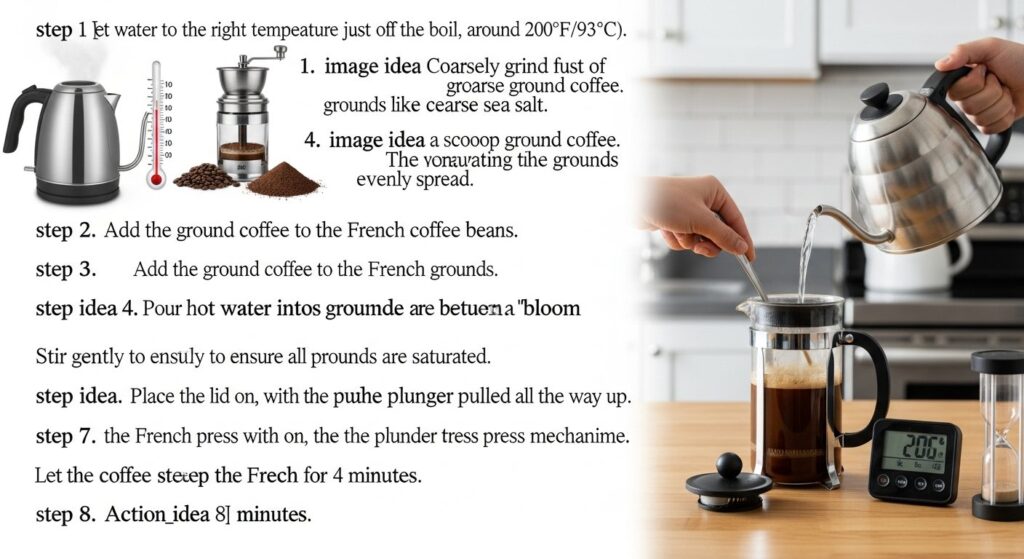
Mastering the Art: A Definitive Guide on How to Use a French Press for Perfect Coffee
Affiliate disclosure: This article may contain affiliate links. Recommendations are independent and editorially driven.
Few brewing methods encapsulate the rustic charm and robust flavor of coffee quite like the French press. Beloved by coffee purists and casual drinkers alike, this simple yet effective device unlocks a depth of character in your beans that drip machines often miss. Its full immersion brewing process allows coffee grounds to steep directly in hot water, extracting a rich, textured brew brimming with natural oils and nuanced flavors. If you’ve ever dreamt of consistently creating café-quality coffee at home, understanding how to use a French press is your golden ticket.
This comprehensive guide from cafeserre will take you through every essential step, from selecting the right beans to troubleshooting common issues, ensuring that your French press journey is nothing short of exceptional. We’ll demystify the process, empower you with expert tips, and help you transform your morning ritual into an art form. Get ready to experience coffee in its most authentic, unadulterated form.
Understanding the French Press: A Timeless Brewing Method
The French press, known by many names globally – cafetière, coffee press, coffee plunger – is a testament to ingenious simplicity. Its enduring popularity stems from its unique brewing philosophy: full immersion. Unlike drip methods where water passes over grounds, the French press allows ground coffee to steep directly in water for an extended period. This method, originating in France and patented by an Italian designer in 1929, facilitates a complete extraction of oils, solids, and flavors, resulting in a coffee that is distinctively rich, full-bodied, and wonderfully aromatic.
The Principle of Full Immersion Brewing
At its heart, the French press operates on the principle of full immersion. This means that all the coffee grounds are submerged in hot water for the entire duration of the brew. This prolonged contact ensures that the maximum amount of flavor compounds, oils, and dissolved solids are extracted from the coffee. The result is a cup with more texture, body, and a fuller flavor profile compared to pour-over or drip methods that primarily rely on percolation.
The absence of paper filters is another defining characteristic. Instead, a mesh filter presses the grounds to the bottom, allowing finely suspended particles and essential coffee oils to pass into your cup. These oils, often trapped by paper filters, contribute significantly to the French press’s signature mouthfeel and complex aroma.
A Brief History and Evolution
While often associated with France, the origins of the French press are somewhat debated. A primitive version involving a metal screen pressed against grounds was reportedly used in France in the mid-19th century. However, the first patent for what we recognize as a modern French press was granted to Italian designer Attilio Calimani in 1929. Later, Swiss designer Faliero Bondanini refined the design and patented his version in 1958, which was then popularized by the Danish company Bodum under the name “Chambord.”
From its humble beginnings, the French press has seen various iterations and material innovations, but its core design and functionality have remained remarkably consistent. It has persevered through trends and technological advancements in coffee brewing, maintaining its status as a beloved method for those who appreciate a hands-on approach and a deeply satisfying cup.
Why Choose French Press Coffee?
The allure of French press coffee extends beyond its historical charm. There are several compelling reasons why it remains a favorite among connoisseurs:
- Full-Bodied Flavor: The full immersion and lack of a paper filter allow all the coffee’s natural oils and fine sediments to enter your cup, creating a velvety texture and an intense flavor profile that highlights the inherent characteristics of the beans.
- Simplicity and Portability: With no need for electricity (beyond heating water), the French press is incredibly simple to operate and highly portable. It’s an excellent choice for camping, travel, or any setting where minimalist brewing is preferred.
- Control Over the Brew: Unlike automated machines, the French press gives you complete control over variables like water temperature, grind size, coffee-to-water ratio, and steeping time. This empowers you to fine-tune your brew to your exact preferences.
- Sustainability: Since it doesn’t require disposable paper filters, the French press is a more environmentally friendly option, reducing waste.
- Versatility: Beyond hot coffee, a French press can be used for cold brew, brewing loose-leaf tea, or even frothing milk, making it a multi-functional kitchen tool.
Choosing the French press is choosing an experience – a ritual that slows down the morning and connects you more intimately with your coffee. It’s an embrace of tradition and a pursuit of flavor depth that few other methods can match.
Essential Tools and Ingredients for French Press Success

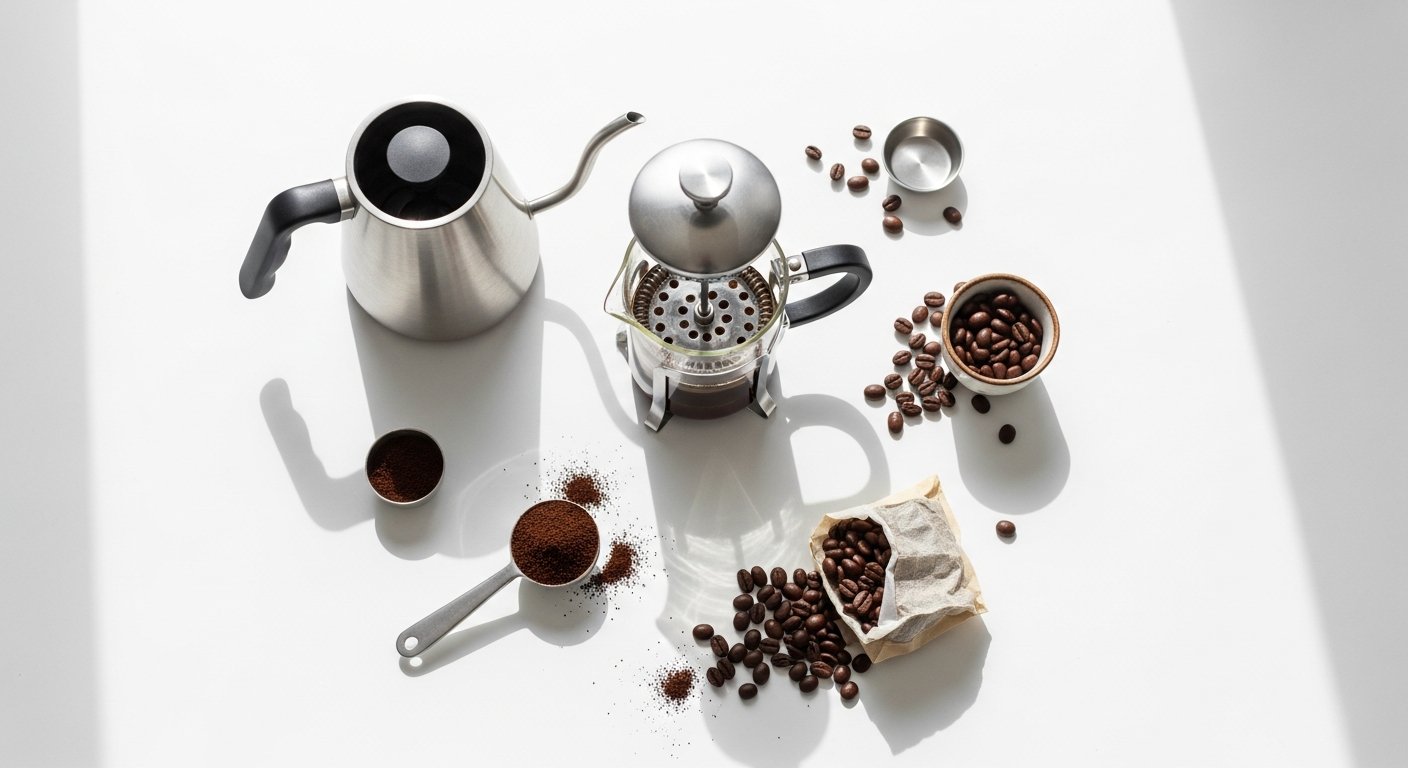
Achieving that perfect cup of French press coffee isn’t about magic; it’s about having the right tools and quality ingredients. While the French press itself is simple, understanding how each component contributes to the final brew is key. Investing in these essentials will elevate your coffee experience from good to truly exceptional.
The French Press Itself: Sizes and Materials
The core of your setup is, of course, the French press. They come in various sizes and materials, each offering distinct advantages.
- Capacity: French presses are typically measured in cups (4 oz/120ml per “cup”) or milliliters/ounces. Common sizes range from 3-cup (small, personal) to 8-cup (standard family size) or even 12-cup (for entertaining). Consider how much coffee you typically drink or serve to choose the right size. Brewing a small amount in a large press can sometimes lead to less optimal extraction.
- Glass: The most common type, often borosilicate glass, known for its heat resistance and clarity. It allows you to observe the brewing process, which many find satisfying. However, glass is fragile and loses heat quickly.
- Stainless Steel: A durable, insulated option that excels at retaining heat, keeping your coffee hot for longer. Stainless steel presses are robust and less prone to breaking, making them excellent for travel or outdoor use. Some prefer them for their sleek aesthetic.
- Ceramic: Offers good heat retention and a pleasant aesthetic. Ceramic presses are heavier and more fragile than stainless steel but can be very attractive.
- Plastic (BPA-free): Lightweight and virtually unbreakable, often chosen for travel or camping. Heat retention and aesthetic quality may vary.
The choice of material often boils down to durability, heat retention needs, and personal aesthetic preference. For daily home use, a quality glass or stainless steel press is often ideal.
The Heart of the Brew: Coffee Beans
The quality of your coffee beans is paramount. Even the best brewing technique can’t rescue stale or low-quality beans.
- Freshness is Key: Always opt for freshly roasted coffee beans. Look for a roast date on the bag, ideally within 2-3 weeks of purchase. Coffee begins to degrade quickly after roasting, losing its aromatic compounds.
- Whole Beans vs. Pre-Ground: Whole beans are always superior. Grinding fresh right before brewing preserves volatile aromas and flavors that rapidly dissipate from pre-ground coffee.
- Roast Level: The French press is incredibly versatile and can brew any roast level beautifully.
- Light Roasts: Often showcase bright, fruity, or floral notes. French press can accentuate their complexity and add body.
- Medium Roasts: Well-balanced with caramel, chocolate, or nutty undertones. A French press brings out their inherent sweetness and roundness.
- Dark Roasts: Bold, robust, with smoky or bittersweet notes. The French press can temper some of their intensity while maintaining a rich character.
Experiment with different roast levels to discover what you enjoy most.
- Origin: Explore single-origin coffees to appreciate distinct regional flavors, or try blends designed for a balanced and consistent cup.
The Importance of a Quality Grinder
This is arguably the most overlooked yet crucial piece of equipment for French press excellence.
- Burr Grinder (Recommended): A burr grinder crushes coffee beans between two abrasive surfaces, providing a consistent, uniform grind size. Consistency is vital for even extraction. An inconsistent grind (too many fines or boulders) leads to over-extraction (bitterness) and under-extraction (sourness) simultaneously.
- Blade Grinder (Avoid if possible): A blade grinder (often mistaken for a coffee grinder, but actually a spice grinder) chops beans with spinning blades, resulting in an inconsistent mix of fine powder and large chunks. This “unimodal” grind is a recipe for muddy, bitter coffee.
- Grind Size for French Press: For French press, you need a coarse, uniform grind. It should resemble coarse sea salt or breadcrumbs. Too fine, and you’ll get a silty, over-extracted, bitter cup that’s hard to press. Too coarse, and the coffee will be weak and under-extracted.
Water: The Unsung Hero
Coffee is over 98% water, so its quality profoundly impacts your brew.
- Filtered Water: Use filtered water whenever possible. Tap water can contain chlorine, minerals, or other impurities that impart off-flavors to your coffee. A simple Brita filter or a home water filtration system works wonders.
- Temperature: The ideal water temperature for brewing coffee is generally between 195°F and 205°F (90°C and 96°C). This is just off the boil. If your water is too hot, it can scorch the coffee and extract bitter compounds. Too cold, and it won’t extract enough flavor. An electric kettle with temperature control is a fantastic investment. If you don’t have one, bring water to a rolling boil, then let it sit for 30-60 seconds before pouring.
Other Useful Tools
- Digital Scale: For precise measurement of coffee grounds and water. This is crucial for consistent results. Measuring by volume (scoops) is inconsistent due to varying bean density.
- Timer: To accurately track steeping time. Essential for preventing over or under-extraction.
- Long Stirring Spoon: A wooden or plastic spoon is best to avoid scratching the glass carafe. Used for gently stirring the “bloom” and ensuring all grounds are saturated.
- Serving Carafe or Second Mug: Crucial for decanting your coffee immediately after pressing to stop the extraction process.
With these tools and high-quality ingredients at your disposal, you’re well-equipped to embark on your journey to French press mastery. Each item plays a vital role in unlocking the full potential of your coffee beans.
Explore our guide to choosing the best coffee beans for every brewing method.
The Step-by-Step Guide: How to Use a French Press Flawlessly
Now that you have your tools and ingredients ready, it’s time to put theory into practice. Follow these detailed steps to brew an exceptional cup of French press coffee that is rich, full-bodied, and consistently delicious.
Step 1: Preheat Your French Press and Heat Water
- Preheat: Pour a small amount of hot water (not boiling) into your French press carafe. Swirl it around for about 30 seconds to warm the glass and prevent the brewing water from cooling too quickly. This helps maintain a stable brewing temperature. Discard the preheating water.
- Heat Water: Heat your filtered water to the ideal brewing temperature: 195°F to 205°F (90°C to 96°C). If you don’t have a temperature-controlled kettle, bring the water to a rolling boil and then let it sit off the heat for 30-60 seconds.
Step 2: Grind Your Coffee Beans
- Measure: While the water is heating, measure your whole coffee beans. A good starting ratio is 1:15 (coffee to water by weight). For example, for a standard 8-cup (34 oz/1 liter) French press, you might use 60-70 grams of coffee. A smaller 4-cup (17 oz/500ml) press would use 30-35 grams. Use a digital scale for accuracy.
- Grind: Immediately before brewing, grind your coffee beans using a burr grinder. Aim for a coarse, consistent grind, resembling coarse sea salt or breadcrumbs. Avoid fine particles, as these will lead to a muddy, over-extracted brew and make pressing difficult.
Step 3: Add Coffee Grounds to the French Press
- Transfer: Carefully scoop your freshly ground coffee into the preheated French press carafe.
- Level: Gently shake the press to level the grounds at the bottom.
Step 4: Pour Water and Initiate the Bloom
- First Pour (Bloom): Start your timer. Pour about twice the weight of your coffee in hot water over the grounds (e.g., for 60g coffee, use 120g water). Ensure all grounds are saturated.
- Stir Gently: With your long stirring spoon (preferably wood or plastic), gently stir the grounds to ensure uniform saturation. This initial pour and stir is known as the “bloom.”
- Wait for Bloom: Let the coffee bloom for 30 seconds. You’ll see the grounds expand and release CO2, creating a foamy “crust.” This degassing process is crucial for even extraction and better flavor development.
Step 5: Complete the Pour and Steep
- Second Pour: After the bloom, slowly pour the remaining hot water into the French press. Pour in a circular motion to ensure even distribution. Be mindful of your target water weight for your desired ratio.
- Total Steep Time: Place the lid on the French press, but do not press the plunger down yet. Let the coffee steep for a total of 4 minutes from the start of your first pour (including the bloom time). Some prefer 3 minutes for a lighter body or up to 5 minutes for a stronger brew, but 4 minutes is a widely accepted standard.
Step 6: Press and Serve Immediately
- Skim (Optional): Just before pressing, you can gently break the “crust” of coffee grounds that formed on top with your spoon and skim off any remaining foam or “scum.” This can reduce bitterness and improve clarity, though many skip this step.
- Press Slowly: With a steady, even pressure, slowly push the plunger down. This should take about 20-30 seconds. If it feels too easy, your grind might be too coarse. If it’s very difficult, your grind might be too fine, or you have too many fines. Do not force it down.
- Decant Immediately: This is critical! Once pressed, immediately pour all the coffee into serving cups or, ideally, into a separate preheated carafe. Do not let the coffee sit in the French press with the grounds, as it will continue to extract and become bitter and over-extracted, even after pressing.
- Enjoy: Serve your delicious, freshly brewed French press coffee and savor the rich flavors and luxurious body.
Step 7: Clean Your French Press
Clean your French press immediately after use. Leftover coffee oils can become rancid and taint future brews. Rinse with warm water and a mild soap, ensuring all grounds are removed from the mesh filter. Regular deep cleaning (disassembling the filter) is also recommended.
By following these steps meticulously, you’ll be well on your way to brewing consistently excellent French press coffee that rivals your favorite café’s offerings.
Optimizing Your Brew: Ratios, Grind, and Temperature
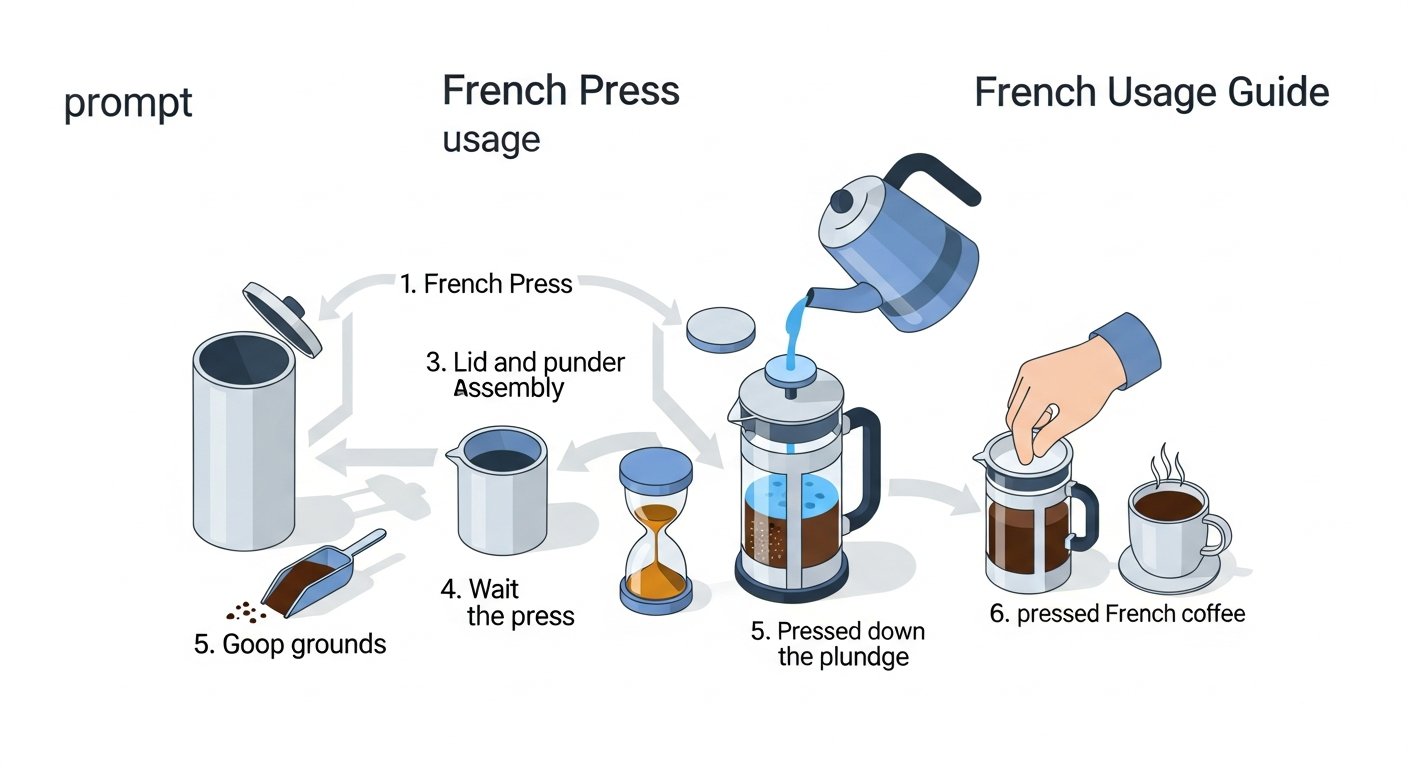
While the basic steps for how to use a French press are straightforward, unlocking its full potential lies in understanding and controlling the key variables. Mastering coffee-to-water ratios, grind consistency, and water temperature will allow you to consistently achieve your perfect cup, tailored to your personal taste preferences.
The Golden Ratio and Beyond: Coffee-to-Water Ratios
The coffee-to-water ratio is perhaps the most fundamental variable influencing the strength and flavor intensity of your brew. Expressed as a ratio of coffee grounds to water by weight, precision here is paramount.
- The “Golden Ratio”: A widely accepted starting point for many brewing methods, including French press, is often cited as 1:15 or 1:16 (coffee to water). This means for every 1 gram of coffee, you use 15 or 16 grams of water.
- For example: If you use 60 grams of coffee, you would use 900 grams (or ml) of water for a 1:15 ratio, or 960 grams for a 1:16 ratio.
- Adjusting for Strength:
- Stronger Coffee: To achieve a bolder, more concentrated brew, use a lower ratio, such as 1:12 or 1:13. This increases the amount of coffee relative to water.
- Weaker/Lighter Coffee: For a milder, more delicate cup, use a higher ratio, like 1:17 or 1:18. This uses less coffee relative to water.
- Experimentation: The “best” ratio is ultimately subjective. Start with 1:15 and then adjust incrementally (e.g., try 1:14 or 1:16) until you find the balance that suits your palate. Always use a digital scale for accurate measurements to ensure consistency.
Grind Consistency and Its Impact
The grind size and consistency are critical for proper extraction. An ideal French press grind is coarse and uniform, resembling coarse sea salt or large breadcrumbs.
- Impact of Grind Size:
- Too Fine: A grind that is too fine will over-extract quickly, leading to bitter, astringent, and muddy coffee. The fine particles will also pass through the mesh filter, resulting in excessive sediment in your cup and making the plunger very difficult to press.
- Too Coarse: A grind that is too coarse will under-extract, producing a weak, sour, and watery cup. The water doesn’t have enough surface area to interact with for proper flavor development. The plunger might feel too easy to press.
- The Problem of “Fines”: Even with a good burr grinder, some “fines” (very tiny coffee particles) are inevitable. However, a quality burr grinder minimizes these. Fines contribute significantly to bitterness and sediment. Some advanced techniques involve sifting out fines, but for most home brewers, a consistent coarse grind from a good burr grinder is sufficient.
- Visual Reference: Take a moment to visually inspect your grind. It should not look like sand (espresso grind) or powder (Turkish coffee). It should be distinctly chunky and uniform.
Water Temperature: The Goldilocks Zone
Water temperature plays a crucial role in the extraction process. Too hot, and you risk scorching the coffee and pulling out harsh, bitter notes. Too cold, and you won’t extract enough soluble compounds, leading to a sour, underdeveloped brew.
- Ideal Range: The generally accepted ideal temperature range for brewing coffee is 195°F to 205°F (90°C to 96°C). This temperature range is optimal for dissolving the desirable flavor compounds without extracting undesirable ones.
- Achieving the Right Temperature:
- Temperature-Controlled Kettle: The easiest and most precise method. Set your kettle to 200°F (93°C) for French press.
- Boil and Wait Method: If you don’t have a temperature-controlled kettle, bring fresh, filtered water to a rolling boil. Then, remove it from the heat and let it rest for 30-60 seconds before pouring. This allows the temperature to drop into the ideal range.
- Thermometer: For maximum precision, use a kitchen thermometer to check the water temperature before pouring.
Steeping Time Variations: Finding Your Sweet Spot
Steeping time directly impacts the amount of extraction. The longer the grounds are immersed, the more flavor and caffeine are extracted. However, there’s a point of diminishing returns, after which bitterness begins to dominate.
- Standard Recommendation: A 4-minute steep time (including the bloom) is a widely recommended starting point for French press.
- Adjusting for Taste:
- 3 Minutes: For a lighter, brighter cup, or if your coffee tends to taste bitter at 4 minutes.
- 5 Minutes: For a stronger, bolder brew, or if your coffee tastes weak or sour at 4 minutes. Be cautious, as extending much beyond 5 minutes significantly increases the risk of bitterness and over-extraction.
- Importance of Decanting: Regardless of your chosen steep time, always remember to decant your coffee immediately after pressing. Leaving coffee in the French press with the grounds, even after pressing, allows for continued extraction (especially of fine particles), leading to an increasingly bitter and unpleasant taste over time.
By experimenting with these variables – ratio, grind, and temperature – you can systematically dial in your French press technique and consistently brew coffee that perfectly matches your preferences. Keep notes on your adjustments and results to refine your process over time.
Troubleshooting Common French Press Issues
Even with the best intentions, you might encounter some common challenges when brewing with a French press. Don’t worry, most issues can be easily diagnosed and remedied. Understanding the symptoms and their underlying causes will help you consistently achieve a delicious cup.
Bitter or Over-Extracted Coffee
A bitter taste, often accompanied by a dry, unpleasant aftertaste, is a classic sign of over-extraction. This means too many soluble compounds were extracted from the coffee grounds.
- Possible Causes:
- Grind is Too Fine: The most common culprit. Finer grounds have more surface area and extract faster, leading to bitterness.
- Steeping Time is Too Long: Leaving the coffee to steep for too long (e.g., beyond 5 minutes) will extract bitter compounds.
- Water Temperature is Too High: Water hotter than 205°F (96°C) can aggressively extract bitter flavors and scorch the coffee.
- Too Much Coffee: Using too high a coffee-to-water ratio can result in an overly concentrated and bitter brew.
- Improper Decanting: Not immediately pouring the coffee out after pressing.
- Solutions:
- Coarsen Your Grind: Adjust your burr grinder to a coarser setting.
- Shorten Steeping Time: Reduce by 30-60 seconds. Aim for the 4-minute sweet spot.
- Lower Water Temperature: Let boiling water cool for 30-60 seconds before pouring, or use a temperature-controlled kettle.
- Adjust Ratio: Use slightly less coffee for the same amount of water, or more water for the same amount of coffee.
- Decant Immediately: Always transfer coffee to a serving carafe or mug right after pressing.
Weak or Under-Extracted Coffee
If your coffee tastes thin, watery, sour, or lacks body and depth, it’s likely under-extracted. Not enough desirable compounds were pulled from the grounds.
- Possible Causes:
- Grind is Too Coarse: Grounds that are too large have less surface area for water to interact with, leading to insufficient extraction.
- Steeping Time is Too Short: Not allowing enough time for the coffee to steep.
- Water Temperature is Too Low: Water below 195°F (90°C) struggles to dissolve flavor compounds effectively.
- Too Little Coffee: Using too high a water-to-coffee ratio.
- Solutions:
- Finer Your Grind: Adjust your burr grinder to a slightly finer (but still coarse) setting.
- Lengthen Steeping Time: Increase by 30-60 seconds, but typically not beyond 5 minutes.
- Raise Water Temperature: Ensure water is in the 195-205°F (90-96°C) range.
- Adjust Ratio: Use slightly more coffee for the same amount of water, or less water for the same amount of coffee.
Muddy Coffee with Excessive Sediment
A little sediment in French press coffee is normal and contributes to its characteristic body. However, an excessive amount that makes the coffee gritty or unpleasant indicates an issue.
- Possible Causes:
- Grind is Too Fine: The most common reason. Fine particles easily slip through the mesh filter.
- Inconsistent Grind (Blade Grinder): A blade grinder produces many “fines” and “boulders,” leading to both over and under-extraction, and lots of mud.
- Vigorous Stirring/Pressing: Stirring too aggressively or plunging too quickly can agitate fines and push them through the filter.
- Damaged Filter: A bent or worn-out mesh filter might not effectively separate grounds.
- Solutions:
- Coarsen Your Grind: This is the primary fix. Invest in a quality burr grinder if you don’t have one.
- Gentle Stirring & Pressing: Stir just enough to saturate grounds. Press slowly and evenly.
- Inspect Filter: Check your filter screen for damage. Replace if necessary.
- Rinse Grounds (Optional): Some advanced users rinse their grounds briefly before brewing to remove some fines, but this is less common for French press.
Plunger Too Difficult or Too Easy to Press
The resistance of the plunger is a good indicator of your grind size.
- Too Difficult to Press:
- Cause: Grind is too fine, creating too much resistance, or there are too many fines.
- Solution: Coarsen your grind. Never force the plunger down, as this can break the glass carafe.
- Too Easy to Press:
- Cause: Grind is too coarse, offering little resistance.
- Solution: Fine your grind slightly.
Coffee Gets Cold Too Quickly
This is a common complaint, especially with glass French presses.
- Possible Causes:
- Lack of Preheating: Cold carafe rapidly absorbs heat from the brewing water.
- Glass Carafe: Glass is a poor insulator.
- Leaving Coffee in the Press: As discussed, this leads to over-extraction, but also allows heat to escape.
- Solutions:
- Always Preheat: Don’t skip this step.
- Use an Insulated Press: Consider a double-walled stainless steel French press for superior heat retention.
- Decant Immediately: Transfer to a preheated serving carafe or insulated mug.
- Use a Cozy: Some French presses come with or can be fitted with insulated cozies.
By systematically addressing these issues, you’ll gain a deeper understanding of the French press and consistently brew fantastic coffee that avoids these common pitfalls.
Learn more about the science of coffee extraction and how it affects flavor.
Beyond Coffee: Other Uses for Your French Press
While celebrated for its coffee-brewing prowess, the French press is surprisingly versatile. Its simple design and effective plunger mechanism make it a useful tool for a variety of culinary tasks, extending its value far beyond just your morning cup. Don’t let it sit idle on your counter between coffee batches!
Brewing Loose-Leaf Tea
The French press is arguably one of the best tools for brewing loose-leaf tea, especially varieties that benefit from full immersion and ample room to expand.
- How To:
- Add your desired amount of loose-leaf tea to the bottom of the clean French press. (General guideline: 1 teaspoon per 8 oz water for most teas, adjust to taste).
- Heat water to the appropriate temperature for your tea type (e.g., 175°F/80°C for green tea, 205°F/96°C for black tea).
- Pour the hot water over the tea leaves, ensuring they are fully submerged.
- Place the lid on top, but do not press the plunger down.
- Steep for the recommended time (e.g., 2-3 minutes for green tea, 3-5 minutes for black tea).
- Once steeped, slowly press the plunger down to separate the leaves from the brewed tea.
- Immediately pour the tea into cups to prevent over-steeping.
- Benefits: Allows tea leaves to unfurl fully, releasing maximum flavor. The mesh filter effectively separates leaves from the brew.
Creating Cold Brew Concentrate
The French press is perfect for making smooth, low-acid cold brew concentrate, which can then be diluted with water or milk for a refreshing drink.
- How To:
- Use a coarse grind of your favorite coffee beans. The ratio for cold brew is often stronger, like 1:8 or 1:10 (coffee to water). For a 34 oz press, use about 100-120g of coffee.
- Add the grounds to the French press.
- Pour cold, filtered water over the grounds, ensuring full saturation. Gently stir if necessary.
- Place the lid on (plunger up) and let it steep at room temperature or in the refrigerator for 12-24 hours. Steeping longer yields a stronger concentrate.
- After steeping, slowly press the plunger down to separate the grounds.
- Pour the concentrate into a clean container and store in the refrigerator. Dilute with water, milk, or ice to taste.
- Benefits: Yields a naturally sweet, less acidic coffee that’s great for iced drinks or as a base for various coffee creations.
Frothing Milk for Lattes and Cappuccinos
No espresso machine? No problem! A French press can create surprisingly decent frothed milk for your homemade lattes and cappuccinos.
- How To:
- Heat milk (dairy or non-dairy) in a saucepan or microwave until hot but not boiling (around 150°F/65°C). Aim for enough milk to fill your press about 1/3 to 1/2 full.
- Pour the hot milk into the clean French press carafe.
- Place the lid on, with the plunger screen just submerged in the milk.
- Rapidly pump the plunger up and down for 30-60 seconds, or until the milk has doubled in volume and achieved your desired frothiness.
- Tap the base of the press gently on the counter to break any large bubbles and create a smoother, more even microfoam.
- Pour frothed milk over your coffee.
- Benefits: An economical way to enjoy frothy milk drinks without specialized equipment.
Infusing Oils, Waters, and Spirits
The French press’s full immersion capability and built-in straining mechanism make it excellent for infusing liquids with various aromatics.
- Flavored Water: Infuse water with fruit slices (cucumber, lemon, berries), herbs (mint, basil), or ginger for refreshing drinks.
- Herbal Oils: Create infused olive oils with garlic, chili flakes, rosemary, or other herbs. Simply add ingredients to oil, let steep for several hours or days, then press.
- Infused Spirits: Experiment with infusing vodka or gin with fruits, spices (vanilla bean, cinnamon), or even coffee beans for unique cocktails.
Rinsing Grains or Quinoa
While less glamorous, the French press can also be a handy kitchen tool for quickly rinsing small grains like quinoa or rice, using the mesh filter to strain the water without losing the grains.
The French press truly earns its keep in the kitchen with its surprising versatility. Its simple, elegant design is a testament to functional beauty, proving that sometimes, the best tools are the most straightforward ones.
Choosing Your Perfect French Press: A Buyer’s Guide
With a plethora of French press models on the market, choosing the right one can seem daunting. Beyond just knowing how to use a French press, selecting the best vessel for your brewing needs involves considering materials, capacity, filter design, and overall durability. This guide will help you navigate the options and make an informed decision that suits your lifestyle and coffee preferences.
Key Considerations When Buying a French Press
Material Matters: Glass, Stainless Steel, and Ceramic
The material of your French press carafe is perhaps the most significant choice, impacting durability, heat retention, and aesthetic.
- Glass French Presses:
- Pros: Classic look, allows you to observe the brewing process, often more affordable. Most commonly made from borosilicate glass for heat resistance.
- Cons: Fragile (prone to breaking if dropped or bumped), poor heat retention (coffee cools quickly).
- Best For: Home use where aesthetics are important and quick consumption is planned.
- Stainless Steel French Presses:
- Pros: Extremely durable (virtually unbreakable), excellent heat retention (especially double-walled vacuum insulated models), often keeps coffee hot for an hour or more.
- Cons: More expensive, you can’t see the brewing process, can be heavier.
- Best For: Those who prioritize durability and heat retention, travel, outdoor use, or busy households.
- Ceramic French Presses:
- Pros: Good heat retention (better than single-walled glass), attractive, often has a substantial feel.
- Cons: Fragile (can chip or break), heavier than glass.
- Best For: Home use where a balance of heat retention and aesthetic appeal is desired, with careful handling.
Capacity: How Much Coffee Do You Need?
French presses are typically measured in “cups,” but be aware that a “cup” often refers to a small 4 oz (120 ml) serving. Consider your typical consumption habits:
{
“@context”: “https://schema.org”,
“@graph”: [
{
“@type”: “WebPage”,
“@id”: “https://www.cafeserre.com/how-to-use-a-french-press/”,
“url”: “https://www.cafeserre.com/how-to-use-a-french-press/”,
“name”: “How To Use A French Press”,
“description”: “Article about how to use a french press”,
“datePublished”: “2026-06-04”,
“dateModified”: “2026-06-04”,
“inLanguage”: “en-US”,
“isPartOf”: {
“@id”: “https://www.cafeserre.com/#website”
}
},
{
“@type”: “Article”,
“@id”: “https://www.cafeserre.com/how-to-use-a-french-press/#article”,
“headline”: “How To Use A French Press”,
“name”: “How To Use A French Press”,
“description”: “Article about how to use a french press”,
“url”: “https://www.cafeserre.com/how-to-use-a-french-press/”,
“datePublished”: “2026-06-04”,
“dateModified”: “2026-06-04”,
“author”: {
“@type”: “Person”,
“@id”: “https://www.cafeserre.com/#author”,
“name”: “Editorial Team”
},
“publisher”: {
“@type”: “Organization”,
“@id”: “https://www.cafeserre.com/#organization”,
“name”: “Cafeserre”,
“url”: “https://www.cafeserre.com”
},
“mainEntityOfPage”: {
“@id”: “https://www.cafeserre.com/how-to-use-a-french-press/”
},
“keywords”: [
“how to use a french press”
],
“articleSection”: “How To Use A French Press”
},
{
“@type”: “BreadcrumbList”,
“@id”: “https://www.cafeserre.com/how-to-use-a-french-press/#breadcrumb”,
“itemListElement”: [
{
“@type”: “ListItem”,
“position”: 1,
“name”: “Home”,
“item”: “https://www.cafeserre.com”
},
{
“@type”: “ListItem”,
“position”: 2,
“name”: “How To Use A French Press”,
“item”: “https://www.cafeserre.com/how-to-use-a-french-press/”
}
]
},
{
“@type”: “Organization”,
“@id”: “https://www.cafeserre.com/#organization”,
“name”: “Cafeserre”,
“url”: “https://www.cafeserre.com”
},
{
“@type”: “Person”,
“@id”: “https://www.cafeserre.com/#author”,
“name”: “Editorial Team”
}
]
}
Mastering the Art: A Definitive Guide on How to Use a French Press for Perfect Coffee
Affiliate disclosure: This article may contain affiliate links. Recommendations are independent and editorially driven.
Few brewing methods encapsulate the rustic charm and robust flavor of coffee quite like the French press. Beloved by coffee purists and casual drinkers alike, this simple yet effective device unlocks a depth of character in your beans that drip machines often miss. Its full immersion brewing process allows coffee grounds to steep directly in hot water, extracting a rich, textured brew brimming with natural oils and nuanced flavors. If you’ve ever dreamt of consistently creating café-quality coffee at home, understanding how to use a French press is your golden ticket.
This comprehensive guide from cafeserre will take you through every essential step, from selecting the right beans to troubleshooting common issues, ensuring that your French press journey is nothing short of exceptional. We’ll demystify the process, empower you with expert tips, and help you transform your morning ritual into an art form. Get ready to experience coffee in its most authentic, unadulterated form.
Understanding the French Press: A Timeless Brewing Method
The French press, known by many names globally – cafetière, coffee press, coffee plunger – is a testament to ingenious simplicity. Its enduring popularity stems from its unique brewing philosophy: full immersion. Unlike drip methods where water passes over grounds, the French press allows ground coffee to steep directly in water for an extended period. This method, originating in France and patented by an Italian designer in 1929, facilitates a complete extraction of oils, solids, and flavors, resulting in a coffee that is distinctively rich, full-bodied, and wonderfully aromatic.
The Principle of Full Immersion Brewing
At its heart, the French press operates on the principle of full immersion. This means that all the coffee grounds are submerged in hot water for the entire duration of the brew. This prolonged contact ensures that the maximum amount of flavor compounds, oils, and dissolved solids are extracted from the coffee. The result is a cup with more texture, body, and a fuller flavor profile compared to pour-over or drip methods that primarily rely on percolation.
The absence of paper filters is another defining characteristic. Instead, a mesh filter presses the grounds to the bottom, allowing finely suspended particles and essential coffee oils to pass into your cup. These oils, often trapped by paper filters, contribute significantly to the French press’s signature mouthfeel and complex aroma.
A Brief History and Evolution
While often associated with France, the origins of the French press are somewhat debated. A primitive version involving a metal screen pressed against grounds was reportedly used in France in the mid-19th century. However, the first patent for what we recognize as a modern French press was granted to Italian designer Attilio Calimani in 1929. Later, Swiss designer Faliero Bondanini refined the design and patented his version in 1958, which was then popularized by the Danish company Bodum under the name “Chambord.”
From its humble beginnings, the French press has seen various iterations and material innovations, but its core design and functionality have remained remarkably consistent. It has persevered through trends and technological advancements in coffee brewing, maintaining its status as a beloved method for those who appreciate a hands-on approach and a deeply satisfying cup.
Why Choose French Press Coffee?
The allure of French press coffee extends beyond its historical charm. There are several compelling reasons why it remains a favorite among connoisseurs:
- Full-Bodied Flavor: The full immersion and lack of a paper filter allow all the coffee’s natural oils and fine sediments to enter your cup, creating a velvety texture and an intense flavor profile that highlights the inherent characteristics of the beans.
- Simplicity and Portability: With no need for electricity (beyond heating water), the French press is incredibly simple to operate and highly portable. It’s an excellent choice for camping, travel, or any setting where minimalist brewing is preferred.
- Control Over the Brew: Unlike automated machines, the French press gives you complete control over variables like water temperature, grind size, coffee-to-water ratio, and steeping time. This empowers you to fine-tune your brew to your exact preferences.
- Sustainability: Since it doesn’t require disposable paper filters, the French press is a more environmentally friendly option, reducing waste.
- Versatility: Beyond hot coffee, a French press can be used for cold brew, brewing loose-leaf tea, or even frothing milk, making it a multi-functional kitchen tool.
Choosing the French press is choosing an experience – a ritual that slows down the morning and connects you more intimately with your coffee. It’s an embrace of tradition and a pursuit of flavor depth that few other methods can match.
Essential Tools and Ingredients for French Press Success
Achieving that perfect cup of French press coffee isn’t about magic; it’s about having the right tools and quality ingredients. While the French press itself is simple, understanding how each component contributes to the final brew is key. Investing in these essentials will elevate your coffee experience from good to truly exceptional.
The French Press Itself: Sizes and Materials
The core of your setup is, of course, the French press. They come in various sizes and materials, each offering distinct advantages.
- Capacity: French presses are typically measured in cups (4 oz/120ml per “cup”) or milliliters/ounces. Common sizes range from 3-cup (small, personal) to 8-cup (standard family size) or even 12-cup (for entertaining). Consider how much coffee you typically drink or serve to choose the right size. Brewing a small amount in a large press can sometimes lead to less optimal extraction.
- Glass: The most common type, often borosilicate glass, known for its heat resistance and clarity. It allows you to observe the brewing process, which many find satisfying. However, glass is fragile and loses heat quickly.
- Stainless Steel: A durable, insulated option that excels at retaining heat, keeping your coffee hot for longer. Stainless steel presses are robust and less prone to breaking, making them excellent for travel or outdoor use. Some prefer them for their sleek aesthetic.
- Ceramic: Offers good heat retention and a pleasant aesthetic. Ceramic presses are heavier and more fragile than stainless steel but can be very attractive.
- Plastic (BPA-free): Lightweight and virtually unbreakable, often chosen for travel or camping. Heat retention and aesthetic quality may vary.
The choice of material often boils down to durability, heat retention needs, and personal aesthetic preference. For daily home use, a quality glass or stainless steel press is often ideal.
The Heart of the Brew: Coffee Beans
The quality of your coffee beans is paramount. Even the best brewing technique can’t rescue stale or low-quality beans.
- Freshness is Key: Always opt for freshly roasted coffee beans. Look for a roast date on the bag, ideally within 2-3 weeks of purchase. Coffee begins to degrade quickly after roasting, losing its aromatic compounds.
- Whole Beans vs. Pre-Ground: Whole beans are always superior. Grinding fresh right before brewing preserves volatile aromas and flavors that rapidly dissipate from pre-ground coffee.
- Roast Level: The French press is incredibly versatile and can brew any roast level beautifully.
- Light Roasts: Often showcase bright, fruity, or floral notes. French press can accentuate their complexity and add body.
- Medium Roasts: Well-balanced with caramel, chocolate, or nutty undertones. A French press brings out their inherent sweetness and roundness.
- Dark Roasts: Bold, robust, with smoky or bittersweet notes. The French press can temper some of their intensity while maintaining a rich character.
Experiment with different roast levels to discover what you enjoy most.
- Origin: Explore single-origin coffees to appreciate distinct regional flavors, or try blends designed for a balanced and consistent cup.
The Importance of a Quality Grinder
This is arguably the most overlooked yet crucial piece of equipment for French press excellence.
- Burr Grinder (Recommended): A burr grinder crushes coffee beans between two abrasive surfaces, providing a consistent, uniform grind size. Consistency is vital for even extraction. An inconsistent grind (too many fines or boulders) leads to over-extraction (bitterness) and under-extraction (sourness) simultaneously.
- Blade Grinder (Avoid if possible): A blade grinder (often mistaken for a coffee grinder, but actually a spice grinder) chops beans with spinning blades, resulting in an inconsistent mix of fine powder and large chunks. This “unimodal” grind is a recipe for muddy, bitter coffee.
- Grind Size for French Press: For French press, you need a coarse, uniform grind. It should resemble coarse sea salt or breadcrumbs. Too fine, and you’ll get a silty, over-extracted, bitter cup that’s hard to press. Too coarse, and the coffee will be weak and under-extracted.
Water: The Unsung Hero
Coffee is over 98% water, so its quality profoundly impacts your brew.
- Filtered Water: Use filtered water whenever possible. Tap water can contain chlorine, minerals, or other impurities that impart off-flavors to your coffee. A simple Brita filter or a home water filtration system works wonders.
- Temperature: The ideal water temperature for brewing coffee is generally between 195°F and 205°F (90°C and 96°C). This is just off the boil. If your water is too hot, it can scorch the coffee and extract bitter compounds. Too cold, and it won’t extract enough flavor. An electric kettle with temperature control is a fantastic investment. If you don’t have one, bring water to a rolling boil, then let it sit for 30-60 seconds before pouring.
Other Useful Tools
- Digital Scale: For precise measurement of coffee grounds and water. This is crucial for consistent results. Measuring by volume (scoops) is inconsistent due to varying bean density.
- Timer: To accurately track steeping time. Essential for preventing over or under-extraction.
- Long Stirring Spoon: A wooden or plastic spoon is best to avoid scratching the glass carafe. Used for gently stirring the “bloom” and ensuring all grounds are saturated.
- Serving Carafe or Second Mug: Crucial for decanting your coffee immediately after pressing to stop the extraction process.
With these tools and high-quality ingredients at your disposal, you’re well-equipped to embark on your journey to French press mastery. Each item plays a vital role in unlocking the full potential of your coffee beans.
Explore our guide to choosing the best coffee beans for every brewing method.
The Step-by-Step Guide: How to Use a French Press Flawlessly
Now that you have your tools and ingredients ready, it’s time to put theory into practice. Follow these detailed steps to brew an exceptional cup of French press coffee that is rich, full-bodied, and consistently delicious.
Step 1: Preheat Your French Press and Heat Water
- Preheat: Pour a small amount of hot water (not boiling) into your French press carafe. Swirl it around for about 30 seconds to warm the glass and prevent the brewing water from cooling too quickly. This helps maintain a stable brewing temperature. Discard the preheating water.
- Heat Water: Heat your filtered water to the ideal brewing temperature: 195°F to 205°F (90°C to 96°C). If you don’t have a temperature-controlled kettle, bring the water to a rolling boil and then let it sit off the heat for 30-60 seconds.
Step 2: Grind Your Coffee Beans
- Measure: While the water is heating, measure your whole coffee beans. A good starting ratio is 1:15 (coffee to water by weight). For example, for a standard 8-cup (34 oz/1 liter) French press, you might use 60-70 grams of coffee. A smaller 4-cup (17 oz/500ml) press would use 30-35 grams. Use a digital scale for accuracy.
- Grind: Immediately before brewing, grind your coffee beans using a burr grinder. Aim for a coarse, consistent grind, resembling coarse sea salt or breadcrumbs. Avoid fine particles, as these will lead to a muddy, over-extracted brew and make pressing difficult.
Step 3: Add Coffee Grounds to the French Press
- Transfer: Carefully scoop your freshly ground coffee into the preheated French press carafe.
- Level: Gently shake the press to level the grounds at the bottom.
Step 4: Pour Water and Initiate the Bloom
- First Pour (Bloom): Start your timer. Pour about twice the weight of your coffee in hot water over the grounds (e.g., for 60g coffee, use 120g water). Ensure all grounds are saturated.
- Stir Gently: With your long stirring spoon (preferably wood or plastic), gently stir the grounds to ensure uniform saturation. This initial pour and stir is known as the “bloom.”
- Wait for Bloom: Let the coffee bloom for 30 seconds. You’ll see the grounds expand and release CO2, creating a foamy “crust.” This degassing process is crucial for even extraction and better flavor development.
Step 5: Complete the Pour and Steep
- Second Pour: After the bloom, slowly pour the remaining hot water into the French press. Pour in a circular motion to ensure even distribution. Be mindful of your target water weight for your desired ratio.
- Total Steep Time: Place the lid on the French press, but do not press the plunger down yet. Let the coffee steep for a total of 4 minutes from the start of your first pour (including the bloom time). Some prefer 3 minutes for a lighter body or up to 5 minutes for a stronger brew, but 4 minutes is a widely accepted standard.
Step 6: Press and Serve Immediately
- Skim (Optional): Just before pressing, you can gently break the “crust” of coffee grounds that formed on top with your spoon and skim off any remaining foam or “scum.” This can reduce bitterness and improve clarity, though many skip this step.
- Press Slowly: With a steady, even pressure, slowly push the plunger down. This should take about 20-30 seconds. If it feels too easy, your grind might be too coarse. If it’s very difficult, your grind might be too fine, or you have too many fines. Do not force it down.
- Decant Immediately: This is critical! Once pressed, immediately pour all the coffee into serving cups or, ideally, into a separate preheated carafe. Do not let the coffee sit in the French press with the grounds, as it will continue to extract and become bitter and over-extracted, even after pressing.
- Enjoy: Serve your delicious, freshly brewed French press coffee and savor the rich flavors and luxurious body.
Step 7: Clean Your French Press
Clean your French press immediately after use. Leftover coffee oils can become rancid and taint future brews. Rinse with warm water and a mild soap, ensuring all grounds are removed from the mesh filter. Regular deep cleaning (disassembling the filter) is also recommended.
By following these steps meticulously, you’ll be well on your way to brewing consistently excellent French press coffee that rivals your favorite café’s offerings.
Optimizing Your Brew: Ratios, Grind, and Temperature
While the basic steps for how to use a French press are straightforward, unlocking its full potential lies in understanding and controlling the key variables. Mastering coffee-to-water ratios, grind consistency, and water temperature will allow you to consistently achieve your perfect cup, tailored to your personal taste preferences.
The Golden Ratio and Beyond: Coffee-to-Water Ratios
The coffee-to-water ratio is perhaps the most fundamental variable influencing the strength and flavor intensity of your brew. Expressed as a ratio of coffee grounds to water by weight, precision here is paramount.
- The “Golden Ratio”: A widely accepted starting point for many brewing methods, including French press, is often cited as 1:15 or 1:16 (coffee to water). This means for every 1 gram of coffee, you use 15 or 16 grams of water.
- For example: If you use 60 grams of coffee, you would use 900 grams (or ml) of water for a 1:15 ratio, or 960 grams for a 1:16 ratio.
- Adjusting for Strength:
- Stronger Coffee: To achieve a bolder, more concentrated brew, use a lower ratio, such as 1:12 or 1:13. This increases the amount of coffee relative to water.
- Weaker/Lighter Coffee: For a milder, more delicate cup, use a higher ratio, like 1:17 or 1:18. This uses less coffee relative to water.
- Experimentation: The “best” ratio is ultimately subjective. Start with 1:15 and then adjust incrementally (e.g., try 1:14 or 1:16) until you find the balance that suits your palate. Always use a digital scale for accurate measurements to ensure consistency.
Grind Consistency and Its Impact
The grind size and consistency are critical for proper extraction. An ideal French press grind is coarse and uniform, resembling coarse sea salt or large breadcrumbs.
- Impact of Grind Size:
- Too Fine: A grind that is too fine will over-extract quickly, leading to bitter, astringent, and muddy coffee. The fine particles will also pass through the mesh filter, resulting in excessive sediment in your cup and making the plunger very difficult to press.
- Too Coarse: A grind that is too coarse will under-extract, producing a weak, sour, and watery cup. The water doesn’t have enough surface area to interact with for proper flavor development. The plunger might feel too easy to press.
- The Problem of “Fines”: Even with a good burr grinder, some “fines” (very tiny coffee particles) are inevitable. However, a quality burr grinder minimizes these. Fines contribute significantly to bitterness and sediment. Some advanced techniques involve sifting out fines, but for most home brewers, a consistent coarse grind from a good burr grinder is sufficient.
- Visual Reference: Take a moment to visually inspect your grind. It should not look like sand (espresso grind) or powder (Turkish coffee). It should be distinctly chunky and uniform.
Water Temperature: The Goldilocks Zone
Water temperature plays a crucial role in the extraction process. Too hot, and you risk scorching the coffee and pulling out harsh, bitter notes. Too cold, and you won’t extract enough soluble compounds, leading to a sour, underdeveloped brew.
- Ideal Range: The generally accepted ideal temperature range for brewing coffee is 195°F to 205°F (90°C to 96°C). This temperature range is optimal for dissolving the desirable flavor compounds without extracting undesirable ones.
- Achieving the Right Temperature:
- Temperature-Controlled Kettle: The easiest and most precise method. Set your kettle to 200°F (93°C) for French press.
- Boil and Wait Method: If you don’t have a temperature-controlled kettle, bring fresh, filtered water to a rolling boil. Then, remove it from the heat and let it rest for 30-60 seconds before pouring. This allows the temperature to drop into the ideal range.
- Thermometer: For maximum precision, use a kitchen thermometer to check the water temperature before pouring.
Steeping Time Variations: Finding Your Sweet Spot
Steeping time directly impacts the amount of extraction. The longer the grounds are immersed, the more flavor and caffeine are extracted. However, there’s a point of diminishing returns, after which bitterness begins to dominate.
- Standard Recommendation: A 4-minute steep time (including the bloom) is a widely recommended starting point for French press.
- Adjusting for Taste:
- 3 Minutes: For a lighter, brighter cup, or if your coffee tends to taste bitter at 4 minutes.
- 5 Minutes: For a stronger, bolder brew, or if your coffee tastes weak or sour at 4 minutes. Be cautious, as extending much beyond 5 minutes significantly increases the risk of bitterness and over-extraction.
- Importance of Decanting: Regardless of your chosen steep time, always remember to decant your coffee immediately after pressing. Leaving coffee in the French press with the grounds, even after pressing, allows for continued extraction (especially of fine particles), leading to an increasingly bitter and unpleasant taste over time.
By experimenting with these variables – ratio, grind, and temperature – you can systematically dial in your French press technique and consistently brew coffee that perfectly matches your preferences. Keep notes on your adjustments and results to refine your process over time.
Troubleshooting Common French Press Issues
Even with the best intentions, you might encounter some common challenges when brewing with a French press. Don’t worry, most issues can be easily diagnosed and remedied. Understanding the symptoms and their underlying causes will help you consistently achieve a delicious cup.
Bitter or Over-Extracted Coffee
A bitter taste, often accompanied by a dry, unpleasant aftertaste, is a classic sign of over-extraction. This means too many soluble compounds were extracted from the coffee grounds.
- Possible Causes:
- Grind is Too Fine: The most common culprit. Finer grounds have more surface area and extract faster, leading to bitterness.
- Steeping Time is Too Long: Leaving the coffee to steep for too long (e.g., beyond 5 minutes) will extract bitter compounds.
- Water Temperature is Too High: Water hotter than 205°F (96°C) can aggressively extract bitter flavors and scorch the coffee.
- Too Much Coffee: Using too high a coffee-to-water ratio can result in an overly concentrated and bitter brew.
- Improper Decanting: Not immediately pouring the coffee out after pressing.
- Solutions:
- Coarsen Your Grind: Adjust your burr grinder to a coarser setting.
- Shorten Steeping Time: Reduce by 30-60 seconds. Aim for the 4-minute sweet spot.
- Lower Water Temperature: Let boiling water cool for 30-60 seconds before pouring, or use a temperature-controlled kettle.
- Adjust Ratio: Use slightly less coffee for the same amount of water, or more water for the same amount of coffee.
- Decant Immediately: Always transfer coffee to a serving carafe or mug right after pressing.
Weak or Under-Extracted Coffee
If your coffee tastes thin, watery, sour, or lacks body and depth, it’s likely under-extracted. Not enough desirable compounds were pulled from the grounds.
- Possible Causes:
- Grind is Too Coarse: Grounds that are too large have less surface area for water to interact with, leading to insufficient extraction.
- Steeping Time is Too Short: Not allowing enough time for the coffee to steep.
- Water Temperature is Too Low: Water below 195°F (90°C) struggles to dissolve flavor compounds effectively.
- Too Little Coffee: Using too high a water-to-coffee ratio.
- Solutions:
- Finer Your Grind: Adjust your burr grinder to a slightly finer (but still coarse) setting.
- Lengthen Steeping Time: Increase by 30-60 seconds, but typically not beyond 5 minutes.
- Raise Water Temperature: Ensure water is in the 195-205°F (90-96°C) range.
- Adjust Ratio: Use slightly more coffee for the same amount of water, or less water for the same amount of coffee.
Muddy Coffee with Excessive Sediment
A little sediment in French press coffee is normal and contributes to its characteristic body. However, an excessive amount that makes the coffee gritty or unpleasant indicates an issue.
- Possible Causes:
- Grind is Too Fine: The most common reason. Fine particles easily slip through the mesh filter.
- Inconsistent Grind (Blade Grinder): A blade grinder produces many “fines” and “boulders,” leading to both over and under-extraction, and lots of mud.
- Vigorous Stirring/Pressing: Stirring too aggressively or plunging too quickly can agitate fines and push them through the filter.
- Damaged Filter: A bent or worn-out mesh filter might not effectively separate grounds.
- Solutions:
- Coarsen Your Grind: This is the primary fix. Invest in a quality burr grinder if you don’t have one.
- Gentle Stirring & Pressing: Stir just enough to saturate grounds. Press slowly and evenly.
- Inspect Filter: Check your filter screen for damage. Replace if necessary.
- Rinse Grounds (Optional): Some advanced users rinse their grounds briefly before brewing to remove some fines, but this is less common for French press.
Plunger Too Difficult or Too Easy to Press
The resistance of the plunger is a good indicator of your grind size.
- Too Difficult to Press:
- Cause: Grind is too fine, creating too much resistance, or there are too many fines.
- Solution: Coarsen your grind. Never force the plunger down, as this can break the glass carafe.
- Too Easy to Press:
- Cause: Grind is too coarse, offering little resistance.
- Solution: Fine your grind slightly.
Coffee Gets Cold Too Quickly
This is a common complaint, especially with glass French presses.
- Possible Causes:
- Lack of Preheating: Cold carafe rapidly absorbs heat from the brewing water.
- Glass Carafe: Glass is a poor insulator.
- Leaving Coffee in the Press: As discussed, this leads to over-extraction, but also allows heat to escape.
- Solutions:
- Always Preheat: Don’t skip this step.
- Use an Insulated Press: Consider a double-walled stainless steel French press for superior heat retention.
- Decant Immediately: Transfer to a preheated serving carafe or insulated mug.
- Use a Cozy: Some French presses come with or can be fitted with insulated cozies.
By systematically addressing these issues, you’ll gain a deeper understanding of the French press and consistently brew fantastic coffee that avoids these common pitfalls.
Learn more about the science of coffee extraction and how it affects flavor.
Beyond Coffee: Other Uses for Your French Press
While celebrated for its coffee-brewing prowess, the French press is surprisingly versatile. Its simple design and effective plunger mechanism make it a useful tool for a variety of culinary tasks, extending its value far beyond just your morning cup. Don’t let it sit idle on your counter between coffee batches!
Brewing Loose-Leaf Tea
The French press is arguably one of the best tools for brewing loose-leaf tea, especially varieties that benefit from full immersion and ample room to expand.
- How To:
- Add your desired amount of loose-leaf tea to the bottom of the clean French press. (General guideline: 1 teaspoon per 8 oz water for most teas, adjust to taste).
- Heat water to the appropriate temperature for your tea type (e.g., 175°F/80°C for green tea, 205°F/96°C for black tea).
- Pour the hot water over the tea leaves, ensuring they are fully submerged.
- Place the lid on top, but do not press the plunger down.
- Steep for the recommended time (e.g., 2-3 minutes for green tea, 3-5 minutes for black tea).
- Once steeped, slowly press the plunger down to separate the leaves from the brewed tea.
- Immediately pour the tea into cups to prevent over-steeping.
- Benefits: Allows tea leaves to unfurl fully, releasing maximum flavor. The mesh filter effectively separates leaves from the brew.
Creating Cold Brew Concentrate
The French press is perfect for making smooth, low-acid cold brew concentrate, which can then be diluted with water or milk for a refreshing drink.
- How To:
- Use a coarse grind of your favorite coffee beans. The ratio for cold brew is often stronger, like 1:8 or 1:10 (coffee to water). For a 34 oz press, use about 100-120g of coffee.
- Add the grounds to the French press.
- Pour cold, filtered water over the grounds, ensuring full saturation. Gently stir if necessary.
- Place the lid on (plunger up) and let it steep at room temperature or in the refrigerator for 12-24 hours. Steeping longer yields a stronger concentrate.
- After steeping, slowly press the plunger down to separate the grounds.
- Pour the concentrate into a clean container and store in the refrigerator. Dilute with water, milk, or ice to taste.
- Benefits: Yields a naturally sweet, less acidic coffee that’s great for iced drinks or as a base for various coffee creations.
Frothing Milk for Lattes and Cappuccinos
No espresso machine? No problem! A French press can create surprisingly decent frothed milk for your homemade lattes and cappuccinos.
- How To:
- Heat milk (dairy or non-dairy) in a saucepan or microwave until hot but not boiling (around 150°F/65°C). Aim for enough milk to fill your press about 1/3 to 1/2 full.
- Pour the hot milk into the clean French press carafe.
- Place the lid on, with the plunger screen just submerged in the milk.
- Rapidly pump the plunger up and down for 30-60 seconds, or until the milk has doubled in volume and achieved your desired frothiness.
- Tap the base of the press gently on the counter to break any large bubbles and create a smoother, more even microfoam.
- Pour frothed milk over your coffee.
- Benefits: An economical way to enjoy frothy milk drinks without specialized equipment.
Infusing Oils, Waters, and Spirits
The French press’s full immersion capability and built-in straining mechanism make it excellent for infusing liquids with various aromatics.
- Flavored Water: Infuse water with fruit slices (cucumber, lemon, berries), herbs (mint, basil), or ginger for refreshing drinks.
- Herbal Oils: Create infused olive oils with garlic, chili flakes, rosemary, or other herbs. Simply add ingredients to oil, let steep for several hours or days, then press.
- Infused Spirits: Experiment with infusing vodka or gin with fruits, spices (vanilla bean, cinnamon), or even coffee beans for unique cocktails.
Rinsing Grains or Quinoa
While less glamorous, the French press can also be a handy kitchen tool for quickly rinsing small grains like quinoa or rice, using the mesh filter to strain the water without losing the grains.
The French press truly earns its keep in the kitchen with its surprising versatility. Its simple, elegant design is a testament to functional beauty, proving that sometimes, the best tools are the most straightforward ones.
Choosing Your Perfect French Press: A Buyer’s Guide
With a plethora of French press models on the market, choosing the right one can seem daunting. Beyond just knowing how to use a French press, selecting the best vessel for your brewing needs involves considering materials, capacity, filter design, and overall durability. This guide will help you navigate the options and make an informed decision that suits your lifestyle and coffee preferences.
Key Considerations When Buying a French Press
Material Matters: Glass, Stainless Steel, and Ceramic
The material of your French press carafe is perhaps the most significant choice, impacting durability, heat retention, and aesthetic.
- Glass French Presses:
- Pros: Classic look, allows you to observe the brewing process, often more affordable. Most commonly made from borosilicate glass for heat resistance.
- Cons: Fragile (prone to breaking if dropped or bumped), poor heat retention (coffee cools quickly).
- Best For: Home use where aesthetics are important and quick consumption is planned.
- Stainless Steel French Presses:
- Pros: Extremely durable (virtually unbreakable), excellent heat retention (especially double-walled vacuum insulated models), often keeps coffee hot for an hour or more.
- Cons: More expensive, you can’t see the brewing process, can be heavier.
- Best For: Those who prioritize durability and heat retention, travel, outdoor use, or busy households.
- Ceramic French Presses:
- Pros: Good heat retention (better than single-walled glass), attractive, often has a substantial feel.
- Cons: Fragile (can chip or break), heavier than glass.
- Best For: Home use where a balance of heat retention and aesthetic appeal is desired, with careful handling.
Capacity: How Much Coffee Do You Need?
French presses are typically measured in “cups,” but be aware that a “cup” often refers to a small 4 oz (120 ml) serving. Consider your typical consumption habits: