


What is Espresso Crema? Unveiling the Golden Crown of Your Perfect Brew
Affiliate disclosure: This article may contain affiliate links. Recommendations are independent and editorially driven.
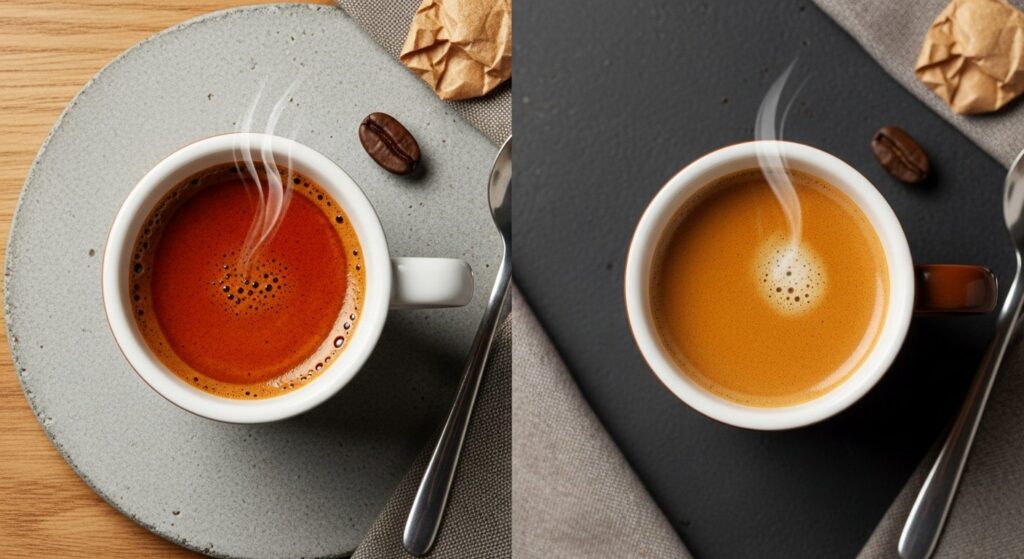
For connoisseurs and casual coffee drinkers alike, the sight of a freshly pulled espresso shot crowned with a rich, caramel-hued layer is instantly recognizable. This ephemeral, creamy foam, known as espresso crema, is far more than mere decoration. It’s a complex indicator of quality, freshness, and the skillful execution of espresso brewing, revered by baristas and coffee enthusiasts globally. At cafeserre, we believe understanding crema is fundamental to truly appreciating the art and science of espresso.
In the world of coffee, especially within the hallowed grounds of a café or in the quiet ritual of home brewing, crema stands as a testament to perfection. It whispers secrets about your beans, your grind, your machine, and your technique. From its shimmering appearance to its subtle contributions to the overall flavor profile, crema is an integral part of the espresso experience. This comprehensive guide will demystify espresso crema, exploring its origins, its significance, what a “good” crema looks like, and how you can achieve it consistently in your own brewing endeavors. Prepare to dive deep into the golden layer that defines true espresso excellence.
The Essence of Espresso Crema: More Than Just Foam
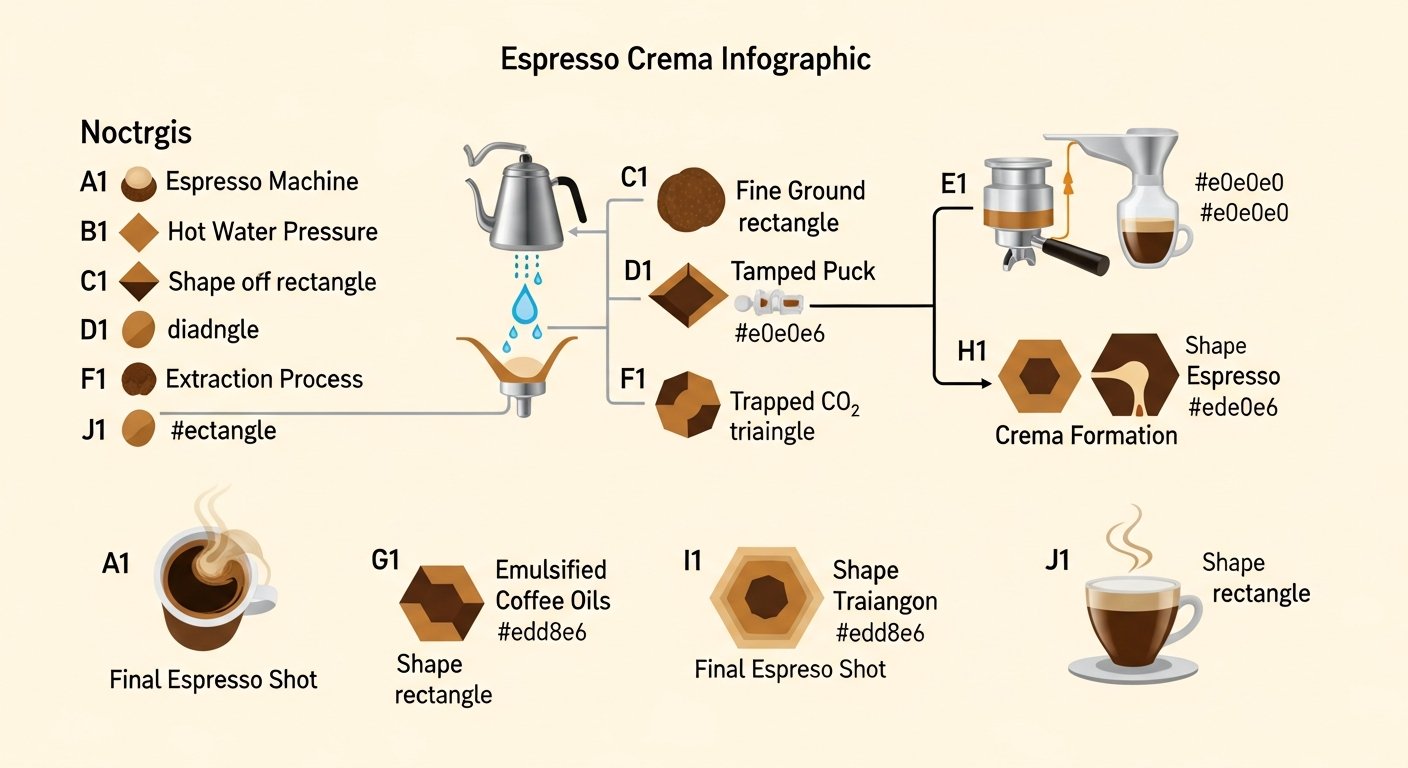
At its core, espresso crema is a reddish-brown emulsion of coffee oils, proteins, and sugars, suspended by tiny bubbles of carbon dioxide gas. This gas is a natural byproduct of the coffee roasting process, trapped within the bean. When hot, pressurized water forces its way through finely ground coffee, it extracts these compounds, and simultaneously, the trapped CO2 is released. Under the intense pressure of an espresso machine, this gas becomes emulsified with the extracted oils and other solubles, forming the stable, dense foam we know as crema.
Unlike the frothy foam found atop a cappuccino or latte, which is created by steaming milk, crema is an inherent component of the espresso shot itself. It’s a hallmark of a properly extracted shot, distinguishing espresso from other brewing methods like drip coffee or French press. Without crema, an espresso is often considered incomplete or indicative of underlying issues in the brewing process.
Defining Characteristics of Crema
- Emulsion: Crema is not simply foam, but a complex emulsion of various coffee components.
- Density: It’s denser and more stable than typical coffee foam, often capable of briefly supporting a sprinkle of sugar.
- Coloration: Typically a reddish-brown or “tiger-stripe” pattern, indicative of proper extraction.
- Ephemeral Nature: While stable, crema is not permanent. It gradually dissipates over a few minutes.
Understanding crema is the first step towards mastering espresso. It’s a visual cue, a sensory experience, and a scientific marvel all rolled into one delicate layer.
The Microscopic Marvel: How Crema Forms

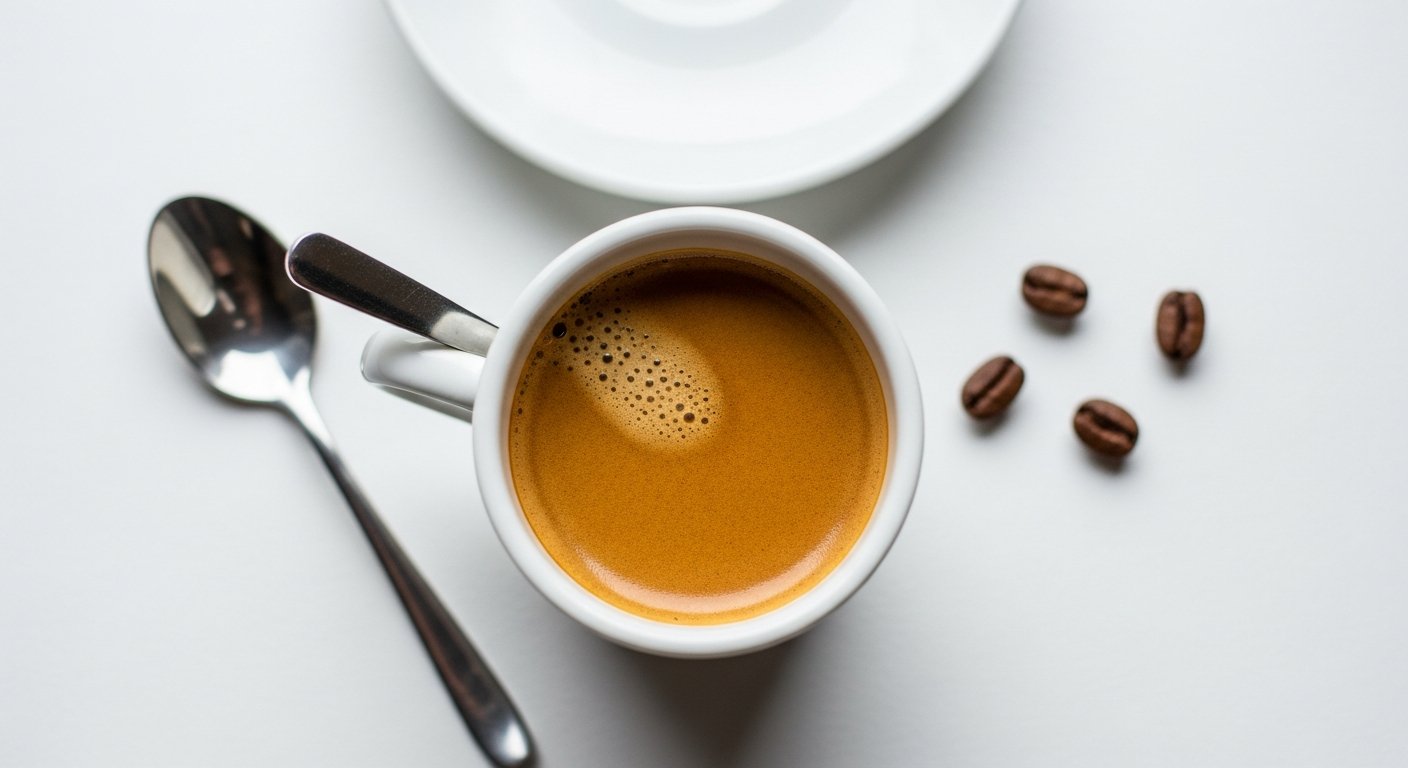
To truly appreciate crema, one must understand the fascinating physics and chemistry at play during espresso extraction. It’s a precise dance between pressure, temperature, time, and the very composition of the coffee beans themselves. The process begins long before the coffee even enters your machine.
The Role of Carbon Dioxide
Coffee beans naturally produce carbon dioxide during the roasting process. This CO2 is trapped within the porous structure of the bean. The darker the roast, generally the more CO2 is produced, though very dark roasts can also release much of it during cooling. The freshness of the roasted beans is paramount here; as beans age, they degas, meaning the CO2 slowly escapes. This is why fresh beans are essential for good crema.
Pressure and Emulsification
When you pull an espresso shot, hot water (typically around 195-205°F or 90-96°C) is forced through the coffee grounds at high pressure (ideally 9 bars). This high pressure is key. It rapidly dissolves the CO2 trapped in the grounds and creates an environment where insoluble coffee oils, proteins, and melanoidins (compounds responsible for color and flavor, formed during roasting) can be emulsified. The dissolved CO2 forms tiny bubbles, which then become stabilized by the surrounding coffee oils and proteins, forming a dense, resilient foam.
The Extraction Process and Solubles
As the pressurized water passes through the coffee bed, it extracts soluble compounds – acids, sugars, and various aromatic substances – that contribute to the espresso’s flavor. Simultaneously, it extracts and emulsifies the oils and gases. The perfect balance of these elements, achieved through optimal grind size, dose, tamp, and water contact time, results in that beautiful, stable crema.
[INLINE IMAGE 1: place after second H2 | alt=”what is espresso crema concept illustration”]
Decoding Crema: What Ideal Crema Looks Like
While crema is always present in a good espresso, not all cremas are created equal. An experienced barista can tell a lot about the quality of the extraction, and even the coffee itself, simply by observing the crema. Learning to “read” your crema is a vital skill for anyone striving for espresso perfection.
Color and Hue
Ideal crema typically presents a rich, hazelnut to reddish-brown color, often with subtle “tiger stripes” or darker flecks. This vibrant, consistent color indicates a balanced extraction. A very dark brown or almost black crema might suggest over-extraction or a very dark roast, while a pale, thin, or whitish crema usually points to under-extraction or stale beans.
Thickness and Persistence
A good crema should be relatively thick, usually about 1/10th of the volume of the shot, and certainly more than a mere whisper on top. It should also be persistent, meaning it doesn’t vanish immediately. While it will slowly dissipate, a well-formed crema should last for at least 1-2 minutes, if not longer, especially if left undisturbed. A crema that disappears almost instantly is a clear sign of an issue, often related to freshness or temperature.
Texture and Elasticity
The texture of ideal crema should be smooth, velvety, and almost elastic. When gently swirled, it should flow back together, displaying a fine, tight bubble structure. Large, irregular bubbles are usually a bad sign, indicating an uneven extraction or potentially old coffee. Some describe the perfect crema as having a “creamy” mouthfeel, adding to the espresso’s overall body and luxuriousness.
Visual Cues of Excellence
- Uniformity: The crema should cover the entire surface of the espresso.
- Absence of large bubbles: Small, uniform bubbles are good; large, erratic ones are not.
- “Tiger stripes”: Darker streaks or mottling are often considered a sign of a perfectly pulled shot.
Developing an eye for perfect crema comes with practice and observation. Each shot provides valuable feedback, allowing you to fine-tune your technique and equipment.
Why Crema is Crucial: Flavor, Aroma, and Quality Indicator
Beyond its aesthetic appeal, crema plays several significant roles in the overall espresso experience. It’s not just a pretty face; it’s a multi-faceted component that contributes to the sensory journey of enjoying a well-crafted espresso.
Indicator of Freshness and Proper Extraction
Perhaps the most important role of crema is as a visual cue. Its presence, color, and persistence are direct indicators of:
- Bean Freshness: As discussed, CO2 is essential for crema. Freshly roasted coffee contains ample CO2. Stale coffee, having degassed, produces little to no crema.
- Proper Grind: An optimal grind size allows for ideal resistance to water flow, ensuring proper pressure buildup and extraction.
- Correct Temperature and Pressure: The right temperature ensures optimal solubles dissolution and CO2 release, while sufficient pressure is vital for emulsification.
- Skilled Barista Technique: From dosing to tamping, every step impacts the final crema.
A beautiful crema is often the first visual confirmation that your brewing parameters are dialed in correctly.
Contribution to Aroma
The dense foam of the crema acts as a cap, trapping many of the volatile aromatic compounds within the espresso. When you lift the cup to sip, these aromas are released, enhancing the overall olfactory experience. The crema itself carries a concentrated burst of these aromas, contributing to the perceived complexity and richness of the coffee.
Impact on Flavor and Mouthfeel
While the exact flavor contribution of crema is debated (some find it slightly bitter), its presence undoubtedly affects the overall mouthfeel and initial taste perception. The emulsified oils and proteins give the espresso a smoother, richer, and more luxurious texture. It can add to the “body” of the espresso, making it feel more substantial on the palate. Many experienced drinkers consider the initial experience of piercing the crema with the first sip to be an integral part of espresso enjoyment.
The crema also acts as a barrier, slowing the cooling of the espresso and prolonging the enjoyment of the shot at its ideal temperature.
Discover more about the crucial role of grind size in brewing.
A Mark of Quality and Craftsmanship
For many, a beautiful crema is synonymous with a high-quality espresso. It signifies that the barista has chosen excellent beans, roasted them well, and executed the extraction with precision and care. It’s a point of pride for baristas and a sign of a truly exceptional coffee experience for the customer. The absence of crema, or a poorly formed one, often immediately signals a substandard shot, even before tasting.
[INLINE IMAGE 2: place after fourth H2 | alt=”what is espresso crema comparison illustration”]
Mastering Crema: Key Factors Influencing its Formation
Achieving consistently beautiful crema requires a holistic approach, considering every step from bean selection to the final pull. Each variable plays a critical role, and understanding their individual impact is key to mastering your espresso.
Coffee Bean Type: Arabica vs. Robusta
The species of coffee bean used has a profound impact on crema.
- Robusta Beans: Known for producing significantly more crema, often thicker and darker, due to their higher lipid and protein content and greater internal pressure. However, Robusta crema can sometimes be less stable and may contain harsher flavors.
- Arabica Beans: Generally produce a finer, more delicate crema, often with those coveted “tiger stripes.” Arabica is prized for its complex aromatic profile, and its crema reflects this elegance.
Many espresso blends incorporate a small percentage of Robusta (e.g., 10-20%) specifically to enhance crema production and add body, while still predominantly featuring Arabica for flavor complexity. Pure Arabica espressos can still produce excellent crema, but it might be slightly less voluminous.
Roast Level: The Deeper, The More (Initially)
The roast level directly influences the amount of CO2 trapped within the bean.
- Medium to Medium-Dark Roasts: Typically yield the most robust crema, as they have developed a significant amount of CO2 without burning off excessive volatile compounds or oils.
- Dark Roasts: While initially producing abundant crema due to high CO2 production, dark roasts can also release much of this gas during the roasting process itself. The crema from dark roasts tends to be darker, thinner, and dissipates more quickly, and can sometimes be overly bitter.
- Light Roasts: Often produce less crema, which tends to be lighter in color and may dissipate faster. This is because lighter roasts contain less CO2 and fewer roasted-derived compounds that stabilize the emulsion.
Freshness of Beans: The Golden Rule
This is arguably the single most important factor. Coffee beans are at their peak for espresso crema production roughly 4-14 days after roasting. During this period, they’ve had sufficient time to degas (release initial, harsh CO2) but still retain plenty for crema formation.
- Too Fresh (less than 4 days): Can lead to excessive, bubbly crema that dissipates quickly, and the shot itself may taste sour or gassy.
- Optimal (4-14 days): Produces the ideal amount and quality of crema.
- Stale (over 4 weeks): Will result in very little to no crema, as most of the CO2 has escaped. The espresso will also taste flat and lifeless.
Always check the roast date and buy small batches to ensure freshness. Proper storage (airtight, opaque container, cool, dark place) is also vital.
Grind Size and Consistency: Precision is Key
The grind size is critical for creating the necessary resistance for proper pressure buildup.
- Too Fine: Leads to over-extraction, blocked flow, and a dark, thin, or patchy crema, potentially with a bitter taste.
- Too Coarse: Results in under-extraction, too fast a flow, and a very pale, thin, or non-existent crema, often leading to a sour shot.
- Optimal: A consistent, fine grind that feels like powdered sugar allows water to extract evenly under pressure, yielding a beautiful crema.
A high-quality burr grinder is indispensable for achieving the necessary consistency.
Tamping Pressure and Leveling: The Foundation
Tamping compacts the coffee grounds into a dense, even puck, which is essential for uniform water flow and pressure.
- Even Leveling: Crucial to prevent channeling (water finding paths of least resistance), which can lead to uneven extraction and poor crema.
- Consistent Pressure: While the exact pressure isn’t as critical as consistency, typically 30 lbs of pressure is recommended. Too light a tamp, and the water rushes through; too hard, and it chokes the machine.
A well-tamped puck forces water to permeate all the grounds evenly, maximizing extraction and crema production.
Water Temperature and Pressure: The Machine’s Contribution
Your espresso machine’s performance is paramount.
- Water Temperature (195-205°F / 90-96°C): Too cold, and the coffee won’t extract properly, leading to pale, thin crema. Too hot, and it can scorch the grounds, resulting in dark, patchy, quickly dissipating crema and a bitter shot.
- Brew Pressure (9 bars): The industry standard 9 bars of pressure is ideal for effective extraction and crema formation. Lower pressure will produce less crema; higher pressure can lead to over-extraction.
Brew Ratio and Extraction Time: The Final Act
The ratio of coffee grounds to water, and the time it takes to extract the shot, also impacts crema.
- Typical Ratio: A common starting point is a 1:2 ratio (e.g., 18g coffee to 36g espresso) in 25-30 seconds.
- Extraction Time: If the shot pulls too fast (under 20 seconds), it’s under-extracted, resulting in pale, thin crema. If it pulls too slow (over 35 seconds), it’s over-extracted, leading to dark, bitter, and quickly dissipating crema.
Adjusting grind size is usually the primary way to control extraction time and achieve the desired crema.
Explore our guide on optimal brewing temperatures for different coffee types.
The Crema Diagnostic: Troubleshooting Common Issues
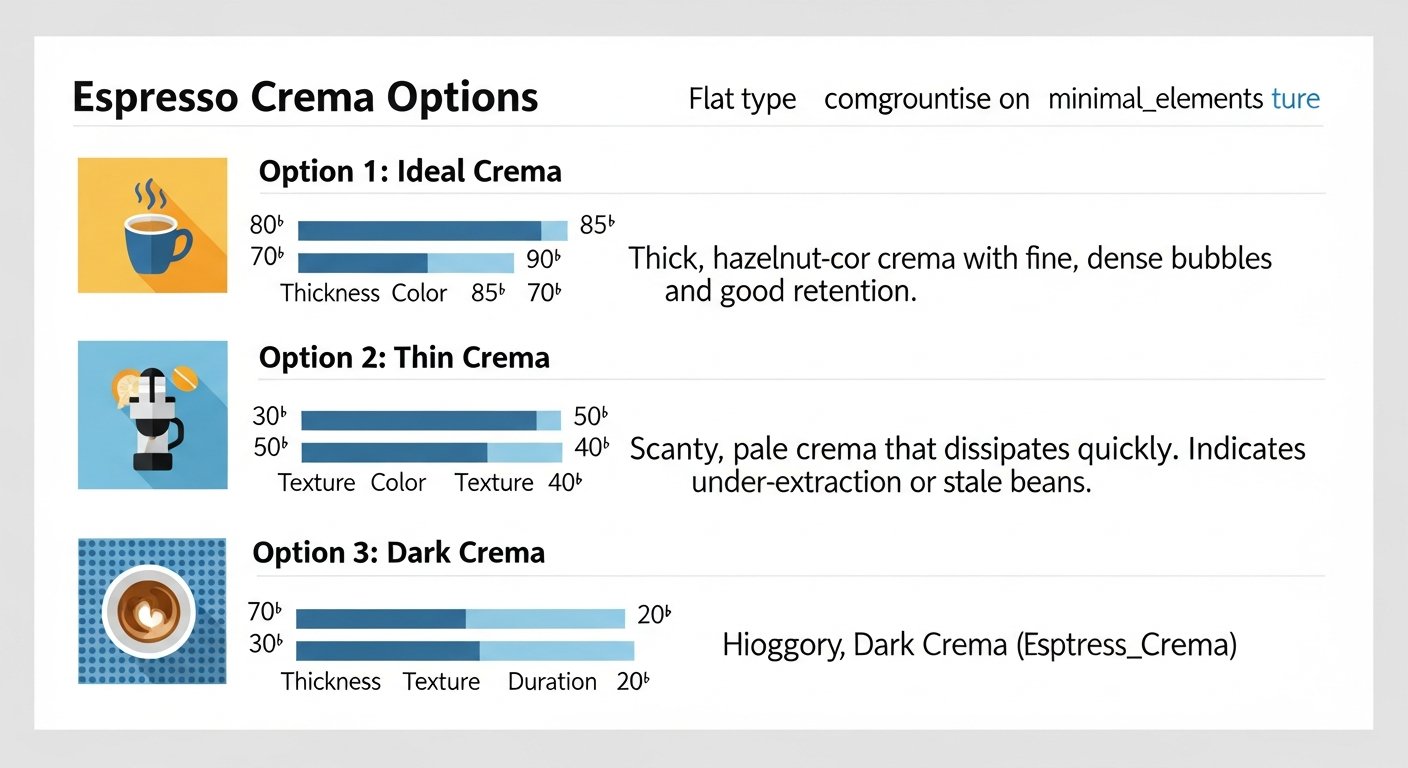
Your crema is a valuable diagnostic tool, offering immediate feedback on your brewing process. By observing its appearance, you can pinpoint specific issues and make necessary adjustments to achieve that perfect shot. Let’s look at common crema problems and their potential solutions.
| Crema Appearance | Likely Problem(s) | Potential Solution(s) |
|---|---|---|
| Too Pale/Thin/Non-Existent |
|
|
| Too Dark/Sparse/Quickly Dissipating |
|
|
| Large, Irregular Bubbles |
|
|
| Too Little Crema (with good extraction) |
|
|
| Crema Disappears Too Quickly |
|
|
The “Optimal” Crema
An ideal crema is a beautiful golden-brown or hazelnut, often with fine “tiger stripes.” It should be about 1/10th of the shot’s volume, smooth, dense, and persistent, slowly closing back up if disturbed. It should not contain large, irregular bubbles and should dissipate gradually over 1-2 minutes. This visual perfection usually correlates with a balanced, flavorful, and aromatic espresso shot. Constant adjustment and observation are part of the joy of espresso crafting.
Crema Across Espresso Styles: Variations and Nuances
While crema is a hallmark of all espresso, its characteristics can subtly change depending on the specific espresso style being prepared. These variations are often intentional, reflecting the desired flavor profile and intensity of each drink.
Traditional Espresso (Normale)
This is the benchmark. A standard 1-2 ounce (30-60ml) shot pulled in 25-30 seconds, yielding the classic golden-brown, tiger-striped crema that is the focus of much of this guide. The crema for a normale shot should be thick, consistent, and persistent, forming the perfect crown.
Ristretto: The Concentrated Shot
A ristretto (“restricted” in Italian) uses the same amount of coffee grounds but half the water (or a much shorter extraction time, e.g., 15-20 seconds), resulting in a more concentrated, sweeter, and less bitter shot.
- Crema Characteristics: Ristretto often produces a slightly darker, thicker, and sometimes even more intense crema than a normale. This is because fewer bitter compounds are extracted, and the concentration of oils and emulsified CO2 is higher in the smaller volume of liquid. The crema can be incredibly dense and rich.
Lungo: The Extended Shot
A lungo (“long” in Italian) is extracted with more water (or a longer extraction time, e.g., 35-45 seconds) than a normale, resulting in a larger volume.
- Crema Characteristics: Lungo shots typically have a thinner crema, which can appear lighter in color and dissipate more quickly. This is due to the increased water volume diluting the emulsified components and extracting more bitter compounds. While it still has crema, it’s often not as visually impressive or persistent as that of a ristretto or normale.
Doppio: The Double Shot
A doppio is simply a double shot of espresso, using twice the coffee and twice the water of a single shot, but extracted using the same principles.
- Crema Characteristics: Essentially, you get double the crema! The characteristics should mirror a perfectly pulled normale shot – rich, golden-brown, and persistent, just in a larger quantity.
Understanding these variations helps in appreciating why crema might look different across various espresso preparations, and how these differences are often part of the intended outcome.
Explore different espresso recipes and how to perfect them at home.
The Great Crema Debate: To Stir or Not to Stir?
This is a question that sparks lively discussion among espresso aficionados: should you stir your espresso before drinking it? The answer, like much in the world of coffee, often comes down to personal preference, but there’s some science behind the arguments.
The Case for Stirring
Proponents of stirring argue that it’s essential for achieving a balanced flavor profile. Here’s why:
- Layered Extraction: Espresso extracts in layers. The initial part of the shot (the “pre-infusion” and early extraction) often contains more acids and lighter flavors. The middle section contains most of the sugars and body. The final part (the “blonde” phase) can contain more bitter compounds. This means your cup actually has layers of different flavors and densities.
- Temperature Distribution: The crema acts as an insulating layer, but the espresso underneath can still have slight temperature variations. Stirring helps to homogenize the temperature.
- Flavor Uniformity: Stirring blends these layers, ensuring that each sip delivers a consistent taste experience, preventing you from getting an overly acidic first sip or a bitter last sip. Many believe the crema itself can be slightly bitter, and integrating it smooths out the flavor.
For those who stir, the goal is a complete, harmonious espresso experience from start to finish.
The Case Against Stirring (or for immediate consumption)
On the other side of the debate are those who prefer to drink their espresso unstirred, often immediately after it’s served. Their arguments include:
- Enjoying the Layers: Some prefer to experience the subtle evolution of flavor with each sip, appreciating the distinct layers of the espresso as they naturally present themselves.
- Preserving Crema’s Contribution: For these drinkers, the crema is not just visual; it’s a critical component that contributes to the aroma, mouthfeel, and initial perception of the shot. Stirring it in might detract from that unique textural and aromatic experience.
- Aesthetics: For some, the beauty of the crema is part of the ritual, and disturbing it feels contrary to the art of espresso.
Our Recommendation
While there’s no single “right” answer, many professional baristas and coffee experts recommend a gentle stir. A quick, light stir (1-2 rotations) can effectively integrate the layers without completely obliterating the crema or cooling the espresso excessively. This often leads to a more balanced and enjoyable drink. Ultimately, however, the best approach is the one that brings you the most enjoyment from your espresso. Experiment and see what you prefer!
Beyond the Shot: Crema’s Role in Coffee Culture
Crema’s influence extends far beyond its scientific properties and diagnostic utility. It has become an iconic symbol within coffee culture, shaping perceptions, inspiring artistry, and even sparking friendly rivalries among baristas.
Aesthetic Appeal and Visual Artistry
The visual appeal of a perfect crema is undeniable. Its golden-brown hue, often adorned with intricate “tiger stripes” or subtle patterns, is a feast for the eyes. In an age where visual presentation is paramount, especially on social media, crema serves as a key element of the espresso’s allure. It’s the crown jewel that signifies a premium product, a testament to the care and skill involved in its creation. Cafes often highlight the crema in their photography, knowing it resonates with consumer expectations of quality.
A Barista’s Signature and Skill Indicator
For baristas, consistently pulling shots with excellent crema is a mark of pride and expertise. It demonstrates their understanding of coffee science, their mastery of the espresso machine, and their attention to detail. Achieving optimal crema requires a keen eye for grind adjustment, dosing precision, and tamping technique. Barista competitions often judge participants partly on the quality of their espresso’s crema, recognizing it as a fundamental indicator of skill.
Education and Conversation Starter
Crema is also an excellent educational tool. It provides a tangible, visual element that baristas can use to explain the nuances of espresso to curious customers. “See this beautiful crema? That tells you these beans are fresh and the shot was pulled perfectly.” It sparks conversations about roast levels, bean origins, and extraction parameters, deepening appreciation for the craft of coffee. For home baristas, the pursuit of perfect crema becomes a journey of learning and experimentation.
Cultural Significance
In countries with strong espresso traditions, particularly Italy, crema holds almost sacred status. It’s not just a layer of foam; it’s an essential, non-negotiable component of a true espresso. Its absence or poor quality can be a significant critique of a café. This cultural reverence underscores its importance as a symbol of authenticity and quality in the global coffee landscape.
Thus, crema transcends its chemical composition to become a powerful cultural touchstone, embodying the passion, precision, and artistry that define the world of specialty coffee.
Achieving Crema Consistency: Maintenance and Best Practices
Even with the best beans and perfect technique, a dirty or poorly maintained espresso machine can sabotage your crema. Consistency in crema relies not only on your brewing prowess but also on the diligent care of your equipment. Here’s how to ensure your machine is always ready to deliver that golden crown.
Daily Cleaning Rituals
Regular, daily cleaning is paramount. Coffee oils are sticky and can easily go rancid, leaving behind a bitter residue that affects flavor and clogs components, impeding proper crema formation.
- Backflushing: If your machine has a 3-way solenoid valve, backflushing with a blind filter and a coffee detergent is crucial. This removes accumulated coffee oils and grounds from the group head and internal passages. Do this at the end of each brewing session or at least daily for active machines.
- Wipe Down Group Head and Shower Screen: After each shot, quickly brush or wipe away any remaining grounds from the shower screen and group gasket.
- Clean Portafilter and Baskets: Remove the portafilter and rinse it thoroughly after each use. At the end of the day, soak the portafilter and baskets in a solution of hot water and coffee machine detergent to remove stubborn oils.
- Purge Steam Wand: Always purge your steam wand before and after each use to clear out any milk residue and prevent blockages. Wipe it immediately with a damp cloth.
Weekly / Bi-Weekly Cleaning
Some components require less frequent but still regular attention.
- Shower Screen Removal: Every week or two, remove the shower screen and thoroughly scrub it, including its underside, to clear any trapped coffee particles or oils.
- Gasket Inspection: Check your group head gasket for wear and tear. A worn gasket can lead to pressure leaks, compromising extraction and crema. Replace as needed.
Descaling (Every 1-3 Months)
Mineral deposits from water (limescale) can build up inside your machine’s boiler and pipes, restricting water flow and affecting temperature stability. This directly impacts extraction pressure and temperature, both critical for crema.
- Follow Manufacturer’s Instructions: Always use the recommended descaling solution and follow the exact procedure for your specific machine model.
- Frequency: The frequency depends on your water hardness and machine usage. In areas with very hard water, descaling may be needed monthly; with soft water or filtered water, every 2-3 months might suffice.
Water Quality
The water you use doesn’t just impact taste; it impacts your machine’s longevity and performance, which in turn affects crema.
- Filtered Water: Use filtered water (e.g., from a Brita filter or a dedicated water filtration system) to reduce mineral buildup and improve taste.
- Avoid Distilled Water: Distilled or reverse osmosis water lacks the minerals necessary for proper extraction and can even damage some machines.
Regular Servicing
Like any complex appliance, your espresso machine benefits from professional servicing. Annually or bi-annually, consider having a technician inspect and maintain your machine. They can check internal components, replace worn parts, and ensure everything is calibrated for optimal performance and consistent crema.
By integrating these maintenance practices into your routine, you ensure that your espresso machine remains a reliable partner in your quest for perfect crema, shot after shot.
Frequently Asked Questions
Q1: Is crema always a sign of a good espresso?
A1: While the presence of crema is almost always a sign of a properly extracted espresso from fresh beans, not all crema is equal. A thin, pale, or quickly dissipating crema indicates issues like under-extraction or stale beans. A perfect crema is dense, rich hazelnut to reddish-brown, and lasts for a minute or two, signaling an optimal shot. So, while its presence is good, its quality is what truly matters.
Q2: Why does my espresso have very little or no crema?
A2: The most common reasons for little to no crema are stale coffee beans (which have degassed most of their CO2), an overly coarse grind leading to under-extraction, insufficient coffee dose, too low water temperature, or inadequate brew pressure. Ensure your beans are fresh (roasted within 4-14 days), your grind is fine and consistent, and your machine is operating at the correct temperature and pressure.
Q3: Can I make espresso crema without an espresso machine?
A3: True espresso crema, as described in this article, is a direct result of high-pressure extraction (typically 9 bars) through finely ground coffee. Methods like Moka pots, AeroPress, or French presses, while producing strong coffee, do not generate the same level of pressure or emulsion, and therefore do not create authentic crema. Some manual espresso makers can create similar results, but a traditional pump-driven machine is typically required for true crema.
Q4: Does the type of coffee bean affect crema?
A4: Absolutely. Robusta beans are known for producing significantly more crema, often thicker and darker, due to their higher lipid and protein content. Arabica beans yield a finer, more delicate crema, typically with beautiful “tiger stripes.” Many espresso blends combine both to achieve a balance of flavor and a robust, beautiful crema.
Q5: How long should crema last on an espresso shot?
A5: An ideal crema should be persistent, typically lasting for at least 1-2 minutes, if not longer, especially if undisturbed. It should gradually dissipate rather than vanishing almost instantly. If your crema disappears very quickly, it’s often an indicator of stale beans, an under-extracted shot, or a low brew temperature.
Q6: Is crema bitter? Should I stir it?
A6: The crema itself can sometimes carry a slightly more bitter flavor, as it often contains a higher concentration of certain extracted compounds. Many espresso enthusiasts and baristas recommend a gentle stir before drinking to integrate the crema with the rest of the espresso. This helps to homogenize the flavors and temperatures throughout the shot, leading to a more balanced and enjoyable taste experience. However, personal preference ultimately dictates whether to stir or not.
What is Espresso Crema? Unveiling the Golden Crown of Your Perfect Brew
Affiliate disclosure: This article may contain affiliate links. Recommendations are independent and editorially driven.
For connoisseurs and casual coffee drinkers alike, the sight of a freshly pulled espresso shot crowned with a rich, caramel-hued layer is instantly recognizable. This ephemeral, creamy foam, known as espresso crema, is far more than mere decoration. It’s a complex indicator of quality, freshness, and the skillful execution of espresso brewing, revered by baristas and coffee enthusiasts globally. At cafeserre, we believe understanding crema is fundamental to truly appreciating the art and science of espresso.
In the world of coffee, especially within the hallowed grounds of a café or in the quiet ritual of home brewing, crema stands as a testament to perfection. It whispers secrets about your beans, your grind, your machine, and your technique. From its shimmering appearance to its subtle contributions to the overall flavor profile, crema is an integral part of the espresso experience. This comprehensive guide will demystify espresso crema, exploring its origins, its significance, what a “good” crema looks like, and how you can achieve it consistently in your own brewing endeavors. Prepare to dive deep into the golden layer that defines true espresso excellence.
The Essence of Espresso Crema: More Than Just Foam
At its core, espresso crema is a reddish-brown emulsion of coffee oils, proteins, and sugars, suspended by tiny bubbles of carbon dioxide gas. This gas is a natural byproduct of the coffee roasting process, trapped within the bean. When hot, pressurized water forces its way through finely ground coffee, it extracts these compounds, and simultaneously, the trapped CO2 is released. Under the intense pressure of an espresso machine, this gas becomes emulsified with the extracted oils and other solubles, forming the stable, dense foam we know as crema.
Unlike the frothy foam found atop a cappuccino or latte, which is created by steaming milk, crema is an inherent component of the espresso shot itself. It’s a hallmark of a properly extracted shot, distinguishing espresso from other brewing methods like drip coffee or French press. Without crema, an espresso is often considered incomplete or indicative of underlying issues in the brewing process.
Defining Characteristics of Crema
- Emulsion: Crema is not simply foam, but a complex emulsion of various coffee components.
- Density: It’s denser and more stable than typical coffee foam, often capable of briefly supporting a sprinkle of sugar.
- Coloration: Typically a reddish-brown or “tiger-stripe” pattern, indicative of proper extraction.
- Ephemeral Nature: While stable, crema is not permanent. It gradually dissipates over a few minutes.
Understanding crema is the first step towards mastering espresso. It’s a visual cue, a sensory experience, and a scientific marvel all rolled into one delicate layer.
The Microscopic Marvel: How Crema Forms
To truly appreciate crema, one must understand the fascinating physics and chemistry at play during espresso extraction. It’s a precise dance between pressure, temperature, time, and the very composition of the coffee beans themselves. The process begins long before the coffee even enters your machine.
The Role of Carbon Dioxide
Coffee beans naturally produce carbon dioxide during the roasting process. This CO2 is trapped within the porous structure of the bean. The darker the roast, generally the more CO2 is produced, though very dark roasts can also release much of it during cooling. The freshness of the roasted beans is paramount here; as beans age, they degas, meaning the CO2 slowly escapes. This is why fresh beans are essential for good crema.
Pressure and Emulsification
When you pull an espresso shot, hot water (typically around 195-205°F or 90-96°C) is forced through the coffee grounds at high pressure (ideally 9 bars). This high pressure is key. It rapidly dissolves the CO2 trapped in the grounds and creates an environment where insoluble coffee oils, proteins, and melanoidins (compounds responsible for color and flavor, formed during roasting) can be emulsified. The dissolved CO2 forms tiny bubbles, which then become stabilized by the surrounding coffee oils and proteins, forming a dense, resilient foam.
The Extraction Process and Solubles
As the pressurized water passes through the coffee bed, it extracts soluble compounds – acids, sugars, and various aromatic substances – that contribute to the espresso’s flavor. Simultaneously, it extracts and emulsifies the oils and gases. The perfect balance of these elements, achieved through optimal grind size, dose, tamp, and water contact time, results in that beautiful, stable crema.
[INLINE IMAGE 1: place after second H2 | alt=”what is espresso crema concept illustration”]
Decoding Crema: What Ideal Crema Looks Like
While crema is always present in a good espresso, not all cremas are created equal. An experienced barista can tell a lot about the quality of the extraction, and even the coffee itself, simply by observing the crema. Learning to “read” your crema is a vital skill for anyone striving for espresso perfection.
Color and Hue
Ideal crema typically presents a rich, hazelnut to reddish-brown color, often with subtle “tiger stripes” or darker flecks. This vibrant, consistent color indicates a balanced extraction. A very dark brown or almost black crema might suggest over-extraction or a very dark roast, while a pale, thin, or whitish crema usually points to under-extraction or stale beans.
Thickness and Persistence
A good crema should be relatively thick, usually about 1/10th of the volume of the shot, and certainly more than a mere whisper on top. It should also be persistent, meaning it doesn’t vanish immediately. While it will slowly dissipate, a well-formed crema should last for at least 1-2 minutes, if not longer, especially if left undisturbed. A crema that disappears almost instantly is a clear sign of an issue, often related to freshness or temperature.
Texture and Elasticity
The texture of ideal crema should be smooth, velvety, and almost elastic. When gently swirled, it should flow back together, displaying a fine, tight bubble structure. Large, irregular bubbles are usually a bad sign, indicating an uneven extraction or potentially old coffee. Some describe the perfect crema as having a “creamy” mouthfeel, adding to the espresso’s overall body and luxuriousness.
Visual Cues of Excellence
- Uniformity: The crema should cover the entire surface of the espresso.
- Absence of large bubbles: Small, uniform bubbles are good; large, erratic ones are not.
- “Tiger stripes”: Darker streaks or mottling are often considered a sign of a perfectly pulled shot.
Developing an eye for perfect crema comes with practice and observation. Each shot provides valuable feedback, allowing you to fine-tune your technique and equipment.
Why Crema is Crucial: Flavor, Aroma, and Quality Indicator
Beyond its aesthetic appeal, crema plays several significant roles in the overall espresso experience. It’s not just a pretty face; it’s a multi-faceted component that contributes to the sensory journey of enjoying a well-crafted espresso.
Indicator of Freshness and Proper Extraction
Perhaps the most important role of crema is as a visual cue. Its presence, color, and persistence are direct indicators of:
- Bean Freshness: As discussed, CO2 is essential for crema. Freshly roasted coffee contains ample CO2. Stale coffee, having degassed, produces little to no crema.
- Proper Grind: An optimal grind size allows for ideal resistance to water flow, ensuring proper pressure buildup and extraction.
- Correct Temperature and Pressure: The right temperature ensures optimal solubles dissolution and CO2 release, while sufficient pressure is vital for emulsification.
- Skilled Barista Technique: From dosing to tamping, every step impacts the final crema.
A beautiful crema is often the first visual confirmation that your brewing parameters are dialed in correctly.
Contribution to Aroma
The dense foam of the crema acts as a cap, trapping many of the volatile aromatic compounds within the espresso. When you lift the cup to sip, these aromas are released, enhancing the overall olfactory experience. The crema itself carries a concentrated burst of these aromas, contributing to the perceived complexity and richness of the coffee.
Impact on Flavor and Mouthfeel
While the exact flavor contribution of crema is debated (some find it slightly bitter), its presence undoubtedly affects the overall mouthfeel and initial taste perception. The emulsified oils and proteins give the espresso a smoother, richer, and more luxurious texture. It can add to the “body” of the espresso, making it feel more substantial on the palate. Many experienced drinkers consider the initial experience of piercing the crema with the first sip to be an integral part of espresso enjoyment.
The crema also acts as a barrier, slowing the cooling of the espresso and prolonging the enjoyment of the shot at its ideal temperature.
Discover more about the crucial role of grind size in brewing.
A Mark of Quality and Craftsmanship
For many, a beautiful crema is synonymous with a high-quality espresso. It signifies that the barista has chosen excellent beans, roasted them well, and executed the extraction with precision and care. It’s a point of pride for baristas and a sign of a truly exceptional coffee experience for the customer. The absence of crema, or a poorly formed one, often immediately signals a substandard shot, even before tasting.
[INLINE IMAGE 2: place after fourth H2 | alt=”what is espresso crema comparison illustration”]
Mastering Crema: Key Factors Influencing its Formation
Achieving consistently beautiful crema requires a holistic approach, considering every step from bean selection to the final pull. Each variable plays a critical role, and understanding their individual impact is key to mastering your espresso.
Coffee Bean Type: Arabica vs. Robusta
The species of coffee bean used has a profound impact on crema.
- Robusta Beans: Known for producing significantly more crema, often thicker and darker, due to their higher lipid and protein content and greater internal pressure. However, Robusta crema can sometimes be less stable and may contain harsher flavors.
- Arabica Beans: Generally produce a finer, more delicate crema, often with those coveted “tiger stripes.” Arabica is prized for its complex aromatic profile, and its crema reflects this elegance.
Many espresso blends incorporate a small percentage of Robusta (e.g., 10-20%) specifically to enhance crema production and add body, while still predominantly featuring Arabica for flavor complexity. Pure Arabica espressos can still produce excellent crema, but it might be slightly less voluminous.
Roast Level: The Deeper, The More (Initially)
The roast level directly influences the amount of CO2 trapped within the bean.
- Medium to Medium-Dark Roasts: Typically yield the most robust crema, as they have developed a significant amount of CO2 without burning off excessive volatile compounds or oils.
- Dark Roasts: While initially producing abundant crema due to high CO2 production, dark roasts can also release much of this gas during the roasting process itself. The crema from dark roasts tends to be darker, thinner, and dissipates more quickly, and can sometimes be overly bitter.
- Light Roasts: Often produce less crema, which tends to be lighter in color and may dissipate faster. This is because lighter roasts contain less CO2 and fewer roasted-derived compounds that stabilize the emulsion.
Freshness of Beans: The Golden Rule
This is arguably the single most important factor. Coffee beans are at their peak for espresso crema production roughly 4-14 days after roasting. During this period, they’ve had sufficient time to degas (release initial, harsh CO2) but still retain plenty for crema formation.
- Too Fresh (less than 4 days): Can lead to excessive, bubbly crema that dissipates quickly, and the shot itself may taste sour or gassy.
- Optimal (4-14 days): Produces the ideal amount and quality of crema.
- Stale (over 4 weeks): Will result in very little to no crema, as most of the CO2 has escaped. The espresso will also taste flat and lifeless.
Always check the roast date and buy small batches to ensure freshness. Proper storage (airtight, opaque container, cool, dark place) is also vital.
Grind Size and Consistency: Precision is Key
The grind size is critical for creating the necessary resistance for proper pressure buildup.
- Too Fine: Leads to over-extraction, blocked flow, and a dark, thin, or patchy crema, potentially with a bitter taste.
- Too Coarse: Results in under-extraction, too fast a flow, and a very pale, thin, or non-existent crema, often leading to a sour shot.
- Optimal: A consistent, fine grind that feels like powdered sugar allows water to extract evenly under pressure, yielding a beautiful crema.
A high-quality burr grinder is indispensable for achieving the necessary consistency.
Tamping Pressure and Leveling: The Foundation
Tamping compacts the coffee grounds into a dense, even puck, which is essential for uniform water flow and pressure.
- Even Leveling: Crucial to prevent channeling (water finding paths of least resistance), which can lead to uneven extraction and poor crema.
- Consistent Pressure: While the exact pressure isn’t as critical as consistency, typically 30 lbs of pressure is recommended. Too light a tamp, and the water rushes through; too hard, and it chokes the machine.
A well-tamped puck forces water to permeate all the grounds evenly, maximizing extraction and crema production.
Water Temperature and Pressure: The Machine’s Contribution
Your espresso machine’s performance is paramount.
- Water Temperature (195-205°F / 90-96°C): Too cold, and the coffee won’t extract properly, leading to pale, thin crema. Too hot, and it can scorch the grounds, resulting in dark, patchy, quickly dissipating crema and a bitter shot.
- Brew Pressure (9 bars): The industry standard 9 bars of pressure is ideal for effective extraction and crema formation. Lower pressure will produce less crema; higher pressure can lead to over-extraction.
Brew Ratio and Extraction Time: The Final Act
The ratio of coffee grounds to water, and the time it takes to extract the shot, also impacts crema.
- Typical Ratio: A common starting point is a 1:2 ratio (e.g., 18g coffee to 36g espresso) in 25-30 seconds.
- Extraction Time: If the shot pulls too fast (under 20 seconds), it’s under-extracted, resulting in pale, thin crema. If it pulls too slow (over 35 seconds), it’s over-extracted, leading to dark, bitter, and quickly dissipating crema.
Adjusting grind size is usually the primary way to control extraction time and achieve the desired crema.
Explore our guide on optimal brewing temperatures for different coffee types.
The Crema Diagnostic: Troubleshooting Common Issues
Your crema is a valuable diagnostic tool, offering immediate feedback on your brewing process. By observing its appearance, you can pinpoint specific issues and make necessary adjustments to achieve that perfect shot. Let’s look at common crema problems and their potential solutions.
| Crema Appearance | Likely Problem(s) | Potential Solution(s) |
|---|---|---|
| Too Pale/Thin/Non-Existent |
|
|
| Too Dark/Sparse/Quickly Dissipating |
|
|
| Large, Irregular Bubbles |
|
|
| Too Little Crema (with good extraction) |
|
|
| Crema Disappears Too Quickly |
|
|
The “Optimal” Crema
An ideal crema is a beautiful golden-brown or hazelnut, often with fine “tiger stripes.” It should be about 1/10th of the shot’s volume, smooth, dense, and persistent, slowly closing back up if disturbed. It should not contain large, irregular bubbles and should dissipate gradually over 1-2 minutes. This visual perfection usually correlates with a balanced, flavorful, and aromatic espresso shot. Constant adjustment and observation are part of the joy of espresso crafting.
Crema Across Espresso Styles: Variations and Nuances
While crema is a hallmark of all espresso, its characteristics can subtly change depending on the specific espresso style being prepared. These variations are often intentional, reflecting the desired flavor profile and intensity of each drink.
Traditional Espresso (Normale)
This is the benchmark. A standard 1-2 ounce (30-60ml) shot pulled in 25-30 seconds, yielding the classic golden-brown, tiger-striped crema that is the focus of much of this guide. The crema for a normale shot should be thick, consistent, and persistent, forming the perfect crown.
Ristretto: The Concentrated Shot
A ristretto (“restricted” in Italian) uses the same amount of coffee grounds but half the water (or a much shorter extraction time, e.g., 15-20 seconds), resulting in a more concentrated, sweeter, and less bitter shot.
- Crema Characteristics: Ristretto often produces a slightly darker, thicker, and sometimes even more intense crema than a normale. This is because fewer bitter compounds are extracted, and the concentration of oils and emulsified CO2 is higher in the smaller volume of liquid. The crema can be incredibly dense and rich.
Lungo: The Extended Shot
A lungo (“long” in Italian) is extracted with more water (or a longer extraction time, e.g., 35-45 seconds) than a normale, resulting in a larger volume.
- Crema Characteristics: Lungo shots typically have a thinner crema, which can appear lighter in color and dissipate more quickly. This is due to the increased water volume diluting the emulsified components and extracting more bitter compounds. While it still has crema, it’s often not as visually impressive or persistent as that of a ristretto or normale.
Doppio: The Double Shot
A doppio is simply a double shot of espresso, using twice the coffee and twice the water of a single shot, but extracted using the same principles.
- Crema Characteristics: Essentially, you get double the crema! The characteristics should mirror a perfectly pulled normale shot – rich, golden-brown, and persistent, just in a larger quantity.
Understanding these variations helps in appreciating why crema might look different across various espresso preparations, and how these differences are often part of the intended outcome.
Explore different espresso recipes and how to perfect them at home.
The Great Crema Debate: To Stir or Not to Stir?
This is a question that sparks lively discussion among espresso aficionados: should you stir your espresso before drinking it? The answer, like much in the world of coffee, often comes down to personal preference, but there’s some science behind the arguments.
The Case for Stirring
Proponents of stirring argue that it’s essential for achieving a balanced flavor profile. Here’s why:
- Layered Extraction: Espresso extracts in layers. The initial part of the shot (the “pre-infusion” and early extraction) often contains more acids and lighter flavors. The middle section contains most of the sugars and body. The final part (the “blonde” phase) can contain more bitter compounds. This means your cup actually has layers of different flavors and densities.
- Temperature Distribution: The crema acts as an insulating layer, but the espresso underneath can still have slight temperature variations. Stirring helps to homogenize the temperature.
- Flavor Uniformity: Stirring blends these layers, ensuring that each sip delivers a consistent taste experience, preventing you from getting an overly acidic first sip or a bitter last sip. Many believe the crema itself can be slightly bitter, and integrating it smooths out the flavor.
For those who stir, the goal is a complete, harmonious espresso experience from start to finish.
The Case Against Stirring (or for immediate consumption)
On the other side of the debate are those who prefer to drink their espresso unstirred, often immediately after it’s served. Their arguments include:
- Enjoying the Layers: Some prefer to experience the subtle evolution of flavor with each sip, appreciating the distinct layers of the espresso as they naturally present themselves.
- Preserving Crema’s Contribution: For these drinkers, the crema is not just visual; it’s a critical component that contributes to the aroma, mouthfeel, and initial perception of the shot. Stirring it in might detract from that unique textural and aromatic experience.
- Aesthetics: For some, the beauty of the crema is part of the ritual, and disturbing it feels contrary to the art of espresso.
Our Recommendation
While there’s no single “right” answer, many professional baristas and coffee experts recommend a gentle stir. A quick, light stir (1-2 rotations) can effectively integrate the layers without completely obliterating the crema or cooling the espresso excessively. This often leads to a more balanced and enjoyable drink. Ultimately, however, the best approach is the one that brings you the most enjoyment from your espresso. Experiment and see what you prefer!
Beyond the Shot: Crema’s Role in Coffee Culture
Crema’s influence extends far beyond its scientific properties and diagnostic utility. It has become an iconic symbol within coffee culture, shaping perceptions, inspiring artistry, and even sparking friendly rivalries among baristas.
Aesthetic Appeal and Visual Artistry
The visual appeal of a perfect crema is undeniable. Its golden-brown hue, often adorned with intricate “tiger stripes” or subtle patterns, is a feast for the eyes. In an age where visual presentation is paramount, especially on social media, crema serves as a key element of the espresso’s allure. It’s the crown jewel that signifies a premium product, a testament to the care and skill involved in its creation. Cafes often highlight the crema in their photography, knowing it resonates with consumer expectations of quality.
A Barista’s Signature and Skill Indicator
For baristas, consistently pulling shots with excellent crema is a mark of pride and expertise. It demonstrates their understanding of coffee science, their mastery of the espresso machine, and their attention to detail. Achieving optimal crema requires a keen eye for grind adjustment, dosing precision, and tamping technique. Barista competitions often judge participants partly on the quality of their espresso’s crema, recognizing it as a fundamental indicator of skill.
Education and Conversation Starter
Crema is also an excellent educational tool. It provides a tangible, visual element that baristas can use to explain the nuances of espresso to curious customers. “See this beautiful crema? That tells you these beans are fresh and the shot was pulled perfectly.” It sparks conversations about roast levels, bean origins, and extraction parameters, deepening appreciation for the craft of coffee. For home baristas, the pursuit of perfect crema becomes a journey of learning and experimentation.
Cultural Significance
In countries with strong espresso traditions, particularly Italy, crema holds almost sacred status. It’s not just a layer of foam; it’s an essential, non-negotiable component of a true espresso. Its absence or poor quality can be a significant critique of a café. This cultural reverence underscores its importance as a symbol of authenticity and quality in the global coffee landscape.
Thus, crema transcends its chemical composition to become a powerful cultural touchstone, embodying the passion, precision, and artistry that define the world of specialty coffee.
Achieving Crema Consistency: Maintenance and Best Practices
Even with the best beans and perfect technique, a dirty or poorly maintained espresso machine can sabotage your crema. Consistency in crema relies not only on your brewing prowess but also on the diligent care of your equipment. Here’s how to ensure your machine is always ready to deliver that golden crown.
Daily Cleaning Rituals
Regular, daily cleaning is paramount. Coffee oils are sticky and can easily go rancid, leaving behind a bitter residue that affects flavor and clogs components, impeding proper crema formation.
- Backflushing: If your machine has a 3-way solenoid valve, backflushing with a blind filter and a coffee detergent is crucial. This removes accumulated coffee oils and grounds from the group head and internal passages. Do this at the end of each brewing session or at least daily for active machines.
- Wipe Down Group Head and Shower Screen: After each shot, quickly brush or wipe away any remaining grounds from the shower screen and group gasket.
- Clean Portafilter and Baskets: Remove the portafilter and rinse it thoroughly after each use. At the end of the day, soak the portafilter and baskets in a solution of hot water and coffee machine detergent to remove stubborn oils.
- Purge Steam Wand: Always purge your steam wand before and after each use to clear out any milk residue and prevent blockages. Wipe it immediately with a damp cloth.
Weekly / Bi-Weekly Cleaning
Some components require less frequent but still regular attention.
- Shower Screen Removal: Every week or two, remove the shower screen and thoroughly scrub it, including its underside, to clear any trapped coffee particles or oils.
- Gasket Inspection: Check your group head gasket for wear and tear. A worn gasket can lead to pressure leaks, compromising extraction and crema. Replace as needed.
Descaling (Every 1-3 Months)
Mineral deposits from water (limescale) can build up inside your machine’s boiler and pipes, restricting water flow and affecting temperature stability. This directly impacts extraction pressure and temperature, both critical for crema.
- Follow Manufacturer’s Instructions: Always use the recommended descaling solution and follow the exact procedure for your specific machine model.
- Frequency: The frequency depends on your water hardness and machine usage. In areas with very hard water, descaling may be needed monthly; with soft water or filtered water, every 2-3 months might suffice.
Water Quality
The water you use doesn’t just impact taste; it impacts your machine’s longevity and performance, which in turn affects crema.
- Filtered Water: Use filtered water (e.g., from a Brita filter or a dedicated water filtration system) to reduce mineral buildup and improve taste.
- Avoid Distilled Water: Distilled or reverse osmosis water lacks the minerals necessary for proper extraction and can even damage some machines.
Regular Servicing
Like any complex appliance, your espresso machine benefits from professional servicing. Annually or bi-annually, consider having a technician inspect and maintain your machine. They can check internal components, replace worn parts, and ensure everything is calibrated for optimal performance and consistent crema.
By integrating these maintenance practices into your routine, you ensure that your espresso machine remains a reliable partner in your quest for perfect crema, shot after shot.
Frequently Asked Questions
Q1: Is crema always a sign of a good espresso?
A1: While the presence of crema is almost always a sign of a properly extracted espresso from fresh beans, not all crema is equal. A thin, pale, or quickly dissipating crema indicates issues like under-extraction or stale beans. A perfect crema is dense, rich hazelnut to reddish-brown, and lasts for a minute or two, signaling an optimal shot. So, while its presence is good, its quality is what truly matters.
Q2: Why does my espresso have very little or no crema?
A2: The most common reasons for little to no crema are stale coffee beans (which have degassed most of their CO2), an overly coarse grind leading to under-extraction, insufficient coffee dose, too low water temperature, or inadequate brew pressure. Ensure your beans are fresh (roasted within 4-14 days), your grind is fine and consistent, and your machine is operating at the correct temperature and pressure.
Q3: Can I make espresso crema without an espresso machine?
A3: True espresso crema, as described in this article, is a direct result of high-pressure extraction (typically 9 bars) through finely ground coffee. Methods like Moka pots, AeroPress, or French presses, while producing strong coffee, do not generate the same level of pressure or emulsion, and therefore do not create authentic crema. Some manual espresso makers can create similar results, but a traditional pump-driven machine is typically required for true crema.
Q4: Does the type of coffee bean affect crema?
A4: Absolutely. Robusta beans are known for producing significantly more crema, often thicker and darker, due to their higher lipid and protein content. Arabica beans yield a finer, more delicate crema, typically with beautiful “tiger stripes.” Many espresso blends combine both to achieve a balance of flavor and a robust, beautiful crema.
Q5: How long should crema last on an espresso shot?
A5: An ideal crema should be persistent, typically lasting for at least 1-2 minutes, if not longer, especially if undisturbed. It should gradually dissipate rather than vanishing almost instantly. If your crema disappears very quickly, it’s often an indicator of stale beans, an under-extracted shot, or a low brew temperature.
Q6: Is crema bitter? Should I stir it?
A6: The crema itself can sometimes carry a slightly more bitter flavor, as it often contains a higher concentration of certain extracted compounds. Many espresso enthusiasts and baristas recommend a gentle stir before drinking to integrate the crema with the rest of the espresso. This helps to homogenize the flavors and temperatures throughout the shot, leading to a more balanced and enjoyable taste experience. However, personal preference ultimately dictates whether to stir or not.