


Updated May 2026. Stepping into the world of pastry and bread can feel intimidating when you are faced with a dizzying array of flours, yeasts, and precision tools. However, mastering basic baking techniques for beginners is the perfect way to transform that anxiety into delicious confidence. Whether you want to pair a freshly baked scone with your morning pour-over coffee or impress your friends with a rustic sourdough loaf, understanding the fundamental mechanics of baking makes all the difference.
Baking is often described as both an art and a science, where exact measurements meet creative flavor profiles. In this comprehensive guide, we will walk you through the essential culinary skills you need to build a rock-solid foundation. From learning how to properly measure dry ingredients to understanding the magic of the creaming method, these foundational skills will demystify the oven for good.
By focusing on clear methods and reliable tools, you will quickly see how simple it is to achieve bakery-quality results right in your own kitchen. Let us roll up our sleeves, preheat the oven, and dive into the essential practices that will elevate your home cafe experience.
What Essential Tools Do Novice Bakers Need?
Before diving into complex recipes, establishing a proper toolkit is vital. The right equipment not only makes the process smoother but also guarantees consistency across your culinary projects. You do not need a commercial kitchen, but a few strategic investments will elevate your essential kitchen equipment setup.
The Digital Kitchen Scale
If there is one tool that separates professionals from amateurs, it is the digital kitchen scale. Precision is paramount in pastry arts. Measuring by weight (grams or ounces) rather than volume eliminates the inconsistencies of packed flour or aerated sugar. Look for a scale with a tare function to easily zero out the weight of your bowls.
Measuring Cups and Spoons
While a scale is preferred for dry goods, you will still need liquid measuring cups (typically glass or clear plastic with a spout) and a set of standardized measuring spoons for small quantities of spices, extracts, and chemical leaveners.
Mixing Bowls and Utensils
Invest in a set of nesting mixing bowls in glass or stainless steel. Stainless steel is particularly excellent for whipping egg whites or cream as it retains cold temperatures well. Pair these with a sturdy balloon whisk for aerating liquids and a flexible silicone spatula for scraping down the sides of bowls—a crucial step to ensure an even batter.
Oven Thermometer
Home ovens are notoriously inaccurate, often fluctuating by up to 25 degrees Fahrenheit. An inexpensive oven thermometer placed on the center rack provides the true ambient temperature, preventing burnt cookie bottoms or underbaked cake centers.
[INLINE IMAGE 1: digital kitchen scale displaying grams next to a bowl of all-purpose flour]
The Science of Key Baking Ingredients

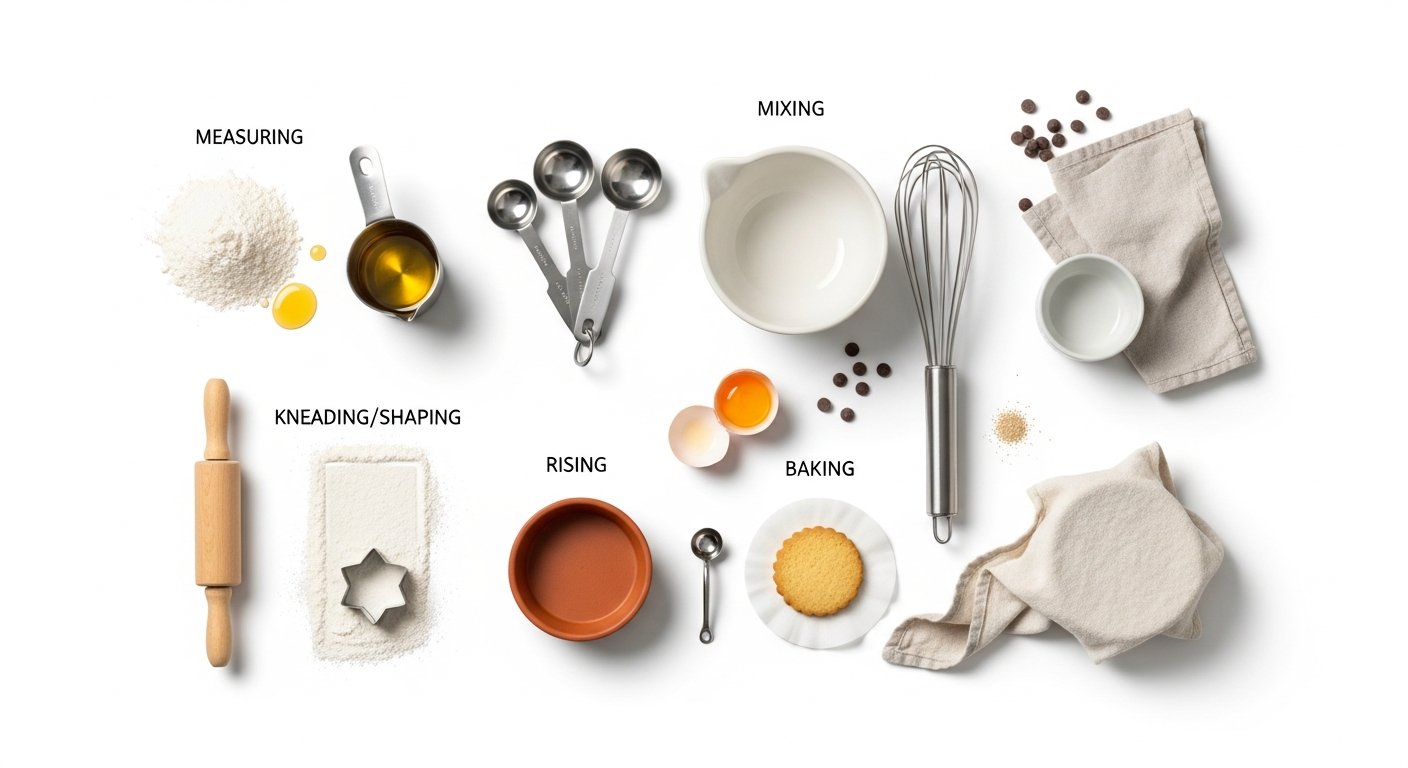
Understanding the chemical roles of your pantry staples is a cornerstone of culinary science. As Paula Figoni outlines in How Baking Works, every component serves a specific structural or flavor purpose.
Flour and Gluten Development
Wheat flours contain proteins called glutenin and gliadin. When hydrated and agitated, they form gluten, an elastic network that traps expanding gases. Bread flour has a high protein content (12-14%) ideal for chewy sourdough, while cake flour has a low protein content (7-9%) for tender sponges. Choosing the right type of flour dictates the final texture of your crumb.
Leavening Agents
Leaveners cause doughs and batters to rise. Biological leaveners, like active dry yeast and sourdough starters, consume sugars and expel carbon dioxide over time. Chemical leaveners act much faster. Baking soda (sodium bicarbonate) requires an acidic ingredient (like buttermilk or lemon juice) to activate. Baking powder contains both the base and the acid, activating first when hydrated and again when exposed to heat (double-acting).
Fats and Sugars
Fats, such as butter, shortening, or oil, tenderize baked goods by coating flour proteins and inhibiting gluten formation. They also carry flavor and contribute to a moist crumb. Sugars do more than sweeten; they caramelize for a golden crust, retain moisture to extend shelf life, and assist in aeration during the creaming process.
Types of Mixing Methods and When to Apply Them
The way you combine your ingredients dictates the final texture of your baked goods. Selecting the correct mixing method is just as important as the ingredients themselves.
The Creaming Method
Used extensively for cookies and pound cakes, the creaming method involves beating softened butter and sugar together until pale and fluffy. This mechanical leavening process forces sharp sugar crystals to cut microscopic air pockets into the fat. When baked, these air pockets expand, giving the pastry a light, tender crumb. Mastering the creaming process is essential for fluffy cakes.
The Muffin Method
Also known as the two-bowl method, this technique is used for pancakes, waffles, and quick breads. You whisk all dry ingredients in one bowl and all wet ingredients (including liquid fats like oil or melted butter) in another. The wet mixture is then gently folded into the dry. The key here is minimal mixing to prevent tough, rubbery textures.
The Biscuit or Pastry Method
For flaky pie crusts and tender scones, cold, solid fat is cut into the flour mixture using a pastry blender or your fingertips until it resembles coarse meal. As the pastry bakes, the distinct pieces of cold fat melt, creating steam pockets that separate the dough into distinct, buttery layers.
The Folding Method
Folding is a delicate technique used to incorporate light, aerated mixtures (like whipped egg whites or whipped cream) into heavier bases without deflating them. Using a silicone spatula, you cut down the center of the bowl and sweep up the sides in a continuous, gentle motion.
[INLINE IMAGE 3: silicone spatula gently folding whipped egg whites into a rich chocolate batter]
How Can You Master Accurate Measuring and Scaling?
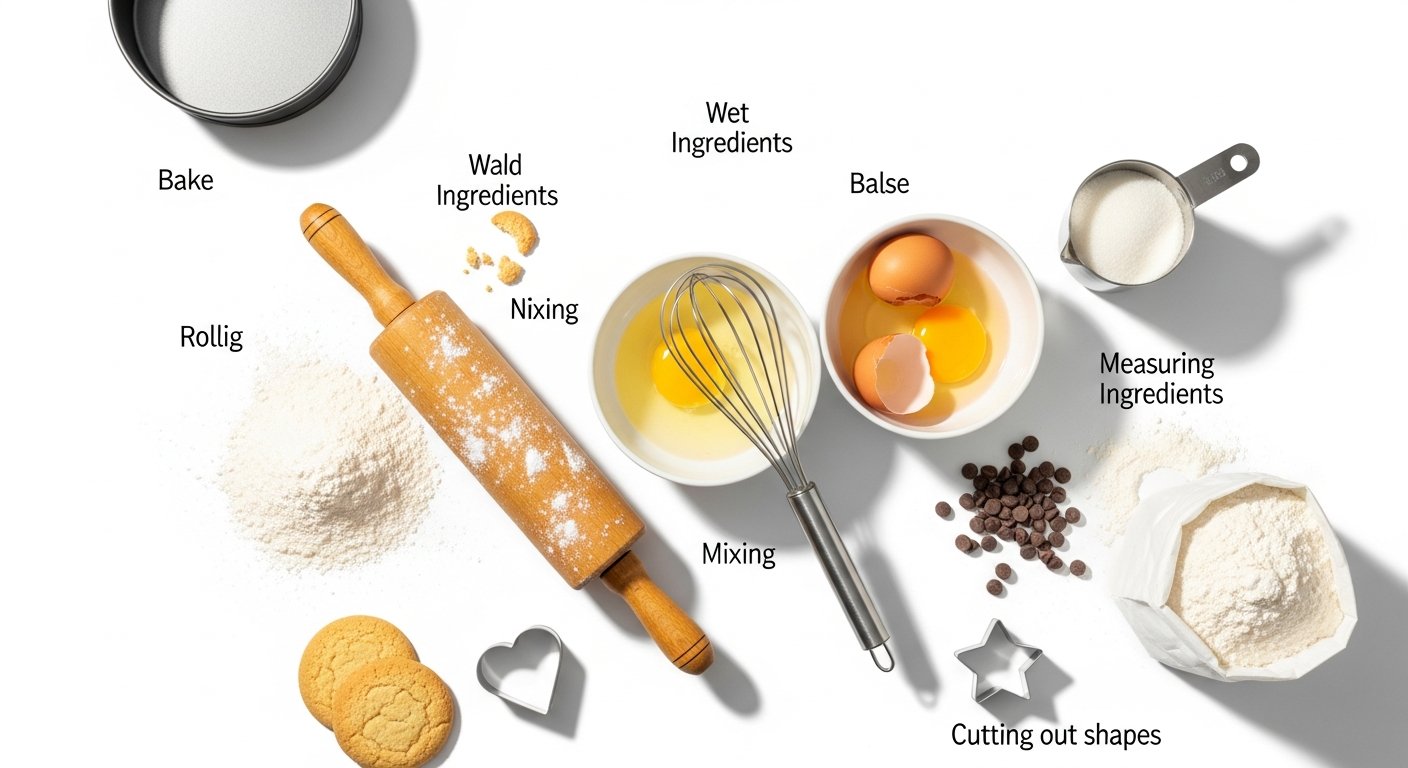
Inaccuracy in scaling is the leading cause of recipe failure. Transitioning from volume measurements to weight-based scaling is a transformative step for any home cook, ensuring your volume versus weight baking ratios are always exact.
The Pitfalls of Volume Measurement
A cup of all-purpose flour can weigh anywhere from 120 grams to 150 grams depending on how tightly it is packed into the measuring cup. This 30-gram difference can turn a light, airy sponge cake into a dense, heavy brick. Humidity, the brand of flour, and even how the flour settled during shipping can alter its volume.
The Spoon and Level Technique
If you must use volume cups, never scoop directly from the flour bag. Instead, fluff the flour with a fork, gently spoon it into your measuring cup until it mounds over the top, and then level it off with the flat edge of a butter knife. This prevents compaction and yields a more accurate measurement.
Scaling Liquids
When measuring liquids by volume, always use a spouted glass or clear plastic jug. Place the jug on a flat, level surface and bend down so your eye is perfectly level with the measurement line. You should read the measurement at the bottom of the meniscus—the slight curve formed by the liquid’s surface tension.
Using the Tare Function
When using a digital scale, place your empty bowl on the scale and press the tare or zero button. Add your first ingredient until you reach the desired weight. Tare the scale again before adding the next ingredient. This allows you to measure multiple items in a single bowl accurately, saving time and reducing cleanup.
Essential Oven Skills for Consistent Results
Your oven is the final crucible where raw batter transforms into a finished masterpiece. Understanding how your specific appliance operates is critical, as Wayne Gisslen emphasizes in Professional Baking regarding heat transfer and baking stages.
The Importance of Preheating
Never bypass the preheating stage. Baked goods rely on an initial blast of high heat—often called oven spring—to rapidly expand air and steam pockets before the structural proteins (gluten and egg proteins) set. If you place a cake in a cold oven, it will likely turn out flat and dense.
Managing Oven Hot Spots
Most home ovens do not distribute heat perfectly evenly. You may have a back-left corner that runs significantly hotter than the front-right. To test this, arrange slices of white bread across the middle rack and bake at 350°F for a few minutes. The browning pattern will reveal your hot spots. To mitigate this, rotate your baking pans halfway through the cooking time.
Blind Baking for Pies and Tarts
When making a custard pie or a tart with a wet filling, the crust must be partially or fully baked before the filling is added to prevent a soggy bottom. This technique, known as blind baking, involves lining the raw dough with parchment paper and filling it with pie weights, dried beans, or uncooked rice to hold its shape while it bakes.
Understanding Carryover Cooking
Food continues to cook even after it is removed from the heat source due to residual internal heat. Cookies, for example, should often be pulled from the oven when the edges are golden but the centers still look slightly underdone. They will firm up as they cool on the baking sheet.
Common Pastry Pitfalls and Troubleshooting Strategies
Even seasoned professionals encounter failures. The key to improvement is understanding the underlying causes of common mistakes so you can adjust your approach in the future.
Sunken Cake Centers
A cake that rises beautifully in the oven only to collapse in the middle is incredibly frustrating. This is often caused by opening the oven door too early, which lets in a rush of cold air and halts the rising process before the crumb structure has set. It can also be the result of expired chemical leaveners or over-creaming the butter and sugar, which incorporates too much air that the batter cannot support.
Tough, Chewy Cookies and Muffins
If your delicate pastries are turning out tough and bread-like, overmixing is the likely culprit. Once flour is hydrated, every stir develops more gluten. For tender baked goods, mix only until the dry ingredients just disappear. A few small lumps in a muffin batter are perfectly acceptable and actually preferred.
Dense, Heavy Bread Dough
Yeast breads require patience. If your loaf is dense and heavy, it likely under-proofed. Yeast needs a warm, draft-free environment to ferment and produce carbon dioxide. If the ambient temperature is too cold, proofing will take much longer than the recipe states. Always judge proofing by volume (e.g., doubled in size) rather than strictly by the clock. Additionally, using water that is too hot can kill the yeast entirely, preventing any rise.
Sources & References
- Figoni, P. (2010). How Baking Works: Exploring the Fundamentals of Baking Science. John Wiley & Sons.
- Gisslen, W. (2016). Professional Baking. John Wiley & Sons.
- The Culinary Institute of America (2015). Baking and Pastry: Mastering the Art and Craft. John Wiley & Sons.