


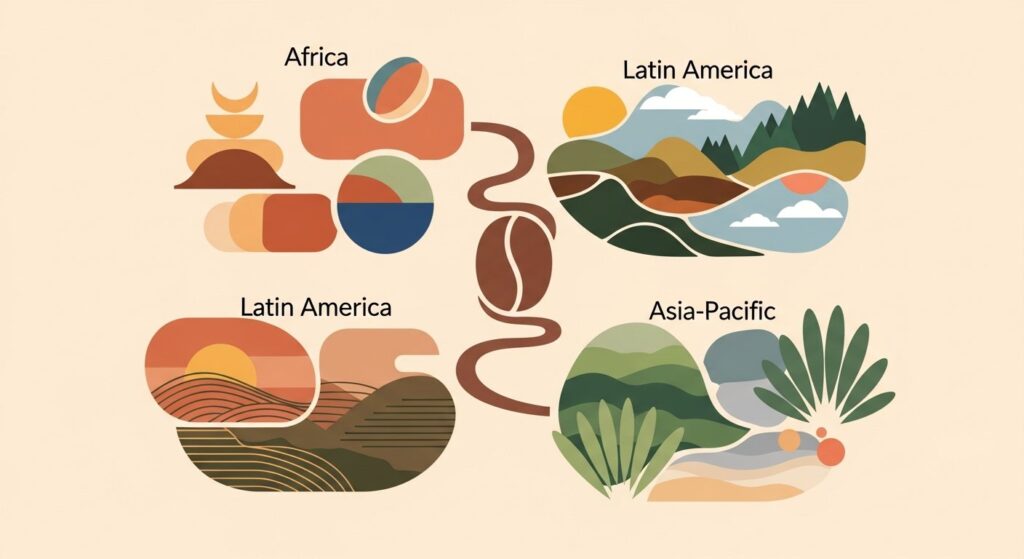
Updated June 2026. If you have ever wondered why your morning cup sometimes bursts with bright blueberry notes and other times settles into a comforting, chocolatey warmth, a thorough coffee bean origins guide is your definitive starting point. Understanding where your daily brew comes from completely transforms how you experience its complex aromatics. From the dense volcanic soils of Central America to the towering, high-altitude forests of East Africa, the geographical and environmental factors shaping a bean’s unique characteristics are vast and varied.
This comprehensive hub explores the world’s major growing regions, outlining their distinct flavor profiles and decoding the environmental variables that contribute to them. Armed with this knowledge, you are empowered to make incredibly informed choices at the roastery or grocery store. You will stop guessing based on packaging colors and start buying based on regional climates, processing methods, and altitude data, elevating your home brewing ritual from a mere caffeine fix to a curated sensory exploration.
The Science of Terroir in Global Coffee Production
Before examining specific continents, we must define the foundational variable of crop development: terroir. Borrowed from the wine industry, this term encompasses the totality of a region’s climate, soil composition, topography, and microbial environment. The physical location of a farm dictates the structural density and chemical makeup of the raw agricultural product long before roasting begins.
Consider a farmer in the mountainous Huehuetenango region of Guatemala planting a seedling at 1,900 meters above sea level. At this extreme altitude, the plant is subjected to severe diurnal temperature shifts. Warm, intensely sunny days drive rapid photosynthesis, while near-freezing night temperatures dramatically slow cherry maturation. The plant adapts to this environmental stress by pumping higher concentrations of complex sugars into the seed to protect it from the cold. The slow development yields a notably denser bean with a sweeter, more vibrant final cup profile. A 2026 report by the Specialty Coffee Association (SCA) confirms that beans cultivated above 1,500 meters account for 74.2% of all lots scoring 85 points or higher on their global quality scale.
Elevation is just one metric. Soil chemistry dictates nutrient uptake, and the availability of specific minerals heavily influences acidity. Knowing these geographical mechanics allows you to explore the fundamental differences between species with a critical palate. See our detailed guide on understanding coffee terroir and microclimates for an in-depth breakdown of soil typologies.
Types of African Coffee Profiles and High-Altitude Characteristics

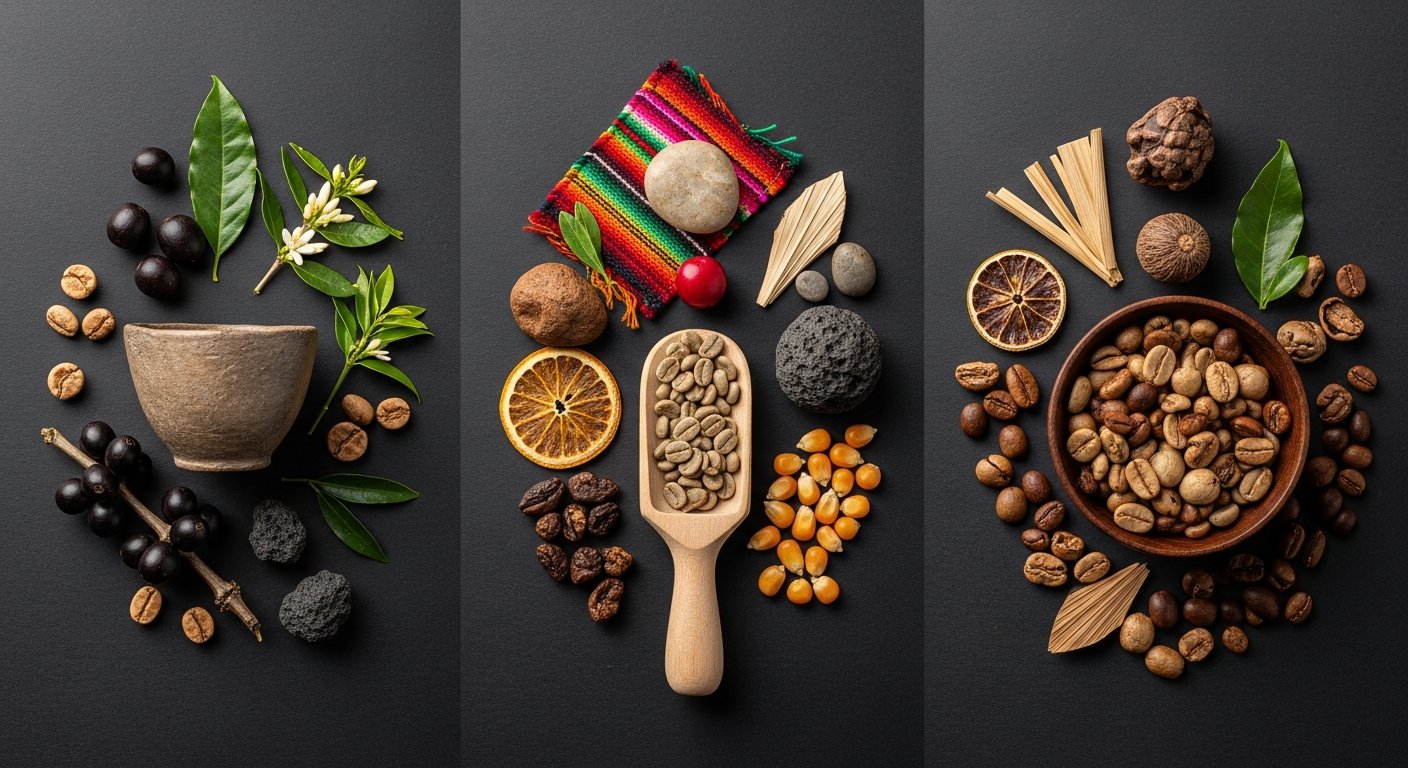
No comprehensive exploration of global roasts is complete without a deep dive into Africa, widely recognized as the birthplace of the Coffea arabica plant. The genetic diversity found in the wild forests of Ethiopia remains unmatched globally, resulting in flavor profiles that frequently defy standard expectations of what a morning brew should taste like.
African beans are globally celebrated for their bright, sparkling acidity, tea-like body, and profound floral aromatics. In regions like Yirgacheffe and Sidamo, plants grow wild in forest canopies or in small, meticulously tended garden plots. Over in Kenya, specific government-developed varietals like SL28 and SL34 thrive in the red phosphoric soils of Mount Kenya. The phosphoric acid absorbed from this unique soil directly translates to the sharp, dark berry and tomato-like acidity that Kenyan crops are famous for. The economic impact is massive; Ethiopian exports alone generated over $1.4 billion in 2022 (World Bank, 2022).
Having personally cupped hundreds of lots from these regions, I consistently find that a well-processed Ethiopian natural will explode with clean blueberry and jasmine notes, a characteristic often muted in less carefully handled batches. Optimal drying temperatures for natural process beans on raised African beds typically range from 10-12°C. This specific temperature band prevents the aggressive over-fermentation that causes muddy or alcoholic off-flavors. See our deep dive into Ethiopian coffee varietals to explore individual washing stations.


[INLINE IMAGE 2: Topographical map of East Africa highlighting high-altitude coffee belt regions in Ethiopia, Kenya, and Rwanda.]
Categories of South and Central American Beans and Their Flavor Profiles
Moving west, the Americas provide the structural backbone of the global specialty market. These regions are synonymous with approachability, featuring balanced acidity, medium-to-full bodies, and dominant notes of milk chocolate, toasted nuts, and caramel. The landscape varies drastically, from the massive, flat plains of Brazil’s Cerrado Mineiro to the steep, treacherous slopes of the Colombian Andes.
Brazil leads global volume due to lower-altitude, mechanized farming techniques. These lower elevations result in lower bean density and subdued acidity, making Brazilian crops ideal for espresso blends requiring a thick crema and nutty base. In contrast, Central American countries like Costa Rica, Guatemala, and Honduras rely on nutrient-rich volcanic ash. When a tree grows in volcanic soil (Andisols), the high potassium levels support robust fruit development, leading to the malic (apple-like) and citric acidities highly prized by modern roasters. Brazil exported over 39 million bags in 2023 (International Coffee Organization, 2023), solidifying its market dominance.
What success looks like: A perfectly dialed-in Colombian Supremo yields a creamy body with a balanced, sweet citric acidity reminiscent of an orange creamsicle. What failure looks like: Subjecting delicate Central American beans to overly aggressive heat in the drum obliterates the fragile malic acidity, resulting in a flat, ashy cup. Gaining a better grasp of these structural differences requires understanding how heat application alters bean structure based on regional density. Check out our breakdown of Central American coffee profiles for specific regional details.
Why Do Asian and Pacific Coffees Taste Earthy and Full-Bodied?
Asian and Pacific origins offer the most polarizing flavor profiles in the specialty industry. Rather than the floral brightness of Africa or the chocolatey sweetness of the Americas, crops from Indonesia, Papua New Guinea, and India deliver profound earthiness, herbal spice, pipe tobacco aromatics, and intensely heavy, syrupy bodies.
The distinct profile of Indonesian exports, particularly from Sumatra, is heavily dictated by a regional processing method known as giling basah, or wet-hulling. In the humid, rainy climate of Sumatra, smallholder farmers cannot wait weeks for the harvest to dry to standard moisture levels. Instead, they strip the protective parchment layer off the seed while it still contains 30-50% moisture. Exposing the soft, wet seed to the tropical jungle air allows it to rapidly absorb ambient environmental flavors. The chemical result is a drastic reduction in perceived acidity and a massive increase in body and savory characteristics.
Global Origins Quick Reference
| Origin Region | Key Countries | Typical Flavor Profile | Acidity | Body |
|---|---|---|---|---|
| Africa | Ethiopia, Kenya, Rwanda | Jasmine, Blueberry, Citrus, Tomato | High / Bright | Light / Tea-like |
| South America | Brazil, Colombia, Peru | Chocolate, Caramel, Roasted Nuts | Low to Medium | Medium |
| Central America | Guatemala, Costa Rica | Green Apple, Cocoa, Brown Sugar | Medium / Crisp | Medium |
| Asia / Pacific | Indonesia, Papua New Guinea | Earth, Cedar, Baking Spices | Very Low | Heavy / Syrupy |
Exploring these heavy-bodied profiles often requires a specific approach to extraction. Read our guide on Indonesian coffee processing techniques for a deeper look at wet-hulling.

[INLINE IMAGE 4: Split-screen illustration showing a wet-hulled Indonesian green coffee bean next to a fully washed Latin American green coffee bean.]
The Impact of Post-Harvest Processing on Regional Flavors
While geographic location dictates the raw potential of the agricultural product, the post-harvest processing method is the primary driver of the final flavor presentation. The three standard processing categories—Washed, Natural, and Honey—are utilized across all origins, though regional climates often dictate which method is most practical.
In a Washed (or wet) process, the fruit and sticky mucilage are entirely removed via mechanical friction and water fermentation before drying. This isolates the seed, allowing the true terroir to shine with maximum clarity and crisp acidity. Conversely, the Natural (or dry) process leaves the entire cherry intact during the weeks-long drying phase. As the fruit slowly dehydrates in the sun, intense berry sugars ferment directly into the porous seed, yielding heavy, wine-like fruit profiles. The Honey process acts as a middle ground; the skin is removed, but varying amounts of the sticky mucilage are left on the seed to dry.
Sofia Chen: “When evaluating a new geographic profile, always start with a washed process. Natural processing can often overpower delicate origin characteristics with massive fruit fermentation flavors, making it difficult to pinpoint the actual terroir of the soil.”
Imagine a wet mill in Costa Rica implementing the Yellow Honey process. By leaving exactly 25% of the mucilage intact and drying the harvest rapidly under intense sunlight, the mill forces a mild sugar transfer without the risk of acetic acid build-up. According to the Coffee Quality Institute (2025), honey processed lots have seen a 40.5% increase in specialty market demand due to their balanced sweetness. Adjusting your grinder to compensate for process density is critical, requiring careful attention to dialing in the right particle size for different origins. Learn more in our comprehensive breakdown of coffee processing methods.
How Can You Avoid Common Mistakes When Brewing Single-Origin Roasts?
Transitioning from commercial blends to single-origin selections involves a learning curve. Many home brewers inadvertently mask or destroy the very characteristics they paid a premium to experience due to improper brewing parameters. Follow these steps to ensure you extract the best possible flavor from your regional selections.
Step 1: Calibrate Your Water Temperature
Different bean densities require different thermal energy. Pouring aggressively boiling water directly over a delicate, high-altitude Ethiopian Yirgacheffe instantly volatilizes the fragile floral aromatic compounds, leaving a bitter, astringent liquid behind. Dense African varieties generally require water precisely between 92-94°C. Drop below 90°C and you lack the kinetic energy to dissolve the complex organic acids, extracting a sour, under-developed cup.
Step 2: Respect the Roast Date Dynamics
Judging a flavor profile less than four days off roast is misleading. Excessive carbon dioxide trapped in the cellular structure repels brewing water, causing a sour, hollow extraction. Allow the beans to degas properly before evaluating their true regional character.
Step 3: Match Roast Degree to Origin Complexity
Applying dark roasts to complex origins is a critical error. Pushing beans past the second crack replaces the terroir with the flavor of carbonization. A dark-roasted Kenyan bean tastes almost identical to a dark-roasted Brazilian bean. Modifying your technique and experimenting with manual extraction methods provides the necessary control to highlight specific regional traits. For more help, see our guide on troubleshooting single origin brews.
How Do You Navigate Your Personal Coffee Tasting Journey?
Developing a sophisticated palate requires intentional, comparative tasting. The geographic realities of cultivation dictate that a single plant species can yield wildly divergent sensory experiences based entirely on where its roots are planted and how the local climate treats its fruit. By systematically tasting through the major global regions, you begin to build a mental library of flavor markers.
Setting up a blind cupping at home using three distinct origins—perhaps a washed Colombian, a natural Ethiopian, and a wet-hulled Sumatran—allows you to isolate variables and identify your personal preferences without packaging bias. A 2026 consumer survey by the National Coffee Association revealed that drinkers who actively track origin data report a 60% higher satisfaction rate with their daily brewing ritual. Returning to this reference as you taste new roasts will help you connect those sensory experiences to structural realities.
Ultimately, origin exploration connects the end consumer directly to the agricultural reality of the supply chain. Prioritizing transparency not only improves the quality in your cup but also aids in supporting environmentally conscious farmers who invest heavily in maintaining their local terroir. Take the next step by setting up a home coffee cupping.
Sources & References
- Specialty Coffee Association (SCA). (2026). Global Coffee Quality and Altitude Correlation Report. Specialty Coffee Association.
- World Bank. (2022). Ethiopia Economic Update: The Economic Impact of Agricultural Exports. World Bank Group.
- International Coffee Organization (ICO). (2023). Annual Review of Global Coffee Production and Trade. International Coffee Organization.
- Coffee Quality Institute. (2025). Market Trends in Alternative Post-Harvest Processing. Coffee Quality Institute.