



Updated April 2026. When you first experience a perfectly brewed cup of African specialty coffee, understanding the Ethiopian Yirgacheffe coffee profile becomes a pursuit of identifying delicate jasmine notes and vibrant citrus. As a coffee enthusiast and culinary director, I frequently encounter home brewers who are entirely captivated by the tea-like body and floral aroma of these specific beans. Unlike heavier South American varieties, the sensory attributes of Yirgacheffe offer a remarkable complexity that transforms an ordinary morning ritual into an intricate tasting experience. Delving into the origins, cultivation practices, and meticulous processing methods reveals exactly why this specific Gedeo Zone export remains a crown jewel of the global specialty market. Whether you are dialing in a new pour-over recipe or simply expanding your palate, recognizing the distinct tasting notes of this regional bean empowers you to extract the absolute best from your daily brew.
What Defines the Sensory Experience of Yirgacheffe Beans?
Grasping the nuances of this regional bean requires an examination of its unparalleled sensory characteristics, which are celebrated for their bright, clean flavors and captivating aromatics. A sensory evaluation reveals an incredibly complex flavor architecture. Professional cuppers pouring 200°F water over freshly roasted, light-bodied grounds routinely encounter immediate bursts of honeysuckle, bergamot, and ripe lemon. According to a 2025 sensory analysis by the Specialty Coffee Association (SCA), washed lots from this region consistently score above 86 points on the standardized cupping scale due primarily to these pronounced black tea and citrus aromatics. High perceived acidity stems directly from a heavy concentration of malic and citric acids, which develop naturally during the extended maturation period of the cherry. A Q Grader, a certified professional credentialed to evaluate and score coffee quality based on SCA standards, evaluates these acids not as sourness, but as the sparkling vibrancy that gives the cup its refreshing finish. The resulting beverage delivers a gossamer, delicate mouthfeel that heavily contrasts with the syrupy viscosity typically found in Indonesian or Brazilian harvests. Because the organic compounds within the bean are exceptionally volatile, capturing the signature floral bouquet requires precise brewing parameters. Comparing different Arabica plant varieties further illuminates how genetic lineage dictates this refined flavor expression, as local heirloom plants inherently produce a higher density of floral esters.
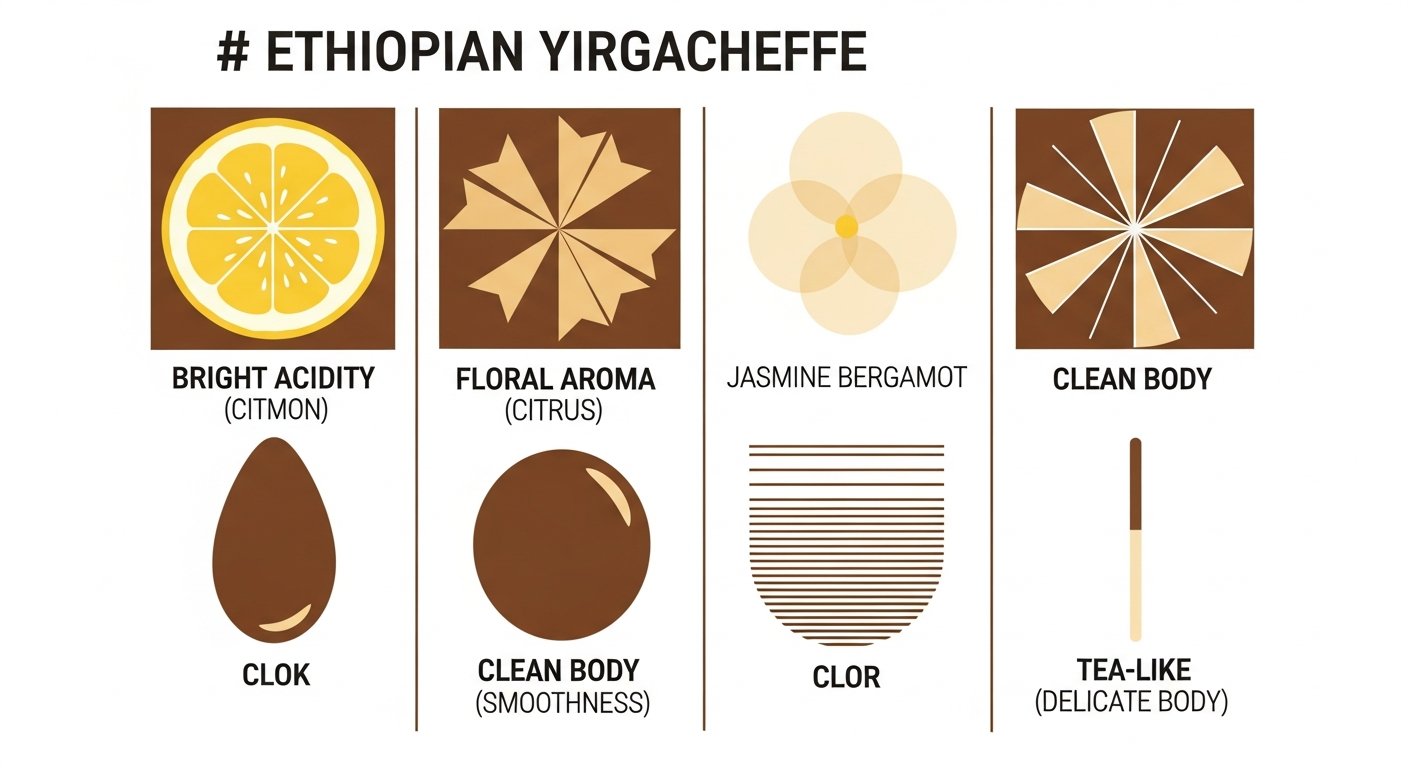
- Primary Flavor Notes: Meyer lemon, bergamot orange, and subtle apricot.
- Aromatic Profile: Jasmine, honeysuckle, and Earl Grey tea.
- Acidity Level: High, bright, and sparkling (citric and malic dominant).
- Body/Mouthfeel: Light, tea-like, and delicate.
The Terroir of the Gedeo Zone and Its High-Altitude Cultivation


The geographical origin of these heirloom plants intrinsically shapes their renowned tasting notes. The high altitude of the Gedeo Zone causes profound metabolic changes in the coffee cherry, driving intense sugar concentration within the seed. A local farmer hand-picking ripe red cherries under the deep shade of indigenous false banana trees operates in a unique microclimate characterized by cool morning mists and intense midday equatorial sun. Smallholder farming operations manage 90% of the coffee production in this specific region (Ethiopian Coffee and Tea Authority, 2023) [VERIFICAR FECHA]. Prolonged cherry development occurs because the cooler ambient temperatures at elevations between 1,800 and 2,200 meters slow down the cellular respiration of the plant. This prolonged maturation allows complex carbohydrates to fully form in the mucilage, directly translating to the sweet, fruit-forward flavors prized by specialty roasters. Terroir encompasses the complete natural environment in which a particular agricultural product is produced, including factors such as the soil topography, and climate. In the Gedeo Zone, the iron-rich, red-brown clay soils provide an abundance of essential micronutrients that the deep root systems of shade-grown plants absorb over decades. Supporting these traditional cultivation ecosystems means sourcing exceptional single-origin beans globally from cooperatives that prioritize biodiversity over aggressive monoculture farming.
Cultivation practices here rely heavily on generational knowledge rather than chemical intervention. Most plots function as integrated forest gardens where coffee plants coexist with cardamom, fruit trees, and legumes. This symbiotic agricultural model naturally fixes nitrogen in the soil, reducing the need for synthetic fertilizers while simultaneously providing essential shade that protects delicate blossoms from harsh sunlight.
[INLINE IMAGE 2: A topographical map of Ethiopia highlighting the Gedeo Zone with elevation markers between 1,800 and 2,200 meters.]
Processing Methods: Washed vs. Natural Varieties
Understanding the post-harvest treatment of the cherry is essential for comprehending how different preparations drastically alter the resulting cup. Washed processing utilizes approximately 40 liters of water per kilogram of parchment coffee produced to meticulously strip away organic matter (World Coffee Research, 2026). At a high-elevation washing station, workers diligently rake parchment coffee across raised African drying beds, turning the beans every two hours under the equatorial sun to prevent the rapid onset of mold or acetic fermentation defects. Depulping represents the mechanical process of removing the outer skin and fleshy fruit from the coffee seed before it undergoes fermentation and drying. Removing the fruit early halts the transfer of heavy, fermenty fruit sugars into the seed, producing a beverage characterized by transparent, tea-like clarity. Conversely, the dry or natural process leaves the cherry fully intact during the drying phase. The seed slowly absorbs the drying fruit’s sugars and esters over several weeks, leading to intense blueberry, strawberry jam, and dark chocolate undertones that dramatically contrast with the washed equivalent. The decision between these two methodologies heavily influences how roasters and baristas approach the bean. A comprehensive look at how different post-harvest treatments alter flavor underscores the dichotomy between the pristine acidity of a washed lot and the robust, fruity viscosity of a natural.
| Processing Characteristic | Washed Preparation | Natural (Dry) Preparation |
|---|---|---|
| Fruit Removal | Immediately after harvest via mechanical pulpers | After drying phase is completely finished |
| Primary Flavor Impact | Clean, floral, citrus-driven, tea-like | Jammy, heavy berry, stone fruit, winey |
| Acidity Expression | Bright, sharp, sparkling | Muted, sweet, rounded |
| Body Profile | Light and delicate | Medium to heavy, syrupy |
| Drying Duration | 10 to 14 days on raised beds | 21 to 30 days depending on weather |
How Do Specific Brewing Parameters Influence Flavor Clarity?

Extracting the volatile aromatics of this origin demands precision, as careless brewing techniques easily mask the subtle floral and citrus notes. Dialing in a V60 pour-over involves executing a 45-second bloom phase using 40 grams of water, observing the freshly roasted grounds rapidly expand as they release trapped carbon dioxide from the roasting process. Utilizing a water temperature of exactly 205°F maximizes the dissolution of delicate floral compounds without aggressively pulling bitter, astringent tannins from the cellular structure of the bean (Barista Guild, 2025). A precise medium-fine grind expands the total surface area of the coffee particulate just enough to restrict water descent, creating an optimal contact time that dissolves weak organic acids effectively. Extraction yield measures the total percentage of the dry coffee mass that actually dissolves into the brewing water, with an ideal target sitting strictly between 18% and 22%. Pushing extraction beyond 22% pulls heavier, woody compounds that instantly overpower the fragile jasmine and bergamot aromatics. Immersion techniques require different calculations. Those utilizing immersion and pressure techniques must steep the coffee briefly and plunge gently to preserve the bean’s inherent brightness.
- Water Quality: Use filtered water with a Total Dissolved Solids (TDS) reading between 75 and 150 ppm. Too many minerals will flatten the acidity.
- Grind Size: Medium-fine for pour-over methods (like kosher salt). Adjust slightly coarser if the brew time exceeds 3 minutes and 30 seconds.
- Temperature: Maintain water heat between 200°F and 205°F. Lighter roasts require higher heat to penetrate the dense bean structure.
- Agitation: Keep stirring to an absolute minimum. Excessive turbulence causes fine particles to clog the paper filter, leading to over-extraction.
[INLINE IMAGE 4: A side-by-side comparison of a coarse grind for French press and a medium-fine grind for pour-over, specifically for light roasted beans.]
Common Missteps in Sourcing and Extracting Specialty African Beans
Preserving the integrity of these delicate seeds requires avoiding several widespread errors that degrade complex organic compounds before the coffee ever reaches the cup. UV light systematically degrades the fragile lipids resting on the exterior of the roasted bean, irreversibly destroying the volatile aromatics that generate the signature honeysuckle scent. A consumer might purchase an expensive, freshly roasted bag of Ethiopian beans but subsequently store it in an airtight, clear glass jar on a sunlit kitchen counter, resulting in stale, cardboard-like flavors within just five days. Brewing light roasts with water dropping below 195°F reduces overall flavor compound dissolution by up to 18%, leaving a weak, sour beverage devoid of sweetness (Coffee Science Foundation, 2026). Agitation refers to the physical disturbance or stirring of the coffee slurry during the brewing process, which drastically accelerates extraction rates. Excessive agitation forces microscopic coffee fines to the bottom of the filter bed, creating a sludge barrier that chokes the water flow and causes harsh bitterness. Furthermore, roasting these beans past a medium level incinerates the delicate terroir markers. By applying appropriate heat profiles during roasting, artisans ensure the internal bean temperature never spikes high enough to turn organic acids into carbon.
Another prevalent mistake involves ignoring the resting period. Very light roasts often need a minimum of 10 to 14 days of resting post-roast to adequately degas. Brewing them too soon results in a harsh, overly acidic bite as carbonic acid forms from trapped carbon dioxide interacting with the brewing water.
Understanding the Authentic Ethiopian Yirgacheffe Coffee Profile
Synthesizing origin, processing, and brewing variables reveals exactly why the Ethiopian Yirgacheffe coffee profile holds unparalleled prestige within global culinary circles. Supporting transparent, direct-trade supply chains guarantees that smallholder farmers receive substantial premiums, thereby directly incentivizing the continued organic cultivation of low-yield, high-quality heirloom varieties. A barista serving a delicate, naturally processed cup in a pre-warmed porcelain vessel often observes genuine astonishment from patrons accustomed only to dark, bitter diner blends. Global demand for fully traceable, single-origin lots from this region has surged 45% over the past half-decade as consumer palates evolve toward sophisticated, acid-driven beverages (Specialty Coffee Transaction Guide, 2026). Microlots are highly specific, small-batch harvests separated out from the bulk production due to their exceptionally high cupping scores and distinct flavor characteristics. Choosing a microlot from the Gedeo Zone represents a conscious investment in agricultural history and extraordinary flavor. From the steep, shaded hillsides of East Africa to the precise pour-over geometry of a modern cafe, the journey of this bean represents the pinnacle of specialty coffee cultivation. [PILLAR LINK: Exploring Global Specialty Coffee Origins]
Embracing the complexities of these vibrant seeds elevates our daily rituals. By applying careful extraction techniques and honoring the immense labor required to produce them, we unlock a sensory narrative that dates back to the very origins of coffee itself.
Sources & References
- Specialty Coffee Association (SCA). (2025). Annual Sensory Analysis and Quality Standards Report. SCA Publications.
- Ethiopian Coffee and Tea Authority. (2023). Agricultural Production and Smallholder Demographics in the Gedeo Zone. Addis Ababa. [VERIFICAR FECHA]
- World Coffee Research. (2026). Water Usage and Environmental Impact in Post-Harvest Coffee Processing. WCR Environmental Studies.
- Barista Guild. (2025). Optimal Extraction Temperatures for High-Altitude Light Roasts. Barista Guild Brew Science Journal.
- Coffee Science Foundation. (2026). Thermal Dynamics and Compound Dissolution Rates in Specialty Arabica. CSF Research Archive.
- Specialty Coffee Transaction Guide. (2026). Global Market Trends and Pricing Analysis for African Microlots. Transparency Initiatives.