


Mastering the Art of Edible Storytelling: A Food Photography Guide for Home Cooks
The Foundation: Light, Your Best Ingredient
Think of light as the most crucial ingredient in your food photography recipe. It dictates mood, texture, and how truly appetizing your dish appears. Forget expensive studio lights; the best light source is often already available to you, absolutely free!
Natural Light is Your Superpower
The golden rule of food photography for home cooks is simple: embrace natural light. It’s soft, forgiving, and beautifully illuminates food without harsh reflections or artificial color casts.
- Find Your Window: The most accessible and effective light source is a window. Position your food near it, ideally within a foot or two.
- Direction Matters: Side lighting (with the window to the left or right of your dish) is often preferred as it creates lovely shadows that add depth and dimension, making your food look three-dimensional rather than flat. Backlighting (with the window behind your food, shooting towards the light) can create a stunning glow and highlight steam or texture, but it requires careful exposure to avoid silhouetting your dish. Avoid direct front lighting, which can flatten your food and wash out details.
- Diffuse the Harshness: Direct sunlight streaming through a window can be too harsh, creating stark highlights and deep, distracting shadows. To soften this, use a diffuser. A sheer white curtain is perfect, or you can improvise with a sheet of parchment paper taped over the window pane. Even a thin white bed sheet held up can work wonders. The goal is to scatter the light, making it softer and more even.
- Embrace the Golden Hour (and Beyond): While the “golden hour” (the hour after sunrise or before sunset) is famous for its warm, soft light, it might not always be practical for your cooking schedule. Don’t worry! Overcast days are a food photographer’s dream, providing naturally diffused, soft light all day long. Even bright, indirect light on a sunny day works beautifully.
Taming the Shadows (and Embracing Them)
Shadows aren’t the enemy; they’re essential for adding depth and interest. However, sometimes you might have shadows that are too dark or distracting.
- Reflectors to the Rescue: To fill in harsh shadows and bounce light back onto your food, use a reflector. You don’t need anything fancy. A simple piece of white foam board (available at craft stores for a few dollars), a white bed sheet, or even a large piece of white cardstock can do the trick. Position it opposite your light source to gently bounce light back onto the darker side of your dish. For a slightly warmer light, you can use a gold-colored reflector or even a piece of cardboard covered in aluminum foil (crinkle it first for a softer reflection).
- Intentional Shadows for Mood: Don’t be afraid of shadows altogether. Sometimes, a moody, dramatic shot benefits from deeper shadows. The key is intent. Are these shadows enhancing the story of your dish, or distracting from it? Learning to balance light and shadow is a journey of practice and observation.
Composition & Styling: Arranging Your Edible Masterpiece
Once you have your light sorted, the next step is to thoughtfully arrange your food and props. Think of your plate as a canvas and your ingredients as paint. Good composition guides the viewer’s eye and tells a story.
The Rule of Thirds & Golden Ratio
These are foundational principles in photography that help create balanced and engaging images.
- The Rule of Thirds: Imagine dividing your frame into nine equal sections with two horizontal and two vertical lines (most smartphone cameras have a grid overlay you can activate). Instead of placing your main subject dead center, position it along these lines or at their intersections. This creates a more dynamic and visually interesting composition. For example, if you’re photographing a slice of cake, place it on one of the intersection points, with your fork leading into it from another.
- The Golden Ratio: A more complex but equally effective compositional guide, often appearing as a spiral. It suggests placing points of interest along this spiral path. While you don’t need to be a mathematician, understanding that off-center placement often feels more natural and pleasing to the eye is key.
Leading Lines & Depth
Use elements in your scene to draw the viewer’s eye towards your main subject.
- Leading Lines: Think about cutlery, a row of ingredients, or even the edge of a cutting board. These can act as “leading lines,” guiding the eye directly to your star dish.
- Creating Depth: Food photography can sometimes look flat. To combat this, introduce elements in the foreground and background that are slightly out of focus (bokeh). A sprig of herb, a few scattered crumbs, or a blurred coffee cup in the foreground can add layers and make the main dish pop. If using a smartphone, “Portrait Mode” is excellent for achieving this blurred background effect.
Props & Backgrounds: Setting the Scene
Props are your storytelling tools, but they should enhance, not overpower, your food.
- Keep it Simple & Relevant: Choose props that complement your dish and the story you want to tell. Are you making a rustic soup? A wooden spoon and a linen napkin might fit. A delicate pastry? A vintage fork and a beautiful ceramic plate. Avoid clutter. Every item in the frame should have a purpose.
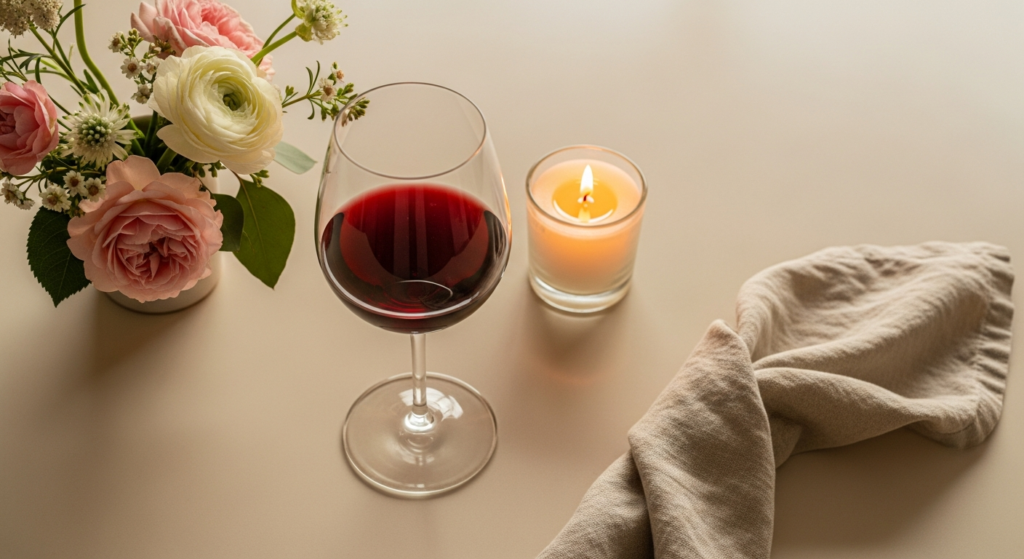
- Neutral & Textural Backdrops: Your background should support, not distract. Simple, neutral backgrounds work best – think wooden tables, plain walls, marble slabs, or even large sheets of craft paper. Texture is your friend here: a crumpled linen napkin, a rustic cutting board, or a ceramic bowl with an interesting glaze can add visual interest without competing with the food. For Cafe Serre’s aesthetic, think cozy, slightly rustic, and warm. Look for items like:
- Ceramic Plates & Bowls: Neutral tones (cream, grey, matte black) or subtle earthy colors. Consider handmade pottery for unique textures.
- Linen Napkins & Tea Towels: These add softness, texture, and a touch of elegance. Natural, unbleached linen or muted tones work beautifully.
- Wooden Cutting Boards: A versatile prop that adds warmth and a rustic touch. Choose different wood types and sizes.
- Utensils: Vintage silver, matte black, or simple stainless steel.
- Small Ramekins & Bowls: Perfect for holding ingredients, sauces, or garnishes in the background.
- Negative Space: Less is Often More: Sometimes, the most powerful compositions are those with ample “negative space” – the empty area around your subject. This gives your food room to breathe, allows it to stand out, and creates a sense of calm and elegance. Don’t feel the need to fill every corner of your frame.
Angles & Perspectives: Seeing Your Food Anew
The angle from which you shoot dramatically changes how your food is perceived. Experimenting with different perspectives will help you find the most flattering way to showcase your dish.
The Overhead Shot (Flat Lay)
The flat lay, or “top-down” shot, is incredibly popular for a reason. It’s clean, organized, and great for showcasing a spread or a dish where the top surface is the most interesting part.
- Best For: Pizzas, charcuterie boards, bowls of soup or salad with intricate toppings, beautifully arranged pastries, or a collection of ingredients.
- Tips: Ensure everything is neatly arranged and in focus. Try to keep your camera parallel to the table to avoid distortion. A small step stool can be helpful for getting directly above your subject.
The 45-Degree Angle (Eye Level)
This is arguably the most natural and inviting perspective, mimicking how we typically view food at a table.
- Best For: Dishes with some height or depth that you want to show off, like a burger, a stack of pancakes, a hearty stew, or a beautifully garnished entree. It’s also excellent for drinks.
- Tips: This angle provides a good balance between showing the top of the dish and its sides. It feels approachable and often creates a sense of intimacy.
The Straight-On Shot
Also known as the “eye-level” shot, this angle is perfect for emphasizing layers, textures, and height.
- Best For: Layered cakes, tall sandwiches, drinks, bottles, or anything where the side profile is key. Think about highlighting the layers of a lasagna or the frothy top of a cappuccino.
- Tips: Ensure your camera is perfectly level with your subject to avoid skewed lines. This shot is excellent for showcasing the ‘architecture’ of your dish.
Storytelling Through Details: From Prep to Plating
Great food photography isn’t just about the final plated dish; it’s about telling a story. From the raw ingredients to the steam rising off a freshly baked pie, these details bring your food to life.
The Freshness Factor: Ingredients as Stars
Cafe Serre celebrates quality ingredients, and so should your photos!
- Showcase Produce: Don’t just photograph the finished meal. A beautiful display of vibrant, fresh vegetables before cooking, or a scattering of fresh herbs around the final dish, immediately communicates quality and freshness. Think about a shot of bright red tomatoes on the vine or glistening bell peppers.
- Garnishes are Gold: A simple sprig of fresh parsley, a sprinkle of flaky sea salt, a drizzle of olive oil, or a dusting of powdered sugar can elevate a dish from good to gorgeous. These small touches add visual appeal and a professional finish.
The Action Shot: Capturing the Moment
Food is dynamic! Capturing movement adds life and energy to your photographs.
- Pouring & Drizzling: A stream of maple syrup over pancakes, olive oil being drizzled, or sauce being poured over pasta.
- Sprinkling & Dusting: A hand sprinkling herbs, cheese, or powdered sugar.
- Slicing & Serving: The first cut into a cake, a knife slicing through a perfectly cooked steak, or a spoon scooping into a dessert.
- Steam & Bubbles: The visible steam rising from a hot dish or coffee, or the effervescence of a sparkling drink. These elements convey warmth, freshness, and immediate appeal. For steam, try to shoot quickly after plating hot food.
- Tip: If using a smartphone, use “burst mode” (hold down the shutter button) for action shots, then pick the best frame.
Texture & Temperature: Making Food Irresistible
Good food photography makes you want to reach out and touch (and taste!) the dish. This is where texture and temperature play a huge role.
- Highlight Textures: Think about the crispy skin of roast chicken, the fluffy interior of bread, the glistening glaze on a pastry, or the melt-in-your-mouth quality of a chocolate cake. Focus your lens on these inviting textures.
- Convey Temperature: Steam implies warmth; condensation on a glass suggests a cold, refreshing drink. Use these cues to enhance the story. A quick trick for making food look fresh and moist is to lightly brush it with a tiny bit of olive oil or spray it with a fine mist of water just before shooting.
Color & Contrast: A Feast for the Eyes
Color is one of the first things we notice about food. Use it strategically.
- Complementary Colors: Think about color theory. Green herbs pop against red tomatoes; orange carrots stand out against a blue plate. Use complementary colors to make elements stand out.
- Pops of Color: A vibrant berry on a neutral dessert, a sprinkle of chili flakes on a creamy soup. These small bursts of color can instantly elevate your dish.
- Balance: Aim for a pleasing balance of colors. Too many competing colors can make a photo look chaotic, while too few can make it bland.
Your Phone is a Powerful Tool: Smartphone Photography Secrets
Let’s be real: most home cooks aren’t hauling around a DSLR. The good news is, modern smartphones are incredibly capable food photography tools. With a few simple tricks, you can unlock their full potential.
Clean Your Lens! (The Easiest Upgrade)
This seems obvious, but it’s often overlooked. Your phone spends its life in pockets and bags, gathering smudges. A dirty lens leads to hazy, dull photos. Give it a quick wipe with a microfiber cloth (or even a corner of your clean t-shirt) before every shot. It’s the simplest, most effective upgrade you can make.
Master Your Camera App
Your phone’s native camera app has more features than you might realize.
- Tap to Focus & Adjust Exposure: Don’t just point and shoot. Tap on the most important part of your food (e.g., the crust of bread, the glistening sauce) to tell your phone where to focus. Once you tap, a sun icon or slider usually appears. Drag it up or down to adjust the brightness (exposure).
- Lock Focus & Exposure: For more control, tap and hold on your subject until “AE/AF Lock” (Auto Exposure/Auto Focus Lock) appears. This ensures your focus and brightness stay put, even if you slightly move your phone. This is particularly useful when composing your shot after setting the focus.
- Activate Grid Lines: Go into your phone’s camera settings and turn on the “Grid” option. This will overlay a 3×3 grid on your screen, making it much easier to apply the Rule of Thirds and ensure your horizons are straight.
- Portrait Mode (for Bokeh): Many newer smartphones have a “Portrait Mode” that creates a beautiful blurred background effect (bokeh), mimicking what professional cameras achieve with wide apertures. Use this to make your food pop against a soft, out-of-focus background.
Basic Editing for Impact
Editing isn’t about transforming your food into something it’s not; it’s about enhancing what’s already there and correcting minor imperfections.
- Start with White Balance: This is crucial for accurate food colors. If your food looks too yellow, blue, or green, adjust the white balance. Most editing apps have a white balance tool (often called ‘temperature’ or ‘tint’) that allows you to warm or cool your image, ensuring whites are white and colors are true to life.
- Brightness & Contrast: A slight boost in brightness can make your food look more vibrant, and a touch of contrast can add depth. Be careful not to overdo it, or your image will look artificial.
- Highlights & Shadows: Adjusting these independently can recover detail in overexposed (too bright) or underexposed (too dark) areas.
- Saturation & Vibrance: A small increase in saturation can make colors pop, but ‘vibrance’ is often a better choice as it boosts less saturated colors without overdoing skin tones or already vibrant hues.
- Sharpness & Clarity: A subtle increase can bring out texture and detail.
- Crop: Don’t be afraid to crop your image to improve composition or remove distracting elements.
- Recommended Apps:
- Snapseed (Free): A powerful, user-friendly app from Google with advanced editing tools.
- Adobe Lightroom Mobile (Free for basic features): Excellent for color correction and professional-grade adjustments.
- VSCO (Free with in-app purchases): Known for its beautiful filters that can give your photos a consistent style.
Beyond the Shot: The Post-Production Polish
The act of capturing the photo is just the beginning. A thoughtful editing process can truly make your food photos shine.
A Touch of Editing Magic (Not Transformation)
Think of editing as applying a subtle, high-quality filter to enhance the natural beauty of your dish, not to disguise it. Your goal is to make the photo accurately reflect how delicious the food tasted and looked in person.
- Subtle Adjustments are Key: When adjusting brightness, contrast, highlights, or shadows, less is often more. Move the sliders slowly. A small tweak can make a big difference, while extreme adjustments can make your photos look artificial and over-processed.
- Selective Adjustments: Some apps allow you to selectively adjust certain areas of your photo. For instance, you might brighten just the food without overexposing the background, or subtly desaturate a distracting background element.
- Straighten and Crop: Use the straighten tool to correct any crooked horizons or tilting angles. Cropping can dramatically improve composition, remove unnecessary clutter, or draw attention to a specific detail. Experiment with different aspect ratios (square for Instagram, wider for a blog post).
Consistency is Key (Developing Your Style)
As you practice, you’ll start to develop your own personal style. This is your visual signature.
- Find Your Aesthetic: Do you prefer bright and airy shots, or dark and moody? Do you gravitate towards warm tones or cooler hues? Experiment with different editing styles until you find what resonates with you and your culinary creations.
- Use Presets/Filters Wisely: If you find a set of editing adjustments you love, many apps allow you to save them as a “preset” or “filter.” Applying the same preset to all your food photos can help create a cohesive and recognizable style across your gallery or social media feed, reflecting the Cafe Serre vibe of warmth and quality.