


Craft Your Perfect Pour: The Essential Guide to Setting Up Your Home Bar Sanctuary
The Foundation: Your Bar Cart or Cabinet
Every great home bar begins with a dedicated space. This isn’t just a place to store bottles; it’s the stage for your mixological performances, a visual statement that invites interaction and enjoyment. The choice between a bar cart, a cabinet, or even a built-in solution depends on your living space, aesthetic preferences, and entertaining style.
Location, Location, Location
Before you even think about buying furniture, consider where your home bar will live. Ideally, it should be easily accessible, perhaps near your kitchen for water and ice, or in a living area where guests naturally gather. Think about the flow of traffic, available wall space, and proximity to electrical outlets if you plan on adding a small appliance like an ice maker or a mini-fridge. Natural light can be beautiful, but direct sunlight isn’t ideal for storing spirits and liqueurs, which can degrade with prolonged exposure to UV rays.
Style Meets Function
This is where your personality shines through. Do you envision a sleek, modern setup or a charming, vintage-inspired nook? Functionality, however, is paramount.
- Bar Carts: The quintessential choice for many, bar carts offer mobility and a touch of glamour. They’re perfect for smaller spaces or for those who like to move the party. Look for sturdy construction, ample surface area for preparing drinks, and at least two shelves for bottles and glassware. Wheels with locks are a must for stability. Popular choices range from minimalist metal designs to ornate brass and glass models. A classic example might be an industrial-style cart from West Elm or a vintage find from an antique store.
- Bar Cabinets & Credenzas: If you have more space and prefer a more permanent, discreet storage solution, a bar cabinet or credenza might be ideal. These often come with integrated features like bottle racks, wine glass holders, and even pull-out cutting boards. They offer a cleaner look, keeping bottles and tools tucked away until needed, making them excellent for more formal living spaces. IKEA’s KALLAX shelving unit, with the right inserts, can be a surprisingly versatile and affordable starting point, allowing you to customize shelves for bottles and drawers for tools.
- Built-in Solutions: For those embarking on a renovation or with a dedicated entertaining space, a built-in bar can be a dream. These allow for custom shelving, integrated sinks, and even under-counter refrigeration. While a bigger commitment, they offer the ultimate in seamless integration and functionality.
Must-Have Features
Regardless of your chosen piece, ensure it meets certain practical criteria. It should be robust enough to hold several heavy bottles and glassware without wobbling. Surface area is crucial – you need space to pour, mix, and garnish without feeling cramped. Adequate storage, whether open shelves or concealed compartments, is essential to keep your collection organized and accessible. Consider a cart or cabinet with a raised edge or railing on the top shelf to prevent bottles from toppling over.
The Bartender’s Toolkit: Essential Utensils

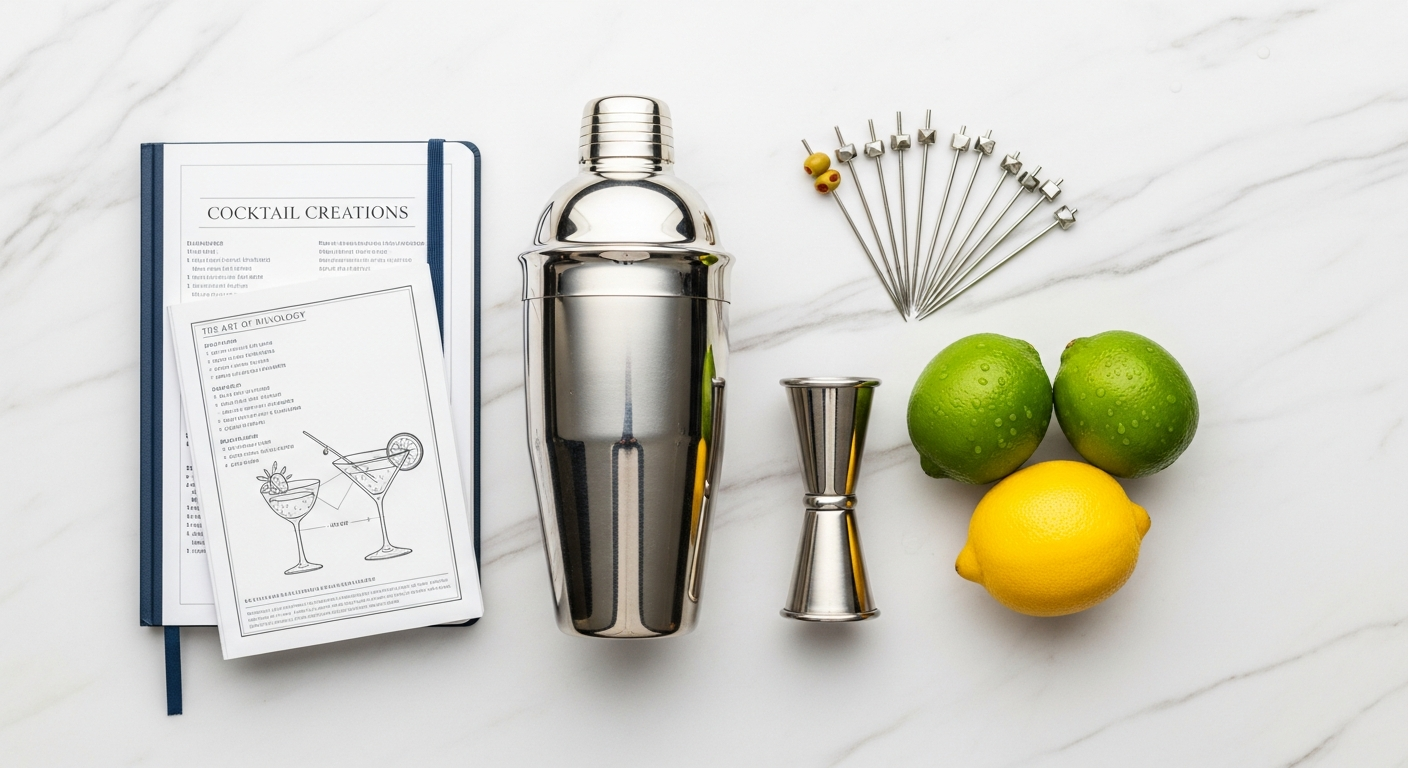
Just as a chef needs their knives, a mixologist needs their tools. Investing in a few quality pieces will make a world of difference in your cocktail crafting experience. Resist the urge to buy an all-in-one “bar set” that often includes flimsy, poorly designed items. Instead, build your kit piece by piece with durable, functional essentials.
Shaking & Stirring
These are the fundamental techniques for chilling and diluting your drinks.
- Shakers:
- Cobbler Shaker: This three-piece shaker (tin, built-in strainer, cap) is often recommended for beginners due to its simplicity. It’s easy to use, though sometimes the cap can get stuck.
- Boston Shaker: Preferred by professionals, this two-piece shaker (one large metal tin, one smaller metal tin or mixing glass) offers better thermal transfer for faster chilling and is easier to clean. It requires a separate strainer. We recommend starting with a good quality Boston shaker set like the Koriko Weighted Shaking Tins from Cocktail Kingdom – they fit perfectly and are incredibly durable.
- Mixing Glass: For stirred cocktails (think Manhattans, Old Fashioneds, Negronis), a heavy-bottomed, thick-walled mixing glass is indispensable. The weight helps stabilize it, and the thick glass keeps your drink colder for longer while you stir. Look for one with a decent capacity (around 500-750ml).
- Bar Spoon: Long and typically twisted, a bar spoon is designed for stirring drinks in a mixing glass without splashing. The twisted handle also aids in layering ingredients if you get fancy. A spoon with a flat muddler end or a small disc on the other side can be a versatile choice.
Measuring & Pouring
Accuracy is key in mixology. Even a slight variation in spirit-to-mixer ratio can throw a drink off balance.
- Jigger: This double-sided measuring tool is non-negotiable. Standard sizes include 1oz/2oz or 0.75oz/1.5oz. Invest in a jigger with clearly marked increments (e.g., 0.5oz, 0.75oz, 1oz, 1.5oz, 2oz) for maximum versatility. Stainless steel is durable and easy to clean.
- Measured Pourers: While not strictly essential for a beginner, free-pourers (those metal or plastic spouts that fit into bottle necks) can speed up service and offer consistent pours once you’ve practiced. However, always verify your pour with a jigger until you’re confident.
Preparation & Garnish
These tools help you extract fresh flavors and add the all-important finishing touches.
- Muddler: For gently crushing fresh herbs (like mint for a Mojito) or fruit (like lime for a Caipirinha). Choose an unvarnished wooden or stainless steel muddler with a flat, rather than toothed, end. A flat end extracts oils and juices without pulverizing the ingredients, which can release bitter flavors.
- Citrus Press/Juicer: Fresh juice is non-negotiable for quality cocktails. A handheld citrus press (lime and lemon specific) is perfect for small batches. If you entertain often, a countertop juicer for larger quantities of orange or grapefruit juice might be worth considering.
- Paring Knife & Small Cutting Board: Dedicate a small, sharp paring knife and a compact cutting board solely for cocktail garnishes. This ensures cleanliness and prevents flavor transfer from food prep.
- Channel Knife/Peeler: For creating elegant citrus twists and peels. A simple vegetable peeler can also work wonders for wider strips of zest.
Strainers & Openers
- Hawthorne Strainer: Essential for separating ice and muddled ingredients from shaken cocktails. Look for one with a tight coil and finger rests for easy handling.
- Julep Strainer: Often used with a mixing glass for stirred drinks, it fits snugly over the rim, allowing liquid to pass while holding back ice.
- Wine Key/Bottle Opener: A sturdy, waiter-style corkscrew is a bar staple.
Product Tip: Brands like OXO, Cocktail Kingdom, and A Bar Above offer excellent quality tools that are durable and designed for efficient use.
The Liquid Gold: Your Spirits & Liqueurs
This is where the real fun begins! Building your liquor cabinet doesn’t mean buying everything at once. Start with a versatile core collection and expand based on your preferences and the cocktails you enjoy making. Aim for quality over quantity – a few good bottles are far better than a dozen mediocre ones.
Core Spirits: The “Big Seven”
These seven categories form the backbone of most classic cocktails.
- Gin: Essential for classics like the Gin & Tonic, Martini, and Negroni. Start with a London Dry style (e.g., Tanqueray, Beefeater, Bombay Sapphire) for its juniper-forward profile. As you explore, consider more floral or citrus-forward gins.
- Vodka: While often considered neutral, a good quality vodka (e.g., Tito’s, Absolut, Ketel One) is crucial for Vodka Martinis, Moscow Mules, and countless other versatile drinks.
- Rum: A versatile spirit.
- White Rum: For Mojitos, Daiquiris, and Piña Coladas (e.g., Bacardi Superior, Plantation 3 Stars).
- Aged Rum: For sipping or richer cocktails like the Old Fashioned or Dark ‘n’ Stormy (e.g., Gosling’s Black Seal, Diplomatico Mantuano, Appleton Estate Signature).
- Tequila: Specifically, a Blanco (silver) Tequila is a must for Margaritas and Palomas. Look for 100% agave tequila for a smoother, more authentic taste (e.g., Olmeca Altos Plata, Espolòn Blanco, El Jimador Blanco).
- Whiskey: A broad category with distinct styles.
- Bourbon: Sweet and vanilla-forward, perfect for Old Fashioneds, Whiskey Sours, and Manhattans (e.g., Maker’s Mark, Bulleit Bourbon, Wild Turkey 101).
- Rye Whiskey: Spicier and drier than bourbon, excellent for Manhattans, Sazeracs, and Whiskey Sours (e.g., Rittenhouse Rye, Sazerac Rye, Bulleit Rye).
- Scotch Whisky: While a vast category, a versatile blend (e.g., Monkey Shoulder, Johnnie Walker Black Label) or a lighter single malt (e.g., Glenmorangie 10) can be good for sipping or a Rob Roy.
- Irish Whiskey: Smooth and approachable, great for Irish Coffee or sipping (e.g., Jameson, Tullamore D.E.W.).
- Brandy/Cognac: While perhaps not an immediate “essential” for every beginner, a versatile VS or VSOP Cognac (e.g., Pierre Ferrand 1840, Hennessy VS) is excellent for Sidecars and classic brandy cocktails, and lovely for sipping.
- Dry Vermouth: Essential for Martinis and Manhattans. Always choose a good quality brand like Dolin Dry or Noilly Prat. Crucially, vermouth is a fortified wine and oxidizes quickly once opened. Store it in the refrigerator and use it within 3-4 weeks.
- Sweet Vermouth: Indispensable for Manhattans, Negronis, and other stirred classics. Dolin Rouge or Carpano Antica Formula are excellent choices. Like dry vermouth, it must be refrigerated after opening.
Essential Liqueurs & Amari
These add sweetness, complexity, and unique flavors.
- Orange Liqueur: Cointreau (a triple sec) is the gold standard, offering a perfect balance of sweetness and bitter orange notes. An alternative like Combier or a good quality curaçao also works. Essential for Margaritas, Sidecars, and Cosmopolitans.
- Bitters: These highly concentrated aromatic extracts are the “salt and pepper” of cocktails.
- Angostura Aromatic Bitters: The most common and versatile, used in Old Fashioneds, Manhattans, and many other drinks.
- Orange Bitters: Adds a bright citrus note (e.g., Regan’s Orange Bitters No. 6).
- Peychaud’s Bitters: Essential for a Sazerac, with a distinct anise and cherry note.
- Aperitifs/Digestifs (Optional but Recommended):
- Campari / Aperol: Italian bitter liqueurs. Campari is more intensely bitter, perfect for Negronis. Aperol is lighter and sweeter, ideal for an Aperol Spritz.
- St-Germain Elderflower Liqueur: Adds a beautiful floral note to many cocktails.
Building Your Collection Smartly
Don’t feel pressured to buy everything at once.
- Start with what you drink: If you love Margaritas, prioritize good tequila and orange liqueur. If Old Fashioneds are your jam, focus on bourbon/rye and bitters.
- Buy smaller bottles: Many spirits come in 375ml or 500ml sizes, which are great for experimenting without a huge upfront cost.
- Explore local distilleries: You might discover unique, high-quality spirits right in your backyard.
- Watch for sales: Liquor stores often have promotions.
With a well-chosen selection of just 6-8 core spirits and a few key liqueurs and bitters, you can craft literally hundreds of different classic and contemporary cocktails. It’s an investment that pays dividends in endless enjoyment.
The Supporting Cast: Mixers, Garnishes & Ice
The best spirits in the world won’t make a great cocktail without fresh, high-quality supporting ingredients. These are often overlooked but are absolutely crucial for elevating your home bar experience.
Fresh Juices: The Lifeblood of Cocktails
This cannot be stressed enough: always use fresh juice. Bottled, pasteurized juices simply don’t compare. The vibrant acidity and essential oils from freshly squeezed citrus are indispensable.
- Lemons & Limes: Keep a steady supply on hand. These are the workhorses of cocktailing.
- Oranges & Grapefruits: Great for specific cocktails or for adding a sweeter citrus note.
Tip: Squeeze your citrus just before you need it. If you’re preparing for a party, squeeze juices a few hours ahead and store them in airtight containers in the fridge. For optimal flavor, try to use them within 24 hours.
Syrups: Sweetness & Flavor
Most basic syrups are incredibly easy and cost-effective to make at home.
- Simple Syrup (1:1): Equal parts granulated sugar and hot water. Stir until dissolved, let cool, and store in a sealed bottle in the fridge for up to 2-3 weeks. Essential for Sours, Daiquiris, and many other cocktails.
- Rich Simple Syrup (2:1): Two parts sugar to one part hot water. This thicker syrup has more body and sweetness, great for Old Fashioneds or when you want less dilution. Lasts longer in the fridge.
- Demerara/Turbinado Syrup: Use raw sugar for a richer, more molasses-like flavor, perfect for whiskey-based drinks. (1:1 or 2:1 ratio).
- Honey Syrup: Equal parts honey and hot water. Great for a Gold Rush or Bee’s Knees.
- Ginger Syrup: Grate fresh ginger, combine with sugar and water, simmer, then strain. Adds a spicy kick.
Sodas & Tonics: Effervescence & Balance
These add sparkle and often bitterness or spice, rounding out a drink.
- Club Soda: Plain carbonated water, for adding effervescence without altering flavor.
- Tonic Water: Essential for Gin & Tonics. Invest in premium tonic waters like Fever-Tree or Q Mixers; their balanced bitterness and natural ingredients make a huge difference.
- Ginger Ale/Ginger Beer: For Moscow Mules, Dark ‘n’ Stormys, and other spicy, refreshing drinks. Ginger beer is spicier than ginger ale.
- Cola/Diet Cola: For Rum & Cokes, or whiskey highballs.
The Unsung Hero: Ice
Good ice is paramount. It chills your drink without over-diluting it too quickly. Forget tiny, fast-melting cubes from a standard freezer tray.
- Large Cubes/Spheres: Slow-melting, ideal for stirred drinks like Old Fashioneds or for serving spirits neat. Silicone molds are readily available.
- Standard Cubes: For shaken drinks. Ensure your ice is fresh and doesn’t carry freezer odors.
- Crushed Ice: Essential for Mojitos, Juleps, and Swizzles. You can buy crushed ice, use an ice crusher, or simply wrap cubes in a clean towel and smash them with a mallet.
Don’t forget an attractive ice bucket and a good pair of tongs for serving.
Garnishes: The Finishing Touch
Garnishes aren’t just for aesthetics; they add aroma, flavor, and complete the sensory experience of a cocktail.
- Citrus:
- Wheels/Wedges: For highballs and rim garnishes.
- Twists/Peels: For expressing aromatic oils over Martinis, Old Fashioneds, and other drinks. Learn to properly express the oils for maximum impact.
- Olives: For Martinis. Invest in good quality, briny olives like Castelvetrano or Spanish Queen.
- Cherries: Ditch the bright red, sugary maraschino cherries. Opt for Luxardo Maraschino Cherries – they are dark, rich, and truly delicious.
- Herbs: Fresh mint (for Mojitos, Juleps), rosemary, or basil can elevate many drinks. Give herbs a gentle “slap” before garnishing to release their aromas.
- Spices: Freshly grated nutmeg (for eggnog, certain sours), cinnamon sticks, or star anise can add a sophisticated touch.
The Little Extras: Glassware, Resources & Ambiance
Once you have your core spirits, tools, and mixers, it’s time to refine the experience. These “little extras” transform a functional bar into a truly inviting and enjoyable space.
Glassware Essentials
Presenting a drink in the right glass enhances its appeal and even its flavor. You don’t need a huge collection, but a few versatile types will cover most cocktails.
- Rocks Glass (Old Fashioned Glass): A sturdy, short glass (8-12 oz) for drinks served over ice, like an Old Fashioned, Negroni, or Whiskey Sour.
- Highball Glass (Collins Glass): A tall, slender glass (10-14 oz) for long, refreshing drinks like Gin & Tonics, Mojitos, or Highballs.
- Coupe or Martini Glass: A stemmed glass (5-8 oz) for “up” drinks (served without ice), such as Martinis, Manhattans, or Daiquiris. Coupes are often preferred for their elegance and less prone to spilling than a traditional V-shaped martini glass.
- Wine Glasses: While not strictly for cocktails, having a set of all-purpose wine glasses is always practical for entertaining.
- Shot Glass / Pony Glass: Useful for precise small measurements, or for, well, shots!
The Art of the Cocktail Book & Digital Resources
Your journey into mixology is greatly enriched by learning from the pros. A good cocktail book is an invaluable resource.
- Physical Books:
- The Joy of Mixology by Gary Regan: A foundational text covering techniques and classic recipes.
- Death & Co: Modern Classic Cocktails: A sophisticated book from one of New York’s most influential bars.
- The Bar Book: Elements of Cocktail Technique by Jeffrey Morgenthaler: Focuses on techniques and homemade ingredients.
- Liquid Intelligence by Dave Arnold: For the science-minded mixologist, delving deep into techniques and ingredients.
- Digital Resources: Websites like Difford’s Guide and Cocktail Builder apps can be excellent for exploring recipes, finding substitutions, and learning new techniques. YouTube channels dedicated to mixology offer visual guidance.
Setting the Mood: Ambiance & Practicalities
The atmosphere surrounding your home bar is just as important as the drinks themselves.
- Lighting: Warm, dimmable lighting creates an inviting and intimate atmosphere. Avoid harsh overhead lights.
- Music: Curate a playlist that matches the mood you want to create – be it lively jazz, mellow lounge music, or upbeat indie tunes.
- Coasters: Protect your surfaces and add a touch of thoughtfulness.
- Small Towel/Bar Rag: Essential for quick cleanups of spills and drips.
- Waste Bin: A small, discreet bin for citrus peels, olive pits, and other refuse keeps your bar tidy.
- Comfortable Seating: If space allows, a bar stool or two invites guests to linger and watch the magic unfold.
- Decoration: Personalize your bar with art, plants, or unique decor items that reflect your style.
Cleanliness & Maintenance
A clean bar is a happy bar. Wipe down spills immediately, wash your tools after each use, and keep your glassware sparkling. Regularly check your vermouth and other perishable items for freshness (remember to refrigerate vermouth!). Rotate your spirits so you’re not always using the same bottle from the back of the cabinet. A well-maintained bar is always ready for action.