


The Ultimate Home Barista Equipment Guide 2026: Brew Specialty Coffee Like a Pro


What are the Foundational Elements for Exceptional Home Barista Coffee?
Before diving into shiny new gadgets, let’s talk about the two most crucial ingredients for any exceptional cup: your coffee beans and your water. Even the most sophisticated espresso machine or precise pour-over setup can’t compensate for poor quality beans or unsuitable water.
Why are Coffee Beans the Heart of the Flavor?
Always prioritize fresh, high-quality specialty coffee beans. Look for a roast date, not a “best by” date, ideally within 2-4 weeks for optimal flavor. Freshly roasted beans contain more volatile aromatics and produce better crema in espresso. Brands like Stumptown Coffee Roasters, Blue Bottle Coffee, and Counter Culture Coffee are excellent starting points for ethically sourced, high-quality beans. Consider single-origin beans to explore distinct regional flavors, or carefully crafted blends for a balanced, consistent profile. Understanding roast levels is also key: light roasts highlight origin characteristics, medium roasts offer balance, and dark roasts emphasize body and roasty notes. World Coffee Research (WCR) continually works to improve coffee quality at the source, ensuring better beans make it to your cup. Always buy whole beans and grind them just before brewing – this is non-negotiable for freshness.
How Does Water Quality Impact Your Coffee?
Coffee is 98% water, so its quality profoundly impacts the final taste. Tap water, even filtered, can contain minerals, chlorine, or off-flavors that detract from your coffee. The Specialty Coffee Association (SCA) provides clear water quality standards:
- Odor: Clean, fresh, no chlorine or off-odors.
- Color: Clear.
- Total Dissolved Solids (TDS): 75-250 mg/L (ideal 150 mg/L).
- pH: 6.5-7.5 (ideal 7.0).
- Total Hardness: 50-175 mg/L CaCO3 (ideal 90 mg/L).
Water with too many minerals can lead to scale buildup in machines and dull flavors, while water that’s too soft can result in sour or underdeveloped coffee. Many home baristas use filtered water (e.g., Brita, ZeroWater) or even reverse osmosis water remineralized with specific coffee-focused mineral packets (like Third Wave Water) to achieve the SCA ideal. Properly filtered and mineralized water not only enhances taste but also protects your expensive equipment from scale damage. Investing in a good water filter or understanding your local water profile is as important as choosing your grinder.

Why is a Burr Grinder the Heart of Your Home Barista Setup?

Why is a Burr Grinder Crucial for Specialty Coffee?
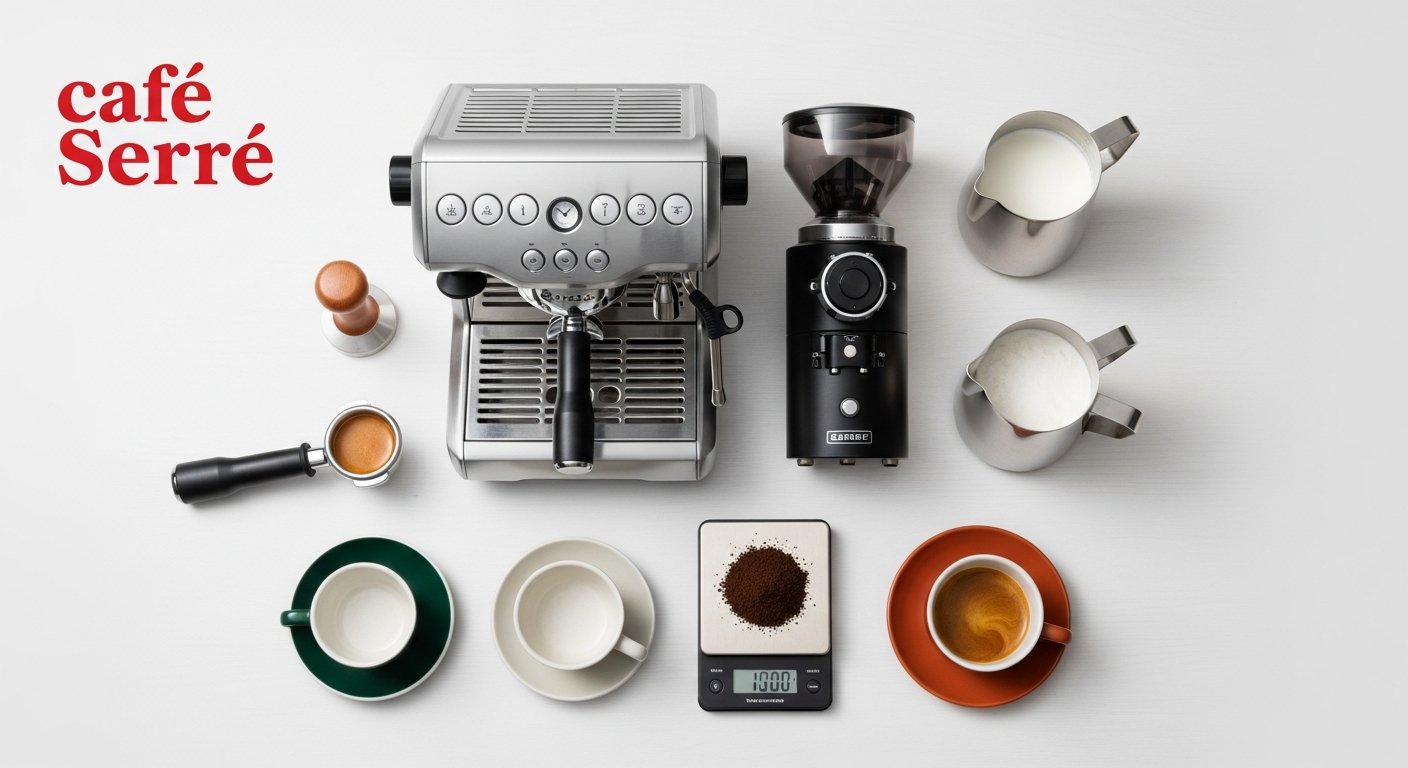
Burr grinders work by crushing beans between two abrasive surfaces (burrs) set at a precise distance. This method produces a remarkably uniform particle size, crucial for consistent water flow and optimal flavor extraction. There are two main types of burrs: conical and flat. Conical burrs are generally found in entry-level to high-end grinders, known for their efficiency and often producing a slightly wider range of particle sizes. Flat burrs, common in high-end and commercial grinders, are praised for their precision and ability to produce a very tight, uniform particle distribution, often leading to very clear, distinct flavors. For a detailed understanding of how grind size impacts your brew, refer to our grind size guide for different methods.
What are the Top Burr Grinder Recommendations for Home Baristas in 2026?
Let’s explore some top recommendations for your 2026 setup:
-
Baratza Encore: Entry-Level Excellence
The gold standard for entry-level electric burr grinders (Approx. $180). The Encore features 40 grind settings, making it versatile enough for most pour-over, French press, and automatic drip methods. While it can grind for espresso, its consistency at very fine settings isn’t always sufficient for unpressurized baskets in high-end machines. It’s durable, easy to clean, and offers excellent value for its price, making it a perfect starting point for any budding home barista.
-
Niche Zero: A Game-Changer for Espresso Enthusiasts
A game-changer, especially for espresso enthusiasts (Approx. $600). The Niche Zero is a single-dosing, conical burr grinder renowned for its incredibly low retention (minimal coffee left in the grinder after grinding) and exceptional grind quality across a wide range, from espresso to French press. Its stepless adjustment allows for incredibly fine-tuning, essential for dialing in espresso shots. Its compact size and elegant design also make it a favorite for many home setups.
-
Comandante C40 MK4 Nitro Blade: World-Class Manual Grinding
For those who appreciate manual craftsmanship and portability, the Comandante C40 is a world-class hand grinder (Approx. $300). Featuring high-nitrogen martensitic stainless steel burrs, it delivers unparalleled grind consistency, rivaling many electric grinders. It’s perfect for pour-over, AeroPress, and even capable of producing excellent espresso grinds, especially for travel or specific single-dosing needs. It requires effort but offers a tactile, rewarding experience.
Choosing the right grinder depends on your primary brewing method and budget, but remember: a good grinder will always elevate your coffee, regardless of the machine you pair it with.

Which Espresso Machine is Right for Your Home Barista Journey?
The allure of a perfectly pulled espresso shot, crowned with rich crema, is undeniable. Espresso, defined by the SCA as a 25-35ml beverage prepared from 7-9 grams of coffee through which clean water of 195-205°F (90-96°C) has been forced at 9-10 atmospheres of pressure, is an art and a science. Modern espresso machines bring this complex process into your home, offering varying degrees of control, convenience, and cost. For a deeper dive into the craft, explore our espresso brewing guide.
What are the Top Espresso Machine Recommendations for Home Baristas?
Let’s explore three popular models, ranging from beginner-friendly to prosumer luxury:
-
Breville Barista Express: All-in-One Entry Point
This all-in-one machine is an excellent entry point into home espresso (Approx. $700). It features an integrated conical burr grinder, a 15-bar thermocoil heating system, and a PID (Proportional-Integral-Derivative) controller for temperature stability – a crucial feature for consistent espresso extraction. A PID controller helps maintain a stable water temperature, which is vital for optimal flavor extraction. While the grinder is decent for beginners, serious enthusiasts might eventually upgrade to a dedicated grinder. Its ease of use, quick heat-up time, and integrated steam wand for milk frothing make it a fantastic value for those learning the ropes of espresso making. It’s a complete ecosystem designed to get you brewing quality espresso right out of the box.
-
Rancilio Silvia Pro X: Prosumer Performance and Control
Stepping up significantly in performance and control, the Silvia Pro X is a dual-boiler, PID-controlled machine built with commercial-grade components (Approx. $1,400). Unlike single-boiler machines, its dual boilers allow you to brew espresso and steam milk simultaneously, saving time and ensuring optimal temperatures for both tasks. The PID system offers precise temperature control, adjustable in 1-degree increments, which is vital for extracting the full range of flavors from different coffees. The “X” model adds a pre-infusion pressure profiling system for even more nuanced extraction. Pre-infusion gently wets the coffee grounds before full pressure is applied, promoting a more even extraction. Its robust construction and exceptional thermal stability make it a favorite among serious home baristas seeking café-quality results. Pair this with a Niche Zero grinder for a formidable setup.
-
La Marzocco Linea Mini: The Epitome of Home Espresso Luxury
The Linea Mini is the epitome of home espresso luxury, a scaled-down version of La Marzocco’s iconic commercial Linea Classic (Approx. $4,800). This machine is for the true connoisseur who demands uncompromising performance, durability, and aesthetics. It features a saturated group head for unparalleled temperature stability, a powerful rotary pump for quiet operation and consistent pressure, and a robust dual-boiler system. The Linea Mini heats up quickly and maintains temperature with incredible precision, allowing for consistent shot after shot. Its manual paddle operation harkens back to traditional espresso machines, offering a tactile and rewarding brewing experience. While a significant investment, the Linea Mini is built to last a lifetime and delivers an espresso experience that rivals the best cafés in the world, making it a dream machine for many.
Choosing an espresso machine is a balance between budget, desired features, and your commitment to the craft. Each machine offers a unique pathway to espresso excellence.

How Can You Master the Art of Pour-Over Coffee at Home?
While espresso offers intensity and richness, pour-over brewing celebrates clarity, nuance, and the delicate aromatics of specialty coffee. It’s a method that rewards precision, patience, and a meditative approach, allowing you to highlight the unique characteristics of a single-origin bean. The SCA often uses pour-over methods for cupping and evaluating coffees due to its ability to reveal true flavor profiles without the interference of pressure or complex machinery.
What Essential Equipment Do You Need for Pour-Over?
The beauty of pour-over lies in its elegant simplicity, yet mastering it requires a few key pieces of equipment:
-
Hario V60: The Iconic Dripper
The iconic Japanese dripper (Approx. $10-$30), available in ceramic, glass, plastic, or metal. Its conical shape, large single hole, and internal ridges promote a fast, even extraction. The V60 allows for maximum control over water flow, making it ideal for highlighting bright, clean flavors. It’s particularly favored by barista champions for its versatility and ability to produce exceptionally clean cups. A standard brew ratio for V60 is often around 1:15 to 1:17 (e.g., 20g coffee to 300-340g water).
-
Chemex: Elegance and Clarity
Renowned for its elegant hourglass design and ability to produce an incredibly clean, sediment-free cup (Approx. $40-$60). The Chemex uses thicker, proprietary filters that remove more oils and fines than other methods, resulting in a remarkably smooth, bright, and often tea-like coffee. It’s perfect for showcasing delicate, floral, or fruity notes in lighter roasts. The Chemex is also a beautiful serving vessel, making it a stylish addition to any kitchen.
-
Fellow Stagg EKG Kettle: Precision Temperature Control
A game-changer for pour-over precision (Approx. $160). This electric gooseneck kettle offers precise temperature control (down to the degree, typically between 135-212°F / 57-100°C) and a beautifully designed spout for an incredibly controlled, even pour. Its variable temperature setting allows you to experiment with different brew temperatures – generally, 195-205°F (90-96°C) is ideal, aligning with SCA water quality standards. The ability to hold temperature and its ergonomic handle make it an indispensable tool for consistent and repeatable pour-over brewing.
What are the Basic Techniques for Pour-Over Brewing?
Technique Basics: Regardless of your dripper, the fundamentals remain. Start with a “bloom” – pour a small amount of water (about twice the coffee weight) to saturate the grounds and allow CO2 to escape, typically for 30-45 seconds. Then, pour slowly and consistently in concentric circles, aiming for an even extraction. Your brew ratio (coffee to water) and total brew time (typically 2:30-4:00 minutes) will be key variables to dial in for your perfect cup. Legendary baristas like James Hoffmann have popularized detailed pour-over guides, emphasizing the importance of grind size, water temperature, and pour rate. Embracing the art of pour-over is a rewarding journey into the subtle complexities of coffee.

What Essential Accessories Do Home Baristas Need for Precision Brewing?
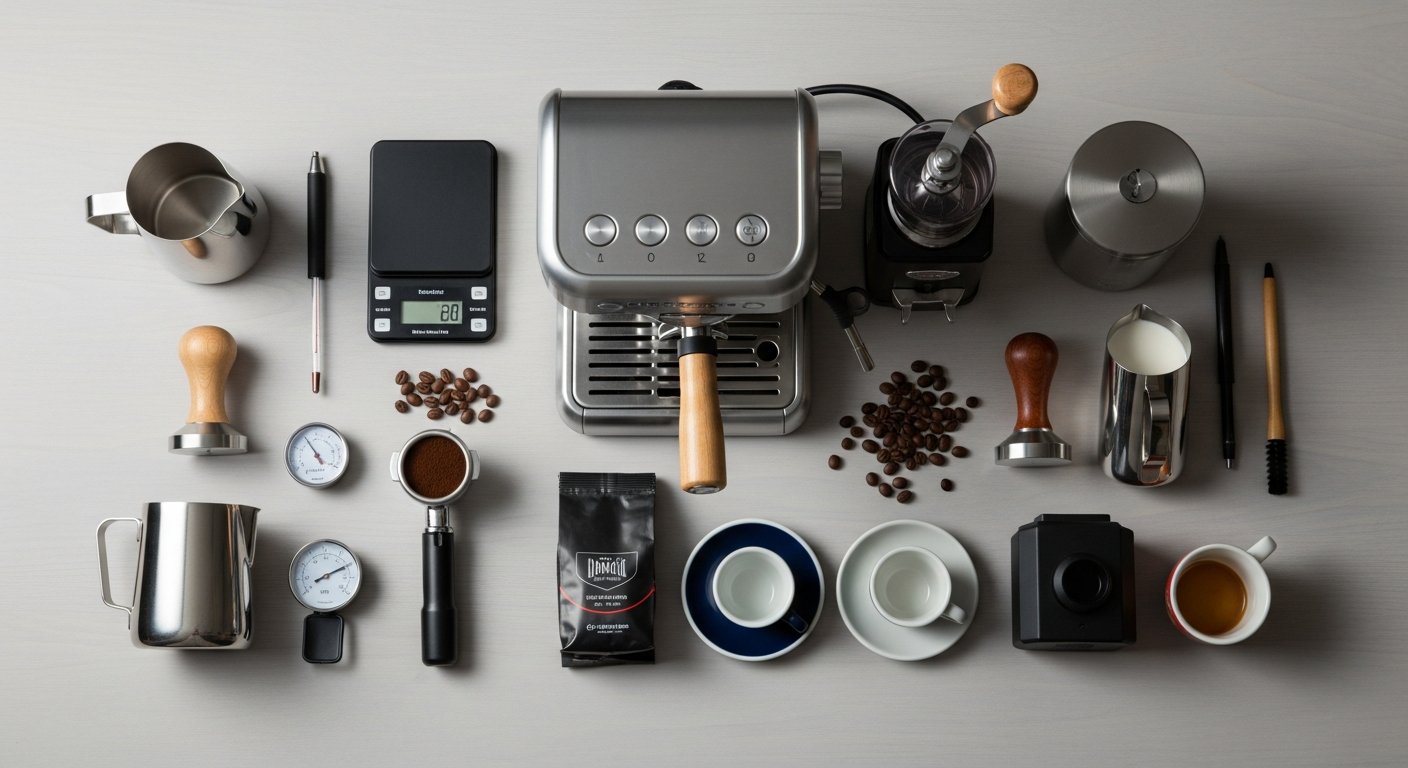
While grinders and brewers are the stars of your home barista setup, a suite of essential accessories acts as the supporting cast, elevating your precision and consistency from good to exceptional. These tools, though seemingly minor, play a critical role in controlling variables and ensuring repeatable results, whether you’re pulling an espresso shot or brewing a pour-over.
Why is a Coffee Scale the Ultimate Precision Tool?
A high-quality digital scale is non-negotiable for serious coffee brewing. It allows you to accurately measure coffee grounds and water, crucial for maintaining consistent brew ratios (e.g., 1:2 for espresso, 1:16 for pour-over).
-
Acaia Lunar: The Gold Standard for Espresso Scales
The gold standard for espresso scales (Approx. $250). The Acaia Lunar is renowned for its lightning-fast response time, extreme accuracy (0.1g resolution), and waterproof design, making it perfect for sitting directly on your espresso machine drip tray. It offers built-in timers, various brewing modes, and Bluetooth connectivity to a companion app for tracking and logging your brews. While a premium investment, its durability and advanced features make it an indispensable tool for dialing in espresso and ensuring precise extractions. For pour-over, the larger Acaia Pearl offers similar precision and features.
How Does a Tamper Ensure Even Espresso Extraction?
For espresso, tamping compresses the coffee grounds into a dense, even puck, creating resistance for the pressurized water. A consistent, level tamp is vital to prevent “channeling,” where water finds paths of least resistance through the puck, leading to underextraction and sour shots.
-
Types of Tampers: Achieving Consistent Pressure
Look for a tamper that perfectly fits your portafilter basket (e.g., 58mm for most commercial machines). Calibrated tampers (e.g., Force Tamper, Pullman BigStep) apply a consistent pressure every time, removing a variable from your workflow. A good, heavy stainless steel tamper with an ergonomic handle is a worthwhile upgrade over the plastic tampers often included with machines.
Why is a Distribution Tool Key for Uniformity?
Before tamping, distributing the coffee grounds evenly in the portafilter basket is just as important. Uneven distribution leads to density variations, which can cause channeling even with a perfect tamp.
-
WDT Tool (Weiss Distribution Technique): Breaking Up Clumps
This involves using a fine needle or whisk to break up clumps and evenly distribute the grounds. It’s a simple, inexpensive tool that makes a dramatic difference in espresso quality.
-
Leveling Tools: Creating a Flat Surface
Spinner-style distribution tools (e.g., OCD by Coffee Distributor) level the coffee bed without compression, often used in conjunction with or instead of a WDT tool to achieve a perfectly flat surface before tamping.
What Other Useful Accessories Do Home Baristas Need?
- Knock Box: An essential for cleanly disposing of spent espresso pucks.
- Milk Pitcher: For steaming milk for lattes and cappuccinos. Invest in a good quality stainless steel pitcher with a precise spout for latte art.
- Cleaning Supplies: Backflushing detergent (e.g., Cafiza), group head brushes, descaling solutions are vital for maintaining your equipment and ensuring longevity.
These accessories, while seemingly small, are the difference between a good cup and a great cup, providing the control and consistency needed to truly master your home barista craft.

How Can You Build Your Dream Home Barista Setup on Any Budget?
Embarking on your home barista journey doesn’t require breaking the bank, but investing wisely can save you money and frustration in the long run. Let’s explore potential setups at different price points, focusing on maximizing quality within each budget. Remember, the key is to prioritize the grinder first, as it has the most significant impact on flavor.
What Does a Starter Home Barista Kit Under $200 Include?
This budget focuses on manual brewing methods that offer excellent quality without the need for expensive machinery.
- Grinder: Hario Skerton Pro or Timemore C2 Manual Grinder (approx. $50-$70). These offer significantly better consistency than blade grinders.
- Brewer: Hario V60 Plastic Dripper (approx. $10) or AeroPress (approx. $35). Both are incredibly versatile and produce great coffee.
- Kettle: Basic gooseneck kettle (stove-top, approx. $25-$40) for controlled pouring.
- Scale: Kitchen scale with 0.1g accuracy (approx. $15-$25).
- Extras: V60 filters, good quality fresh beans.
Total: Approx. $135-$180. This setup allows you to experience true specialty coffee, understand grind consistency, and explore different manual brew methods.
What Does an Elevated Manual Brewing Setup Under $500 Offer?
This budget allows for a significant upgrade in grinder quality and more advanced manual brewing tools, or even an introduction to espresso-like drinks.
- Grinder: Baratza Encore (approx. $180). A foundational electric grinder for consistent results across many brew methods.
- Brewer: Fellow Stagg EKG Kettle (approx. $160) for precise temperature control, paired with a Chemex or Hario V60 Glass/Ceramic (approx. $40-$60).
- Scale: A more responsive 0.1g kitchen scale or basic coffee scale (approx. $30-$50).
- Optional Espresso-like: Moka Pot (approx. $30) for stovetop concentrated coffee, or consider an AeroPress for versatility.
- Extras: Quality filters, a variety of specialty beans.
Total: Approx. $410-$490. This kit provides excellent control over pour-over parameters and a significant step up in grind quality, paving the way for truly exceptional manual brews.
What Can You Expect from a Home Espresso & Premium Manual Brewing Setup Under $1000?
Here, you can introduce a capable entry-level espresso machine or significantly enhance your manual brewing arsenal with professional-grade tools.
- Espresso Focus:
- Machine: Breville Barista Express (approx. $700, includes grinder).
- Scale: Acaia Lunar (if budget allows, or a good 0.1g kitchen scale for espresso, approx. $50-$100).
- Accessories: Tamper upgrade, WDT tool, knock box (approx. $50-$100).
- Manual Brewing Focus:
- Grinder: Comandante C40 (approx. $300) or a Baratza Virtuoso+ (approx. $250).
- Kettle: Fellow Stagg EKG (approx. $160).
- Brewer: Hario V60 or Chemex (approx. $40-$60).
- Scale: Acaia Pearl Model S (approx. $250) for ultimate precision in pour-over.
Total: Approx. $800-$1000. This budget allows for a truly capable home espresso setup or a top-tier manual brewing station, offering a taste of professional-level coffee at home. Prioritize based on whether espresso or filter coffee is your primary passion.
What are the Key Takeaways for Your Home Barista Equipment Guide 2026?
- Grinder First: Always prioritize a high-quality burr grinder. It’s the single most impactful investment for improving your coffee, ensuring consistent extraction across all brewing methods.
- Water Matters: Don’t overlook water quality. Use filtered water that meets SCA standards to enhance flavor and protect your equipment from scale buildup.
- Precision is Key: Invest in a good digital scale (like the Acaia Lunar) for accurate measurement of coffee and water, crucial for repeatable results in both espresso and pour-over.
- Match Your Machine to Your Passion & Budget: Whether it’s the versatile Breville Barista Express, the robust Rancilio Silvia Pro X, or the luxurious La Marzocco Linea Mini, choose an espresso machine that aligns with your skill level and commitment.
- Explore Beyond Espresso: Don’t forget the nuanced world of pour-over. Tools like the Hario V60, Chemex, and Fellow Stagg EKG kettle offer a rewarding path to clear, flavorful filter coffee.
Conclusion: Elevating Your Home Barista Experience in 2026
Embarking on the home barista journey is a rewarding path that deepens your appreciation for coffee and empowers you to craft exceptional beverages right in your kitchen. By following this home barista equipment guide 2026, you’re not just buying tools; you’re investing in a passion, a skill, and countless moments of coffee enjoyment. Remember to prioritize your grinder, pay attention to water quality, and choose equipment that aligns with your brewing aspirations and budget. With the right gear and a commitment to learning, your home coffee setup will rival your favorite cafe. Happy brewing!