


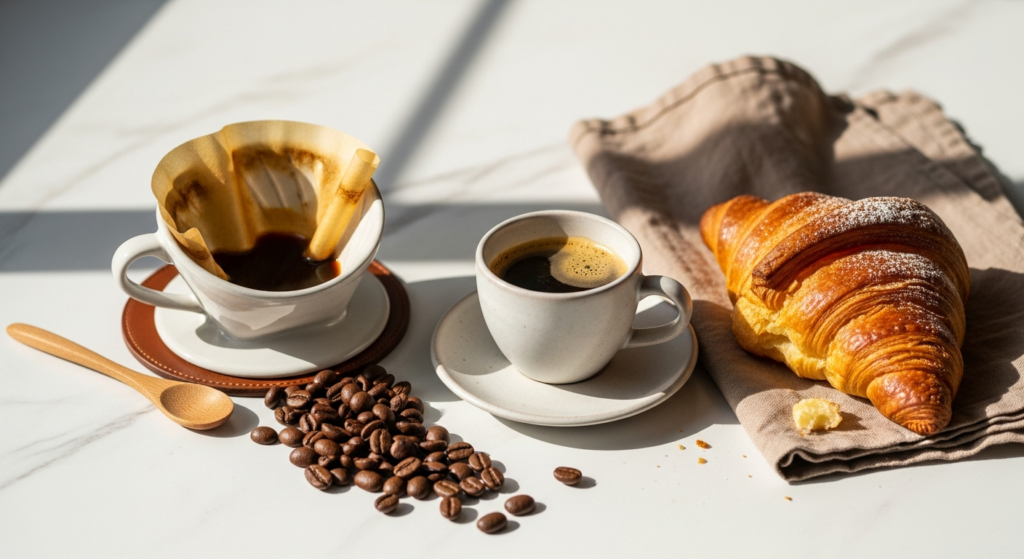
Sauce Mother Sauces Application Guide
At Café Serre, we champion the pursuit of quality and the joy of discovery. Whether you’re a seasoned barista or just beginning your coffee exploration, understanding these “mother sauces” of coffee brewing is crucial. Each method offers a unique approach to extraction, revealing different facets of a coffee’s origin, processing, and roast profile. From the intense concentration of espresso to the clean clarity of a pour over, we’ll delve into the science and artistry behind each technique, providing you with the knowledge and confidence to experiment and find your perfect brew. Prepare to transform your kitchen into a personal coffee laboratory, where precision meets passion, and every application yields a delightful result.
Espresso: The Concentrated Foundation of Flavor
Espresso, often considered the heart of modern coffee culture, is perhaps the most concentrated and versatile “mother sauce” in our brewing arsenal. Originating in Italy, it’s not a bean or a roast, but a method of brewing that forces hot, pressurized water through finely-ground coffee. The result is a small, potent shot, typically 25-35ml, crowned with a rich, reddish-brown crema—a hallmark of a well-pulled shot.
Equipment Essentials for Espresso
To embark on your espresso journey, you’ll need a few key pieces of equipment. An espresso machine is paramount; entry-level options like the Breville Barista Express (around $700-800) offer integrated grinders and decent pressure, while more advanced prosumer machines like the Rancilio Silvia (around $800-900 for the machine, grinder separate) provide greater control and durability. A high-quality burr grinder is equally critical, as grind consistency directly impacts extraction. Options like the Baratza Sette 270 (around $400) or the Eureka Mignon Specialita (around $600) are excellent choices, offering precise adjustments for the fine grind required for espresso.
The Principles of a Perfect Shot
The Specialty Coffee Association (SCA) defines espresso as “a 25–35 ml beverage prepared from 7–9 grams of coffee through which clean water of 90.5°C to 96°C has been forced at 9–10 atmospheres of pressure, and where the complete extraction takes place in 20–30 seconds.” While these are general guidelines, a common contemporary brew ratio for specialty espresso is 1:2 (e.g., 18g coffee in, 36g espresso out) extracted in 25-35 seconds. Key variables include:
- Grind Size: Extremely fine, like powdered sugar, but not clumpy. Too fine, and the shot will choke; too coarse, and it will run too fast.
- Dose: The amount of ground coffee in your portafilter basket, typically 18-20g for a double shot.
- Yield: The weight of the liquid espresso produced. Using a scale is crucial for consistency.
- Temperature: Water temperature around 90-96°C (195-205°F) is ideal for optimal extraction without scorching or under-extracting.
- Pressure: Commercial machines typically operate at 9 bars of pressure.
- Time: The duration of the extraction, influencing flavor balance.
Barista champions like James Hoffmann emphasize the importance of consistent puck preparation, including even distribution and tamping, to prevent “channeling” – where water finds paths of least resistance, leading to uneven extraction. Espresso serves as a standalone shot, a base for milk drinks like lattes and cappuccinos, or an ingredient in coffee cocktails, making it a truly versatile “mother sauce” for countless applications.
Pour Over: The Art of Precision Extraction

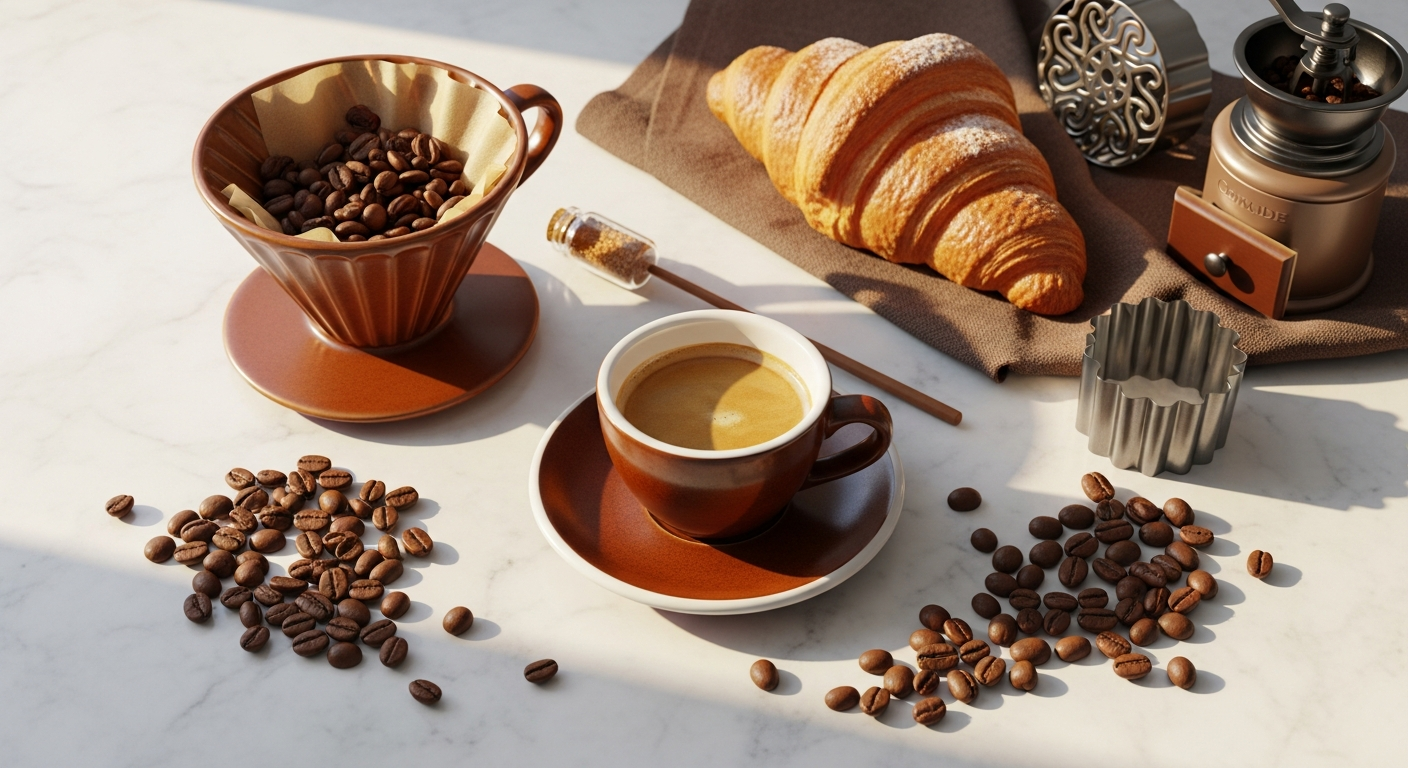
Pour over brewing stands as a testament to precision and patience, offering perhaps the cleanest and most nuanced expression of a coffee’s inherent flavors. This method involves manually pouring hot water over a bed of coffee grounds in a filter cone, allowing gravity to draw the extracted liquid into a carafe below. It’s a method that rewards meticulous technique, revealing the delicate aromatics and bright acidity often masked by other brewing styles.
Essential Tools for Pour Over Mastery
To achieve an exceptional pour over, several tools are indispensable. The brewing device itself can vary, with popular options including the Hario V60 (around $20-40), known for its conical shape and large single hole promoting faster flow; the Kalita Wave (around $30-50), with its flat bottom and three holes for more even extraction; and the elegant Chemex (around $40-60), famous for its thicker filter and clean cup. A gooseneck kettle, such as the Fellow Stagg EKG (around $160-190), is crucial for precise water pouring control. A good digital scale (around $20-50) is also non-negotiable for accurate brew ratios.
Unlocking Flavor Through Technique
The SCA recommends brewed coffee be extracted with water between 92-96°C (195-205°F) for optimal solubility. A typical pour over brew ratio ranges from 1:15 to 1:18 (e.g., 20g coffee to 300-360g water). Key steps and variables include:
- Grind Size: Medium-fine to medium, resembling table salt. The specific grind will depend on your chosen brewer and desired extraction time.
- Water Temperature: As per SCA guidelines, maintaining a consistent temperature is vital for even extraction.
- The Bloom: After pouring enough water to saturate the grounds (typically 2-3 times the coffee weight), allow it to sit for 30-45 seconds. This allows trapped CO2 to escape, preventing sour flavors and promoting even extraction.
- Pour Technique: Gentle, circular pours from the center outwards, avoiding pouring directly on the filter paper. Aim for continuous, controlled flow, often in pulses. World Coffee Research (WCR) studies on extraction have shown the importance of water flow dynamics.
- Total Brew Time: Depending on the brewer and grind, aim for 2:30 to 4:00 minutes for the entire extraction process.
Renowned roasters like Stumptown Coffee Roasters and Counter Culture Coffee frequently share pour over recipes, emphasizing the balance between grind size, water temperature, and pour rate. The result is a clean, bright, and often tea-like cup that highlights the nuanced aromatics and delicate acidity of a well-sourced single-origin bean. Pour over is an application that truly allows the coffee’s terroir to shine.
French Press: Full Immersion, Bold Flavors
The French Press, despite its name, has a somewhat disputed origin, with patents filed in France and Italy in the early 20th century. Regardless of its exact birthplace, it has become a beloved brewing method globally, celebrated for its simplicity and the rich, full-bodied cup it produces. Unlike pour over, the French Press employs a full immersion technique, where coffee grounds are steeped directly in hot water for an extended period before being separated by a plunger with a mesh filter. This method allows all the coffee oils and fine particulates to remain in the final brew, contributing to its characteristic robust flavor and velvety mouthfeel.
The Uncomplicated Charm of the French Press
The beauty of the French Press lies in its minimal equipment requirements. A durable French Press pot, such as those from Bodum (ranging from $20-50 depending on size and material), is essentially all you need. A good burr grinder is still vital for a consistent coarse grind, and a kettle for heating water. The simplicity makes it an excellent entry point for beginners, while still offering depth for seasoned enthusiasts.
Crafting a Robust Brew
The French Press diverges from other methods in its approach to extraction. The goal is to maximize contact time between water and coffee, leading to a full-bodied brew. Key parameters for a successful French Press application include:
- Grind Size: Coarse and uniform, resembling sea salt or breadcrumbs. This prevents fine particles from passing through the mesh filter and creating a muddy cup, and it ensures even extraction over the longer steep time.
- Water Temperature: Aim for 90-96°C (195-205°F). Boiling water can scorch the grounds and extract bitter compounds.
- Brew Ratio: A common starting point is 1:12 to 1:15 (e.g., 30g coffee to 360-450g water). This can be adjusted based on desired strength.
- Steep Time: Typically 4 minutes. Some prefer longer for extra strength, but exceeding 5-6 minutes can lead to over-extraction and bitterness.
- The Plunge: After steeping, gently and slowly press the plunger down, separating the grounds from the liquid. A fast plunge can agitate fines and create a cloudy brew.
The full immersion nature of the French Press means that all soluble compounds, including more oils and fine sediments, make it into your cup. This contributes to its rich “body” and robust flavor profile, often described as comforting and earthy. It’s an excellent method for showcasing darker roasted coffees or those with inherent chocolatey or nutty notes. Many roasters, including Intelligentsia Coffee, recommend this method for a bold, classic coffee experience.
Aeropress: Versatility in a Plunger
Invented in 2005 by Alan Adler, the Aeropress quickly became a darling of the specialty coffee community due to its incredible versatility, portability, and ability to brew a remarkably clean and flavorful cup. Often described as a hybrid between a French Press and an espresso machine, it uses air pressure to force water through a bed of coffee, resulting in a concentrated brew in a very short time. Its compact design and ease of cleaning make it a favorite for travelers and those seeking a quick, high-quality coffee experience.
The Ingenious Aeropress System
The Aeropress itself is a marvel of simple engineering, typically costing around $30-40. It consists of a plunger, a chamber, a filter cap, and paper filters. While it doesn’t require specialized equipment beyond a grinder and a kettle, its design allows for endless experimentation. The small paper filters provide a clean cup, akin to pour over, while the pressure mimics some aspects of espresso extraction.
A Spectrum of Brewing Possibilities
One of the Aeropress’s greatest strengths is its adaptability. There are two primary methods:
- Standard Method: Place the chamber over a mug, add coffee and water, stir, and press.
- Inverted Method: Assemble the Aeropress upside down, allowing for a longer steep time without dripping, then flip onto a mug for pressing. This method is popular in competitive brewing.
Key variables for Aeropress application:
- Grind Size: Highly variable, from fine (like espresso) for short, concentrated brews, to medium-fine for longer steep times.
- Water Temperature: Often slightly lower than other methods, ranging from 80-95°C (175-200°F), particularly for darker roasts or to reduce bitterness.
- Brew Ratio: Extremely flexible. Often produces a concentrate (e.g., 1:4 to 1:8) that can be diluted with hot water to desired strength, or a full-strength brew (e.g., 1:10 to 1:15).
- Brew Time: Typically very short, from 30 seconds to 2 minutes, due to the pressure-assisted extraction.
- Pressure: The manual pressing action creates pressure, efficiently extracting solubles.
Barista champions frequently use the Aeropress in competitions due to its precision and control. For instance, the World Aeropress Championship features innovative recipes from around the globe, highlighting its endless potential. The resulting cup can range from a strong, espresso-like concentrate to a clean, full-bodied coffee, making it an incredibly versatile “mother sauce” for various coffee applications, from a quick morning brew to a base for iced coffee or specialty drinks. Its robustness makes it perfect for travel, ensuring a quality cup anywhere.
Moka Pot: Italian Tradition, Robust Brew
The Moka Pot, an iconic stovetop espresso maker invented by Alfonso Bialetti in 1933, is a staple in millions of Italian homes and coffee cultures worldwide. While it doesn’t produce true espresso in the technical sense (it typically operates at 1.5-2 bars of pressure compared to an espresso machine’s 9 bars), it consistently brews a strong, concentrated coffee that serves as an excellent base for traditional Italian-style drinks. Its distinctive design and the satisfying gurgle as it brews evoke a sense of heritage and ritual.
The Enduring Design of the Moka Pot
The Moka Pot’s three-chamber design is both simple and ingenious. Water goes in the bottom chamber, coffee grounds in the middle filter basket, and the brewed coffee collects in the top chamber. The most famous brand, Bialetti Moka Express, still dominates the market, with pots ranging from $30-60 depending on size and material. It’s a durable, low-tech option that offers a unique brewing experience.
Brewing Principles for a Bold Cup
The Moka Pot relies on steam pressure to push hot water up through the coffee grounds. Mastering this process is key to avoiding burnt or bitter flavors:
- Grind Size: Medium-fine, slightly coarser than espresso. Too fine, and the water won’t pass through; too coarse, and the coffee will be weak.
- Water Temperature: Fill the bottom chamber with hot (not boiling) water. This significantly reduces the time the pot spends on the heat, preventing the coffee grounds from “cooking” and developing metallic or burnt flavors.
- Coffee Dose: Fill the filter basket evenly, without tamping. Tamping can restrict flow and lead to over-extraction or dangerous pressure buildup.
- Heat Source: Use medium-low heat. The slower the extraction, the better the flavor. A fast, aggressive extraction often results in bitterness.
- Extraction Signal: Listen for a bubbling, gurgling sound and watch for the coffee stream to lighten in color. Remove from heat immediately when this occurs, or just before, to prevent over-extraction.
The Moka Pot produces a robust, full-bodied coffee with a strong aroma and an intensity that falls between drip coffee and true espresso. It’s an ideal “mother sauce” for those who enjoy their coffee strong, often served black or with a splash of milk, and forms the basis for many traditional Italian coffee rituals. Esteemed roasters like illy often provide specific Moka Pot grind recommendations, honoring this classic brewing method.
Cold Brew: Time-Infused Sweetness
Cold brew stands apart from other coffee “mother sauces” by foregoing heat entirely in its primary extraction. Instead, it relies on time and cold water to slowly steep coffee grounds, yielding a concentrate that is remarkably low in acidity, naturally sweet, and incredibly smooth. This method has surged in popularity, particularly for those seeking a refreshing, less bitter coffee experience, and its versatility makes it an excellent base for a myriad of iced drinks and culinary applications.
Simple Setup for a Smooth Brew
The beauty of cold brew lies in its simplicity. You don’t need fancy equipment, though dedicated cold brew systems can streamline the process. At its most basic, you need a large jar or container, coarse-ground coffee, filtered water, and a way to filter the concentrate (e.g., cheesecloth, a fine mesh sieve, or a paper filter-lined funnel). Specialized systems like the Toddy Cold Brew System (around $40-60) offer convenience with integrated filters and spouts.
The Art of Patient Extraction
Cold brew’s principles are straightforward, but patience is key:
- Grind Size: Very coarse, similar to French Press or even coarser. This prevents over-extraction and bitterness during the long steep time and makes filtration easier.
- Water Quality: Use filtered, cold water. The quality of your water will directly impact the final flavor.
- Brew Ratio: Cold brew is typically made as a concentrate, with ratios ranging from 1:4 to 1:8 (e.g., 200g coffee to 800ml-1600ml water). This concentrate is then diluted to taste with water, milk, or ice.
- Steep Time: This is the most crucial variable. A minimum of 12 hours is recommended, with 16-24 hours often yielding the best results. Steeping in the refrigerator is ideal for food safety and flavor stability.
- Filtration: After steeping, carefully filter the grounds from the concentrate. Multiple filtration steps (coarse then fine) can ensure a clean, sediment-free brew.
Because cold water extracts fewer acids and bitter compounds, cold brew is notably smoother and sweeter than hot-brewed coffee, often presenting chocolate, nutty, and caramel notes more prominently. It’s a fantastic “mother sauce” for creating bespoke beverages—from simple iced coffees to complex cocktails. Its low acidity also makes it gentler on the stomach. Many specialty roasters, such as Heart Coffee Roasters, offer specific recommendations for cold brew, recognizing its unique flavor profile and growing appeal.
Siphon/Syphon: The Theatrical Experience
For those who appreciate both scientific precision and visual spectacle, the Siphon (or Syphon) coffee maker offers a truly theatrical brewing experience. Often seen in high-end cafés and coffee laboratories, this method utilizes vapor pressure and vacuum to brew coffee, resulting in an exceptionally clean, bright, and tea-like cup. While it requires more attention and a slightly higher learning curve, the Siphon provides unparalleled control over temperature and extraction, making it a “mother sauce” for the adventurous and detail-oriented coffee enthusiast.
The Elegant Science of Siphon Brewing
A Siphon brewer typically consists of two glass globes, a heat source (often a butane burner), and a filter. Brands like Hario (models ranging from $100-250) are well-regarded for their quality. The magic happens when water in the lower globe is heated, creating vapor pressure that pushes it up into the upper globe where the coffee grounds reside. As the heat is removed, a vacuum pulls the brewed coffee back down, through the filter, into the lower globe.
Mastering the Vacuum Brew
Siphon brewing allows for meticulous control, which can highlight delicate flavors and aromas:
- Grind Size: Medium, similar to pour over. Too fine, and it can clog the filter; too coarse, and extraction will be weak.
- Water Temperature: The beauty of the Siphon is that the water reaches the grounds at a consistent, ideal temperature (around 92-96°C or 195-205°F) due to the boiling point and vapor pressure.
- Brew Ratio: Typically 1:15 to 1:17. Precision with a scale is paramount.
- Brew Time: Once the water rises to the upper chamber, stir to ensure all grounds are saturated. Brew for 1 to 2 minutes. Agitation and brew time are critical for extraction.
- Heat Management: The heat source is removed to initiate the drawdown. The speed of the drawdown impacts the final flavor.
The resulting coffee from a Siphon is renowned for its clarity, vibrant acidity, and delicate body, often described as having a tea-like quality. It excels at showcasing the intricate flavor profiles of light-roasted, high-quality single-origin beans. While perhaps not an everyday method for everyone, the Siphon is an exquisite “mother sauce” for special occasions or when you wish to deeply explore the subtle nuances of a particular coffee, offering both a sensory and intellectual delight. It’s a method that truly embodies the spirit of coffee as a sophisticated lifestyle choice, aligning perfectly with the ethos of Café Serre.
Key Takeaways for Mastering Coffee’s “Mother Sauces”
- Grind Size is Paramount: The correct and consistent grind size for each brewing method is the single most important factor influencing