


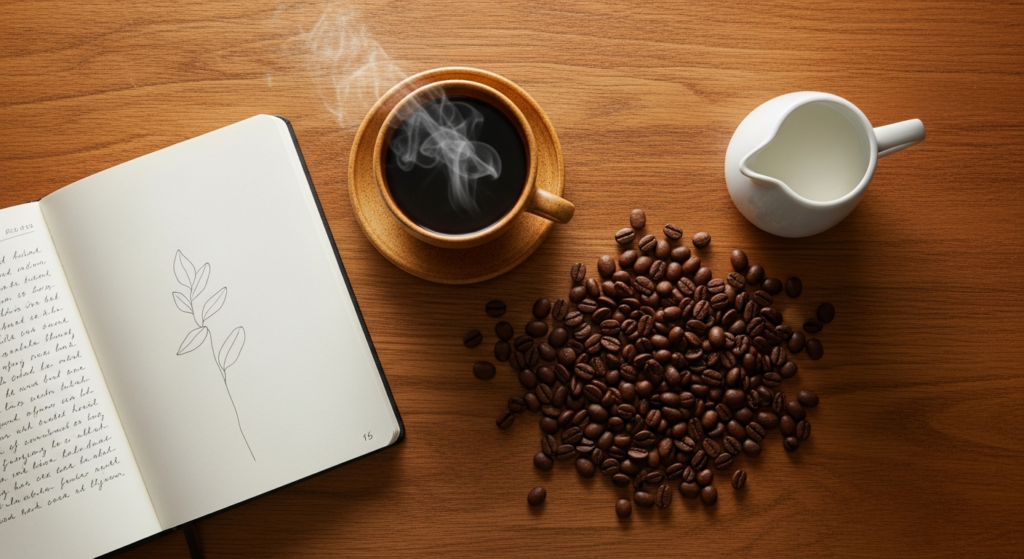
Mastering Specialty Coffee at Home: Your Guide to Crafting Café-Quality Drinks
The Foundation: Understanding Specialty Coffee
Before we delve into grinders and brew ratios, let’s talk about what makes “specialty coffee” truly special. It’s more than just a marketing term; it’s a commitment to quality from seed to cup. The Specialty Coffee Association (SCA) defines specialty coffee as beans that score 80 points or above on a 100-point scale, evaluated by certified tasters. This score reflects meticulous care in cultivation, harvesting, processing, roasting, and brewing, ensuring exceptional flavors and aromas. When you choose specialty coffee, you’re choosing traceability, ethical sourcing, and a dedication to excellence that shines through in every sip.
Bean Selection: Your Flavor Journey Begins
The most impactful decision you’ll make for your home coffee journey is the coffee bean itself. Think of it as the canvas for your culinary masterpiece.
* Origin Matters: Just like wine, coffee’s flavor profile is heavily influenced by its origin.
* Ethiopia: Often bright, floral, tea-like, with berry or citrus notes.
* Colombia: Balanced, medium-bodied, with notes of caramel, chocolate, and sometimes fruity acidity.
* Brazil: Nutty, chocolatey, low acidity, often with a heavier body, making it excellent for espresso.
* Kenya: Bold, complex, with blackcurrant, tomato, or wine-like notes.
* Central America (Costa Rica, Guatemala): Clean, bright acidity, balanced, with notes of chocolate, nuts, and fruit.
Experiment with single-origin beans to discover your preferences, or try a thoughtfully crafted blend from a reputable roaster.
* Roast Levels Unveiled: The roast level dramatically impacts flavor.
* Light Roast: Typically the most complex and acidic, showcasing the bean’s inherent origin characteristics. Expect bright, fruity, floral notes. Often preferred for pour-overs.
* Medium Roast: A balanced approach, retaining some origin characteristics while developing caramelization. Sweet, rounded, with good body. Versatile for many brewing methods.
* Dark Roast: Bold, smoky, often with notes of dark chocolate, caramel, and nuts. Lower acidity, fuller body. Can sometimes mask origin characteristics, but excellent for those who enjoy a robust cup, especially with milk.
Don’t be afraid to try different roasts from the same origin to understand how roasting transforms the bean.
* Freshness is King: This is arguably the most critical factor. Coffee is an agricultural product, and it degrades over time.
* Roast Date vs. Best-By Date: Always look for a “roast date” on the bag, not just a “best-by” date. Specialty coffee is best consumed within 2-4 weeks of its roast date. For espresso, many baristas prefer beans that have rested for 7-14 days after roasting to allow for degassing and flavor development.
* Why it matters: Freshly roasted coffee has a vibrant aroma and a full spectrum of flavors. As it ages, it loses its aromatic compounds, resulting in a dull, flat, or even bitter taste.
* Where to Buy:
* Local Roasters: Support your community and get the freshest beans possible. Most roasters are happy to chat about their offerings.
* Online Subscriptions: Services like Trade Coffee Co., Atlas Coffee Club, or Angel’s Cup offer curated selections from various roasters, often tailored to your taste preferences. This is a fantastic way to explore.
* Supermarket “Specialty” Brands: While some larger brands offer decent options, always check for a roast date. If it’s more than a month old, pass on it.
Storage: Protecting Your Precious Beans
Once you have those beautiful beans, protect their freshness!
* Airtight Container: Store whole beans in an opaque, airtight container. Oxygen is coffee’s enemy. Many specialty coffee bags come with a one-way valve, which is great for short-term storage. For longer periods, consider an airtight canister like those from Fellow Atmos or Airscape.
* Dark, Cool Place: Keep your coffee away from direct sunlight, heat, and moisture. A pantry shelf is ideal.
Avoid the Fridge/Freezer (mostly): The freezer can preserve coffee for very long periods, if* done correctly (vacuum-sealed, thawed only once). However, for daily use, the fridge or freezer can introduce moisture and odors, leading to stale-tasting coffee. Stick to room temperature for beans you’ll consume within a few weeks.
* Grind on Demand: Never pre-grind your coffee. The moment coffee is ground, its surface area increases exponentially, accelerating oxidation and flavor loss. Your grinder is your best friend for freshness.
Essential Equipment: Building Your Home Barista Toolkit
You don’t need to break the bank to make great coffee at home, but strategic investments in key pieces of equipment will make all the difference. Think of it as acquiring quality tools for a craft.
The Grinder: Your Most Crucial Investment
If there’s one piece of equipment to splurge on, it’s the grinder. A consistent, precise grind is the bedrock of excellent extraction.
* Burr Grinders vs. Blade Grinders:
* Blade Grinders (the “whirly blade” type): These don’t grind; they chop. They produce an inconsistent mix of fine powder and large chunks, leading to uneven extraction (some coffee over-extracts, some under-extracts) and a muddy, bitter, or sour cup. Avoid at all costs for specialty coffee.
* Burr Grinders: These use two abrasive surfaces (burrs) to crush coffee beans into uniform particles. This consistency is vital for even extraction and delicious flavor.
* Conical vs. Flat Burrs:
* Conical Burrs: Generally found in entry-to-mid-range grinders, known for a slightly wider grind distribution, which can be forgiving. Excellent for most home brewing.
* Flat Burrs: Often found in higher-end grinders, known for a very uniform particle size, producing exceptionally clean and nuanced cups.
* Recommendations:
* Entry-Level Excellence (Electric): The Baratza Encore is a perennial favorite, offering reliable, consistent grinds for pour-over, French press, and AeroPress at an accessible price point (around $180).
* Mid-Range (Electric, Brew-focused): The Fellow Ode Brew Grinder Gen 2 is a beautiful and functional flat-burr grinder perfect for filter coffee methods (pour-over, French press) with excellent consistency and minimal retention (around $349).
* Espresso-Focused (Electric): If espresso is your goal, you’ll need finer, more precise control. The Eureka Mignon Specialita or Baratza Sette 270 are fantastic choices, offering stepless adjustments and robust build quality (around $400-$700).
* Manual Grinders (Budget/Travel): For portability or if budget is tight, a high-quality manual burr grinder like the 1Zpresso JX-Pro or Comandante C40 offers exceptional grind quality for all methods, but requires a bit of arm work (around $150-$300).
Brewing Devices: Your Method, Your Flavor
The best brewing device is the one you enjoy using and that produces the flavors you love.
* Pour Over (Hario V60, Chemex, Kalita Wave):
* Pros: Highlight bright, clean, nuanced flavors. Excellent clarity.
* Cons: Requires precision, a gooseneck kettle, and a scale. Can be unforgiving.
* Ideal for: Light to medium roasts, single-origin coffees where you want to taste every delicate note.
* French Press:
* Pros: Full-bodied, robust, rich coffee. Simple to use. No paper filters needed.
* Cons: Sediment can be present. Less clarity than pour-over.
* Ideal for: Medium to dark roasts, those who prefer a heavier, bolder cup.
* AeroPress:
* Pros: Incredibly versatile, fast, durable, portable, easy to clean. Can make espresso-like concentrate or full-bodied coffee.
* Cons: Small brew volume (1-2 cups).
* Ideal for: Travel, quick brews, experimenting with different recipes, and making concentrated coffee for milk drinks or iced coffee.
* Espresso Machine: The ultimate dive into café classics.
* Pros: Creates concentrated espresso shots, essential for lattes, cappuccinos, and more. The ability to steam milk.
* Cons: Significant investment, a steep learning curve, requires a precise espresso grinder.
* Recommendations:
* Entry-Level: Breville Bambino Plus (automatic milk steaming, fast heat-up, around $500), Gaggia Classic Pro (manual, durable, mod-friendly, around $450).
* Mid-Range: Rancilio Silvia (classic, robust, good for steaming, around $800), Profitec GO (excellent temperature stability, sleek, around $1000).
* Essential Espresso Accessories: A good quality tamper (not the plastic one that comes with the machine), a knock box for spent pucks, and a stainless steel milk pitcher.
Kettle: Precision Pouring
* Gooseneck Kettle: Crucial for pour-over methods. The slender spout allows for precise control over water flow, which is essential for even extraction.
* Recommendations: Fellow Stagg EKG (electric, temperature control, beautiful design, around $160), Hario Buono Kettle (classic stovetop or electric, reliable, around $50-$100).
* Temperature Control: Look for kettles with temperature control settings. The ideal brewing temperature is generally between 93-96°C (200-205°F).
Scale: The Secret to Consistency
A digital kitchen scale that measures in 0.1-gram increments and ideally has a built-in timer is non-negotiable for specialty coffee.
* Why it’s essential: Coffee brewing is a precise science. Measuring coffee beans by weight (not scoops!) and water by weight ensures consistent ratios, leading to repeatable, delicious results.
* Recommendations: Hario V60 Drip Scale (reliable, affordable, around $50), Timemore Black Mirror Basic Plus (sleek, accurate, good value, around $70), Acaia Pearl Model S (professional-grade, advanced features, around $250).
Water Filter: The Unsung Hero
Coffee is 98% water, so the quality of your water drastically affects taste. Tap water often contains chlorine, minerals, or other impurities that can impart off-flavors or hinder extraction.
* Recommendations: A simple Brita or ZeroWater pitcher filter is a great start. For more serious enthusiasts, specific coffee-focused water filters or reverse osmosis systems can be considered. Even better, check your local water report and consider an in-line filter for your espresso machine.
The Art of Brewing: Techniques for Various Drinks
Now that you have your tools, let’s talk technique. Brewing specialty coffee is an art, but it’s an art built on science and repeatable methods.
The Golden Ratio: Coffee to Water
This is your starting point for any brew. The generally accepted “golden ratio” for filter coffee is 1:15 to 1:18 (coffee to water). This means for every 1 gram of coffee, you use 15 to 18 grams (or milliliters) of water.
* Example: For a typical 300ml (300g) mug of coffee, you’d use about 18-20 grams of coffee (300g / 16 = 18.75g).
* Why it’s key: Consistency. This ratio ensures you’re extracting the right amount of flavor compounds. Too much water for the coffee, and it’ll be weak; too little, and it’ll be over-extracted and bitter.
Mastering the Grind
Grind size is perhaps the most critical variable, second only to the beans themselves. It dictates how quickly water flows through the coffee bed and how efficiently flavor compounds are extracted.
* Under-extraction (too coarse): Water flows too quickly, doesn’t dissolve enough flavor. Results in a sour, weak, watery, or thin-bodied taste.
* Over-extraction (too fine): Water flows too slowly, dissolves too many bitter, astringent compounds. Results in a bitter, dry, hollow, or burnt taste.
* Visual Examples:
* Coarse (sea salt): French press, cold brew.
* Medium-Coarse (rough sand): Chemex.
* Medium (table salt): Pour over (V60, Kalita Wave), drip coffee machines.
* Medium-Fine (fine sand): AeroPress (depending on recipe).
* Fine (sugar-like/powdered sugar): Espresso.
Pour Over Perfection (Hario V60 Example)
1. Heat Water: Bring your filtered water to 93-96°C (200-205°F).
2. Prepare Filter: Place a paper filter in your V60. Rinse it thoroughly with hot water to remove any paper taste and preheat the brewer and mug. Discard the rinse water.
3. Add Coffee: Place your V60 on your scale. Add freshly ground coffee (medium grind, e.g., 20g for a 320g brew). Tare the scale to zero.
4. The Bloom: Start a timer. Pour about twice the coffee’s weight in water (e.g., 40g water for 20g coffee) evenly over the grounds. Let it “bloom” for 30-45 seconds. This allows gases to escape, preparing the coffee for even extraction.
5. Pouring: Begin your main pour. Pour slowly and steadily in concentric circles, avoiding the edges, aiming to keep the water level consistent. A common technique is to pour in pulses (e.g., 100g at 0:45, 100g at 1:30, 120g at 2:15).
6. Finish: Aim for a total brew time of 3-4 minutes. Once the water has fully drained, remove the V60 and enjoy!
French Press Fullness
1. Heat Water: Bring water to 93-96°C (200-205°F).
2. Add Coffee: Use a coarse grind (e.g., 30g coffee for 500g water). Add to the preheated French press.
3. Pour Water: Pour all your hot water over the grounds, ensuring they are fully saturated.
4. Stir & Steep: Give a gentle stir to ensure all grounds are wet. Place the lid on, but don’t plunge. Steep for 4 minutes.
5. Plunge: Slowly and steadily press the plunger down, taking about 20-30 seconds. Avoid forcing it or pressing too quickly, which can stir up sediment.
6. Serve Immediately: Don’t let coffee sit in the French press after plunging, as it will continue to extract and become bitter.
AeroPress Versatility (Basic Recipe)
1. Heat Water: Bring water to 80-85°C (175-185°F) for a smoother cup, or 93-96°C (200-205°F) for more extraction.
2. Prepare: Place a paper filter in the cap, wet it, and discard rinse water.
3. Add Coffee: Use a medium-fine grind (e.g., 17g coffee for 250g water). Add to the AeroPress chamber.
4. Pour Water: Pour about 50g of hot water, stir briefly for 10 seconds.
5. Fill & Steep: Fill to the “4” mark (around 250g total water). Steep for 1-2 minutes, depending on desired strength.
6. Plunge: Place the plunger on top and press slowly and steadily for 20-30 seconds until you hear a hiss.
7. Serve: Drink as is, or dilute with hot water for an Americano-style brew.
Espresso Excellence (The Biggest Leap)
This is where consistency and precision are paramount.
1. Dialing in the Grind: This is the most challenging and rewarding part. Your espresso grinder needs to be able to make micro-adjustments.
* Goal: For a double shot, aim for 18-20 grams of coffee in, yielding 36-40 grams of liquid espresso out, in 25-30 seconds.
* Adjusting: If your shot runs too fast (under 25s) and tastes sour/weak, grind finer. If it runs too slow (over 30s) and tastes bitter/burnt, grind coarser.
2. Dosing: Use your scale to weigh your ground coffee precisely into your portafilter basket (e.g., 18g).
3. Distribution: Distribute the grounds evenly in the basket using a WDT (Weiss Distribution Technique) tool or by gently tapping the portafilter. This prevents channeling.
4. Tamping: Apply firm, even pressure to tamp the coffee bed flat and level. A good tamp is crucial for resistance.
5. Pulling the Shot: Lock the portafilter into your machine. Place your cup on a scale under the spouts and hit the brew button. Start your timer.
6. Monitoring: Observe the stream – it should start dark, then lighten to a “mouse tail” consistency with “tiger striping.”
7. Yield: Stop the shot when you reach your target yield (e.g., 36g) within the target time (25-30s).
8. Crema: A good shot will have a rich, reddish-brown crema on top.
Elevating Your Drinks: Milk Steaming & Flavor Additions
Once you’ve mastered the espresso shot, the world of milk-based drinks opens up. And even without an espresso machine, you can still create delightful concoctions!
The Magic of Milk Steaming
Perfectly steamed milk is sweet, velvety, and integral to lattes, cappuccinos, and flat whites.
* Type of Milk: Whole dairy milk is the easiest to steam due to its fat and protein content. However, many non-dairy milks now steam beautifully. Oat milk (barista blend) is a favorite for its creamy texture and neutral flavor, followed by almond milk (barista blend). Experiment to find your favorite.
* The Pitcher: Use a stainless steel milk pitcher with a spout, sized appropriately for the amount of milk you’re steaming (e.g., 12oz for one drink, 20oz for two).
* Technique (Espresso Machine Steam Wand):
1. Purge: Briefly open the steam wand to clear any condensed water.
2. Position: Submerge the tip of the wand just below the milk surface, slightly off-center.
3. Aeration (Stretching): Open the steam valve fully. You should hear a gentle “tearing paper” sound – this is air being introduced, creating foam. Do this for a few seconds, until the milk volume increases by about 20-30%. For a cappuccino, you’ll want more air; for a flat white or latte, less.
4. Texturing (Rolling): Lower the pitcher slightly, submerging the wand tip deeper. You should hear a silent “whirlpool” sound – this integrates the foam into the milk, creating microfoam (a uniform, glossy, liquid texture).
5. Temperature: Continue rolling until the pitcher is too hot to comfortably hold (around 60-65°C / 140-150°F). Overheating will scald the milk and destroy its sweetness.
6. Clean & Swirl: Close the steam valve, wipe the wand immediately with a damp cloth, and purge it again. Swirl the milk vigorously in the pitcher to eliminate any large bubbles and achieve that glossy texture.
* Alternative Milk Frothing (No Espresso Machine):
* French Press: Heat milk in a saucepan. Pour into a French press. Plunge rapidly until frothy.
* Handheld Frother: Inexpensive battery-operated wands can create decent foam.
* Electric Milk Frother: Devices like the Nespresso Aeroccino or Fellow Eddy automatically heat and froth milk, perfect for convenience.
Beyond the Basics: Syrups, Spices, and More
Personalize your drinks with homemade or store-bought additions.
* Simple Syrup: Easily made at home! Combine equal parts sugar and hot water, stir until dissolved, cool, and store in the fridge. Customize with vanilla bean, cinnamon sticks, or citrus zest.
* Flavor Syrups: Vanilla, caramel, hazelnut, and peppermint are popular choices. Brands like Monin or Torani offer a wide range.
* Spices: A sprinkle of cinnamon, nutmeg, or cardamom can elevate any coffee drink.
* Chocolate: For mochas, use good quality cocoa powder mixed with a little hot coffee to make a paste, or melt dark chocolate chips into your espresso.
* Whipped Cream: Homemade whipped cream (heavy cream, a touch of sugar, vanilla extract, whipped until soft peaks form) is always superior to store-bought aerosols.
Crafting Café Classics: Recipes to Try at Home
Here are some beloved café drinks you can now master with your newfound skills!
Latte
* Description: The most popular milk-based espresso drink, characterized by its smooth, velvety microfoam and rich espresso flavor.
* Recipe:
1. Pull 1-2 shots (36-40g) of fresh espresso into your mug.
2. Steam 6-8 oz of milk to a glossy, velvety texture with minimal foam (around 60-65°C / 140-150°F).
3. Swirl the milk gently to incorporate the foam.
4. Pour the steamed milk into the espresso, aiming for a thin, even layer of microfoam on top. Practice your latte art if you’re feeling ambitious!
Cappuccino
* Description: A classic Italian drink with equal parts espresso, steamed milk, and a generous cap of airy foam.
* Recipe:
1. Pull 1-2 shots (36-40g) of fresh espresso into your mug.
2. Steam 4-5 oz of milk, incorporating more air than for a latte to create a thicker, fluffier foam (around 60-65°C / 140-150°F).
3. Swirl the milk.
4. Pour the steamed milk into the espresso, using a spoon to hold back some of the liquid milk and allow the thicker foam to form the distinct cap.
Americano
* Description: A simple yet satisfying drink that dilutes espresso with hot water, creating a flavor profile similar to drip coffee but with the rich intensity of espresso.
* Recipe:
1. Heat 4-6 oz of hot water (ideally 93-96°C / 200-205°F).
2. Pull 1-2 shots (36-40g) of fresh espresso directly into your mug.
3. Pour the hot water over the espresso. (Some prefer to add espresso to water to preserve crema, but either way works!)
Mocha
* Description: A delicious blend of espresso, chocolate, and steamed milk, essentially a chocolate latte.
* Recipe:
1. Add 1-2 tablespoons of chocolate syrup (or cocoa powder mixed with a splash of hot espresso to create a paste) to the bottom of your mug.
2. Pull 1-2 shots (36-40g) of fresh espresso directly into the mug, stirring to combine with the chocolate.
3. Steam 6-8