


Tarte Tatin Variations and Apple Selection
The Allure of Tarte Tatin: A Culinary Canvas for Coffee Pairing
At its heart, Tarte Tatin is a deceptively simple dish, yet its depth of flavor provides a rich canvas for exploration, particularly when considering coffee pairings. The magic begins with the apples, which are meticulously caramelized in butter and sugar before being topped with a layer of puff or shortcrust pastry and baked. The inversion upon serving reveals a beautiful mosaic of tender, golden-brown fruit, steeped in a syrupy, buttery caramel. The choice of apples is paramount here; traditional recipes often call for varieties like Golden Delicious, Calville Blanc, or Reine des Reinettes due to their ability to hold their shape and develop a complex flavor profile when cooked. More modern variations might experiment with Granny Smith for a tart counterpoint, or Honeycrisp for a sweeter, firmer bite.
Each apple variation brings a slightly different character to the tart: a Granny Smith Tarte Tatin will present a brighter acidity that cuts through the richness, while a Golden Delicious version will offer a more mellow, honeyed sweetness. These subtle differences directly influence the ideal coffee pairing. A tart-forward apple might call for a coffee with more body and chocolatey notes to provide balance, whereas a sweeter apple could be beautifully complemented by a brighter, fruitier coffee that enhances its natural sugars without overwhelming it.
Beyond the apples, the caramel itself is a key player. From a deep, almost burnt sugar note to a lighter, more buttery sweetness, the caramel’s intensity shapes the overall profile. A darker caramel demands a coffee with robust flavors, perhaps a medium-dark roast with notes of roasted nuts or dark chocolate. A lighter caramel, conversely, might shine with a lighter roast, highlighting delicate floral or citrus notes. The pastry, too, contributes textural contrast and a buttery richness that requires consideration. A flaky puff pastry versus a denser shortcrust will interact differently with the coffee’s body and mouthfeel.
The beauty of Tarte Tatin lies in these variations, offering an endless array of pairing possibilities. As coffee enthusiasts, our goal is not just to enjoy the tart, but to elevate it through a thoughtful selection and preparation of our brew. This culinary journey into Tarte Tatin serves as the perfect preamble to understanding how specialty coffee, with its own spectrum of flavors and aromas, can complete and enhance this classic French masterpiece.
Decoding Coffee Profiles for Dessert Harmony

To truly unlock the potential of coffee pairing with Tarte Tatin, one must first understand the intricate world of coffee profiles. Just as apples vary, so too do coffee beans, each offering a unique sensory experience. The Specialty Coffee Association (SCA) has developed a ‘Coffee Taster’s Flavor Wheel’ which serves as an invaluable tool, categorizing flavors from fruity and floral to nutty and chocolatey, helping us articulate the complex notes present in our brew. For pairing with a dessert like Tarte Tatin, we primarily focus on a coffee’s acidity, body, and dominant flavor notes.
Acidity in coffee, often described as brightness or vivacity, is distinct from sourness. It can manifest as citrusy (lemon, orange), malic (apple, pear), or tartaric (grape). A coffee with a vibrant acidity can cut through the richness of the Tarte Tatin’s caramel and butter, providing a refreshing counterpoint. For a tart-forward apple variety in your Tarte Tatin, a coffee with balanced, rounded acidity might be preferred to avoid an overly sharp experience. Conversely, a sweeter Tarte Tatin might benefit from a coffee with lively acidity to prevent it from feeling cloying.
Body refers to the mouthfeel and weight of the coffee on your tongue – think of the difference between skim milk and whole milk. A full-bodied coffee, often associated with darker roasts or specific origins like Brazil, can stand up to the richness of the Tarte Tatin, providing a satisfying presence that matches the dessert’s intensity. A lighter-bodied coffee, perhaps from Ethiopia, might be too delicate and get lost against the dessert’s robust flavors unless specifically chosen to highlight very subtle notes.
Flavor Notes are the heart of pairing. Coffees can present a spectrum of notes:
- Fruity: Berries, stone fruit, citrus. These can echo the fruitiness of the apples, especially if the Tarte Tatin uses brighter apple varieties.
- Nutty/Chocolatey: Almond, hazelnut, dark chocolate, cocoa. These notes often harmonize beautifully with the caramelized sugar and buttery pastry, providing a comforting, grounding presence.
- Spicy: Cinnamon, clove, nutmeg. While less common as dominant notes, these can add an intriguing layer, especially if the Tarte Tatin itself has warming spices.
- Caramel/Brown Sugar: These notes are a natural complement to the Tarte Tatin’s defining caramelization, enhancing the dessert’s core flavor profile.
Consider a washed Ethiopian Yirgacheffe, known for its bright, floral, and citrus notes, which could brilliantly complement a Tarte Tatin made with sweeter apples, adding a layer of sophisticated fruitiness. Alternatively, a naturally processed Brazilian coffee, rich in chocolate and nutty notes with a full body, would be an exquisite match for a Tarte Tatin featuring a deeper, more robust caramel, providing a harmonious and comforting experience. Understanding these profiles allows us to intentionally select a coffee that doesn’t just accompany the Tarte Tatin but elevates it, creating a truly memorable sensory duet.
Mastering the Brew: SCA Standards for Optimal Pairing
The journey from green bean to exceptional cup is a meticulous one, and for a coffee destined to pair with a masterpiece like Tarte Tatin, precision is paramount. The Specialty Coffee Association (SCA) has established rigorous standards for brewing, often referred to as the ‘Gold Cup Standard,’ which serve as a benchmark for optimal extraction. Adhering to these standards ensures that the coffee’s inherent qualities are fully expressed, making it a worthy companion to any gourmet dessert.
The SCA Gold Cup Standard outlines several critical parameters:
- Brewing Temperature: The ideal water temperature for brewing is between 90-96°C (195-205°F). Water that is too cool will result in under-extraction, leading to a sour, weak, and underdeveloped taste. Water that is too hot can lead to over-extraction, producing bitter, astringent flavors that would clash with the delicate balance of Tarte Tatin. Precise temperature control is crucial, often requiring a kettle with temperature presets or a good thermometer.
- Brew Ratio: This refers to the ratio of coffee grounds to water. The SCA recommends a ratio between 1:15 and 1:18 (e.g., 1 gram of coffee to 15-18 grams of water). For pairing with Tarte Tatin, a slightly stronger ratio, perhaps 1:15 or 1:16, might be beneficial to ensure the coffee’s flavors are robust enough to stand alongside the dessert without being overshadowed. A precise digital scale is indispensable for achieving accuracy here.
- Extraction Yield: This measures the percentage of soluble material extracted from the coffee grounds into the brew. The SCA Gold Cup target is an extraction yield of 18-22%. This range represents the sweet spot where desirable flavor compounds are extracted, and undesirable ones (like excessive bitterness) are left behind. Achieving this requires careful control over grind size, brew time, and agitation.
- TDS (Total Dissolved Solids): This measures the concentration of dissolved coffee solids in the final beverage. For the Gold Cup, the TDS range is typically 1.15-1.35%. A refractometer is used to measure TDS, providing a scientific basis for assessing brew strength. While not a common home barista tool, understanding its importance highlights the precision involved in professional brewing.
Beyond these metrics, water quality plays a pivotal role. Water constitutes over 98% of your brew, so its mineral content significantly impacts taste. The SCA recommends water that is clean, fresh, odor-free, and with specific mineral content (e.g., 150 mg/L total hardness, 40 mg/L alkalinity). Filtered water or specific mineral additives (like those from Third Wave Water) can dramatically improve your coffee’s flavor potential.
Finally, grind size and consistency are non-negotiable. A consistent grind ensures even extraction. For most pour-over methods, a medium-fine grind is suitable, while French Press requires a coarser grind. Inconsistency leads to a mix of under-extracted (sour) and over-extracted (bitter) particles, resulting in a muddled cup that would fail to complement the refined flavors of Tarte Tatin. Investing in a quality burr grinder is perhaps the single most impactful upgrade for any home barista aiming for Gold Cup standards.
By meticulously controlling these variables, we can craft a coffee that not only meets professional standards but also harmonizes perfectly with the rich, caramelized notes of Tarte Tatin, transforming a simple dessert pairing into an art form.
Essential Equipment for the Home Barista & Pairing Enthusiast
For the coffee enthusiast seeking to perfectly pair their brew with a classic like Tarte Tatin, the right equipment is as crucial as the beans themselves. Investing in quality tools elevates the brewing process from a routine to a ritual, ensuring precision and unlocking the full flavor potential of your coffee. Here, we outline essential equipment categories, including brand recommendations and approximate price ranges, to help you craft an exceptional cup.
- Burr Grinder: The single most important piece of equipment after the beans themselves. A consistent grind is fundamental for even extraction.
- Entry-Level Electric: Baratza Encore ESP (approx. $200). Offers excellent consistency for its price, suitable for various brew methods.
- Mid-Range Electric: Fellow Ode Brew Grinder Gen 2 (approx. $345). Designed specifically for brew coffee, offering wide range and low retention.
- High-End Manual: Comandante C40 MK4 Nitro Blade (approx. $300). Exceptional grind quality and consistency, perfect for pour-over and immersion. Ideal for those who value precision and portability.
- Brewing Device: Different methods highlight different characteristics.
- French Press: Bodum Chambord (approx. $30-50). Known for full-bodied, rich coffee. Its immersion method provides a heavy mouthfeel, which can stand up beautifully to the richness of Tarte Tatin. A classic choice for French cuisine pairings.
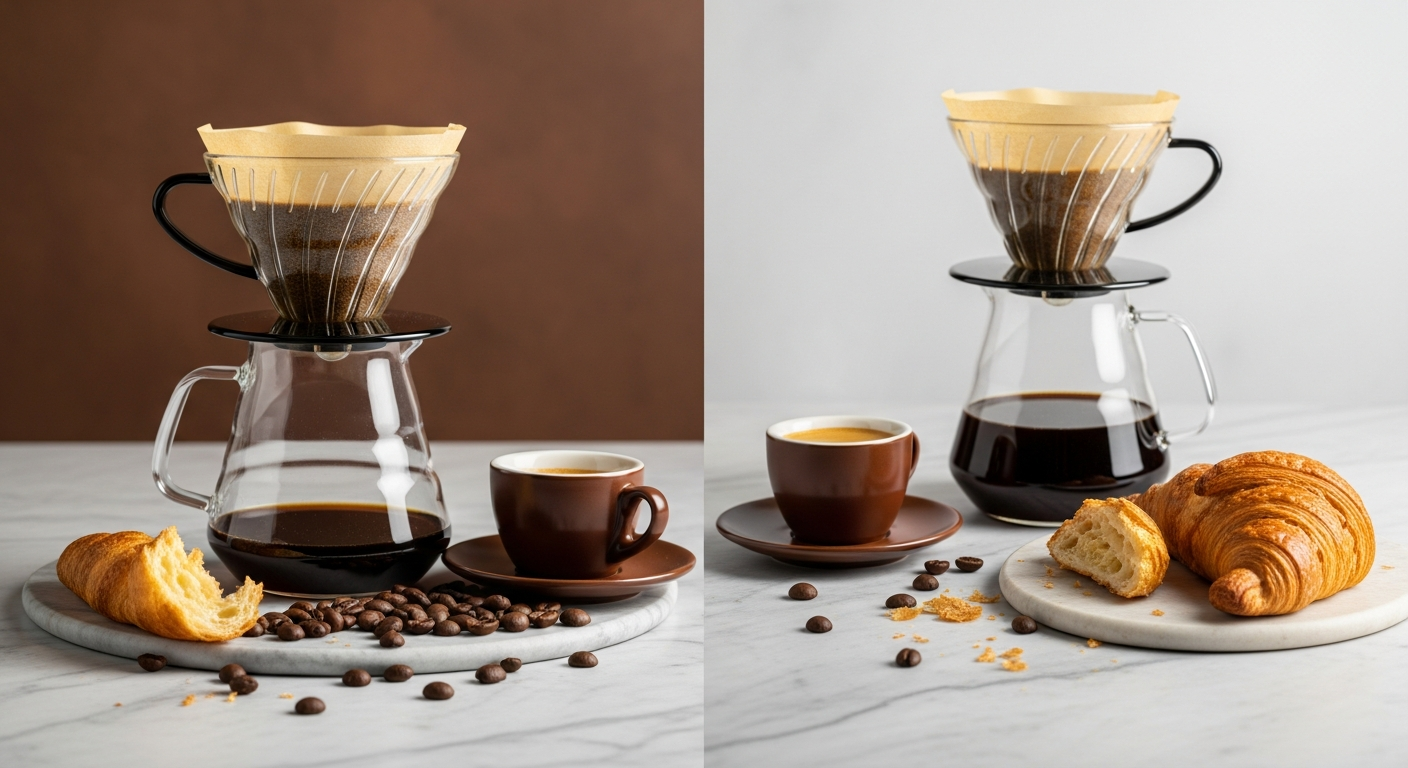
- Pour-Over (e.g., Hario V60): Hario V60 Dripper (approx. $20-30 for ceramic/glass). Emphasizes clarity, acidity, and delicate flavors. Excellent for highlighting brighter, fruitier coffees that can cut through the sweetness of the tart. Pair with Hario V60 filters (approx. $10/100 count).
- Aeropress: AeroPress Go (approx. $45). Versatile, capable of producing anything from espresso-like concentrates to full-bodied immersion brews. Great for experimentation to find the perfect profile.
- Chemex: Chemex Classic Series (approx. $45-60). Produces a clean, light-bodied coffee with minimal sediment, thanks to its thick paper filters. Can offer a very refined pairing experience. Chemex filters (approx. $15/100 count).
- Kettle with Temperature Control: Precision temperature is key for SCA Gold Cup standards.
- Electric Gooseneck Kettle: Fellow Stagg EKG (approx. $195) or Brewista Artisan (approx. $180). Offers precise temperature setting and a gooseneck spout for controlled pouring, essential for pour-over methods.
- Basic Electric Kettle: Bonavita Variable Temp Kettle (approx. $90). A reliable and more affordable option for temperature control.
- Digital Scale with Timer: Essential for accurate brew ratios and consistent results.
- Entry-Level: Hario V60 Drip Scale (approx. $60). Combines a scale and timer, perfect for pour-over.
- Mid-Range: Acaia Pearl Model S (approx. $290). Highly precise, fast response, and smart features for serious enthusiasts.
- Quality Water Filter: As discussed, water is paramount.
- Pitcher Filter: Brita or Pur (approx. $30-50).
- Specialty Water Additives: Third Wave Water (approx. $15 for 12 packets). Designed to mimic SCA-recommended water profiles.
While some items represent a significant investment, starting with a good grinder and scale will yield the most immediate and noticeable improvements in your coffee. Gradually upgrading your brewing device and kettle will further refine your ability to craft the perfect cup, ready to complement the exquisite flavors of Tarte Tatin.
Crafting the Perfect Brew Ratio & Temperature for Dessert Companions
Beyond selecting the right equipment, the art of brewing lies in meticulously controlling variables like brew ratio and temperature, especially when aiming for a coffee that harmonizes with a rich dessert like Tarte Tatin. These parameters, when precisely managed, allow us to manipulate the coffee’s strength, body, and flavor extraction, ensuring it complements rather than clashes with the dessert’s profile.
Brew Ratio: The Foundation of Strength and Balance
The brew ratio, the proportion of coffee grounds to water, dictates the strength and concentration of your final cup. While the SCA Gold Cup standard suggests a range of 1:15 to 1:18, fine-tuning this for dessert pairing is key. For Tarte Tatin, which boasts caramelized sweetness, buttery richness, and often a hint of tartness, a slightly stronger coffee can often be more desirable. A ratio in the range of 1:15 to 1:16 (e.g., 1 gram of coffee to 15-16 grams of water) can provide the necessary body and intensity to stand alongside the dessert without being overwhelmed. A weaker coffee might get lost, while an overly strong one could dominate. For example, if you’re brewing 300ml of coffee, you would use 20 grams of coffee for a 1:15 ratio, or 18.75 grams for a 1:16 ratio.
This stronger ratio helps to accentuate the coffee’s inherent notes—be it the chocolatey depth of a Brazilian natural or the fruity brightness of a washed Ethiopian—making them more pronounced and capable of interacting with the dessert’s flavors. World Coffee Research (WCR) studies on varietals and processing methods also inform our choice; a varietal known for its inherent sweetness or robust body (e.g., a high-quality Bourbon or Typica) might excel with a slightly higher brew ratio to fully express those characteristics.
Temperature: Unlocking Flavor Compounds
Water temperature is not just about heat; it’s about the energy required to dissolve flavor compounds from the coffee grounds. As per SCA guidelines, the ideal range is 90-96°C (195-205°F). For pairing with Tarte Tatin, aiming for the higher end of this spectrum, perhaps 93-96°C (200-205°F), can be particularly effective. Hotter water tends to extract more soluble compounds, leading to a fuller-bodied and more intense flavor profile, which can be beneficial when a coffee needs to stand up to a rich dessert.
- Higher Temperatures (93-96°C): Often preferred for medium to dark roasts or coffees with rich, chocolatey, or nutty notes. It helps to fully develop these complex flavors and contributes to a robust body, which complements the caramel and butter of Tarte Tatin.
- Mid-Range Temperatures (90-92°C): Can be used for lighter roasts or coffees with delicate floral and fruity notes, preserving their subtlety. However, for Tarte Tatin, this might result in a coffee that is too delicate unless specifically chosen for a contrasting, delicate pairing.
Experimentation within these ranges is encouraged. A slightly lower temperature might be explored if you find your coffee too bitter or astringent, suggesting over-extraction, while a higher temperature can rescue a bland, under-extracted cup. The goal is to maximize the desirable flavors and aromas that will enhance the Tarte Tatin, creating a balanced and memorable sensory experience. By mastering these variables, you transform brewing from a simple act into a precise craft, allowing your coffee to shine as the perfect dessert companion.
Insights from Barista Champions and Renowned Roasters
The world of specialty coffee is constantly evolving, driven by the passion and expertise of professionals who push the boundaries of flavor and technique. When it comes to pairing coffee with desserts, particularly one as nuanced as Tarte Tatin, insights from barista champions and renowned roasters offer invaluable guidance. Their understanding of coffee’s intricate chemistry and sensory impact provides a roadmap for elevating our own home brewing and pairing experiences.
James Hoffmann, a World Barista Champion and celebrated coffee educator, often emphasizes the importance of understanding the coffee’s roast profile and origin. For dessert pairings, he might suggest considering how the coffee’s inherent acidity or sweetness will interact with the dessert. For Tarte Tatin, a dessert with caramelized sugars and often a gentle tartness from the apples, Hoffmann’s philosophy would likely lean towards a coffee that either complements these notes directly or provides a refreshing contrast. A medium-roasted coffee from a region like Colombia or Brazil, known for its balanced acidity and notes of chocolate or caramel, could provide a harmonious pairing, echoing the dessert’s sweetness and richness.
From the perspective of renowned roasters, the selection of the bean itself is paramount. Tim Wendelboe, a highly respected Norwegian roaster and World Barista Champion, is known for his meticulous approach to sourcing and roasting light-roasted coffees that highlight the bean’s origin characteristics. If pairing with Tarte Tatin, Wendelboe might suggest a very clean, bright coffee—perhaps a washed Ethiopian—to cut through the richness of the tart and offer a refreshing, palate-cleansing experience. The coffee’s inherent fruitiness could also echo the apple notes, creating a sophisticated interplay of flavors. He often emphasizes the importance of a clean cup, free from defects, to ensure the purest expression of flavor.
Another perspective comes from roasters like Square Mile Coffee Roasters in London, co-founded by James Hoffmann. They often provide detailed tasting notes for their single-origin offerings, which serve as excellent guides for pairing. For a dessert like Tarte Tatin, they might recommend a coffee with notes of dried fruit, nuts, or chocolate, which naturally align with the dessert’s profile. For instance, a coffee described with “stewed apple” or “caramel” notes would be a direct complement, enhancing the existing flavors of the tart.
Barista champions frequently highlight the importance of extraction. Agnieszka Rojewska, another World Barista Champion, often speaks about precision in brewing parameters to achieve a balanced extraction. For dessert pairings, ensuring a coffee is perfectly extracted—not too bitter, not too sour—is crucial. An over-extracted coffee with harsh bitterness would overpower the delicate sweetness of Tarte Tatin, while an under-extracted, sour coffee would clash unpleasantly. Consistency in grind size, water temperature, and brew time, as discussed earlier, is key to achieving this balance.
In essence, the collective wisdom from these coffee luminaries points towards thoughtful selection and precise execution. Choose a coffee whose inherent flavors either mirror or provide a delightful contrast to the Tarte Tatin. Then, brew it with utmost care, adhering to best practices to ensure its full potential is realized. This approach transforms coffee pairing from a casual choice into an art form, enriching the entire dessert experience.
Elevating the Experience: Beyond the Brew and into Lifestyle
The enjoyment of Tarte Tatin with specialty coffee extends far beyond the technicalities of brewing and bean selection; it’s an immersive lifestyle experience that encapsulates the elegance of French cuisine and the refined pleasure of a perfectly brewed cup. At Cafe Serre, we believe in creating moments, and pairing these two elements is an opportunity to cultivate an atmosphere of sophistication and indulgence.
Consider the presentation. Just as a Tarte Tatin is meticulously arranged with its caramelized apples glistening, your coffee deserves similar attention. Serve your expertly brewed coffee in elegant ceramic or glass cups that highlight its color and aroma. A classic French Press presentation can add a rustic charm, while a pour-over served in a delicate mug speaks to precision. The visual appeal sets the stage, hinting at the quality of the sensory journey to come. Consider a simple linen napkin, a small side of crème fraîche or vanilla bean ice cream with the tart, and perhaps a sprig of mint for garnish – these small details elevate the entire experience.
The ambiance also plays a significant role. Imagine a cozy afternoon, perhaps with soft jazz or classical music playing gently in the background. Natural light streaming through a window, or the warm glow of subtle lighting in the evening, can transform a simple snack into a cherished ritual. The aroma of freshly baked Tarte Tatin mingling with the rich fragrance of brewing coffee creates an olfactory symphony that is both comforting and invigorating. This holistic approach, where sight, sound, and smell are all considered, enhances the taste experience itself, making the coffee and tart combination truly unforgettable.
This pairing philosophy extends beyond Tarte Tatin to other classic French pastries. A flaky croissant, with its buttery layers, finds a perfect match in a medium-bodied coffee with nutty or chocolate notes. A delicate macaron, with its varied flavors, can be complemented by a bright, fruit-forward single origin that either echoes or contrasts its specific filling. Even a rich pain au chocolat can be beautifully balanced by a robust, well-extracted espresso or a strong pour-over that cuts through its sweetness and richness.
Ultimately, this approach to coffee and dessert is about mindful indulgence. It’s about taking the time to appreciate the craftsmanship behind both the Tarte Tatin and the coffee, understanding their origins, and savoring each bite and sip. It’s a celebration of simple pleasures executed with excellence, turning an everyday moment into a luxurious escape. By embracing this lifestyle, you don’t just consume; you experience, you appreciate, and you truly live the Cafe Serre ethos of specialty coffee and refined living.
Key Takeaways for Perfect Coffee & Tarte Tatin Pairing:
- Match Intensity: Pair the richness and sweetness of Tarte Tatin (considering apple and caramel variations) with a coffee of comparable body and flavor intensity to avoid one overpowering the other.
- Balance Flavors: Utilize coffee’s acidity to cut through richness, or complementary notes (chocolate, caramel, fruit) to enhance the tart’s profile.
- Prioritize Precision Brewing: Adhere to SCA Gold Cup standards for temperature (90-96°C), brew ratio (1:15-1:16 for dessert pairing), and consistent grind to ensure optimal extraction.
- Invest in Quality Equipment: A good burr grinder, precise scale, and temperature-controlled kettle are foundational for consistent, high-quality brews.
- Elevate the Experience: Beyond taste, consider presentation and ambiance to create a holistic, memorable moment of indulgence.
Brew Method Comparison for Tarte Tatin Pairing
Choosing the right brew method can significantly influence how your coffee interacts with Tarte Tatin. Each method highlights different characteristics of the coffee, allowing for varied pairing experiences.
| Brew Method | Ideal Pairing Characteristics | Complexity & Clarity | Recommended Roast Level for Pairing | Best for Tarte Tatin Profile |
|---|---|---|---|---|
| French Press | Full-bodied, rich, bold flavors, heavy mouthfeel. Retains more oils and fines. | Lower clarity, higher sediment. Robust flavor profile. | Medium to Dark Roast | Deeply caramelized, richer Tarte Tatin (e.g., with Golden Delicious apples and dark caramel). Complements buttery pastry. |
| Pour Over (e.g., Hario V60) | Clean, bright, high clarity, nuanced |