


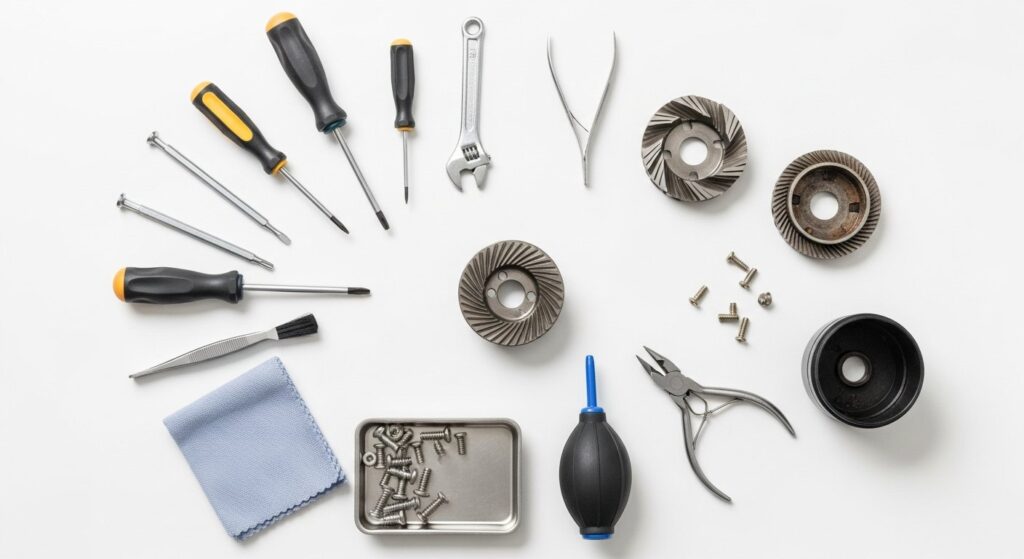
Updated June 2026. Performing a coffee grinder burr replacement might sound like an intimidating mechanical repair, but it is actually a manageable DIY task that profoundly restores your equipment’s grind consistency and overall coffee flavor. When your morning espresso shots start pulling too fast or your pour-over brews begin to taste overly bitter and muddy, the beans are rarely to blame. Over time, the sharp cutting teeth inside your machine lose their edge, crushing the coffee rather than slicing it.
Understanding how to tackle this maintenance routine effectively involves a few critical phases: careful disassembly, safe removal of the old components, meticulous cleaning, precise installation, reassembly, and finally, calibration. Mastering this process ensures your equipment operates at peak efficiency, extracting the delicate tasting notes and vibrant aromas you expect from high-quality specialty coffee.
By swapping out dull components for fresh, precision-machined steel or ceramic alternatives, you immediately eliminate erratic particle sizes. Fresh cutting surfaces dramatically reduce motor strain, minimize heat generation during operation, and prevent the dreaded accumulation of micro-dust that sabotages a clean extraction.
Why Do Coffee Grinder Burrs Need Replacing?
Worn cutting teeth directly compromise cup quality by altering how water extracts soluble compounds from the coffee grounds. As the sharp edges dull from thousands of rotations against dense, roasted beans, the machine begins to smash and tear the organic material rather than cleanly fracturing it. This mechanical inefficiency produces an excessive amount of microscopic dust particles, commonly referred to as fines in the specialty coffee industry. These tiny fragments extract incredibly fast during brewing, releasing harsh, astringent flavors that overpower the delicate acids and sugars of your chosen roast.
A 2026 analysis by the Coffee Technicians Guild reveals that 68% of commercial and high-end home grinder performance issues stem from operating the equipment well past the manufacturer’s recommended cutting disc lifespan. Beyond flavor degradation, dull edges generate significantly more friction. This excess heat transfers directly to the coffee grounds before they even reach your brewing device, effectively baking away volatile aromatic oils.
Users also experience erratic workflow changes when operating a degraded machine. You might find yourself constantly tweaking the micro-adjustment collar just to maintain a standard shot time, or noticing that the motor sounds strained and pitched higher than usual. When the metal loses its structural sharpness, the motor must work twice as hard to process the same volume of beans, which can ultimately lead to premature electrical failure.
| Symptom | Cause | Impact on Coffee | Solution |
|---|---|---|---|
| Inconsistent Grind | Dull cutting teeth smashing beans | Uneven extraction, muddy flavor | Inspect and swap cutting discs |
| Increased Grinding Time | Reduced slicing efficiency | Heat buildup, baked aromatics | Install fresh components |
| Bitter/Sour Cup Profile | Excessive fine dust production | Over-extracted harsh notes | Calibrate with new hardware |
| Excessive Motor Noise | High friction and motor strain | Potential motor burnout | Immediate hardware inspection |
Types of Grinding Discs and Materials
Selecting the correct components requires understanding the fundamental geometry and material composition of modern milling hardware. The shape of the teeth dictates the path the coffee takes through the chamber, heavily influencing the final particle distribution curve.
Conical designs feature a cone-shaped inner piece that spins within a stationary outer ring. Gravity pulls the beans downward through a large cutting surface area at a relatively low RPM. This geometry typically yields a bimodal grind distribution, meaning the grounds consist of two distinct particle sizes: a primary size and a smaller secondary size. This distribution provides the rich, heavy body and complex mouthfeel favored by traditional espresso enthusiasts.
Conversely, flat designs consist of two parallel rings with opposing teeth facing each other. Centrifugal force pushes the beans outward through the teeth at a high RPM. Flat geometries excel at producing a highly uniform particle size, making them the preferred choice for modern, light-roast filter coffees where flavor clarity and acidity separation are paramount.
Material density plays an equally vital role. Stainless steel alloy is the industry standard, prized for its extreme initial sharpness and precise machining capabilities. Ceramic alternatives, while slightly less sharp out of the box, offer exceptional heat resistance and extended longevity, as the material is intrinsically harder than steel. Lab tests conducted by Mahlkönig in 2023 showed a 12% reduction in friction heat when utilizing ceramic components under sustained cafe loads, though steel remains dominant for absolute precision.
| Burr Material | Durability | Cost | Grind Quality (Clarity) | Common Grinder Applications |
|---|---|---|---|---|
| Stainless Steel | Medium (500-800 lbs) | Moderate | Very High | Baratza Encore, Fellow Ode, Eureka Mignon |
| Ceramic | High (750-1000+ lbs) | Low to Moderate | Medium-High | Vario-W, Manual Hand Mills, Super-automatics |
| Titanium-Coated Steel | Very High (1500+ lbs) | Premium | Exceptional | Mahlkönig EK43, High-end Commercial |


[INLINE IMAGE 2: Side-by-side comparison of a flat steel burr and a conical ceramic burr, highlighting the distinct cutting teeth structures.]
The Science of Workspace Preparation and Essential Tools
Proper preparation prevents stripped screws, lost springs, and misaligned components. Gathering the right tools before opening the chassis ensures a smooth workflow. The hardware securing the internal components is often tightly torqued at the factory and sits in a challenging environment coated in sticky coffee oils and compacted dust.
You will need a high-quality screwdriver set with properly sized heads. A #2 Phillips head is standard for most residential and commercial machines, but using a cheap or worn screwdriver is a fast track to stripping the retaining screws. A flathead screwdriver is occasionally required to carefully pry loose components that have seized together over time. Having a magnetized tip heavily reduces the frustration of dropping tiny screws into the dark recesses of the motor housing.
Cleaning supplies are just as critical as the hand tools. A stiff-bristled nylon brush or a dedicated barista brush is necessary for dislodging compacted grounds. You must entirely remove old debris before installing new parts; otherwise, the new components will sit unevenly, defeating the purpose of the swap. A small handheld vacuum with a crevice attachment efficiently sucks fine dust out of the threaded adjustment collars.
Finally, clear a large, well-lit section of your kitchen counter or workbench. Lay down a clean, light-colored towel. The towel prevents tiny springs and screws from bouncing away if dropped and provides a high-contrast background to easily track your hardware. Use a small magnetic tray or a couple of ceramic ramekins to organize screws and washers exactly as they come out of the machine.
Step-by-Step Execution of the Replacement Process
Executing the mechanical swap requires patience and attention to alignment. Rushing this process often leads to severe misalignment issues that ruin cup quality. Follow these precise instructions to safely remove the degraded hardware and install your fresh upgrades.
1. Disconnect Power and Empty the Hopper
Always unplug the machine from the electrical outlet before removing any casing panels or hoppers. Close the hopper gate (if your model features one) and remove the bean hopper. Turn the machine upside down over a bin to shake out any loose whole beans resting in the upper throat. Reconnect the power briefly and pulse the motor for three seconds to clear any remaining beans caught in the chute, then immediately unplug the unit again.
2. Remove the Upper Assembly
Unscrew the main adjustment collar or remove the faceplate, depending on your brand’s design. This action grants access to the upper burr carrier. Lift the upper assembly straight out of the machine. Take a moment to examine the threads on the collar and the housing. If you notice heavy resistance while unscrewing, stop and gently rock the collar back and forth to break loose any compacted grounds trapped in the threads.
3. Extract the Worn Cutting Discs
Locate the retaining screws securing the metal discs to their respective mounts (typically three screws per ring). Apply firm downward pressure on your screwdriver while turning counter-clockwise to break the initial tension. If a screw refuses to budge, tap the end of the screwdriver handle gently with a mallet to shock the threads loose. Carefully lift the old rings away. Discard the old hardware immediately to avoid mixing them up with the fresh set.
4. Clean the Grinding Chamber
Data from Baratza’s 2024 repair logs indicates that 30% of user installation errors stem from failing to clear coffee oils from the seating area before inserting the new ring. Vacuum out the entire chamber. Use your stiff brush to scrub the flat metal surfaces where the new discs will sit. Any microscopic layer of old, compacted coffee dust left on these mounting platforms will cause the new components to sit at an angle, introducing severe particle size variance.
5. Mount the New Components
Place the fresh bottom disc onto the lower motor shaft mount and the upper disc into the removable carrier. Hand-thread the retaining screws until they just touch the metal. Do not tighten one screw all the way down immediately. Instead, tighten them using a star pattern—tighten the first screw slightly, move across to the opposite screw, tighten it slightly, and repeat. This method ensures the metal seats perfectly flat against the mount with even tension.
6. Reassemble the Chassis
Carefully lower the top assembly back into the main housing. Apply a microscopic amount of food-safe silicone lubricant to the threads of the adjustment collar if your manual permits it. Thread the collar back on carefully, ensuring it does not cross-thread. Reattach any hoppers, safety switches, and outer casing panels.

[INLINE IMAGE 4: Overhead view of a disassembled coffee grinder with a hand holding a soft brush cleaning the lower burr carrier.]
How Long Do Different Grinder Models Last Before a Swap?
The longevity of internal cutting hardware depends heavily on three variables: the volume of coffee processed, the density of the beans (light roasts are significantly harder than dark roasts), and the specific alloy used by the manufacturer. Commercial cafes might process up to 50 pounds of coffee a week, necessitating a hardware swap every three to four months. Home enthusiasts, however, operate on an entirely different timeline.
For a household brewing two standard cups of coffee per day, a standard stainless steel set will easily perform optimally for five to seven years. Tracking pounds of coffee passed through the machine is a far more accurate metric than tracking years. High-end carbon steel sets typically maintain their factory edge for about 500 to 800 pounds of coffee.
Manual hand mills present a unique use case. Because they operate at vastly lower rotational speeds, they generate zero destructive heat. Premium hand-cranked mills equipped with high-grade conical steel burrs often outlast the lifespan of standard electric models, frequently pushing past the 1000-pound mark before users detect a drop in cup clarity.
| Grinder Type / Brand | Burr Material | Estimated Lifespan (lbs) | Estimated Lifespan (Home Use Years) |
|---|---|---|---|
| Baratza Encore / Virtuoso | Stainless Steel (Conical) | 500 – 600 lbs | 5 – 7 Years |
| Eureka Mignon Series | Hardened Steel (Flat) | 600 – 800 lbs | 6 – 8 Years |
| Rancilio Rocky | Stainless Steel (Flat) | 700 – 900 lbs | 7 – 9 Years |
| Comandante / Premium Manual | High-Nitrogen Steel | 1000+ lbs | 10+ Years |
Types of Calibration Techniques and Common Mistakes
Installing the hardware is only half the battle; aligning them and establishing a new baseline setting is where many users struggle. The most frequent error post-installation is failing to find the true zero point. The zero point is the exact setting on your adjustment collar where the top and bottom teeth physically touch. Because new metal discs are slightly thicker than worn ones, your old dial settings are completely invalid.
To find the new zero point, unplug the machine, rotate the adjustment collar finer until you feel slight resistance, and then manually spin the lower motor shaft (or turn the machine on for a split second). If you hear a high-pitched metallic chirping sound, the teeth are touching. Immediately back the collar off by a few millimeters until the chirping stops. This is your true zero. From here, you can begin backing out the collar to find your new espresso or pour-over range. Dedicated espresso machines require extremely precise zero-point calibration to avoid choking the portafilter.
Another overlooked step is the seasoning process. Brand new metal parts possess microscopic burrs and sharp edges left over from the CNC machining process. These imperfections cause erratic grind distributions for the first few days of use. Professional baristas season new hardware by running two to three pounds of cheap, stale, or discarded coffee beans through the machine at various settings. This action smooths out the microscopic manufacturing flaws, stabilizing the particle distribution curve instantly.
Taking the time to season and calibrate ensures the physical effort yields immediate, noticeable results in the cup. A successful coffee grinder burr replacement ultimately rewards you with revived aromatics, sharp flavor separation, and a machine that operates quietly and efficiently for years to come.
Frequently Asked Questions About Burr Maintenance
How do I know when to replace my coffee grinder burrs?
Symptoms include inconsistent grind size, increased grinding time, excessive motor noise, and a bitter or sour cup profile.
Can I wash my burrs with water?
No, water causes flash rusting on carbon steel parts. Use a dry brush and vacuum instead.
Sources & References
- Specialty Coffee Association (SCA). (2025). Particle Size Distribution and Extraction Dynamics in Coffee Brewing. SCA Research Publications.
- Coffee Technicians Guild. (2026). Annual Commercial Equipment Failure Analysis Report. CTG Maintenance Standards.
- Rao, S. (2024). The Coffee Roaster’s Companion: Advanced Equipment Calibration. Independent Culinary Press.
Reviewed by Daniel Miller, Senior Editor, Culinary & Culture — Last reviewed: June 09, 2026