French Pastry Fundamentals Home Bakers Should Master
French Pastry Fundamentals Home Bakers Should Master
The Foundation of Flakiness: Mastering Pâte Feuilletée & Puff Pastry Precision
Pâte Feuilletée, or puff pastry, is the cornerstone of many iconic French pastries, from classic croissants to savory vol-au-vents. Its hallmark is the myriad of delicate, buttery layers that shatter with a satisfying crispness, a texture achieved through the intricate process of lamination. This technique involves meticulously folding a block of butter into a detrempe (dough), chilling, and then rolling and folding repeatedly. The goal is to create hundreds of ultra-thin layers of butter separated by layers of dough, which, when baked, release steam to puff up and create that characteristic airy texture. Precision is paramount here, much like the exacting standards required to pull an exceptional espresso shot.
The quality of your butter is non-negotiable; opt for a high-fat European-style butter (around 82% butterfat) for superior flavor and pliability. Temperature control is equally critical. The butter must be firm but flexible, not cold and brittle, nor warm and greasy. If the butter is too cold, it will crack and tear the dough; too warm, and it will melt into the dough, destroying the layers. Maintaining a cool kitchen environment (ideally below 20°C / 68°F) and chilling the dough frequently between turns are essential steps. A digital kitchen scale, like the OXO Good Grips Food Scale (~$50), is indispensable for accurate ingredient measurement, ensuring your butter-to-dough ratio is perfect.
Mastering pâte feuilletée requires patience. Each “turn” (a series of folds) must be followed by adequate chilling time (30-60 minutes) to allow the gluten to relax and the butter to firm up. Rushing this process will result in tough, uneven pastry. For home bakers, aiming for 4-6 turns is typical for achieving sufficient layers. The final bake should be at a high initial temperature (around 200-220°C / 400-425°F) to promote rapid steam expansion, followed by a slightly lower temperature to ensure even cooking and browning.
Pairing: The rich, buttery notes of a perfectly baked croissant or pain au chocolat (which uses a laminated dough similar to puff pastry) sing when accompanied by a robust, medium-roast single-origin coffee. Consider a washed Colombian or a naturally processed Brazilian with notes of chocolate and nuts. The coffee’s body and moderate acidity cut through the richness of the pastry, creating a harmonious balance. Just as a perfectly extracted espresso, brewed at an SCA-recommended 90-96°C, offers a symphony of flavors, a well-made puff pastry delivers a textural and taste experience that elevates the entire coffee ritual.
Choux Perfection: Crafting Eclairs and Profiteroles – A Study in Steam and Structure
Pâte à Choux, or choux pastry, is a marvel of French baking, yielding light, hollow shells perfect for filling with creams and custards. Eclairs, profiteroles, and croquembouche all begin with this versatile dough. Unlike other pastries that rely on yeast or chemical leaveners, choux pastry achieves its signature puff through steam. The process begins on the stovetop, where flour is cooked into a mixture of water (or milk), butter, and salt, forming a thick paste. Eggs are then beaten in gradually, creating a smooth, glossy dough that’s pipeable.
The key to choux perfection lies in two critical stages: the cooking of the flour paste and the addition of eggs. When cooking the paste, it’s crucial to dry it out sufficiently over medium heat, stirring continuously until it pulls away from the sides of the pan and a thin film forms on the bottom. This step gelatinizes the starch, allowing the dough to absorb the eggs without becoming too runny. Adding the eggs requires careful attention; too few, and the pastry will be dense; too many, and it won’t hold its shape. The dough should have a “ribbon” consistency, slowly falling from a spoon in a thick V-shape. A stand mixer, such as a KitchenAid Artisan Stand Mixer (~$400), equipped with a paddle attachment, makes incorporating the eggs much easier.
Once piped onto a baking sheet (a Silpat Non-Stick Baking Mat, ~25, is excellent for even baking), the choux pastry relies on high oven heat (starting around 200-220°C / 400-425°F) to rapidly convert the dough’s moisture into steam. This steam inflates the pastry, creating the hollow interior. After a few minutes, the temperature is typically reduced to allow the shells to dry out and crisp up without collapsing. It’s a delicate balance, much like the precise temperature control needed for a pour-over brew, where water at 92-96°C extracts optimal flavor from the coffee grounds.
Pairing: The delicate, slightly eggy flavor of choux pastry, especially when filled with classic crème pâtissière or a rich chocolate ganache, pairs wonderfully with a nuanced espresso or a creamy latte. An espresso brewed from a high-quality blend, offering notes of caramel and dark chocolate, complements the sweetness and richness of an eclair. For profiteroles filled with vanilla bean ice cream and drizzled with chocolate, a full-bodied espresso, perhaps from a Breville Barista Express Impress (~$700), provides a beautiful contrast, cutting through the sweetness while enhancing the dessert’s decadent qualities. The light texture of the choux allows the coffee’s complexity to shine through, creating a balanced and satisfying experience.
The Art of the Tart: Pâte Sucrée & Pâte Sablée – Building a Sweet Base for Your Brew
French tarts are a celebration of seasonal fruits, rich custards, and decadent chocolates, all cradled within a perfectly crisp and tender crust. The two primary sweet tart doughs home bakers should master are Pâte Sucrée (sweet shortcrust pastry) and Pâte Sablée (sandy shortcrust pastry). Both are “short” doughs, meaning they have a high fat content and minimal gluten development, resulting in a delicate, crumbly texture that melts in your mouth.
Pâte Sucrée, made with powdered sugar, butter, flour, and sometimes an egg yolk, is known for its sturdy yet tender crumb. It’s often made using the creaming method, where butter and sugar are beaten together until light and fluffy before adding the egg and then the flour. This method incorporates air, contributing to the dough’s tender texture. Pâte Sablée, on the other hand, is typically made by “sanding” the butter into the flour (like making traditional pie crust) before adding sugar and eggs. This method results in an even more crumbly, “sandy” texture, hence its name.
The key to both doughs is to work them minimally once the flour is added. Overworking develops gluten, leading to a tough, chewy crust—the antithesis of a good French tart. Chilling the dough thoroughly before rolling and lining the tart pan is crucial for manageability and preventing shrinkage during baking. Blind baking (pre-baking the crust with pie weights) is often necessary, especially for tarts with wet fillings, to ensure a crisp bottom. Bake until golden brown, typically around 180°C (350°F). A well-made tart shell should be sturdy enough to hold its filling but tender enough to cut easily, offering a delightful contrast to the creamy or fruity interior.
Pairing: The versatility of tarts allows for a wide range of coffee pairings. A classic Tarte au Citron (lemon tart) with its bright acidity and sweet filling finds a perfect match in a clean, bright single-origin coffee with floral or citrus notes, perhaps a light-roasted Ethiopian Yirgacheffe from a reputable roaster like Counter Culture Coffee. The coffee’s acidity can either complement the lemon or provide a refreshing contrast. For a rich chocolate tart, a bolder, full-bodied coffee with chocolatey undertones, such as a dark-roasted Sumatran or a blend designed for espresso, would be ideal. The coffee’s bitterness can balance the sweetness of the chocolate, creating a complex and satisfying sensory experience. Just as a barista carefully selects a brew method (Chemex, V60) to highlight specific coffee characteristics, you can choose your tart and coffee pairing to accentuate desired flavors.
Enriching Your Mornings: Brioche and Viennoiseries – The Ultimate Coffee Companion
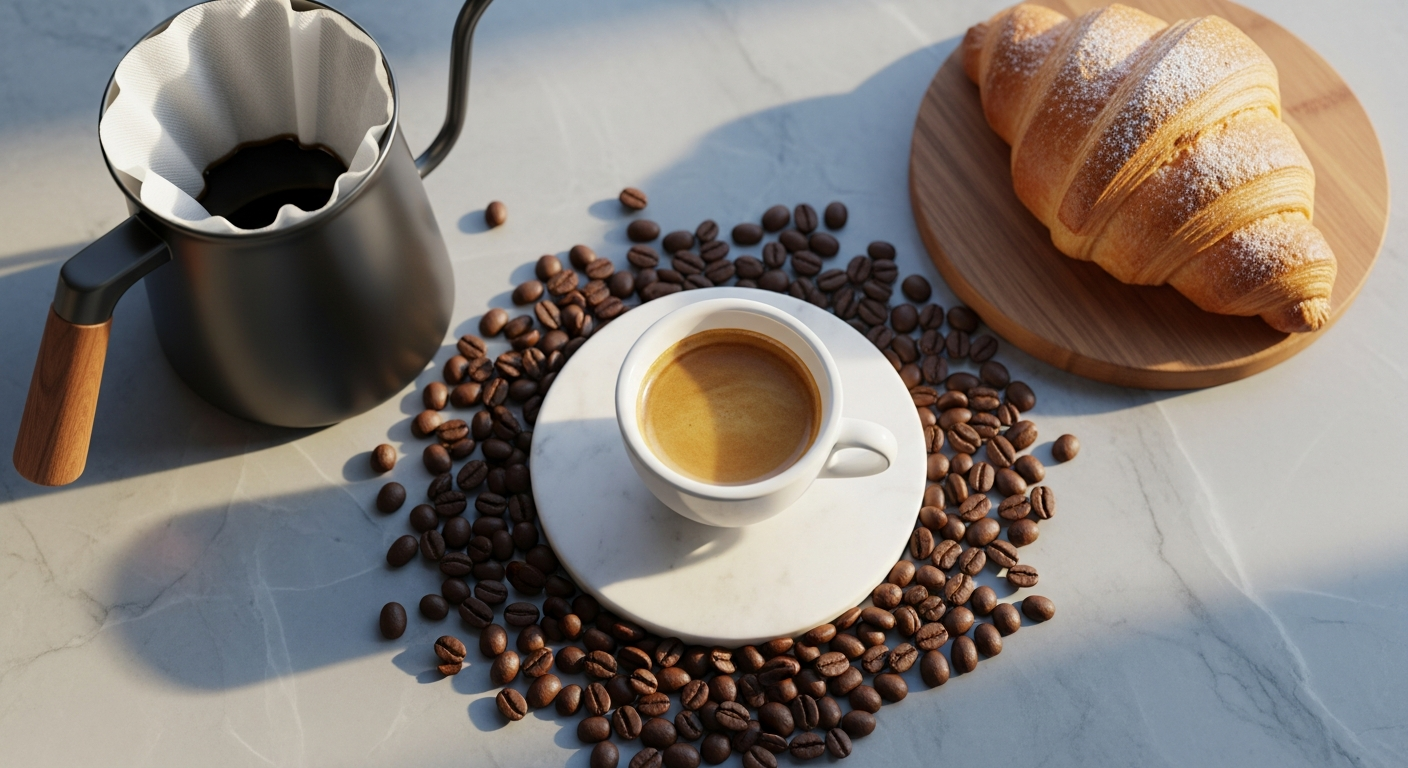
Brioche and Viennoiseries represent a beloved category of French pastries, often enjoyed for breakfast or as a delightful snack. These enriched doughs are characterized by their high butter and egg content, which give them a tender crumb, rich flavor, and beautiful golden hue. While brioche is a bread, it straddles the line with pastry due to its luxurious texture. Viennoiseries, like croissants and pain au chocolat, are essentially laminated brioche doughs, offering a lighter, flakier version of enriched goodness.
Mastering brioche begins with understanding yeast doughs. The dough requires significant kneading to develop gluten, which creates its characteristic strength and elasticity. A stand mixer is invaluable here, as the dough can be quite sticky due to the high fat content. Incorporating softened butter gradually, after the initial gluten development, is key to achieving that signature brioche texture. Proper proofing, allowing the yeast to ferment and the dough to rise, is also critical. An overnight cold proof is often recommended, as it deepens the flavor and makes the dough easier to handle. Baking at a moderate temperature (around 175-190°C / 350-375°F) ensures a golden crust and a fully cooked interior.
For Viennoiseries like croissants, the process combines brioche-making with the lamination technique of pâte feuilletée. This creates the iconic flaky layers within a rich, slightly sweet dough. The precision required for lamination (butter temperature, dough temperature, even rolling) is paramount. Each fold and turn contributes to the final texture. Just as a champion barista like Agnieszka Rojewska emphasizes consistency in every step of coffee preparation, from grind size to milk steaming, consistency in your lamination technique will yield truly exceptional croissants.
Pairing: These rich, buttery pastries are arguably the quintessential coffee companions. A classic brioche, perhaps toasted and served with jam, pairs beautifully with a medium-bodied filter coffee. The coffee’s clean profile and gentle acidity complement the brioche’s richness without overwhelming it. For croissants and pain au chocolat, a strong espresso or a milk-based coffee like a latte or cappuccino is often preferred. The espresso’s intensity cuts through the butteriness, while the milk in a latte provides a creamy counterpoint that enhances the pastry’s decadent flavor. A well-crafted latte art, achieved with perfectly steamed milk, adds to the aesthetic pleasure, mirroring the visual appeal of a perfectly golden croissant. Consider a dark-roasted espresso blend from a roaster like Stumptown Coffee Roasters, providing chocolate and nutty notes that harmonize with the pastry’s sweetness.
Delicate Delights: Macarons – Precision, Patience, and the Perfect Espresso Pairing
Macarons, with their delicate crisp shell, chewy interior, and luscious filling, are perhaps the most iconic and challenging French pastry for home bakers. Often feared for their finicky nature, mastering macarons is a testament to precision and patience, much like dialing in the perfect espresso shot. The main components are almond flour, powdered sugar, egg whites, and granulated sugar, combined to create a meringue-based cookie.
There are two primary methods for making macarons: French and Italian meringue. The Italian method, which involves pouring hot sugar syrup into whipping egg whites, is often considered more stable and forgiving for beginners. Regardless of the method, precision in measurement is non-negotiable. A digital scale is essential, as even a gram too much or too little can affect the outcome. The temperature of your egg whites can also play a role; some bakers prefer aged egg whites for better stability.
The most critical step is “macaronage”—the delicate folding of the almond flour mixture into the meringue. The goal is to achieve a batter that flows slowly and continuously off your spatula, forming a “ribbon” that eventually melts back into the main batter within 10-20 seconds. Undermixed batter will result in lumpy shells without “feet” (the ruffled base), while overmixed batter will be too runny and spread excessively. Piping uniform circles requires practice, and a good quality pastry bag and round tip are helpful (e.g., Ateco Pastry Bag Set, ~$20).
After piping, the macarons must “rest” or “dry” at room temperature for 30-60 minutes, or until a skin forms on top. This allows the shells to develop their characteristic “feet” during baking. Baking temperature is also vital, typically around 140-160°C (285-325°F). Too hot, and they’ll crack; too cool, and they won’t develop feet. The ideal macaron has a crisp shell, a chewy interior, and a distinct ruffled foot.
Crème de la Crème: Essential Custards and Creams for Elevated French Pastries and Coffee
Beyond the doughs and shells, the heart of many French pastries lies in their exquisite fillings. Mastering essential custards and creams is fundamental for any home baker looking to elevate their creations. Crème Pâtissière (pastry cream), Crème Diplomate, and rich Ganaches are versatile components that add flavor, texture, and moisture, transforming simple baked goods into luxurious desserts.
Crème Pâtissière is a thick, rich custard made from milk, sugar, egg yolks, flour or cornstarch, and vanilla. The key to its success is proper cooking: heating the mixture gently while whisking constantly until it thickens to a pudding-like consistency. It must be brought to a boil for a minute or two to ensure the starch is fully cooked and the cream remains stable, preventing a raw flour taste. Once cooked, it should be immediately transferred to a clean bowl, covered with plastic wrap directly on the surface to prevent a skin from forming, and chilled rapidly. This cream is the base for fruit tarts, eclairs, and many other desserts.
Crème Diplomate is a lighter version of pastry cream, made by folding whipped cream into chilled crème pâtissière. This creates a fluffy, airy filling perfect for delicate pastries like cream puffs or as a lighter alternative in fruit tarts. The key here is to ensure both components are well-chilled before combining, and to fold gently to maintain the airiness of the whipped cream.
Ganache, a luxurious emulsion of chocolate and heavy cream, is another indispensable filling. The ratio of chocolate to cream dictates its consistency, from a pourable glaze to a firm truffle filling. For a pipeable filling, a 1:1 ratio of chocolate to cream by weight is a good starting point. Heating the cream to a simmer, then pouring it over finely chopped chocolate, allowing it to sit for a few minutes before whisking until smooth, is the standard method. Quality chocolate is paramount for a superior ganache.
Pairing: These rich fillings offer incredible opportunities for coffee pairing. A vanilla bean crème pâtissière in a tart or eclair complements a classic medium-roast coffee, where the coffee’s inherent sweetness and balanced acidity enhance the vanilla’s aromatic profile. A chocolate ganache tart, with its intense chocolate flavor, demands a coffee with similar depth and body. A dark-roasted espresso blend, perhaps with notes of roasted nuts and dark cocoa, would create a decadent synergy. The creaminess of these fillings also provides a lovely contrast to the coffee’s liquid texture, creating a delightful mouthfeel. Just as the World Coffee Research (WCR) Flavor Wheel helps us identify subtle notes in coffee, understanding the flavor profiles of these creams allows for more intentional and delightful pairings.
The Grand Finale: Presentation, Pairing Principles, and Cultivating Your Home Café
Mastering French pastry fundamentals isn’t just about the baking; it’s about embracing the entire experience, from the meticulous preparation to the artful presentation and the thoughtful pairing with coffee. Cultivating a “home café” atmosphere elevates your creations, transforming them into moments of genuine indulgence and connection, much like the curated experience at Cafeserre.com.
Presentation is key. Even the simplest pastry can look exquisite with a little attention to detail. Consider garnishes: a dusting of powdered sugar, a fresh berry, a sprig of mint, or a delicate drizzle of chocolate sauce. Plating on elegant dishes, using contrasting colors and textures, can make your pastries truly shine. A perfectly piped swirl of cream, a shiny glaze on an eclair, or the neat layers of a mille-feuille all contribute to the visual feast. Think of it as the latte art of baking—an extra touch that shows care and craftsmanship.
Understanding pairing principles will further enhance your home café experience. There are generally two approaches: complementary or contrasting.
- Complementary Pairings: Match similar flavor notes. A caramel eclair with a coffee featuring caramel or nutty undertones. A chocolate pastry with a chocolatey, full-bodied espresso. This creates a harmonious, seamless flavor profile.
- Contrasting Pairings: Use opposing flavors to create balance and excitement. A bright, acidic fruit tart with a rich, darker roast coffee. The coffee’s bitterness can cut through sweetness, while its acidity can refresh the palate. A delicate macaron with a robust espresso can be a delightful contrast in intensity.
Consider the body and intensity of both the pastry and the coffee. A light, airy pastry like a choux puff often pairs well with a medium-bodied coffee, allowing both to shine. A dense, rich pastry like a chocolate torte might call for a bolder, more intense coffee to stand up to its flavors. Temperature also plays a role; a warm croissant with a hot, freshly brewed coffee is a classic for a reason. Equipment like a Fellow Stagg EKG Electric Kettle (~$170) for precise pour-over brewing or a Baratza Encore ESP Grinder (~$200) for consistent particle size will ensure your coffee is as meticulously prepared as your pastries.
Ultimately, creating your home café is about personalizing the experience. Experiment with different roasts from various roasters, explore single-origin coffees with unique flavor profiles, and try unexpected pastry pairings. Document your successes and learn from your experiments, just as you would refine your brew ratios (e.g., 1:15 to 1:18 for filter coffee) to unlock optimal flavors. The journey of mastering French pastry, intertwined with the art of specialty coffee, is a continuous exploration of sensory delight and a wonderful way to bring a touch of French elegance to your everyday life.
Key Takeaways for Mastering French Pastries & Coffee Pairings:
- Precision is Paramount: Accurate measurements and strict temperature control are non-negotiable for French pastry, mirroring the exactitude required for specialty coffee brewing (e.g., SCA water temperature standards 90-96°C).
- Quality Ingredients Matter: High-fat butter, good quality chocolate, and fresh eggs are as crucial for pastry as fresh, high-grade coffee beans are for your brew.
- Patience is a Virtue: Many French pastry techniques, like lamination and macaronage, require chilling and resting periods; rushing these steps compromises the final texture and flavor.
- Understand Flavor Profiles: Learn to identify the dominant flavors and textures in both your pastries and coffees to create harmonious or exciting contrasting pairings.
- Embrace the Experience: Beyond baking and brewing, focus on presentation and creating a delightful “home café” atmosphere to fully savor your creations.
Essential French Pastry & Coffee Pairing Reference Table: Pâte Sucrée (Sweet Shortcrust Pastry)
| Step/Component | Description & Tips for Success | Coffee Pairing Notes |
|---|---|---|
| Pâte Sucrée Dough | Ingredients: 250g all-purpose flour, 125g unsalted butter (cold, cubed), 100g powdered sugar, 1 large egg yolk, pinch of salt. Method: “Sablage” method (rub butter into flour until sandy) or “Crémer” method (cream butter & sugar). Add egg yolk last. Mix until just combined. |
Neutral base. Focus on the filling’s coffee pairing. |
| Chilling & Rolling | Chill dough for at least 30-60 mins. Roll between two sheets of parchment paper to 3-4mm thickness. Avoid overworking to prevent gluten development. | |
| Lining Tart Pan | Carefully transfer dough to a fluted tart pan (24cm/9.5in). Press gently into sides. Trim excess. Prick base with a fork. Chill again for 15-30 mins. | |
| Blind Baking | Line chilled crust with parchment paper, fill with pie weights/dried beans. Bake at 180°C (350°F) for 15-20 mins. Remove weights, bake for another 5-10 mins until lightly golden. | |
| Common Fillings: Fruit Tart | Fresh berries, sliced stone fruits, or cooked fruit compotes. Often layered over crème pâtissière. | Light to Medium Roast: Washed Ethiopian (floral, citrus), Kenyan (berry, winey). SCA-recommended brew temp 92-96°C for pour-over enhances fruit notes. |
| Common Fillings: Chocolate Tart |