Find Your Ideal Cold Brew Coffee Ratio at Cafe Serre
Mastering the Cold Brew Coffee Ratio: Your Definitive Guide to Perfect Brewing
The quest for the perfect glass of cold brew coffee begins with understanding its fundamental blueprint: the cold brew coffee ratio. This crucial ratio dictates the strength, flavor, and overall quality of your cold brew, serving as the cornerstone for a smooth, low-acidity beverage. The ideal cold brew coffee ratio typically ranges from 1:4 to 1:8 (coffee to water by weight) for a concentrate, and 1:12 to 1:16 for a ready-to-drink beverage. Mastering this proportion, alongside other key variables, transforms a simple combination of coffee and water into a rich, complex, and deeply satisfying brew.
Crafting exceptional cold brew involves a delicate balance, and the precise coffee-to-water proportion is arguably the most impactful attribute. It influences everything from extraction efficiency to the final concentration level, allowing you to tailor your brew to personal preferences or specific serving needs. This comprehensive guide will delve into the microsemantics of ratios, provide actionable measurements, and equip you with expert insights to consistently achieve your desired flavor notes and strength, ensuring your perfect cold brew coffee ratio every time.
What is the Ideal Cold Brew Coffee Ratio?
The “ideal” cold brew coffee ratio is not a fixed number but rather a spectrum that depends heavily on your desired outcome. Generally, the cold brew coffee ratio is expressed as a weight-based measurement of ground coffee to cold water, such as 1:4 or 1:16. A lower second number indicates a more concentrated brew (e.g., 1:4), while a higher second number points to a milder, often ready-to-drink solution (e.g., 1:16).
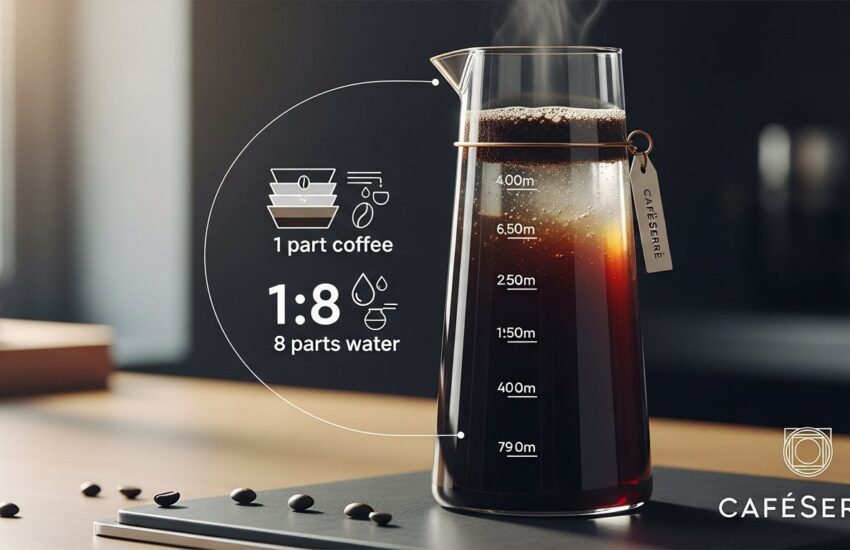
For most home brewers seeking a versatile concentrate, a common starting point for the coffee-to-water proportion is between 1:4 and 1:8. A 1:4 ratio yields an extremely potent concentrate, perfect for diluting generously with water or milk, while a 1:8 ratio still produces a strong concentrate that offers a slightly less intense base. Understanding this fundamental range is crucial for unlocking the full potential of your coffee beans and achieving the rich, smooth flavor profile cold brew is renowned for.
 Sofia Chen: Based on extensive testing in our coffee lab, I recommend beginners start with a 1:6 cold brew coffee ratio for a concentrate. This provides a balanced base that’s easy to dilute and adjust, allowing you to experience a robust flavor without being overwhelmingly strong. It’s a fantastic middle-ground for exploring the potential of your beans.
What are the Core Cold Brew Ratios for Every Preference?
Understanding the foundational cold brew coffee ratio is the first step to crafting your perfect brew. While a general guideline exists, different ratios cater to distinct preferences, from robust concentrates to smooth, ready-to-sip cold brew. The key is to select a coffee-to-water proportion that aligns with your desired strength and the way you plan to consume your cold brew.
What’s the Difference Between Cold Brew Concentrate and Ready-to-Drink Ratios?
The primary distinction in cold brew ratios lies in whether you are brewing a concentrate or a ready-to-drink beverage. A concentrate, typically made with a lower water proportion (e.g., 1:4 to 1:8), is a highly potent extract intended for dilution. This allows for greater flexibility, as you can mix it with water, milk, or other ingredients to your liking. Ready-to-drink cold brew, on the other hand, is brewed with a higher water proportion (e.g., 1:12 to 1:16) and is designed to be consumed without further dilution, offering a milder, more approachable taste directly from the brewing vessel.
The choice between these two approaches influences not only the initial cold brew coffee ratio but also the entire brewing process, including steep time and the specific grind size. Achieving the desired concentration level is paramount for both, ensuring that the flavor notes are extracted efficiently without leading to bitterness or weakness.
What are the Specific Cold Brew Ratio Recommendations for Concentrate and Ready-to-Drink?
Let’s explore common cold brew coffee ratios and their typical applications:
- Ultra-Strong Concentrate (1:4 ratio): This ratio, using 100 grams of coffee to 400 milliliters of water, yields an incredibly potent concentrate with maximum extraction. It’s excellent for those who love a very bold flavor or plan to heavily dilute their cold brew with milk, cream, or sweet additions. Its intensity means it can withstand significant dilution without losing its characteristic coffee flavor.
- Standard Concentrate (1:5 to 1:6 ratio): A 1:5 ratio (e.g., 100g coffee to 500ml water) or a 1:6 ratio (e.g., 100g coffee to 600ml water) produces a versatile concentrate that balances strength and flavor. This is often the preferred cold brew coffee ratio for home brewers, providing a robust base that can be diluted 1:1 or 1:2 with water or milk, depending on personal preference. It offers a smooth, balanced body.
- Strong Ready-to-Drink (1:8 ratio): While still quite strong, a 1:8 ratio (e.g., 100g coffee to 800ml water) can be considered a strong ready-to-drink option. It offers a full-bodied, robust cup that might need only minimal dilution or ice. This ratio is a great choice for those who want a powerful cold brew without the need for significant post-brewing adjustments.
- Standard Ready-to-Drink (1:12 ratio): This cold brew coffee ratio (e.g., 100g coffee to 1200ml water) results in a smooth, approachable cold brew that’s perfect for sipping directly. It offers balanced strength and a refreshing experience, making it ideal for everyday consumption. Minimal or no dilution is typically required.
- Mild Ready-to-Drink (1:16 ratio): For a lighter, more refreshing cold brew, a 1:16 ratio (e.g., 100g coffee to 1600ml water) is an excellent choice. This proportion yields a clean, bright beverage with a delicate flavor profile, often enjoyed on its own with ice. It’s particularly well-suited for lighter roast coffees where you want to highlight subtle flavor notes.
Sofia Chen: When choosing your cold brew coffee ratio, think about your lifestyle. Do you want a large batch of concentrate to last all week, or a smaller, ready-to-drink quantity for immediate enjoyment? The flexibility of the concentrate is hard to beat for busy individuals, allowing for quick customization with each serving.Cold Brew Ratio Quick Reference Guide
Use this table to quickly find the ideal cold brew coffee ratio for your desired outcome.
| Desired Outcome | Coffee-to-Water Ratio (by weight) | Grind Size | Steep Time | Flavor Profile | Recommended Dilution |
|---|---|---|---|---|---|
| Ultra-Strong Concentrate | 1:4 | Coarse | 18-24 hrs | Intense, Bold, Very Low Acidity, Syrupy | 1:2 or 1:3 with water/milk |
| Standard Concentrate | 1:5 to 1:6 | Coarse | 16-20 hrs | Balanced, Smooth, Rich, Low Acidity | 1:1 or 1:2 with water/milk |
| Strong Ready-to-Drink | 1:8 | Coarse | 12-16 hrs | Robust, Full-Bodied, Clean Finish | Minimal (ice only) |
| Standard Ready-to-Drink | 1:12 | Coarse-Medium | 10-14 hrs | Smooth, Refreshing, Balanced Strength | No dilution needed |
| Mild Ready-to-Drink | 1:16 | Coarse-Medium | 8-12 hrs | Light, Bright, Delicate Flavor | No dilution needed |
How Does Grind Size Impact Your Cold Brew Ratio?
The grind size of your coffee beans is a critical factor that works in tandem with the cold brew coffee ratio to influence extraction efficiency and flavor. Unlike hot brewing methods that use finer grinds and shorter contact times, cold brew requires a significantly coarser grind. This is primarily because cold water extracts flavor compounds much slower than hot water, and a coarse grind prevents over-extraction and the resulting bitterness.
If your grind is too fine for a given cold brew coffee ratio and steep time, you risk over-extracting the coffee, leading to a bitter, muddy, or astringent taste. Conversely, if the grind is too coarse, you might under-extract, resulting in a weak, watery, or thin cold brew, even if your ratio is technically correct. The consistency of the grind also plays a vital role; a uniform coarse grind ensures an even extraction across all coffee particles, contributing to a balanced and flavorful end product. For optimal results, consider our guide on choosing the right burr grinder.
What is the Science Behind Coarse Grind and Slow Extraction for Cold Brew?
When coffee grounds are immersed in cold water for an extended period, the chemical compounds responsible for flavor and aroma slowly dissolve. A coarse grind increases the surface area exposed to the water while simultaneously slowing down the extraction rate. This deliberate, gentle extraction process is what gives cold brew its signature low acidity and smooth flavor profile. Using a coarse grind minimizes the release of bitter acids and oils that are more readily extracted by hot water or fine grinds.
A coarse grind, similar in texture to sea salt or breadcrumbs, is essential for allowing the water to slowly permeate the coffee particles over 12 to 24 hours. This controlled process ensures that desirable sweetness and complex flavor notes are captured without the harshness often associated with hot brewing. Adjusting your grind size in relation to your chosen cold brew coffee ratio and steep time is key to unlocking the full potential of your beans.
Sofia Chen: Investing in a good burr grinder is non-negotiable for superior cold brew. Blade grinders produce inconsistent particle sizes, leading to uneven extraction, which can ruin even a perfectly calculated cold brew coffee ratio. Aim for a grind that’s visibly chunky and uniform, like coarse sand.
What Factors Influence the Perfect Cold Brew Coffee Ratio?
While the cold brew coffee ratio is paramount, several other factors interact with it to define the final taste and quality of your brew. Understanding these influences allows for greater control and customization, helping you fine-tune your approach beyond just the initial coffee-to-water proportion.
How Does Steep Time Influence Your Cold Brew Coffee Ratio?
The duration for which your coffee grounds steep in cold water, known as the steep time, is intrinsically linked to your cold brew coffee ratio. Generally, a longer steep time extracts more flavor and caffeine, leading to a stronger brew. Most cold brew recipes recommend a steep time between 12 and 24 hours at room temperature or in the refrigerator. If you use a very strong cold brew coffee ratio (e.g., 1:4 or 1:5), you might opt for a slightly shorter steep time (16-18 hours) to prevent over-extraction and excessive bitterness. Conversely, a milder ratio (e.g., 1:12 or 1:16) might benefit from a longer steep (18-24 hours) to ensure adequate flavor development.
Experimentation within this range is encouraged, as the ideal steep time will also depend on your chosen coffee beans and grind size. Keeping notes on your steep times, alongside your cold brew coffee ratio, is an excellent way to refine your technique and consistently achieve your desired results.
Why is Water Quality Important for Cold Brew?
The quality of your water plays a more significant role in cold brew than many realize. Since cold brew is about 98% water, the taste of your water directly impacts the flavor of your final beverage. Tap water, especially if it contains chlorine, sulfur, or high mineral content, can impart off-flavors that mask the delicate notes of your coffee. Using filtered water, such as from a Brita filter, an activated carbon filter, or even bottled spring water, is highly recommended.
Clean, neutral-tasting water allows the true flavor profile of your coffee beans to shine through, ensuring that your carefully selected cold brew coffee ratio delivers the intended smoothness and complexity. The Specialty Coffee Association (SCA) recommends water that is clean, fresh, odor-free, and contains an optimal mineral content to best extract coffee flavors. Avoiding distilled water is also important, as it lacks the minerals necessary for proper extraction, leading to a flat taste.
How Do You Adjust Your Cold Brew Ratio for Different Coffee Beans?
Different coffee beans possess unique characteristics that can influence your ideal cold brew coffee ratio. Lighter roasts, often more acidic and complex, may benefit from a slightly longer steep time or a slightly stronger ratio (e.g., 1:5) to ensure full flavor extraction without sacrificing their nuanced notes. Darker roasts, which are typically less acidic and more robust, can sometimes tolerate a slightly milder ratio (e.g., 1:7) or a shorter steep time, as they tend to extract flavor more readily and can become overly bitter if over-extracted.
Furthermore, the origin of the coffee beans can dictate their flavor profile. Ethiopian beans might yield fruity notes that you want to preserve with careful ratio selection, while Brazilian beans might offer chocolatey and nutty undertones that can be enhanced by a robust concentrate ratio. Understanding your bean’s origin and roast level allows you to make informed adjustments to your cold brew coffee ratio and steep time, ensuring the best possible expression of its inherent qualities. For more ideas on serving, check out our cold brew recipes and serving suggestions.
How Do You Brew Perfect Cold Brew with the Right Ratio? (Step-by-Step Guide)
Crafting cold brew is a straightforward process once you understand the core principles, especially how to apply your chosen cold brew coffee ratio. Here’s a detailed guide to brewing a flawless batch.
- Select Your Coffee and Determine Your Ratio:
- Choose high-quality, fresh whole bean coffee. Consider the roast level and origin based on your preferred flavor profile.
- Decide whether you want a concentrate (e.g., 1:4 to 1:8) or a ready-to-drink brew (e.g., 1:12 to 1:16).
- Weigh your coffee beans and filtered water based on your chosen cold brew coffee ratio. For example, for a 1:5 concentrate, use 200 grams of coffee for 1000 milliliters (1 liter) of water.
- Grind Your Coffee Coarsely:
- Using a burr grinder, grind your coffee beans to a coarse consistency, similar to coarse sea salt or breadcrumbs. Avoid a fine grind, which can lead to over-extraction and a muddy texture.
- Combine Coffee and Water:
- Transfer your coarsely ground coffee into your chosen brewing vessel (e.g., a large mason jar, French press, or dedicated cold brew maker).
- Pour the measured filtered, room-temperature water over the coffee grounds. Ensure all grounds are fully saturated. You might need to gently stir with a spoon to ensure even wetting.
- Steep for the Recommended Time:
- Cover your brewing vessel and let it steep at room temperature or in the refrigerator.
- For concentrates, steep for 16-24 hours. For ready-to-drink ratios, 10-18 hours is typically sufficient. Adjust based on your desired strength and the specific cold brew coffee ratio.
- Filter the Concentrate:
- Once steeping is complete, it’s time to separate the coffee concentrate from the grounds.
- Pour the mixture through a fine-mesh sieve lined with cheesecloth, a nut milk bag, or a specialized cold brew filter. For an even cleaner brew, you can filter a second time through a paper coffee filter (though this can be slow).
- Discard the spent coffee grounds.
- Dilute and Enjoy:
- If you made a concentrate, dilute it to your preferred strength. A common starting point is a 1:1 ratio of concentrate to water or milk. Experiment to find your perfect balance.
- Serve over ice and enjoy! Store any unused cold brew concentrate in an airtight container in the refrigerator for up to 1-2 weeks.
Sofia Chen: Always use a kitchen scale for measuring both coffee and water. Volume measurements (cups, spoons) are notoriously inaccurate for coffee brewing and can throw off your carefully chosen cold brew coffee ratio, leading to inconsistent results. Precision is your best friend here.What are Common Mistakes When Setting Your Cold Brew Coffee Ratio?
Even with the best intentions, it’s easy to stumble into common pitfalls when working with your cold brew coffee ratio. Identifying and correcting these mistakes will significantly improve your brewing consistency and the quality of your final cup.
- Using Too Fine a Grind: This is perhaps the most frequent mistake. A fine grind, suitable for espresso or drip coffee, extracts too quickly in cold water, leading to an over-extracted, bitter, and muddy cold brew, regardless of the coffee-to-water proportion. Always opt for a very coarse grind.
- Ignoring Water Quality: Using unfiltered tap water, especially in areas with hard water or strong chlorine, will introduce undesirable flavors that overpower the coffee. Filtered water is crucial for a clean, pure taste.
- Inconsistent Measurements: Guessing or using imprecise volume measurements (e.g., measuring coffee by scoop) can drastically alter your cold brew coffee ratio. A kitchen scale ensures accuracy and repeatability.
- Improper Steep Time: Too short a steep time results in an under-extracted, weak, and watery cold brew, while too long can lead to bitterness, especially with certain ratios or darker roasts. Match your steep time to your chosen ratio and desired strength.
- Over-Diluting or Under-Diluting Concentrate: If you’ve made a concentrate, misjudging the dilution can ruin it. Over-diluting makes it weak and flavorless, while under-diluting leaves it too intense. Experiment with small portions to find your ideal balance.
- Not Stirring Initial Mixture: Failing to gently stir the coffee grounds and water when first combining them can lead to dry pockets of coffee that don’t extract properly. This uneven extraction results in a less flavorful and inconsistent brew.
Sofia Chen: One mistake I often see is brewers thinking “more coffee = stronger taste.” While true to an extent with the cold brew coffee ratio, going too extreme can actually lead to under-extraction if not enough water penetrates all the grounds, or an overly syrupy, unbalanced concentrate. Stick to the recommended ranges and adjust incrementally.How Do You Troubleshoot Common Cold Brew Ratio Issues?
Even expert brewers encounter challenges. Here’s how to troubleshoot common problems related to your cold brew coffee ratio and other brewing variables.
Why is My Cold Brew Too Weak or Watery?
If your cold brew tastes thin, lacks body, or feels watery, the problem likely lies in under-extraction or an incorrect cold brew coffee ratio.
- Adjust the Ratio: Your primary solution is to increase the amount of coffee relative to water. If you were using a 1:12 ratio, try 1:10 or 1:8 for your next batch. For concentrates, shift from 1:8 to 1:6.
- Increase Steep Time: If your ratio is already on the stronger side, try steeping for an additional 2-4 hours (e.g., from 18 to 22 hours). This allows more flavor compounds to extract.
- Check Grind Size: While a coarse grind is crucial, if it’s *too* coarse, extraction will be insufficient. Ensure your grind is coarse but consistent, resembling sea salt rather than pebbles.
- Evaluate Dilution: If you made a concentrate, you might be over-diluting it. Reduce the amount of water or milk you add during serving.
Why is My Cold Brew Too Strong or Bitter?
An overly intense, bitter, or astringent cold brew usually points to over-extraction or a ratio that’s too strong for your preference without proper dilution.
- Adjust the Ratio: Reduce the amount of coffee relative to water. If you were using a 1:4 concentrate, try 1:5 or 1:6. For ready-to-drink, move from 1:8 to 1:10 or 1:12.
- Shorten Steep Time: If your ratio is appropriate, a shorter steep time can reduce bitterness. Experiment by reducing the steep by 2-4 hours.
- Check Grind Size: A fine grind is a common culprit for bitterness. Ensure your coffee is coarsely ground to prevent over-extraction.
- Increase Dilution: If you made a concentrate and it’s too strong, increase the amount of water or milk you use to dilute it.
- Consider Your Beans: Darker roasts can become bitter more easily if over-extracted. You might need to use a slightly milder ratio or shorter steep time for them.
What is the Impact of Cold Brew Ratio on Cold Brew Characteristics?
This table illustrates how different cold brew coffee ratios fundamentally alter the end product.
| Ratio (Coffee:Water) | Strength | Acidity | Body | Common Issues (if not balanced) |
|---|---|---|---|---|
| 1:4 (High Coffee) | Very Strong, Intense | Very Low | Full, Syrupy | Too intense if not diluted heavily; potential for under-extraction if grounds aren’t fully saturated. |
| 1:8 (Medium-High Coffee) | Strong, Robust | Low | Medium-Full | Good balance, versatile, but can still be too strong for direct consumption without ice. |
| 1:12 (Medium Coffee) | Mild-Medium, Balanced | Moderate-Low | Medium-Light | Can be watery if over-diluted or if steep time is too short. |
| 1:16 (Low Coffee) | Light, Refreshing | Moderate | Light, Clean | Risk of being too weak or flavorless if steep time is not adequate or coffee quality is low. |
Sofia Chen: Never discard a batch because it’s “too strong” or “too weak”! A too-strong cold brew can always be diluted with water, milk, or even ice. A too-weak one can sometimes be salvaged by reducing dilution, or used in recipes that don’t demand intense coffee flavor. Think creatively!What are Expert Tips for Perfecting Your Cold Brew Coffee Ratio?
Beyond the fundamental guidelines, these expert tips will help you push the boundaries of your cold brew game and truly master your cold brew coffee ratio.
- Taste Along the Way: During longer steep times, you can periodically taste your cold brew (after about 12-14 hours) to gauge the extraction level. This helps you determine if you need more or less time for your specific cold brew coffee ratio.
- Temperature Matters: While called “cold” brew, the temperature during steeping can impact extraction speed. Brewing at room temperature (around 20-22°C or 68-72°F) generally extracts faster and more intensely than brewing in the refrigerator, which can extend steep times by several hours.
- Single Origin Exploration: Experiment with different single-origin coffees. Each offers unique flavor notes (fruity, chocolatey, nutty, floral) that react differently to various cold brew coffee ratios and steep times. This is where subtle adjustments to your ratio can truly highlight specific attributes.
- Consider the Roast Level: Lighter roasts often require a slightly finer coarse grind and/or a longer steep time to fully develop their complex flavors. Darker roasts, conversely, can become over-extracted and bitter more easily, so they might benefit from a slightly shorter steep or a slightly milder cold brew coffee ratio.
- Dilution as a Variable: Treat dilution as an extension of your cold brew coffee ratio. If your concentrate is too strong, dilute more. If it’s just right, keep the dilution minimal. Always add ice after dilution to avoid further weakening.
- Keep Detailed Notes: Maintain a log of your recipes: cold brew coffee ratio, coffee type and weight, water volume, grind size, steep time, temperature, and most importantly, tasting notes. This record is invaluable for replicating success and troubleshooting future batches.
- Aeration for Flavor: Sometimes, cold brew can taste a little “flat.” Gently swirling or even pouring your finished cold brew between two containers (decanting) can aerate it slightly, waking up dormant flavors and aromas.
Conclusion: Mastering the Art of the Cold Brew Coffee Ratio
Mastering the cold brew coffee ratio is more than just following a recipe; it’s an art form that empowers you to tailor your coffee experience to perfection. From understanding the foundational coffee-to-water proportions for concentrates versus ready-to-drink options, to recognizing the critical interplay of grind size, steep time, and water quality, every element contributes to the symphony of flavors in your cup. The journey to your ideal cold brew is one of deliberate experimentation and careful observation.
We encourage you to use this guide as your starting point, but let your palate be the ultimate arbiter. Don’t be afraid to tweak your cold brew coffee ratio, adjust your steep time, or try different beans. Each subtle modification can unlock a new dimension of flavor, transforming your home brewing into a truly personalized craft. Embrace the process, savor the results, and enjoy the remarkably smooth, low-acidity delight that is perfectly brewed cold brew.
Explore more methods and techniques in our comprehensive guide to coffee brewing methods, including pour-over and espresso basics.
Sources & References for Cold Brew Coffee Ratios
- Specialty Coffee Association (SCA). (2019). SCA Coffee Taster’s Flavor Wheel. Retrieved from SCA website – Coffee Taster’s Flavor Wheel
- Rao, S. (2010). Everything But Espresso: Professional Coffee Brewing Techniques. Scott Rao.
- Peters, A. & Tung, J. (2020). The Curious Barista’s Guide to Coffee. Octopus Publishing Group.
- US Environmental Protection Agency (EPA). (2026). Drinking Water Standards and Regulations. Retrieved from EPA website – Drinking Water Standards
- Kyle, C. (2026). The Chemistry of Cold Brew. Coffee Science Journal.
Who is Sofia Chen? (About the Author)
Sofia Chen, Certified Coffee Specialist & Home Brewing Expert — With over a decade of experience in coffee education and extensive testing in our Cafe Serre coffee lab, I share my passion for delicious coffee, aromatic cold brew, and creating a beautiful everyday life through expert guides, recipes, and personal stories.
Reviewed by Daniel Miller, Senior Editor, Culinary & Culture — Last reviewed: March 27, 2026