
Espresso vs Americano vs Flat White — Key Differences & Guide
Espresso, Americano, Flat White: Your Ultimate Coffee Companion Guide
Quick Comparison: Espresso vs Americano vs Flat White
| Feature | Espresso | Americano | Flat White |
|---|---|---|---|
| Espresso shots | 1–2 | 1–2 | 2 (double) |
| Added liquid | None | Hot water | Steamed milk + microfoam |
| Serving size | 1–2 oz (30–60ml) | 6–12 oz (180–360ml) | 5–6 oz (150–180ml) |
| Caffeine (approx.) | 64 mg/shot | 64–128 mg | 128 mg (2 shots) |
| Calories (approx.) | ~5 kcal | ~5–15 kcal | ~120 kcal (whole milk) |
| Milk foam type | None | None | Microfoam (velvety) |
| Intensity | Very high | Medium | High (coffee-forward) |
| Best for | Quick kick, purists | Longer sipping, iced coffee | Milk lovers who want coffee-forward |
How to Make These Drinks Without an Espresso Machine
Don’t have an espresso machine? You can approximate these drinks at home with more accessible equipment:
AeroPress Espresso-Style Concentrate
Use 18g of finely ground coffee (fine as table salt) with 60ml of 200°F water. Press slowly over 45–60 seconds. The result is a concentrated brew (not true espresso, but close) that works as a base for an Americano-style drink (add 120ml hot water) or a flat white (steam/froth 100ml of milk).
Moka Pot Method
A Bialetti Moka Express produces a concentrated, crema-free coffee that approximates espresso in strength. Use fine-to-medium grind, fill the basket level without tamping, and brew on medium heat. For an Americano: add 120–180ml hot water to your moka pot output. For a flat white-style: froth milk using a handheld frother (e.g., Aerolatte or Bodum) and pour over your moka pot concentrate.
Milk Steaming Without a Steam Wand
For microfoam-quality milk without an espresso machine: heat whole milk or barista oat milk (Minor Figures, Oatly Barista Edition) to 140–150°F, then use a battery-powered handheld frother for 20–30 seconds in a circular motion. The result won’t have true microfoam’s velvety texture, but it produces a smooth, frothy milk suitable for flat white-style drinks at home.
The Soul of the Bean: Understanding the Espresso Shot
Before we can truly appreciate an Americano or a flat white, we must first pay homage to their very foundation: the espresso. It’s not just a small shot of coffee; it’s a concentrated symphony of flavor, a testament to precision and passion.
A Brief History of Concentrated Perfection
The story of espresso begins in early 20th-century Italy, born out of a desire for a faster, more efficient way to brew coffee. The word “espresso” itself, often mistranslated as “express,” actually refers to coffee made “expressly for you” or “pressed out.” Early machines used steam pressure, but it was Giovanni Gaggia’s 1947 invention of the lever-driven piston pump that introduced true high-pressure extraction, finally giving us the rich, crema-topped shot we recognize today. This innovation revolutionized coffee consumption, making it a quick, intense, and deeply satisfying experience.
The Anatomy of a Perfect Shot: Crema, Body, Heart
A truly exceptional espresso is a marvel to behold and taste, typically served in a demitasse cup, usually 1.5 to 2 ounces (45-60ml). It’s a complex beverage with distinct layers:
* Crema: The golden-brown, tiger-striped foam that sits atop the shot. It’s a delicate emulsion of coffee oils, sugars, and CO2, indicative of a fresh roast, proper extraction, and a well-functioning machine. It contributes to the aroma and mouthfeel, though too much or too little can signal issues.
* Body: The middle layer, typically caramel-brown, where the bulk of the solubles reside. This is where you find the rich, full flavors and the viscous mouthfeel that coats your palate.
* Heart: The darkest, deepest layer at the bottom, which contributes the intense bitterness and acidity that balances the shot.
Together, these layers create a balanced, aromatic, and surprisingly complex drink, bursting with concentrated coffee essence.
The Golden Rules of Espresso Extraction
Crafting a perfect espresso is a delicate dance between several critical variables. Mastering these is the key to unlocking the true potential of your beans.
* Dose: The amount of ground coffee used. For a double shot (the standard), 18-20 grams is common. Consistency is paramount.
* Grind: This is arguably the most crucial variable. Espresso requires a very fine, consistent grind, resembling powdered sugar or flour. Too coarse, and the water rushes through, resulting in an under-extracted, weak, sour shot. Too fine, and the water chokes, leading to an over-extracted, bitter, astringent shot.
* Tamp: After grinding, the coffee grounds in the portafilter must be compressed evenly with firm, level pressure (around 30 pounds) to create a uniform puck. This ensures water flows evenly through the coffee, preventing channeling.
* Temperature: Water temperature plays a vital role in extraction. The ideal range is typically 195-205°F (90-96°C). Too cold, and flavors won’t fully extract; too hot, and bitter compounds can be over-extracted.
* Pressure: Espresso machines typically operate at 9 bars of pressure. This high pressure forces water through the finely ground coffee, extracting the solubles rapidly.
* Time: A standard double espresso extraction should take between 25-30 seconds, from the moment the pump is engaged until the desired yield is reached.
* Yield: The amount of liquid espresso produced. For an 18g dose, a 1:2 brew ratio (36g yield) is a widely accepted starting point, but ratios can be adjusted (e.g., 1:1.5 for a “ristretto” or 1:2.5 for a “lungo”) to dial in specific flavors.
Product Recommendations & Tips:
For home enthusiasts, investing in a high-quality burr grinder is non-negotiable. Brands like Baratza (e.g., the Encore ESP or Sette 270) or Niche Zero are excellent choices for consistency. For espresso machines, Breville (e.g., Bambino Plus, Barista Express) offers fantastic entry-level to mid-range options, while brands like Gaggia (Classic Pro) provide more manual control for those eager to learn. Always use freshly roasted beans (within 2-3 weeks of the roast date) and filtered water for the best results.
The Elegant Dilution: Crafting the Americano
Once you have that perfect espresso shot, the world of espresso-based drinks opens up. The Americano is perhaps the simplest, yet most profoundly satisfying, of these variations.
A Tale of Two Cultures: The Americano’s Origins
The Americano’s history is steeped in wartime necessity and cultural adaptation. Legend has it that during World War II, American soldiers stationed in Italy found the concentrated Italian espresso too strong for their palates, accustomed as they were to larger, milder filter coffee. To make it more palatable, they began adding hot water to dilute the espresso, effectively creating a drink closer to what they were used to back home. Thus, the “Caffè Americano” was born – a respectful nod to its origins and the soldiers who inspired it.
The Art of the Americano: How to Build It Right
At its core, an Americano is simply espresso diluted with hot water. However, there’s a subtle art to its preparation that can significantly impact the final taste.
* The Ratio: There’s no strict rule, but a common starting point is a 1:2 or 1:3 ratio of espresso to hot water. So, for a double espresso (2oz), you’d add 4-6oz of hot water. Ultimately, it comes down to personal preference for strength.
* Water First or Espresso First? This is a hotly debated topic among baristas.
* Espresso First (Traditional): Pouring hot water over the espresso shot. This preserves the crema, allowing it to float on top, adding to the visual appeal and aroma. Many purists prefer this method.
Water First (Café Serre’s Recommendation for Smoother Taste): Pouring the hot water into the cup before* adding the espresso. This method gently breaks the fall of the espresso, dispersing it more evenly and often resulting in a slightly smoother, more integrated flavor profile, with the crema still forming beautifully on top. We find this method creates a more harmonious blend of flavors.
* Water Temperature: Use fresh, hot water, ideally just off the boil (around 200°F / 93°C). Boiling water can scald the espresso, while lukewarm water will result in a poor-tasting drink.
Why the Americano Endures: Its Unique Appeal
The Americano offers a delightful bridge between the intensity of espresso and the drinkability of filter coffee.
* Intensity Control: It allows you to enjoy the complex flavors of espresso in a less concentrated, more sippable format, without the added milk or sugar often found in other espresso drinks.
* Clarity of Flavor: Because it’s just coffee and water, the Americano truly highlights the specific characteristics of the coffee beans – their origin, roast profile, and processing. It’s an excellent way to discern the nuances of different single-origin espressos.
* Versatility: It can be enjoyed black, or with a splash of milk or a touch of sweetener, catering to a wide range of preferences. It’s also an excellent base for iced coffee, as the hot espresso can be poured directly over ice and topped with cold water.
For those who appreciate the unadulterated taste of coffee but find a straight espresso too intense, the Americano is a perfect, elegant choice.
The Silken Embrace: Decoding the Flat White
Moving from the purity of espresso and Americano, we now enter the creamy, dreamy world of milk-based espresso drinks. Among these, the flat white stands out for its unique texture and balanced flavor.
From Down Under to Global Sensation: The Flat White’s Journey
The flat white’s origins are a subject of passionate debate, with both Australia and New Zealand laying claim to its invention in the 1980s. Regardless of its exact birthplace, it quickly became a staple in Antipodean coffee culture before spreading globally, gaining immense popularity in the UK, North America, and beyond. Its rise was fueled by a desire for a milk-based drink that offered a stronger coffee flavor than a latte, with a smoother, less foamy texture than a cappuccino.
What Makes a Flat White Flat? The Milk Science
The defining characteristic of a flat white lies in its milk. It’s not about the “flatness” of the top, but rather the way the milk is textured and integrated with the espresso.
* Microfoam, Not Macrofoam: Unlike a cappuccino, which has a distinct layer of airy, stiff foam (macrofoam), a flat white uses finely textured milk known as “microfoam.” This microfoam is created by introducing just the right amount of air into the milk during steaming, then swirling it to create a glossy, velvety consistency.
* Steaming Technique:
1. Aeration (Stretching): Begin with cold milk (whole milk is ideal for its fat content, though good results can be achieved with alternatives like oat milk). Position the steam wand just below the surface of the milk, creating a gentle “kissing” sound. This introduces air, causing the milk to expand slightly. This phase should be brief – just a few seconds – to avoid creating too much foam.
2. Texturing (Integrating): Submerge the wand deeper into the pitcher, angling it slightly to create a swirling vortex. This motion breaks down larger bubbles into tiny, uniform microbubbles, creating that desired silky, paint-like texture. Continue until the milk reaches an ideal temperature of 140-150°F (60-65°C) – too hot, and it will scald, losing its sweetness.
3. Purge and Wipe: Immediately after steaming, purge the steam wand to clear any milk residue, then wipe it clean with a damp cloth.
* Pouring Technique: The magic happens in the pour. After steaming, tap the pitcher gently on the counter to eliminate any remaining large bubbles, then swirl the milk vigorously to maintain its silky consistency. The microfoam should be so well integrated that it appears as one with the liquid milk. Pour immediately after steaming, starting high to allow the milk to flow under the crema, then lowering the pitcher closer to the cup to create latte art, if desired, or simply to ensure a beautiful, integrated top layer with minimal visible foam.
Product Recommendations & Tips:
A good quality stainless steel milk pitcher with a pointed spout is essential for controlled pouring. For milk alternatives, “barista blend” oat milk (e.g., Minor Figures, Oatly Barista Edition) consistently produces excellent microfoam. Practice is key! Don’t be discouraged if your first attempts aren’t perfect; mastering milk texturing takes time and patience.
The Ideal Flat White: Balance and Harmony
A well-made flat white is a revelation.
* Stronger Coffee Flavor: It typically uses the same amount of espresso as a latte (a double shot) but with less milk and a thinner layer of microfoam. This means the coffee flavor shines through more prominently than in a latte or cappuccino, which tend to be milkier.
* Velvety Mouthfeel: The hallmark of a flat white is its incredibly smooth, almost luxurious texture. The finely integrated microfoam blends seamlessly with the espresso, creating a consistent, creamy experience from the first sip to the last.
* Smaller Volume: Flat whites are traditionally served in smaller cups (5-6oz / 150-180ml) compared to lattes (8-12oz / 240-360ml), further emphasizing the coffee-to-milk ratio and intense flavor.
* Visual Appeal: The surface of a perfectly poured flat white should be glossy and homogenous, with the espresso crema beautifully integrated into the milk, often allowing for intricate latte art patterns.
If you love the comfort of milk but crave a more robust coffee presence, the flat white is your perfect match. It’s a sophisticated choice that speaks volumes about your appreciation for craft and balance.
A Trio on the Tongue: Choosing Your Perfect Sip
Now that we’ve explored each drink individually, let’s put them side-by-side to help you decide which one suits your mood, your palate, and the moment.
When to Reach for an Espresso
* The Quick Jolt: When you need an immediate, intense caffeine kick and a burst of flavor to start your day or overcome an afternoon slump.
* Flavor Exploration: When you want to truly taste the unadulterated character of the coffee beans – their origin, roast, and nuances. It’s a great way to “test drive” a new blend or single origin.
* The Purist’s Choice: For those who appreciate coffee in its most concentrated, unadorned form, celebrating the craft of the barista and the quality of the bean.
* After a Meal: A traditional Italian way to conclude a rich meal, acting as a digestif.
When the Americano Calls Your Name
* The Filter Coffee Lover’s Espresso: If you enjoy the body and flavor depth of espresso but prefer a larger volume drink and the milder intensity of filter coffee.
* Hydration with a Kick: It’s a great option for a longer, more extended coffee break, providing both caffeine and hydration.
* Clarity and Simplicity: When you want to appreciate the clean, distinct flavor profile of your espresso without the interference of milk or sugar, but in a less overwhelming format than a straight shot.
* Versatile Base: An excellent choice for making an iced coffee that still carries a strong coffee flavor.
When Only a Flat White Will Do
* The Coffee-Forward Milk Drink: When you crave the comforting creaminess of milk but want the espresso’s flavor to remain prominent, rather than being overshadowed by milk.
* Velvety Indulgence: For those who adore a smooth, luxurious mouthfeel that coats the palate with balanced sweetness and coffee notes.
* The Morning Ritual: A perfect companion for a gentle start to the day, offering warmth, comfort, and a satisfying coffee hit.
* Artistic Appreciation: If you enjoy the visual artistry of latte art and the seamless integration of coffee and milk.
Flavor Profiles and Sensory Experiences
* Espresso: Intense, bold, complex, with pronounced acidity, bitterness, and sweetness. Full-bodied, often with notes of chocolate, nuts, fruit, or flowers depending on the bean. The experience is quick, sharp, and invigorating.
* Americano: Clean, bright, less intense than espresso but with the same underlying flavor profile. The dilution mellows the acidity and bitterness, making it more approachable. It offers a longer, more reflective sipping experience.
* Flat White: Harmonious, balanced, creamy, with the espresso’s character shining through the silky, naturally sweet milk. The mouthfeel is paramount – smooth and velvety. It’s an comforting, integrated experience where coffee and milk complement each other beautifully.
Consider the time of day, what you’re eating (or not eating), and your overall mood. There’s no “best” drink; only the best drink for you at that particular moment.
For those serious about replicating cafe-quality espresso at home, the Rancilio Silvia Pro X (dual boiler, PID temperature control, ~$1,400) and the iconic La Marzocco Linea Mini (commercial group head in a home-sized machine, ~$3,500–$4,500) represent the prosumer tier. These machines offer the temperature stability and pressure profiling that entry-level machines cannot match, producing espresso on par with professional cafe output.
Standards & Sources
- Espresso extraction standard: 9 bar pressure; 25–30 second shot time; 1:2 brew ratio (18g dose → 36g yield). Source: SCA Espresso Excellence program and SCAA Technical Standards.
- Espresso machines referenced: Home/prosumer — Breville Bambino Plus, Breville Barista Express, Gaggia Classic Pro. Prosumer/semi-commercial — Rancilio Silvia Pro X, La Marzocco Linea Mini (the gold standard for home baristas, ~$3,500–$4,500; used in professional cafe environments globally).
- Milk steaming: Microfoam target 140–150°F (60–65°C); whole milk fat content 3.25–3.5% for optimal foam stability. Barista oat milk formulations (Oatly Barista Edition, Minor Figures) use added sunflower oil and acidity regulators to replicate dairy foam behavior.
- Caffeine data: USDA FoodData Central; average Arabica espresso shot = 63mg caffeine per 1oz (30ml).
Mastering Your Home Coffee Sanctuary: Tips for the Aspiring Barista
Bringing the magic of Cafe Serre into your own kitchen is a deeply rewarding endeavor. With the right tools and techniques, you can consistently craft exceptional espresso, Americanos, and flat whites.
The Unsung Hero: Your Grinder
We can’t stress this enough: a good grinder is more important than a fancy espresso machine. A consistent, uniform grind is the bedrock of good extraction.
* Burr Grinder Only: Blade grinders “chop” coffee, creating an inconsistent mix of boulders and dust, leading to uneven extraction. Invest in a quality conical or flat burr grinder.
* Micro-Adjustments: Look for a grinder that allows for fine, stepless adjustments, crucial for dialing in espresso.
* Cleanliness: Regularly clean your grinder to prevent old oils from turning rancid and affecting flavor.
Beans, Beans, the Magical Fruit (of the Coffee Plant)
The quality of your raw ingredient is paramount.
* Freshly Roasted: Always buy beans that have a roast date, not just a “best by” date. Aim to use them within 2-3 weeks of roasting for optimal flavor and crema.
* Whole Beans: Grind just before brewing. Pre-ground coffee loses its aroma and flavor rapidly.
* Roast Level: Medium roasts often provide the best balance for espresso, highlighting the bean’s origin characteristics without excessive bitterness from a dark roast or sourness from a light roast.
* Single Origin vs. Blend: Experiment! Single origins offer unique regional characteristics, while espresso blends are expertly crafted to achieve a balanced, consistent flavor profile specifically for espresso. Support local roasters – they often have the freshest beans and can offer great advice.
Water: The Forgotten Ingredient
Coffee is 98% water, yet its quality is often overlooked.
* Filtered Water: Tap water contains chlorine and minerals that can negatively impact flavor. Use filtered water (e.g., Brita, BWT filter jugs).
* Ideal Mineral Content: For the truly dedicated, specific water profiles (like those offered by Third Wave Water packets) can enhance extraction and flavor, providing the perfect balance of minerals for coffee brewing. Avoid distilled water, as it lacks the minerals needed for proper extraction.
The Art of Milk Texturing
Practice makes perfect.
* Cold Milk: Start with milk straight from the fridge. This gives you more time to texture before it overheats.
* Proper Pitcher Size: Don’t overfill. Fill the pitcher just below the spout’s base, allowing room for expansion.
* Listen and Feel: Learn to listen to the “kissing” sound of aeration and feel the temperature of the pitcher as you steam.
* Practice with Water: If you’re hesitant to waste milk, practice steaming with water and a tiny drop of dish soap – it helps mimic the texture.
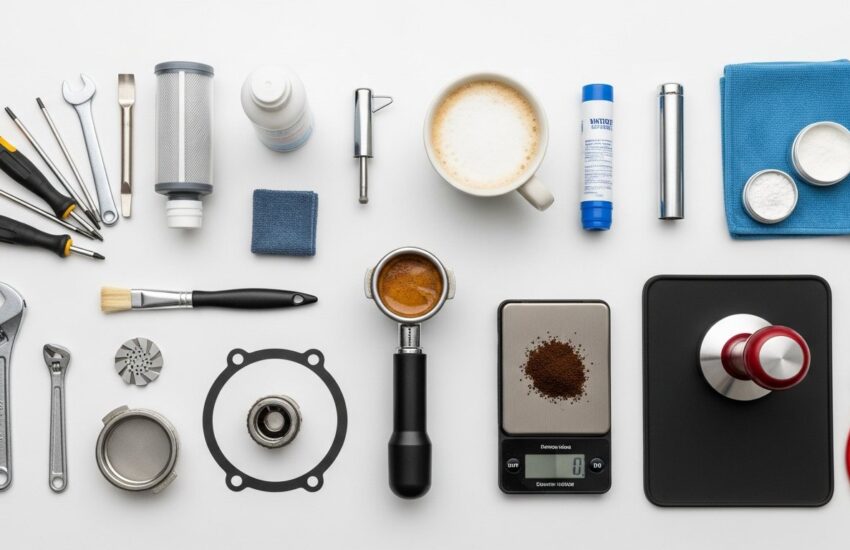
Keeping Your Kit Pristine
Cleanliness isn’t just for hygiene; it’s vital for flavor.
* Wipe Steam Wand: Always wipe your steam wand immediately after steaming milk.
* Backflushing: If your machine has a 3-way solenoid valve, regularly backflush with a blind basket and espresso machine cleaner (e.g., Cafiza) to remove built-up coffee oils.
* Descaling: Periodically descale your machine according to the manufacturer’s instructions to prevent mineral buildup, which can affect heating and flow.
Embrace the journey of learning, experiment with different beans and techniques, and most importantly, enjoy every delicious sip you create!