Home Cooking Techniques: The Complete Guide
Mastering Home Cooking Techniques: An Introduction to Cafeserre Culinary Principles
Home cooking techniques encompass a diverse range of methods used to transform raw ingredients into delicious, nourishing meals within a domestic setting. From fundamental knife skills to advanced flavor development, mastering these techniques empowers home cooks to create culinary masterpieces. This comprehensive guide explores essential home cooking techniques, enriched by the simple, fresh, and flavor-focused philosophy of Cafeserre cooking, a culinary approach that emphasizes quality ingredients and mindful preparation to elevate everyday meals. Understanding these core methods not only builds confidence but also unlocks a world of creative possibilities, allowing you to consistently produce restaurant-quality dishes in your own kitchen. At Cafeserre, we believe that exceptional food begins with exceptional technique, blended with a passion for wholesome, flavorful ingredients.
| Technique | Heat Type | Key Equipment | Ideal Ingredients | Cafeserre Focus | Best For (Outcome) |
|---|---|---|---|---|---|
| Sautéing | Dry Heat | Sauté pan, wooden spoon | Thinly sliced vegetables, seafood, small cuts of meat | Quick flavor development, crisp-tender texture, quality olive oil | Quick meals, side dishes, aromatics |
| Roasting | Dry Heat | Roasting pan, sheet pan, oven | Root vegetables, poultry, larger cuts of meat, firm fish | Caramelization, tender interior, robust flavors, herbs & spices | Entrées, hearty sides, meal prepping |
| Braising | Combination | Dutch oven, slow cooker | Tougher cuts of meat (short ribs, chuck), hearty vegetables | Tenderizing, rich sauces, depth of flavor, slow cooking | Comfort food, stews, pot roasts |
| Grilling | Dry Heat | Grill (charcoal, gas), grill pan | Steaks, poultry, firm vegetables, seafood | Smoky flavor, char marks, quick cooking, lean proteins | Outdoor cooking, summer meals, vibrant flavors |
| Steaming | Moist Heat | Steamer basket, pot with lid | Delicate vegetables, fish, dumplings | Preserving nutrients & color, gentle cooking, light dishes | Healthy sides, diet-friendly meals, retaining freshness |
Sautéing and Pan-Frying: Achieving Perfect Browning
Sautéing and pan-frying are indispensable home cooking techniques that rely on dry heat to cook food quickly, often with minimal fat. Sautéing, derived from the French word “sauter” meaning “to jump,” involves cooking small, uniformly cut pieces of food over relatively high heat in a shallow pan, keeping ingredients moving frequently. This method is excellent for developing flavor through the Maillard reaction, a chemical process that creates browning and complex savory notes on the surface of foods. Pan-frying uses slightly more fat and typically involves larger pieces of food cooked for longer periods, often turning once or twice to achieve an even crust. Both techniques demand proper temperature control to prevent burning while ensuring thorough cooking. Mastering these methods means understanding how heat transfers through the pan and oil to create a delightful texture and rich taste profile.
For a comprehensive deep dive into Sautéing and Pan-Frying, explore our dedicated guide: [CLUSTER LINK: Sautéing and Pan-Frying Deep Dive]
[INLINE IMAGE 1: place after second H2]
What is the ideal temperature for sautéing?
The ideal temperature for sautéing typically ranges from medium-high to high heat, ensuring that the oil shimmers but doesn’t smoke. For olive oil, this is often around 350-375°F (175-190°C). Heating your pan and oil correctly before adding ingredients is crucial. A common mistake is adding food to a cold pan, which leads to steaming rather than browning. What success looks like: Ingredients sizzle immediately upon contact with the pan, developing a beautiful golden-brown crust within minutes. What failure looks like: Food steams in its own juices, turns grey, and lacks flavor due to insufficient heat.
Key equipment for effective sautéing
To effectively sauté, a heavy-bottomed pan, such as a stainless steel or cast iron sauté pan, is essential for even heat distribution. A pan with sloped sides facilitates stirring and flipping. A sturdy wooden spoon or spatula helps manage the food without damaging the pan’s surface. At Cafeserre, we recommend a 10-12 inch stainless steel sauté pan for most home cooking needs, allowing enough surface area to avoid overcrowding.
The Cafeserre approach to sautéing vegetables
In Cafeserre cooking, sautéing vegetables prioritizes vibrant color, crisp-tender texture, and the natural sweetness of fresh, seasonal produce. We often use quality extra virgin olive oil and a delicate touch of garlic and fresh herbs like basil or oregano. The goal is quick cooking, allowing vegetables to retain their structural integrity and nutritional value. For example, when sautéing green beans, blanch them briefly first, then quickly sauté in hot olive oil with slivered almonds and a squeeze of lemon juice. This method preserves their bright green color and slight crunch while infusing them with Mediterranean-inspired flavors.
Roasting and Baking: Harnessing Dry Heat for Flavor
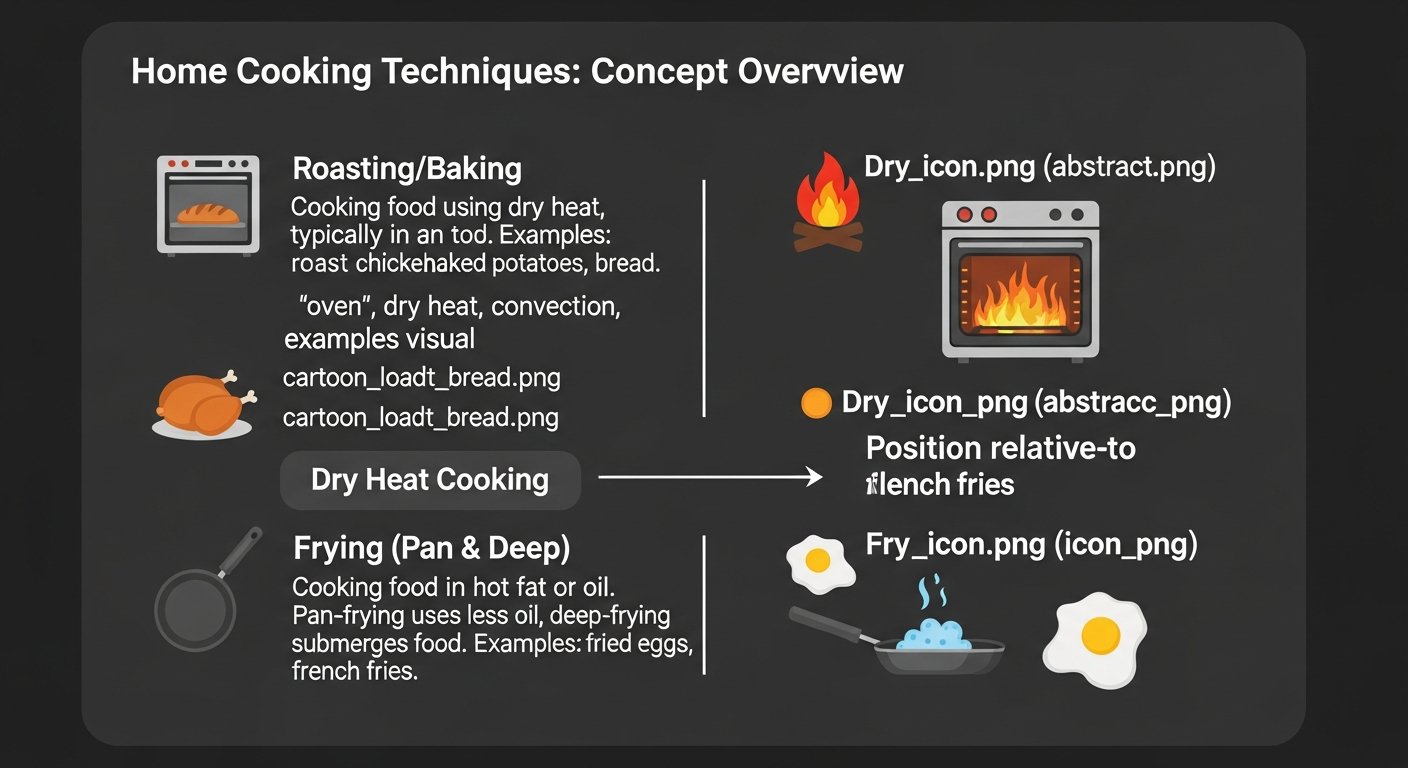
Roasting and baking are fundamental dry-heat home cooking techniques that utilize an oven’s circulating hot air to cook food evenly from all sides. Roasting typically refers to cooking foods like meats and vegetables at higher temperatures (often 375°F / 190°C and above) to achieve a caramelized exterior and tender interior. Baking usually involves more delicate items like pastries, breads, and casseroles at slightly lower, more controlled temperatures. Both methods transform ingredients through dehydration and the Maillard reaction, concentrating flavors and creating appealing textures. The consistent, enveloping heat of the oven makes them ideal for hands-off cooking, allowing you to prepare other components of your meal while your main dish cooks to perfection. Mastering roasting and baking means understanding how different foods react to sustained dry heat and adjusting temperatures and times accordingly.
For a comprehensive deep dive into Roasting and Baking, explore our dedicated guide: [CLUSTER LINK: Roasting and Baking Deep Dive]
Optimal temperatures and times for roasting vegetables
For most vegetables, roasting at 400°F (200°C) is ideal, allowing them to soften and caramelize without burning. Root vegetables like carrots, potatoes, and parsnips typically take 25-40 minutes, while softer vegetables like bell peppers, zucchini, or broccoli florets may only need 15-20 minutes. Always ensure vegetables are cut into uniform pieces for even cooking and spread them in a single layer on a sheet pan to promote browning. What success looks like: Vegetables are fork-tender on the inside, with crisp, slightly charred edges and a sweet, concentrated flavor. What failure looks like: Pale, soggy vegetables that are either undercooked and hard or overcooked and mushy, lacking any caramelized notes.
Tips for achieving a perfectly roasted chicken Cafeserre-style
A perfectly roasted chicken is a hallmark of good home cooking techniques. The Cafeserre approach emphasizes simple, high-quality ingredients. Start with a fresh, pasture-raised chicken. Rub it generously with good quality olive oil, fresh herbs (rosemary, thyme, oregano), minced garlic, lemon zest, salt, and black pepper. Stuff the cavity with lemon halves and more herbs. Roast at 400°F (200°C) for the first 15-20 minutes to crisp the skin, then reduce to 375°F (190°C) until an internal temperature of 165°F (74°C) is reached in the thickest part of the thigh, usually 1.5-2 hours total. Baste periodically with pan juices for extra moisture and flavor.
The Maillard reaction is a complex chemical reaction between amino acids and reducing sugars that gives browned food its distinctive flavor. It’s responsible for the delicious crust on roasted meats, seared scallops, and baked bread. It occurs most effectively under dry heat conditions above 285°F (140°C).
Braising and Stewing: The Art of Slow, Tender Cooking
Braising and stewing are combination-cooking home cooking techniques that transform tough cuts of meat and hearty vegetables into incredibly tender, flavorful dishes. Both involve browning the main ingredients first (dry heat) to develop rich flavors, followed by slow simmering in a small amount of liquid (moist heat) in a tightly covered pot over low heat, either on the stovetop or in the oven. Braising typically involves larger cuts of meat or whole vegetables partially submerged in liquid, while stewing uses smaller, uniformly cut pieces completely submerged. The long, gentle cooking process breaks down connective tissues, rendering tough proteins melt-in-your-mouth tender and allowing flavors to meld beautifully. These methods are ideal for maximizing flavor extraction and creating comforting, deeply satisfying meals, often perfect for batch cooking and meal prepping.
For a comprehensive deep dive into Braising and Stewing, explore our dedicated guide: [CLUSTER LINK: Braising and Stewing Deep Dive]
[INLINE IMAGE 2: place after fourth H2]
Selecting the right cuts of meat for braising
For successful braising, select cuts of meat rich in connective tissue, which breaks down into gelatin during long, slow cooking, adding richness and tenderness. Ideal choices include beef chuck roast, short ribs, lamb shanks, pork shoulder (butt), and oxtail. These cuts are often more economical but yield incredibly flavorful results when treated with patience. Avoid lean cuts like tenderloin, which will dry out and become tough under these conditions. What success looks like: The meat is incredibly tender and easily pulls apart with a fork, with a rich, savory sauce that coats it beautifully. What failure looks like: Dry, stringy meat that resists pulling apart, or a watery, thin sauce lacking depth of flavor.
The Cafeserre philosophy of slow-cooked stews
In Cafeserre cooking, slow-cooked stews embody comfort, robust flavor, and the celebration of simple, wholesome ingredients. Our stews often feature Mediterranean-inspired components: lean lamb or beef, root vegetables (carrots, potatoes, celery), legumes (chickpeas, lentils), and a rich aromatic base of onions, garlic, and quality crushed tomatoes. Fresh herbs like bay leaf, rosemary, and thyme are crucial for developing complex flavor layers. We emphasize browning the meat thoroughly before adding liquid, ensuring a deep fond develops at the bottom of the pot, which is then deglazed with red wine or broth. The slow simmer ensures every ingredient is infused with flavor, creating a hearty and nourishing meal.
Steps to creating a rich, flavorful braising liquid
- Sauté Aromatics: After browning your meat and removing it, add chopped onions, carrots, and celery (mirepoix) to the same pot. Sauté until softened and lightly caramelized, scraping up any browned bits (fond) from the bottom of the pan.
- Deglaze: Add a splash of liquid—red wine, white wine, or broth—and scrape the bottom of the pan with a wooden spoon to release all the flavorful fond. Reduce slightly.
- Build Flavor Base: Stir in tomato paste, garlic, and fresh herbs. Cook for a minute until fragrant.
- Add Liquid: Pour in enough liquid (beef broth, chicken broth, water, beer, or a combination) to partially submerge your braising meat (typically halfway to two-thirds).
- Season: Season the liquid with salt, pepper, and any additional spices. Bring to a gentle simmer before adding the meat back and covering the pot.
Grilling and Broiling: High Heat, Intense Flavor Development
Grilling and broiling are high-heat, dry-cooking home cooking techniques that impart a distinct char and smoky flavor to food. Grilling involves cooking food directly over a radiant heat source (like charcoal or gas flames), typically outdoors. Broiling uses radiant heat from above, usually within an oven, simulating the intense direct heat of a grill. Both methods are excellent for achieving a crisp, flavorful exterior and tender interior very quickly. The intense heat causes rapid browning through the Maillard reaction and fat rendering, creating a desirable texture and concentrated flavor. These techniques are particularly favored for cooking lean proteins, firm vegetables, and fruits, providing a vibrant, often healthier, alternative to pan-frying. They require careful attention to prevent burning due to the high temperatures involved.
For a comprehensive deep dive into Grilling and Broiling, explore our dedicated guide: [CLUSTER LINK: Grilling and Broiling Deep Dive]
Achieving perfect grill marks and smoky flavor
To achieve perfect grill marks and impart that coveted smoky flavor, preheat your grill to high heat (around 450-550°F / 230-290°C). Ensure your grill grates are clean and lightly oiled to prevent sticking. Place food at a 45-degree angle to the grates, cook undisturbed for 2-3 minutes, then rotate 90 degrees and cook for another 2-3 minutes to create crosshatch marks. Flip and repeat on the other side. For smoky flavor, use wood chips (soaked if using charcoal, in a smoker box if gas) or natural lump charcoal. What success looks like: Distinct, dark grill marks with a slightly charred, crispy exterior and a juicy, tender interior, accompanied by a pleasant smoky aroma. What failure looks like: Pale, unappetizing food that sticks to the grates, or burnt, carbonized exteriors with raw interiors.
The Cafeserre secret to flavorful grilled vegetables
The Cafeserre approach to grilled vegetables centers on enhancing their natural sweetness and char with simple, fresh seasonings. We choose firm, seasonal vegetables like bell peppers, zucchini, eggplant, asparagus, and red onions. Slice them uniformly, toss generously with good quality extra virgin olive oil, sea salt, freshly cracked black pepper, and a medley of fresh or dried Mediterranean herbs (e.g., oregano, thyme, rosemary). Grilling these over medium-high heat until tender-crisp with beautiful char marks highlights their inherent flavors. A finishing squeeze of fresh lemon juice or a drizzle of balsamic glaze adds a bright, zesty finish that is distinctly Cafeserre.
Steaming and Poaching: Gentle Methods for Delicate Ingredients
Steaming and poaching are moist-heat home cooking techniques celebrated for their gentle approach, making them ideal for delicate ingredients where flavor preservation and nutrient retention are paramount. Steaming involves cooking food by exposing it to hot steam, typically above boiling water, in a covered vessel. This method locks in moisture, nutrients, and natural flavors without the need for added fats. Poaching, on the other hand, means gently cooking food in a barely simmering liquid (water, broth, wine, milk) held at a low temperature, usually between 160-180°F (71-82°C). This ensures that delicate proteins like fish and eggs cook through without becoming tough or rubbery. Both techniques are cornerstones of healthy cooking, offering light, fresh, and highly digestible dishes. They are particularly favored for highlighting the inherent quality of pristine ingredients.
For a comprehensive deep dive into Steaming and Poaching, explore our dedicated guide: [CLUSTER LINK: Steaming and Poaching Deep Dive]
Perfecting steamed fish and vegetables
To perfect steamed fish, place seasoned fillets (like cod, salmon, or snapper) in a steamer basket over simmering water (or a flavored poaching liquid) and cover tightly. Cook for 5-10 minutes, depending on thickness, until opaque and flaky. For vegetables, cut them uniformly and steam until vibrant in color and tender-crisp; broccoli florets take 5-7 minutes, asparagus 3-5 minutes. Overcooking is the biggest enemy here. What success looks like: Fish is moist, flaky, and retains its natural succulence; vegetables are bright in color, tender but with a slight bite, and taste fresh. What failure looks like: Dry, rubbery fish or mushy, discolored vegetables that have lost their flavor and nutrients.
The Cafeserre touch for poached eggs
Poached eggs are a simple yet elegant staple in Cafeserre cuisine. For perfect poaching, fill a wide, shallow pot with about 2-3 inches of water, add a splash of white vinegar (about 1 tbsp per liter of water), and bring to a gentle simmer (tiny bubbles, not a rolling boil). Crack very fresh eggs into individual small bowls or ramekins. Create a gentle swirl in the simmering water and carefully slide one egg at a time into the vortex. Cook for 3-4 minutes for a runny yolk, 4-5 minutes for a soft yolk. Remove with a slotted spoon and drain on paper towels. Serve immediately, often with a sprinkle of fresh chives, a drizzle of olive oil, and a grind of black pepper.
Understanding Cafeserre Cooking: Core Principles and Philosophy
Cafeserre cooking is more than just a collection of recipes; it’s a culinary philosophy rooted in the Mediterranean ethos, emphasizing simplicity, freshness, and the inherent quality of ingredients. At its heart, it’s about mindful preparation that respects the natural flavors of food, turning everyday meals into nourishing and delightful experiences. This approach prioritizes seasonal produce, lean proteins, healthy fats like olive oil, and a vibrant palette of fresh herbs and spices. It shuns overly complicated techniques or heavy sauces, instead relying on careful seasoning and strategic cooking methods to bring out the best in each component. The cultural influences draw heavily from the coastal regions, celebrating a balanced diet rich in vegetables, grains, seafood, and moderate portions of meat. This commitment to fresh, simple, and flavorful eating extends to every dish created under the Cafeserre banner.
For a comprehensive deep dive into Cafeserre Cooking, explore our dedicated guide: [CLUSTER LINK: Cafeserre Cooking Deep Dive]
What defines the Cafeserre culinary philosophy?
The Cafeserre culinary philosophy is defined by several core principles:
- Simplicity: Fewer, high-quality ingredients are preferred over complex combinations, allowing natural flavors to shine.
- Freshness & Seasonality: A strong emphasis on using fresh, locally sourced, and seasonal produce, meats, and seafood.
- Healthy Fats: Extra virgin olive oil is the primary cooking fat, celebrated for its flavor and health benefits.
- Herbs & Spices: Generous use of fresh herbs (basil, oregano, thyme, parsley, rosemary) and simple spices to enhance, not mask, flavors.
- Mindful Preparation: Cooking with attention to detail and a respect for the ingredients, ensuring proper technique and careful seasoning.
- Balance: Creating well-rounded meals that are nutritious, satisfying, and aesthetically pleasing, without excess.
Essential ingredients in Cafeserre cuisine
The pantry of Cafeserre cooking is filled with staples that reflect its Mediterranean roots:
- Extra Virgin Olive Oil: The foundation for cooking, dressing, and finishing.
- Fresh Vegetables: Tomatoes, bell peppers, zucchini, eggplant, spinach, artichokes, and leafy greens.
- Legumes: Chickpeas, lentils, cannellini beans for protein and fiber.
- Whole Grains: Farro, couscous, whole wheat pasta, crusty bread.
- Seafood: Fresh fish (snapper, cod, sea bass), shrimp, calamari.
- Lean Meats: Chicken, lamb (in moderation), occasionally lean beef.
- Dairy/Cheese: Feta, goat cheese, fresh mozzarella.
- Aromatics: Garlic, onions, fresh lemons.
- Herbs: Basil, oregano, thyme, rosemary, parsley, mint.
Applying Cafeserre principles to everyday meals
Integrating Cafeserre principles into your daily home cooking techniques is straightforward. Instead of heavy sauces, opt for a squeeze of lemon juice and a drizzle of quality olive oil. Swap out butter for olive oil in sautéing. Focus on vegetables as the main component of your plate, with protein as an accompaniment. Season generously with fresh herbs and sea salt. For instance, turn a simple grilled chicken breast into a Cafeserre meal by serving it with a large salad of mixed greens, tomatoes, cucumbers, feta, and a lemon-oregano vinaigrette, alongside a side of quinoa or farro. This approach makes meals both healthier and more flavorful.
Common Mistakes in Home Cooking Techniques (and How to Avoid Them)
Even seasoned home cooks can fall prey to common pitfalls when practicing various home cooking techniques. Recognizing and correcting these mistakes is key to elevating your culinary skills and consistently producing delicious results. Many errors stem from impatience, incorrect temperature control, or neglecting the fundamental properties of ingredients. By understanding what typically goes wrong, you can proactively adjust your approach and apply the precise, mindful principles advocated by Cafeserre cooking. This section highlights some of the most frequent errors across different cooking methods and provides clear, actionable solutions to help you avoid them, ensuring your efforts in the kitchen are always rewarded with culinary success.
- Overcrowding the Pan: When sautéing or pan-frying, adding too much food at once lowers the pan’s temperature dramatically. This causes ingredients to steam rather than sear, preventing the desirable Maillard reaction and resulting in soggy, pale food.
- Cafeserre Solution: Cook in smaller batches. Give ingredients space to breathe and allow heat to circulate properly, ensuring even browning and crisp textures.
- Incorrect Heat Control: Using heat that is too low leads to bland, soggy results (especially for searing), while heat that is too high can burn exteriors before interiors are cooked.
- Cafeserre Solution: Pay attention to visual cues. For sautéing, oil should shimmer; for roasting, preheat your oven thoroughly. Adjust heat as needed based on the ingredient and desired outcome.
- Underseasoning: Food that lacks sufficient salt, pepper, or other spices can taste flat and uninspired, even if cooked perfectly.
- Cafeserre Solution: Season in layers. Add salt and pepper at various stages of cooking, tasting as you go. Finish with fresh herbs and a final pinch of sea salt or a squeeze of lemon for brightness.
- Not Resting Meat: Cutting into roasted or grilled meat immediately after cooking allows precious juices to escape, leading to dry results.
- Cafeserre Solution: Always rest cooked meat (chicken, steak, roasts) for 5-15 minutes, tented loosely with foil, after removing it from the heat. This allows juices to redistribute, resulting in a more tender and moist product.
- Ignoring Mise en Place: Not having all ingredients prepped and ready before you start cooking can lead to chaotic cooking, burnt ingredients, and missed steps.
- Cafeserre Solution: Embrace “mise en place” (everything in its place). Chop all vegetables, measure all liquids, and gather all spices before you turn on the heat. This ensures a smooth and enjoyable cooking process.
- Overcooking Vegetables: Especially when steaming or blanching, cooking vegetables for too long drains their vibrant color, nutrients, and crisp texture, leaving them mushy.
- Cafeserre Solution: Cook vegetables until they are just tender-crisp. A quick ice bath after blanching or steaming can stop the cooking process and preserve their bright color.
Elevating Your Home Cooking with Cafeserre Insights
Mastering fundamental home cooking techniques is a journey, and integrating the principles of Cafeserre cooking can significantly elevate your culinary results. By focusing on quality, freshness, and mindful preparation, you not only improve the taste and nutritional value of your meals but also develop a deeper appreciation for the cooking process itself. The journey from raw ingredients to a perfectly cooked dish becomes more intuitive and enjoyable when you understand how heat interacts with food and how simple, pure flavors can create profound culinary experiences. Adopting the Cafeserre approach means embracing the art of cooking with purpose, creating food that nourishes both body and soul.
This comprehensive guide has provided a foundational overview of essential home cooking techniques, from the quick sizzle of sautéing to the slow embrace of braising. We’ve shown how each method, when applied with Cafeserre insights, can transform ordinary ingredients into extraordinary meals. Remember that consistency, practice, and a willingness to experiment are your best allies in the kitchen. Continue to explore, taste, and refine your skills, and you’ll find immense satisfaction in every dish you create. The Cafeserre kitchen is a place of learning and discovery, where every meal is an opportunity to celebrate the joy of good food, simply prepared.
For more detailed information and advanced tips on each specific cooking method, remember to explore our dedicated cluster pages linked throughout this pillar article. Happy cooking!