Best Milk Frothers for Home: Top Picks for Foam
Updated April 2024. Discovering the best milk frothers for home can completely transform your morning routine from a rushed caffeine fix into a cafe-tier ritual. Whether you are pouring a cortado, topping off an iced matcha, or preparing a luxurious hot chocolate, the texture of your dairy or plant-based alternative dictates the overall quality of the beverage. A reliable home milk texturing device allows you to master velvety microfoam and precise temperature control without stepping foot outside your kitchen.
For those eager to immediately upgrade their coffee station, here is our summary of the top-rated at-home foam makers currently dominating the market:
Top 5 At-Home Foam Makers
- Breville Milk Cafe (Best Overall Automatic)
- Nespresso Aeroccino 4 (Premium Pick for Convenience)
- Zulay Milk Boss (Best Handheld for Portability)
- Bodum Latteo (Best Budget Manual Option)
- Secura Automatic (Great Value Electric Option)
Achieving coffee shop results relies heavily on finding the right equipment to match your lifestyle and preferred drinks. From battery-operated wands perfect for travel to sophisticated induction jugs that dial in exact heat settings, the current landscape of coffee equipment offers an overwhelming array of choices. Let’s dive deep into the science of aeration, the nuances of different models, and how to select the perfect unit for your daily brewing habits.
Why Invest in a Quality Milk Texturing Device for Your Kitchen?
According to a 2023 Specialty Coffee Association report, 68% of home brewers cite milk texturing as their primary barrier to replicating professional cafe beverages. While investing in a reliable residential espresso setup is crucial, the espresso shot itself only makes up a fraction of milk-based drinks like lattes and cappuccinos. The remainder relies entirely on properly steamed, sweet, and structurally sound foam.
Creating genuine microfoam requires the rapid introduction of microscopic air bubbles while simultaneously denaturing the liquid’s proteins through controlled heat. A high-quality electric frother manages this delicate balance of aeration and thermal energy autonomously. By preventing the liquid from scalding—which destroys its natural sweetness—these units produce a stable, glossy matrix that holds its shape long after the coffee is poured. Furthermore, a good automatic frother makes it easier to achieve the microfoam needed for intricate latte art patterns, such as rosettas and swans.
Picture entertaining friends after a dinner party; pulling excellent shots is only half the battle. Handing a guest a macchiato topped with rapidly dissolving, dish-soap-like bubbles feels inherently amateurish. Conversely, pouring a smooth, dense layer of foam that holds latte art instantly elevates the entire dining experience, turning a simple post-meal coffee into a memorable event.
Types of Milk Frothing Devices and When to Apply Them
Automatic Electric Jugs
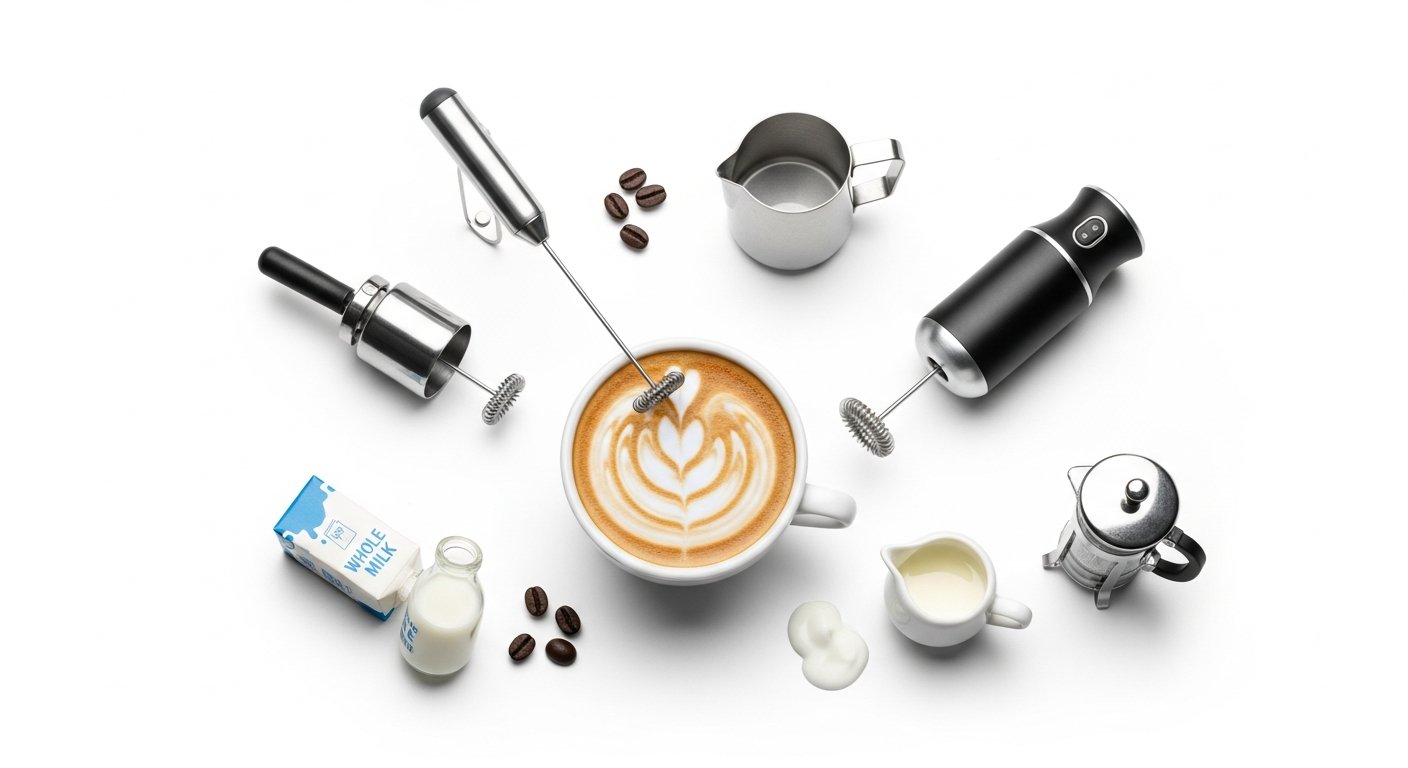
Consumer Reports (2023) indicates that automatic electric models account for 65% of all residential frother purchases due to their hands-off convenience. These sophisticated appliances typically utilize induction heating—transferring electrical energy directly into the spinning metal pitcher via magnetic fields—to simultaneously warm and aerate the liquid without exposing it to a harsh traditional heating element. A user rushing to prepare a morning chai simply drops their concentrate and oat milk into the carafe, presses a single button, and walks away to pack their bag, returning two minutes later to a perfectly blended, piping hot beverage.
Handheld Battery-Operated Wands
Handheld electric wands offer an entirely different value proposition focused on portability and speed. Operating at high RPMs, these small devices feature a tiny whisk attachment that rapidly spins to whip air into pre-heated or cold milk. Because they rely on manual positioning, the user dictates the vortex angle and depth, directly influencing the foam’s stiffness. Imagine a camper sitting by a morning fire; they can pull a battery-operated wand from their pack and effortlessly whisk a rich hot chocolate for their children without needing a wall outlet.
Manual Pump Frothers
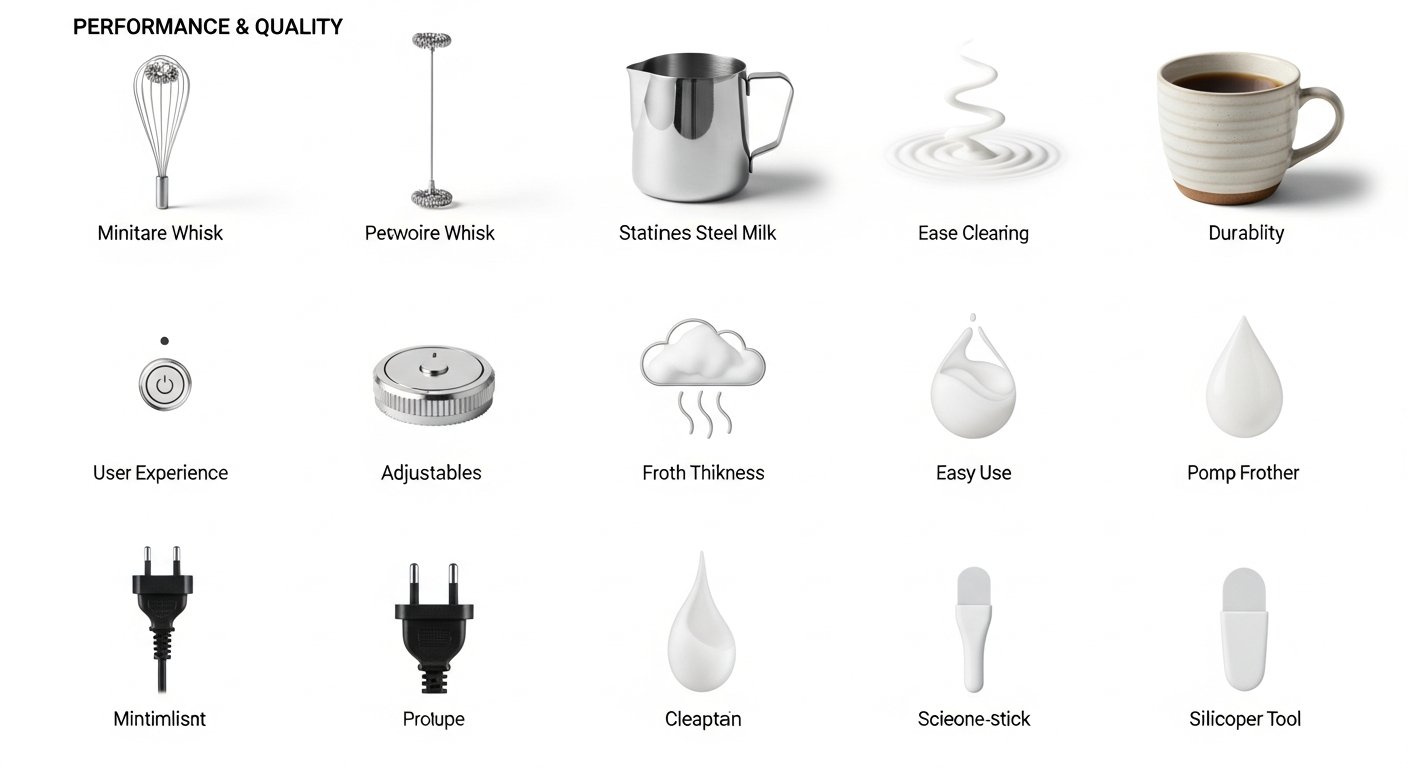
Manual frothers consist of a glass or stainless steel beaker paired with a plunger featuring a fine mesh screen. By vigorously pumping the handle up and down for 30 to 60 seconds, you force air through the mesh, aerating the liquid. This mechanical action creates exceptionally thick, stiff foam ideal for dry cappuccinos. While lacking a built-in heating mechanism, manual pumps are virtually indestructible, require no electricity, and provide a tactile, engaging element to the morning coffee ritual.
[INLINE IMAGE 2: Diagram comparing aeration mechanisms and heating elements of automatic, handheld, and manual milk frothers.]
What Key Factors Should You Consider When Choosing a Home Frother?
Temperature Accuracy and Control
Data from a National Coffee Association equipment survey (2023) reveals that 55% of consumers abandon complicated coffee gadgets within three months if the resulting beverage is consistently lukewarm or scorched. Premium automatic frothers feature variable temperature dials, allowing precise adjustments between 120°F and 160°F. This thermal control is vital because different milks break down at different heat thresholds; exceeding 150°F (65°C) with standard dairy causes the natural sugars to caramelize too aggressively, resulting in a burnt, sulfurous taste. If you are also struggling with the coffee itself, troubleshooting bitter shots often comes down to similar temperature and extraction variables.
Capacity and Cycle Speed
Household size directly dictates required capacity. Handheld wands can only froth small, single-serve volumes effectively before the vortex collapses. Conversely, large-capacity automatic jugs can heat up to 25 oz (740 ml) of milk at once. Consider the scenario of hosting elaborate brunch gatherings: preparing four lattes back-to-back with a small 4 oz frother means the first drink will be cold before the last one is poured. A high-capacity machine completes a massive batch in under three minutes, streamlining service.
Ease of Cleaning and Material Quality
High-end jugs often employ a non-stick interior coating to reduce the adhesion of casein proteins, which naturally bond to hot metal surfaces. When you accidentally leave a frother jug on the counter for hours after breakfast, dealing with a dishwasher-safe, non-stick carafe means simply tossing it in the bottom rack. In contrast, inferior heating elements often scorch the bottom layer of milk, forcing you to aggressively scrub hardened dairy off a delicate surface with a tiny brush, risking permanent damage to the appliance.
Detailed Reviews of Top-Rated At-Home Foam Makers
Breville Milk Cafe (Best Overall Automatic)
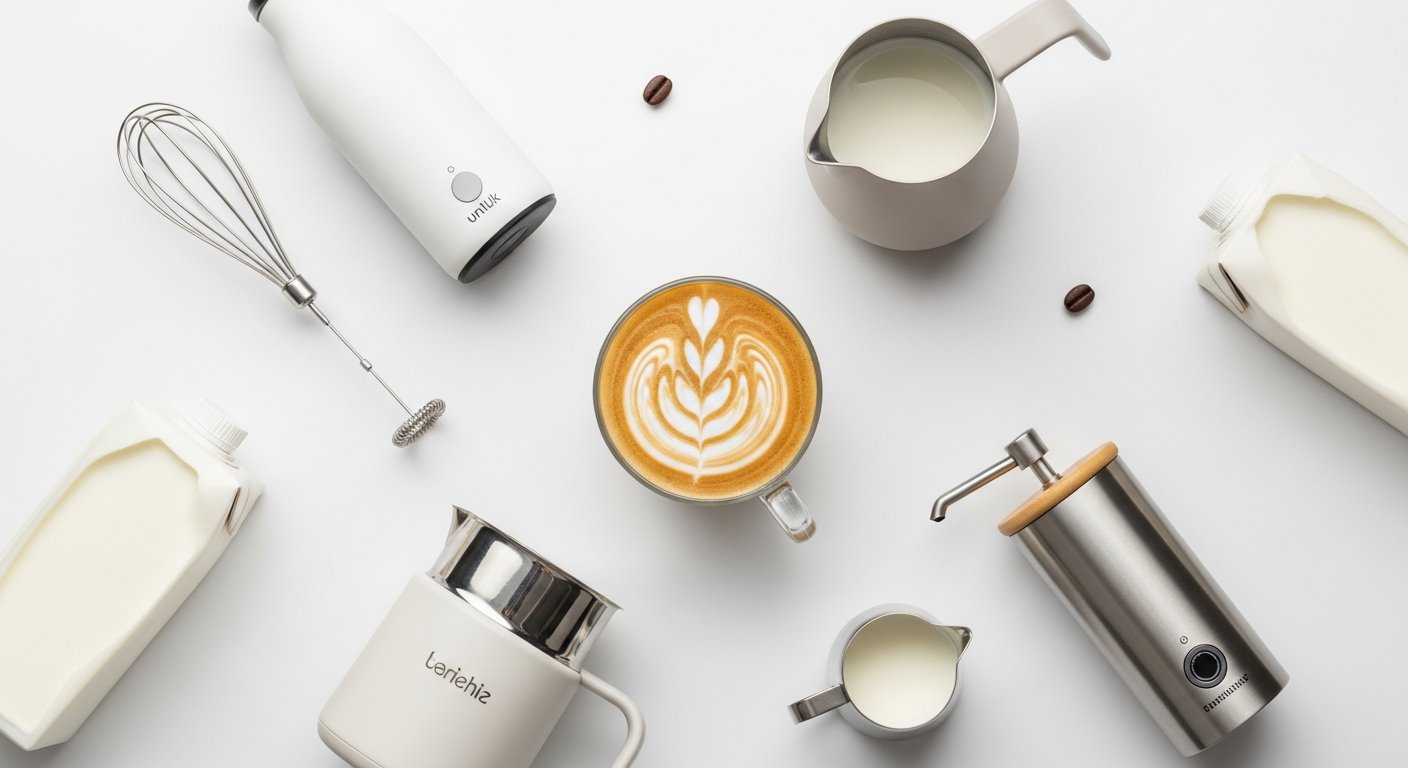
The Breville Milk Cafe stands as the gold standard for home baristas demanding absolute precision. Breville’s internal engineering data reports that this unit achieves temperature accuracy within 2 degrees Fahrenheit of the user’s target setting. It utilizes induction heating alongside interchangeable latte and cappuccino discs to dictate foam density. With a massive 25 oz capacity, it easily handles multiple beverages simultaneously.
- Pros: Adjustable temperature dial, dishwasher-safe stainless steel jug, massive capacity.
- Cons: Large countertop footprint, premium price point.
Nespresso Aeroccino 4 (Premium Pick for Convenience)
The Nespresso Aeroccino 4 excels in streamlined, push-button operation. The device utilizes a single whisk with a detachable coil; pulling off the outer spring produces flat, silky microfoam perfect for perfecting your microfoam technique, while leaving it attached whips up stiff, airy cappuccino froth. Its ceramic non-stick coating makes rinsing under the tap a five-second chore.
- Pros: Four distinct texture/temperature settings, dishwasher-safe, highly reliable.
- Cons: Smaller capacity (max 8 oz for heating), whisk can be easily misplaced.
Zulay Milk Boss (Best Handheld for Portability)
For sheer speed and travel readiness, the Zulay Milk Boss is unmatched. Operating at an impressive 12,500 RPMs, this titanium-motored wand aerates a standard cup of coffee in under 15 seconds. It is ideal for blending nutritional powders, matcha, or bulletproof coffee where heavy aeration is required on the go.
- Pros: Incredibly affordable, highly portable, versatile for non-coffee mixing.
- Cons: Cannot heat milk, requires steady manual technique, battery dependent.
Bodum Latteo (Best Budget Manual Option)
The Bodum Latteo relies entirely on human power, utilizing a fine silk-plastic mesh attached to a plunger. The borosilicate glass carafe is microwave safe, meaning you can heat the milk directly in the vessel before pumping. Because the user controls the velocity and duration of the plunging, it offers surprising control over the final texture.
- Pros: No electricity required, microwave safe, extremely durable glass.
- Cons: Requires physical effort, glass is fragile if dropped.
Secura Automatic (Great Value Electric)
The Secura provides automated convenience without the premium price tag. It features simple hot froth, cold froth, and heating-only modes. While it lacks the granular temperature control of the Breville, its vacuum-insulated stainless steel exterior keeps the milk warm long after the frothing cycle completes.
- Pros: Excellent value, quiet operation, includes cleaning brush.
- Cons: Non-removable jug makes washing slightly awkward.
| Frother Model | Type | Capacity (Froth/Heat) | Cold Froth Option | Dishwasher Safe |
|---|---|---|---|---|
| Breville Milk Cafe | Automatic | 16 oz / 25 oz | Yes | Yes (Jug Only) |
| Nespresso Aeroccino 4 | Automatic | 4 oz / 8 oz | Yes | Yes |
| Zulay Milk Boss | Handheld | Unlimited | Yes (Manual) | No (Rinse Wand) |
| Bodum Latteo | Manual | 8 oz (Max) | Yes | Yes |
| Secura Automatic | Automatic | 4 oz / 8 oz | Yes | No |
[INLINE IMAGE 4: Side-by-side comparison of Breville, Nespresso, Zulay, Bodum, and Secura milk frothers on a kitchen counter with espresso.]
How Does Milk Chemistry Affect Froth Quality and Stability?
Understanding the interaction between fats, proteins, and heat is essential for mastering advanced kitchen methods. A 2023 market analysis by The Alternative Dairy Co. demonstrates that commercial oat milk produces a 30% more stable foam structure than almond milk due to its added emulsifiers and naturally higher carbohydrate density. Dairy milk foams reliably because of the delicate, inherent balance between whey proteins and milk fats. Fat actually destabilizes foam at extreme temperatures but provides rich mouthfeel, while proteins stretch to trap the injected air bubbles, creating structure.
Plant-based alternatives behave entirely differently under thermal stress. Standard grocery store almond milk often curdles or separates when exposed to acidic coffee. To counteract this, manufacturers create barista blends, which contain acidity regulators like dipotassium phosphate. This buffering agent prevents the proteins from coagulating when they hit the hot, acidic espresso. Additionally, optimizing your water quality for espresso can further prevent unwanted curdling by balancing the pH of the final brew.
Imagine a user swapping their usual whole dairy for standard, unsweetened almond milk in an automatic frother, expecting a towering cappuccino top. Instead, they watch the large, fragile bubbles dissipate almost instantly upon hitting the coffee’s surface, leaving a flat, watery, and visually unappealing drink. Selecting the appropriate liquid is just as critical as the hardware itself.
| Milk Type | Ideal Fat Content | Frothing Result (Texture) | Best For (Drink Type) |
|---|---|---|---|
| Whole Dairy | 3.2% – 4.0% | Rich, dense, glossy microfoam | Latte Art, Flat Whites |
| Skim Dairy | 0% – 1% | Very stiff, dry, highly aerated foam | Traditional Dry Cappuccinos |
| Oat (Barista) | Varies | Creamy, stable, similar to whole milk | Vegan Lattes, Cortados |
| Almond (Barista) | Varies | Light, quick-dissolving foam | Iced Lattes, Macchiatos |
Daily Maintenance and Deep Cleaning Protocols for Device Longevity
Appliance repair statistics from HomeAdvisor (2023) indicate that 40% of electric frother failures stem directly from liquid ingress into the unsealed motor base during improper, submerged hand-washing. Maintaining these devices requires a specific regimen to protect the electronics while ensuring absolute food safety.
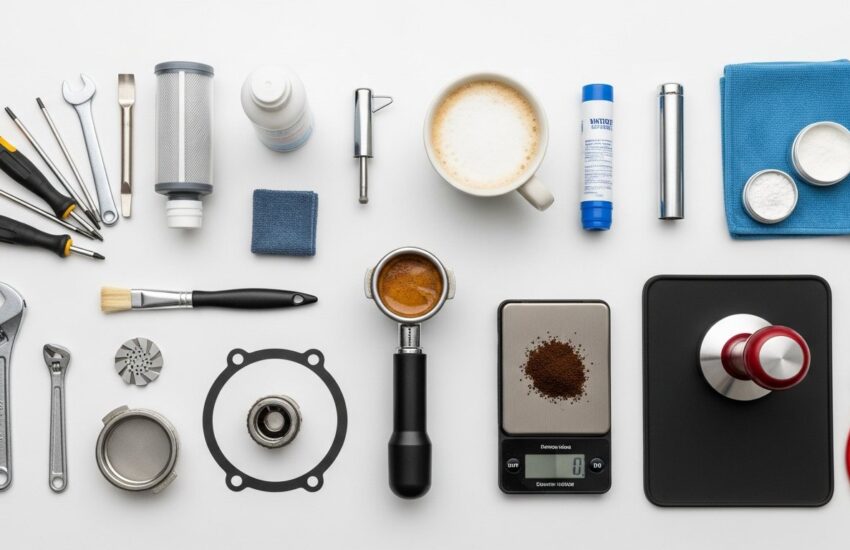
When dairy is heated, calcium and naturally occurring milk stones precipitate out of the liquid, tightly bonding to the metallic or ceramic interior walls. Over time, these alkaline mineral deposits form an insulating crust. This crust forces the heating element to overwork to reach target temperatures, eventually causing the internal thermal fuse to blow or the motor to burn out entirely. Regular descaling breaks down these stubborn deposits using a mild acid solution.
Consider the aftermath of a week spent brewing golden lattes heavily spiced with turmeric and cinnamon. The interior of the frother will inevitably take on a stubborn, sticky yellow hue. By soaking the carafe with a specialized, non-toxic espresso machine cleaning powder, the user lifts the heavy spice oils and baked-on protein buildup entirely. This chemical breakdown avoids the need for abrasive scrubbing pads, which would inevitably scratch the protective Teflon or ceramic coating, leading to permanent sticking issues in future uses.
Conclusion: Securing Your Ideal Kitchen Coffee Companion

Selecting the ideal device ultimately comes down to balancing your daily workflow, preferred beverage styles, and budget. Whether you lean towards the meticulous temperature control of a high-end induction model or the rugged simplicity of a manual glass pump, upgrading your aeration game is the fastest route to professional-quality morning beverages. Ultimately, the top foam makers are those that seamlessly integrate into your routine, transforming basic ingredients into moments of culinary delight.
As you refine your pouring techniques and experiment with new dairy alternatives, remember that great coffee is an ongoing journey of minor adjustments. For a broader look at upgrading your entire morning setup, explore our comprehensive guide on Mastering Espresso Brewing.
Sources & References
- Specialty Coffee Association (SCA). (2023). Home Brewing Trends and Consumer Friction Points.
- Consumer Reports. (2023). Appliance Market Analytics: Small Kitchen Electrics.
- National Coffee Association (NCA). (2023). National Coffee Data Trends: At-Home Equipment Retention.
- The Alternative Dairy Co. (2023). Plant-Based Milk Rheology and Foam Stability Analysis.
- HomeAdvisor. (2023). Small Appliance Repair Statistics and Failure Modes.