Cheese Course Etiquette: French Tradition vs Modern Approach
Cheese Course Etiquette: French Tradition vs Modern Approach
Whether you’re a purist or prefer a more relaxed approach, understanding cheese course etiquette enhances the experience. French tradition emphasizes specific order, tools, and presentation, while modern interpretations encourage flexibility and personal pairing choices, including the exciting world of specialty coffee.
The Enduring Allure of the Cheese Course: A Cultural Phenomenon
From the rustic farmhouses of rural France to the opulent dining rooms of Parisian haute cuisine, the cheese course has long been more than just a dish; it’s a cultural touchstone. Its roots are deeply intertwined with French agricultural history and its profound respect for terroir – the unique environmental factors that influence the taste and characteristics of a product. Historically, cheese served as a practical way to preserve milk, but over centuries, it evolved into an art form, with hundreds of distinct varieties, each telling a story of its region, its maker, and its aging process. The ritual of serving cheese before dessert, or as a standalone course, emerged from a desire to celebrate these diverse flavors, offering a palate cleanser and a moment of digestive contemplation. It’s a testament to the French philosophy of savoring life’s simple pleasures, elevated through careful selection and presentation.
Beyond its culinary significance, the cheese course fosters connection. It’s a shared experience, inviting conversation and appreciation. The visual spectacle of a well-arranged cheese board, with its array of textures, colors, and forms, is inherently inviting. The act of cutting, serving, and discussing each cheese becomes a communal ritual, deepening bonds around the table. In many ways, it mirrors the communal aspect of sharing a perfectly brewed pot of coffee – both are experiences designed to be lingered over, discussed, and enjoyed in good company. Understanding this cultural depth is the first step to appreciating why etiquette, whether traditional or modern, plays such a vital role in elevating the cheese course from a mere collection of dairy products to a memorable culinary event.
The transition from the savory main course to the sweet dessert is expertly bridged by cheese, preparing the palate for new sensations while providing a satisfying conclusion to the meal’s savory journey. This thoughtful progression is a hallmark of French dining, reflecting a holistic approach to the meal experience. Each cheese, with its unique profile – from the creamy tang of a chèvre to the pungent bite of a Roquefort – offers a distinct sensory adventure. This diversity encourages exploration and a deeper understanding of the craft behind each piece. The cheese course, therefore, is not merely about eating; it’s about experiencing, learning, and celebrating a rich culinary heritage that continues to captivate and delight food lovers worldwide.
Deciphering French Tradition: Rules, Rituals, and Reverence
The traditional French approach to the cheese course is steeped in specific rules and rituals, reflecting centuries of culinary refinement. These guidelines are not arbitrary; they are designed to maximize enjoyment, respect the cheese, and honor the dining experience. Central to French tradition is the concept of a “cheese platter” (plateau de fromages), typically presented before dessert. The selection usually includes an odd number of cheeses (often 3, 5, or 7) to ensure visual balance and variety. The cheeses are carefully chosen to represent a range of milk types (cow, goat, sheep), textures (soft, semi-hard, hard), and flavor profiles (mild, strong, pungent).
Presentation is paramount. Cheeses are traditionally served at room temperature to allow their full flavors and aromas to develop. They are arranged aesthetically, often clockwise, from mildest to strongest, or by type. Each cheese typically comes with its own dedicated knife, preventing flavor transfer. When cutting, the rule is to cut a piece that includes a portion of the rind and the paste, ensuring an even distribution of flavor and texture. For example, a wedge of Brie should be cut from the point towards the rind, while a log of Chèvre is sliced into rounds. The “nose” or tip of a wedge is considered the most flavorful part, and it’s considered poor etiquette to cut off just the tip, leaving an undesirable piece for others.
Accoutrements are kept simple to allow the cheese to shine. A fresh baguette is the quintessential accompaniment, providing a neutral canvas. Fruit, such as grapes or figs, and sometimes a simple fruit paste (like quince paste), might be offered, but elaborate jams, honey, or crackers are less common in strict French tradition. The pairing is almost always with wine, typically the same red wine that was served with the main course, or a lighter white wine for specific cheeses. The reverence for tradition extends to the pace of enjoyment: the cheese course is meant to be savored slowly, allowing time for appreciation and conversation. It’s a deliberate pause in the meal, a moment to reflect on the preceding dishes and anticipate the sweet conclusion, embodying the French philosophy of gastronomic mindfulness.
Understanding these traditional nuances not only helps one navigate a formal French dining experience but also provides a solid foundation from which to explore more modern interpretations. The French approach emphasizes respect for the product and the process, a philosophy that resonates deeply with the specialty coffee world’s focus on bean origin, processing, and meticulous brewing. Just as a traditional French cheese course highlights the terroir of its cheeses, a perfectly brewed single-origin coffee showcases the unique characteristics of its beans, reminding us that quality and careful preparation are universal tenets of culinary excellence.
The Modern Cheese Course: Flexibility, Flavor, and Personal Expression
While French tradition provides a foundational reverence for cheese, the modern approach embraces flexibility, personal expression, and a broader spectrum of pairings. Contemporary dining often sees the cheese course integrated more fluidly into the meal, sometimes even serving as an appetizer or a light main course, rather than strictly between the main and dessert. The “rules” are relaxed, encouraging experimentation and tailoring the experience to individual preferences and the occasion.
Selection is still key, but the emphasis shifts from strict traditional categories to an exciting exploration of global cheeses. You might find innovative artisanal cheeses from the US, UK, or Australia alongside classic French varieties. The number of cheeses can vary widely, from a single, perfectly chosen showstopper to an abundant spread designed for grazing. Presentation, while still aiming for aesthetic appeal, can be more creative and less rigid. Boards might incorporate different materials like slate or wood, and the arrangement can be artistic rather than strictly ordered by strength.
Accoutrements are where the modern cheese course truly shines with its expanded palette. Beyond the classic baguette, you’ll find an array of artisan crackers, various nuts (marcona almonds, candied pecans), dried fruits (apricots, cranberries), fresh seasonal fruits (berries, pears), honey, gourmet preserves, chutneys, and even savory elements like olives or cured meats. This wider selection allows for complex flavor combinations and textural contrasts, inviting guests to create their own perfect bites. The “one knife per cheese” rule is often relaxed, with a few versatile knives provided, though good hygiene still dictates using separate utensils for very strong or soft cheeses.
Pairing options have exploded beyond traditional wine. Craft beers, ciders, spirits, and, increasingly, specialty coffees, are now considered exciting companions to cheese. This reflects a broader culinary trend towards exploring unexpected harmonies and challenging conventional wisdom. The modern approach encourages diners to trust their palates, to discover what combinations truly delight them, and to treat the cheese course as an opportunity for culinary adventure rather than a strict adherence to historical norms. It’s about making the experience accessible, enjoyable, and deeply personal, fostering an environment where guests feel empowered to explore and appreciate the incredible diversity of the cheese world in their own unique way.
Beyond Wine: The Art of Pairing Cheese with Specialty Coffee
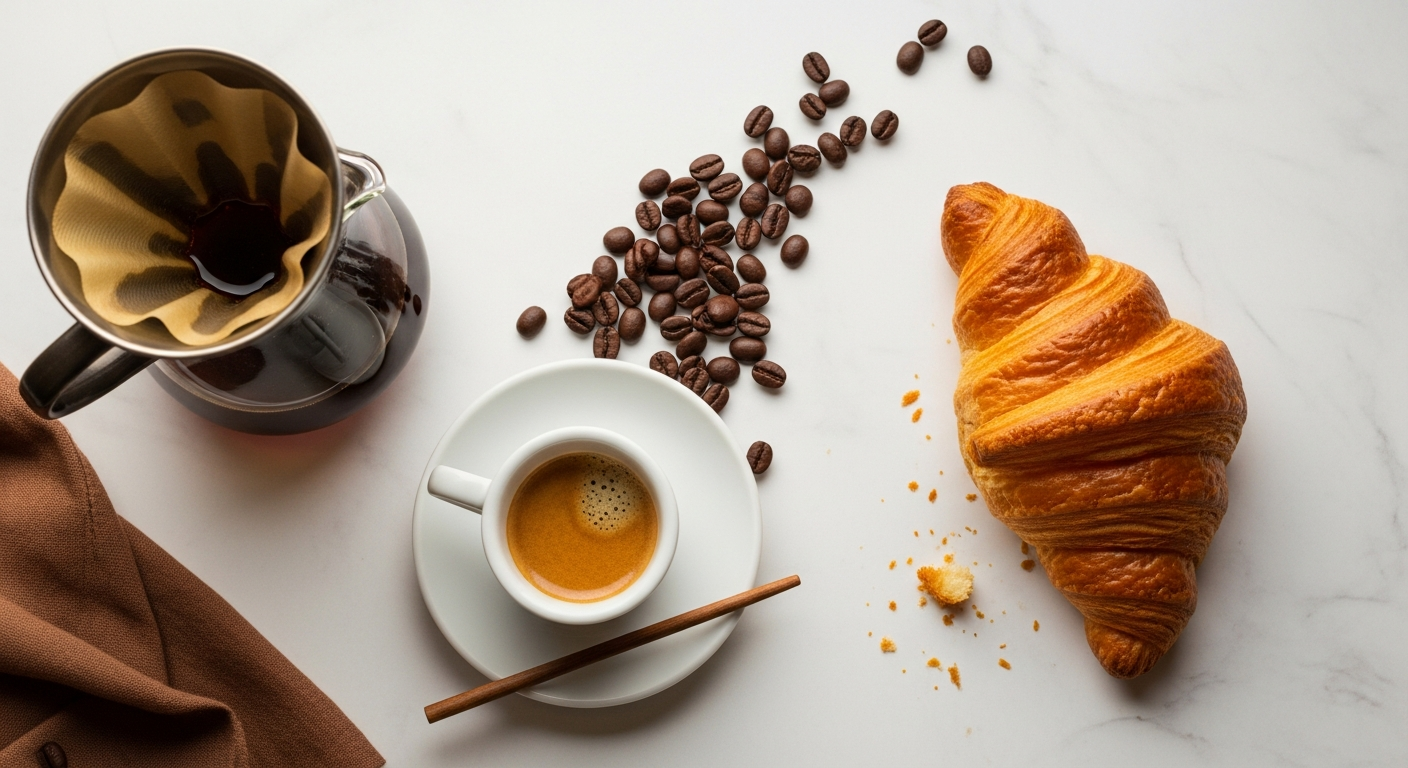
For too long, wine has held an almost exclusive dominion over cheese pairings. However, as the world of specialty coffee continues to evolve, revealing an astonishing spectrum of flavors, aromas, and textures, it’s becoming increasingly clear that coffee offers a sophisticated and often superior alternative. At Café Serre, we believe the complex profiles of artisanal cheeses find a fascinating counterpart in meticulously prepared single-origin coffees and expertly crafted blends. This is where the precision of coffee brewing, guided by authoritative sources like the Specialty Coffee Association (SCA), truly elevates the pairing experience.
When approaching coffee and cheese pairing, consider the fundamental flavor components: acidity, body, sweetness, and bitterness in coffee, and saltiness, creaminess, tang, and pungency in cheese. The goal is to find balance and synergy, where each element enhances the other without overwhelming. For instance, a bright, fruit-forward Ethiopian Yirgacheffe, known for its high acidity and delicate floral notes, can beautifully cut through the richness of a creamy, buttery Brie or a fresh Chèvre, providing a refreshing contrast. To achieve this, brewing to SCA standards is paramount: a water temperature of 200°F (93°C) ± 5°F (3°C) is ideal for optimal extraction, using a brew ratio typically between 1:15 and 1:18 (e.g., 55 grams of coffee per liter of water).
For a more robust, earthy cheese like a aged Gouda or a sharp Cheddar, a coffee with a fuller body and lower acidity, perhaps a natural-processed Brazilian or a Sumatran Mandheling with notes of chocolate and nuts, would be an excellent match. The coffee’s richness can stand up to the cheese’s intensity, creating a harmonious and comforting experience. Equipment choices also play a role: a pour-over method using a Hario V60 dripper (around $25) or a Chemex (8-cup, around $45) will highlight clarity and delicate notes, while a French press will emphasize body and intensity, perfect for those richer coffees. Grinding with a quality burr grinder like a Baratza Encore (approx. $180) or a Fellow Ode Brew Grinder (approx. $300) ensures consistent particle size, crucial for proper extraction, and using a precision kettle like the Fellow Stagg EKG (approx. $160) allows for exact temperature control. Even a precise scale like the Acaia Pearl (approx. $250) can make a difference in achieving the perfect brew ratio.
Leading coffee experts and barista champions often emphasize the importance of understanding a coffee’s origin and processing to unlock its full potential. For example, a washed Colombian coffee, with its balanced profile and caramel notes, could be a versatile partner for many semi-hard cheeses. Conversely, a light-roasted, naturally processed coffee from a renowned roaster like Onyx Coffee Lab, with its intense fruitiness, might create a surprising and delightful counterpoint to a salty blue cheese. The World Coffee Research (WCR) has done extensive work on varietal characteristics, and understanding these can guide your pairing choices, much like knowing the breed of an animal helps understand its cheese. This adventurous approach to pairing opens up a vast new world of sensory exploration, proving that specialty coffee is not just a beverage, but a sophisticated culinary ingredient capable of enhancing even the most cherished traditions.
Crafting Your Own Cheese & Coffee Experience: Selection, Presentation, and Service
Creating a memorable cheese and coffee experience at home is an art that combines thoughtful selection, appealing presentation, and attentive service. Whether you lean towards French tradition or modern flexibility, these principles will guide you in crafting an exceptional spread. Start with a diverse selection of cheeses, aiming for 3-5 varieties that offer a range of textures, milk types, and flavor intensities. Consider a fresh goat cheese, a creamy Brie or Camembert, a semi-hard aged cheddar or Gruyère, and a pungent blue cheese. Ensure your cheeses are brought to room temperature at least 30-60 minutes before serving to allow their flavors to fully bloom.
For presentation, a beautiful board is key. Wood, slate, or marble all provide elegant backdrops. Arrange your cheeses attractively, leaving space between them. For visual appeal and ease of serving, you can pre-cut a few slices or wedges from harder cheeses, while leaving softer cheeses whole for guests to cut. Include a fresh baguette, sliced, and a selection of complementary accompaniments. For a modern twist, consider adding artisanal crackers, a small bowl of local honey, fig jam, candied nuts, and seasonal fruits like grapes, figs, or apple slices. Remember the “one knife per cheese” rule for optimal flavor integrity, or at least provide several versatile knives for guests to choose from.
Now, for the coffee. Select 2-3 distinct coffee profiles that you believe will complement your chosen cheeses. For example, pair a light-roasted Ethiopian with the fresh goat cheese, a medium-roasted Colombian with the Gruyère, and a darker-roasted Sumatran with the blue cheese. Prepare each coffee using precise brewing methods to highlight its unique characteristics. For pour-over, ensure your water is heated to the optimal SCA-recommended 200°F (93°C) and use a consistent brew ratio of 1:16. For a French press, a slightly coarser grind and a 4-minute steep time can yield a rich, full-bodied brew. Serve the coffees freshly brewed, perhaps in small tasting cups, allowing guests to experiment with pairings.
Service should be relaxed and informative. Encourage guests to try different combinations and discuss their preferences. Provide small cards or labels for each cheese and coffee, detailing their origin, type, and flavor notes. This adds an educational element and enhances appreciation. Don’t be afraid to guide your guests, suggesting a “classic pairing” or an “adventurous match.” The goal is to create an interactive and enjoyable experience that celebrates both the rich heritage of cheese and the innovative spirit of specialty coffee. By paying attention to these details, you transform a simple serving of cheese and coffee into a sophisticated culinary event that delights the senses and sparks conversation.
Common Pitfalls and How to Elevate Your Experience
Even with the best intentions, a cheese course can sometimes fall short. Understanding common pitfalls and how to avoid them can significantly elevate your experience, whether you’re hosting or simply enjoying. One of the most frequent mistakes is serving cheese straight from the refrigerator. Cold mutes flavors and stiffens textures. Always allow cheeses to come to room temperature for at least 30-60 minutes before serving. This simple step unlocks their full aromatic and taste potential, a principle as crucial as serving coffee at its optimal drinking temperature (typically between 140-160°F or 60-70°C for peak flavor perception).
Another pitfall is an unbalanced selection. Too many similar cheeses (e.g., all soft, all cow’s milk) can lead to palate fatigue. Aim for variety in milk type, texture, and intensity. Similarly, an overwhelming array of accompaniments can distract from the cheese itself. While modern approaches allow for more variety, ensure each accompaniment genuinely enhances rather than competes with the cheese. A good rule of thumb is to offer 3-5 carefully chosen complements that provide contrast in texture or flavor, such as a crisp cracker, a sweet jam, and some tart fruit.
For coffee pairings, a common mistake is using poorly brewed coffee. An over-extracted (bitter) or under-extracted (sour) coffee will detract from even the finest cheese. Adhering to SCA standards for brewing, using fresh, quality beans, and precise measurements (e.g., using a scale like an Acaia Pearl to ensure accurate brew ratios) is crucial. Avoid heavily flavored or sweetened coffees, as these can overpower the delicate nuances of cheese. Instead, opt for single-origin coffees with clean, distinct flavor profiles that can either complement or contrast in a balanced way.
Improper cutting is another faux pas, especially in traditional settings. Cutting off only the “nose” of a wedge of cheese is considered impolite. Teach yourself and your guests how to cut each type of cheese correctly to ensure everyone gets a fair and enjoyable portion. Finally, rushing the experience diminishes its pleasure. The cheese course, like a well-crafted espresso, is meant to be savored. Encourage lingering, conversation, and exploration of flavors. By being mindful of these details – from temperature and selection to proper cutting and precise coffee preparation – you can transform a simple cheese course into a truly refined and memorable culinary journey, a testament to the art of mindful indulgence that Café Serre champions.
The Future of the Cheese Course: Innovation and Personalization
The cheese course, while deeply rooted in tradition, is far from static. Its future lies in a dynamic blend of innovation and personalization, embracing new culinary trends while never losing sight of its inherent charm. This evolution is particularly exciting for specialty coffee enthusiasts, as the burgeoning world of coffee offers unprecedented opportunities to reimagine traditional pairings and create truly unique experiences.
One key aspect of the future cheese course is a continued emphasis on global diversity and artisanal production. Consumers are increasingly seeking out unique, small-batch cheeses from around the world, moving beyond the well-known French classics to explore varieties from places like Italy, Spain, the UK, and even emerging cheese-making regions. This expanded palate for cheese naturally opens the door for more adventurous pairings, including those with specialty coffees that echo similar themes of origin, craftsmanship, and distinct flavor profiles. Imagine pairing a funky, washed-rind cheese from Vermont with a naturally processed, high-altitude coffee from Costa Rica, or a sheep’s milk cheese from Sardinia with a robust, earthy Sumatran Mandheling.
Personalization will also play a significant role. Rather than strictly adhering to prescribed rules, individuals and chefs will increasingly curate cheese courses that reflect personal tastes, dietary preferences, and creative whims. This could mean themed cheese boards (e.g., “Pacific Northwest Cheeses,” “Mediterranean Delights”), or boards focused on specific flavor profiles (e.g., “Umami Bomb,” “Sweet & Savory”). The integration of coffee further enhances this personalization. A host might offer a “coffee flight” alongside the cheese, featuring three distinct single-origin brews—each prepared to SCA standards with specific brew ratios (e.g., a light roast at 1:17, a medium roast at 1:16, a dark roast at 1:15)—inviting guests to discover their own favorite combinations. Equipment like the Fellow Stagg EKG kettle for precise temperature control and a Baratza Encore grinder for fresh, consistent grinds will become standard tools for the home coffee connoisseur crafting these pairings.
Furthermore, the cheese course may become more interactive and educational. Workshops on cheese and coffee pairing, tasting notes provided for each selection, and discussions about terroir (both for cheese and coffee) will deepen appreciation. This aligns perfectly with Café Serre’s mission to educate and inspire. The future cheese course is not about abandoning tradition but about building upon it, using the rich tapestry of global flavors and the precision of specialty coffee to create experiences that are both deeply respectful of heritage and vibrantly contemporary. It’s a journey of discovery, where every bite of cheese and every sip of coffee tells a story, inviting us to explore the endless possibilities of flavor and culture.
Key Takeaways for Your Cheese Course Experience:
- **Temperature Matters:** Always serve cheeses at room temperature to maximize flavor and aroma.
- **Variety is Key:** Aim for a diverse selection in terms of milk type, texture, and intensity.
- **Mindful Cutting:** Respect the cheese by cutting pieces that include both rind and paste.
- **Explore Pairings:** Beyond wine, specialty coffee offers complex and rewarding pairings with cheese.
- **Personalize & Enjoy:** Whether traditional or modern, tailor the experience to your taste and savor the moment.
French Tradition vs. Modern Approach: A Comparison
| Feature | French Tradition (Classic) | Modern Approach (Contemporary) |
|---|---|---|
| Placement in Meal | Strictly between main course and dessert. | Flexible: appetizer, main, between main/dessert, or standalone. |
| Number of Cheeses | Odd numbers (3, 5, 7) for balance. | Variable (1-7+), emphasis on quality over quantity or specific count. |
| Cheese Selection | Primarily French varieties, focus on regional terroir. | Global artisanal cheeses, diverse milk types and origins. |
| Arrangement | Often clockwise from mildest to strongest; aesthetic but ordered. | Creative, artistic, less rigid; focus on visual appeal and flow. |
| Cutting Etiquette | Specific knife per cheese; precise cuts to include rind and paste. | More relaxed, versatile knives; still aims for fair portions. |
| Accompaniments | Simple: baguette, sometimes grapes/figs, minimal fruit paste. | Wide array: artisan crackers, nuts, diverse fruits, honey, jams, chutneys, cured meats. |
| Pairings | Primarily wine (often same as main course). | Wine, craft beer, cider, spirits, and notably, specialty coffee. |
| Overall Vibe | Reverent, formal, adherence to established rituals. | Flexible, experimental, personal expression, interactive. |