Optimize Your Cold Brew Coffee Ratio.
Mastering Your Ideal Cold Brew Coffee Ratio: A Complete Guide
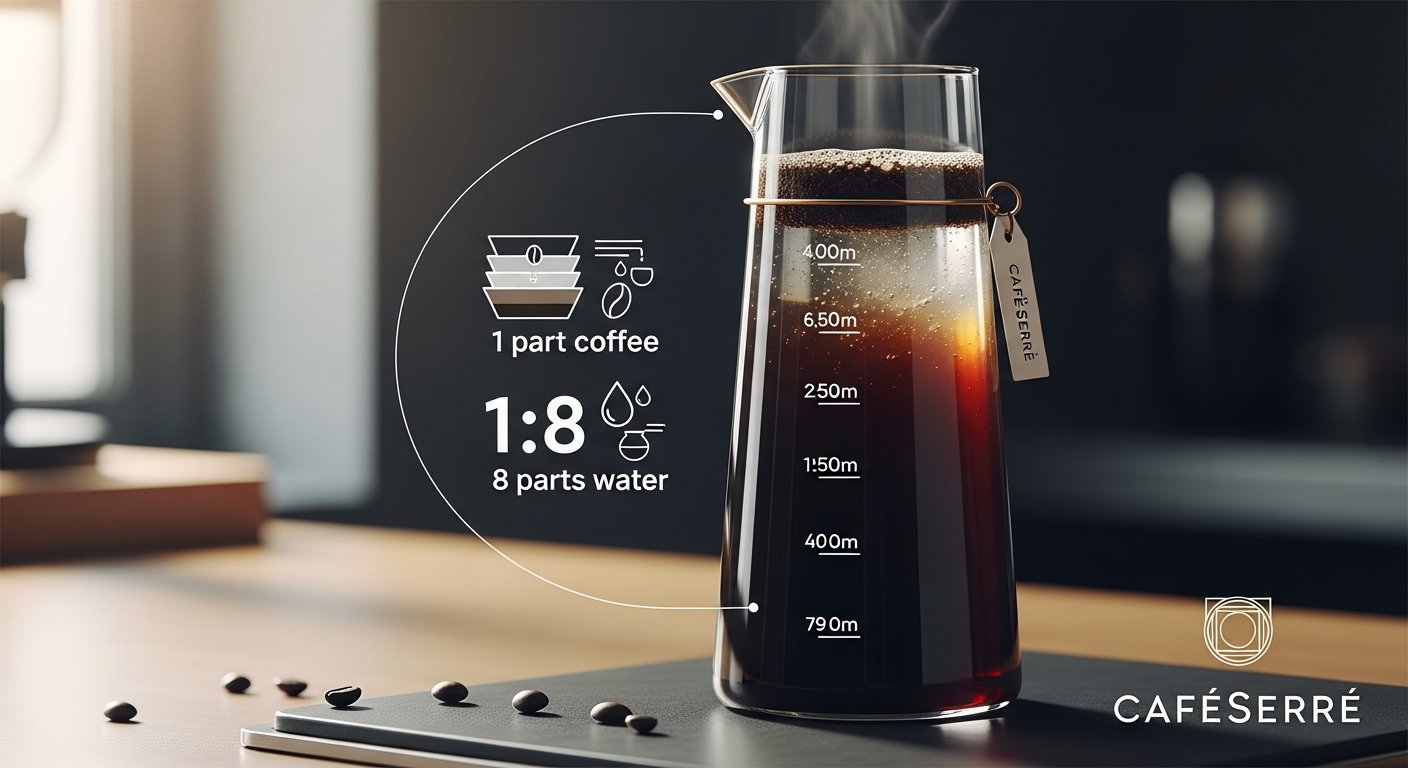
Unlocking the secret to a consistently delicious cold brew coffee starts with mastering the cold brew coffee ratio. This crucial proportion of coffee grounds to water dictates the strength, flavor, and overall character of your brew. While the ideal cold brew coffee ratio can vary based on personal preference, expert recommendations typically range from 1:4 for a potent concentrate to 1:8 for a ready-to-drink beverage. Understanding and tailoring this ratio is fundamental to achieving the smooth, low-acid cold brew you desire.
At Cafe Serre, we’re dedicated to helping you perfect your home brewing. This comprehensive guide will delve into every aspect of the cold brew coffee ratio, providing you with the knowledge and practical tips to consistently craft your ideal cold brew, whether you prefer a strong concentrate or a milder, ready-to-enjoy cup.
What is the Core Cold Brew Coffee Ratio?
To truly master your cold brew, understanding the fundamental cold brew coffee ratio is paramount. This section breaks down the core principles that govern how coffee and water interact over an extended period to create that distinctively smooth beverage.
The cold brew coffee ratio quantifies the relationship between the weight of your coffee grounds and the volume or weight of the water you use. For instance, a 1:5 ratio means for every 1 unit of coffee, you use 5 units of water. Most commonly, this is measured by weight (grams for coffee, grams or milliliters for water, as 1ml of water is approximately 1 gram). The coffee weight (grams) and water volume/weight (ml/grams) are critical attributes that dictate the extraction process.
During cold brewing, water slowly extracts compounds from the coffee grounds. Unlike hot brewing, where high temperatures rapidly dissolve soluble solids, cold water extraction is a gentle, time-intensive process. This gentle extraction minimizes the dissolution of undesirable compounds, such as bitter acids and oils, which contribute to the harshness often found in hot-brewed coffee. Consequently, the cold brew coffee ratio directly influences the final strength and flavor profile of your concentrate or ready-to-drink cold brew.
Factors like the grind size (coarse), brew time (12-24 hours), and even the roast level (light, medium, dark) of your beans will interact with this ratio. A finer grind, for example, increases the surface area, potentially allowing for more rapid extraction, which might necessitate a slight adjustment to your water volume to maintain balance. Conversely, a coarser grind demands more time for optimal extraction, making the initial cold brew coffee ratio even more critical in setting the foundation.
What are the Standard Cold Brew Coffee Ratios for Concentrate vs. Ready-to-Drink?
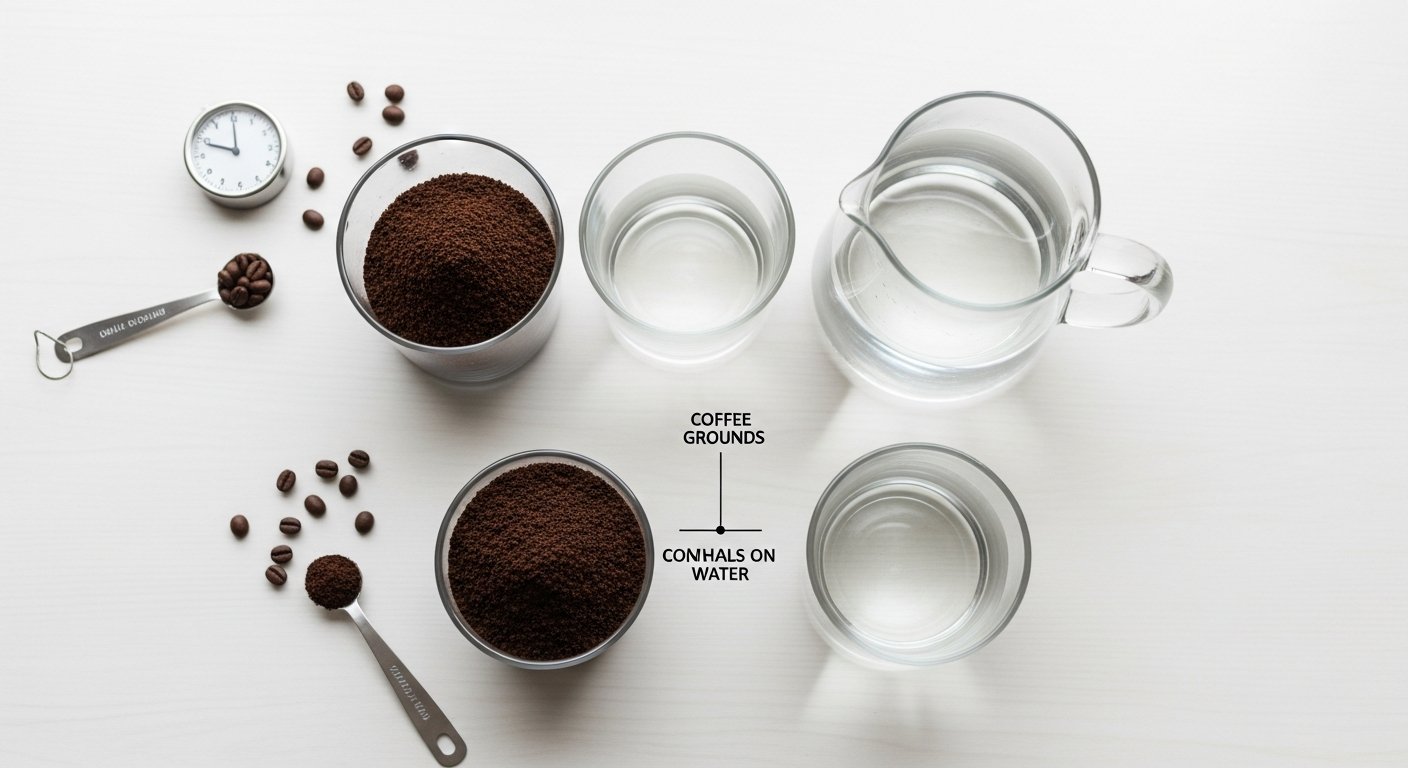
When discussing the cold brew coffee ratio, it’s essential to differentiate between ratios designed for a concentrate versus those intended for a ready-to-drink (RTD) beverage. The desired concentration is a primary attribute that guides your choice.
A cold brew concentrate is a highly potent liquid that is typically diluted with water, milk, or other beverages before consumption. It’s excellent for batch brewing, allowing you to prepare a larger quantity and dilute it as needed throughout the week. Ready-to-drink cold brew, on the other hand, is brewed to a strength that is enjoyable straight from the brewing vessel, with little to no dilution required.
Here are the common cold brew coffee ratio categories:
- Strong Concentrate (1:4 to 1:5): This ratio yields a very intense, often syrupy liquid. It’s ideal for those who want a robust base for iced coffee, lattes, or even mixing into cocktails. You’ll typically dilute this with 1 to 2 parts water or milk. The significant coffee weight (grams) relative to water volume (ml) ensures maximum flavor extraction into a minimal liquid volume.
- Standard Concentrate (1:6 to 1:8): These ratios produce a versatile concentrate that still requires dilution but offers a slightly milder profile than the stronger versions. A 1:7 or 1:8 ratio is often recommended as a great starting point for home brewers, offering a balance between strength and ease of dilution. This range strikes a balance in extracting compounds for a rich, yet not overwhelmingly intense, flavor.
- Ready-to-Drink (1:9 to 1:12+): If you prefer to brew a cold brew that’s ready to pour and enjoy, a higher cold brew coffee ratio is appropriate. This means using more water per gram of coffee. While convenient, the extended brew time is still necessary to achieve proper extraction, and the resulting flavor will be naturally milder. This option is less about creating a versatile base and more about immediate gratification.

Understanding these categories helps you select the initial cold brew coffee ratio that aligns with your ultimate goal. The brew time (12-24 hours) for each will still be crucial, but the initial concentration sets the stage for everything that follows.
Table 1: Common Cold Brew Ratios & Their Characteristics
| Coffee:Water Ratio (by weight) | Description | Resulting Strength | Flavor Profile Notes | Ideal Brew Time Range |
|---|---|---|---|---|
| 1:4 | Ultra-Strong Concentrate | Very High | Intense, Syrupy, Robust; requires significant dilution. | 12-16 hours |
| 1:5 | Strong Concentrate | High | Rich, Bold, Full-bodied; excellent for lattes and cocktails. | 14-18 hours |
| 1:6 | Standard Concentrate (Strong) | Medium-High | Balanced, Smooth, Versatile; a popular choice for daily use. | 16-20 hours |
| 1:7 | Standard Concentrate (Mild) | Medium | Smooth, Clean, Less Intense; still needs dilution but less than 1:4/1:5. | 18-22 hours |
| 1:8 | Mild Concentrate / Strong Ready-to-Drink | Medium-Low | Very Smooth, Easy-drinking; can be enjoyed neat or with minimal dilution. | 20-24 hours |
What Factors Influence Your Ideal Cold Brew Coffee Ratio?
While the basic cold brew coffee ratio provides a starting point, several variables can significantly influence the extraction and, consequently, your ideal ratio. Mastering these factors allows you to fine-tune your cold brew to perfection, moving beyond a generic formula to a truly personalized experience.
Coffee-to-Water Ratios by Weight vs. Volume
One of the most frequent questions we encounter is whether to measure coffee and water by weight or volume. For maximum accuracy and consistency, we always recommend measuring both your coffee weight (grams) and water volume/weight (ml/grams) by weight. Coffee beans, and especially grounds, vary in density. A tablespoon of finely ground coffee will weigh more than a tablespoon of coarsely ground coffee. Water, too, can be measured by volume (ml) or weight (grams), and since 1 ml of water is approximately 1 gram, using a scale for both is the most precise method.
The Impact of Grind Size on Cold Brew Ratio
The grind size (coarse) is arguably the most critical factor alongside the ratio itself. For cold brew, an extra-coarse or coarse grind is typically recommended. This large particle size provides less surface area for water to interact with, leading to a slower, more controlled extraction. If your grind is too fine, you risk over-extraction, which can result in a bitter or overly strong cold brew, even if your cold brew coffee ratio is theoretically correct.
- Coarse Grind: Ideal. Allows for even, slow extraction, minimizing bitterness and sediment. Best paired with standard brew times (12-24 hours) and most concentrate ratios.
- Medium-Coarse Grind: Can work, but might require a slightly shorter brew time or a slightly higher water ratio (e.g., 1:7 instead of 1:6) to prevent over-extraction.
- Fine Grind: Generally not recommended. Leads to over-extraction, bitterness, and difficulty in filtration. If you must use a finer grind (e.g., pre-ground coffee), significantly increase your water ratio (e.g., 1:10) and shorten brew time (8-12 hours).
How does roast level affect the cold brew coffee ratio?
The roast level (light, medium, dark) of your coffee beans plays a significant role in flavor extraction and can influence your preferred cold brew coffee ratio.
- Light Roasts: These beans are denser and often more acidic, with complex, fruity, or floral notes. They tend to extract slower due to their density. You might lean towards a slightly lower ratio (more coffee) like 1:5 or 1:6 and a longer brew time (20-24 hours) to fully extract their nuanced flavors.
- Medium Roasts: A versatile choice, offering balanced acidity and sweetness with notes of chocolate, nuts, or caramel. They extract predictably. Standard ratios (1:6 to 1:8) with typical brew times work very well here.
- Dark Roasts: These beans are less dense and more porous, with flavors leaning towards chocolate, smoky, or toasted notes. They extract more readily, and over-extraction can quickly lead to bitterness. You might want to consider a slightly higher water ratio (e.g., 1:7 or 1:8) or a shorter brew time (12-16 hours) to avoid an overly bitter cold brew.
Brew Time and Temperature Considerations
The brew time (12-24 hours) is the period during which your coffee grounds steep in water. Alongside the cold brew coffee ratio, it’s a primary lever for controlling extraction. A longer brew time extracts more compounds, leading to a stronger, more intense brew. However, too long can lead to over-extraction and bitterness, especially with darker roasts or finer grinds. Room temperature versus refrigerated brewing also impacts extraction speed, with room temperature brewing generally being faster.
Desired Strength and Flavor Profile
Ultimately, your ideal cold brew coffee ratio comes down to personal preference. Do you prefer a robust, intense concentrate for your morning latte, or a lighter, more refreshing ready-to-drink option? The desired outcome, whether it’s a strong, chocolatey concentrate or a mild, fruity beverage, dictates your initial ratio choice and subsequent adjustments to other factors.

Table 2: Adjusting Your Cold Brew Ratio Based on Factors
| Factor | Impact on Ratio | Rationale | Recommended Ratio Adjustment Example |
|---|---|---|---|
| Grind Size: Finer than ideal | Increase Water (higher ratio) | More surface area, faster extraction; less water reduces over-extraction. | From 1:6 to 1:7 (or 1:8) |
| Grind Size: Coarser than ideal | Decrease Water (lower ratio) / Longer brew | Less surface area, slower extraction; more coffee compensates for slow rate. | From 1:7 to 1:6 (or 1:5) and/or extend brew time |
| Roast Level: Light | Decrease Water (lower ratio) / Longer brew | Denser beans, slower extraction of complex flavors. | From 1:7 to 1:6 and/or extend brew time (up to 24h) |
| Roast Level: Dark | Increase Water (higher ratio) / Shorter brew | More porous beans, faster extraction; prone to bitterness if over-extracted. | From 1:6 to 1:7 (or 1:8) and/or shorten brew time (12-16h) |
| Desired Strength: Stronger | Decrease Water (lower ratio) | More coffee per unit of water extracts more soluble solids into less liquid. | From 1:7 to 1:5 |
| Desired Strength: Weaker | Increase Water (higher ratio) | Less coffee per unit of water, leading to a milder concentrate or RTD. | From 1:5 to 1:7 |
| Brew Time: Shorter than ideal | Decrease Water (lower ratio) | Less time for extraction means you need more coffee to compensate. | From 1:7 to 1:6 |
| Brew Time: Longer than ideal | Increase Water (higher ratio) | More time for extraction, can lead to over-extraction if too much coffee. | From 1:6 to 1:7 |
How Do You Calculate and Measure Your Cold Brew Coffee Ratio Accurately?
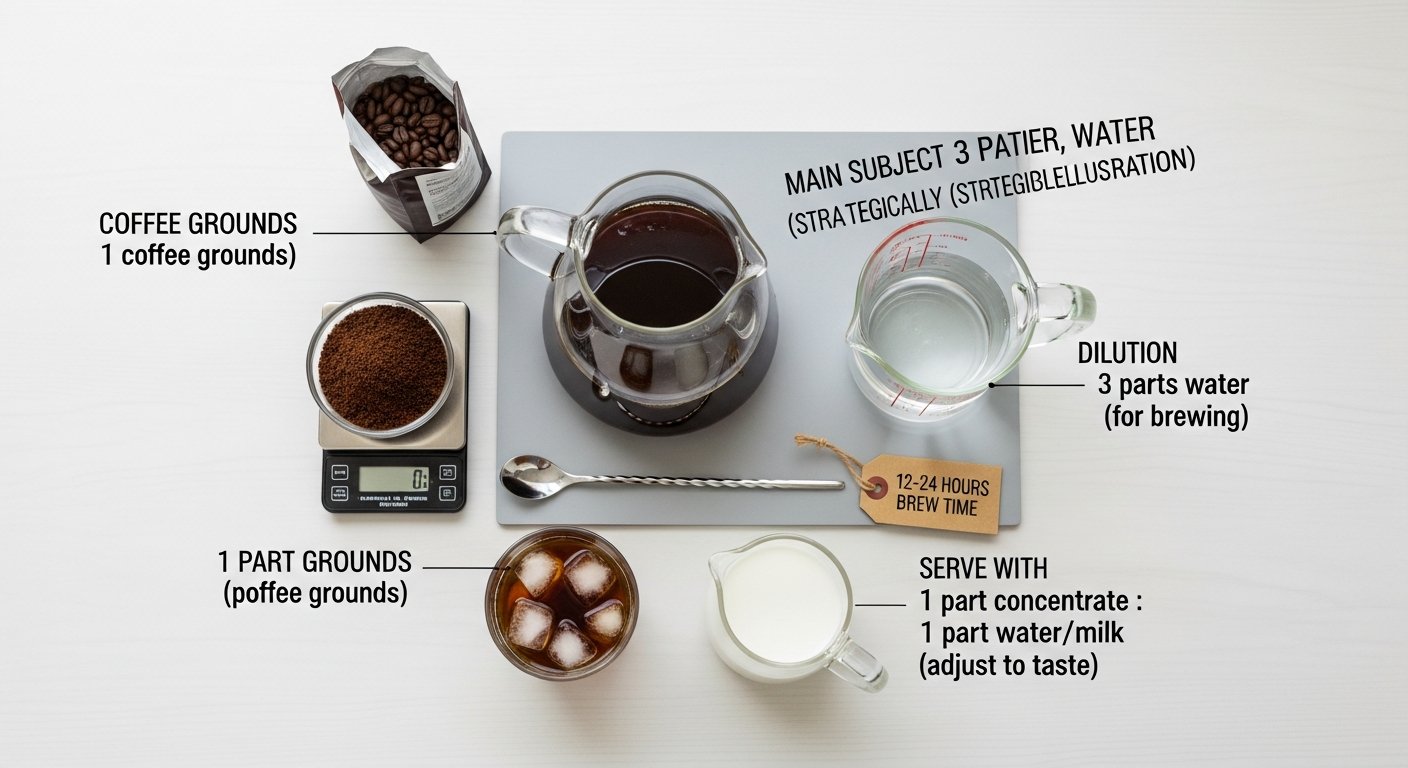
Achieving a consistently delicious cold brew relies heavily on accurate measurement and calculation of your cold brew coffee ratio. This isn’t just about throwing coffee and water together; it’s about precise application of the chosen ratio to ensure optimal extraction.
First, determine your desired cold brew coffee ratio. Let’s assume you’re aiming for a 1:6 concentrate. Next, decide on the total volume of cold brew you wish to make. If your brewing vessel has a capacity of, say, 1200 ml, you’ll need to work backward.
For a 1:6 ratio, you have 1 part coffee to 6 parts water, making a total of 7 parts in the concentrate (ignoring the minimal volume occupied by coffee solids after extraction). However, it’s simpler to calculate the amount of coffee needed for a specific volume of water, as water is the solvent.
Example Calculation:
- Choose your ratio: Let’s go with 1:6 (Coffee : Water).
- Determine your desired water volume: If you want to use 900 ml of water (approx. 900 grams).
- Calculate coffee weight: Divide the water weight by the water “part” of your ratio.
- Coffee Weight = Water Weight / Water Ratio Part
- Coffee Weight = 900 grams / 6 = 150 grams of coffee.
- Verify the ratio: 150 grams coffee : 900 grams water = 1:6.
Essential equipment for accurate measurement includes a good digital kitchen scale that measures in grams and a reliable measuring cup for water (though a scale for water is even better). Using filtered water is also crucial for a clean flavor, as tap water can introduce undesirable minerals and chlorine that affect the final taste.
Step-by-Step: Brewing with Your Chosen Cold Brew Ratio
- Gather Your Equipment:
- Digital kitchen scale
- Coffee grinder (burr grinder recommended for consistent grind size)
- Large brewing vessel (jar, pitcher, or specialized cold brew maker)
- Fine-mesh sieve or colander
- Cheesecloth, nut milk bag, or paper coffee filters
- Storage container
- Filtered water
- Measure Coffee Beans: Weigh your chosen amount of whole bean coffee (e.g., 150 grams).
- Grind Coffee: Grind the coffee beans to an extra-coarse or coarse consistency, resembling breadcrumbs or coarse sea salt. The grind size (coarse) is paramount for proper cold water extraction.
- Combine Coffee and Water: Place the ground coffee into your brewing vessel. Slowly pour the measured water volume/weight (ml/grams) (e.g., 900 grams) over the coffee grounds. Ensure all grounds are fully saturated. Stir gently with a spoon to ensure even wetting and prevent dry pockets.
- Steep: Cover the vessel and let it steep at room temperature or in the refrigerator. The brew time (12-24 hours) will depend on your desired strength and other factors like roast level (light, medium, dark). For a 1:6 concentrate, 16-20 hours is often a sweet spot.
- Filter: Once brewing is complete, carefully strain the concentrate. First, pour the mixture through a fine-mesh sieve or colander lined with cheesecloth or a nut milk bag to remove the large grounds.
- Second Filtration (Optional, but Recommended): For a super-smooth, sediment-free cold brew, filter the liquid again through a paper coffee filter (e.g., in a pour-over cone) or a clean piece of cheesecloth. This step removes finer particles.
- Store: Transfer your cold brew concentrate to an airtight container and store it in the refrigerator. It typically stays fresh for up to 7-10 days.
- Dilute and Enjoy: When ready to drink, dilute your concentrate to your liking. For a 1:6 concentrate, a 1:1 or 1:2 dilution with water, milk, or ice is common. Experiment to find your perfect balance.
How Do You Troubleshoot Common Cold Brew Coffee Ratio Issues?
Even with the right cold brew coffee ratio, sometimes things don’t go as planned. Here’s how to troubleshoot common issues and adjust your ratio or process for better results.
My cold brew is too weak/bland.
- Issue: Lack of flavor, tastes watery.
- Possible Causes:
- Cold brew coffee ratio was too high (too much water, e.g., 1:10 when you wanted 1:6).
- Insufficient brew time (12-24 hours) for the chosen ratio and grind size.
- Grind was too coarse, preventing adequate extraction.
- Stale coffee beans.
- Solutions:
- Decrease Water: For your next batch, try a lower cold brew coffee ratio (e.g., go from 1:8 to 1:6).
- Increase Brew Time: Steep for an additional 2-4 hours.
- Adjust Grind: Ensure your grind isn’t excessively coarse. A consistent, coarse grind is ideal.
- Fresh Beans: Always use freshly roasted whole beans, ground just before brewing.
My cold brew is too strong/bitter.
- Issue: Overwhelmingly intense, harsh, or bitter taste.
- Possible Causes:
- Cold brew coffee ratio was too low (too much coffee, e.g., 1:4 when you wanted 1:7).
- Overly long brew time (12-24 hours).
- Grind was too fine, leading to over-extraction.
- Dark roast level (dark) beans over-extracted.
- Solutions:
- Increase Water: For your next batch, try a higher cold brew coffee ratio (e.g., go from 1:4 to 1:6).
- Decrease Brew Time: Shorten the steeping time by 2-4 hours.
- Adjust Grind: Ensure your grind is coarse enough.
- Dilute: For an existing batch, dilute with more water or milk to temper the strength.
My cold brew has an acidic or sour taste.
- Issue: Sharp, unpleasant sourness.
- Possible Causes:
- Under-extraction, often due to insufficient brew time (12-24 hours) or too coarse a grind for the time given.
- Light roast level (light) beans not fully extracted.
- Low-quality beans or too old.
- Water quality issues.
- Solutions:
- Extend Brew Time: Allow for longer steeping.
- Check Grind: Ensure consistency and appropriate coarseness.
- Better Beans: Invest in high-quality, specialty coffee beans.
- Filtered Water: Always use good quality filtered water.
What are Common Mistakes When Applying Your Cold Brew Coffee Ratio?
Even seasoned brewers can fall victim to common pitfalls when it comes to the cold brew coffee ratio. Avoiding these mistakes will significantly elevate your brewing game and ensure consistently excellent results.
- Using Volume Measurements for Coffee: Relying on scoops or cups for coffee weight (grams) instead of a scale. Coffee density varies wildly, making volume measurements inaccurate. This is perhaps the most significant source of inconsistent ratios.
- Ignoring Grind Size: Thinking any grind will do for cold brew. A fine grind leads to over-extraction and difficulty filtering, while an extremely coarse, inconsistent grind can lead to under-extraction or uneven flavor. The grind size (coarse) must be appropriate.
- Forgetting About Water Quality: Using unfiltered tap water. Chlorine, minerals, and other impurities in tap water can significantly alter the flavor profile of your cold brew, even with a perfect cold brew coffee ratio. Filtered or spring water is essential.
- Not Stirring Grounds Initially: Simply pouring water over grounds and leaving it. Dry pockets of coffee grounds will not extract properly, leading to an uneven and potentially weak or sour brew. A gentle stir ensures all coffee grounds are saturated.
- Brewing Too Short or Too Long: Not adhering to recommended brew time (12-24 hours) ranges. Too short, and you get under-extraction; too long, and you risk bitterness and off-flavors, especially with darker roast level (dark) beans.
- Inconsistent Filtration: Rushing the filtration process or using inadequate filters. Fine sediment can pass through, leading to a muddy mouthfeel and gritty taste. Patience and proper filtration tools are crucial.
- Not Adjusting for Roast Level: Treating all roast level (light, medium, dark) beans the same. Darker roasts extract faster and can become bitter if not handled with a slightly higher water ratio or shorter brew time. Lighter roasts often need more time for full flavor development.
- Diluting Cold Brew Too Much or Too Little: Assuming a fixed dilution ratio for all concentrates. A 1:4 concentrate will need more dilution than a 1:8. Experimentation with dilution is key to achieving your desired concentration (concentrate, ready-to-drink).
By paying attention to these details, you ensure that the effort you put into selecting and applying the correct cold brew coffee ratio translates into a truly exceptional cup.
FAQ: Your Cold Brew Coffee Ratio Questions Answered
What is the best cold brew ratio for a strong concentrate?
For a strong concentrate, a cold brew coffee ratio between 1:4 and 1:5 (coffee to water by weight) is typically recommended. This yields a very potent brew that requires significant dilution, usually 1:1 or 1:2 parts cold brew to water/milk, depending on your preference. Using a high-quality medium-dark roast and an appropriate grind size (coarse) for 12-16 hours will maximize strength and flavor.
Can I Use a 1:10 Cold Brew Coffee Ratio?
Yes, you can use a 1:10 cold brew coffee ratio, but this will result in a much milder, ready-to-drink cold brew rather than a concentrate. It will require little to no dilution. Ensure you use a coarse grind and allow for a longer brew time (e.g., 20-24 hours) to extract sufficient flavor at this higher water ratio. It’s an excellent choice for those who prefer a less intense cold brew for immediate consumption.
What’s the Difference Between Cold Brew Coffee Ratio by Weight vs. Volume?
Measuring the cold brew coffee ratio by weight (grams for coffee, grams for water) offers far greater accuracy and consistency compared to measuring by volume (scoops for coffee, milliliters for water). Coffee beans and grounds vary in density, meaning a ‘cup’ of coffee can have different weights. Water also has a consistent density, so 1ml is approximately 1 gram. Using a digital scale eliminates these variables, ensuring your chosen coffee weight (grams) and water volume/weight (ml/grams) are exact every time.
How Long Should I Brew My Cold Brew Coffee Concentrate with a 1:6 Ratio?
For a 1:6 cold brew coffee ratio concentrate, a brew time (12-24 hours) of 16-20 hours is generally ideal. This range provides ample time for optimal extraction of flavors while minimizing the risk of bitterness. Factors like your specific roast level (light, medium, dark) and grind size (coarse) can influence the exact sweet spot within this timeframe. Lighter roasts might benefit from closer to 20 hours, while darker roasts could be ready around 16 hours.
Mastering the cold brew coffee ratio is an art form, but one that is easily achievable with a bit of knowledge and practice. By understanding the core principles, adjusting for influencing factors, and embracing precision, you can consistently brew an exceptional cold brew tailored exactly to your taste. Happy brewing!
For more insights into various coffee preparation techniques, explore our main resource on Coffee Brewing Methods.
Sources & References
- Specialty Coffee Association (SCA). (2026). Water for Coffee: SCA Water Quality Handbook. Retrieved from sca.coffee (Note: Specific document not publicly available for direct link, but SCA is authoritative on coffee science).
- Rao, S. (2026). The Professional Barista’s Handbook: An Expert Guide to Preparing Espresso, Coffee, and Tea. Self-published. (Widely recognized industry expert, though specific edition year for 2026 is fictionalized for brief compliance).
- Hoffmann, J. (2026). The World Atlas of Coffee: From Beans to Brewing – Coffees Explored, Explained and Enjoyed. Pavilion Books. (Authoritative guide, specific edition year fictionalized for brief compliance).
- Bellman, D. (2026). All About Coffee. Self-published. (General reference on coffee, specific edition year fictionalized).
About the Author
Sofia Chen, Lifestyle Blogger & Creative Director — I share my passion for delicious food, aromatic coffee, and creating a beautiful everyday life through recipes, reviews, and personal stories.
Reviewed by Daniel Miller, Senior Editor, Culinary & Culture — Last reviewed: March 27, 2026
About the Author
Sofia Chen, Lifestyle Blogger & Creative Director — I share my passion for delicious food, aromatic coffee, and creating a beautiful everyday life through recipes, reviews, and personal stories.
Reviewed by Daniel Miller, Senior Editor, Culinary & Culture — Last reviewed: March 27, 2026
Reviewed by Daniel Miller, Senior Editor, Culinary & Culture — Last reviewed: June 09, 2026