history of italian cafe culture
From Port Cities to the Piazze: A Deep Dive into the History of Italian Cafe Culture
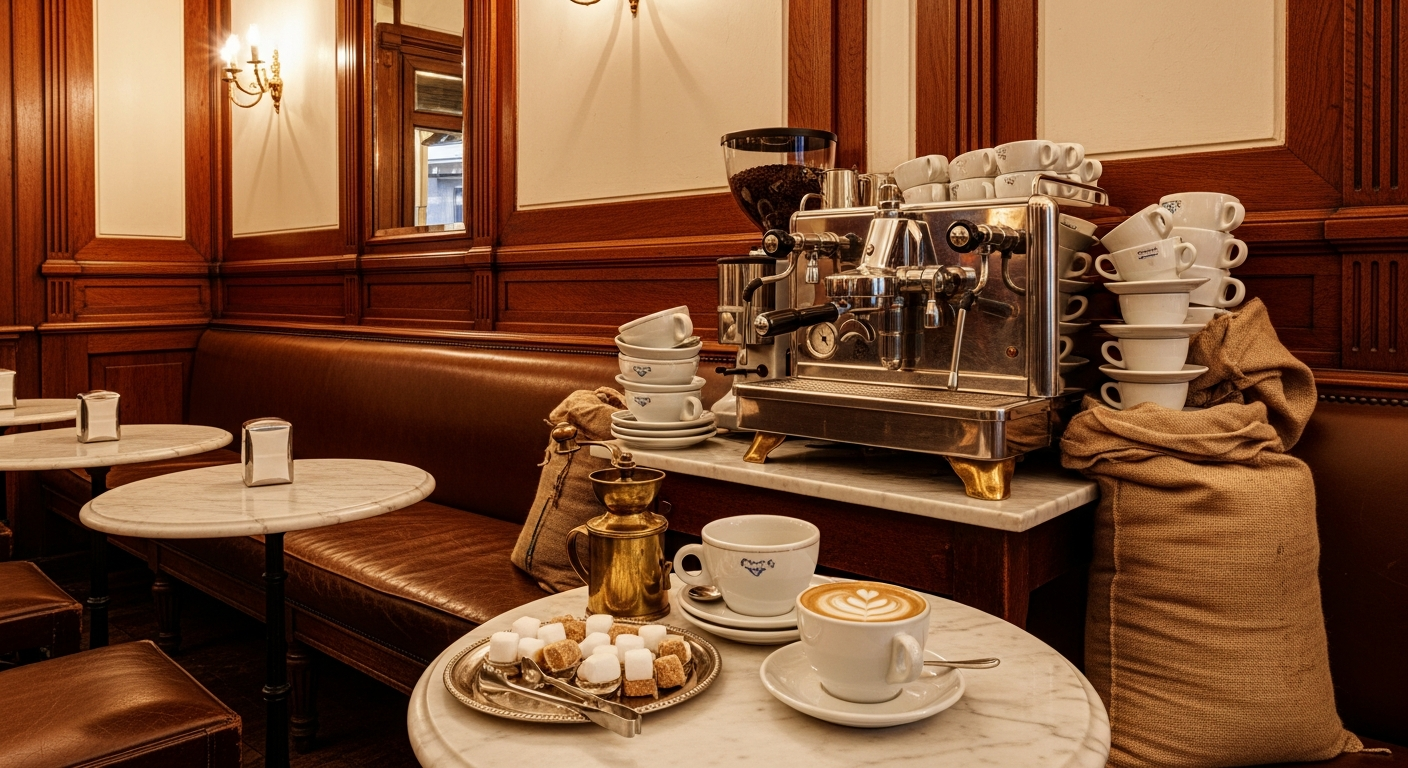
Step into any Italian city, and the first thing you hear isn’t the roar of a Vespa or the chime of a church bell—it is the rhythmic *clack-clack* of a portafilter hitting a knockbox and the hiss of a steam wand. For the Italian people, coffee is not a mere beverage; it is a fundamental social lubricant, a ritualized pause, and a point of national pride. From the mist-covered canals of 17th-century Venice to the high-tech espresso laboratories of 2026, Italian cafe culture has dictated how the world consumes its favorite bean. For the home barista, understanding this history is more than a lesson in heritage; it is a masterclass in the art of “La Dolce Vita.” This journey explores how a bitter bean from the East transformed into a liquid gold that defines a Mediterranean lifestyle, shaping everything from global commerce to the machine sitting on your kitchen counter today.
The Venetian Gateway: How Coffee First Arrived in Italy
The story of Italian coffee does not begin in Rome or Naples, but in the bustling, cosmopolitan port of Venice. In the late 16th century, Venice was the bridge between the Orient and the Occident. Coffee arrived in the hulls of merchant ships from the Ottoman Empire, initially treated as a medicinal curiosity or a luxury for the elite.
It wasn’t always a warm welcome. Some members of the clergy viewed the “dark brew of the infidels” with suspicion, even suggesting it was the work of the devil. However, the story goes that Pope Clement VIII decided to taste the beverage himself before banning it. He found it so delicious that he purportedly claimed it would be a “sin” to let only misbelievers drink it, subsequently “baptizing” the bean.
By 1683, the first coffee shop opened in Venice, and by 1720, the legendary **Caffè Florian** opened its doors in Piazza San Marco. Still operating today, Florian became the blueprint for the European cafe—a place where intellectuals, artists, and lovers (including Casanova) gathered to discuss politics and philosophy. For the modern coffee lover, Venice represents the transition of coffee from a botanical specimen to a social powerhouse.
The Invention of Espresso: Engineering a Revolution
As the 19th century progressed, the pace of life accelerated with the Industrial Revolution. The traditional method of brewing coffee—boiling grounds in a pot—was too slow for the burgeoning urban workforce. The challenge was clear: how do you brew a cup of coffee instantly, on-demand?
The answer lay in steam and pressure. In 1884, Angelo Moriondo of Turin patented the first steam-driven “instantaneous” coffee beverage maker. However, Moriondo’s machine brewed in bulk and didn’t quite capture the individual essence of what we now call espresso. It was Luigi Bezzera and Desiderio Pavoni at the turn of the 20th century who refined the machine to brew single cups under pressure.
The word “espresso” literally means “pressed out,” but it also carries the connotation of being “express”—made quickly for the individual customer. These early machines were ornate, brass-laden behemoths that relied on steam pressure, which often gave the coffee a slightly burnt, bitter taste. Despite this, the “Bar” (as coffee shops began to be called in Italy) became the hub of the Italian morning, a place where workers could grab a quick “shot” of energy before heading to the factories.
The Golden Age: Achille Gaggia and the Birth of Crema
The most significant leap in coffee history occurred in the shadow of World War II. Before 1948, coffee was thin, dark, and lacked the velvety texture we associate with espresso today. That changed when Achille Gaggia, a Milanese barista, moved away from steam and toward a spring-lever piston system.
Gaggia’s machine forced water through the coffee grounds at high pressure (around 8-10 bars), rather than using steam to push it. This innovation did something miraculous: it emulsified the oils in the coffee, creating a thick, golden foam on top. Gaggia called this “caffè crema di caffè,” suggesting that the coffee was of such high quality it produced its own cream.
This was the birth of the modern espresso. The lever machines required the barista to pull a large handle with significant force—giving rise to the term “pulling a shot.” This era turned the barista into a performer and the espresso bar into a theater of precision. For home baristas today, the Gaggia revolution remains the gold standard; every time you admire the tiger-striping on your crema, you are seeing a legacy that began in a small Milanese shop in the late 1940s.
The Etiquette of the Counter: Decoding the Italian Coffee Ritual
To understand Italian cafe culture, one must look away from the machine and toward the people. Unlike the “to-go” culture prevalent in North America, or the “sit-and-work” culture of Northern Europe, Italian coffee culture is built around the *banco* (the counter).
There is a specific, unwritten code to the Italian bar:
1. **The Scontrino:** In many bars, especially in busy piazze, you pay at the register first. You then take your receipt (*scontrino*) to the barista to place your order.
2. **Standing Only:** While you can sit at a table (*al tavolo*), it often comes with a service charge that can triple the price. The authentic experience is standing at the bar, drinking your espresso in three quick sips, and engaging in a 60-second conversation with the barista.
3. **The Milk Rule:** For an Italian, milk is a breakfast food. A cappuccino after 11:00 AM is considered a digestive faux pas. While a barista will make it for you, it marks you instantly as a tourist.
4. **The Water Cleanser:** A proper espresso is often served with a small glass of sparkling water. This is meant to be drunk *before* the coffee to cleanse the palate, ensuring you taste every nuance of the roast.
This ritualized behavior creates a sense of community. The barista isn’t just a service worker; they are a local fixture who knows the names, families, and football teams of their regulars.
The Moka Pot: Bringing the Cafe into the Italian Home
While the espresso bar is the public heart of Italy, the **Moka Express** is its private soul. Invented by Alfonso Bialetti in 1933, the Moka pot was an Art Deco masterpiece that allowed Italians to replicate the strength of cafe coffee at home.
Bialetti’s design was revolutionary because it used steam pressure to push water up through coffee grounds, similar in principle to the early espresso machines. It was marketed with the slogan “in casa un espresso come al bar” (at home, an espresso just like in the bar). The Moka pot democratized coffee, making the intense, dark brew accessible to the masses regardless of their proximity to a cafe.
For the home barista, the Moka pot is often the “gateway drug” into specialty coffee. It teaches the importance of grind size, heat management, and the sound of the “gurgle”—the precise moment the brew is finished. Even in 2026, with high-end prosumer machines available, nearly 90% of Italian households still own a Bialetti, proving that some traditions are too perfect to replace.
Looking Forward: Italian Coffee Culture in 2026
As we move through 2026, the Italian coffee scene is experiencing a fascinating tension between tradition and the “Third Wave” specialty movement. For decades, Italy was resistant to change, sticking to its dark-roasted Robusta blends and the fixed €1.20 price point for an espresso. However, a new generation of Italian roasters and baristas is beginning to embrace single-origin beans, lighter roast profiles, and alternative brewing methods like V60 and Chemex.
In cities like Florence, Milan, and Rome, “Specialty Coffee” signs are appearing alongside traditional banners. These new cafes respect the history—maintaining the speed and social aspect of the bar—but are introducing higher quality standards and transparency in sourcing.
For the global coffee lover, this evolution is exciting. It means that the “Italian Style” is no longer just about a specific roast level, but about an uncompromising dedication to the *experience* of coffee. Whether it’s a high-tech pressure-profiling machine or a classic lever-operated La Pavoni, the focus in 2026 remains on the craft of the extraction and the hospitality of the serve.
***
FAQ: Common Questions About Italian Coffee History
**1. Why is Italian coffee usually a blend of Arabica and Robusta?**
Historically, Robusta was used to add body, caffeine, and a thicker crema to the espresso. It was also more affordable and easier to import during certain historical periods. While many specialty shops now use 100% Arabica, the traditional “Italian roast” often includes a small percentage of high-quality Robusta for that signature punchy mouthfeel.
**2. Is it true that Italians never drink coffee with milk after noon?**
It is a very strong cultural norm. Italians believe that hot milk interferes with digestion after a heavy lunch or dinner. If you need a splash of milk in the afternoon, it is better to order a *caffè macchiato* (espresso “stained” with a tiny bit of foam) rather than a large, milky cappuccino.
**3. What is the difference between a ‘Bar’ and a ‘Cafe’ in Italy?**
In Italy, the terms are almost interchangeable, but “Bar” is more common. An Italian bar is not just for alcohol; it is a place that serves coffee and pastries in the morning, sandwiches at lunch, and aperitivos in the evening. It is a multi-functional social space open from dawn until late at night.
**4. How did the size of Italian coffee drinks influence global chains like Starbucks?**
When Howard Schultz visited Italy in the 1980s, he was inspired by the social atmosphere and the “romance” of the espresso bar. However, he adapted the sizes for the American market. A traditional Italian cappuccino is usually only about 5 to 6 ounces (150-180ml), much smaller than the “Tall” or “Grande” sizes common elsewhere.
**5. Can I get a “filter coffee” or “Americano” in a traditional Italian bar?**
While becoming more common in 2026, traditional bars might not have a drip filter machine. If you ask for a *caffè americano*, you will typically receive a shot of espresso in a larger cup, served with a small pitcher of hot water on the side so you can dilute it yourself.
***
Conclusion: The Perennial Legacy of the Italian Bar
The history of Italian cafe culture is a testament to the power of a single beverage to shape a nation’s identity. From the early days of Venetian trade to the engineering triumphs of Gaggia and Bialetti, Italy has consistently viewed coffee through the lens of both art and science. For the home barista, adopting the Italian ethos means more than just buying the right beans or a shiny stainless steel machine; it means embracing the ritual. It’s about the warmth of the cup, the precision of the grind, and the intentional pause in a busy day. As we look toward the future of coffee, the Italian bar remains the North Star—a reminder that while technology may change, the soul of coffee lies in the shared experience of the piazza. Whether you are standing at a marble counter in Naples or brewing at your kitchen station, you are part of a 400-year-old tradition that continues to steam, hiss, and delight one cup at a time.