Light Vs Dark Roast Coffee
Light vs Dark Roast Coffee: Unraveling the Roast Spectrum for the Ultimate Brew
Affiliate disclosure: This article may contain affiliate links. Recommendations are independent and editorially driven.
For many coffee enthusiasts, the choice between light vs dark roast coffee is more than just a preference; it’s a statement about their understanding and appreciation of coffee’s incredible versatility. The journey from a green, unroasted bean to the aromatic, flavorful coffee we brew each morning is a complex dance of heat, time, and chemistry, culminating in a spectrum of roasts that offer dramatically different sensory experiences. At cafeserre, we believe that understanding this spectrum is fundamental to truly appreciating the art of coffee. Whether you’re a seasoned connoisseur or just beginning your coffee exploration, delving into the intricacies of light and dark roasts will transform your daily ritual.
This comprehensive guide will take you deep into the heart of the roasting process, exploring how different roast levels impact everything from flavor and aroma to caffeine content and health benefits. We’ll demystify common misconceptions, provide practical brewing advice, and help you navigate the vast world of coffee to find your perfect match. Prepare to unlock a richer, more informed coffee journey, one delicious cup at a time.
The Art and Science of Coffee Roasting: Defining Light and Dark
At its core, coffee roasting is a heat-driven chemical transformation that unlocks hundreds of aromatic compounds dormant within the green coffee bean. The duration and intensity of this process are what differentiate a light roast from a dark roast, fundamentally altering the bean’s structure, density, and chemical composition.
The Maillard Reaction and Caramelization
The magic begins with two pivotal chemical reactions: the Maillard reaction and caramelization. The Maillard reaction, a complex series of chemical reactions between amino acids and reducing sugars, is responsible for the browning and development of savory, nutty, and malty flavors. It kicks off relatively early in the roasting process. As roasting progresses, sugars within the bean begin to caramelize, contributing sweet, buttery, and sometimes burnt sugar notes. The balance and extent of these reactions dictate the final flavor profile.
Visual Cues and Internal Temperature
Roasters monitor several key indicators to determine the roast level. Visual cues like color, bean expansion, and the presence of oils are crucial. Internally, bean temperature is meticulously tracked. The “first crack” occurs when the bean’s internal moisture turns to steam, causing it to expand and crack audibly, similar to popcorn. This typically happens between 190-205°C (375-400°F). The “second crack” is a more subtle, softer crack, indicating structural breakdown and oil migration, usually occurring at higher temperatures, around 224-232°C (435-450°F).
From Green Bean to Golden Brown: The Light Roast Journey
Light roasts are typically stopped shortly after the first crack, before the second crack begins. The beans will be light brown in color, with a dry, matte surface, as the internal oils have not yet migrated to the surface. The internal temperature of the beans usually reaches between 180°C and 205°C (356°F and 401°F). This shorter roasting time and lower finishing temperature mean that more of the coffee’s original characteristics—its “origin flavors”—are preserved. Think of it as a subtle enhancement rather than an overhaul. Light roasts prioritize the unique qualities imparted by the coffee’s varietal, processing method, and terroir.
Deepening the Roast: The Dark Roast Transformation
Dark roasts, conversely, are allowed to develop well into or even past the second crack. The beans will appear dark brown, often almost black, and will have a shiny, oily surface due to the migration of internal oils. The internal temperature can reach upwards of 230°C (446°F) or even higher. At these elevated temperatures, the origin characteristics begin to diminish, replaced by flavors derived from the roasting process itself. Sugars caramelize intensely, and some carbonization may occur, contributing to smoky, bitter, and robust notes. The bean becomes less dense and more brittle due to the extensive thermal breakdown.
A Symphony of Flavors: Decoding the Taste Profiles
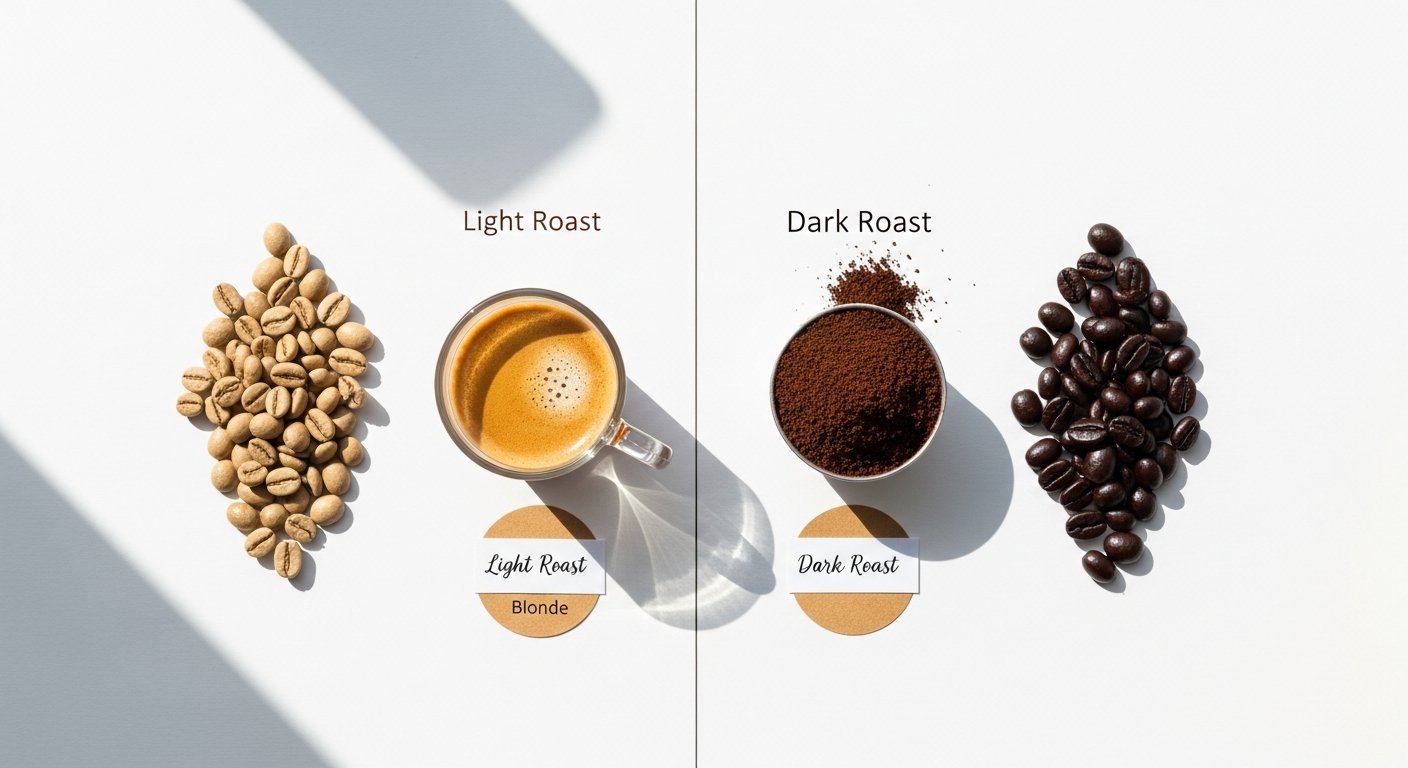
The most immediately noticeable difference between light vs dark roast coffee lies in their distinct flavor profiles. This is where the roasting process truly dictates the sensory experience, offering a palate of possibilities for every preference.
Affiliate disclosure: This article may contain affiliate links. Recommendations are independent and editorially driven.
The Brightness of Light Roasts: Acidity and Origin Character
Light roasts are celebrated for their vibrant, complex, and often delicate flavors. Because the roasting process is minimal, the inherent characteristics of the bean’s origin shine through. You’ll typically find:
- High Acidity: Not to be confused with sourness, this refers to a pleasant tartness, similar to that found in fruits or wine. It contributes to the coffee’s liveliness and brightness.
- Fruity Notes: Berries, citrus (lemon, orange, grapefruit), stone fruits (peach, apricot) are common.
- Floral Aromas: Jasmine, rose, honeysuckle can be prominent, especially in African coffees.
- Nutty/Caramel Tones: Subtler notes of almond, hazelnut, or light caramel can provide a sweet underpinning.
- Herbal/Grassy Notes: Occasionally, you might detect hints of tea or fresh herbs.
- Lighter Body: Often described as tea-like or crisp, with a clean finish.
Think of a light roast as a spotlight on the coffee bean itself, showcasing its unique genetic makeup and the environment in which it was grown. They are often less bitter, allowing subtle sweetness and complex aromatic compounds to come forward.
The Boldness of Dark Roasts: Bitterness and Roast-Driven Notes
Dark roasts, on the other hand, are defined by the intense flavors developed during the extended roasting process. The origin characteristics are largely overshadowed by the roast profile, creating a more uniform, robust, and often bolder taste experience:
- Lower Acidity: The perceived acidity is significantly reduced, replaced by a more dominant bitterness.
- Smoky/Charred Notes: Often reminiscent of toasted bread, dark chocolate, or even charcoal.
- Caramelization/Burnt Sugar: Intense caramel, molasses, or slightly burnt sugar flavors are prevalent.
- Nutty/Cocoa Tones: Deep, roasted nut flavors and dark chocolate or cocoa are very common.
- Fuller Body: Dark roasts typically have a heavier, syrupy, or creamy mouthfeel due to the breakdown of cellulose and the release of oils.
- Bitterness: A prominent characteristic, though in well-roasted dark coffees, it should be a pleasant, integrated bitterness rather than an acrid one.
Dark roasts are often preferred by those who enjoy a strong, impactful cup that stands up well to milk and sugar. They provide a comforting, familiar boldness that many associate with “traditional” coffee flavor.
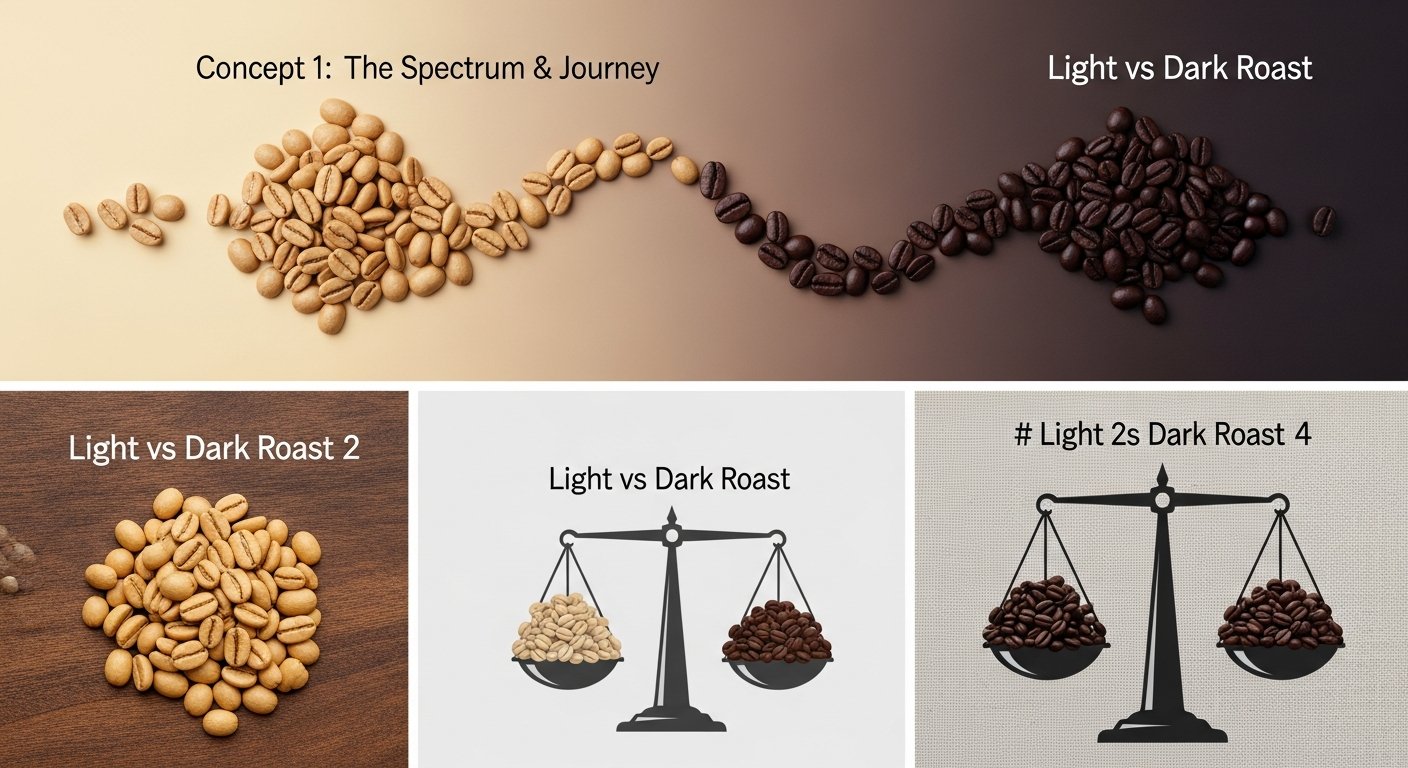
[INLINE IMAGE 1: place after second H2 | alt=”light vs dark roast coffee concept illustration”]
Nuance and Complexity: Beyond Simple Categories
It’s crucial to remember that “light” and “dark” are broad categories within a continuous spectrum. There are “medium-light,” “medium,” and “medium-dark” roasts that offer various balances between origin character and roast development. A medium roast, for instance, aims to develop sweetness and body while still preserving some of the origin’s nuances, often presenting a balanced cup with notes of caramel, chocolate, and mild fruitiness. Exploring these intermediate roasts can be incredibly rewarding for those seeking a harmonious blend of characteristics.
Ultimately, the flavor profile is the most direct indicator of whether you’re dealing with light vs dark roast coffee. Understanding these differences allows you to make informed choices that align with your personal taste preferences and discover new dimensions of coffee enjoyment.
Caffeine Content: Dispelling the Myths
One of the most persistent myths in the coffee world revolves around caffeine content: that dark roasts contain more caffeine than light roasts due to their stronger flavor. This is, in fact, often the opposite of the truth, or at least a highly nuanced issue.
The Density Debate: Weight vs. Volume
The key to understanding caffeine lies in how roasting affects bean density and how coffee is measured:
- Density Change: As coffee beans roast, they lose moisture and expand. Darker roasts lose more moisture and expand more, becoming less dense and more porous than lighter roasts.
- Caffeine per Bean: The actual caffeine content *per bean* remains relatively constant, or slightly decreases, as roasting progresses. While some caffeine can degrade at extremely high temperatures, the overall loss is minimal and not significant enough to cause a drastic difference between light and dark roasts.
- Caffeine by Weight: If you measure coffee by weight (e.g., 20 grams of beans), then a light roast will typically have slightly *more* caffeine. Why? Because light roast beans are denser, meaning 20 grams of light roast coffee will contain more individual beans (and thus more caffeine) than 20 grams of less dense, darker roast coffee.
- Caffeine by Volume: If you measure coffee by volume (e.g., two scoops of beans), then a dark roast might have slightly *more* caffeine. Since dark roast beans are larger and less dense, two scoops of dark roast will physically contain more bean material (and thus more caffeine) than two scoops of smaller, denser light roast beans.
Most precise brewing methods, especially in specialty coffee, measure coffee by weight for consistency. Therefore, for most home brewers using a scale, light roasts will generally contain a fractionally higher amount of caffeine per serving than dark roasts. However, the difference is often marginal, usually within 5-10%, and much less significant than other factors.
Brewing Method’s Influence on Caffeine Extraction
Far more influential than the roast level itself is the brewing method and parameters:
- Grind Size: Finer grinds increase surface area, leading to more efficient caffeine extraction.
- Water Temperature: Higher water temperatures extract caffeine more readily.
- Brew Time: Longer contact time between coffee grounds and water results in more caffeine extraction.
- Coffee-to-Water Ratio: A higher concentration of coffee grounds relative to water will yield a more caffeinated brew.
For example, a cold brew (long brew time, coarse grind, often high coffee-to-water ratio) made with a light roast can be extremely potent, while a quick espresso shot (short brew time, very fine grind, specific pressure) can also deliver a significant punch, regardless of roast. Learn more about how different brewing methods impact your cup in our guide to mastering coffee brewing techniques.
Practical Implications for Your Daily Brew
In practical terms, the difference in caffeine between light vs dark roast coffee is often less significant than the perceived difference in strength or boldness. The “strong” flavor of a dark roast comes from its intense roast-derived compounds, not necessarily from more caffeine. If you’re sensitive to caffeine, focusing on brew method adjustments (e.g., shorter brew times, cooler water) will likely have a greater impact than simply choosing a light or dark roast. For most individuals, the decision between light and dark roast should be based primarily on desired flavor and aroma rather than a perceived caffeine advantage.
Acidity, Body, and Mouthfeel: A Tactile Experience
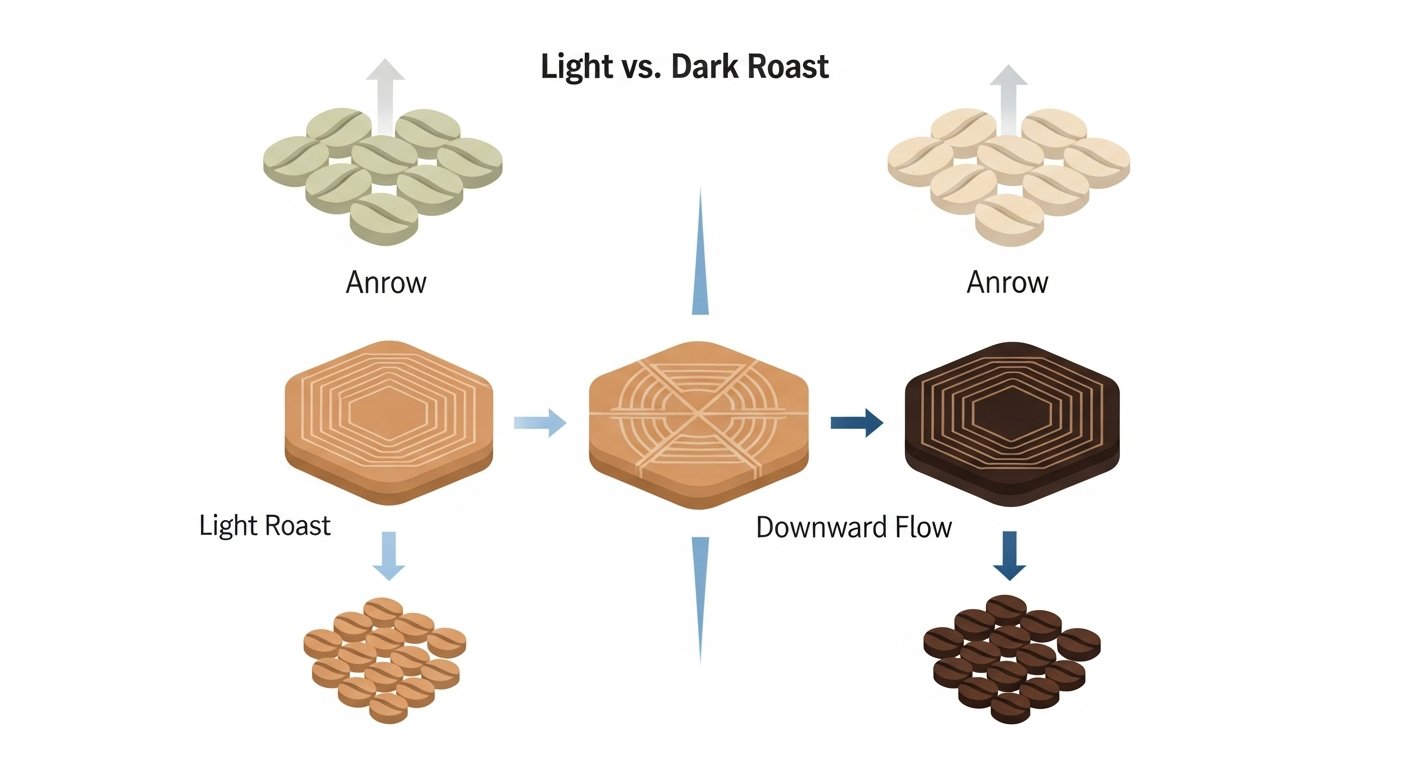
Beyond flavor and caffeine, the tactile sensations of acidity, body, and mouthfeel play a critical role in the coffee experience. These attributes are profoundly shaped by the roasting process and contribute significantly to the overall character of light vs dark roast coffee.
The Zest and Sparkle of Light Roasts
Light roasts are renowned for their pronounced acidity. This isn’t the unpleasant sourness of spoiled food, but rather a desirable brightness and crispness that adds complexity and liveliness to the cup. Think of the refreshing tang of a green apple or a glass of dry white wine. This acidity is largely due to the higher concentration of chlorogenic acids and other organic acids that survive the shorter roasting process. These acids contribute to:
- Brightness: A clean, sharp, almost sparkling sensation on the tongue.
- Clarity: Flavors tend to be distinct and well-defined.
- Light Body: The mouthfeel is often described as tea-like, delicate, or crisp, with a quick, clean finish. This is because fewer solids and oils are extracted, and the bean’s structure is largely intact.
Coffees from origins known for high acidity, such as Ethiopia or Kenya, particularly shine in a light roast, where their inherent brightness is preserved and celebrated.
The Fullness and Richness of Dark Roasts
Dark roasts, conversely, exhibit significantly lower perceived acidity. The extended heat breaks down many of the organic acids, replacing that bright zest with a deeper, more robust character. What they gain in place of acidity is a rich body and full mouthfeel:
- Low Acidity: The brightness is diminished, leading to a smoother, often more mellow initial taste.
- Heavy Body: Dark roasts typically have a substantial, viscous, almost syrupy mouthfeel. This is due to the greater breakdown of cellulose fibers and the increased migration of oils to the bean’s surface, which then contribute to the brew.
- Richness: The sensation of fullness and depth on the palate is a hallmark of dark roasts.
- Lingering Finish: The flavors and tactile sensations often persist longer on the tongue, contributing to a more prolonged aftertaste.
These characteristics make dark roasts particularly well-suited for espresso, where a thick crema and robust body are highly prized, or for those who enjoy adding milk and sugar, as the coffee’s intensity can stand up to additions without being overshadowed.
[INLINE IMAGE 2: place after fourth H2 | alt=”light vs dark roast coffee comparison illustration”]
Understanding pH Levels and Perceived Acidity
While light roasts often have a higher *actual* pH (meaning they are less acidic in a chemical sense) than dark roasts, the *perceived* acidity is higher in light roasts due to the presence of specific organic acids like citric, malic, and phosphoric acid. Darker roasts, while having a slightly lower pH (more acidic chemically), often have a lower *perceived* acidity because these bright organic acids have been broken down, and the bitterness from the roast process dominates the flavor profile. This distinction between actual pH and perceived acidity is important for understanding how different roasts interact with your palate and digestion. If you’re looking to explore more about how specific acids influence coffee flavor, our detailed article on the chemistry behind coffee flavor profiles offers further insights.
Ultimately, the balance of acidity, body, and mouthfeel is a personal preference. Some prefer the clean, lively “sparkle” of a light roast, while others seek the comforting, substantial “hug” of a dark roast. Experimenting with both can help you define what tactile experience you enjoy most in your cup.
Health Implications and Antioxidant Profiles
Beyond taste and caffeine, the health aspects of coffee are a topic of much interest and research. The roast level plays a role in the concentration and composition of certain beneficial compounds, particularly antioxidants, and other substances that can impact digestion.
Antioxidants: The Powerhouse in Every Bean
Coffee is a rich source of antioxidants, primarily chlorogenic acids (CGAs), which have been linked to various health benefits, including reduced inflammation, improved heart health, and protection against certain diseases. The roasting process significantly impacts these compounds.
- Light Roasts: Tend to retain a higher concentration of chlorogenic acids. Since these acids begin to break down under high heat, the shorter roasting time of light roasts means more of these beneficial compounds survive into your cup.
- Dark Roasts: While CGAs are reduced, darker roasts develop new antioxidant compounds through the Maillard reaction. Some studies suggest that while the *type* of antioxidants might shift, the overall antioxidant capacity remains robust. These new compounds, called melanoidins, contribute to the coffee’s color and body and also possess antioxidant and anti-inflammatory properties.
So, while the specific chemical profile of antioxidants changes, both light and dark roasts contribute significantly to your dietary intake of these protective compounds. Neither can definitively be declared “healthier” purely on antioxidant content, as the benefits might come from different sets of compounds.
Chlorogenic Acids and Their Preservation
For those specifically interested in chlorogenic acids, light roasts are the clear winner. CGAs are known to be sensitive to heat. As the roast progresses, they degrade into other compounds, including quinic acid and caffeic acid. These breakdown products also have their own health benefits but may contribute to increased bitterness in darker roasts. Some research even links quinic acid to potential stomach upset in sensitive individuals, though this is not universally experienced.
Digestive Comfort and Considerations
Digestive comfort is another area where light vs dark roast coffee can differ for some individuals:
- Acidity and Stomach Sensitivity: People prone to acid reflux or stomach discomfort often find darker roasts to be more tolerable. This is because, despite the actual pH being slightly lower (more acidic), the perceived acidity is reduced due to the breakdown of certain organic acids, and dark roasts contain N-methylpyridinium, a compound that can inhibit stomach acid secretion. Light roasts, with their higher concentration of bright organic acids, might be more irritating for some sensitive stomachs.
- Bitterness and Digestive Stimulation: The bitterness in dark roasts, though sometimes perceived negatively, can actually stimulate digestive enzymes.
It’s important to listen to your body. If you experience digestive issues with coffee, experimenting with different roast levels, as well as brewing methods, can help identify what works best for you. For more insights on brewing for sensitive stomachs, explore our article on low-acid coffee options and brewing tips.
Acrylamide: A Brief Note on Roast Levels
Acrylamide is a chemical compound that can form in certain starchy foods during high-temperature cooking, including coffee beans during roasting. It’s a topic of occasional concern, though typically at levels far below what’s considered harmful in coffee. Interestingly, acrylamide levels tend to be highest in *medium* roasted coffees and then decrease in darker roasts as it begins to degrade with extended heat. Light roasts generally have lower levels than medium, and very dark roasts also see a reduction compared to medium. The exact science is complex and still being researched, but current consensus indicates that the amount of acrylamide in coffee is not a significant health risk for most consumers.
In summary, while light roasts retain more original chlorogenic acids, dark roasts develop new antioxidant compounds and may be gentler on sensitive stomachs. Both are part of a healthy diet, and the choice ultimately comes down to personal preference and how your body reacts.
Brewing Methods: Optimizing Extraction for Each Roast
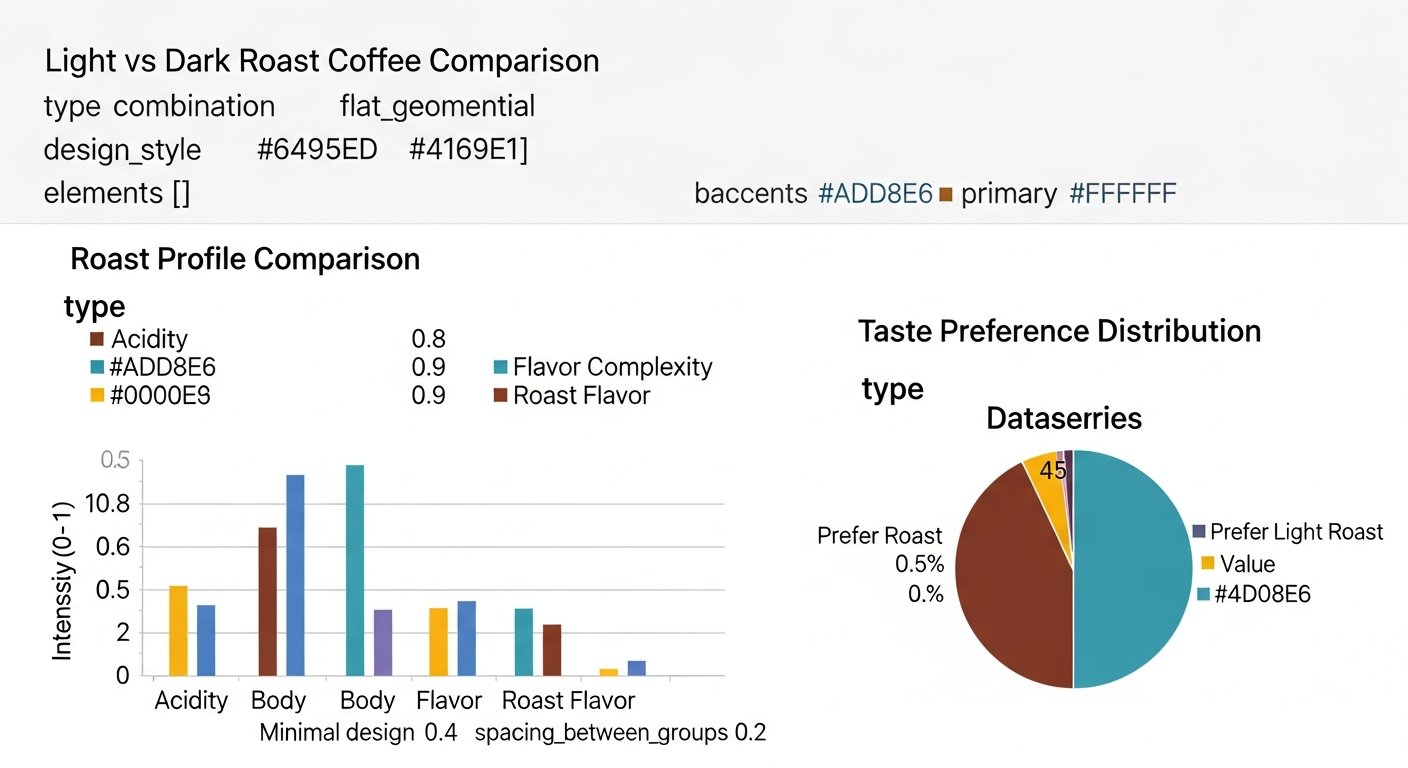
The roast level of your coffee bean should fundamentally influence your brewing strategy. Just as a chef adapts cooking techniques to different ingredients, a barista (or home brewer) must adjust brewing parameters to extract the best from light vs dark roast coffee. Using the wrong approach can lead to an underdeveloped, sour, or overly bitter cup, masking the very flavors you sought.
Light Roasts: Precision and Purity
Light roasts, with their denser structure, higher acidity, and complex origin characteristics, demand careful and often longer extraction to fully develop their nuanced flavors without becoming sour or under-extracted. The goal is to highlight their inherent brightness and sweetness while avoiding an overly tart or thin cup.
- Recommended Methods: Pour-over (Hario V60, Chemex), AeroPress, Siphon, Immersion brewers (French Press, but with careful technique). These methods allow for precise control over water temperature, pour rate, and contact time.
- Grind Size: Generally a medium-fine to medium grind. For pour-overs, aim for a consistency like table salt. Too coarse, and it will be under-extracted and sour; too fine, and it will be bitter and slow.
- Water Temperature: Higher temperatures are often preferred for light roasts, typically between 90-96°C (195-205°F). Hotter water helps to overcome the density of the bean and efficiently extract the complex sugars and acids.
- Brew Time: Slightly longer brew times than for dark roasts can be beneficial, especially with pour-overs, to ensure full flavor development. For a pour-over, this might mean 3-5 minutes, allowing for multiple pours and gentle agitation.
- Key Goal: Maximize clarity, highlight fruity/floral notes, and ensure a balanced acidity without sourness.
Dark Roasts: Taming the Intensity
Dark roasts, being more porous and brittle, release their flavors much more readily. The challenge here is to extract their bold, rich character without over-extraction, which can quickly lead to excessive bitterness and an acrid taste. The natural oils on the surface also play a role, requiring different approaches to filter media and cleaning.
- Recommended Methods: French Press, Automatic Drip Coffee Makers, Espresso, AeroPress (with shorter steep times), Moka Pot. These methods often excel at producing a full-bodied cup.
- Grind Size: Generally a medium to coarse grind. For French Press, a very coarse grind like sea salt is ideal. Dark roasts are more soluble, so a coarser grind helps prevent over-extraction.
- Water Temperature: Slightly lower temperatures, typically 85-93°C (185-200°F), can help prevent scorching and over-extracting bitter compounds.
- Brew Time: Shorter brew times are usually necessary. For French Press, 3-4 minutes is often sufficient. For espresso, the speed is inherent, but precise shot timing is critical.
- Key Goal: Emphasize rich, bold, smoky/chocolatey notes, ensure a full body, and avoid excessive bitterness.
Grind Size Matters: A Critical Variable
Regardless of roast, grind size is arguably the most critical brewing variable. It controls the surface area of the coffee exposed to water, directly impacting extraction rate. A general rule: the lighter the roast, the finer the grind *might* need to be (relative to optimal coarse grind for dark roast) to ensure full extraction, though careful experimentation within the medium range is key. Conversely, darker roasts are more soluble and require a coarser grind to prevent over-extraction. Always grind fresh just before brewing to preserve volatile aromatics. Find your perfect grinder with our expert coffee grinder reviews.
Water Temperature and Brew Time
These two variables work in tandem. Hotter water generally extracts more, faster. Longer brew times also extract more. For light roasts, you might lean towards slightly hotter water and/or slightly longer brew times. For dark roasts, cooler water and/or shorter brew times help manage extraction and prevent bitterness. However, consistency is paramount. Use a good quality kettle with temperature control for optimal results.
Comparison Table: Brewing Parameters for Light vs. Dark Roasts
| Parameter | Light Roast Coffee | Dark Roast Coffee |
|---|---|---|
| Recommended Brewing Methods | Pour-over (V60, Chemex), AeroPress, Siphon, Immersion (careful) | French Press, Automatic Drip, Espresso, Moka Pot, AeroPress (short steep) |
| Grind Size (General) | Medium-fine to Medium (like table salt) | Medium to Coarse (like sea salt) |
| Water Temperature | 90-96°C (195-205°F) | 85-93°C (185-200°F) |
| Brew Time (Example for Drip/Press) | 3-5 minutes (pour-over), 4-5 minutes (French Press) | 2-4 minutes (pour-over), 3-4 minutes (French Press) |
| Desired Flavor Outcome | Bright, complex, fruity, floral, clean finish | Bold, rich, smoky, chocolatey, full body, robust |
| Body/Mouthfeel | Lighter, crisp, tea-like | Fuller, heavier, syrupy, creamy |
Remember, these are guidelines. The ultimate goal is to experiment with your specific beans and equipment to find the “sweet spot” that yields the most delicious cup for your palate. Understanding these principles for light vs dark roast coffee will empower you to consistently brew exceptional coffee.
Origin and Varietal Influence: A Pre-Roast Blueprint
Before the beans even touch the roaster, their origin and varietal imbue them with an intrinsic character that profoundly influences how they taste at different roast levels. The interplay between the bean’s inherent qualities and the roasting process is a crucial aspect of coffee appreciation. Understanding this relationship helps you predict and appreciate the potential of your chosen coffee, whether it’s a vibrant light roast or a robust dark roast.
Terroir and Bean Characteristics in Light Roasts
Light roasts are designed to be transparent, allowing the unique “terroir” of the coffee to shine through. Terroir encompasses all the environmental factors that affect a crop’s phenotype, including the soil, climate, altitude, and even the processing methods used at the farm. This means:
- Geographic Distinctiveness: A light roast of an Ethiopian Yirgacheffe will clearly showcase its characteristic floral and citrus notes. A Colombian Gesha will reveal its delicate jasmine and peach qualities. These are flavors inherent to the bean’s genetic makeup and growing conditions.
- Processing Methods: Washed (wet) processing often highlights acidity and cleanliness, making it ideal for light roasts. Natural (dry) processing, which involves drying the cherries with the fruit intact, tends to impart more fruit-forward, boozy, or heavy notes, which can also be spectacular in a light roast, adding layers of sweetness.
- Varietal Specificity: Different Arabica varieties (e.g., Typica, Bourbon, Geisha, SL-28) have distinct genetic predispositions for certain flavors and aromas. Light roasting aims to preserve these varietal signatures, offering a glimpse into the coffee’s genetic heritage.
- Density and Structure: Beans grown at high altitudes are often denser and harder, requiring a more controlled, slower application of heat in a light roast to ensure even development without scorching the exterior or leaving the interior underdeveloped.
When you choose a light roast, you are essentially asking the roaster to act as a curator, preserving and presenting the coffee’s original story with minimal intervention from the roast itself.
Dark Roasts as a Canvas for Blending
While dark roasts can be applied to single-origin beans, they are often the backbone of classic blends. The intense heat of dark roasting tends to homogenize flavors, reducing the distinctiveness of individual origins and amplifying roast-derived notes like chocolate, caramel, and smoke. This makes them ideal for:
- Consistency: Dark roast blends can be formulated to achieve a consistent flavor profile year after year, even if the blend components change slightly due to seasonal availability. The roast notes dominate, creating a reliable taste.
- Cost-Effectiveness: Less expensive or lower-grade beans can be used in dark roast blends, as the powerful roast flavors can mask undesirable characteristics or inconsistencies. This doesn’t mean dark roasts are inherently “bad,” but it does mean a less-than-perfect green bean can still yield a delicious dark roast.
- “Espresso Blends”: Many traditional espresso blends are dark roasts because their full body, low acidity, and prominent chocolate/caramel notes stand up well to milk and create a robust, classic espresso shot.
- Robusta Inclusion: Dark roast blends, especially those for espresso, often include a percentage of Robusta beans. Robusta is known for its high caffeine content, thick crema, and bold, often rubbery or burnt rubber notes. When dark roasted and blended carefully, it can contribute body and intensity without overpowering the cup.
In a dark roast, the origin still matters in providing a fundamental building block, but the roaster’s skill lies in crafting a balanced and robust flavor profile through the roasting process and judicious blending, rather than merely showcasing the bean’s inherent qualities.
Single Origin vs. Blends
The choice between single-origin and blends often aligns with roast preferences:
- Single Origin: Typically associated with light and medium roasts, where the goal is to celebrate the unique characteristics of a specific farm, region, or cooperative. It’s about exploring distinct flavors.
- Blends: Often, but not exclusively, found in medium-dark to dark roasts. Blends are crafted to achieve a specific taste profile that might not be possible with a single bean, or to ensure consistency across seasons. They are about creating a harmonious, balanced, or robust experience.
Understanding the “pre-roast blueprint” provided by origin and varietal allows you to make more informed choices, whether you’re seeking the bright fruitiness of a light-roasted single-origin heirloom Ethiopian or the comforting boldness of a dark-roasted Italian espresso blend.
Choosing Your Perfect Cup: A Guide to Personal Preference
Ultimately, the “best” choice between light vs dark roast coffee is entirely subjective. There’s no right or wrong answer, only a perfect match for your individual palate and preferences. The journey of discovering your ideal cup is part of the joy of coffee culture. Here’s how to navigate your choices and make informed decisions.
Considerations for New Coffee Drinkers
If you’re new to the world of specialty coffee or transitioning from pre-ground supermarket coffee, your palate might be accustomed to the more robust, often roast-dominant flavors of dark roasts. Here are some pointers:
- Start with Medium: If you find dark roasts too bitter and light roasts too unfamiliar (perhaps even “sour” if under-extracted), a medium roast is an excellent starting point. It offers a balance, showcasing some origin character with developed sweetness and body.
- Familiar Flavors: If you enjoy chocolate, caramel, or nutty notes, dark roasts will likely appeal immediately. If you’re drawn to fruit, tea, or floral notes, then light roasts are your playground.
- Add-ins: If you typically add milk, sugar, or cream, dark roasts often stand up better to these additions without their flavor being completely diluted. A delicate light roast can sometimes be overwhelmed.
- Explore Gradually: Don’t feel pressured to love light roasts if you don’t initially. Gradually introduce yourself to different roasts, perhaps trying a medium-dark or medium-light before jumping to extremes.
Exploring Your Palate: Tasting Notes and Experimentation
The most effective way to determine your preference is through active tasting and experimentation:
- Read Tasting Notes: Pay attention to the tasting notes provided by roasters. If you see terms like “bright acidity,” “citrus,” and “floral,” you’re looking at a light roast. If it mentions “dark chocolate,” “caramel,” “smoke,” or “bold,” it’s likely a dark roast. Over time, you’ll learn what these notes indicate about the roast level and whether they align with your preferences.
- Coffee Flights/Café Visits: Many specialty cafés offer coffee flights or will brew different single-origin coffees for you. This is an excellent way to compare light vs dark roast coffee side-by-side. Ask the barista for recommendations and insights.
- Brew at Home: Purchase small bags of different roasts and brew them using the same method. Note the differences in aroma, flavor, body, and aftertaste. Keep a simple tasting journal.
- Don’t Discount “Bad” Cups: Sometimes an unpleasant cup isn’t because you dislike the roast, but because it was poorly brewed. Adjust your brewing parameters (grind, temperature, time) before writing off an entire roast level.
Seasonal and Situational Choices
Your preference might also vary with the season or your mood:
- Morning Wake-Up: A bold, dark roast might be perfect for a robust morning kick-start.
- Afternoon Treat: A delicate, aromatic light roast might be ideal for a more reflective afternoon moment.
- Warm Weather: Lighter, brighter coffees often make fantastic iced coffee or cold brew.
- Cold Weather: Darker, richer roasts can be comforting and warming on a chilly day.
Don’t limit yourself! The beauty of the coffee world is its diversity. Many coffee lovers enjoy a range of roasts depending on the time of day, food pairings, or even their mood. For pairing coffee with food, check out our guide on the art of coffee and food pairing.
Beyond Roast: Freshness, Grind, and Preparation
While the roast level is crucial, it’s just one piece of the puzzle. Always remember that the freshest beans, ground just before brewing, and prepared with clean, well-maintained equipment, will yield the best results regardless of roast. A perfectly roasted bean can be ruined by improper storage or brewing, just as a mediocre bean can be improved by a skilled hand.
Embrace the exploration of light vs dark roast coffee. It’s a delicious journey that continuously reveals new dimensions of flavor and aroma, enriching your coffee experience.
Common Misconceptions and the Spectrum of Roasts
The distinction between light vs dark roast coffee, while fundamental, is often clouded by various misconceptions. Dispelling these myths is crucial for a clearer understanding and appreciation of the full spectrum of coffee flavors.
“Burnt” vs. “Bold”: Reframing Dark Roasts
One of the most common misconceptions is that dark roasts are simply “burnt” coffee. While it’s true that poor quality dark roasts can indeed taste burnt, a well-executed dark roast is far from it. It embodies “boldness” rather than “burntness.”
- Burnt Coffee: An acrid, excessively bitter, carbon-like flavor, often accompanied by a thin body, indicates a coffee
Light vs Dark Roast Coffee: Unraveling the Roast Spectrum for the Ultimate Brew
Affiliate disclosure: This article may contain affiliate links. Recommendations are independent and editorially driven.
For many coffee enthusiasts, the choice between light vs dark roast coffee is more than just a preference; it’s a statement about their understanding and appreciation of coffee’s incredible versatility. The journey from a green, unroasted bean to the aromatic, flavorful coffee we brew each morning is a complex dance of heat, time, and chemistry, culminating in a spectrum of roasts that offer dramatically different sensory experiences. At cafeserre, we believe that understanding this spectrum is fundamental to truly appreciating the art of coffee. Whether you’re a seasoned connoisseur or just beginning your coffee exploration, delving into the intricacies of light and dark roasts will transform your daily ritual.
This comprehensive guide will take you deep into the heart of the roasting process, exploring how different roast levels impact everything from flavor and aroma to caffeine content and health benefits. We’ll demystify common misconceptions, provide practical brewing advice, and help you navigate the vast world of coffee to find your perfect match. Prepare to unlock a richer, more informed coffee journey, one delicious cup at a time.
The Art and Science of Coffee Roasting: Defining Light and Dark
At its core, coffee roasting is a heat-driven chemical transformation that unlocks hundreds of aromatic compounds dormant within the green coffee bean. The duration and intensity of this process are what differentiate a light roast from a dark roast, fundamentally altering the bean’s structure, density, and chemical composition.
The Maillard Reaction and Caramelization
The magic begins with two pivotal chemical reactions: the Maillard reaction and caramelization. The Maillard reaction, a complex series of chemical reactions between amino acids and reducing sugars, is responsible for the browning and development of savory, nutty, and malty flavors. It kicks off relatively early in the roasting process. As roasting progresses, sugars within the bean begin to caramelize, contributing sweet, buttery, and sometimes burnt sugar notes. The balance and extent of these reactions dictate the final flavor profile.
Visual Cues and Internal Temperature
Roasters monitor several key indicators to determine the roast level. Visual cues like color, bean expansion, and the presence of oils are crucial. Internally, bean temperature is meticulously tracked. The “first crack” occurs when the bean’s internal moisture turns to steam, causing it to expand and crack audibly, similar to popcorn. This typically happens between 190-205°C (375-400°F). The “second crack” is a more subtle, softer crack, indicating structural breakdown and oil migration, usually occurring at higher temperatures, around 224-232°C (435-450°F).
From Green Bean to Golden Brown: The Light Roast Journey
Light roasts are typically stopped shortly after the first crack, before the second crack begins. The beans will be light brown in color, with a dry, matte surface, as the internal oils have not yet migrated to the surface. The internal temperature of the beans usually reaches between 180°C and 205°C (356°F and 401°F). This shorter roasting time and lower finishing temperature mean that more of the coffee’s original characteristics—its “origin flavors”—are preserved. Think of it as a subtle enhancement rather than an overhaul. Light roasts prioritize the unique qualities imparted by the coffee’s varietal, processing method, and terroir.
Deepening the Roast: The Dark Roast Transformation
Dark roasts, conversely, are allowed to develop well into or even past the second crack. The beans will appear dark brown, often almost black, and will have a shiny, oily surface due to the migration of internal oils. The internal temperature can reach upwards of 230°C (446°F) or even higher. At these elevated temperatures, the origin characteristics begin to diminish, replaced by flavors derived from the roasting process itself. Sugars caramelize intensely, and some carbonization may occur, contributing to smoky, bitter, and robust notes. The bean becomes less dense and more brittle due to the extensive thermal breakdown.
A Symphony of Flavors: Decoding the Taste Profiles
The most immediately noticeable difference between light vs dark roast coffee lies in their distinct flavor profiles. This is where the roasting process truly dictates the sensory experience, offering a palate of possibilities for every preference.
Affiliate disclosure: This article may contain affiliate links. Recommendations are independent and editorially driven.
The Brightness of Light Roasts: Acidity and Origin Character
Light roasts are celebrated for their vibrant, complex, and often delicate flavors. Because the roasting process is minimal, the inherent characteristics of the bean’s origin shine through. You’ll typically find:
- High Acidity: Not to be confused with sourness, this refers to a pleasant tartness, similar to that found in fruits or wine. It contributes to the coffee’s liveliness and brightness.
- Fruity Notes: Berries, citrus (lemon, orange, grapefruit), stone fruits (peach, apricot) are common.
- Floral Aromas: Jasmine, rose, honeysuckle can be prominent, especially in African coffees.
- Nutty/Caramel Tones: Subtler notes of almond, hazelnut, or light caramel can provide a sweet underpinning.
- Herbal/Grassy Notes: Occasionally, you might detect hints of tea or fresh herbs.
- Lighter Body: Often described as tea-like or crisp, with a clean finish.
Think of a light roast as a spotlight on the coffee bean itself, showcasing its unique genetic makeup and the environment in which it was grown. They are often less bitter, allowing subtle sweetness and complex aromatic compounds to come forward.
The Boldness of Dark Roasts: Bitterness and Roast-Driven Notes
Dark roasts, on the other hand, are defined by the intense flavors developed during the extended roasting process. The origin characteristics are largely overshadowed by the roast profile, creating a more uniform, robust, and often bolder taste experience:
- Lower Acidity: The perceived acidity is significantly reduced, replaced by a more dominant bitterness.
- Smoky/Charred Notes: Often reminiscent of toasted bread, dark chocolate, or even charcoal.
- Caramelization/Burnt Sugar: Intense caramel, molasses, or slightly burnt sugar flavors are prevalent.
- Nutty/Cocoa Tones: Deep, roasted nut flavors and dark chocolate or cocoa are very common.
- Fuller Body: Dark roasts typically have a heavier, syrupy, or creamy mouthfeel due to the breakdown of cellulose and the release of oils.
- Bitterness: A prominent characteristic, though in well-roasted dark coffees, it should be a pleasant, integrated bitterness rather than an acrid one.
Dark roasts are often preferred by those who enjoy a strong, impactful cup that stands up well to milk and sugar. They provide a comforting, familiar boldness that many associate with “traditional” coffee flavor.
[INLINE IMAGE 1: place after second H2 | alt=”light vs dark roast coffee concept illustration”]
Nuance and Complexity: Beyond Simple Categories
It’s crucial to remember that “light” and “dark” are broad categories within a continuous spectrum. There are “medium-light,” “medium,” and “medium-dark” roasts that offer various balances between origin character and roast development. A medium roast, for instance, aims to develop sweetness and body while still preserving some of the origin’s nuances, often presenting a balanced cup with notes of caramel, chocolate, and mild fruitiness. Exploring these intermediate roasts can be incredibly rewarding for those seeking a harmonious blend of characteristics.
Ultimately, the flavor profile is the most direct indicator of whether you’re dealing with light vs dark roast coffee. Understanding these differences allows you to make informed choices that align with your personal taste preferences and discover new dimensions of coffee enjoyment.
Caffeine Content: Dispelling the Myths
One of the most persistent myths in the coffee world revolves around caffeine content: that dark roasts contain more caffeine than light roasts due to their stronger flavor. This is, in fact, often the opposite of the truth, or at least a highly nuanced issue.
The Density Debate: Weight vs. Volume
The key to understanding caffeine lies in how roasting affects bean density and how coffee is measured:
- Density Change: As coffee beans roast, they lose moisture and expand. Darker roasts lose more moisture and expand more, becoming less dense and more porous than lighter roasts.
- Caffeine per Bean: The actual caffeine content *per bean* remains relatively constant, or slightly decreases, as roasting progresses. While some caffeine can degrade at extremely high temperatures, the overall loss is minimal and not significant enough to cause a drastic difference between light and dark roasts.
- Caffeine by Weight: If you measure coffee by weight (e.g., 20 grams of beans), then a light roast will typically have slightly *more* caffeine. Why? Because light roast beans are denser, meaning 20 grams of light roast coffee will contain more individual beans (and thus more caffeine) than 20 grams of less dense, darker roast coffee.
- Caffeine by Volume: If you measure coffee by volume (e.g., two scoops of beans), then a dark roast might have slightly *more* caffeine. Since dark roast beans are larger and less dense, two scoops of dark roast will physically contain more bean material (and thus more caffeine) than two scoops of smaller, denser light roast beans.
Most precise brewing methods, especially in specialty coffee, measure coffee by weight for consistency. Therefore, for most home brewers using a scale, light roasts will generally contain a fractionally higher amount of caffeine per serving than dark roasts. However, the difference is often marginal, usually within 5-10%, and much less significant than other factors.
Brewing Method’s Influence on Caffeine Extraction
Far more influential than the roast level itself is the brewing method and parameters:
- Grind Size: Finer grinds increase surface area, leading to more efficient caffeine extraction.
- Water Temperature: Higher water temperatures extract caffeine more readily.
- Brew Time: Longer contact time between coffee grounds and water results in more caffeine extraction.
- Coffee-to-Water Ratio: A higher concentration of coffee grounds relative to water will yield a more caffeinated brew.
For example, a cold brew (long brew time, coarse grind, often high coffee-to-water ratio) made with a light roast can be extremely potent, while a quick espresso shot (short brew time, very fine grind, specific pressure) can also deliver a significant punch, regardless of roast. Learn more about how different brewing methods impact your cup in our guide to mastering coffee brewing techniques.
Practical Implications for Your Daily Brew
In practical terms, the difference in caffeine between light vs dark roast coffee is often less significant than the perceived difference in strength or boldness. The “strong” flavor of a dark roast comes from its intense roast-derived compounds, not necessarily from more caffeine. If you’re sensitive to caffeine, focusing on brew method adjustments (e.g., shorter brew times, cooler water) will likely have a greater impact than simply choosing a light or dark roast. For most individuals, the decision between light and dark roast should be based primarily on desired flavor and aroma rather than a perceived caffeine advantage.
Acidity, Body, and Mouthfeel: A Tactile Experience
Beyond flavor and caffeine, the tactile sensations of acidity, body, and mouthfeel play a critical role in the coffee experience. These attributes are profoundly shaped by the roasting process and contribute significantly to the overall character of light vs dark roast coffee.
The Zest and Sparkle of Light Roasts
Light roasts are renowned for their pronounced acidity. This isn’t the unpleasant sourness of spoiled food, but rather a desirable brightness and crispness that adds complexity and liveliness to the cup. Think of the refreshing tang of a green apple or a glass of dry white wine. This acidity is largely due to the higher concentration of chlorogenic acids and other organic acids that survive the shorter roasting process. These acids contribute to:
- Brightness: A clean, sharp, almost sparkling sensation on the tongue.
- Clarity: Flavors tend to be distinct and well-defined.
- Light Body: The mouthfeel is often described as tea-like, delicate, or crisp, with a quick, clean finish. This is because fewer solids and oils are extracted, and the bean’s structure is largely intact.
Coffees from origins known for high acidity, such as Ethiopia or Kenya, particularly shine in a light roast, where their inherent brightness is preserved and celebrated.
The Fullness and Richness of Dark Roasts
Dark roasts, conversely, exhibit significantly lower perceived acidity. The extended heat breaks down many of the organic acids, replacing that bright zest with a deeper, more robust character. What they gain in place of acidity is a rich body and full mouthfeel:
- Low Acidity: The brightness is diminished, leading to a smoother, often more mellow initial taste.
- Heavy Body: Dark roasts typically have a substantial, viscous, almost syrupy mouthfeel. This is due to the greater breakdown of cellulose fibers and the increased migration of oils to the bean’s surface, which then contribute to the brew.
- Richness: The sensation of fullness and depth on the palate is a hallmark of dark roasts.
- Lingering Finish: The flavors and tactile sensations often persist longer on the tongue, contributing to a more prolonged aftertaste.
These characteristics make dark roasts particularly well-suited for espresso, where a thick crema and robust body are highly prized, or for those who enjoy adding milk and sugar, as the coffee’s intensity can stand up to additions without being overshadowed.
[INLINE IMAGE 2: place after fourth H2 | alt=”light vs dark roast coffee comparison illustration”]
Understanding pH Levels and Perceived Acidity
While light roasts often have a higher *actual* pH (meaning they are less acidic in a chemical sense) than dark roasts, the *perceived* acidity is higher in light roasts due to the presence of specific organic acids like citric, malic, and phosphoric acid. Darker roasts, while having a slightly lower pH (more acidic chemically), often have a lower *perceived* acidity because these bright organic acids have been broken down, and the bitterness from the roast process dominates the flavor profile. This distinction between actual pH and perceived acidity is important for understanding how different roasts interact with your palate and digestion. If you’re looking to explore more about how specific acids influence coffee flavor, our detailed article on the chemistry behind coffee flavor profiles offers further insights.
Ultimately, the balance of acidity, body, and mouthfeel is a personal preference. Some prefer the clean, lively “sparkle” of a light roast, while others seek the comforting, substantial “hug” of a dark roast. Experimenting with both can help you define what tactile experience you enjoy most in your cup.
Health Implications and Antioxidant Profiles
Beyond taste and caffeine, the health aspects of coffee are a topic of much interest and research. The roast level plays a role in the concentration and composition of certain beneficial compounds, particularly antioxidants, and other substances that can impact digestion.
Antioxidants: The Powerhouse in Every Bean
Coffee is a rich source of antioxidants, primarily chlorogenic acids (CGAs), which have been linked to various health benefits, including reduced inflammation, improved heart health, and protection against certain diseases. The roasting process significantly impacts these compounds.
- Light Roasts: Tend to retain a higher concentration of chlorogenic acids. Since these acids begin to break down under high heat, the shorter roasting time of light roasts means more of these beneficial compounds survive into your cup.
- Dark Roasts: While CGAs are reduced, darker roasts develop new antioxidant compounds through the Maillard reaction. Some studies suggest that while the *type* of antioxidants might shift, the overall antioxidant capacity remains robust. These new compounds, called melanoidins, contribute to the coffee’s color and body and also possess antioxidant and anti-inflammatory properties.
So, while the specific chemical profile of antioxidants changes, both light and dark roasts contribute significantly to your dietary intake of these protective compounds. Neither can definitively be declared “healthier” purely on antioxidant content, as the benefits might come from different sets of compounds.
Chlorogenic Acids and Their Preservation
For those specifically interested in chlorogenic acids, light roasts are the clear winner. CGAs are known to be sensitive to heat. As the roast progresses, they degrade into other compounds, including quinic acid and caffeic acid. These breakdown products also have their own health benefits but may contribute to increased bitterness in darker roasts. Some research even links quinic acid to potential stomach upset in sensitive individuals, though this is not universally experienced.
Digestive Comfort and Considerations
Digestive comfort is another area where light vs dark roast coffee can differ for some individuals:
- Acidity and Stomach Sensitivity: People prone to acid reflux or stomach discomfort often find darker roasts to be more tolerable. This is because, despite the actual pH being slightly lower (more acidic), the perceived acidity is reduced due to the breakdown of certain organic acids, and dark roasts contain N-methylpyridinium, a compound that can inhibit stomach acid secretion. Light roasts, with their higher concentration of bright organic acids, might be more irritating for some sensitive stomachs.
- Bitterness and Digestive Stimulation: The bitterness in dark roasts, though sometimes perceived negatively, can actually stimulate digestive enzymes.
It’s important to listen to your body. If you experience digestive issues with coffee, experimenting with different roast levels, as well as brewing methods, can help identify what works best for you. For more insights on brewing for sensitive stomachs, explore our article on low-acid coffee options and brewing tips.
Acrylamide: A Brief Note on Roast Levels
Acrylamide is a chemical compound that can form in certain starchy foods during high-temperature cooking, including coffee beans during roasting. It’s a topic of occasional concern, though typically at levels far below what’s considered harmful in coffee. Interestingly, acrylamide levels tend to be highest in *medium* roasted coffees and then decrease in darker roasts as it begins to degrade with extended heat. Light roasts generally have lower levels than medium, and very dark roasts also see a reduction compared to medium. The exact science is complex and still being researched, but current consensus indicates that the amount of acrylamide in coffee is not a significant health risk for most consumers.
In summary, while light roasts retain more original chlorogenic acids, dark roasts develop new antioxidant compounds and may be gentler on sensitive stomachs. Both are part of a healthy diet, and the choice ultimately comes down to personal preference and how your body reacts.
Brewing Methods: Optimizing Extraction for Each Roast
The roast level of your coffee bean should fundamentally influence your brewing strategy. Just as a chef adapts cooking techniques to different ingredients, a barista (or home brewer) must adjust brewing parameters to extract the best from light vs dark roast coffee. Using the wrong approach can lead to an underdeveloped, sour, or overly bitter cup, masking the very flavors you sought.
Light Roasts: Precision and Purity
Light roasts, with their denser structure, higher acidity, and complex origin characteristics, demand careful and often longer extraction to fully develop their nuanced flavors without becoming sour or under-extracted. The goal is to highlight their inherent brightness and sweetness while avoiding an overly tart or thin cup.
- Recommended Methods: Pour-over (Hario V60, Chemex), AeroPress, Siphon, Immersion brewers (French Press, but with careful technique). These methods allow for precise control over water temperature, pour rate, and contact time.
- Grind Size: Generally a medium-fine to medium grind. For pour-overs, aim for a consistency like table salt. Too coarse, and it will be under-extracted and sour; too fine, and it will be bitter and slow.
- Water Temperature: Higher temperatures are often preferred for light roasts, typically between 90-96°C (195-205°F). Hotter water helps to overcome the density of the bean and efficiently extract the complex sugars and acids.
- Brew Time: Slightly longer brew times than for dark roasts can be beneficial, especially with pour-overs, to ensure full flavor development. For a pour-over, this might mean 3-5 minutes, allowing for multiple pours and gentle agitation.
- Key Goal: Maximize clarity, highlight fruity/floral notes, and ensure a balanced acidity without sourness.
Dark Roasts: Taming the Intensity
Dark roasts, being more porous and brittle, release their flavors much more readily. The challenge here is to extract their bold, rich character without over-extraction, which can quickly lead to excessive bitterness and an acrid taste. The natural oils on the surface also play a role, requiring different approaches to filter media and cleaning.
- Recommended Methods: French Press, Automatic Drip Coffee Makers, Espresso, AeroPress (with shorter steep times), Moka Pot. These methods often excel at producing a full-bodied cup.
- Grind Size: Generally a medium to coarse grind. For French Press, a very coarse grind like sea salt is ideal. Dark roasts are more soluble, so a coarser grind helps prevent over-extraction.
- Water Temperature: Slightly lower temperatures, typically 85-93°C (185-200°F), can help prevent scorching and over-extracting bitter compounds.
- Brew Time: Shorter brew times are usually necessary. For French Press, 3-4 minutes is often sufficient. For espresso, the speed is inherent, but precise shot timing is critical.
- Key Goal: Emphasize rich, bold, smoky/chocolatey notes, ensure a full body, and avoid excessive bitterness.
Grind Size Matters: A Critical Variable
Regardless of roast, grind size is arguably the most critical brewing variable. It controls the surface area of the coffee exposed to water, directly impacting extraction rate. A general rule: the lighter the roast, the finer the grind *might* need to be (relative to optimal coarse grind for dark roast) to ensure full extraction, though careful experimentation within the medium range is key. Conversely, darker roasts are more soluble and require a coarser grind to prevent over-extraction. Always grind fresh just before brewing to preserve volatile aromatics. Find your perfect grinder with our expert coffee grinder reviews.
Water Temperature and Brew Time
These two variables work in tandem. Hotter water generally extracts more, faster. Longer brew times also extract more. For light roasts, you might lean towards slightly hotter water and/or slightly longer brew times. For dark roasts, cooler water and/or shorter brew times help manage extraction and prevent bitterness. However, consistency is paramount. Use a good quality kettle with temperature control for optimal results.
Comparison Table: Brewing Parameters for Light vs. Dark Roasts
Parameter Light Roast Coffee Dark Roast Coffee Recommended Brewing Methods Pour-over (V60, Chemex), AeroPress, Siphon, Immersion (careful) French Press, Automatic Drip, Espresso, Moka Pot, AeroPress (short steep) Grind Size (General) Medium-fine to Medium (like table salt) Medium to Coarse (like sea salt) Water Temperature 90-96°C (195-205°F) 85-93°C (185-200°F) Brew Time (Example for Drip/Press) 3-5 minutes (pour-over), 4-5 minutes (French Press) 2-4 minutes (pour-over), 3-4 minutes (French Press) Desired Flavor Outcome Bright, complex, fruity, floral, clean finish Bold, rich, smoky, chocolatey, full body, robust Body/Mouthfeel Lighter, crisp, tea-like Fuller, heavier, syrupy, creamy Remember, these are guidelines. The ultimate goal is to experiment with your specific beans and equipment to find the “sweet spot” that yields the most delicious cup for your palate. Understanding these principles for light vs dark roast coffee will empower you to consistently brew exceptional coffee.
Origin and Varietal Influence: A Pre-Roast Blueprint
Before the beans even touch the roaster, their origin and varietal imbue them with an intrinsic character that profoundly influences how they taste at different roast levels. The interplay between the bean’s inherent qualities and the roasting process is a crucial aspect of coffee appreciation. Understanding this relationship helps you predict and appreciate the potential of your chosen coffee, whether it’s a vibrant light roast or a robust dark roast.
Terroir and Bean Characteristics in Light Roasts
Light roasts are designed to be transparent, allowing the unique “terroir” of the coffee to shine through. Terroir encompasses all the environmental factors that affect a crop’s phenotype, including the soil, climate, altitude, and even the processing methods used at the farm. This means:
- Geographic Distinctiveness: A light roast of an Ethiopian Yirgacheffe will clearly showcase its characteristic floral and citrus notes. A Colombian Gesha will reveal its delicate jasmine and peach qualities. These are flavors inherent to the bean’s genetic makeup and growing conditions.
- Processing Methods: Washed (wet) processing often highlights acidity and cleanliness, making it ideal for light roasts. Natural (dry) processing, which involves drying the cherries with the fruit intact, tends to impart more fruit-forward, boozy, or heavy notes, which can also be spectacular in a light roast, adding layers of sweetness.
- Varietal Specificity: Different Arabica varieties (e.g., Typica, Bourbon, Geisha, SL-28) have distinct genetic predispositions for certain flavors and aromas. Light roasting aims to preserve these varietal signatures, offering a glimpse into the coffee’s genetic heritage.
- Density and Structure: Beans grown at high altitudes are often denser and harder, requiring a more controlled, slower application of heat in a light roast to ensure even development without scorching the exterior or leaving the interior underdeveloped.
When you choose a light roast, you are essentially asking the roaster to act as a curator, preserving and presenting the coffee’s original story with minimal intervention from the roast itself.
Dark Roasts as a Canvas for Blending
While dark roasts can be applied to single-origin beans, they are often the backbone of classic blends. The intense heat of dark roasting tends to homogenize flavors, reducing the distinctiveness of individual origins and amplifying roast-derived notes like chocolate, caramel, and smoke. This makes them ideal for:
- Consistency: Dark roast blends can be formulated to achieve a consistent flavor profile year after year, even if the blend components change slightly due to seasonal availability. The roast notes dominate, creating a reliable taste.
- Cost-Effectiveness: Less expensive or lower-grade beans can be used in dark roast blends, as the powerful roast flavors can mask undesirable characteristics or inconsistencies. This doesn’t mean dark roasts are inherently “bad,” but it does mean a less-than-perfect green bean can still yield a delicious dark roast.
- “Espresso Blends”: Many traditional espresso blends are dark roasts because their full body, low acidity, and prominent chocolate/caramel notes stand up well to milk and create a robust, classic espresso shot.
- Robusta Inclusion: Dark roast blends, especially those for espresso, often include a percentage of Robusta beans. Robusta is known for its high caffeine content, thick crema, and bold, often rubbery or burnt rubber notes. When dark roasted and blended carefully, it can contribute body and intensity without overpowering the cup.
In a dark roast, the origin still matters in providing a fundamental building block, but the roaster’s skill lies in crafting a balanced and robust flavor profile through the roasting process and judicious blending, rather than merely showcasing the bean’s inherent qualities.
Single Origin vs. Blends
The choice between single-origin and blends often aligns with roast preferences:
- Single Origin: Typically associated with light and medium roasts, where the goal is to celebrate the unique characteristics of a specific farm, region, or cooperative. It’s about exploring distinct flavors.
- Blends: Often, but not exclusively, found in medium-dark to dark roasts. Blends are crafted to achieve a specific taste profile that might not be possible with a single bean, or to ensure consistency across seasons. They are about creating a harmonious, balanced, or robust experience.
Understanding the “pre-roast blueprint” provided by origin and varietal allows you to make more informed choices, whether you’re seeking the bright fruitiness of a light-roasted single-origin heirloom Ethiopian or the comforting boldness of a dark-roasted Italian espresso blend.
Choosing Your Perfect Cup: A Guide to Personal Preference
Ultimately, the “best” choice between light vs dark roast coffee is entirely subjective. There’s no right or wrong answer, only a perfect match for your individual palate and preferences. The journey of discovering your ideal cup is part of the joy of coffee culture. Here’s how to navigate your choices and make informed decisions.
Considerations for New Coffee Drinkers
If you’re new to the world of specialty coffee or transitioning from pre-ground supermarket coffee, your palate might be accustomed to the more robust, often roast-dominant flavors of dark roasts. Here are some pointers:
- Start with Medium: If you find dark roasts too bitter and light roasts too unfamiliar (perhaps even “sour” if under-extracted), a medium roast is an excellent starting point. It offers a balance, showcasing some origin character with developed sweetness and body.
- Familiar Flavors: If you enjoy chocolate, caramel, or nutty notes, dark roasts will likely appeal immediately. If you’re drawn to fruit, tea, or floral notes, then light roasts are your playground.
- Add-ins: If you typically add milk, sugar, or cream, dark roasts often stand up better to these additions without their flavor being completely diluted. A delicate light roast can sometimes be overwhelmed.
- Explore Gradually: Don’t feel pressured to love light roasts if you don’t initially. Gradually introduce yourself to different roasts, perhaps trying a medium-dark or medium-light before jumping to extremes.
Exploring Your Palate: Tasting Notes and Experimentation
The most effective way to determine your preference is through active tasting and experimentation:
- Read Tasting Notes: Pay attention to the tasting notes provided by roasters. If you see terms like “bright acidity,” “citrus,” and “floral,” you’re looking at a light roast. If it mentions “dark chocolate,” “caramel,” “smoke,” or “bold,” it’s likely a dark roast. Over time, you’ll learn what these notes indicate about the roast level and whether they align with your preferences.
- Coffee Flights/Café Visits: Many specialty cafés offer coffee flights or will brew different single-origin coffees for you. This is an excellent way to compare light vs dark roast coffee side-by-side. Ask the barista for recommendations and insights.
- Brew at Home: Purchase small bags of different roasts and brew them using the same method. Note the differences in aroma, flavor, body, and aftertaste. Keep a simple tasting journal.
- Don’t Discount “Bad” Cups: Sometimes an unpleasant cup isn’t because you dislike the roast, but because it was poorly brewed. Adjust your brewing parameters (grind, temperature, time) before writing off an entire roast level.
Seasonal and Situational Choices
Your preference might also vary with the season or your mood:
- Morning Wake-Up: A bold, dark roast might be perfect for a robust morning kick-start.
- Afternoon Treat: A delicate, aromatic light roast might be ideal for a more reflective afternoon moment.
- Warm Weather: Lighter, brighter coffees often make fantastic iced coffee or cold brew.
- Cold Weather: Darker, richer roasts can be comforting and warming on a chilly day.
Don’t limit yourself! The beauty of the coffee world is its diversity. Many coffee lovers enjoy a range of roasts depending on the time of day, food pairings, or even their mood. For pairing coffee with food, check out our guide on the art of coffee and food pairing.
Beyond Roast: Freshness, Grind, and Preparation
While the roast level is crucial, it’s just one piece of the puzzle. Always remember that the freshest beans, ground just before brewing, and prepared with clean, well-maintained equipment, will yield the best results regardless of roast. A perfectly roasted bean can be ruined by improper storage or brewing, just as a mediocre bean can be improved by a skilled hand.
Embrace the exploration of light vs dark roast coffee. It’s a delicious journey that continuously reveals new dimensions of flavor and aroma, enriching your coffee experience.
Common Misconceptions and the Spectrum of Roasts
The distinction between light vs dark roast coffee, while fundamental, is often clouded by various misconceptions. Dispelling these myths is crucial for a clearer understanding and appreciation of the full spectrum of coffee flavors.
“Burnt” vs. “Bold”: Reframing Dark Roasts
One of the most common misconceptions is that dark roasts are simply “burnt” coffee. While it’s true that poor quality dark roasts can indeed taste burnt, a well-executed dark roast is far from it. It embodies “boldness” rather than “burntness.”
- Burnt Coffee: An acrid, excessively bitter, carbon-like flavor, often accompanied by a thin body, indicates a coffee