best budget espresso grinder home
The Best Budget Espresso Grinder for Your Home Setup: 2026 Guide
Finding the perfect espresso grinder on a budget used to be an exercise in frustration. For years, the “entry-level” for true espresso grinding started at a price point that made most hobbyists wince. However, as we move into 2026, the landscape has shifted dramatically. Innovation in manufacturing and a surge in home barista culture have brought professional-grade precision down to accessible prices. You no longer need to spend a thousand dollars to achieve the fine, uniform grounds required for a syrupy, balanced shot of espresso.
The grinder is, arguably, the most important piece of equipment in your coffee station—more vital even than the espresso machine itself. Without the ability to “dial in” your grind size with micro-adjustments, your expensive beans will either produce a sour, watery mess or a bitter, over-extracted disappointment. This guide explores the best budget espresso grinders available today, balancing cost, build quality, and—most importantly—grind consistency to help you pull cafe-quality shots at home.
—
Why the Grinder Matters More Than the Machine
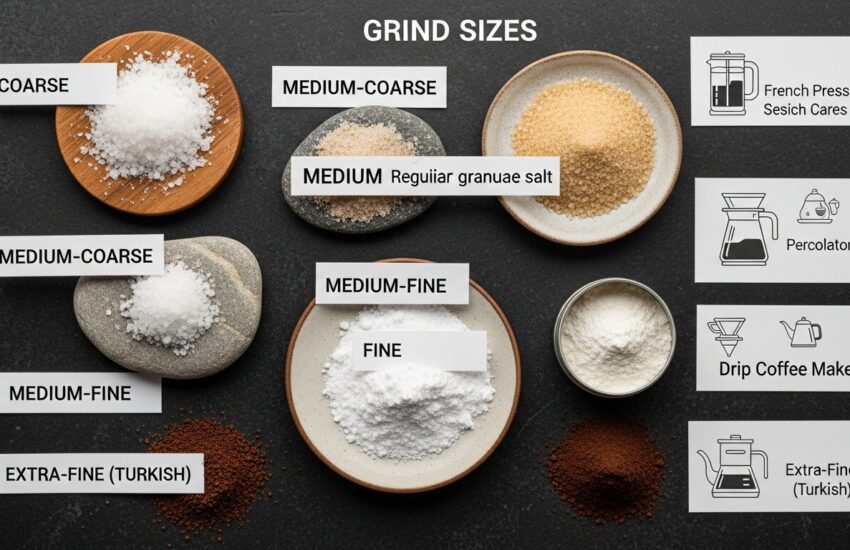
In the world of home espresso, there is a common saying: “Spend twice as much on the grinder as you do on the machine.” While that might be an exaggeration for those on a strict budget, the sentiment holds true. Espresso requires a very specific particle size—extremely fine and remarkably uniform.
When water is forced through a coffee puck at nine bars of pressure, it will always follow the path of least resistance. If your grinder produces “fines” (dust-like particles) and “boulders” (larger chunks) simultaneously, the water will flow unevenly, a phenomenon known as channeling. This leads to an unbalanced flavor profile. A high-quality budget burr grinder ensures that the particles are uniform enough to create the necessary resistance, allowing for the sweet, complex flavors of the bean to be extracted properly. As we look at the best options for 2026, the focus remains on burr geometry and adjustment resolution.
—
Manual vs. Electric: The Great Budget Debate
When shopping for the best budget espresso grinder for home use, the first crossroads you will encounter is the choice between manual (hand) grinders and electric grinders. In 2026, the value proposition of manual grinders has never been higher.
#
The Case for Manual Grinders
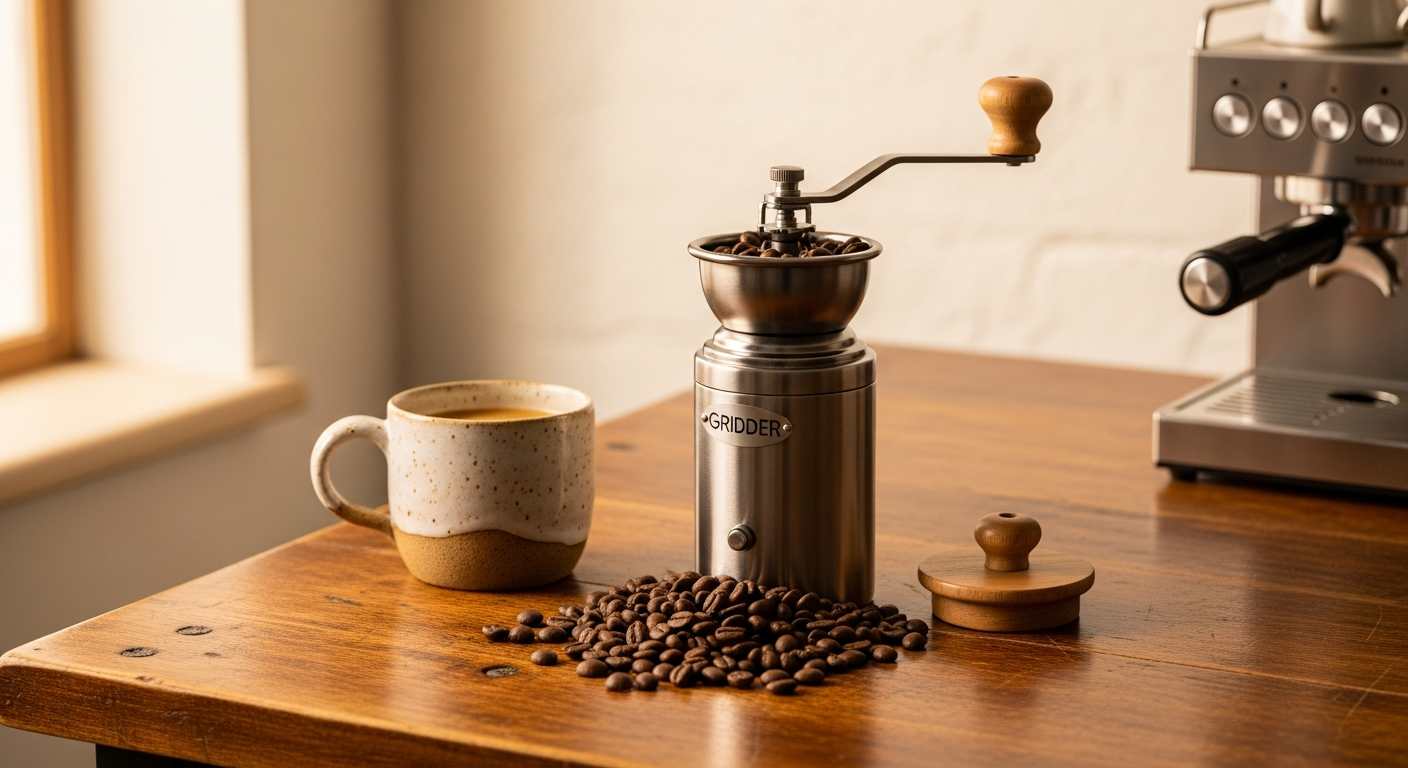
If your primary goal is the absolute best grind quality for the lowest possible price, manual is the way to go. Because you aren’t paying for a motor, a gear assembly, or complex electronics, almost 100% of your investment goes into the burr set and the ball bearings. Modern manual grinders, like those from 1Zpresso or Kingrinder, can grind a double shot of espresso in about 45 to 60 seconds with minimal effort. They offer “stepless” or “micro-stepped” adjustments that often outperform electric grinders twice their price.
#
The Case for Electric Grinders
Convenience is the king of the kitchen. If you find yourself making three or four milk-based drinks back-to-back for family or guests, hand-grinding will quickly become a chore. Electric grinders provide consistency at the push of a button. While budget electric grinders used to be too noisy or inconsistent for espresso, the current market features specialized entry-level units designed specifically to handle the high-torque demands of fine grinding.
—
Top Picks for the Best Budget Espresso Grinders
The market is currently saturated with options, but a few standouts have proven their worth through rigorous testing by the global coffee community.
#
1. The Kingrinder K6 (Best Overall Value)
The Kingrinder K6 has become a cult favorite for a reason. It features a 48mm heptagonal stainless steel burr set that produces a very clean cup profile. With 16 microns per click, it offers the granularity needed to “dial in” espresso perfectly. It is robust, portable, and arguably the best “bang for your buck” in the manual category.
#
2. Baratza Encore ESP (Best Entry-Level Electric)
The original Baratza Encore was a legend for filter coffee, but it couldn’t do espresso. The “ESP” version changed everything. By re-engineering the adjustment collar to provide micro-steps in the espresso range while maintaining macro-steps for pour-over, Baratza created a true “all-rounder.” It is backed by Baratza’s world-class customer service and “don’t-dump-it, fix-it” philosophy, making it a sustainable choice for 2026.
#
3. Fellow Opus (The Aesthetic Powerhouse)
Fellow is known for beautiful design, and the Opus is no exception. This all-purpose grinder uses a unique conical burr set designed to handle everything from espresso to cold brew. While the internal adjustment ring can be slightly confusing at first, the grind quality is excellent for the price point, and its small footprint makes it ideal for cramped kitchen counters.
#
4. Turin SK40 / D40+ (Best Stepless Electric)
For those who want an electric grinder with “stepless” adjustment—meaning you can move the burrs in infinite increments rather than fixed clicks—the Turin SK40 is a game-changer. It uses a worm-gear adjustment system usually found on grinders costing three times as much. It is a single-dose specialist, meaning it is designed to have “zero retention,” ensuring the beans you put in are the grounds you get out.
—
Key Features to Look for in a Budget Grinder
When you are hunting for a deal, it is easy to get distracted by flashy features like LED screens or timers. However, for espresso, three technical specifications matter more than anything else:
#
1. Burr Material and Shape
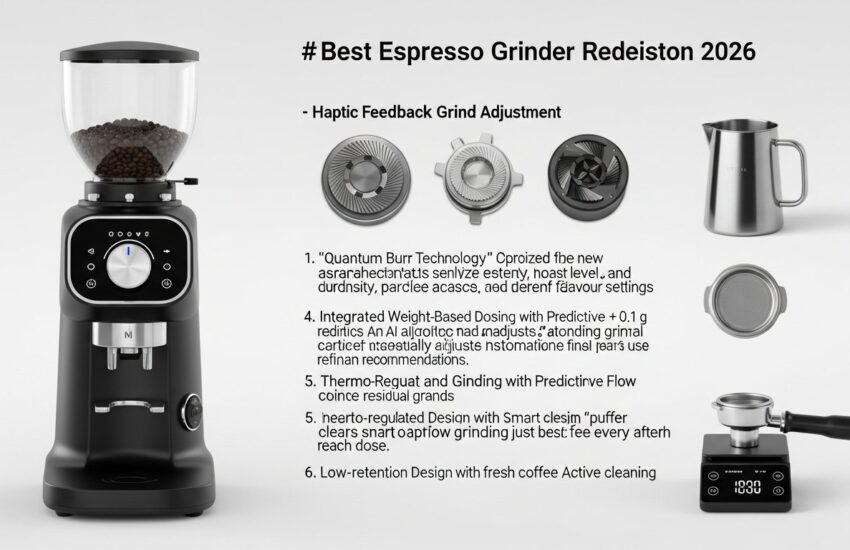
Look for stainless steel conical burrs. Ceramic burrs are often found in older budget models; while they stay sharp longer, they tend to produce more “fines,” which can muddy the flavor of your espresso. Stainless steel burrs are sharper and produce a more uniform grind, which is essential for the high-clarity shots preferred in 2026.
#
2. Adjustment Resolution
This is the “make or break” feature. If a grinder has clicks that are too far apart, you might find that setting #4 is too coarse (the shot flows in 15 seconds) and setting #3 is too fine (the machine chokes and no coffee comes out). You need a grinder that allows for tiny adjustments to “split the difference.”
#
3. Grind Retention
Retention refers to the amount of coffee that gets stuck inside the grinder’s internal chutes. In a budget setting, high retention is a nightmare because you have to purge several grams of coffee every time you change the grind size. Seek out “single-dose” designs with low-retention paths to save money on beans and ensure freshness.
—
Workflow Tips: Making a Budget Grinder Perform Like a Pro
Even the best budget espresso grinder for home use can benefit from a few “pro-level” techniques. You can bridge the gap between a $200 grinder and a $1,000 grinder by refining your workflow.
**The RDT (Ross Droplet Technique):**
Budget grinders often suffer from static buildup, which causes grounds to fly everywhere and stick to the insides of the machine. By adding a single drop of water to your beans (or using a small spray mister) before grinding, you can almost entirely eliminate static.
**The WDT (Weiss Distribution Technique):**
Since budget grinders may produce some small clumps, using a WDT tool—a series of thin needles—to stir the grounds in your portafilter is essential. This breaks up clumps and ensures an even density across the coffee puck, preventing channeling and improving the extraction of your espresso.
**Slow Feeding:**
A burgeoning trend in 2026 for budget electric grinders is “slow feeding.” By dropping the beans into the hopper slowly while the motor is running, rather than dumping them all in at once, you can actually increase the uniformity of the grind. This reduces the “popcorning” effect and can lead to a more consistent shot.
—
Maintenance: Protecting Your Investment
A budget grinder can last for a decade if properly maintained. Unlike cheap blade grinders, burr grinders require regular cleaning. Coffee beans contain oils that, over time, can go rancid and coat the burrs, affecting the flavor of your brew.
Once a month, you should open your grinder to brush out the burr chamber. Many modern budget grinders are designed with “tool-less” disassembly, making this process quick and easy. Additionally, using cleaning pellets (like Urnex Grindz) can help absorb oils in areas you can’t reach with a brush. By keeping the burrs clean and sharp, you ensure that your “budget” setup continues to punch above its weight class.
—
FAQ: Common Questions About Budget Espresso Grinders
**Q: Can I use a regular coffee grinder for espresso?**
A: Generally, no. Most standard grinders (like those designed for drip coffee or French press) cannot grind fine enough to create the pressure needed for espresso. Even if they can reach the fineness, they lack the micro-adjustment capabilities to properly time the shot.
**Q: Is a manual grinder too much work for daily use?**
A: It depends on your lifestyle. For one or two shots a day, most people find it a rewarding ritual. However, if you have any wrist issues or frequently entertain guests, you will likely prefer an electric model.
**Q: What is “stepless” adjustment?**
A: A stepped grinder has fixed “clicks” or settings. A stepless grinder allows you to turn the dial to any position, giving you infinite control over the grind size. This is highly prized for espresso because it allows for absolute precision.
**Q: Why do some grinders have “zero retention”?**
A: Zero retention means that if you put 18 grams of beans in, 18 grams of ground coffee come out. This is important for espresso because it ensures you aren’t getting “stale” grounds from yesterday mixed into your fresh shot.
**Q: How long do stainless steel burrs last?**
A: For the average home user, a quality set of stainless steel burrs can last through 500 to 1,000 pounds of coffee. For most people, this means the burrs will last 5 to 10 years before needing replacement.
—
Conclusion: Elevating Your Home Cafe in 2026
The journey to the perfect home espresso shot starts at the grinder. As we have seen, the “best budget espresso grinder home” category is no longer a graveyard of cheap plastic machines. Whether you choose the tactile, high-precision experience of a Kingrinder manual unit or the streamlined convenience of the Baratza Encore ESP, the technology available in 2026 makes it possible for anyone to enjoy cafe-standard coffee without a commercial budget.
By prioritizing burr quality and adjustment resolution over unnecessary digital bells and whistles, you can invest in a tool that will grow with you as you develop your palate. Remember, the best grinder is the one that fits your workflow and encourages you to experiment with new beans and techniques. With the right budget grinder in your kitchen, you are well on your way to mastering the art of the perfect pull.