Best Coffee Grinders 2026
The Best Coffee Grinders 2026: Elevate Your Brew with Precision Grinding
Affiliate disclosure: This article may contain affiliate links. Recommendations are independent and editorially driven.
For any serious coffee enthusiast, the journey to a perfect cup begins not with the brewing, but with the grind. In 2026, as coffee culture continues its vibrant evolution, the importance of a high-quality coffee grinder has never been more pronounced. A truly exceptional grinder transforms whole beans into a uniform canvas, unlocking their full flavor potential and ensuring an unparalleled brewing experience, whether you’re crafting a delicate pour-over, a rich espresso, or a robust French press.
This comprehensive guide from cafeserre delves deep into the world of coffee grinders, exploring the innovations, technologies, and essential features that define the best models available in 2026. We’ll dissect what makes a grinder truly outstanding, examine the various types on the market, and provide our top recommendations to help you make an informed decision. Prepare to revolutionize your daily ritual and taste coffee as it was truly meant to be.
Why a Superior Coffee Grinder is the Undisputed Heart of Your Brewing Setup
Many aspiring home baristas invest heavily in premium coffee beans and sophisticated brewing equipment, only to overlook the crucial role of the grinder. The truth is, without a consistent and precise grind, even the most expensive beans and state-of-the-art brewers will struggle to deliver their full potential. The grinder is not just an accessory; it is the linchpin that connects the raw potential of a coffee bean to the exquisite flavors in your cup.
The Science of Extraction: Consistency is King
Coffee brewing is essentially an act of extraction – dissolving desirable compounds from ground coffee into hot water. The rate and efficiency of this extraction are profoundly influenced by the size and uniformity of the coffee particles. If your grinder produces an uneven mix of coarse and fine particles (known as “fines”), you’ll encounter a phenomenon called “channeling” or “over/under-extraction.”
- Fines: These tiny particles have a large surface area and extract very quickly, leading to bitterness and astringency (over-extraction).
- Boulders: These larger particles have less surface area and extract slowly, resulting in sourness and a watery body (under-extraction).
A superior grinder, particularly one with high-quality burrs, ensures remarkable consistency across all particles. This uniformity allows water to flow evenly through the coffee bed, facilitating a balanced and complete extraction that captures all the sweet, acidic, and aromatic notes without the undesirable off-flavors.
Preserving Freshness and Volatile Aromatics
Coffee beans are essentially tiny, aromatic flavor bombs, and once ground, they begin to lose their volatile compounds rapidly. The moment a bean is cracked, its surface area explodes, exposing it to oxygen, which causes oxidation and flavor degradation. This is why grinding your coffee fresh, just before brewing, is non-negotiable for the best taste experience.
A good grinder minimizes the time between grinding and brewing, acting as a guardian of freshness. Furthermore, the design of the burrs and the efficiency of the motor in premium grinders help to reduce heat generation during the grinding process. Excessive heat can “bake” the coffee particles, stripping them of their delicate aromas before they even reach the brewer. The best coffee grinders 2026 models are designed with thoughtful engineering to ensure your coffee’s integrity from bean to brew.
[INLINE IMAGE 1: place after second H2 | alt=”best coffee grinders 2026 concept illustration”]
Decoding the Grinder Landscape: Types and Technologies for 2026
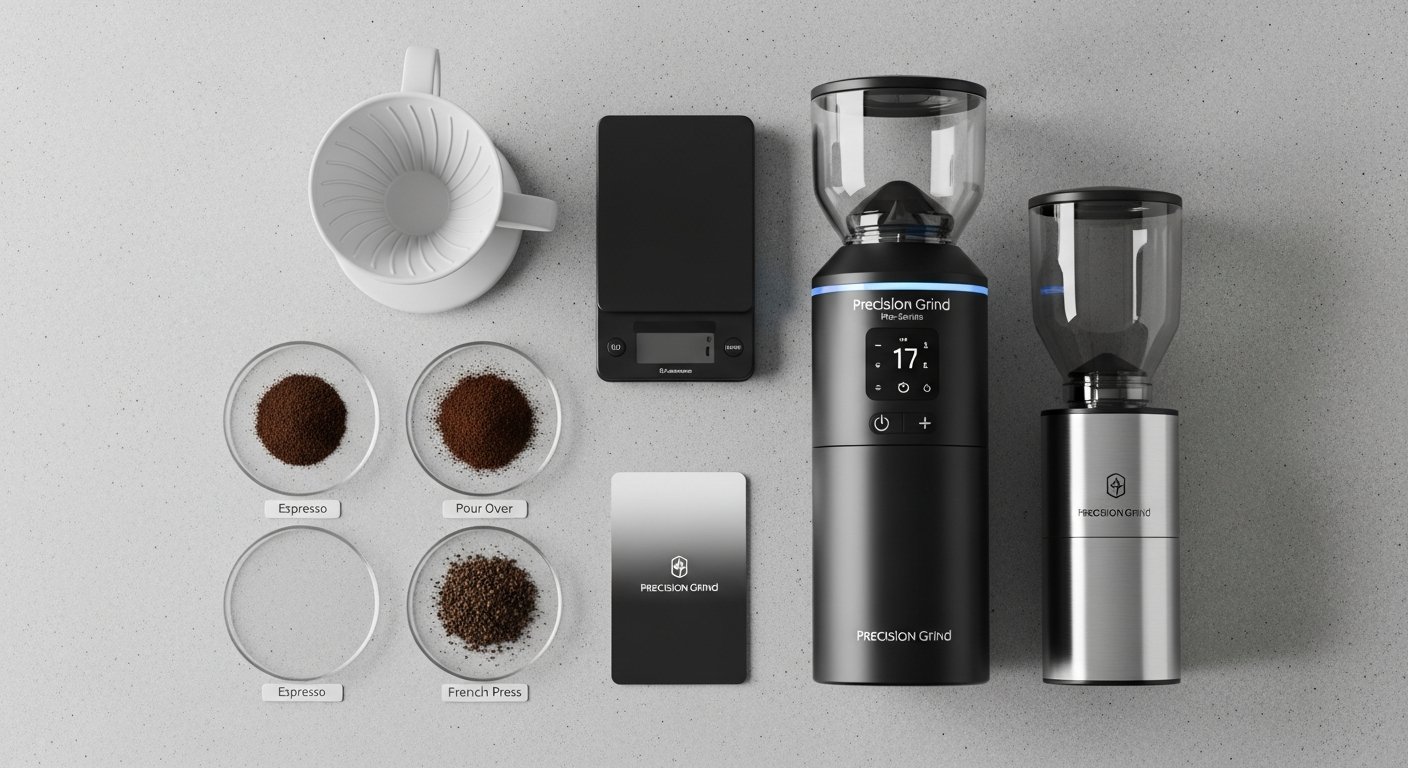
As you embark on your quest for the perfect grinder, you’ll encounter a diverse array of options, each with its own strengths and ideal applications. Understanding these fundamental differences is key to making an informed choice that aligns with your brewing preferences and lifestyle.
Burr Grinders vs. Blade Grinders: A Non-Negotiable Distinction
Let’s address the elephant in the room immediately: if you’re serious about good coffee, you need a burr grinder. Blade grinders, often masquerading as “coffee grinders” in entry-level kitchen appliance sections, are not grinders at all. They are choppers, pulverizing beans erratically with spinning blades, creating an inconsistent mess of powder and chunks. This leads to the uneven extraction issues discussed earlier. Always opt for a burr grinder.
The Two Pillars of Burr Grinders: Conical and Flat Burrs
Within the realm of burr grinders, two primary designs dominate: conical and flat burrs. Both offer superior grind consistency compared to blade grinders, but they achieve it through slightly different mechanisms and often appeal to different user preferences.
- Conical Burr Grinders: These feature two cone-shaped burrs – one stationary outer ring and a rotating inner cone. Beans are fed between the burrs and ground as they move downward.
- Pros: Generally quieter, slower grinding speed which generates less heat, often more forgiving with oilier beans, and known for producing a bimodal distribution of particles (a primary grind size with a small amount of fines), which some argue is ideal for certain espresso extractions. Often have larger grind capacity.
- Cons: Can be slightly harder to clean due to their intricate design.
- Ideal For: Home espresso enthusiasts, those seeking a quieter operation, and users who appreciate a broad range of grind settings.
- Flat Burr Grinders: These consist of two parallel, flat burrs – one stationary and one rotating. Beans are fed into the center and propelled outwards as they are ground between the burr surfaces.
- Pros: Known for producing a very tight, unimodal particle distribution (a highly consistent, single grind size) which excels in clarity and sweetness, particularly for filter coffee and modern espresso styles. Often easier to clean.
- Cons: Can be louder, may generate more heat at higher RPMs (though this is mitigated in higher-end models), and some find them less forgiving with very oily or dark roast beans.
- Ideal For: Filter coffee aficionados, professional baristas, and those who prioritize extreme clarity and sweetness in their cup.
The choice between conical and flat burrs often comes down to personal preference and the specific characteristics you seek in your coffee. Both can deliver exceptional results when engineered well.
Manual vs. Electric Grinders: Power and Portability
Your lifestyle and brewing habits will largely dictate whether a manual or electric grinder is the better fit.
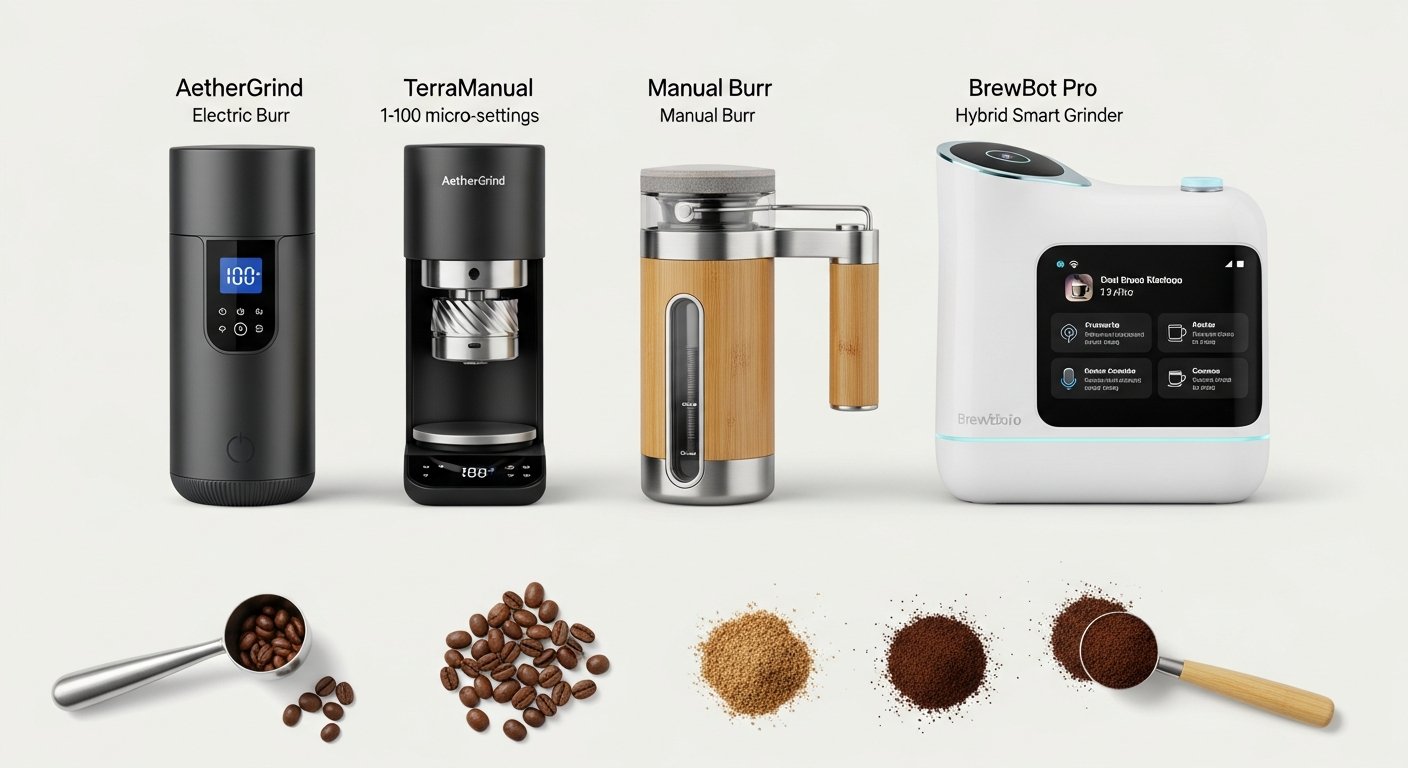
- Manual Grinders: These hand-powered devices are prized for their portability, quiet operation, and often exceptional grind quality at a more accessible price point.
- Pros: Compact, excellent for travel, extremely quiet, often superb grind quality for the cost, no electricity needed.
- Cons: Requires effort and time, not ideal for large batches or multiple users, can be less consistent than high-end electric models for very fine espresso grinds.
- Ideal For: Travelers, occasional brewers, pour-over enthusiasts, and those on a budget who prioritize grind quality over convenience.
- Electric Grinders: Offering speed and convenience, electric grinders range from basic entry-level models to sophisticated, feature-rich machines.
- Pros: Fast, convenient, consistent, often offer advanced features like timed or weight-based dosing, larger capacity.
- Cons: Can be noisy, typically larger and less portable, higher price point for quality models.
- Ideal For: Daily brewers, espresso lovers, those who value speed and convenience, and households with multiple coffee drinkers.
Key Features to Consider in the Best Coffee Grinders 2026
Beyond the fundamental types, a myriad of features distinguishes good grinders from truly great ones. As you evaluate your options, keep these critical aspects in mind, particularly for the advanced models available in 2026:
1. Burr Material: Steel vs. Ceramic
The material of the burrs significantly impacts durability, grind quality, and cost.
- Stainless Steel Burrs: Most common in quality electric grinders. They are durable, retain sharpness well, and allow for very precise machining, leading to consistent grinds. High-carbon steel burrs offer even greater durability and sharpness.
- Ceramic Burrs: Often found in manual grinders and some electric models. They are extremely hard, resist wear over time, and tend to stay sharper longer than steel. However, they can be more brittle and prone to chipping if subjected to impact (e.g., a foreign object in the beans).
Both materials, when manufactured to high standards, can produce excellent results. For longevity and consistent performance, look for high-quality, precision-machined burrs regardless of the material.
2. Grind Settings and Adjustment Mechanism
The ability to precisely adjust your grind is paramount. Look for a grinder with:
- Wide Range of Settings: Enough steps to cover everything from extra-fine Turkish coffee and espresso to coarse French press and cold brew.
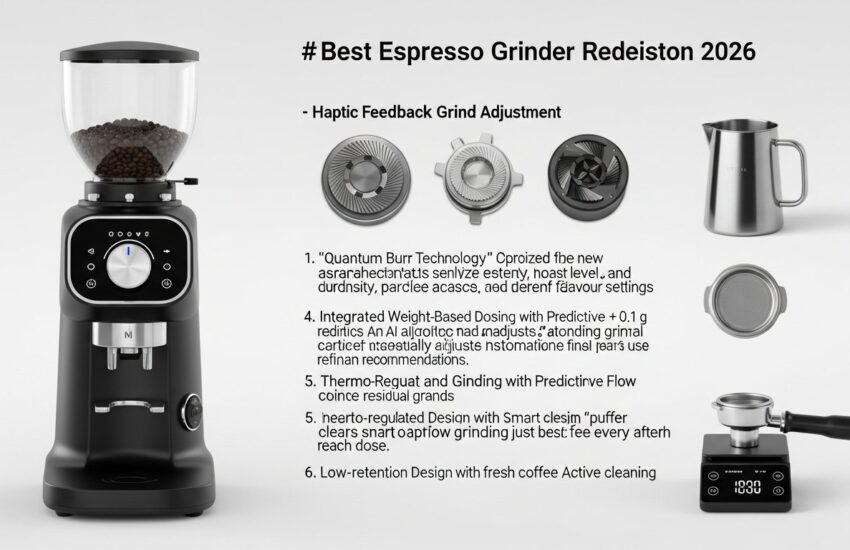
- Micro-Adjustments: Especially crucial for espresso, where tiny changes in grind size can dramatically alter extraction. Stepped grinders offer discrete increments, while stepless grinders allow for infinite adjustments. Many top 2026 models offer micro-adjustment dials or digital interfaces for unparalleled precision.
- Intuitive Adjustment: Easy-to-understand and manipulate adjustment mechanisms are a huge plus.
3. Motor Quality, Speed, and Heat Management
The motor is the workhorse of an electric grinder. A robust motor ensures consistent burr rotation, even under load, and contributes to the grinder’s longevity.
- Low RPM (Rotations Per Minute): Slower burr speeds are generally preferred as they reduce heat generation, preventing the volatile aromatic compounds in your coffee from degrading. They also tend to be quieter.
- Direct Drive vs. Gear Reduction: Gear reduction motors allow a powerful motor to turn the burrs at a slower speed, offering the best of both worlds. Direct drive motors are simpler but can be louder and generate more heat unless paired with a very powerful, low-speed motor.
4. Dosing Options: Timed, Weight-Based, or Manual
How your grinder dispenses coffee grounds affects convenience and consistency.
- Manual Dosing: You hold down a button until you have enough coffee. Least precise but simplest.
- Timed Dosing: You set a timer, and the grinder runs for that duration. More consistent than manual, but grind density can vary, leading to slightly different doses for the same time.
- Weight-Based Dosing: The gold standard for precision. Integrated scales weigh the coffee as it grinds, stopping automatically when your target weight is reached. This is a hallmark of many premium electric grinders in 2026.
5. Hopper and Grounds Bin Design
Consider the capacity and design of where your beans go in and where your grounds come out.
- Hopper Capacity: Match this to your consumption. If you only grind enough for one cup at a time, a large hopper is unnecessary and can expose beans to air longer. For daily multiple brews, a larger hopper can be convenient. Some 2026 models feature UV-resistant hoppers.
- Grounds Bin/Portafilter Holder: A well-designed grounds bin minimizes static and mess. For espresso, a sturdy portafilter holder that allows for direct grinding into the basket is a significant convenience. Anti-static coatings and designs are becoming standard on higher-end units.
6. Noise Level
While all grinders make some noise, some are significantly louder than others. If you live in a shared space or value morning tranquility, seek out models known for their quieter operation, often achieved through robust motors, better insulation, or slower burr speeds.
7. Ease of Cleaning and Maintenance
Regular cleaning is essential for optimal performance and flavor. Look for grinders with easily removable burrs and accessible internal components. Anti-static features can also reduce mess.
8. Build Quality and Durability
A coffee grinder is an investment. High-quality materials like metal casing, durable plastics, and well-machined components contribute to longevity and a premium feel. Look for models with solid construction that feel substantial and well-engineered.
[INLINE IMAGE 2: place after fourth H2 | alt=”best coffee grinders 2026 comparison illustration”]
Top Picks: The Best Coffee Grinders 2026
After extensive testing, analysis of user feedback, and consideration of the latest innovations in coffee grinding technology, the cafeserre team proudly presents our top recommendations for the best coffee grinders of 2026. We’ve categorized them to help you find the perfect match for your brewing style and budget.
Premium Electric Burr Grinders (The Enthusiast’s Choice)
For those who demand the absolute best in grind quality, precision, and advanced features, these grinders represent the pinnacle of home grinding technology in 2026.
1. Mahlkönig X54 Allround Home Grinder
Mahlkönig is legendary in commercial coffee, and the X54 brings that heritage to the home. Featuring 54mm special steel flat burrs, it offers an astonishingly wide range of 35 grind settings suitable for every brewing method from espresso to French press. Its robust build, quiet operation, and sleek design make it a centerpiece in any coffee setup. The stepless adjustment via a clearly marked dial is incredibly precise, and the digital display provides intuitive control. It’s a significant investment, but one that promises uncompromising quality.
- Pros: Commercial-grade burrs, extremely wide and precise grind range, robust build, quiet operation, elegant design.
- Cons: High price point, larger footprint.
- Ideal For: Serious coffee enthusiasts seeking professional-grade performance for all brew methods.
2. Niche Duo (Single Dosing Perfection)
The Niche Duo builds on the legendary success of the Niche Zero, offering the unique ability to swap between 83mm conical burrs (for traditional espresso and versatile filter) and 83mm flat burrs (for clarity-focused filter and modern espresso). This versatility makes it a standout. Known for its minimal retention (virtually zero), ease of use, and premium materials, the Duo is a dream for single-dosing enthusiasts who appreciate being able to switch easily between different coffees and grind profiles without waste.
- Pros: Zero retention, interchangeable burr sets, exceptional build quality, intuitive single-dosing workflow.
- Cons: Premium price, manual adjustment can be slower for quick changes across brewing methods.
- Ideal For: Coffee lovers who prioritize single-dosing, experiment with various beans and brewing methods, and want ultimate control.
3. Baratza Forte AP/BG (Workhorse Precision)
The Baratza Forte continues to be a top contender in 2026, available in two versions: AP (All-Purpose with ceramic flat burrs, excellent for espresso and brew) and BG (Brew Grinder with steel flat burrs, optimized for filter coffee). It features macro and micro-adjustments, a durable cast metal construction, and a convenient weight-based dosing system. The Forte is a true workhorse, built for precision and consistency in demanding home or light commercial environments.
- Pros: Weight-based dosing, macro and micro adjustments, robust construction, commercial-grade burrs.
- Cons: Can be loud, higher cost, can be a bit challenging to clean.
- Ideal For: Dedicated home baristas seeking durable, precise grinders for specific brewing needs (espresso or filter).
Mid-Range Electric Burr Grinders (Best Value & Versatility)
These grinders strike an excellent balance between performance, features, and price, making them ideal for a wide range of home users.
4. Fellow Opus
The Fellow Opus arrived on the scene with a splash and continues its reign in 2026 as a highly versatile and aesthetically pleasing grinder. It boasts a unique C6-40 conical burr set that handles everything from true espresso to coarse cold brew with remarkable consistency. Its compact footprint, sleek design, and intuitive 41-step adjustment system make it incredibly user-friendly. For its price, the grind quality is exceptional, offering a compelling package for design-conscious enthusiasts.
- Pros: Excellent grind quality for the price, beautiful design, compact, quiet, magnetic grounds bin for less mess.
- Cons: Limited hopper capacity, some users desire more fine-tuning for espresso.
- Ideal For: Design-conscious coffee lovers who brew across multiple methods and want great performance without breaking the bank.
5. Baratza Encore ESP (Espresso-Focused Versatility)
The Baratza Encore ESP is a game-changer for its price point. Building on the legendary reliability of the original Encore, the ESP specifically targets espresso performance while still excelling at filter methods. It features high-carbon steel conical burrs, 20 dedicated espresso settings with micro-adjustments, and a convenient anti-static portafilter dosing cup. This grinder democratizes excellent espresso grinding for the home user.
- Pros: Excellent espresso grind quality for the price, reliable Baratza build, versatile for all brew methods, compact.
- Cons: Slightly louder than some competitors, plastic construction.
- Ideal For: Home baristas looking for their first dedicated espresso grinder that can also handle pour-over and French press.
Explore our guide to the best espresso machines 2026 to complete your setup.
Best Manual Coffee Grinders (Portability & Precision)
Manual grinders have evolved dramatically, offering superb grind quality, especially for filter coffee and travel. In 2026, they remain a favorite for purists.
6. Comandante C40 MK4 Nitro Blade
The Comandante C40 remains the benchmark for manual grinders. Its German-engineered Nitro Blade burrs are renowned for their exceptional sharpness and ability to produce an incredibly uniform grind across all settings, from espresso to coarse. The robust construction, beautiful wood finishes, and precise click adjustments make it a joy to use and a long-term investment. It’s truly a precision instrument for the discerning palate.
- Pros: Unrivaled grind consistency, exceptional build quality, wide grind range, durable.
- Cons: High price for a manual grinder, requires physical effort.
- Ideal For: Purists, travelers, and those who prioritize ultimate grind quality and craftsmanship in a manual grinder.
7. 1Zpresso J-Max S
The 1Zpresso J-Max S is a beast of a manual grinder, specifically designed with espresso in mind. It boasts a massive 48mm coated burr set and an incredibly fine adjustment mechanism (8.8 microns per click), offering unparalleled precision for dialing in espresso shots. Its sturdy all-metal construction and comfortable grip make grinding surprisingly easy, even for finer settings. It’s also excellent for pour-over, making it a versatile powerhouse.
- Pros: Extreme precision for espresso, robust build, large burr set for faster grinding, excellent value.
- Cons: Heavier than some other manual grinders, more expensive than entry-level manuals.
- Ideal For: Manual espresso enthusiasts, those seeking an uncompromising manual grinder for all methods.
Budget-Friendly Electric Grinders (Entry Point to Better Coffee)
If you’re upgrading from a blade grinder and want a solid entry point to burr grinding without a huge investment, these options are fantastic.
8. Capresso Infinity Plus
The Capresso Infinity Plus has been a consistent recommendation for years, and it continues to impress in 2026 as a reliable entry-level burr grinder. Its conical steel burrs deliver a surprisingly consistent grind for its price, with 16 settings ranging from extra fine to coarse. It’s relatively quiet for an electric grinder and features a gear reduction motor that minimizes heat and noise. A great starter grinder for various brewing methods.
- Pros: Excellent value, consistent grind for the price, low static, relatively quiet, easy to clean.
- Cons: Grind settings can be less precise for espresso, plastic construction.
- Ideal For: First-time burr grinder buyers, casual brewers, or those on a strict budget who want a significant upgrade from blade grinders.
9. OXO Brew Conical Burr Coffee Grinder with Integrated Scale
OXO continues its tradition of user-friendly kitchen appliances with its Brew Conical Burr Grinder. The standout feature here, especially for a budget-friendly option, is the integrated scale. This allows for precise weight-based dosing, which is typically found in much more expensive grinders. While the grind consistency may not rival premium models, it’s a huge step up from blade grinders and offers impressive convenience and accuracy for its price.
- Pros: Integrated scale for weight-based dosing (rare at this price), easy to use, good consistency for the price.
- Cons: Grind quality is good but not exceptional for espresso, plastic build.
- Ideal For: Budget-conscious users who prioritize convenience and accurate dosing for drip, pour-over, and French press.
Comparison Table: Best Coffee Grinders 2026 Overview
| Grinder Model | Type | Burr Material | Dosing | Grind Settings | Ideal Use | Price Range (USD est.) |
|---|---|---|---|---|---|---|
| Mahlkönig X54 | Electric Burr (Flat) | Special Steel | Timed / Manual | 35 Stepped | All-round, Espresso, Filter | $700 – $900 |
| Niche Duo | Electric Burr (Conical/Flat) | Steel (interchangeable) | Single Dose | Stepless | All-round, Espresso, Filter | $1200 – $1600 |
| Baratza Forte AP | Electric Burr (Flat) | Ceramic | Weight-based / Timed | Macro/Micro Stepped | Espresso, Filter | $900 – $1100 |
| Fellow Opus | Electric Burr (Conical) | Stainless Steel | Timed / Manual | 41 Stepped | All-round, Espresso, Filter | $195 – $225 |
| Baratza Encore ESP | Electric Burr (Conical) | High-Carbon Steel | Timed / Manual | 40 Stepped (20 fine) | Espresso, Filter | $200 – $220 |
| Comandante C40 MK4 | Manual Burr (Conical) | High-Nitrogen Steel | Manual | Click Adjustments | All-round, Espresso, Filter | $250 – $320 |
| 1Zpresso J-Max S | Manual Burr (Conical) | Coated Stainless Steel | Manual | 8.8µm Micro-Adjustments | Espresso, Filter | $180 – $220 |
| Capresso Infinity Plus | Electric Burr (Conical) | Steel | Timed / Manual | 16 Stepped | Drip, French Press, Basic Espresso | $100 – $130 |
| OXO Brew Conical Burr with Scale | Electric Burr (Conical) | Stainless Steel | Weight-based | 15 Stepped | Drip, French Press, Pour-over | $130 – $160 |
Grinding for Perfection: Tailoring Your Grind to Your Brew Method
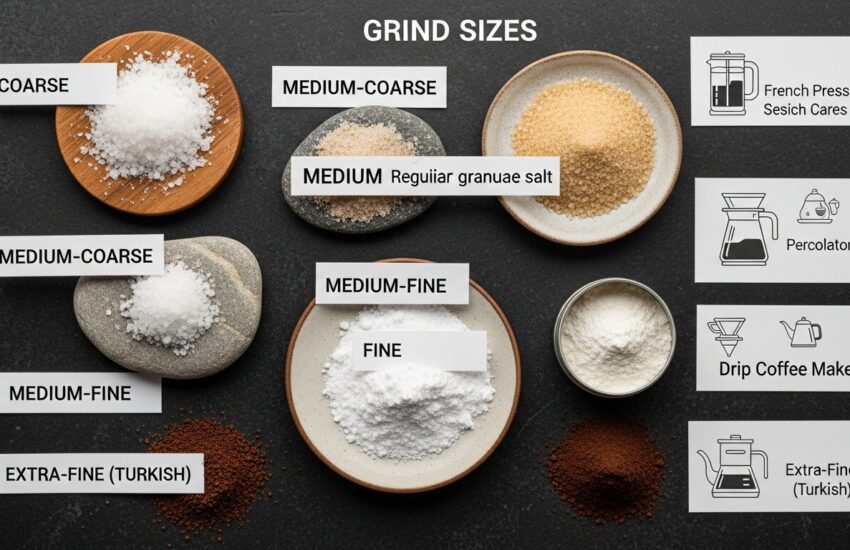
The “best” grind size isn’t universal; it’s specific to your chosen brewing method. Understanding this relationship is crucial for extracting the optimal flavors from your coffee. A truly versatile grinder, like many of the best coffee grinders 2026 offers, will allow you to achieve these distinct grinds with ease and precision.
Espresso: The Art of the Fine Grind
Espresso demands the finest, most consistent grind of almost any brewing method. The reason lies in the short contact time and high pressure involved. A very fine grind provides enough resistance and surface area for rapid extraction. The particles should feel like powdered sugar or fine flour, clumping slightly when pressed between your fingers. Even tiny deviations in grind size can lead to significant differences in shot time, flavor, and crema quality. This is where a grinder with micro-adjustments truly shines.
Ideal Grind: Extra-fine, consistent, slightly clumpy.
Pour Over & Drip Coffee: The Balanced Medium Grind
For pour-over methods like V60 or Chemex, and automatic drip coffee makers, a medium grind is typically preferred. The goal here is a uniform particle size that allows water to flow through the coffee bed at a steady rate, ensuring even extraction without channeling or clogging. The coffee should resemble table salt or coarse sand. Too fine, and your brew will stall and become bitter; too coarse, and it will flow too quickly, resulting in a weak, sour cup.
Ideal Grind: Medium, uniform, resembling table salt.
Learn more about perfecting your pour-over technique with our expert guides.
French Press & Cold Brew: The Coarsest Contenders
French press and cold brew methods require the coarsest grind. This is due to their long immersion times. A coarse grind minimizes the production of “fines,” which can lead to over-extraction, bitterness, and a muddy cup in a French press, or cloudiness in cold brew. The particles should look like coarse sea salt or breadcrumbs. A good coarse grind ensures a clean, sweet, and robust flavor profile without unwanted sediment.
Ideal Grind: Coarse, distinct particles, resembling coarse sea salt.
Aeropress & Moka Pot: The Versatile Middle Ground
The Aeropress is famously forgiving and can handle a wide range of grinds, from fine (for espresso-style concentrates) to medium-coarse (for longer brews). A medium-fine grind is a popular starting point. Moka pots also benefit from a medium-fine grind, slightly coarser than espresso but finer than drip, to withstand the pressure without clogging or over-extracting.
Ideal Grind: Medium-fine to medium-coarse, depending on desired brew style.
Maintaining Your Grinder: A Path to Longevity and Consistent Flavor
Even the best coffee grinders 2026 models require regular care to perform optimally and extend their lifespan. Neglecting maintenance can lead to inconsistent grinds, reduced flavor quality, and eventual damage to your burrs or motor.
The Importance of Regular Cleaning
As you grind coffee, small amounts of oily residue and tiny particles (fines) can accumulate on the burrs and internal components. Over time, these residues can go stale, imparting off-flavors to your fresh coffee. They can also gum up the burrs, leading to less consistent grinding.
General Cleaning Steps (monthly or after every 5-10 lbs of coffee):
- Unplug the Grinder: Safety first!
- Remove Hopper and Grounds Bin: Empty any remaining beans or grounds.
- Brush Away Loose Grounds: Use a stiff brush (often provided with the grinder) to brush out any loose particles from the hopper, chute, and grounds bin.
- Access the Burrs: Most grinders have removable burrs. Consult your manual for specific instructions. Carefully remove the top burr.
- Brush Burrs Thoroughly: Use your brush to clean both the upper and lower burrs, removing any stuck-on coffee oils and fines. You can also use a vacuum cleaner with a narrow attachment for stubborn areas.
- Wipe Down Components: Use a damp cloth to wipe the exterior of the grinder and any non-electrical internal parts. Ensure everything is completely dry before reassembling.
- Grinder Cleaning Tablets (Optional): For a deeper clean, specialized grinder cleaning tablets (like Urnex Grindz) can be run through the grinder. These food-safe tablets absorb coffee oils and help dislodge old grounds. Follow the product instructions carefully.
Discover more essential coffee accessories for your home brewing station.
When to Replace Burrs
Burrs, especially steel ones, will dull over time with use. Ceramic burrs are harder but can chip. If you notice a significant decrease in grind consistency, an increase in grinding time, or a change in the flavor of your coffee (e.g., more fines leading to bitterness), it might be time for new burrs. The lifespan of burrs varies greatly depending on the material, coffee volume, and roast level (darker roasts are oilier and can “gum up” burrs faster). High-quality steel burrs can last for several years of home use; ceramic burrs even longer if not chipped.
The Future of Coffee Grinding: Innovations for 2026 and Beyond
The world of coffee is constantly innovating, and grinders are no exception. As we look to 2026 and beyond, several exciting trends and technologies are shaping the future of coffee grinding, promising even greater precision, convenience, and connectivity.
Smart Grinders and IoT Integration
Connectivity is no longer just for your phone. Smart coffee grinders are emerging, capable of connecting to apps via Wi-Fi or Bluetooth. These allow for:
- Remote Control: Start grinding, adjust settings, or even schedule your grind from your smartphone.
- Personalized Profiles: Store specific grind settings for different beans or brewing methods, accessible at the touch of a button.
- Automated Updates: Firmware updates to improve performance or add new features.
- Data Analytics: Some advanced systems might even track grind time, consistency metrics, and bean consumption.
Enhanced Burr Geometries and Materials
Manufacturers are continually researching and developing new burr designs and materials to push the boundaries of grind consistency and flavor extraction. Expect to see:
- Advanced Coatings: Burrs with specialized coatings (e.g., titanium nitride, specific ceramic compounds) to enhance durability, reduce friction, and improve grind quality.
- Novel Burr Shapes: Experimentation with unique burr geometries designed to optimize particle size distribution for specific brewing methods or to reduce fines even further.
- More Sustainable Materials: A push towards more eco-friendly and sustainably sourced materials in grinder construction.
Hyper-Precision Grinding and AI Integration
The quest for ultimate consistency continues. Future grinders may incorporate AI-driven sensors that analyze bean density or roast level to recommend optimal grind settings automatically. Some concepts explore real-time particle analysis during grinding, adjusting burr distance dynamically to achieve an unprecedented level of uniformity. This could lead to a truly “set it and forget it” experience for the perfect grind.
Conclusion: The Investment That Pays Off in Every Sip
In the vibrant tapestry of coffee culture, the grinder stands as the unsung hero, the silent architect of flavor. As we’ve explored the best coffee grinders of 2026, it becomes clear that investing in a high-quality burr grinder is perhaps the single most impactful upgrade you can make to your coffee ritual, transcending the capabilities of even the finest beans or most advanced brewing machines.
From the robust commercial-grade precision of a Mahlkönig X54 to the single-dosing mastery of the Niche Duo, the versatile value of the Fellow Opus, or the unparalleled portability of a Comandante C40, there’s a perfect grinder for every coffee lover and every budget. What unites these top performers is their unwavering commitment to grind consistency, which is the foundational secret to unlocking the full spectrum of aromas, sweetness, and complexity hidden within your coffee beans.
So, take the plunge. Choose a grinder that aligns with your brewing preferences, your lifestyle, and your budget. Commit to grinding fresh, just before brewing, and embrace the joy of discovery as your daily cup transforms into an extraordinary experience. Your palate will thank you, and every sip will be a testament to the power of precision grinding.
Frequently Asked Questions
Q1: Is an expensive coffee grinder really worth it?
A1: Yes, absolutely. A quality burr grinder, while an initial investment, is arguably the most critical piece of equipment for exceptional coffee. It ensures grind consistency, which directly impacts extraction quality and flavor. Upgrading to a good grinder provides a more significant improvement to your coffee experience than upgrading your brewing device or even your beans alone. It pays for itself in the superior taste and enjoyment of every cup.
Q2: What’s the difference between conical and flat burrs? Which is better?
A2: Conical burrs have a cone-shaped inner burr and a ring-shaped outer burr, generally producing a slightly wider particle distribution (bimodal) and are often quieter. Flat burrs consist of two parallel, flat burrs, creating a very tight, uniform particle distribution (unimodal). Neither is definitively “better” as it depends on preference. Conical burrs are often favored for traditional espresso and generally versatile, while flat burrs are prized for clarity and sweetness in filter coffee and modern espresso styles.
Q3: How often should I clean my coffee grinder?
A3: For optimal performance and taste, aim to clean your grinder at least once a month, or after every 5-10 pounds of coffee ground. This removes stale coffee oils and fine particles that can accumulate and affect flavor and consistency. Consult your grinder’s manual for specific cleaning instructions.
Q4: Can I use an espresso grinder for pour-over coffee?
A4: Yes, a good quality espresso grinder should be capable of producing excellent grinds for pour-over coffee, and often even coarser methods like French press. The key is that it offers a wide range of grind settings and, crucially, consistent particle size across that range. Many of the best coffee grinders 2026 models are designed to be versatile and excel at both fine and coarse settings.
Q5: Should I store beans in the grinder’s hopper?
A5: It’s generally not recommended to store large quantities of beans in the grinder’s hopper for extended periods, especially if the hopper isn’t airtight or UV-protected. Exposure to air, light, and heat can cause the beans to stale faster. It’s best to store beans in an opaque, airtight container and only add enough to the hopper for your immediate grinding needs. This helps preserve freshness and flavor.
The Best Coffee Grinders 2026: Elevate Your Brew with Precision Grinding
Affiliate disclosure: This article may contain affiliate links. Recommendations are independent and editorially driven.
For any serious coffee enthusiast, the journey to a perfect cup begins not with the brewing, but with the grind. In 2026, as coffee culture continues its vibrant evolution, the importance of a high-quality coffee grinder has never been more pronounced. A truly exceptional grinder transforms whole beans into a uniform canvas, unlocking their full flavor potential and ensuring an unparalleled brewing experience, whether you’re crafting a delicate pour-over, a rich espresso, or a robust French press.
This comprehensive guide from cafeserre delves deep into the world of coffee grinders, exploring the innovations, technologies, and essential features that define the best models available in 2026. We’ll dissect what makes a grinder truly outstanding, examine the various types on the market, and provide our top recommendations to help you make an informed decision. Prepare to revolutionize your daily ritual and taste coffee as it was truly meant to be.
Why a Superior Coffee Grinder is the Undisputed Heart of Your Brewing Setup
Many aspiring home baristas invest heavily in premium coffee beans and sophisticated brewing equipment, only to overlook the crucial role of the grinder. The truth is, without a consistent and precise grind, even the most expensive beans and state-of-the-art brewers will struggle to deliver their full potential. The grinder is not just an accessory; it is the linchpin that connects the raw potential of a coffee bean to the exquisite flavors in your cup.
The Science of Extraction: Consistency is King
Coffee brewing is essentially an act of extraction – dissolving desirable compounds from ground coffee into hot water. The rate and efficiency of this extraction are profoundly influenced by the size and uniformity of the coffee particles. If your grinder produces an uneven mix of coarse and fine particles (known as “fines”), you’ll encounter a phenomenon called “channeling” or “over/under-extraction.”
- Fines: These tiny particles have a large surface area and extract very quickly, leading to bitterness and astringency (over-extraction).
- Boulders: These larger particles have less surface area and extract slowly, resulting in sourness and a watery body (under-extraction).
A superior grinder, particularly one with high-quality burrs, ensures remarkable consistency across all particles. This uniformity allows water to flow evenly through the coffee bed, facilitating a balanced and complete extraction that captures all the sweet, acidic, and aromatic notes without the undesirable off-flavors.
Preserving Freshness and Volatile Aromatics
Coffee beans are essentially tiny, aromatic flavor bombs, and once ground, they begin to lose their volatile compounds rapidly. The moment a bean is cracked, its surface area explodes, exposing it to oxygen, which causes oxidation and flavor degradation. This is why grinding your coffee fresh, just before brewing, is non-negotiable for the best taste experience.
A good grinder minimizes the time between grinding and brewing, acting as a guardian of freshness. Furthermore, the design of the burrs and the efficiency of the motor in premium grinders help to reduce heat generation during the grinding process. Excessive heat can “bake” the coffee particles, stripping them of their delicate aromas before they even reach the brewer. The best coffee grinders 2026 models are designed with thoughtful engineering to ensure your coffee’s integrity from bean to brew.
[INLINE IMAGE 1: place after second H2 | alt=”best coffee grinders 2026 concept illustration”]
Decoding the Grinder Landscape: Types and Technologies for 2026
As you embark on your quest for the perfect grinder, you’ll encounter a diverse array of options, each with its own strengths and ideal applications. Understanding these fundamental differences is key to making an informed choice that aligns with your brewing preferences and lifestyle.
Burr Grinders vs. Blade Grinders: A Non-Negotiable Distinction
Let’s address the elephant in the room immediately: if you’re serious about good coffee, you need a burr grinder. Blade grinders, often masquerading as “coffee grinders” in entry-level kitchen appliance sections, are not grinders at all. They are choppers, pulverizing beans erratically with spinning blades, creating an inconsistent mess of powder and chunks. This leads to the uneven extraction issues discussed earlier. Always opt for a burr grinder.
The Two Pillars of Burr Grinders: Conical and Flat Burrs
Within the realm of burr grinders, two primary designs dominate: conical and flat burrs. Both offer superior grind consistency compared to blade grinders, but they achieve it through slightly different mechanisms and often appeal to different user preferences.
- Conical Burr Grinders: These feature two cone-shaped burrs – one stationary outer ring and a rotating inner cone. Beans are fed between the burrs and ground as they move downward.
- Pros: Generally quieter, slower grinding speed which generates less heat, often more forgiving with oilier beans, and known for producing a bimodal distribution of particles (a primary grind size with a small amount of fines), which some argue is ideal for certain espresso extractions. Often have larger grind capacity.
- Cons: Can be slightly harder to clean due to their intricate design.
- Ideal For: Home espresso enthusiasts, those seeking a quieter operation, and users who appreciate a broad range of grind settings.
- Flat Burr Grinders: These consist of two parallel, flat burrs – one stationary and one rotating. Beans are fed into the center and propelled outwards as they are ground between the burr surfaces.
- Pros: Known for producing a very tight, unimodal particle distribution (a highly consistent, single grind size) which excels in clarity and sweetness, particularly for filter coffee and modern espresso styles. Often easier to clean.
- Cons: Can be louder, may generate more heat at higher RPMs (though this is mitigated in higher-end models), and some find them less forgiving with very oily or dark roast beans.
- Ideal For: Filter coffee aficionados, professional baristas, and those who prioritize extreme clarity and sweetness in their cup.
The choice between conical and flat burrs often comes down to personal preference and the specific characteristics you seek in your coffee. Both can deliver exceptional results when engineered well.
Manual vs. Electric Grinders: Power and Portability
Your lifestyle and brewing habits will largely dictate whether a manual or electric grinder is the better fit.
- Manual Grinders: These hand-powered devices are prized for their portability, quiet operation, and often exceptional grind quality at a more accessible price point.
- Pros: Compact, excellent for travel, extremely quiet, often superb grind quality for the cost, no electricity needed.
- Cons: Requires effort and time, not ideal for large batches or multiple users, can be less consistent than high-end electric models for very fine espresso grinds.
- Ideal For: Travelers, occasional brewers, pour-over enthusiasts, and those on a budget who prioritize grind quality over convenience.
- Electric Grinders: Offering speed and convenience, electric grinders range from basic entry-level models to sophisticated, feature-rich machines.
- Pros: Fast, convenient, consistent, often offer advanced features like timed or weight-based dosing, larger capacity.
- Cons: Can be noisy, typically larger and less portable, higher price point for quality models.
- Ideal For: Daily brewers, espresso lovers, those who value speed and convenience, and households with multiple coffee drinkers.
Key Features to Consider in the Best Coffee Grinders 2026
Beyond the fundamental types, a myriad of features distinguishes good grinders from truly great ones. As you evaluate your options, keep these critical aspects in mind, particularly for the advanced models available in 2026:
1. Burr Material: Steel vs. Ceramic
The material of the burrs significantly impacts durability, grind quality, and cost.
- Stainless Steel Burrs: Most common in quality electric grinders. They are durable, retain sharpness well, and allow for very precise machining, leading to consistent grinds. High-carbon steel burrs offer even greater durability and sharpness.
- Ceramic Burrs: Often found in manual grinders and some electric models. They are extremely hard, resist wear over time, and tend to stay sharper longer than steel. However, they can be more brittle and prone to chipping if subjected to impact (e.g., a foreign object in the beans).
Both materials, when manufactured to high standards, can produce excellent results. For longevity and consistent performance, look for high-quality, precision-machined burrs regardless of the material.
2. Grind Settings and Adjustment Mechanism
The ability to precisely adjust your grind is paramount. Look for a grinder with:
- Wide Range of Settings: Enough steps to cover everything from extra-fine Turkish coffee and espresso to coarse French press and cold brew.
- Micro-Adjustments: Especially crucial for espresso, where tiny changes in grind size can dramatically alter extraction. Stepped grinders offer discrete increments, while stepless grinders allow for infinite adjustments. Many top 2026 models offer micro-adjustment dials or digital interfaces for unparalleled precision.
- Intuitive Adjustment: Easy-to-understand and manipulate adjustment mechanisms are a huge plus.
3. Motor Quality, Speed, and Heat Management
The motor is the workhorse of an electric grinder. A robust motor ensures consistent burr rotation, even under load, and contributes to the grinder’s longevity.
- Low RPM (Rotations Per Minute): Slower burr speeds are generally preferred as they reduce heat generation, preventing the volatile aromatic compounds in your coffee from degrading. They also tend to be quieter.
- Direct Drive vs. Gear Reduction: Gear reduction motors allow a powerful motor to turn the burrs at a slower speed, offering the best of both worlds. Direct drive motors are simpler but can be louder and generate more heat unless paired with a very powerful, low-speed motor.
4. Dosing Options: Timed, Weight-Based, or Manual
How your grinder dispenses coffee grounds affects convenience and consistency.
- Manual Dosing: You hold down a button until you have enough coffee. Least precise but simplest.
- Timed Dosing: You set a timer, and the grinder runs for that duration. More consistent than manual, but grind density can vary, leading to slightly different doses for the same time.
- Weight-Based Dosing: The gold standard for precision. Integrated scales weigh the coffee as it grinds, stopping automatically when your target weight is reached. This is a hallmark of many premium electric grinders in 2026.
5. Hopper and Grounds Bin Design
Consider the capacity and design of where your beans go in and where your grounds come out.
- Hopper Capacity: Match this to your consumption. If you only grind enough for one cup at a time, a large hopper is unnecessary and can expose beans to air longer. For daily multiple brews, a larger hopper can be convenient. Some 2026 models feature UV-resistant hoppers.
- Grounds Bin/Portafilter Holder: A well-designed grounds bin minimizes static and mess. For espresso, a sturdy portafilter holder that allows for direct grinding into the basket is a significant convenience. Anti-static coatings and designs are becoming standard on higher-end units.
6. Noise Level
While all grinders make some noise, some are significantly louder than others. If you live in a shared space or value morning tranquility, seek out models known for their quieter operation, often achieved through robust motors, better insulation, or slower burr speeds.
7. Ease of Cleaning and Maintenance
Regular cleaning is essential for optimal performance and flavor. Look for grinders with easily removable burrs and accessible internal components. Anti-static features can also reduce mess.
8. Build Quality and Durability
A coffee grinder is an investment. High-quality materials like metal casing, durable plastics, and well-machined components contribute to longevity and a premium feel. Look for models with solid construction that feel substantial and well-engineered.
[INLINE IMAGE 2: place after fourth H2 | alt=”best coffee grinders 2026 comparison illustration”]
Top Picks: The Best Coffee Grinders 2026
After extensive testing, analysis of user feedback, and consideration of the latest innovations in coffee grinding technology, the cafeserre team proudly presents our top recommendations for the best coffee grinders of 2026. We’ve categorized them to help you find the perfect match for your brewing style and budget.
Premium Electric Burr Grinders (The Enthusiast’s Choice)
For those who demand the absolute best in grind quality, precision, and advanced features, these grinders represent the pinnacle of home grinding technology in 2026.
1. Mahlkönig X54 Allround Home Grinder
Mahlkönig is legendary in commercial coffee, and the X54 brings that heritage to the home. Featuring 54mm special steel flat burrs, it offers an astonishingly wide range of 35 grind settings suitable for every brewing method from espresso to French press. Its robust build, quiet operation, and sleek design make it a centerpiece in any coffee setup. The stepless adjustment via a clearly marked dial is incredibly precise, and the digital display provides intuitive control. It’s a significant investment, but one that promises uncompromising quality.
- Pros: Commercial-grade burrs, extremely wide and precise grind range, robust build, quiet operation, elegant design.
- Cons: High price point, larger footprint.
- Ideal For: Serious coffee enthusiasts seeking professional-grade performance for all brew methods.
2. Niche Duo (Single Dosing Perfection)
The Niche Duo builds on the legendary success of the Niche Zero, offering the unique ability to swap between 83mm conical burrs (for traditional espresso and versatile filter) and 83mm flat burrs (for clarity-focused filter and modern espresso). This versatility makes it a standout. Known for its minimal retention (virtually zero), ease of use, and premium materials, the Duo is a dream for single-dosing enthusiasts who appreciate being able to switch easily between different coffees and grind profiles without waste.
- Pros: Zero retention, interchangeable burr sets, exceptional build quality, intuitive single-dosing workflow.
- Cons: Premium price, manual adjustment can be slower for quick changes across brewing methods.
- Ideal For: Coffee lovers who prioritize single-dosing, experiment with various beans and brewing methods, and want ultimate control.
3. Baratza Forte AP/BG (Workhorse Precision)
The Baratza Forte continues to be a top contender in 2026, available in two versions: AP (All-Purpose with ceramic flat burrs, excellent for espresso and brew) and BG (Brew Grinder with steel flat burrs, optimized for filter coffee). It features macro and micro-adjustments, a durable cast metal construction, and a convenient weight-based dosing system. The Forte is a true workhorse, built for precision and consistency in demanding home or light commercial environments.
- Pros: Weight-based dosing, macro and micro adjustments, robust construction, commercial-grade burrs.
- Cons: Can be loud, higher cost, can be a bit challenging to clean.
- Ideal For: Dedicated home baristas seeking durable, precise grinders for specific brewing needs (espresso or filter).
Mid-Range Electric Burr Grinders (Best Value & Versatility)
These grinders strike an excellent balance between performance, features, and price, making them ideal for a wide range of home users.
4. Fellow Opus
The Fellow Opus arrived on the scene with a splash and continues its reign in 2026 as a highly versatile and aesthetically pleasing grinder. It boasts a unique C6-40 conical burr set that handles everything from true espresso to coarse cold brew with remarkable consistency. Its compact footprint, sleek design, and intuitive 41-step adjustment system make it incredibly user-friendly. For its price, the grind quality is exceptional, offering a compelling package for design-conscious enthusiasts.
- Pros: Excellent grind quality for the price, beautiful design, compact, quiet, magnetic grounds bin for less mess.
- Cons: Limited hopper capacity, some users desire more fine-tuning for espresso.
- Ideal For: Design-conscious coffee lovers who brew across multiple methods and want great performance without breaking the bank.
5. Baratza Encore ESP (Espresso-Focused Versatility)
The Baratza Encore ESP is a game-changer for its price point. Building on the legendary reliability of the original Encore, the ESP specifically targets espresso performance while still excelling at filter methods. It features high-carbon steel conical burrs, 20 dedicated espresso settings with micro-adjustments, and a convenient anti-static portafilter dosing cup. This grinder democratizes excellent espresso grinding for the home user.
- Pros: Excellent espresso grind quality for the price, reliable Baratza build, versatile for all brew methods, compact.
- Cons: Slightly louder than some competitors, plastic construction.
- Ideal For: Home baristas looking for their first dedicated espresso grinder that can also handle pour-over and French press.
Explore our guide to the best espresso machines 2026 to complete your setup.
Best Manual Coffee Grinders (Portability & Precision)
Manual grinders have evolved dramatically, offering superb grind quality, especially for filter coffee and travel. In 2026, they remain a favorite for purists.
6. Comandante C40 MK4 Nitro Blade
The Comandante C40 remains the benchmark for manual grinders. Its German-engineered Nitro Blade burrs are renowned for their exceptional sharpness and ability to produce an incredibly uniform grind across all settings, from espresso to coarse. The robust construction, beautiful wood finishes, and precise click adjustments make it a joy to use and a long-term investment. It’s truly a precision instrument for the discerning palate.
- Pros: Unrivaled grind consistency, exceptional build quality, wide grind range, durable.
- Cons: High price for a manual grinder, requires physical effort.
- Ideal For: Purists, travelers, and those who prioritize ultimate grind quality and craftsmanship in a manual grinder.
7. 1Zpresso J-Max S
The 1Zpresso J-Max S is a beast of a manual grinder, specifically designed with espresso in mind. It boasts a massive 48mm coated burr set and an incredibly fine adjustment mechanism (8.8 microns per click), offering unparalleled precision for dialing in espresso shots. Its sturdy all-metal construction and comfortable grip make grinding surprisingly easy, even for finer settings. It’s also excellent for pour-over, making it a versatile powerhouse.
- Pros: Extreme precision for espresso, robust build, large burr set for faster grinding, excellent value.
- Cons: Heavier than some other manual grinders, more expensive than entry-level manuals.
- Ideal For: Manual espresso enthusiasts, those seeking an uncompromising manual grinder for all methods.
Budget-Friendly Electric Grinders (Entry Point to Better Coffee)
If you’re upgrading from a blade grinder and want a solid entry point to burr grinding without a huge investment, these options are fantastic.
8. Capresso Infinity Plus
The Capresso Infinity Plus has been a consistent recommendation for years, and it continues to impress in 2026 as a reliable entry-level burr grinder. Its conical steel burrs deliver a surprisingly consistent grind for its price, with 16 settings ranging from extra fine to coarse. It’s relatively quiet for an electric grinder and features a gear reduction motor that minimizes heat and noise. A great starter grinder for various brewing methods.
- Pros: Excellent value, consistent grind for the price, low static, relatively quiet, easy to clean.
- Cons: Grind settings can be less precise for espresso, plastic construction.
- Ideal For: First-time burr grinder buyers, casual brewers, or those on a strict budget who want a significant upgrade from blade grinders.
9. OXO Brew Conical Burr Coffee Grinder with Integrated Scale
OXO continues its tradition of user-friendly kitchen appliances with its Brew Conical Burr Grinder. The standout feature here, especially for a budget-friendly option, is the integrated scale. This allows for precise weight-based dosing, which is typically found in much more expensive grinders. While the grind consistency may not rival premium models, it’s a huge step up from blade grinders and offers impressive convenience and accuracy for its price.
- Pros: Integrated scale for weight-based dosing (rare at this price), easy to use, good consistency for the price.
- Cons: Grind quality is good but not exceptional for espresso, plastic build.
- Ideal For: Budget-conscious users who prioritize convenience and accurate dosing for drip, pour-over, and French press.
Comparison Table: Best Coffee Grinders 2026 Overview
| Grinder Model | Type | Burr Material | Dosing | Grind Settings | Ideal Use | Price Range (USD est.) |
|---|---|---|---|---|---|---|
| Mahlkönig X54 | Electric Burr (Flat) | Special Steel | Timed / Manual | 35 Stepped | All-round, Espresso, Filter | $700 – $900 |
| Niche Duo | Electric Burr (Conical/Flat) | Steel (interchangeable) | Single Dose | Stepless | All-round, Espresso, Filter | $1200 – $1600 |
| Baratza Forte AP | Electric Burr (Flat) | Ceramic | Weight-based / Timed | Macro/Micro Stepped | Espresso, Filter | $900 – $1100 |
| Fellow Opus | Electric Burr (Conical) | Stainless Steel | Timed / Manual | 41 Stepped | All-round, Espresso, Filter | $195 – $225 |
| Baratza Encore ESP | Electric Burr (Conical) | High-Carbon Steel | Timed / Manual | 40 Stepped (20 fine) | Espresso, Filter | $200 – $220 |
| Comandante C40 MK4 | Manual Burr (Conical) | High-Nitrogen Steel | Manual | Click Adjustments | All-round, Espresso, Filter | $250 – $320 |
| 1Zpresso J-Max S | Manual Burr (Conical) | Coated Stainless Steel | Manual | 8.8µm Micro-Adjustments | Espresso, Filter | $180 – $220 |
| Capresso Infinity Plus | Electric Burr (Conical) | Steel | Timed / Manual | 16 Stepped | Drip, French Press, Basic Espresso | $100 – $130 |
| OXO Brew Conical Burr with Scale | Electric Burr (Conical) | Stainless Steel | Weight-based | 15 Stepped | Drip, French Press, Pour-over | $130 – $160 |
Grinding for Perfection: Tailoring Your Grind to Your Brew Method
The “best” grind size isn’t universal; it’s specific to your chosen brewing method. Understanding this relationship is crucial for extracting the optimal flavors from your coffee. A truly versatile grinder, like many of the best coffee grinders 2026 offers, will allow you to achieve these distinct grinds with ease and precision.
Espresso: The Art of the Fine Grind
Espresso demands the finest, most consistent grind of almost any brewing method. The reason lies in the short contact time and high pressure involved. A very fine grind provides enough resistance and surface area for rapid extraction. The particles should feel like powdered sugar or fine flour, clumping slightly when pressed between your fingers. Even tiny deviations in grind size can lead to significant differences in shot time, flavor, and crema quality. This is where a grinder with micro-adjustments truly shines.
Ideal Grind: Extra-fine, consistent, slightly clumpy.
Pour Over & Drip Coffee: The Balanced Medium Grind
For pour-over methods like V60 or Chemex, and automatic drip coffee makers, a medium grind is typically preferred. The goal here is a uniform particle size that allows water to flow through the coffee bed at a steady rate, ensuring even extraction without channeling or clogging. The coffee should resemble table salt or coarse sand. Too fine, and your brew will stall and become bitter; too coarse, and it will flow too quickly, resulting in a weak, sour cup.
Ideal Grind: Medium, uniform, resembling table salt.
Learn more about perfecting your pour-over technique with our expert guides.
French Press & Cold Brew: The Coarsest Contenders
French press and cold brew methods require the coarsest grind. This is due to their long immersion times. A coarse grind minimizes the production of “fines,” which can lead to over-extraction, bitterness, and a muddy cup in a French press, or cloudiness in cold brew. The particles should look like coarse sea salt or breadcrumbs. A good coarse grind ensures a clean, sweet, and robust flavor profile without unwanted sediment.
Ideal Grind: Coarse, distinct particles, resembling coarse sea salt.
Aeropress & Moka Pot: The Versatile Middle Ground
The Aeropress is famously forgiving and can handle a wide range of grinds, from fine (for espresso-style concentrates) to medium-coarse (for longer brews). A medium-fine grind is a popular starting point. Moka pots also benefit from a medium-fine grind, slightly coarser than espresso but finer than drip, to withstand the pressure without clogging or over-extracting.
Ideal Grind: Medium-fine to medium-coarse, depending on desired brew style.
Maintaining Your Grinder: A Path to Longevity and Consistent Flavor
Even the best coffee grinders 2026 models require regular care to perform optimally and extend their lifespan. Neglecting maintenance can lead to inconsistent grinds, reduced flavor quality, and eventual damage to your burrs or motor.
The Importance of Regular Cleaning
As you grind coffee, small amounts of oily residue and tiny particles (fines) can accumulate on the burrs and internal components. Over time, these residues can go stale, imparting off-flavors to your fresh coffee. They can also gum up the burrs, leading to less consistent grinding.
General Cleaning Steps (monthly or after every 5-10 lbs of coffee):
- Unplug the Grinder: Safety first!
- Remove Hopper and Grounds Bin: Empty any remaining beans or grounds.
- Brush Away Loose Grounds: Use a stiff brush (often provided with the grinder) to brush out any loose particles from the hopper, chute, and grounds bin.
- Access the Burrs: Most grinders have removable burrs. Consult your manual for specific instructions. Carefully remove the top burr.
- Brush Burrs Thoroughly: Use your brush to clean both the upper and lower burrs, removing any stuck-on coffee oils and fines. You can also use a vacuum cleaner with a narrow attachment for stubborn areas.
- Wipe Down Components: Use a damp cloth to wipe the exterior of the grinder and any non-electrical internal parts. Ensure everything is completely dry before reassembling.
- Grinder Cleaning Tablets (Optional): For a deeper clean, specialized grinder cleaning tablets (like Urnex Grindz) can be run through the grinder. These food-safe tablets absorb coffee oils and help dislodge old grounds. Follow the product instructions carefully.
Discover more essential coffee accessories for your home brewing station.
When to Replace Burrs
Burrs, especially steel ones, will dull over time with use. Ceramic burrs are harder but can chip. If you notice a significant decrease in grind consistency, an increase in grinding time, or a change in the flavor of your coffee (e.g., more fines leading to bitterness), it might be time for new burrs. The lifespan of burrs varies greatly depending on the material, coffee volume, and roast level (darker roasts are oilier and can “gum up” burrs faster). High-quality steel burrs can last for several years of home use; ceramic burrs even longer if not chipped.
The Future of Coffee Grinding: Innovations for 2026 and Beyond
The world of coffee is constantly innovating, and grinders are no exception. As we look to 2026 and beyond, several exciting trends and technologies are shaping the future of coffee grinding, promising even greater precision, convenience, and connectivity.
Smart Grinders and IoT Integration
Connectivity is no longer just for your phone. Smart coffee grinders are emerging, capable of connecting to apps via Wi-Fi or Bluetooth. These allow for:
- Remote Control: Start grinding, adjust settings, or even schedule your grind from your smartphone.
- Personalized Profiles: Store specific grind settings for different beans or brewing methods, accessible at the touch of a button.
- Automated Updates: Firmware updates to improve performance or add new features.
- Data Analytics: Some advanced systems might even track grind time, consistency metrics, and bean consumption.
Enhanced Burr Geometries and Materials
Manufacturers are continually researching and developing new burr designs and materials to push the boundaries of grind consistency and flavor extraction. Expect to see:
- Advanced Coatings: Burrs with specialized coatings (e.g., titanium nitride, specific ceramic compounds) to enhance durability, reduce friction, and improve grind quality.
- Novel Burr Shapes: Experimentation with unique burr geometries designed to optimize particle size distribution for specific brewing methods or to reduce fines even further.
- More Sustainable Materials: A push towards more eco-friendly and sustainably sourced materials in grinder construction.
Hyper-Precision Grinding and AI Integration
The quest for ultimate consistency continues. Future grinders may incorporate AI-driven sensors that analyze bean density or roast level to recommend optimal grind settings automatically. Some concepts explore real-time particle analysis during grinding, adjusting burr distance dynamically to achieve an unprecedented level of uniformity. This could lead to a truly “set it and forget it” experience for the perfect grind.
Conclusion: The Investment That Pays Off in Every Sip
In the vibrant tapestry of coffee culture, the grinder stands as the unsung hero, the silent architect of flavor. As we’ve explored the best coffee grinders of 2026, it becomes clear that investing in a high-quality burr grinder is perhaps the single most impactful upgrade you can make to your coffee ritual, transcending the capabilities of even the finest beans or most advanced brewing machines.
From the robust commercial-grade precision of a Mahlkönig X54 to the single-dosing mastery of the Niche Duo, the versatile value of the Fellow Opus, or the unparalleled portability of a Comandante C40, there’s a perfect grinder for every coffee lover and every budget. What unites these top performers is their unwavering commitment to grind consistency, which is the foundational secret to unlocking the full spectrum of aromas, sweetness, and complexity hidden within your coffee beans.
So, take the plunge. Choose a grinder that aligns with your brewing preferences, your lifestyle, and your budget. Commit to grinding fresh, just before brewing, and embrace the joy of discovery as your daily cup transforms into an extraordinary experience. Your palate will thank you, and every sip will be a testament to the power of precision grinding.
Frequently Asked Questions
Q1: Is an expensive coffee grinder really worth it?
A1: Yes, absolutely. A quality burr grinder, while an initial investment, is arguably the most critical piece of equipment for exceptional coffee. It ensures grind consistency, which directly impacts extraction quality and flavor. Upgrading to a good grinder provides a more significant improvement to your coffee experience than upgrading your brewing device or even your beans alone. It pays for itself in the superior taste and enjoyment of every cup.
Q2: What’s the difference between conical and flat burrs? Which is better?
A2: Conical burrs have a cone-shaped inner burr and a ring-shaped outer burr, generally producing a slightly wider particle distribution (bimodal) and are often quieter. Flat burrs consist of two parallel, flat burrs, creating a very tight, uniform particle distribution (unimodal). Neither is definitively “better” as it depends on preference. Conical burrs are often favored for traditional espresso and generally versatile, while flat burrs are prized for clarity and sweetness in filter coffee and modern espresso styles.
Q3: How often should I clean my coffee grinder?
A3: For optimal performance and taste, aim to clean your grinder at least once a month, or after every 5-10 pounds of coffee ground. This removes stale coffee oils and fine particles that can accumulate and affect flavor and consistency. Consult your grinder’s manual for specific cleaning instructions.
Q4: Can I use an espresso grinder for pour-over coffee?
A4: Yes, a good quality espresso grinder should be capable of producing excellent grinds for pour-over coffee, and often even coarser methods like French press. The key is that it offers a wide range of grind settings and, crucially, consistent particle size across that range. Many of the best coffee grinders 2026 models are designed to be versatile and excel at both fine and coarse settings.
Q5: Should I store beans in the grinder’s hopper?
A5: It’s generally not recommended to store large quantities of beans in the grinder’s hopper for extended periods, especially if the hopper isn’t airtight or UV-protected. Exposure to air, light, and heat can cause the beans to stale faster. It’s best to store beans in an opaque, airtight container and only add enough to the hopper for your immediate grinding needs. This helps preserve freshness and flavor.