Coffee Processing Methods
The Art and Science of Coffee Processing Methods: A Deep Dive into Flavor and Culture
Affiliate disclosure: This article may contain affiliate links. Recommendations are independent and editorially driven.
For many, coffee is a daily ritual, a comforting start to the day, or a thoughtful afternoon pick-me-up. We savor its rich aromas, complex flavors, and the energizing warmth it provides. Yet, few truly understand the intricate journey a coffee bean takes from a humble cherry on a shrub to the roasted perfection in our cups. The single most influential stage in this transformative journey, beyond cultivation itself, lies in the coffee processing methods. These methods are not merely agricultural steps; they are ancient traditions, scientific endeavors, and artistic expressions that fundamentally shape the taste, aroma, body, and acidity of the final brew.
At cafeserre, we believe that understanding the nuances of coffee processing methods is key to unlocking a deeper appreciation for your morning mug. It’s about appreciating the farmer’s skill, the terroir’s influence, and the complex alchemy that occurs before roasting even begins. This comprehensive guide will take you on an in-depth exploration of the primary and emerging coffee processing methods, detailing their techniques, their impact on the bean’s inherent characteristics, and their broader implications for sustainability and the global coffee industry.
From the bright clarity of a washed coffee to the syrupy sweetness of a natural, and the balanced complexity of a honey-processed bean, each method tells a unique story. Join us as we demystify these processes, offering insights that will empower you to make more informed choices, discover new favorite coffees, and perhaps even inspire you to experiment with your own brewing techniques to highlight these distinct profiles.
Understanding the Foundation: What Are Coffee Processing Methods?
Before a coffee cherry can be roasted, it must first be processed to remove the fruit layers surrounding the green bean. This critical stage, often referred to as green coffee processing, is where the foundational flavors of the coffee are developed and preserved. The choice of coffee processing methods significantly influences the final cup profile, from its aroma and sweetness to its acidity and body. It’s an often-overlooked step that holds immense power over the destiny of a coffee bean.
The Journey from Cherry to Bean
A coffee cherry, much like a stone fruit, consists of several layers. The outermost layer is the skin (exocarp), followed by the pulp (mesocarp), a slimy layer called mucilage, and then the parchment (endocarp) which encases two seeds (the coffee beans, though sometimes only one forms, called a peaberry). Inside the parchment, there’s a thin silverskin that clings to the bean. The primary goal of processing is to remove all these layers, leaving only the dried green coffee bean, ready for export and eventual roasting.
Farmers typically harvest coffee cherries when they are ripe and red (or yellow, depending on the varietal). Once picked, the clock starts ticking. The method chosen for processing must be executed quickly and efficiently to prevent spoilage and fermentation of the fruit, which can introduce undesirable flavors or defects. The immediate post-harvest handling is crucial, setting the stage for either a magnificent coffee or a mediocre one.
Why Processing Matters: Flavor, Quality, and Shelf Life
The decision on which coffee processing method to use is influenced by several factors: local climate, water availability, tradition, and the desired flavor profile. Each method interacts differently with the sugars, acids, and other chemical compounds within the coffee cherry, leading to distinctive characteristics in the final bean.
- Flavor Development: The most apparent impact is on flavor. Natural processing, for instance, allows the beans to absorb more sugars from the drying fruit, often resulting in sweeter, fruitier notes. Washed processing, by contrast, removes the fruit early, allowing the inherent bean characteristics, particularly acidity and brightness, to shine through.
- Quality Control: Proper processing is essential for quality. Inconsistent drying or improper fermentation can lead to mold, off-flavors, and reduced cup quality. Skilled processors meticulously monitor conditions to ensure uniformity and prevent defects.
- Shelf Life: Well-processed green coffee, dried to the optimal moisture content (typically 10-12%), is stable and can be stored for extended periods without degradation. Poorly dried coffee, however, is susceptible to mold and rapid loss of quality.
- Economic Value: The quality achieved through meticulous processing directly translates to the price farmers can command for their green coffee. Specialty coffee, known for its unique and desirable flavor profiles, often demands higher prices due to the extra care and precision involved in its processing.
Understanding these fundamental principles provides a lens through which to appreciate the complexity of the coffee world and the profound impact of coffee processing methods.
[INLINE IMAGE 1: place after second H2 | alt=”coffee processing methods concept illustration”]
The Washed (Wet) Process: Cleanliness and Clarity
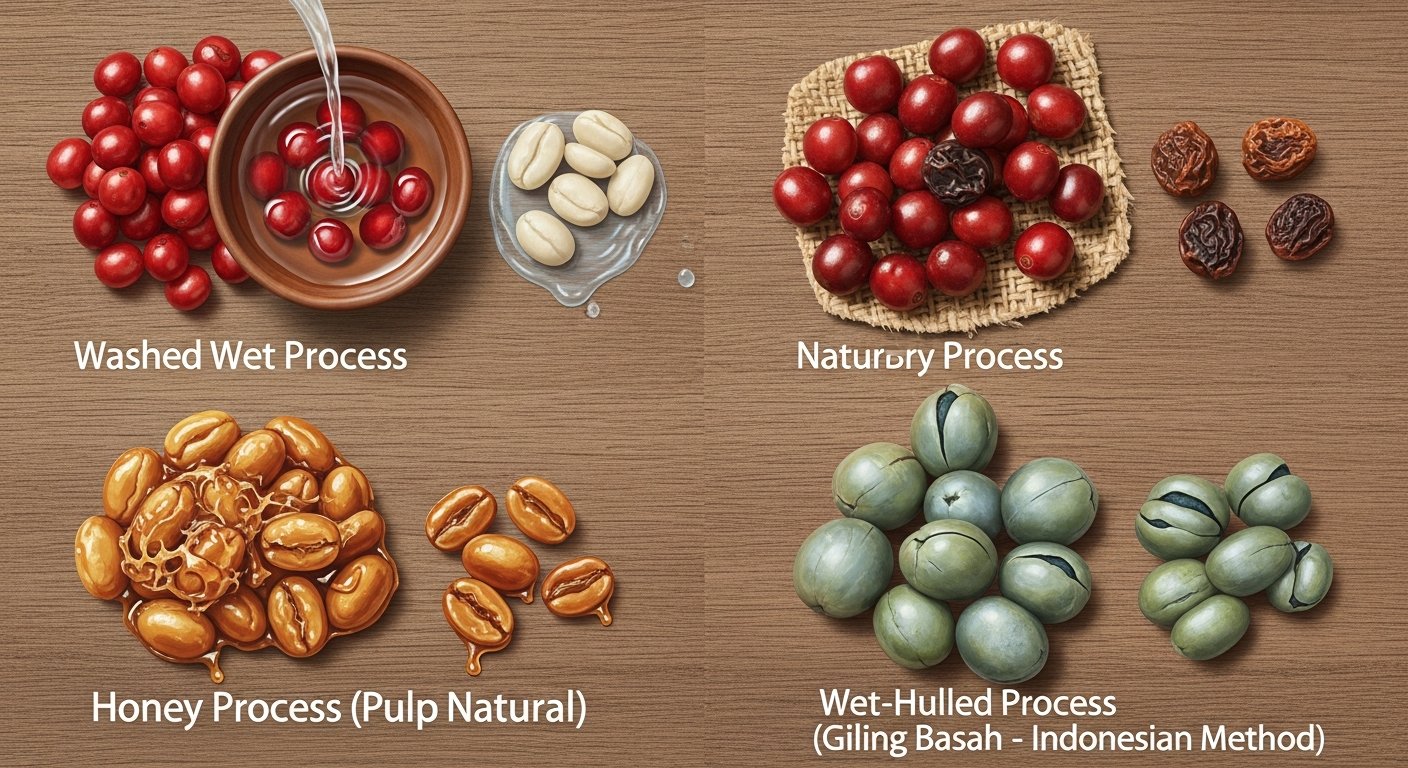
The washed process, also known as the wet method, is perhaps the most widely used and technically demanding of the major coffee processing methods. It’s lauded for producing coffees with exceptional clarity, clean flavors, and pronounced acidity. This method requires significant amounts of water and precise control over various stages, but the reward is often a bright, vibrant cup profile that showcases the inherent characteristics of the coffee varietal and its terroir.
The process typically begins immediately after harvest. Ripe coffee cherries are delivered to a processing station (wet mill) where they undergo several key steps:
- Sorting: Cherries are first immersed in water. Ripe, dense cherries sink, while unripe, overripe, or damaged cherries and debris float. This initial sorting ensures only the best quality cherries move forward.
- Pulping: The sorted cherries are then fed into a depulper machine, which removes the outer skin and most of the fruit pulp, leaving the beans encased in their sticky mucilage layer and parchment.
- Mucilage Removal: This is the most crucial stage of the washed process, and it can be achieved in a few ways:
- Fermentation: The pulped beans, still covered in mucilage, are placed in large tanks with water. Natural enzymes or microbes break down the mucilage over 12-72 hours. This fermentation must be carefully monitored to prevent over-fermentation, which can lead to sour or vinegary off-flavors.
- Mechanical Demucilaging: Some wet mills use specialized machines that scrub off the mucilage through friction, often with minimal or no fermentation. This method is faster and uses less water, appealing to regions with limited water resources or a desire for faster processing.
- Washing: After mucilage removal, the beans are thoroughly washed with clean water to remove any remaining pulp or fermentation residues. This final wash is critical for the “cleanliness” associated with washed coffees.
- Drying: The wet parchment coffee beans are then dried to an optimal moisture content of 10-12%. This can be done on raised beds (patios or African beds) under the sun, or in mechanical dryers, depending on the climate and volume. Slow, even drying is paramount to prevent cracking, mold, or uneven moisture distribution.
Demucilaging: From Fermentation to Mechanical Removal
The demucilaging step is where the true art and science of washed processing often come to the fore. Traditional fermentation, while requiring careful oversight, allows for subtle chemical changes within the bean that can enhance its complexity. The duration, temperature, and microbial activity all play a role. A skilled processor knows precisely when the mucilage has broken down enough, indicated by the beans losing their slipperiness and acquiring a gritty texture.
Mechanical demucilagers, on the other hand, offer speed and consistency, reducing the risk of fermentation defects and often consuming less water. However, some argue that mechanically demucilaged coffees, while clean, might lack some of the nuanced depth that controlled fermentation can impart. Both methods have their proponents and produce excellent coffees when executed correctly, highlighting the diverse approaches within coffee processing methods.
The Drying Stage: Precision and Patience
Proper drying is just as critical as fermentation. If the coffee is dried too quickly, the outer layers can harden, trapping moisture inside and leading to uneven roasting or even mold. If dried too slowly, the beans can develop unwanted musty or earthy flavors. Raised beds, often called African beds, allow for excellent air circulation and even drying, as farmers can regularly rake and turn the beans. Mechanical dryers offer more control over temperature and airflow, especially in humid climates.
Flavor Profile: Bright, Acidic, and Nuanced
Washed coffees are renowned for their crisp acidity, delicate aromatics, and clean cup. By removing the fruit pulp early, the intrinsic characteristics of the coffee bean—influenced by its varietal, altitude, and soil—are allowed to shine. Expect notes of citrus, florals, bright fruits, and sometimes chocolate or nuts, with a lighter body and a clean, refreshing finish. The lack of prolonged contact with the fruit pulp prevents the absorption of its sugars and more intense fruit notes, leading to a more refined and often elegant profile.
Environmental Considerations of the Washed Method
While producing exceptional coffee, the traditional washed process is notoriously water-intensive. The pulping, fermentation, and washing stages all require significant amounts of water, leading to concerns about water scarcity and wastewater management in some coffee-growing regions. The wastewater, rich in organic matter, can pollute local waterways if not properly treated. Sustainable practices are increasingly being adopted, such as closed-loop water systems, water recycling, and the use of mechanical demucilagers that reduce water consumption. These innovations are crucial for the long-term viability of washed coffee production and represent a significant evolution in coffee processing methods.
The Natural (Dry) Process: Sweetness and Body
The natural process, also known as the dry method, is the oldest and simplest of the coffee processing methods, requiring no specialized machinery or significant water use. Originating in regions with limited water resources, like Ethiopia and Yemen, it involves drying the entire coffee cherry with the fruit intact. This method typically results in coffees with a heavier body, lower acidity, and pronounced sweetness, often showcasing intense fruity, jammy, or even wine-like flavors.
Sun-Drying the Whole Cherry
The natural process begins immediately after harvest. Ripe coffee cherries are spread out in a thin layer on large patios (often concrete or brick) or on raised drying beds (African beds). The goal is to allow the entire cherry to dry slowly and evenly under the sun. This stage can take several weeks, depending on the climate, humidity, and temperature.
As the cherries dry, the fruit’s sugars and flavors are absorbed into the coffee bean. The natural process allows for a significant interaction between the bean and the fruit, which is why it imparts such distinctive characteristics. The drying process is critical; if the cherries dry too quickly, the internal moisture may not equalize, leading to defects. If they dry too slowly, mold can develop, or undesirable fermentation can occur.
Turning and Monitoring: Preventing Defects
To ensure even drying and prevent mold or unwanted fermentation, the cherries must be regularly turned and raked throughout the day. This manual labor is intensive and critical for quality. At night, or during rain, the cherries are often covered or piled to protect them from moisture. The drying process is complete when the cherries become brittle and dark, and the bean inside rattles freely within its dried husk. At this point, the dried outer layers (including the skin, pulp, mucilage, and parchment) are removed using a dry hulling machine, revealing the green coffee bean.
Flavor Profile: Fruity, Full-Bodied, and Complex
Natural processed coffees are celebrated for their bold, often sweet, and undeniably fruity flavor profiles. Expect notes of berries, tropical fruits, stone fruits, and sometimes chocolate or nutty undertones. They typically exhibit a heavy, syrupy body and lower acidity compared to washed coffees. The intense fruit contact during drying can also impart a wild, fermented, or even wine-like complexity, which, when done well, is highly prized. When executed poorly, however, this intensity can manifest as over-fermented, moldy, or excessively earthy flavors.
Advantages and Disadvantages of Natural Processing
Advantages:
- Water Conservation: Requires virtually no water compared to the washed method, making it ideal for arid regions or areas with limited water resources.
- Lower Production Costs: Less equipment and infrastructure are needed, reducing initial investment for farmers.
- Distinctive Flavor Profile: Produces unique, sought-after flavors that many specialty coffee enthusiasts adore.
- Environmental Impact: Reduced water usage also means no wastewater discharge issues.
Disadvantages:
- High Risk of Defects: Improper drying or monitoring can easily lead to mold, over-fermentation, or other off-flavors, resulting in lower quality and value.
- Requires Dry, Sunny Climate: This method is highly dependent on consistent dry weather, limiting its applicability in humid or rainy regions.
- Labor Intensive: Requires significant manual labor for turning and monitoring the drying cherries.
- Inconsistent Quality: Can be more challenging to achieve consistent quality batch after batch compared to washed methods, especially without meticulous care.
Despite its challenges, the natural process, when handled with expertise and dedication, yields some of the most exciting and flavorful coffees in the world, showcasing a vibrant spectrum of coffee processing methods.
[INLINE IMAGE 2: place after fourth H2 | alt=”coffee processing methods comparison illustration”]
The Honey Process: A Bridge Between Two Worlds

The honey process (not involving actual honey, but named for the sticky, honey-like feel of the mucilage remaining on the beans) is an innovative hybrid of the washed and natural coffee processing methods. It originated in Costa Rica and has gained popularity worldwide for its ability to produce coffees with remarkable sweetness, balanced acidity, and a rounder body. This method removes the outer skin and pulp, much like the washed process, but then leaves a specific amount of the mucilage layer on the parchment coffee during the drying phase, akin to the natural process.
The Mucilage: Key to the Honey Method
After harvesting and initial sorting, ripe coffee cherries are de-pulped. However, unlike the washed method where all mucilage is fermented and washed away, in the honey process, a portion of the sticky mucilage remains on the parchment. It is this residual mucilage, rich in sugars, that significantly influences the flavor profile during drying. The amount of mucilage left on the bean is a deliberate choice by the producer, impacting the final characteristics.
The mucilage, due to its sugar content, creates a sticky, gooey layer around the parchment, which gives the method its name. The beans are then spread on raised beds or patios to dry. Similar to the natural process, diligent turning and careful monitoring are essential to prevent mold and ensure even drying. The sticky mucilage makes this a particularly challenging stage, as beans can clump together, hindering airflow and promoting uneven drying. The drying process can take 1-3 weeks, depending on the climate and the specific honey method used.
Color Classifications: Yellow, Red, Black Honey
To provide greater control and to differentiate the resulting flavor profiles, the honey process is often categorized by the amount of mucilage left on the bean and the drying conditions, typically indicated by color:
- Yellow Honey: The least amount of mucilage is left (around 25-50%). These beans are dried quickly, often in direct sunlight, frequently turned to prevent clumping. They tend to have a bright, clean profile with enhanced sweetness, resembling a super-sweet washed coffee.
- Red Honey: A medium amount of mucilage is retained (around 50-75%). These beans are dried more slowly, often in partial shade or on cloudy days, with less frequent turning. They offer increased sweetness, a fuller body, and more red fruit notes, bridging the gap between washed and natural.
- Black Honey: The highest amount of mucilage is left (around 75-100%, similar to a natural process but without the skin). These beans are dried very slowly, usually in full shade, with minimal turning. This method is the most labor-intensive and risky, but it yields coffees with exceptional sweetness, syrupy body, and complex, dark fruit, chocolate, or rum-like notes, closely approaching the intensity of a natural coffee.
Each color variation represents a different degree of contact between the bean and the sugary mucilage, leading to distinct flavor nuances, showcasing the versatility of coffee processing methods.
Flavor Profile: Balanced Sweetness, Acidity, and Body
Honey-processed coffees are celebrated for their remarkable balance. They often exhibit the sweetness and body typically found in natural coffees, combined with some of the clarity and bright acidity characteristic of washed coffees. Depending on the specific honey method (yellow, red, or black), the flavor profile can range from bright and fruity with a sweet finish to intensely sweet, syrupy, and complex with notes of dark fruits, caramel, and spices. They tend to have a cleaner finish than naturals but more body and sweetness than washed coffees.
Challenges and Rewards of Honey Processing
Challenges:
- Labor Intensive: Requires meticulous attention during drying, with constant turning to prevent mold and ensure even drying due to the stickiness of the mucilage.
- Risk of Defects: High risk of over-fermentation or mold if not managed precisely, especially with red and black honey methods.
- Climate Dependence: Like naturals, it thrives in dry, sunny climates, though shade drying can be adapted for higher humidity.
- Technical Skill: Requires significant expertise from the producer to control the amount of mucilage and manage the drying environment.
Rewards:
- Unique Flavor Profiles: Offers a spectrum of balanced and complex flavors that appeal to a wide range of coffee drinkers.
- Economic Value: Often commands higher prices in the specialty coffee market due to the labor and skill involved.
- Reduced Water Use: While not as water-free as the natural process, it significantly reduces water consumption compared to the traditional washed method.
The honey process represents a sophisticated evolution in coffee processing methods, offering producers a powerful tool to shape the flavor of their beans and providing consumers with a truly distinct coffee experience.
Explore our guide to ethical coffee sourcing.
The Wet-Hulled (Giling Basah) Process: Indonesia’s Unique Signature
The Wet-Hulled process, known locally as Giling Basah, is a unique set of coffee processing methods almost exclusively found in Indonesia, particularly on the islands of Sumatra and Sulawesi. This method stands apart from others due to its distinctive two-stage drying process and its profound impact on the coffee’s flavor profile, resulting in the characteristic earthy, spicy, and often savory notes associated with Sumatran and Sulawesi coffees.
The Distinctive Two-Stage Drying
The Giling Basah process involves a unique sequence that prioritizes rapid processing in a humid climate. Here’s how it generally works:
- Pulping: Cherries are pulped (often manually or with small depulpers) to remove the skin and most of the fruit pulp, leaving the beans covered in mucilage and parchment.
- Short Fermentation (Optional) & Initial Drying: The pulped beans, still wet and slimy, are typically allowed to ferment for a very short period (sometimes overnight) to break down some of the mucilage. They are then briefly sun-dried for a few hours, or perhaps a day, until their moisture content is reduced to around 30-40%. At this stage, the parchment is still soft and pliable.
- Wet Hulling: This is the defining step. While the beans are still significantly wet (at 30-40% moisture, much higher than the 10-12% for other methods), they are taken to a central mill. Here, specialized wet-hulling machines remove the parchment layer. This process requires robust machinery and often results in some damage or deformation to the soft, swollen beans.
- Final Drying: After hulling, the now bare, green beans (which are still quite wet and dark green/blue in color) are spread out to dry further. This final drying phase continues until the beans reach the standard 10-12% moisture content. This stage is often slower and more challenging due to the lack of the protective parchment layer.
The high moisture content during hulling is what makes Giling Basah so distinct. In most other methods, parchment is only removed once the beans are fully dry and stable. The rationale behind this Indonesian practice is rooted in necessity: the region’s high humidity and frequent rainfall make it difficult to dry coffee fully in parchment without risking mold and spoilage. Removing the parchment early speeds up the final drying time.
Flavor Profile: Earthy, Spicy, and Low Acidity
Coffees processed with the Giling Basah method are famous for their unique and immediately recognizable flavor profiles. They typically exhibit:
- Full, Syrupy Body: Often described as heavy or thick.
- Low Acidity: Much lower and rounder acidity compared to washed coffees.
- Earthy and Woody Notes: Prominent flavors of damp earth, forest floor, cedar, or tobacco.
- Spicy Undertones: Hints of clove, black pepper, or other warm spices.
- Savory/Umami Qualities: Some describe a savory broth-like note.
- Muted Fruit: Fruit notes are typically darker, like dried fig or prune, rather than bright or fresh.
While some describe these notes as “rustic” or “unclean” by Western specialty coffee standards, these characteristics are precisely what many connoisseurs seek in a Sumatran coffee, making it a beloved and unique offering in the world of coffee processing methods.
Cultural Significance and Regionality
The Giling Basah method is deeply interwoven with the culture and economy of Indonesian coffee farming. It’s a pragmatic response to the environmental conditions and logistical challenges faced by smallholder farmers in Sumatra and other islands. The rapid processing and early sale of semi-dried coffee to collectors provide quicker cash flow for farmers, which is vital for their livelihoods.
While often controversial due to the higher risk of defects (such as “phenol” or “rubbery” notes if poorly managed) and the sometimes untidy appearance of the green beans (which can show physical damage from the wet hulling), Giling Basah coffee holds a distinct and cherished place in the global coffee market. It serves as a powerful reminder that diversity in coffee processing methods contributes immensely to the rich tapestry of flavors available to consumers worldwide.
Emerging and Experimental Coffee Processing Methods
While the washed, natural, and honey processes form the backbone of global coffee production, the specialty coffee industry is a hotbed of innovation. Farmers, researchers, and roasters are constantly experimenting with new coffee processing methods, pushing the boundaries of flavor and seeking to unlock unprecedented levels of complexity and nuance in the bean. These emerging techniques often draw inspiration from other fermentation-heavy industries, like wine-making, and leverage scientific understanding to precisely control microbial activity and environmental conditions.
Anaerobic Fermentation: Controlled Environments for Bold Flavors
Anaerobic fermentation is one of the most significant recent developments in coffee processing methods. Unlike traditional fermentation, which occurs in open-air tanks (aerobic), anaerobic fermentation takes place in sealed, oxygen-deprived tanks or containers. This lack of oxygen forces different metabolic pathways for the microbes involved, leading to the production of unique acids and flavor compounds.
The process often begins after depulping (similar to a washed or honey process), where the beans with their mucilage are placed in sealed tanks. These tanks might be purged with CO2 to ensure a truly anaerobic environment. The beans ferment for a controlled period, sometimes with temperature regulation, before being dried as a washed or honey-processed coffee would be. Sometimes, whole cherries are fermented anaerobically before depulping, creating an “anaerobic natural” process.
Flavor Profile: Anaerobic coffees are celebrated for their distinctive, often intense, and complex flavor profiles. Expect notes of tropical fruits (pineapple, mango), wine-like qualities, spiced rum, whiskey, or even a savory umami character. They can be incredibly vibrant and full-bodied, often with a unique tartness or effervescence. These coffees often push traditional flavor boundaries, appealing to adventurous palates.
Carbonic Maceration: Wine-Inspired Innovation
Carbonic maceration is another technique borrowed directly from the wine industry (specifically, Beaujolais wine). In this process, whole, intact coffee cherries are placed in sealed, oxygen-free tanks that are then infused with carbon dioxide. The CO2 environment causes the fruit to ferment from the inside out, metabolizing sugars and producing a unique array of esters and flavor compounds within the cherry before it is depulped.
After a controlled period of carbonic maceration, the cherries are typically depulped and then dried as a washed, honey, or even natural coffee, depending on the desired outcome. The internal fermentation under CO2 leads to a distinctive set of chemical reactions that are different from traditional fermentation methods.
Flavor Profile: Coffees processed with carbonic maceration often exhibit vibrant, intensely fruity, and sometimes floral notes. Expect flavors reminiscent of red berries, candied fruits, rose, or even bubblegum. They tend to have a bright acidity, clean mouthfeel, and a lingering, sweet finish, offering a refined twist on other coffee processing methods.
Thermal Shock and Other Avant-Garde Techniques
Beyond anaerobic and carbonic maceration, the world of experimental coffee processing methods is constantly expanding. Some producers are experimenting with:
- Thermal Shock: Exposing beans to extreme temperature changes (e.g., hot water then cold water) during processing to potentially alter cellular structure and enzyme activity.
- Controlled Inoculation: Introducing specific strains of yeast or bacteria (like those used in wine or beer production) during fermentation to guide flavor development in highly specific directions.
- Extended Fermentation: Deliberately prolonging fermentation times, sometimes for several days or even weeks, under carefully controlled conditions, to achieve deeper, more complex flavors.
- Co-fermentation: Adding other fruits or ingredients (like passion fruit, oranges, or spices) during fermentation to infuse the coffee with external flavors. This is a more controversial method, as some argue it masks the coffee’s inherent quality rather than enhancing it.
The Future of Coffee Processing
These emerging coffee processing methods represent a thrilling frontier in coffee. They require immense skill, scientific understanding, and often significant investment in equipment, but they offer the potential for unparalleled flavor innovation. As producers continue to refine these techniques, we can expect to see an even wider spectrum of extraordinary coffees hitting the market, challenging our perceptions of what coffee can taste like and providing endless opportunities for discovery for coffee lovers. This drive for innovation ensures the category of coffee processing methods remains dynamic and exciting.
Decaffeination: Removing the Buzz, Preserving the Flavor
Decaffeination is a specialized set of coffee processing methods designed to remove caffeine from green coffee beans while preserving as much of the original flavor profile as possible. While historically decaf coffee often had a reputation for lacking flavor, modern decaffeination techniques have made significant strides, offering high-quality, delicious options for those who want to enjoy coffee without the stimulant effect. The process always occurs before roasting, as the high temperatures of roasting can make caffeine removal more difficult.
All decaffeination methods essentially involve two core steps:
- Extraction: Soaking the green coffee beans in a solvent (or water, in some cases) to extract the caffeine.
- Separation: Removing the caffeine from the solvent, allowing the solvent to be reused or disposed of responsibly.
The key is to selectively remove caffeine while minimizing the loss of other volatile compounds that contribute to flavor and aroma.
Solvent-Based Methods: Methylene Chloride and Ethyl Acetate
These methods use chemical solvents to directly extract caffeine from the coffee beans. They are highly effective and can be very precise in removing caffeine while often retaining good flavor.
-
Methylene Chloride (MC) Process:
In this method, green coffee beans are first steamed to open their pores. They are then submerged in a solution of methylene chloride, which selectively binds to caffeine molecules. The beans are soaked until the desired amount of caffeine is removed (usually to 0.1% or less). The beans are then steamed again to remove any residual solvent. Although methylene chloride is a chemical, any trace amounts left on the beans after steaming evaporate completely during roasting, making the final product safe for consumption. This method is often favored for its ability to preserve the coffee’s intrinsic flavors.
-
Ethyl Acetate (EA) Process (The “Natural” Decaf):
Ethyl acetate is an organic compound found naturally in fruits like apples and bananas, and it can also be derived from sugarcane fermentation. This is why it’s sometimes marketed as “natural decaf.” The process is similar to the MC method: beans are steamed, then soaked in an ethyl acetate solution, which extracts the caffeine. After extraction, the beans are steamed again to remove the solvent. Coffees processed with EA can sometimes take on a subtle fruity sweetness, particularly if the ethyl acetate is derived from sugarcane, adding a unique characteristic to the range of coffee processing methods.
Non-Solvent Methods: Swiss Water Process and CO2 Process
These methods avoid the direct use of chemical solvents, appealing to consumers who prefer a “chemical-free” decaffeination process.
-
Swiss Water Process:
This method relies solely on water and activated carbon filtration, making it 100% chemical-free. The process starts by soaking a batch of green coffee beans in hot water to extract both caffeine and flavor compounds. This “flavor-charged” water is then passed through activated charcoal filters, which are specially designed to trap only the caffeine molecules, leaving the flavor compounds intact. This caffeine-free, flavor-rich water, known as “Green Coffee Extract” (GCE), is then used to decaffeinate subsequent batches of fresh green coffee beans. As new beans are soaked in the GCE, their caffeine diffuses into the water, but their flavor compounds remain in the beans because the GCE is already saturated with those compounds. The GCE is then re-filtered to remove the newly extracted caffeine. This cycle continues until the beans are 99.9% caffeine-free. Swiss Water Processed coffees are known for their clean taste and excellent flavor retention.
-
CO2 Process (Carbon Dioxide Process):
The CO2 process uses supercritical carbon dioxide (CO2 under high pressure and temperature, where it acts as both a liquid and a gas) as a solvent to extract caffeine. Green coffee beans are placed in a high-pressure vessel, and supercritical CO2 is introduced. The CO2 penetrates the beans and selectively dissolves the caffeine. The caffeine-laden CO2 is then removed, and the caffeine is separated from the CO2, which can be reused. This method is highly effective and gentle on the coffee’s flavor compounds, as CO2 is non-toxic and leaves no residue. It’s often used for large commercial batches due to the high equipment costs, but it produces very high-quality decaf coffee.
Flavor Considerations in Decaffeinated Coffee
While modern decaffeination methods are highly advanced, it’s true that some very subtle flavor nuances can be lost or altered during the process. The “decaf flavor” often associated with older methods, characterized by a slightly dull or papery taste, is largely a thing of the past with specialty decafs. Reputable roasters now source high-quality beans for decaffeination and use methods known for excellent flavor retention. When choosing decaf, it’s worth noting the decaffeination method used, as this can offer clues about the potential flavor profile and quality, further broadening our understanding of coffee processing methods.
Discover the best brewing methods for every coffee type.
Impact on Sustainability and Ethical Sourcing
The choice and execution of coffee processing methods have profound implications beyond just flavor; they critically impact environmental sustainability and the livelihoods of coffee farmers. As consumers become increasingly conscious of the origins and ethics behind their food and drink, understanding these impacts becomes essential for making responsible choices. Sustainable coffee processing aims to minimize negative environmental footprints while maximizing social and economic benefits for producers.
Water Usage and Wastewater Management
The most direct environmental impact of coffee processing methods often revolves around water. The traditional washed process, while producing exceptionally clean coffees, is notorious for its high water consumption. Pulping, fermentation, and washing can require vast amounts of water, especially in regions already facing water scarcity. This not only strains local water resources but also creates significant volumes of wastewater.
Wastewater from coffee processing, known as “coffee effluent,” is highly acidic and rich in organic matter. If discharged directly into rivers or streams, it can deplete oxygen levels, harm aquatic life, and contaminate drinking water sources. Sustainable practices are addressing this through:
- Eco-Pulpers: Modern pulping machines that use significantly less water (up to 80-90% less) by mechanically removing mucilage or using minimal water for friction.
- Water Recycling: Implementing closed-loop systems where water used for washing is filtered and reused.
- Wastewater Treatment: Constructing anaerobic lagoons, bio-digesters, or wetlands to treat effluent before discharge, turning harmful byproducts into less damaging substances or even biogas.
In contrast, natural processing uses very little to no water, making it inherently more water-efficient. Honey processing also offers a significant reduction in water use compared to fully washed methods.
Energy Consumption and Carbon Footprint
Energy is consumed at various stages of coffee processing, from operating machinery (depulpers, hullers) to mechanical dryers. The type of energy source directly affects the carbon footprint. Reliance on fossil fuels contributes to greenhouse gas emissions.
Efforts towards reducing energy consumption and carbon footprint include:
- Solar Drying: Maximizing the use of sun-drying on patios and raised beds, which is zero-energy.
- Efficient Machinery: Investing in modern, energy-efficient pulpers and hullers.
- Renewable Energy: Utilizing solar panels or biogas (generated from coffee waste) to power processing facilities.
The transportation of processed green coffee beans also contributes to the carbon footprint. Minimizing unnecessary steps and optimizing logistics are part of sustainable practices.
Farmer Livelihoods and Economic Implications
The choice of coffee processing methods also has significant economic implications for farmers. While certain methods like the washed process can demand higher prices for their clean profiles, they also require greater investment in infrastructure (wet mills, water treatment) and resources (water). Natural and honey processes might require less capital investment but demand intensive manual labor and carry higher risks of defects, which can impact profitability.
Sustainable sourcing practices aim to ensure that farmers receive fair prices for their beans, irrespective of the processing method, recognizing the skill and effort involved. This helps farmers invest in better processing equipment, sustainable practices, and improve their quality of life. Transparency in the supply chain, direct trade relationships, and certifications (e.g., Fair Trade, Rainforest Alliance) play crucial roles in ensuring economic sustainability.
Choosing Sustainably Processed Coffee
As a consumer, you can contribute to sustainable coffee consumption by:
- Looking for Certifications: These often indicate adherence to environmental and social standards.
- Buying from Transparent Roasters: Roasters who provide information about their sourcing, including the coffee processing methods used and the farm’s sustainability practices.
- Exploring Diverse Origins: Understanding that different regions naturally lend themselves to different coffee processing methods, and appreciating the diversity.
- Supporting Eco-Friendly Processes: Actively seeking out coffees processed with water-saving methods like natural or honey, or washed coffees from mills utilizing advanced water treatment.
The journey from cherry to cup is complex, and the environmental and social stewardship
The Art and Science of Coffee Processing Methods: A Deep Dive into Flavor and Culture
Affiliate disclosure: This article may contain affiliate links. Recommendations are independent and editorially driven.
For many, coffee is a daily ritual, a comforting start to the day, or a thoughtful afternoon pick-me-up. We savor its rich aromas, complex flavors, and the energizing warmth it provides. Yet, few truly understand the intricate journey a coffee bean takes from a humble cherry on a shrub to the roasted perfection in our cups. The single most influential stage in this transformative journey, beyond cultivation itself, lies in the coffee processing methods. These methods are not merely agricultural steps; they are ancient traditions, scientific endeavors, and artistic expressions that fundamentally shape the taste, aroma, body, and acidity of the final brew.
At cafeserre, we believe that understanding the nuances of coffee processing methods is key to unlocking a deeper appreciation for your morning mug. It’s about appreciating the farmer’s skill, the terroir’s influence, and the complex alchemy that occurs before roasting even begins. This comprehensive guide will take you on an in-depth exploration of the primary and emerging coffee processing methods, detailing their techniques, their impact on the bean’s inherent characteristics, and their broader implications for sustainability and the global coffee industry.
From the bright clarity of a washed coffee to the syrupy sweetness of a natural, and the balanced complexity of a honey-processed bean, each method tells a unique story. Join us as we demystify these processes, offering insights that will empower you to make more informed choices, discover new favorite coffees, and perhaps even inspire you to experiment with your own brewing techniques to highlight these distinct profiles.
Understanding the Foundation: What Are Coffee Processing Methods?
Before a coffee cherry can be roasted, it must first be processed to remove the fruit layers surrounding the green bean. This critical stage, often referred to as green coffee processing, is where the foundational flavors of the coffee are developed and preserved. The choice of coffee processing methods significantly influences the final cup profile, from its aroma and sweetness to its acidity and body. It’s an often-overlooked step that holds immense power over the destiny of a coffee bean.
The Journey from Cherry to Bean
A coffee cherry, much like a stone fruit, consists of several layers. The outermost layer is the skin (exocarp), followed by the pulp (mesocarp), a slimy layer called mucilage, and then the parchment (endocarp) which encases two seeds (the coffee beans, though sometimes only one forms, called a peaberry). Inside the parchment, there’s a thin silverskin that clings to the bean. The primary goal of processing is to remove all these layers, leaving only the dried green coffee bean, ready for export and eventual roasting.
Farmers typically harvest coffee cherries when they are ripe and red (or yellow, depending on the varietal). Once picked, the clock starts ticking. The method chosen for processing must be executed quickly and efficiently to prevent spoilage and fermentation of the fruit, which can introduce undesirable flavors or defects. The immediate post-harvest handling is crucial, setting the stage for either a magnificent coffee or a mediocre one.
Why Processing Matters: Flavor, Quality, and Shelf Life
The decision on which coffee processing method to use is influenced by several factors: local climate, water availability, tradition, and the desired flavor profile. Each method interacts differently with the sugars, acids, and other chemical compounds within the coffee cherry, leading to distinctive characteristics in the final bean.
- Flavor Development: The most apparent impact is on flavor. Natural processing, for instance, allows the beans to absorb more sugars from the drying fruit, often resulting in sweeter, fruitier notes. Washed processing, by contrast, removes the fruit early, allowing the inherent bean characteristics, particularly acidity and brightness, to shine through.
- Quality Control: Proper processing is essential for quality. Inconsistent drying or improper fermentation can lead to mold, off-flavors, and reduced cup quality. Skilled processors meticulously monitor conditions to ensure uniformity and prevent defects.
- Shelf Life: Well-processed green coffee, dried to the optimal moisture content (typically 10-12%), is stable and can be stored for extended periods without degradation. Poorly dried coffee, however, is susceptible to mold and rapid loss of quality.
- Economic Value: The quality achieved through meticulous processing directly translates to the price farmers can command for their green coffee. Specialty coffee, known for its unique and desirable flavor profiles, often demands higher prices due to the extra care and precision involved in its processing.
Understanding these fundamental principles provides a lens through which to appreciate the complexity of the coffee world and the profound impact of coffee processing methods.
[INLINE IMAGE 1: place after second H2 | alt=”coffee processing methods concept illustration”]
The Washed (Wet) Process: Cleanliness and Clarity
The washed process, also known as the wet method, is perhaps the most widely used and technically demanding of the major coffee processing methods. It’s lauded for producing coffees with exceptional clarity, clean flavors, and pronounced acidity. This method requires significant amounts of water and precise control over various stages, but the reward is often a bright, vibrant cup profile that showcases the inherent characteristics of the coffee varietal and its terroir.
The process typically begins immediately after harvest. Ripe coffee cherries are delivered to a processing station (wet mill) where they undergo several key steps:
- Sorting: Cherries are first immersed in water. Ripe, dense cherries sink, while unripe, overripe, or damaged cherries and debris float. This initial sorting ensures only the best quality cherries move forward.
- Pulping: The sorted cherries are then fed into a depulper machine, which removes the outer skin and most of the fruit pulp, leaving the beans encased in their sticky mucilage layer and parchment.
- Mucilage Removal: This is the most crucial stage of the washed process, and it can be achieved in a few ways:
- Fermentation: The pulped beans, still covered in mucilage, are placed in large tanks with water. Natural enzymes or microbes break down the mucilage over 12-72 hours. This fermentation must be carefully monitored to prevent over-fermentation, which can lead to sour or vinegary off-flavors.
- Mechanical Demucilaging: Some wet mills use specialized machines that scrub off the mucilage through friction, often with minimal or no fermentation. This method is faster and uses less water, appealing to regions with limited water resources or a desire for faster processing.
- Washing: After mucilage removal, the beans are thoroughly washed with clean water to remove any remaining pulp or fermentation residues. This final wash is critical for the “cleanliness” associated with washed coffees.
- Drying: The wet parchment coffee beans are then dried to an optimal moisture content of 10-12%. This can be done on raised beds (patios or African beds) under the sun, or in mechanical dryers, depending on the climate and volume. Slow, even drying is paramount to prevent cracking, mold, or uneven moisture distribution.
Demucilaging: From Fermentation to Mechanical Removal
The demucilaging step is where the true art and science of washed processing often come to the fore. Traditional fermentation, while requiring careful oversight, allows for subtle chemical changes within the bean that can enhance its complexity. The duration, temperature, and microbial activity all play a role. A skilled processor knows precisely when the mucilage has broken down enough, indicated by the beans losing their slipperiness and acquiring a gritty texture.
Mechanical demucilagers, on the other hand, offer speed and consistency, reducing the risk of fermentation defects and often consuming less water. However, some argue that mechanically demucilaged coffees, while clean, might lack some of the nuanced depth that controlled fermentation can impart. Both methods have their proponents and produce excellent coffees when executed correctly, highlighting the diverse approaches within coffee processing methods.
The Drying Stage: Precision and Patience
Proper drying is just as critical as fermentation. If the coffee is dried too quickly, the outer layers can harden, trapping moisture inside and leading to uneven roasting or even mold. If dried too slowly, the beans can develop unwanted musty or earthy flavors. Raised beds, often called African beds, allow for excellent air circulation and even drying, as farmers can regularly rake and turn the beans. Mechanical dryers offer more control over temperature and airflow, especially in humid climates.
Flavor Profile: Bright, Acidic, and Nuanced
Washed coffees are renowned for their crisp acidity, delicate aromatics, and clean cup. By removing the fruit pulp early, the intrinsic characteristics of the coffee bean—influenced by its varietal, altitude, and soil—are allowed to shine. Expect notes of citrus, florals, bright fruits, and sometimes chocolate or nuts, with a lighter body and a clean, refreshing finish. The lack of prolonged contact with the fruit pulp prevents the absorption of its sugars and more intense fruit notes, leading to a more refined and often elegant profile.
Environmental Considerations of the Washed Method
While producing exceptional coffee, the traditional washed process is notoriously water-intensive. The pulping, fermentation, and washing stages all require significant amounts of water, leading to concerns about water scarcity and wastewater management in some coffee-growing regions. The wastewater, rich in organic matter, can pollute local waterways if not properly treated. Sustainable practices are increasingly being adopted, such as closed-loop water systems, water recycling, and the use of mechanical demucilagers that reduce water consumption. These innovations are crucial for the long-term viability of washed coffee production and represent a significant evolution in coffee processing methods.
The Natural (Dry) Process: Sweetness and Body
The natural process, also known as the dry method, is the oldest and simplest of the coffee processing methods, requiring no specialized machinery or significant water use. Originating in regions with limited water resources, like Ethiopia and Yemen, it involves drying the entire coffee cherry with the fruit intact. This method typically results in coffees with a heavier body, lower acidity, and pronounced sweetness, often showcasing intense fruity, jammy, or even wine-like flavors.
Sun-Drying the Whole Cherry
The natural process begins immediately after harvest. Ripe coffee cherries are spread out in a thin layer on large patios (often concrete or brick) or on raised drying beds (African beds). The goal is to allow the entire cherry to dry slowly and evenly under the sun. This stage can take several weeks, depending on the climate, humidity, and temperature.
As the cherries dry, the fruit’s sugars and flavors are absorbed into the coffee bean. The natural process allows for a significant interaction between the bean and the fruit, which is why it imparts such distinctive characteristics. The drying process is critical; if the cherries dry too quickly, the internal moisture may not equalize, leading to defects. If they dry too slowly, mold can develop, or undesirable fermentation can occur.
Turning and Monitoring: Preventing Defects
To ensure even drying and prevent mold or unwanted fermentation, the cherries must be regularly turned and raked throughout the day. This manual labor is intensive and critical for quality. At night, or during rain, the cherries are often covered or piled to protect them from moisture. The drying process is complete when the cherries become brittle and dark, and the bean inside rattles freely within its dried husk. At this point, the dried outer layers (including the skin, pulp, mucilage, and parchment) are removed using a dry hulling machine, revealing the green coffee bean.
Flavor Profile: Fruity, Full-Bodied, and Complex
Natural processed coffees are celebrated for their bold, often sweet, and undeniably fruity flavor profiles. Expect notes of berries, tropical fruits, stone fruits, and sometimes chocolate or nutty undertones. They typically exhibit a heavy, syrupy body and lower acidity compared to washed coffees. The intense fruit contact during drying can also impart a wild, fermented, or even wine-like complexity, which, when done well, is highly prized. When executed poorly, however, this intensity can manifest as over-fermented, moldy, or excessively earthy flavors.
Advantages and Disadvantages of Natural Processing
Advantages:
- Water Conservation: Requires virtually no water compared to the washed method, making it ideal for arid regions or areas with limited water resources.
- Lower Production Costs: Less equipment and infrastructure are needed, reducing initial investment for farmers.
- Distinctive Flavor Profile: Produces unique, sought-after flavors that many specialty coffee enthusiasts adore.
- Environmental Impact: Reduced water usage also means no wastewater discharge issues.
Disadvantages:
- High Risk of Defects: Improper drying or monitoring can easily lead to mold, over-fermentation, or other off-flavors, resulting in lower quality and value.
- Requires Dry, Sunny Climate: This method is highly dependent on consistent dry weather, limiting its applicability in humid or rainy regions.
- Labor Intensive: Requires significant manual labor for turning and monitoring the drying cherries.
- Inconsistent Quality: Can be more challenging to achieve consistent quality batch after batch compared to washed methods, especially without meticulous care.
Despite its challenges, the natural process, when handled with expertise and dedication, yields some of the most exciting and flavorful coffees in the world, showcasing a vibrant spectrum of coffee processing methods.
[INLINE IMAGE 2: place after fourth H2 | alt=”coffee processing methods comparison illustration”]
The Honey Process: A Bridge Between Two Worlds
The honey process (not involving actual honey, but named for the sticky, honey-like feel of the mucilage remaining on the beans) is an innovative hybrid of the washed and natural coffee processing methods. It originated in Costa Rica and has gained popularity worldwide for its ability to produce coffees with remarkable sweetness, balanced acidity, and a rounder body. This method removes the outer skin and pulp, much like the washed process, but then leaves a specific amount of the mucilage layer on the parchment coffee during the drying phase, akin to the natural process.
The Mucilage: Key to the Honey Method
After harvesting and initial sorting, ripe coffee cherries are de-pulped. However, unlike the washed method where all mucilage is fermented and washed away, in the honey process, a portion of the sticky mucilage remains on the parchment. It is this residual mucilage, rich in sugars, that significantly influences the flavor profile during drying. The amount of mucilage left on the bean is a deliberate choice by the producer, impacting the final characteristics.
The mucilage, due to its sugar content, creates a sticky, gooey layer around the parchment, which gives the method its name. The beans are then spread on raised beds or patios to dry. Similar to the natural process, diligent turning and careful monitoring are essential to prevent mold and ensure even drying. The sticky mucilage makes this a particularly challenging stage, as beans can clump together, hindering airflow and promoting uneven drying. The drying process can take 1-3 weeks, depending on the climate and the specific honey method used.
Color Classifications: Yellow, Red, Black Honey
To provide greater control and to differentiate the resulting flavor profiles, the honey process is often categorized by the amount of mucilage left on the bean and the drying conditions, typically indicated by color:
- Yellow Honey: The least amount of mucilage is left (around 25-50%). These beans are dried quickly, often in direct sunlight, frequently turned to prevent clumping. They tend to have a bright, clean profile with enhanced sweetness, resembling a super-sweet washed coffee.
- Red Honey: A medium amount of mucilage is retained (around 50-75%). These beans are dried more slowly, often in partial shade or on cloudy days, with less frequent turning. They offer increased sweetness, a fuller body, and more red fruit notes, bridging the gap between washed and natural.
- Black Honey: The highest amount of mucilage is left (around 75-100%, similar to a natural process but without the skin). These beans are dried very slowly, usually in full shade, with minimal turning. This method is the most labor-intensive and risky, but it yields coffees with exceptional sweetness, syrupy body, and complex, dark fruit, chocolate, or rum-like notes, closely approaching the intensity of a natural coffee.
Each color variation represents a different degree of contact between the bean and the sugary mucilage, leading to distinct flavor nuances, showcasing the versatility of coffee processing methods.
Flavor Profile: Balanced Sweetness, Acidity, and Body
Honey-processed coffees are celebrated for their remarkable balance. They often exhibit the sweetness and body typically found in natural coffees, combined with some of the clarity and bright acidity characteristic of washed coffees. Depending on the specific honey method (yellow, red, or black), the flavor profile can range from bright and fruity with a sweet finish to intensely sweet, syrupy, and complex with notes of dark fruits, caramel, and spices. They tend to have a cleaner finish than naturals but more body and sweetness than washed coffees.
Challenges and Rewards of Honey Processing
Challenges:
- Labor Intensive: Requires meticulous attention during drying, with constant turning to prevent mold and ensure even drying due to the stickiness of the mucilage.
- Risk of Defects: High risk of over-fermentation or mold if not managed precisely, especially with red and black honey methods.
- Climate Dependence: Like naturals, it thrives in dry, sunny climates, though shade drying can be adapted for higher humidity.
- Technical Skill: Requires significant expertise from the producer to control the amount of mucilage and manage the drying environment.
Rewards:
- Unique Flavor Profiles: Offers a spectrum of balanced and complex flavors that appeal to a wide range of coffee drinkers.
- Economic Value: Often commands higher prices in the specialty coffee market due to the labor and skill involved.
- Reduced Water Use: While not as water-free as the natural process, it significantly reduces water consumption compared to the traditional washed method.
The honey process represents a sophisticated evolution in coffee processing methods, offering producers a powerful tool to shape the flavor of their beans and providing consumers with a truly distinct coffee experience.
Explore our guide to ethical coffee sourcing.
The Wet-Hulled (Giling Basah) Process: Indonesia’s Unique Signature
The Wet-Hulled process, known locally as Giling Basah, is a unique set of coffee processing methods almost exclusively found in Indonesia, particularly on the islands of Sumatra and Sulawesi. This method stands apart from others due to its distinctive two-stage drying process and its profound impact on the coffee’s flavor profile, resulting in the characteristic earthy, spicy, and often savory notes associated with Sumatran and Sulawesi coffees.
The Distinctive Two-Stage Drying
The Giling Basah process involves a unique sequence that prioritizes rapid processing in a humid climate. Here’s how it generally works:
- Pulping: Cherries are pulped (often manually or with small depulpers) to remove the skin and most of the fruit pulp, leaving the beans covered in mucilage and parchment.
- Short Fermentation (Optional) & Initial Drying: The pulped beans, still wet and slimy, are typically allowed to ferment for a very short period (sometimes overnight) to break down some of the mucilage. They are then briefly sun-dried for a few hours, or perhaps a day, until their moisture content is reduced to around 30-40%. At this stage, the parchment is still soft and pliable.
- Wet Hulling: This is the defining step. While the beans are still significantly wet (at 30-40% moisture, much higher than the 10-12% for other methods), they are taken to a central mill. Here, specialized wet-hulling machines remove the parchment layer. This process requires robust machinery and often results in some damage or deformation to the soft, swollen beans.
- Final Drying: After hulling, the now bare, green beans (which are still quite wet and dark green/blue in color) are spread out to dry further. This final drying phase continues until the beans reach the standard 10-12% moisture content. This stage is often slower and more challenging due to the lack of the protective parchment layer.
The high moisture content during hulling is what makes Giling Basah so distinct. In most other methods, parchment is only removed once the beans are fully dry and stable. The rationale behind this Indonesian practice is rooted in necessity: the region’s high humidity and frequent rainfall make it difficult to dry coffee fully in parchment without risking mold and spoilage. Removing the parchment early speeds up the final drying time.
Flavor Profile: Earthy, Spicy, and Low Acidity
Coffees processed with the Giling Basah method are famous for their unique and immediately recognizable flavor profiles. They typically exhibit:
- Full, Syrupy Body: Often described as heavy or thick.
- Low Acidity: Much lower and rounder acidity compared to washed coffees.
- Earthy and Woody Notes: Prominent flavors of damp earth, forest floor, cedar, or tobacco.
- Spicy Undertones: Hints of clove, black pepper, or other warm spices.
- Savory/Umami Qualities: Some describe a savory broth-like note.
- Muted Fruit: Fruit notes are typically darker, like dried fig or prune, rather than bright or fresh.
While some describe these notes as “rustic” or “unclean” by Western specialty coffee standards, these characteristics are precisely what many connoisseurs seek in a Sumatran coffee, making it a beloved and unique offering in the world of coffee processing methods.
Cultural Significance and Regionality
The Giling Basah method is deeply interwoven with the culture and economy of Indonesian coffee farming. It’s a pragmatic response to the environmental conditions and logistical challenges faced by smallholder farmers in Sumatra and other islands. The rapid processing and early sale of semi-dried coffee to collectors provide quicker cash flow for farmers, which is vital for their livelihoods.
While often controversial due to the higher risk of defects (such as “phenol” or “rubbery” notes if poorly managed) and the sometimes untidy appearance of the green beans (which can show physical damage from the wet hulling), Giling Basah coffee holds a distinct and cherished place in the global coffee market. It serves as a powerful reminder that diversity in coffee processing methods contributes immensely to the rich tapestry of flavors available to consumers worldwide.
Emerging and Experimental Coffee Processing Methods
While the washed, natural, and honey processes form the backbone of global coffee production, the specialty coffee industry is a hotbed of innovation. Farmers, researchers, and roasters are constantly experimenting with new coffee processing methods, pushing the boundaries of flavor and seeking to unlock unprecedented levels of complexity and nuance in the bean. These emerging techniques often draw inspiration from other fermentation-heavy industries, like wine-making, and leverage scientific understanding to precisely control microbial activity and environmental conditions.
Anaerobic Fermentation: Controlled Environments for Bold Flavors
Anaerobic fermentation is one of the most significant recent developments in coffee processing methods. Unlike traditional fermentation, which occurs in open-air tanks (aerobic), anaerobic fermentation takes place in sealed, oxygen-deprived tanks or containers. This lack of oxygen forces different metabolic pathways for the microbes involved, leading to the production of unique acids and flavor compounds.
The process often begins after depulping (similar to a washed or honey process), where the beans with their mucilage are placed in sealed tanks. These tanks might be purged with CO2 to ensure a truly anaerobic environment. The beans ferment for a controlled period, sometimes with temperature regulation, before being dried as a washed or honey-processed coffee would be. Sometimes, whole cherries are fermented anaerobically before depulping, creating an “anaerobic natural” process.
Flavor Profile: Anaerobic coffees are celebrated for their distinctive, often intense, and complex flavor profiles. Expect notes of tropical fruits (pineapple, mango), wine-like qualities, spiced rum, whiskey, or even a savory umami character. They can be incredibly vibrant and full-bodied, often with a unique tartness or effervescence. These coffees often push traditional flavor boundaries, appealing to adventurous palates.
Carbonic Maceration: Wine-Inspired Innovation
Carbonic maceration is another technique borrowed directly from the wine industry (specifically, Beaujolais wine). In this process, whole, intact coffee cherries are placed in sealed, oxygen-free tanks that are then infused with carbon dioxide. The CO2 environment causes the fruit to ferment from the inside out, metabolizing sugars and producing a unique array of esters and flavor compounds within the cherry before it is depulped.
After a controlled period of carbonic maceration, the cherries are typically depulped and then dried as a washed, honey, or even natural coffee, depending on the desired outcome. The internal fermentation under CO2 leads to a distinctive set of chemical reactions that are different from traditional fermentation methods.
Flavor Profile: Coffees processed with carbonic maceration often exhibit vibrant, intensely fruity, and sometimes floral notes. Expect flavors reminiscent of red berries, candied fruits, rose, or even bubblegum. They tend to have a bright acidity, clean mouthfeel, and a lingering, sweet finish, offering a refined twist on other coffee processing methods.
Thermal Shock and Other Avant-Garde Techniques
Beyond anaerobic and carbonic maceration, the world of experimental coffee processing methods is constantly expanding. Some producers are experimenting with:
- Thermal Shock: Exposing beans to extreme temperature changes (e.g., hot water then cold water) during processing to potentially alter cellular structure and enzyme activity.
- Controlled Inoculation: Introducing specific strains of yeast or bacteria (like those used in wine or beer production) during fermentation to guide flavor development in highly specific directions.
- Extended Fermentation: Deliberately prolonging fermentation times, sometimes for several days or even weeks, under carefully controlled conditions, to achieve deeper, more complex flavors.
- Co-fermentation: Adding other fruits or ingredients (like passion fruit, oranges, or spices) during fermentation to infuse the coffee with external flavors. This is a more controversial method, as some argue it masks the coffee’s inherent quality rather than enhancing it.
The Future of Coffee Processing
These emerging coffee processing methods represent a thrilling frontier in coffee. They require immense skill, scientific understanding, and often significant investment in equipment, but they offer the potential for unparalleled flavor innovation. As producers continue to refine these techniques, we can expect to see an even wider spectrum of extraordinary coffees hitting the market, challenging our perceptions of what coffee can taste like and providing endless opportunities for discovery for coffee lovers. This drive for innovation ensures the category of coffee processing methods remains dynamic and exciting.
Decaffeination: Removing the Buzz, Preserving the Flavor
Decaffeination is a specialized set of coffee processing methods designed to remove caffeine from green coffee beans while preserving as much of the original flavor profile as possible. While historically decaf coffee often had a reputation for lacking flavor, modern decaffeination techniques have made significant strides, offering high-quality, delicious options for those who want to enjoy coffee without the stimulant effect. The process always occurs before roasting, as the high temperatures of roasting can make caffeine removal more difficult.
All decaffeination methods essentially involve two core steps:
- Extraction: Soaking the green coffee beans in a solvent (or water, in some cases) to extract the caffeine.
- Separation: Removing the caffeine from the solvent, allowing the solvent to be reused or disposed of responsibly.
The key is to selectively remove caffeine while minimizing the loss of other volatile compounds that contribute to flavor and aroma.
Solvent-Based Methods: Methylene Chloride and Ethyl Acetate
These methods use chemical solvents to directly extract caffeine from the coffee beans. They are highly effective and can be very precise in removing caffeine while often retaining good flavor.
-
Methylene Chloride (MC) Process:
In this method, green coffee beans are first steamed to open their pores. They are then submerged in a solution of methylene chloride, which selectively binds to caffeine molecules. The beans are soaked until the desired amount of caffeine is removed (usually to 0.1% or less). The beans are then steamed again to remove any residual solvent. Although methylene chloride is a chemical, any trace amounts left on the beans after steaming evaporate completely during roasting, making the final product safe for consumption. This method is often favored for its ability to preserve the coffee’s intrinsic flavors.
-
Ethyl Acetate (EA) Process (The “Natural” Decaf):
Ethyl acetate is an organic compound found naturally in fruits like apples and bananas, and it can also be derived from sugarcane fermentation. This is why it’s sometimes marketed as “natural decaf.” The process is similar to the MC method: beans are steamed, then soaked in an ethyl acetate solution, which extracts the caffeine. After extraction, the beans are steamed again to remove the solvent. Coffees processed with EA can sometimes take on a subtle fruity sweetness, particularly if the ethyl acetate is derived from sugarcane, adding a unique characteristic to the range of coffee processing methods.
Non-Solvent Methods: Swiss Water Process and CO2 Process
These methods avoid the direct use of chemical solvents, appealing to consumers who prefer a “chemical-free” decaffeination process.
-
Swiss Water Process:
This method relies solely on water and activated carbon filtration, making it 100% chemical-free. The process starts by soaking a batch of green coffee beans in hot water to extract both caffeine and flavor compounds. This “flavor-charged” water is then passed through activated charcoal filters, which are specially designed to trap only the caffeine molecules, leaving the flavor compounds intact. This caffeine-free, flavor-rich water, known as “Green Coffee Extract” (GCE), is then used to decaffeinate subsequent batches of fresh green coffee beans. As new beans are soaked in the GCE, their caffeine diffuses into the water, but their flavor compounds remain in the beans because the GCE is already saturated with those compounds. The GCE is then re-filtered to remove the newly extracted caffeine. This cycle continues until the beans are 99.9% caffeine-free. Swiss Water Processed coffees are known for their clean taste and excellent flavor retention.
-
CO2 Process (Carbon Dioxide Process):
The CO2 process uses supercritical carbon dioxide (CO2 under high pressure and temperature, where it acts as both a liquid and a gas) as a solvent to extract caffeine. Green coffee beans are placed in a high-pressure vessel, and supercritical CO2 is introduced. The CO2 penetrates the beans and selectively dissolves the caffeine. The caffeine-laden CO2 is then removed, and the caffeine is separated from the CO2, which can be reused. This method is highly effective and gentle on the coffee’s flavor compounds, as CO2 is non-toxic and leaves no residue. It’s often used for large commercial batches due to the high equipment costs, but it produces very high-quality decaf coffee.
Flavor Considerations in Decaffeinated Coffee
While modern decaffeination methods are highly advanced, it’s true that some very subtle flavor nuances can be lost or altered during the process. The “decaf flavor” often associated with older methods, characterized by a slightly dull or papery taste, is largely a thing of the past with specialty decafs. Reputable roasters now source high-quality beans for decaffeination and use methods known for excellent flavor retention. When choosing decaf, it’s worth noting the decaffeination method used, as this can offer clues about the potential flavor profile and quality, further broadening our understanding of coffee processing methods.
Discover the best brewing methods for every coffee type.
Impact on Sustainability and Ethical Sourcing
The choice and execution of coffee processing methods have profound implications beyond just flavor; they critically impact environmental sustainability and the livelihoods of coffee farmers. As consumers become increasingly conscious of the origins and ethics behind their food and drink, understanding these impacts becomes essential for making responsible choices. Sustainable coffee processing aims to minimize negative environmental footprints while maximizing social and economic benefits for producers.
Water Usage and Wastewater Management
The most direct environmental impact of coffee processing methods often revolves around water. The traditional washed process, while producing exceptionally clean coffees, is notorious for its high water consumption. Pulping, fermentation, and washing can require vast amounts of water, especially in regions already facing water scarcity. This not only strains local water resources but also creates significant volumes of wastewater.
Wastewater from coffee processing, known as “coffee effluent,” is highly acidic and rich in organic matter. If discharged directly into rivers or streams, it can deplete oxygen levels, harm aquatic life, and contaminate drinking water sources. Sustainable practices are addressing this through:
- Eco-Pulpers: Modern pulping machines that use significantly less water (up to 80-90% less) by mechanically removing mucilage or using minimal water for friction.
- Water Recycling: Implementing closed-loop systems where water used for washing is filtered and reused.
- Wastewater Treatment: Constructing anaerobic lagoons, bio-digesters, or wetlands to treat effluent before discharge, turning harmful byproducts into less damaging substances or even biogas.
In contrast, natural processing uses very little to no water, making it inherently more water-efficient. Honey processing also offers a significant reduction in water use compared to fully washed methods.
Energy Consumption and Carbon Footprint
Energy is consumed at various stages of coffee processing, from operating machinery (depulpers, hullers) to mechanical dryers. The type of energy source directly affects the carbon footprint. Reliance on fossil fuels contributes to greenhouse gas emissions.
Efforts towards reducing energy consumption and carbon footprint include:
- Solar Drying: Maximizing the use of sun-drying on patios and raised beds, which is zero-energy.
- Efficient Machinery: Investing in modern, energy-efficient pulpers and hullers.
- Renewable Energy: Utilizing solar panels or biogas (generated from coffee waste) to power processing facilities.
The transportation of processed green coffee beans also contributes to the carbon footprint. Minimizing unnecessary steps and optimizing logistics are part of sustainable practices.
Farmer Livelihoods and Economic Implications
The choice of coffee processing methods also has significant economic implications for farmers. While certain methods like the washed process can demand higher prices for their clean profiles, they also require greater investment in infrastructure (wet mills, water treatment) and resources (water). Natural and honey processes might require less capital investment but demand intensive manual labor and carry higher risks of defects, which can impact profitability.
Sustainable sourcing practices aim to ensure that farmers receive fair prices for their beans, irrespective of the processing method, recognizing the skill and effort involved. This helps farmers invest in better processing equipment, sustainable practices, and improve their quality of life. Transparency in the supply chain, direct trade relationships, and certifications (e.g., Fair Trade, Rainforest Alliance) play crucial roles in ensuring economic sustainability.
Choosing Sustainably Processed Coffee
As a consumer, you can contribute to sustainable coffee consumption by:
- Looking for Certifications: These often indicate adherence to environmental and social standards.
- Buying from Transparent Roasters: Roasters who provide information about their sourcing, including the coffee processing methods used and the farm’s sustainability practices.
- Exploring Diverse Origins: Understanding that different regions naturally lend themselves to different coffee processing methods, and appreciating the diversity.
- Supporting Eco-Friendly Processes: Actively seeking out coffees processed with water-saving methods like natural or honey, or washed coffees from mills utilizing advanced water treatment.
The journey from cherry to cup is complex, and the environmental and social stewardship