French Bistro Classics for Home Cooks Tonight
French Bistro Classics for Home Cooks Tonight
The Art of the French Bistro Coffee Experience at Home
The French bistro experience is more than just food; it’s a symphony of senses, a celebration of simple pleasures executed with profound care. Central to this daily ritual, whether a quick morning espresso or a leisurely afternoon café au lait, is coffee. But not just any coffee. To truly capture the essence of a Parisian café, your brew needs to be thoughtful, flavorful, and perfectly prepared. It’s about bringing that European sensibility – a reverence for quality and tradition – into your home. Think beyond merely serving coffee; consider how it complements the robust flavors of a Boeuf Bourguignon, the delicate sweetness of a Crème brûlée, or the buttery flakiness of a pain au chocolat.
The journey begins with appreciation. Specialty coffee, unlike its commodity counterpart, is meticulously sourced, expertly roasted, and carefully prepared to highlight its unique characteristics. Just as a chef selects the finest ingredients for a classic French dish, a home barista chooses specialty beans for their distinct varietal (a specific type of coffee plant, like Bourbon or Gesha), processing method, and roast profile. This attention to detail elevates the coffee from a mere caffeine delivery system to an integral part of the dining experience.
Consider the typical French bistro coffee: often a strong, dark roast, served as a potent espresso or a milky café au lait. While tradition leans towards darker roasts, the specialty coffee world opens up a spectrum of possibilities. You can explore medium roasts with nutty and chocolatey notes that echo the richness of French pastries, or even lighter, fruitier roasts that provide a vibrant counterpoint to savory dishes. The goal is not necessarily to replicate a French roast exactly, but to capture the spirit of thoughtful enjoyment and quality that defines the bistro. Understanding these nuances allows you to tailor your coffee choices to your specific meal, enhancing both the food and the beverage in a harmonious dance of flavors. This section will guide you through cultivating that discerning palate and setting the stage for an authentic French coffee journey right in your kitchen.
Brewing Beyond the Bistro: Mastering Classic French Press & Pour-Over
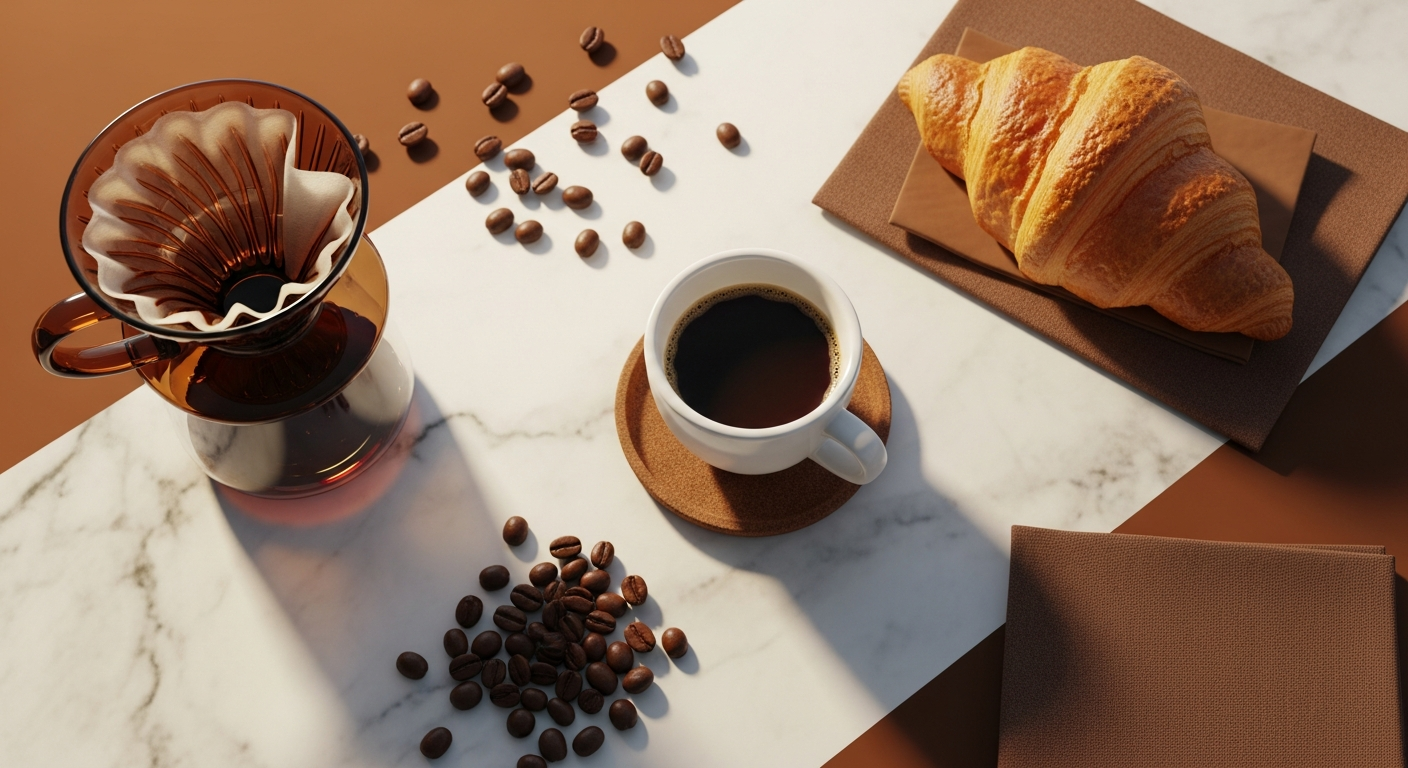
To truly embrace the French bistro coffee experience at home, mastering key brewing methods is essential. While espresso is iconic, the French Press and pour-over offer accessible and rewarding ways to craft exceptional coffee that pairs beautifully with your culinary endeavors. Each method highlights different characteristics of the bean, allowing you to tailor your brew to your meal.
The French Press: Robust Simplicity
The French Press (or cafetière) is arguably the most “French” of home brewing methods, known for producing a full-bodied, rich cup with a distinct mouthfeel. It’s an immersion brew, meaning the coffee grounds are fully submerged in hot water for the entire brewing process, extracting a wide range of flavors and oils. This robust quality makes it an excellent companion for hearty French dishes like Coq au Vin or a rich Quiche Lorraine.
To brew an SCA-standard French Press:
- Grind Size: Coarse, resembling sea salt. This prevents over-extraction and minimizes sediment.
- Water Temperature: Aim for 93-96°C (195-205°F). Water that’s too hot can scorch the coffee, while water that’s too cool results in under-extraction.
- Brew Ratio: The Specialty Coffee Association (SCA) recommends a golden ratio of 1:15 to 1:18 (coffee to water by weight). For example, for a 34-ounce (1-liter) French Press, use approximately 60-67 grams of coffee.
- Brew Time: 4 minutes.
- Add coarse grounds to the preheated French Press.
- Pour about twice the weight of coffee in hot water over the grounds, stirring gently to ensure all grounds are saturated. This is the “bloom” phase, allowing gases to escape.
- Wait 30 seconds, then pour the remaining water, ensuring all grounds are immersed.
- Place the lid on, but don’t plunge. Let steep for 4 minutes.
- Slowly and steadily plunge the filter down.
- Serve immediately to prevent further extraction and bitterness.
Pour-Over: Clean & Nuanced
Pour-over brewing, using devices like a Hario V60 or Chemex, produces a cleaner, brighter cup that highlights the more delicate, aromatic notes of specialty coffee. It’s a percolation method, where water passes through a bed of coffee grounds and a filter. This method is superb for pairing with lighter French pastries, fruit tarts, or even a delicate Salade Niçoise, where you want the coffee to complement rather than overpower.
SCA-aligned Pour-Over technique:
- Grind Size: Medium-fine, like table salt. Finer than French Press, coarser than espresso.
- Water Temperature: 90-96°C (195-205°F).
- Brew Ratio: 1:16 to 1:18. For a 300ml cup, use 18-20 grams of coffee.
- Brew Time: Typically 2.5-4 minutes, depending on the device and grind.
- Place a filter in your pour-over device and rinse with hot water to remove paper taste and preheat the brewer. Discard rinse water.
- Add ground coffee, shaking gently to level the bed.
- Bloom (30-45 seconds): Pour about twice the weight of coffee in water over the grounds, ensuring full saturation. Watch for the “bloom” – the coffee expanding as CO2 escapes.
- Main Pour: Continue pouring in concentric circles, slowly and steadily, maintaining a consistent water level. Avoid pouring directly onto the filter paper or disturbing the coffee bed too much. Aim for a total brew time that results in proper extraction without bitterness (over-extraction) or sourness (under-extraction).
Mastering these methods, with attention to grind size, water temperature, and brew ratio, will unlock incredible flavor and allow you to serve coffee worthy of any French bistro.
Curating Your Beans: Roasts & Origins for French Flavors
Selecting the right coffee beans is paramount to recreating the French bistro experience at home. Just as French cuisine relies on the quality of its ingredients, specialty coffee demands careful consideration of origin, varietal, and roast profile. The goal is to find beans that not only taste exceptional on their own but also harmonize with the rich, diverse flavors of French cooking.
Traditionally, French bistros often serve darker roasted coffees, characterized by their bold, sometimes smoky, and bittersweet notes. These roasts develop flavors like dark chocolate, caramel, nuts, and even a hint of spice, with lower acidity and a heavier body. For those seeking to emulate this classic profile, look for beans labeled “French Roast” or “Espresso Roast” from reputable specialty roasters. Brands like Stumptown Coffee Roasters‘ Hair Bender blend or Blue Bottle Coffee‘s Hayes Valley Espresso offer excellent interpretations of these darker, more intense profiles, perfect for a strong espresso or a robust French Press.
However, the specialty coffee world invites exploration beyond traditional dark roasts. Medium roasts, in particular, can offer a beautiful balance, providing enough depth to stand up to rich foods while retaining more of the bean’s inherent origin characteristics. For instance, a medium-roasted Brazilian coffee often presents with notes of chocolate, nuts, and low acidity, making it incredibly versatile. Its earthy and sweet undertones would complement savory dishes like pâté or a creamy gratin. Similarly, a well-balanced Colombian Supremo, with its sweet caramel and citrus notes, could provide a pleasant contrast to a buttery croissant or a fruit tart.
When considering origins, certain regions naturally lend themselves to specific flavor profiles that resonate with French cuisine:
- Brazil: Often yields full-bodied coffees with low acidity and notes of chocolate, nuts, and caramel. Excellent for French Press and espresso.
- Colombia: Known for balanced coffees with medium body, bright acidity, and notes of chocolate, nuts, and sometimes fruit. Versatile for various brew methods.
- Sumatra (Indonesia): Offers unique earthy, woody, and sometimes spicy notes with a heavy body and very low acidity. A bold choice for strong pairings.
- Central American Coffees (e.g., Guatemala, Costa Rica): Tend to be brighter with notes of chocolate, caramel, and stone fruit, offering a refreshing contrast.
For a truly exceptional experience, consider single-origin beans from roasters like Counter Culture Coffee, known for their commitment to transparency and quality. Their detailed tasting notes will guide you in selecting a bean whose profile – whether it’s the rich chocolate of a Colombian or the nutty sweetness of a Brazilian – perfectly complements your chosen French dish. Don’t be afraid to experiment; the joy lies in discovering your perfect pairing. Remember to always buy freshly roasted beans (within 2-3 weeks of the roast date) and grind them just before brewing to capture their peak flavor and aroma, as advocated by experts like World Coffee Research (WCR) for optimal quality.
Perfect Pairings: Coffee & French Bistro Staples
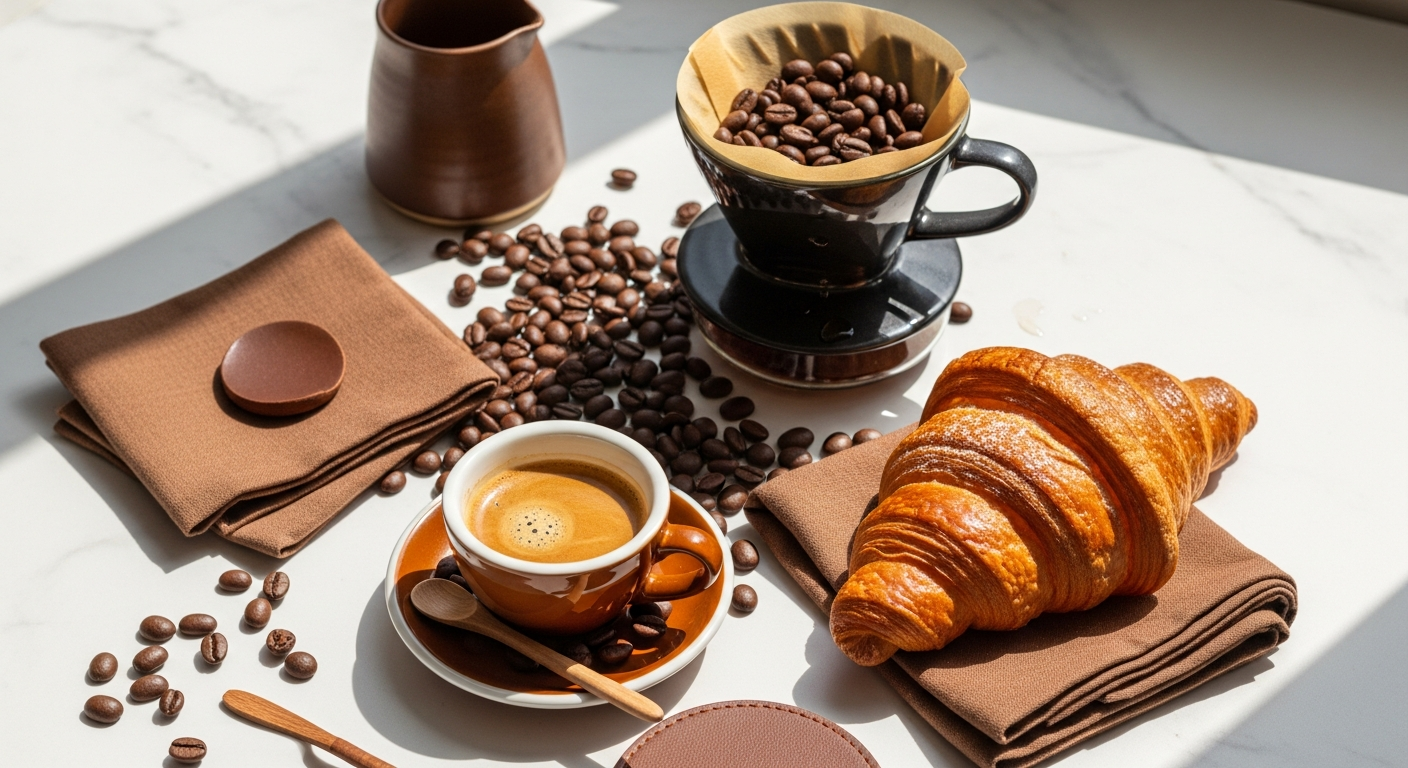
The magic of a French bistro lies in its ability to transform simple, high-quality ingredients into unforgettable experiences. Coffee, when thoughtfully paired, becomes another one of these essential ingredients, elevating both the beverage and the dish. Here’s how to create harmonious coffee pairings for some beloved French bistro classics:
For Breakfast & Brunch: Croissants, Pain au Chocolat, & Quiche
- Croissants & Pain au Chocolat: These buttery, flaky pastries demand a coffee that can cut through their richness while complementing their inherent sweetness. A classic choice is a strong, dark-roasted espresso or a robust French Press. The intense coffee provides a lovely counterpoint to the pastry’s fat, while notes of dark chocolate or caramel in the coffee enhance the pastry’s flavors. Alternatively, a well-made Café au Lait (strong coffee with steamed milk) offers a comforting, creamy pairing that’s quintessentially French.
- Quiche Lorraine: This savory custard tart, with its bacon and cheese, requires a coffee that can stand up to its richness without overpowering it. A medium-bodied pour-over from Colombia or Guatemala, with its balanced acidity and notes of caramel or stone fruit, would be ideal. The cleaner profile of the pour-over can highlight the subtle nuances of the quiche, while its brightness can cut through the fattiness.
For Lunch & Dinner: Boeuf Bourguignon, Steak Frites, & Salade Niçoise
- Boeuf Bourguignon & Coq au Vin: Hearty, slow-cooked stews with deep, savory flavors call for a coffee with equal depth. A full-bodied French Press made with a dark-roasted Brazilian or Sumatran bean, offering notes of dark chocolate, earthiness, or even a hint of spice, would be a superb match. The coffee’s intensity will complement the richness of the meat and wine-based sauces, creating a truly satisfying experience.
- Steak Frites: A perfectly seared steak with crispy fries is a bistro icon. A bold AeroPress brew using a medium-dark roast, perhaps an Ethiopian natural with its wilder, fruitier notes or a punchy Central American, could offer an intriguing contrast. The coffee’s acidity can cleanse the palate, preparing it for the next savory bite, while its robust flavor holds its own against the meat.
- Salade Niçoise: This vibrant salad, with tuna, olives, green beans, and potatoes, is lighter and more refreshing. A lighter-roasted pour-over, perhaps an Ethiopian Yirgacheffe with its floral and citrus notes, or a bright Kenyan, would be a delightful pairing. The coffee’s delicate flavors and higher acidity would complement the freshness of the salad without overwhelming it.
For Dessert: Crème brûlée, Tarte Tatin, & Mousse au Chocolat
- Crème brûlée & Tarte Tatin: Sweet, caramelized desserts pair wonderfully with a well-pulled espresso. The espresso’s concentrated flavor, often with notes of dark chocolate or roasted nuts, can balance the sweetness of the dessert. The bitterness of the espresso provides a sophisticated contrast to the sugar, as often noted by world barista champions like James Hoffmann when discussing pairing principles.
- Mousse au Chocolat: For a rich chocolate dessert, consider a coffee with complementary chocolate notes. A medium-dark roasted Colombian or Brazilian coffee brewed as a pour-over would enhance the chocolate experience, creating a seamless flavor profile that is deeply satisfying.
Experimentation is key! Trust your palate and enjoy the journey of discovering your own perfect French bistro coffee pairings.
Elevating the Everyday: French Coffee Drinks to Make Tonight
Beyond simple black coffee, the French bistro offers a delightful array of coffee beverages that are surprisingly easy to recreate at home. These drinks not only taste authentic but also add a touch of Parisian elegance to your evening. Mastering a few staples will transform your kitchen into a charming café.
The Quintessential Café au Lait
The Café au Lait is perhaps the most iconic French coffee drink, a comforting staple for breakfast or a relaxed afternoon. It’s elegantly simple: strong brewed coffee combined with steamed milk, typically served in a bowl (bol) rather than a cup, perfect for dipping croissants.
- Coffee Component: Brew a strong French Press or a double shot of espresso. For a classic taste, use a dark or medium-dark roast with chocolatey or nutty notes.
- Milk Component: Gently heat and steam whole milk until it’s frothy but not overly airy. Aim for a velvety microfoam. If you don’t have a steamer, heat milk on the stovetop until hot but not boiling, then whisk vigorously until foamy.
- Assembly: Pour equal parts hot coffee and steamed milk into your favorite mug or bowl. Stir gently. The beauty of Café au Lait is its simplicity and comforting warmth.
The Perfect Espresso (and its Variations)
An espresso is the foundation of many classic coffee drinks and is a cornerstone of the French coffee experience. While it requires an espresso machine, achieving a great shot at home is incredibly rewarding.
- Equipment: A quality espresso machine (like the Breville Barista Express for beginners, around $700, or a Gaggia Classic Pro for a more manual approach, around $450) and a good grinder (Baratza Encore ESP, around $200, or a Niche Zero for premium, around $700).
- Technique: Use freshly ground, finely ground coffee. Tamp evenly. Aim for a 1:2 brew ratio (coffee weight to espresso yield) in 25-30 seconds. For example, 18g in yields 36g out. The resulting shot should have a rich, reddish-brown crema (the flavorful, reddish-brown foam on top).
- Variations:
- Noisette: A single espresso with a dollop of foamed milk, just enough to tint it hazelnut-brown.
- Café Crème: Similar to a latte or cappuccino, an espresso topped with a generous amount of steamed milk and foam.
Café Filtre (Drip Coffee, French Style)
While often associated with American diners, a well-made drip coffee, or “café filtre,” is also a common sight in French homes. The key is quality beans and proper brewing.
- Method: Use a standard drip coffee maker, but elevate it with specialty beans.
- Grind: Medium.
- Ratio: Adhere to SCA standards: 1:16-1:18 coffee to water. Use filtered water.
- Result: A clean, consistent cup that can be enjoyed black or with a splash of milk, perfect for a less intense, but equally satisfying, coffee moment.
These French-inspired coffee drinks are more than just beverages; they are an invitation to slow down, savor, and infuse your everyday with a touch of Gallic charm. Experiment with different roasts and milks to find your perfect rendition.
Essential Gear for Your Home Bistro Coffee Bar
To truly bring the French bistro coffee experience to your home, investing in the right equipment is crucial. You don’t need a professional setup, but a few key pieces will significantly elevate your brewing game. Think of these as your chef’s tools for coffee.
1. The Grinder: Non-Negotiable for Freshness
The single most important piece of equipment for specialty coffee is a quality burr grinder. Pre-ground coffee loses its aroma and flavor rapidly. A burr grinder ensures uniform particle size, which is critical for even extraction (the process of dissolving flavor compounds from ground coffee into hot water), preventing bitter over-extraction or sour under-extraction.
- Entry-Level Electric: Baratza Encore ESP (approx. $200). An excellent all-rounder, capable of grinding for espresso to French Press.
- Manual Option: Timemore C2/C3 (approx. $70-100). Great for pour-over and French Press, portable, and offers excellent grind quality for the price.
- Premium Electric: Fellow Ode Brew Grinder Gen 2 (approx. $349). Designed for brew methods (not espresso), it offers exceptional consistency and aesthetics.
2. Brewing Devices: Versatility is Key
Depending on your preferred style, you’ll want one or more of these:
- French Press: Bodum Chambord (approx. $30-50 for an 8-cup). The classic, for full-bodied, rich coffee.
- Pour-Over:
- Hario V60 (ceramic or plastic, approx. $30-50). Excellent for clean, bright cups. Pair with Hario paper filters.
- Chemex (3-cup or 6-cup, approx. $45-60). Produces an exceptionally clean, sediment-free cup, often highlighting delicate notes. Requires specific Chemex filters.
- AeroPress: AeroPress Original or Clear (approx. $40-50). Incredibly versatile, capable of making espresso-like concentrates, full immersion, or pour-over style coffee. Great for travel.
- Espresso Machine:
- Breville Bambino Plus (approx. $500). Compact, fast, and great for lattes/cappuccinos with its automatic milk frother.
- Gaggia Classic Pro (approx. $450). A more traditional, manual machine that allows for greater control and skill development.
3. Precision Tools: The Barista’s Edge
These might seem like extras, but they significantly improve consistency and quality:
- Digital Scale with Timer: Hario V60 Drip Scale (approx. $60) or a simpler kitchen scale (approx. $20-30). Essential for measuring coffee and water precisely, adhering to brew ratios.
- Gooseneck Kettle: Fellow Stagg EKG (electric, approx. $169) or Hario Buono (stovetop, approx. $60). Provides precise control over water flow, critical for pour-over. Variable temperature control is a bonus for hitting that ideal 90-96°C (195-205°F).
- Thermometer: To ensure your water is at the optimal temperature if your kettle doesn’t have a built-in one.
- Filtered Water: A simple Brita filter pitcher (approx. $30) makes a huge difference. Coffee is 98% water, so its quality profoundly impacts taste.
Starting with a good grinder and one brewing device, then gradually adding precision tools, will transform your home coffee experience from basic to bistro-level perfection. As World Coffee Research emphasizes, consistency in every step, from bean to brew, leads to the best cup.
The Barista’s Touch: Advanced Techniques for Home Brewers
Once you’ve mastered the basics and acquired your essential gear, it’s time to delve into the finer points that elevate a good cup of coffee to an exceptional one. These advanced techniques, often employed by professional baristas and advocated by organizations like the SCA and WCR, focus on precision and understanding the science behind extraction.
Understanding Water Chemistry
- TDS (Total Dissolved Solids): The SCA recommends a TDS of 75-250 mg/L, with an ideal of 150 mg/L. This balance allows for optimal extraction without imparting off-flavors.
- pH: Should be neutral, around 7.0.
- Hardness: Moderate hardness (around 68-85 mg/L calcium hardness) is best.
Using filtered water is a simple step, but for true connoisseurs, specialized water filters or even remineralized distilled water (using products like Third Wave Water) can fine-tune your water profile to perfection, bringing out the most subtle notes in your specialty beans.
Grind Consistency and Dosing
A good burr grinder is only part of the equation; understanding how to use it is key.
- Dialing In: For any new coffee or brewing method, you need to “dial in” your grind. If your coffee tastes sour, it’s likely under-extracted, and you need a finer grind. If it’s bitter, it’s likely over-extracted, and you need a coarser grind. This iterative process is crucial for optimal flavor.
- Dosing by Weight: Always measure your coffee beans by weight using a digital scale before grinding. This ensures consistent brew ratios (e.g., 1:16 coffee to water) every time, which is fundamental for reproducible results.
Mastering Milk Frothing for French-Style Drinks
For Café au Lait and Café Crème, velvety microfoam is essential.
- Steam Wand Technique: If using an espresso machine, purge the steam wand first. Position the wand just below the surface of cold milk (whole milk works best for texture and sweetness). “Stretch” the milk by introducing air for the first few seconds, creating a swirling vortex. Then, lower the wand deeper to “texture” the milk, incorporating the air evenly until it reaches 60-65°C (140-150°F). Tap the pitcher to remove large bubbles and swirl for a glossy finish.
- Alternative Methods: For those without a steam wand, an electric milk frother (like a Nespresso Aeroccino, around $100) or even a French Press can create decent foam. Heat milk on the stovetop, then plunge vigorously with the French Press filter to create froth.
Understanding Extraction and Channeling
Professional baristas are acutely aware of extraction dynamics.
- Even Extraction: The goal is for water to pass evenly through all coffee grounds. Poor grind distribution, uneven tamping (for espresso), or an inconsistent pour (for pour-over) can lead to channeling (when water finds an easy path through the coffee bed), resulting in uneven extraction and off-flavors.
- Temperature Stability: Maintaining a consistent water temperature throughout the brew is critical. Preheating your brewing device and cups helps prevent heat loss.
By focusing on these advanced techniques, you’ll gain a deeper understanding of coffee and achieve a level of consistency and flavor extraction that rivals your favorite bistro, making every cup a testament to your passion and skill.
Key Takeaways for Your Home Bistro Coffee Experience
- Prioritize Freshness: Always buy freshly roasted specialty beans and grind them just before brewing for optimal flavor.
- Master Key Methods: Learn the French Press for rich, full-bodied brews and pour-over for clean, nuanced cups, adjusting to SCA standards.
- Match Roasts & Origins: Select beans with profiles (darker, nutty/chocolatey for robust foods; lighter, brighter for delicate dishes) that complement your French bistro classics.
- Invest in Essential Gear: A quality burr grinder and a precise scale are non-negotiable. A gooseneck kettle and filtered water significantly enhance results.
- Embrace Precision: Pay attention to water temperature, brew ratios, and grind size. Experiment and “dial in” your settings for the perfect extraction.