home coffee brewing methods beginners
The Ultimate Guide to Home Coffee Brewing Methods for Beginners: 2026 Edition
There is a profound transformation that occurs when you transition from being a casual coffee drinker to a home barista. It starts with the realization that coffee isn’t just a bitter caffeine delivery system; it is a complex, aromatic beverage with more flavor compounds than wine. For many, the journey begins with a simple question: How can I make my morning cup taste as good as the one from the local specialty cafe?
Mastering home coffee brewing is a blend of art and science, a ritual that rewards patience and curiosity. In 2026, the accessibility of high-quality beans and precision equipment has made it easier than ever for beginners to achieve professional-grade results in their own kitchens. Whether you prefer a heavy, textured mouthfeel or a crisp, tea-like clarity, there is a brewing method tailored to your palate. This guide will walk you through the most popular techniques, the essential equipment, and the foundational principles that will elevate your coffee game from mediocre to magnificent.
1. The French Press: The Gateway to Full-Bodied Immersion
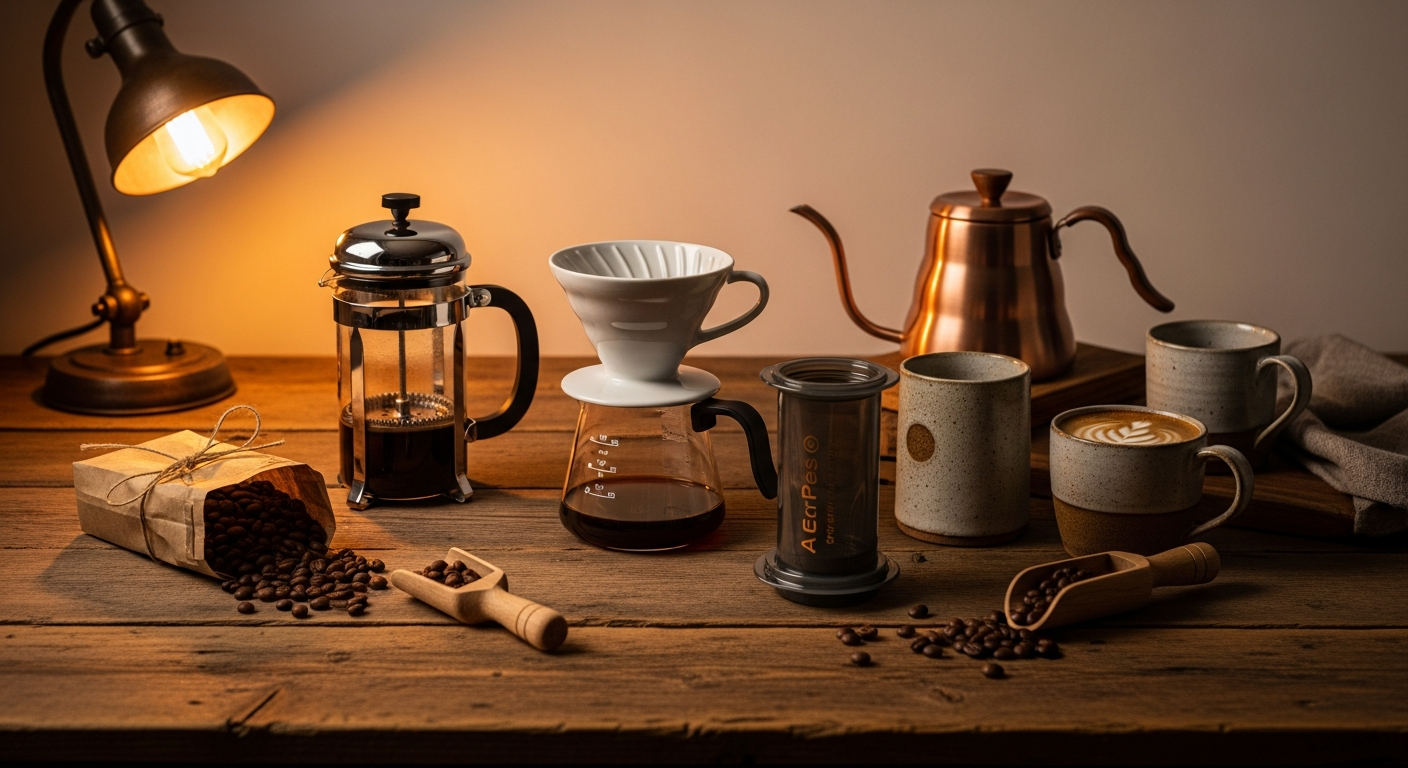
For many beginners, the French Press (or cafetière) is the perfect entry point into manual brewing. It is an “immersion” method, meaning the coffee grounds sit in direct contact with hot water for the entire brewing duration. This results in a cup that is remarkably full-bodied, textured, and rich. Because the French Press uses a metal mesh filter rather than paper, the coffee’s natural oils and fine sediments are preserved, creating a heavy “mouthfeel” that many coffee lovers crave.
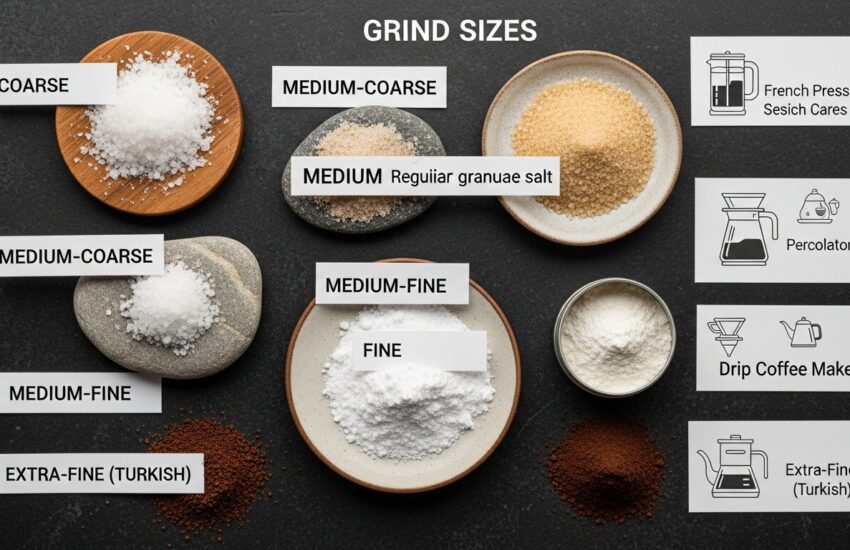
To succeed with the French Press, your most important variable is the grind size. You need a **coarse, even grind**—similar in appearance to sea salt. If the grind is too fine, the water will over-extract the bitterness, and you’ll find it difficult to plunge the filter. The standard ratio is roughly 1:15 (one gram of coffee for every 15 grams of water). Simply add your coffee, pour in your off-the-boil water, and let it steep for four minutes.
The “pro tip” for 2026 beginners? After the four-minute mark, use a spoon to break the “crust” of grounds floating on top and scoop away any remaining foam. Let it sit for another five minutes without plunging all the way to the bottom. This allows the sediment to settle, resulting in a much cleaner cup while maintaining that signature French Press weight.
2. Pour-Over Perfection: Mastering the Hario V60 and Chemex
If the French Press is about power and body, the pour-over method is about clarity and nuance. This is a “percolation” method, where fresh water constantly passes through a bed of coffee and a paper filter. This process removes the oils and silts, highlighting the delicate floral and fruity notes of the bean. Two of the most iconic devices in this category are the Hario V60 and the Chemex.
The **Hario V60** is known for its internal ribs and large exit hole, allowing for a faster flow and a bright, acidic profile. The **Chemex**, with its thick laboratory-grade filters, produces an incredibly clean and crisp cup, often considered the gold standard for tasting the specific “terroir” of single-origin beans.
For beginners, pour-over brewing requires a bit more finesse. You will need a **gooseneck kettle** to control the flow of water precisely. The technique involves a “bloom”—pouring a small amount of water over the grounds and waiting 30 seconds to let CO2 escape—followed by steady, circular pours. The goal is to keep the water level consistent and ensure all grounds are evenly saturated. While it has a steeper learning curve, the reward is a sophisticated cup of coffee that reveals layers of flavor you never knew existed.
3. The AeroPress: Versatility and Travel-Friendly Brewing
The AeroPress has developed a cult-like following since its inception, and in 2026, it remains one of the most versatile tools in a home barista’s arsenal. It is a hybrid method that combines immersion with pressure. Essentially a giant BPA-free plastic syringe, the AeroPress allows you to experiment with almost every variable: grind size, steep time, and water temperature.
Beginners love the AeroPress because it is virtually indestructible and incredibly easy to clean. It can produce everything from a concentrated, espresso-style shot to a standard American-style cup. There are two main ways to use it: the **Standard Method** (upright) and the **Inverted Method** (upside down). The Inverted Method is popular among enthusiasts because it prevents any coffee from dripping through the filter before the brewing time is complete, ensuring a full immersion.
Because of its rapid brewing time (usually around 2 minutes), the AeroPress tends to have lower acidity than other methods. It is the ultimate travel companion for coffee lovers, fitting easily into a backpack or suitcase. If you enjoy experimenting with different recipes—ranging from fine grinds to medium-coarse—the AeroPress provides an endless playground for your taste buds.
4. Cold Brew: Patience for the Low-Acid Lovers
Cold brew is not simply iced coffee; it is a unique brewing process that uses time instead of heat to extract flavor. By steeping coarse grounds in room temperature or cold water for 12 to 24 hours, you create a coffee concentrate that is incredibly smooth, naturally sweet, and remarkably low in acidity.
The beauty of cold brew for beginners is its simplicity. You don’t need fancy scales or gooseneck kettles. You can brew it in a dedicated cold brew maker or even a simple glass jar. The key is the ratio: a common starting point is 1:8 (coffee to water). Once the steeping time is up, you filter the concentrate through a paper filter or fine mesh.
The resulting concentrate can be stored in the refrigerator for up to two weeks, making it the most convenient “grab-and-go” option for busy mornings. You can dilute it with water, milk, or even tonic water. Because the cold extraction doesn’t pull out the bitter tannins that heat does, cold brew is often the preferred method for those with sensitive stomachs or those who find traditional hot coffee too sharp.
5. The Moka Pot: The Stovetop Espresso Alternative
Often referred to as the “Italian stovetop espresso maker,” the Moka Pot is a classic that has stood the test of time. While it doesn’t technically produce “true” espresso (as it doesn’t reach the 9 bars of pressure required), it produces a short, intense, and viscous coffee that serves as an excellent base for lattes and cappuccinos.
The Moka Pot works through steam pressure. Water in the bottom chamber boils, creating pressure that pushes the water up through a basket of finely ground coffee and out into the top chamber. For beginners, the Moka Pot can be tricky because it is easy to “burn” the coffee, resulting in a metallic or overly bitter taste.
The secret to a perfect Moka Pot in 2026? **Start with boiling water** in the bottom reservoir. This reduces the amount of time the actual coffee grounds spend sitting on the stove, preventing them from overheating. As soon as the coffee starts to flow into the top chamber and begins to gurgle or “sputter,” remove it from the heat and run the bottom of the pot under cold tap water to stop the extraction immediately. This technique ensures a rich, sweet, and powerful cup every time.
6. The “Golden Rules” of Home Brewing: Beyond the Equipment
Regardless of which method you choose, your success as a home barista depends on three foundational pillars: the beans, the water, and the grind.
* **Freshness is King:** Coffee is a perishable agricultural product. Once roasted, beans begin to lose their aromatic compounds. Always look for a “roasted on” date rather than an “expiration” date. For the best results, use beans within 4 to 20 days of roasting.
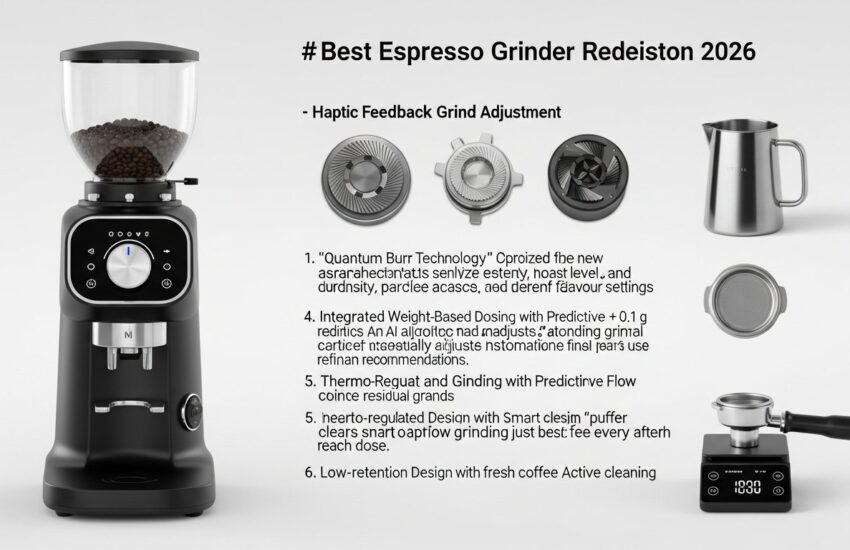
* **Invest in a Burr Grinder:** If you only buy one piece of equipment, make it a burr grinder. Unlike blade grinders, which “hack” the beans into uneven chunks, burr grinders use two revolving abrasive surfaces to produce a uniform grind size. Uniformity is the key to even extraction.
* **Water Quality Matters:** A cup of coffee is 98% water. If your tap water tastes like chlorine or is “hard” (full of minerals), your coffee will suffer. Using filtered water can instantly improve the clarity and sweetness of your brew.
FAQ: Common Questions for Beginner Home Baristas
**Q: What is the best brewing method for someone on a budget?**
A: The French Press and the AeroPress are excellent budget-friendly options. They are relatively inexpensive to purchase and don’t require specialized kettles or expensive filters to produce a high-quality cup.
**Q: Do I really need a digital scale?**
A: While you can measure by volume (scoops and cups), a scale is the fastest way to improve your coffee. It ensures consistency. If you find a recipe you love, a scale allows you to replicate it perfectly every single morning.
**Q: What is the difference between light, medium, and dark roast for home brewing?**
A: Light roasts are more acidic and highlight the bean’s origin (fruity, floral). Dark roasts are more oily and highlight the roasting process (chocolatey, smoky, bitter). Medium roasts offer a balance of both. For pour-overs, light to medium is usually preferred, while French Press and Moka Pots excel with medium to dark roasts.
**Q: Why does my coffee taste sour?**
A: Sourness is usually a sign of “under-extraction.” This means the water didn’t pull enough flavor out of the grounds. To fix this, try using a finer grind, hotter water, or a longer brewing time.
**Q: Can I use pre-ground coffee?**
A: You can, but coffee begins to oxidize and lose flavor within minutes of being ground. For the best 2026 home brewing experience, grinding your beans fresh immediately before brewing is the single most impactful change you can make.
Conclusion: Your Journey to the Perfect Cup
Embarking on the path of home coffee brewing is a rewarding endeavor that transforms a daily necessity into a moment of mindful craft. There is no “single best” way to brew coffee; the beauty of the hobby lies in finding the method that aligns with your personal taste and lifestyle.
Perhaps you will find solace in the slow, rhythmic pouring of a V60 on a quiet Sunday morning, or maybe you will appreciate the rugged, reliable intensity of a Moka Pot before a busy workday. By understanding the principles of immersion, percolation, and pressure—and by prioritizing fresh beans and a quality grind—you are well on your way to mastering the art of the brew. In 2026, the world of specialty coffee is more inclusive and exciting than ever. So, pick a method, grab some fresh beans, and start experimenting. Your perfect cup is waiting.